






Whether you are a history buff, a science fan, or just someone who loves learning random new things, there is a popular corner of the internet made just for you.
With over 1.4 million members, this massive Facebook group brings people from around the globe together to share fun facts, deep thoughts, and heartwarming real-life stories. Take the kind man who walks the streets carrying rescue pups to help them find loving homes — nobody asked him to, yet he shows up every day. Or the incredible mom who shocked the world by giving birth to not one, not two, but nine babies all at once.
To save you some scrolling, Bored Panda has gathered the most curious gems from the group right here. Keep reading to stock up on great conversation starters for your next trivia night or dinner party.
#41

During a rainy Memorial Day game at Atlanta’s SunTrust Park in 2018, a Parkview High School Marine Corps JROTC cadet stood at attention beside the stadium’s POW-MIA memorial. While the cadet remained at his post in the downpour, a Braves fan in a red raincoat left his seat and held an umbrella over him to help keep him dry.
The fan’s identity wasn’t reported, but his thoughtful gesture caught people’s attention. It was a simple act of kindness that showed respect for the young cadet and the memorial beside him—a reminder that even a small gesture can mean a lot.
Report
1point
#42

A tiny kitten was found alone at a construction site, where the workers gave it a safe place and plenty of care. Before long, the little newcomer was posing in a hard hat and high-visibility vest, looking like it was ready to join the crew. What began as an unexpected discovery turned into a sweet reminder that a small act of kindness can make a big difference.
Report
1point
#43
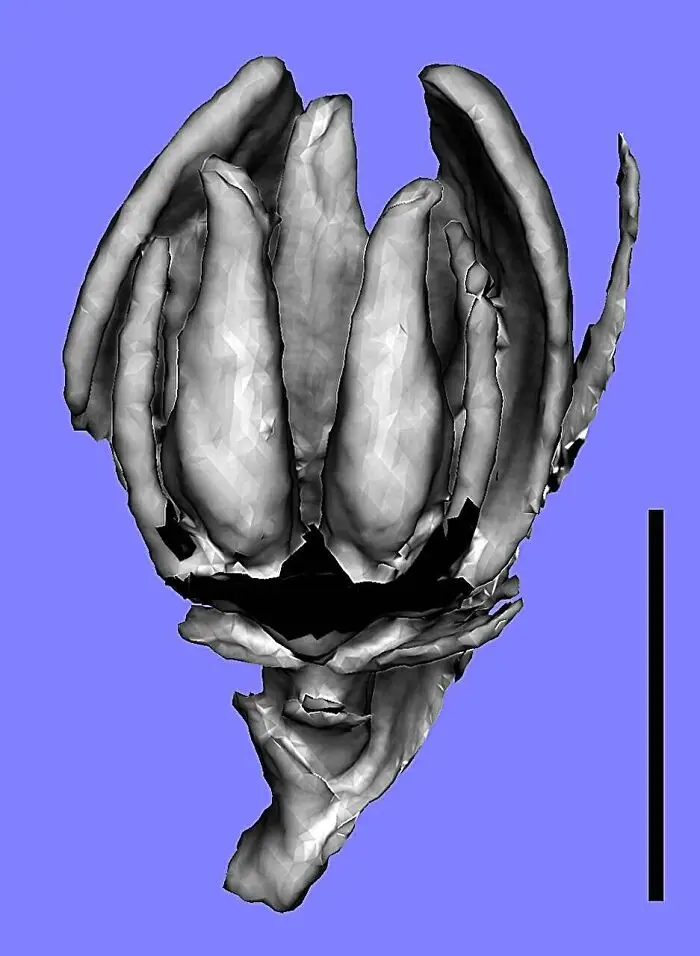
A flower smaller than a grain of rice hid inside a rock for 130 years — and it may rewrite the story of every flower on Earth.
Scientists have just revealed Tomlinsoniella pedicellata, a 100-million-year-old fossil flower found by accident inside a sandstone specimen collected in Kansas in the 1870s and kept in the Smithsonian's collections ever since. Nobody could see it from the outside. It was only when paleobotanist Steven Manchester scanned the rock with X-rays that the tiny bloom showed up, perfectly preserved as a hollow mould in the stone.
The flower is just 1.5 millimetres tall, yet it carries the full classic blueprint of the monocots — three sepals, three petals, six stamens and three separate carpels, all arranged in threes. That is the same ground plan you see today in lilies, tulips and daffodils. The team believes it most closely matches an extinct kind of fan palm, which would make it the oldest palm flower ever found — though they are careful to say the exact family is still open to question.
What makes this so remarkable is the timing. Flowering plants were already spreading in the age of the dinosaurs, but fossils of their earliest flowers are vanishingly rare. This one sat unnoticed in a museum drawer for over a century, waiting for a scanner powerful enough to look inside the rock without breaking it.
How many other lost chapters of Earth's story are still sitting quietly in museum collections, waiting to be found?
Report
1point
#44
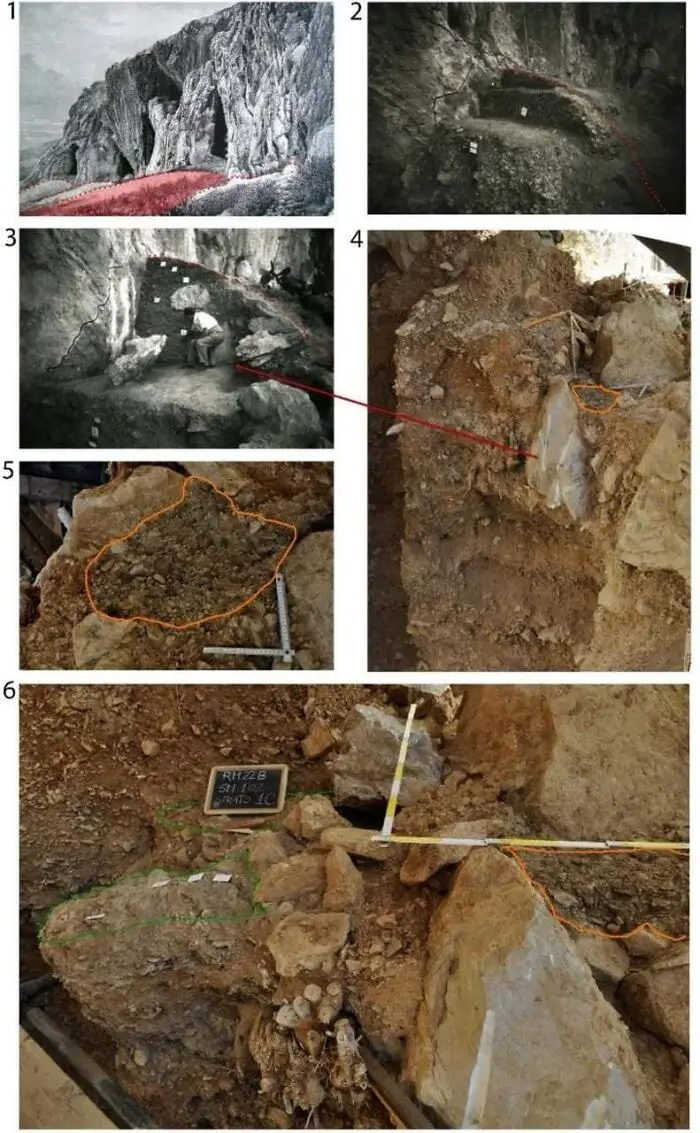
Some 30,000 years ago, Ice Age hunters lit a fire inside a rock shelter on the Italian coast — and that fire is now rewriting when humans first reached Italy.
The shelter is Riparo Mochi, tucked into the Balzi Rossi cliffs on the French-Italian border. A fresh excavation found an intact hearth there, ringed by marine shells and surrounded by more than 7,500 tiny stone tools. A shell buried beside the fire was radiocarbon dated to between 30,000 and 30,800 years ago.
That pushes the arrival of the Noaillian hunter-gatherers — a culture that spread east from Spain and France — back by 2,000 to 3,000 years, making Riparo Mochi the earliest known Noaillian site in Italy. Before this, the dates made little sense: the culture seemed to appear deep in southern Italy thousands of years before reaching the coastal corridor it must have travelled through.
The tools tell their own story too. Under the microscope, the sharp side edges of the little burins show wear from cutting meat and hide — not from engraving bone, as archaeologists had long assumed. Scrapers and wedges shaped wooden shafts and split bone for marrow.
The timing lines up with a sudden cold snap around 30,500 years ago, when Europe turned harsh and dry. The researchers think the cold pushed these hunters east along the Mediterranean coast, toward milder ground in Italy.
A single hearth, a shell, and a scatter of stone — and a whole migration moves thousands of years earlier. What else do you think is still buried in those cliffs, waiting to change the timeline again?
Report
1point
#45
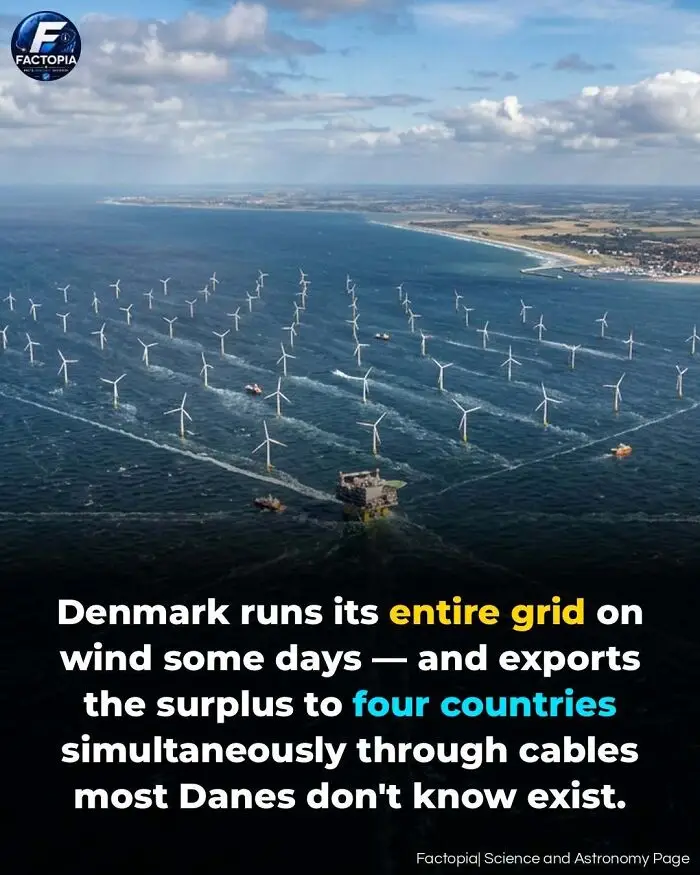
"Denmark runs its entire grid on wind some days — and the surplus powers four countries simultaneously through cables most Danes don't know exist.
On a strong North Sea day, Danish wind turbines generate more electricity than 6 million Danes can consume. The surplus does not go to waste. It travels instantly through eight high-voltage interconnectors to Norway, Sweden, Germany, and the Netherlands — countries that at that precise moment need what Denmark cannot absorb.
Norway uses cheap Danish electricity to fill its mountain reservoirs instead of releasing hydropower. Germany displaces gas generation. The transactions happen automatically. No human decides to export Danish wind to a German factory. The electricity market prices it. The cables carry it.
Energinet — Denmark's grid operator — has been managing this since wind penetration first exceeded 100% of national demand in 2014. A decade of operational experience with a variable renewable grid that no other country has replicated at comparable penetration.
The grid is not theoretical. It is a live demonstration that high wind penetration can be reliable if you build enough interconnection, enough flexibility, and enough respect for the physics of the system.
Denmark did not design the world's best renewable grid. It built a lot of turbines and then solved the problems that created. The sequence — build first, solve second — is not the sequence that textbooks recommend. It is the sequence that works.
Every country building toward high renewable penetration is hiring Danish engineers to explain how the system functions.
Source: Danish Energy Agency & Energinet, 2023.
Report
1point
#46
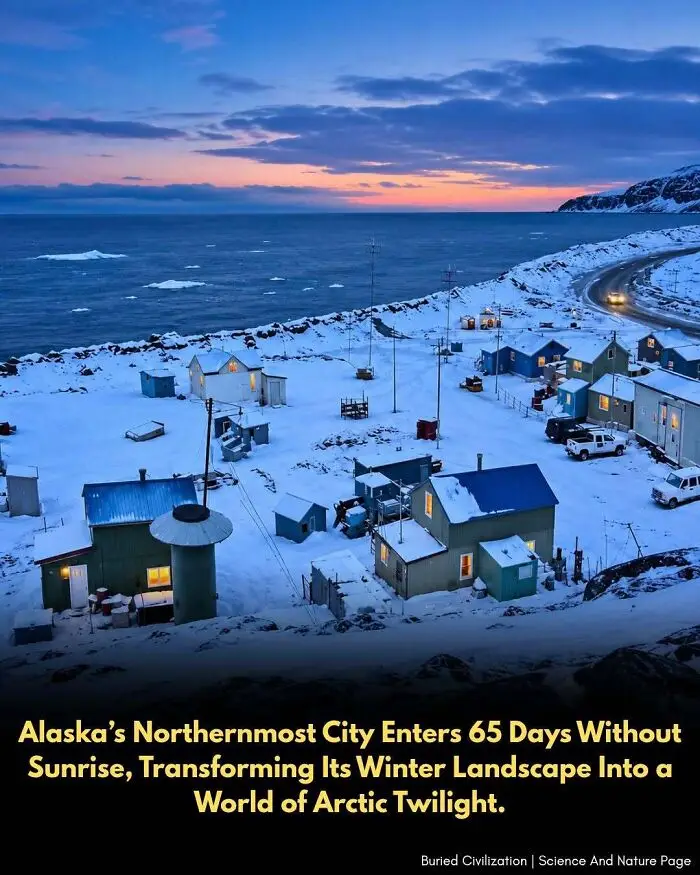
THE SUN HAS DISAPPEARED BELOW THE HORIZON IN ALASKA'S NORTHERNMOST CITY, AND RESIDENTS FACE 65 DAYS WITHOUT A SUNRISE.
Utqiaġvik, Alaska, has entered one of nature's most remarkable seasonal events. The city's final sunset of 2026 took place on November 18, and the Sun will remain below the horizon until January 23, 2027.
Located about 320 miles north of the Arctic Circle, Utqiaġvik experiences this phenomenon every winter. Known as the polar night, it occurs when Earth's northern regions tilt away from the Sun, preventing it from rising above the horizon for an extended period.
From November 19 through January 22, residents will experience 65 consecutive days without a sunrise. During this time, the Sun will not appear above the horizon, even around midday.
But polar night does not mean complete darkness around the clock.
The sky can still become surprisingly bright during the middle of the day. Civil twilight creates beautiful shades of blue and purple along the southern horizon, while moonlight and occasional displays of the northern lights add to the Arctic scenery.
The science behind this phenomenon is connected to Earth's 23.5-degree axial tilt. As the planet travels around the Sun, its northern regions gradually turn away from direct sunlight during winter. The farther north a place is located, the longer this period without sunrise can last.
Utqiaġvik experiences the opposite phenomenon during summer. Known as the midnight sun, this seasonal event brings continuous daylight, with the Sun remaining above the horizon for weeks at a time.
Residents are accustomed to these dramatic seasonal changes, continuing their daily routines throughout the long winter darkness. Schools, businesses, and community activities carry on as the Arctic landscape changes around them.
The Sun is expected to make its first appearance above the horizon again on January 23, 2027, at approximately 1:03 p.m. local time. Even then, daylight will initially last for only a little over an hour.
It is a remarkable reminder of how Earth's position in space shapes life in different parts of our planet. In one place, people experience weeks without a sunrise, while others enjoy long summer days filled with sunlight.
One planet, two extraordinary extremes, and a natural cycle that makes our world truly fascinating.
Report
1point
#47
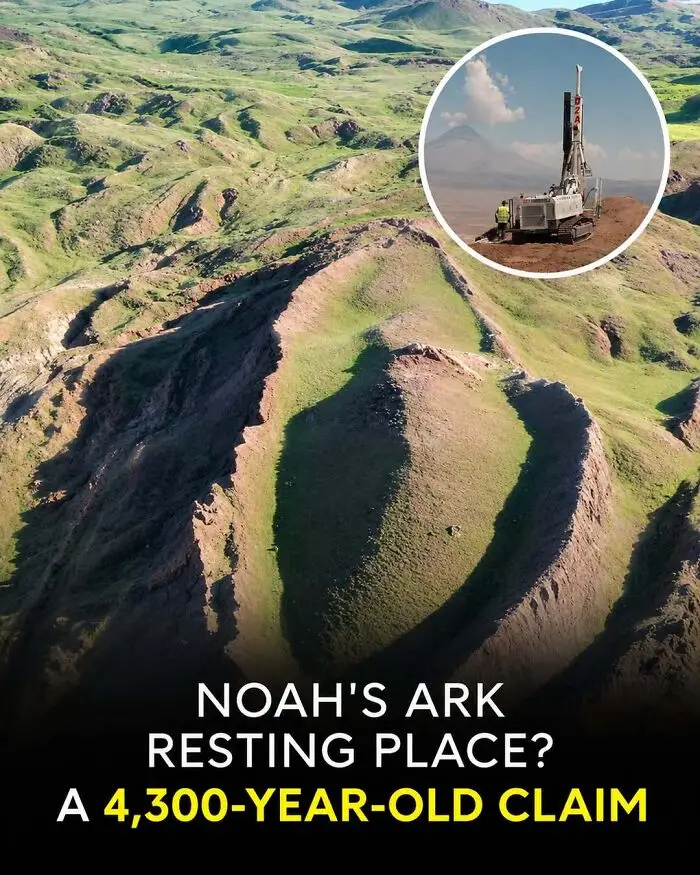
A boat-shaped formation near Mount Ararat in Türkiye has renewed interest in the search for Noah’s Ark. A research team says recent scans and drilling support the idea that the formation could be man-made, and has linked it to the story’s traditional timeline.
But the Ark has not been scientifically confirmed. The reported findings are still claims, and the material’s identity and age need stronger independent verification. For now, it’s an intriguing mystery—not a proven discovery. World News
What do you think: a possible clue, or should we wait for more evidence?
Report
0points