




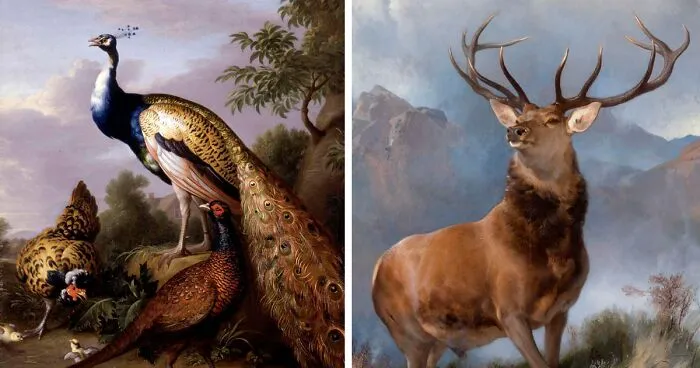


We have a soft spot for art. But not just any art — we’re talking about animal paintings. We love animals, we love paintings, and of course, we love the combination of the two!
Following the recent discovery of a pig painting in Indonesia, where Ice Age cave painters flourished, it’s said that the first traces of animals in art date back to at least 45,000 years ago. Since then, art featuring animals has taken many forms. From Pisanello’s Duck in 1440, passing through Yi Am’s art in the 16th century, and the French animal painter Rosa Bonheur in the 1800s, we’ve seen animals depicted in all kinds of styles and genres.
When it comes to capturing the spirit of an animal through pencil or brushstrokes on canvas, some have a talent that is hard to match. We’ve selected our favorite animal artists over time so that you can see how stunning the most famous animal paintings are for yourself! The artists featured here have taken painting animals to the next level — from incredibly realistic portraits of cats and dogs to more abstract pieces that feature animals in new, exciting ways.
#41 Head Of A Dog (1876) By Edouard Manet
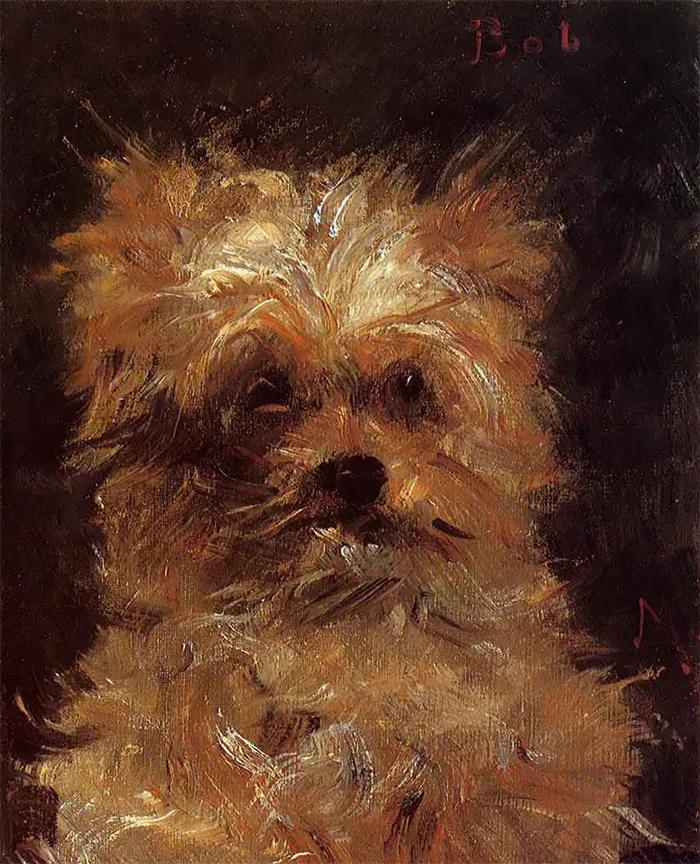
The portrait of this dog, which Manet named Bob, was painted in the artist’s hometown in 1876. Said to be realized in both realist and impressionist styles, it clearly shows the loose, textured brushstrokes typical of Manet’s style.
Report
9points
#42 A Horse Frightened By A Lion (1770) By George Stubbs
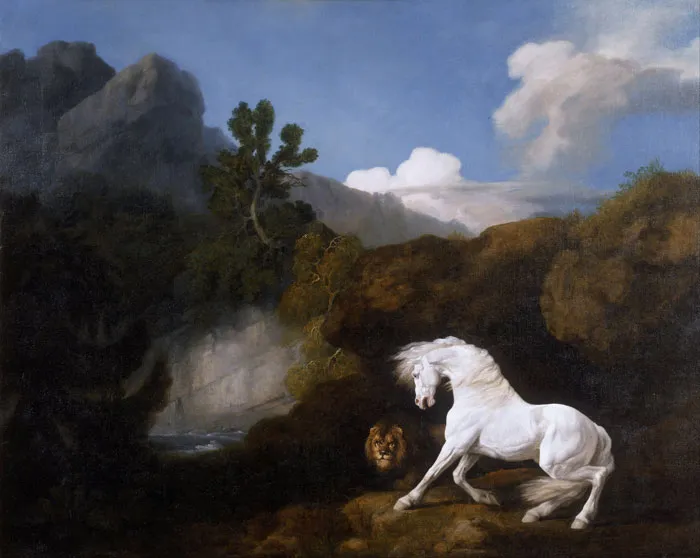
Around 1762, George Stubbs started working on a series of paintings on the subject of a lion attacking a horse, which he kept reinterpreting over a span of 30 years. With no surprise, they ended up becoming part of his most celebrated and influential works. This one, completed in 1770, shows a white horse terrified in dramatic tension at the sight of a lion.
Report
9points
#43 Monkeys In A Tavern (1660) By David Teniers The Younger
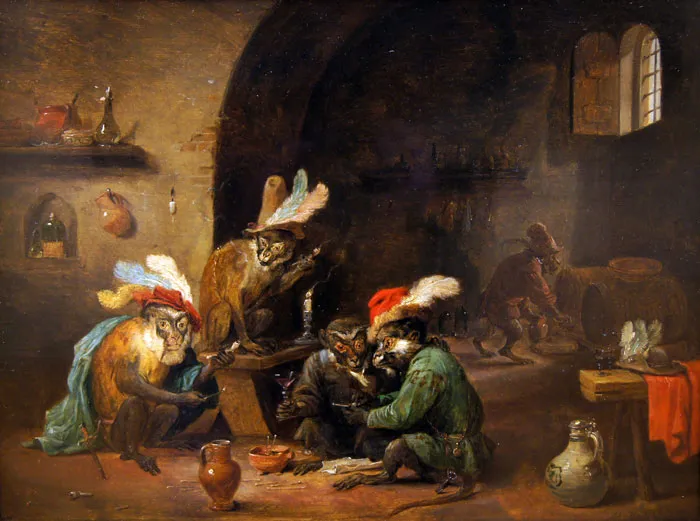
David Teniers the Younger was an incredibly versatile artist who focused part of his work on depicting taverns. Monkeys In A Tavern might feel a little out of place, but it’s actually part of an artistic movement with monkeys as the central subjects. Monkeys in art were incredibly popular in the 16th and 17th centuries and were often included in humorous scenes.
Report
9points
#44 Lamb Of God (1635-40) By Francisco De Zurbaran
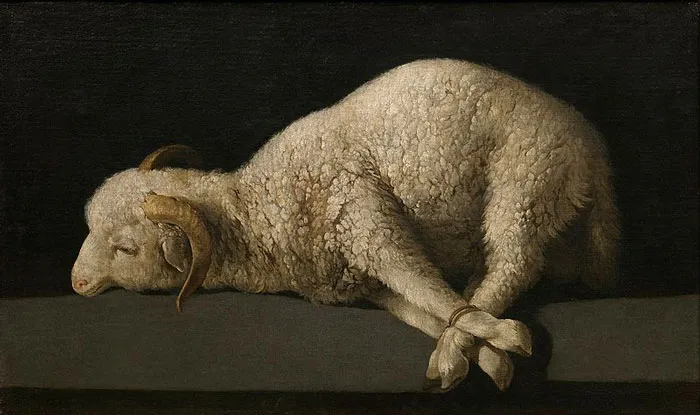
It’s no surprise that lambs carry a symbolic meaning in religious paintings. Francisco De Zurbaran’s lamb is depicted bound in a sacrificial posture, symbolizing Christ’s sacrifice for the salvation of the world. It’s housed in the Prado Museum in Madrid, Spain.
Report
9points
#45 Still Life With Dead Game In A Marble Niche (1706) By Alexandre-François Desportes
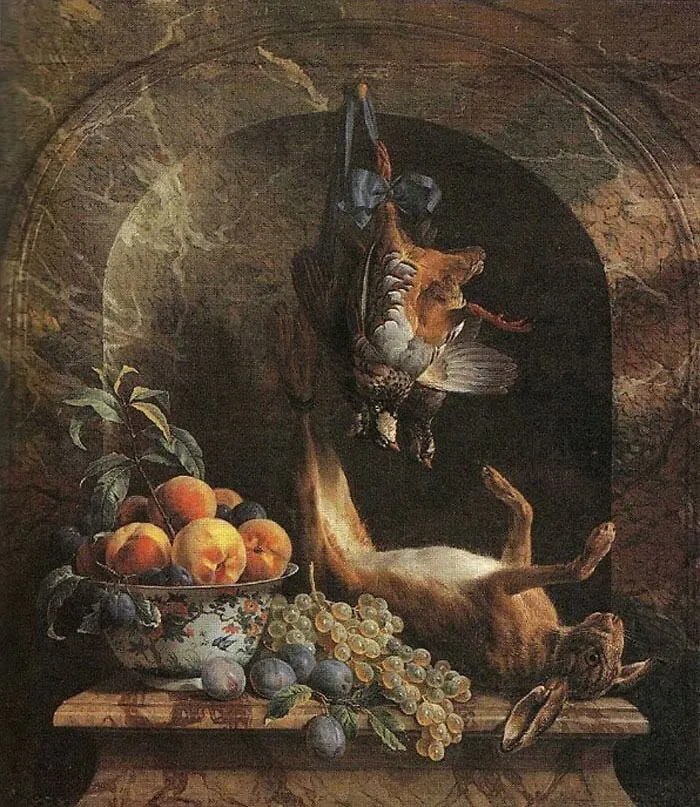
Trained as an animal painter and favored by both Louis XIV and Louis XV, Alexandre-François Desportes gained recognition for his hunting scenes as well as his magnificent still lifes.
Report
9points
#46 Off To School (1883) By Charles Burton Barber
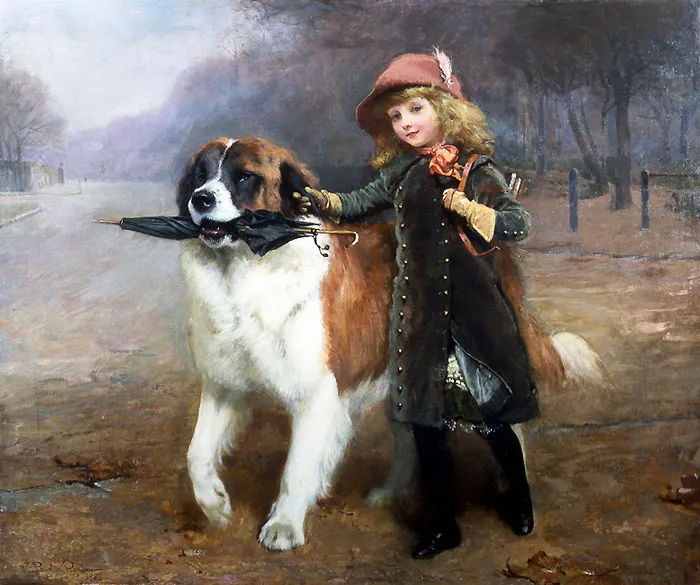
Barber’s talent made him a highly sought-after artist, and in 1883, the year Off To School was painted, he was elected a member of the Royal Institute of Painters. In this piece, we find a young noble girl with her St. Bernard as he follows her to school. The dog stands in a regal posture, and his size gives off a feeling of security.
Report
9points
#47 The Kongouro From New Holland (1772) By George Stubbs
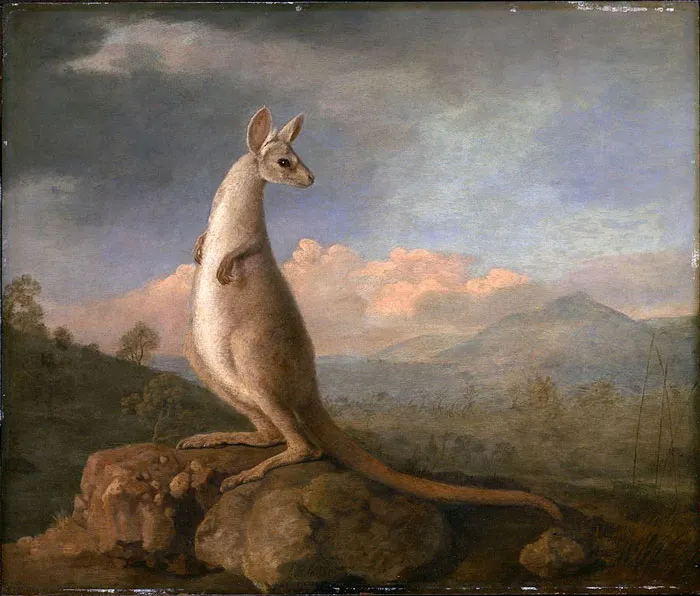
George Stubbs gifted us with the first depictions of Australian animals in European art. With no live subject to use as inspiration, he based his work on a drawing plus a sample of kangaroo skin collected during James Cook’s first voyage. The painting is displayed at the National Maritime Museum of Greenwich, London.
Report
8points
#48 Bull (1911) By Franz Marc
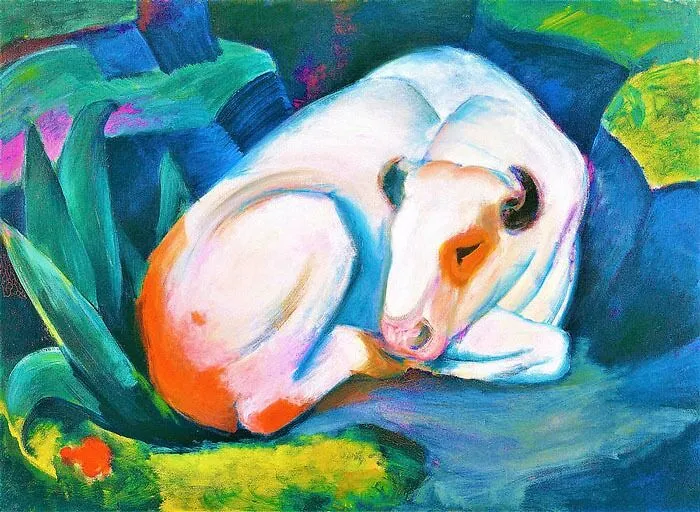
Franz Marc’s depiction of a bull seems inspired by the Pinzgauer, a breed native to Austria. The artist has depicted such a strong animal to seem fragile and vulnerable, endearing it to the viewer. The care taken by Marc in his portrayal of the bull proves his love for the natural and animal worlds, the main subjects of his art.
Report
8points
#49 Lying Cow (1883) By Vincent Van Gogh
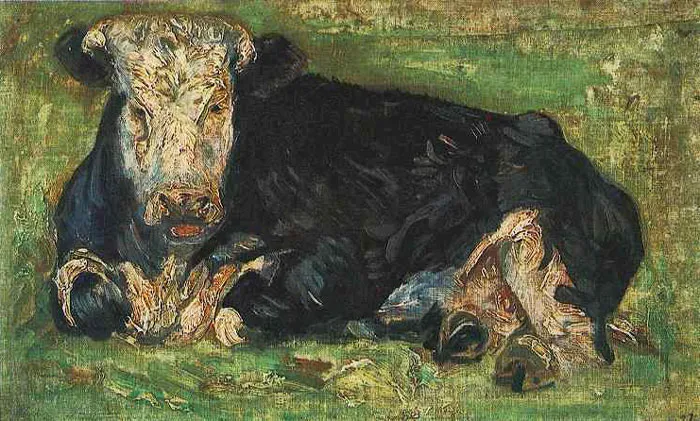
Among Vincent Van Gogh’s early works, we find the Lying Cow, a black and white bovine lying down in a green meadow facing the viewer. The Dutch artist painted it around 1882 when he lived in The Hague.
Report
8points
#50 A King Charles Spaniel (C. 1866) By Edouard Manet
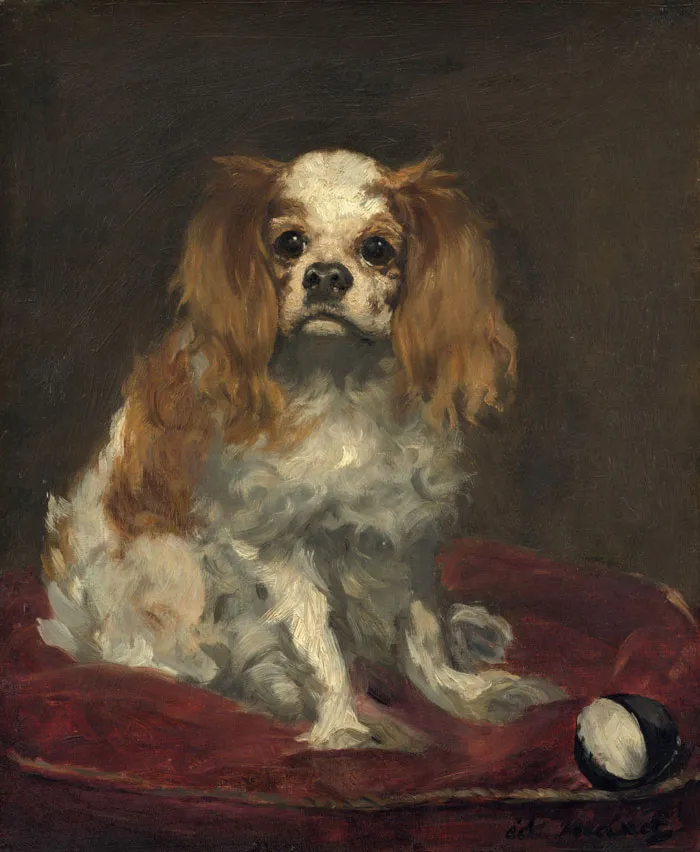
Édouard Manet was a major figure in the shift from Realism to Impressionism. Not much is known about this work or Manet’s animal paintings. Still, according to some associate curators, he painted portraits of pets for his friends and other people in his inner circle. It’s on display at the National Gallery of Art in Washington, D.C.
Report
8points
#51 Fox Hunt (1893) By Winslow Homer
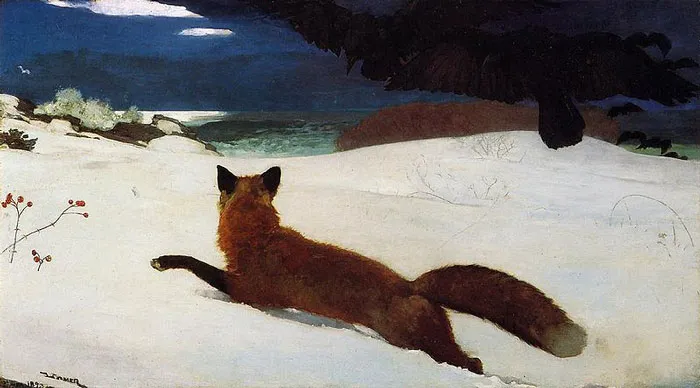
Winslow Homer began to depict naturalist subjects in 1890, such as scenes of hunting and fishing or coastal and marine views. Fox Hunt, the largest single canvas realized by Homer, narrates a story of brutal reality, with a fox desperately trying to escape from a flock of crows driven by hunger.
Report
8points
#52 Deer In The Forest (1913) By Franz Marc
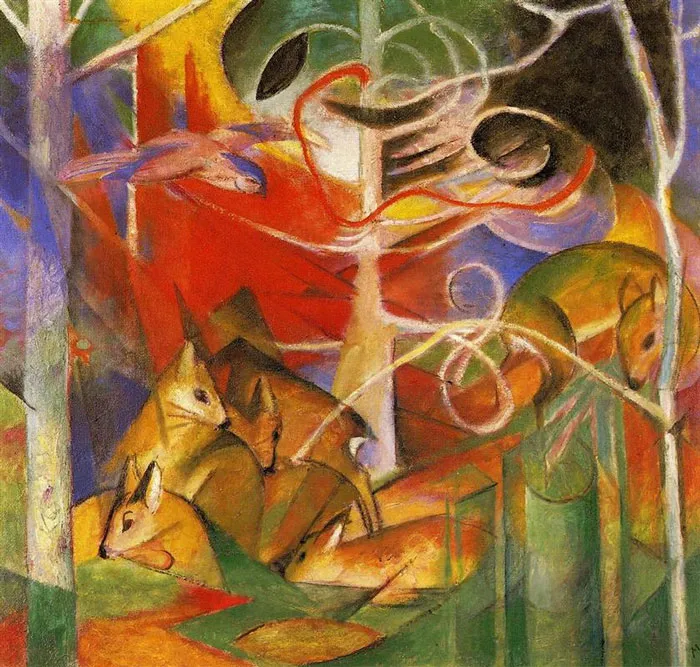
Franz Marc painted his Deer In The Forest in 1913 when he wanted to escape the political tension in Germany by immersing himself in the purity of the animal kingdom. This wildlife painting depicts a group of deer nestled in a forest. Just above their heads, there’s a giant flying bird, thought to symbolize the looming threat of war in Germany.
Report
8points
#53 Ducks (C. 1880-1904) By Willem Maris
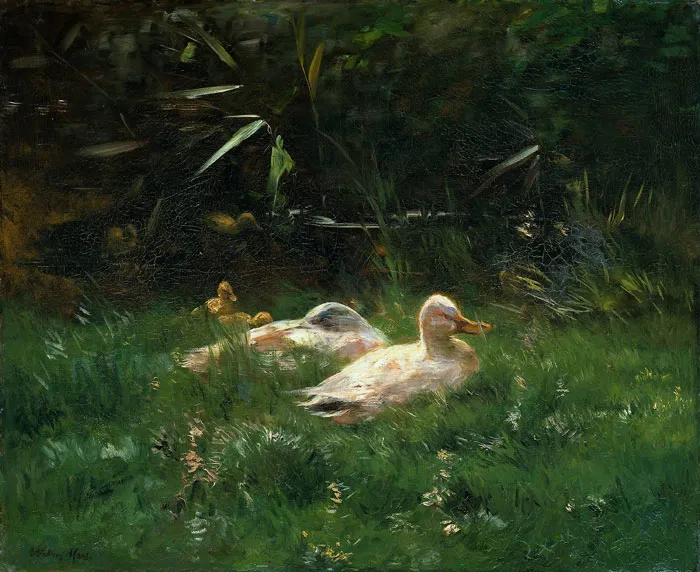
Born and raised in The Hague, Willem Maris stuck to the same natural and animal subjects his whole life: meadows, ditches, ponds, cows, chickens, and as displayed in this canvas, ducks. The painting is currently located at the Rijksmuseum, Amsterdam.
Report
8points
#54 Cat And Bird (1928) By Paul Klee
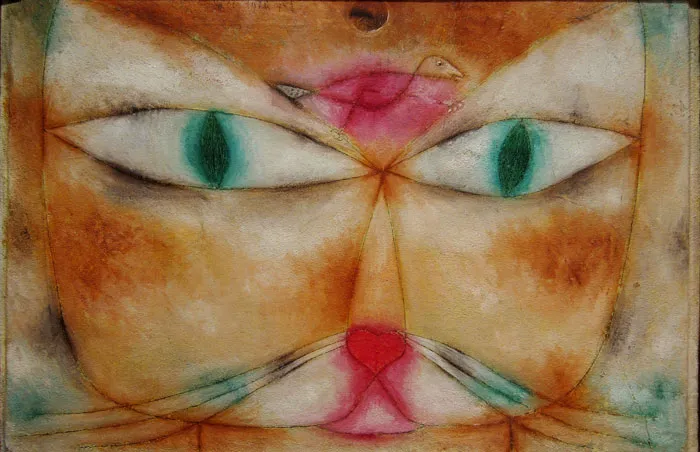
Paul Klee was notoriously fascinated by cats and how children create art with their own personal views on the world. Cat And Bird combines these interests and, despite the tension you can expect when a cat and a bird meet, the warm colors and softness make it much quieter and more dreamlike.
Report
8points
#55 The Sleeping Gypsy (1897) By Henri Rousseau
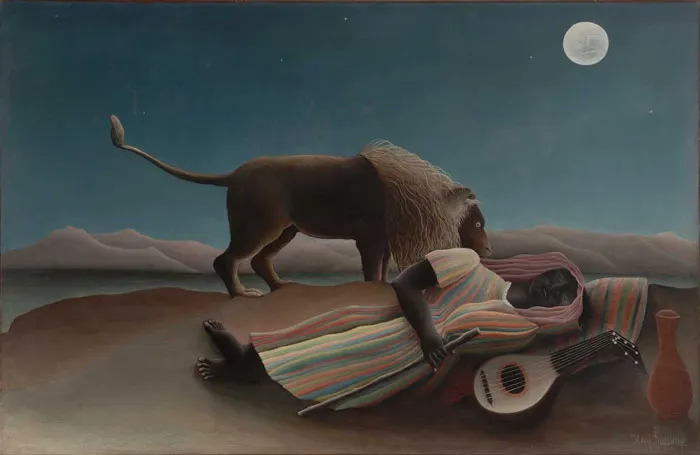
Rousseau first displayed this painting at the 13th Salon des Indépendants. He described this piece as representing a wandering mandolin player lying on the ground, exhausted and fast asleep. A lion approaches her but doesn’t hurt the woman. He stands there under the moonlit light, which gives the painting a poetic effect.
Report
8points
#56 Swan Attacked By A Dog (1745) By Jean-Baptiste Oudry
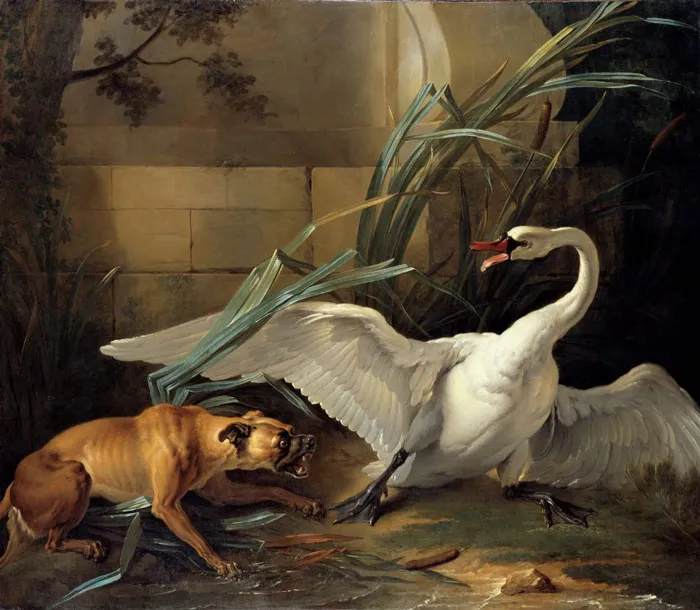
18th-century critics interpreted Oudry’s animal paintings as historical subjects and judged them as they would with scenes of human emotion. Oudry was also highly respected back in his day for his tremendous skills in handling white-on-white areas, such as the feathers of this swan, which show a superb range of shades and tones.
Report
8points
#57 Landscape With Exotic Birds And Two Dogs (1724) By Jakob Bogdány
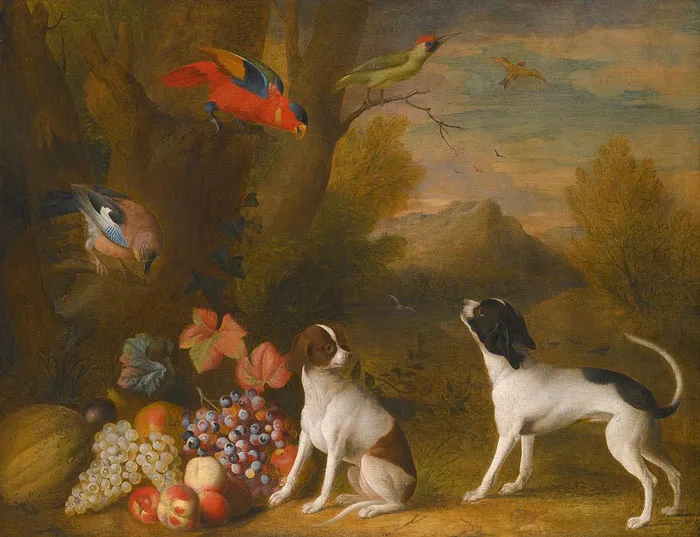
Jakob Bogdány’s bird paintings often feature a variety of exotic species, like cockatoos, macaws, and mynas, imported to Europe at the time. The artist often used a bird of red plumage, such as a scarlet ibis, red avadavat, or northern cardinal, to highlight his paintings.
Report
8points
#58 A Good Shot (1892) By Winslow Homer
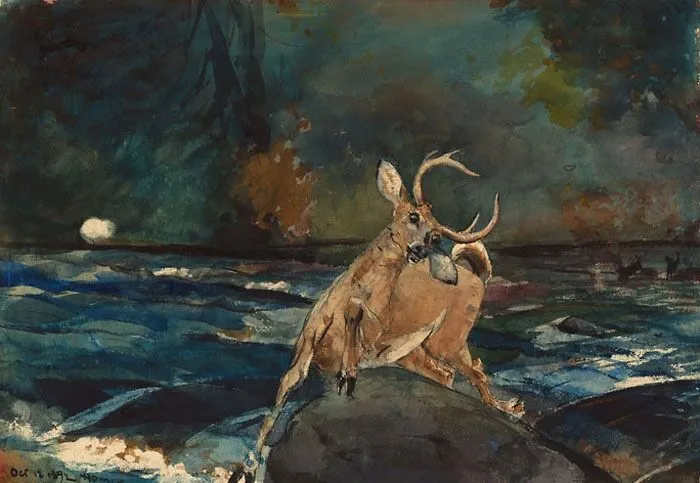
A Good Shot is Homer’s only watercolor to show a deer’s death. This piece captures a specific moment in time, the instant a stag has been shot while climbing to the top of a rock in a river. On the right are two hounds running in the direction of the mortally wounded animal.
Report
8points
#59 Outing (1885) By Philip R. Goodwin
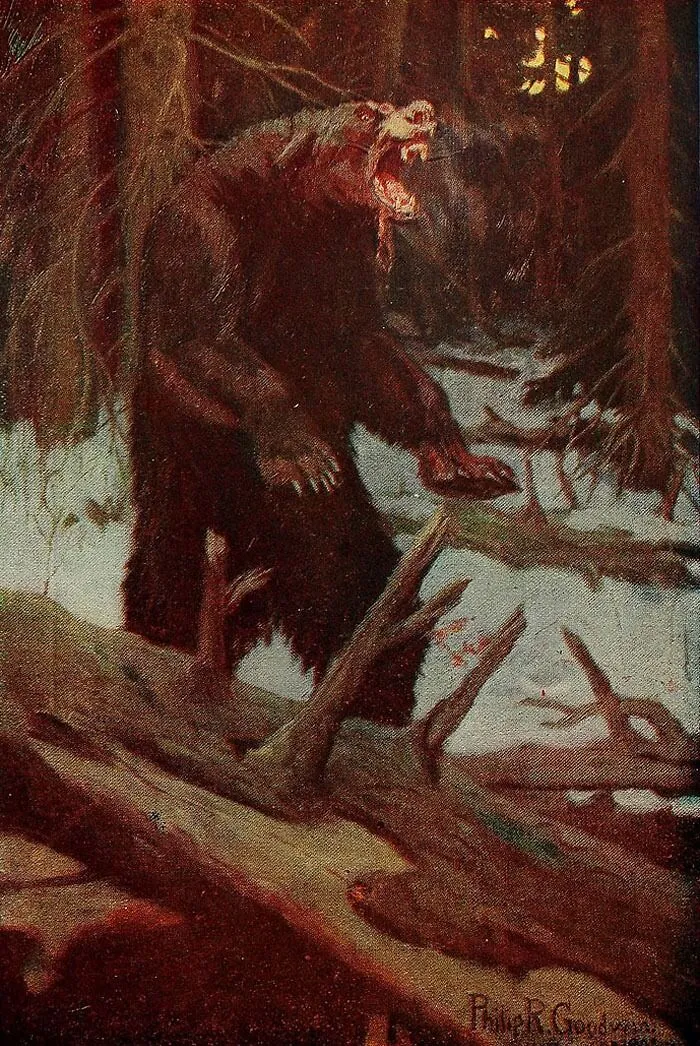
Goodwin was a skilled painter who provided illustrations for numerous books and magazines, especially depictions of wildlife and outdoor scenes. This artwork of a standing bear was included in the book Outing, published in 1885.
Report
8points
#60 Hunting Dogs In A Boat (1889) By Winslow Homer
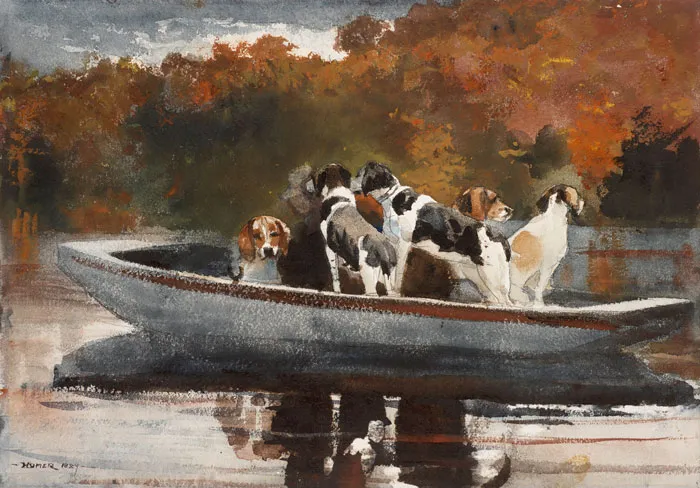
Five dogs are crowded into a boat, waiting for the next command or perhaps just resting after a day spent hunting deer. This painting demonstrates the full maturity of Winslow Homer’s technical skills, which set him apart as a preeminent figure in American art.
Report
7points