




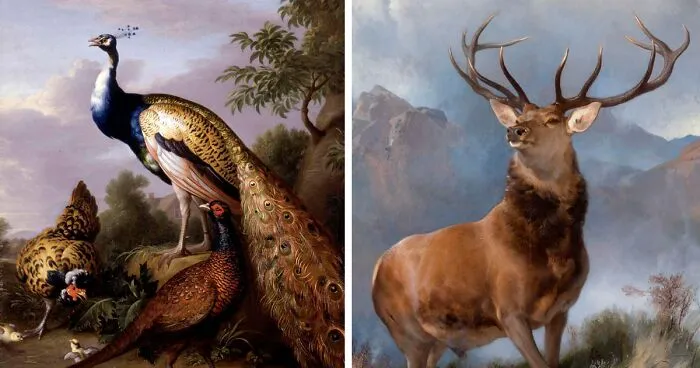


We have a soft spot for art. But not just any art — we’re talking about animal paintings. We love animals, we love paintings, and of course, we love the combination of the two!
Following the recent discovery of a pig painting in Indonesia, where Ice Age cave painters flourished, it’s said that the first traces of animals in art date back to at least 45,000 years ago. Since then, art featuring animals has taken many forms. From Pisanello’s Duck in 1440, passing through Yi Am’s art in the 16th century, and the French animal painter Rosa Bonheur in the 1800s, we’ve seen animals depicted in all kinds of styles and genres.
When it comes to capturing the spirit of an animal through pencil or brushstrokes on canvas, some have a talent that is hard to match. We’ve selected our favorite animal artists over time so that you can see how stunning the most famous animal paintings are for yourself! The artists featured here have taken painting animals to the next level — from incredibly realistic portraits of cats and dogs to more abstract pieces that feature animals in new, exciting ways.
#21 Heads Of Ewes And Rams By Rosa Bonheur
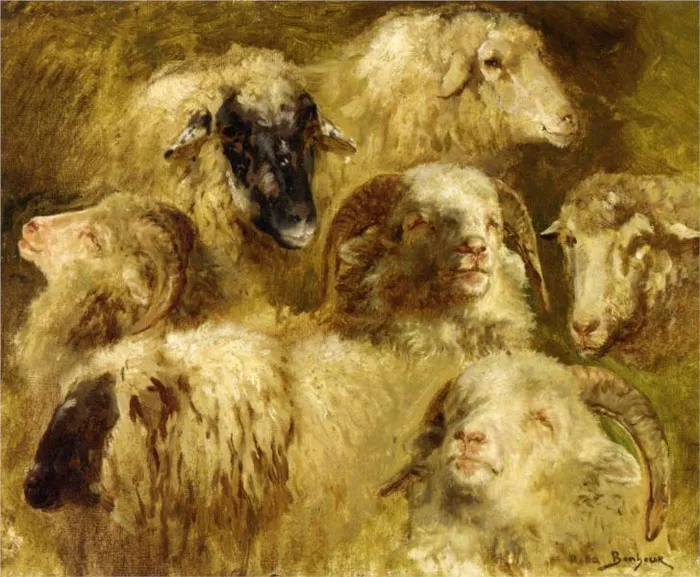
Bonheur began her artistic training by studying and sketching domesticated animals, including sheep, which she represented in this artwork.
Report
14points
#22 Gloucestershire Old Spot (1800-1805) By James Ward
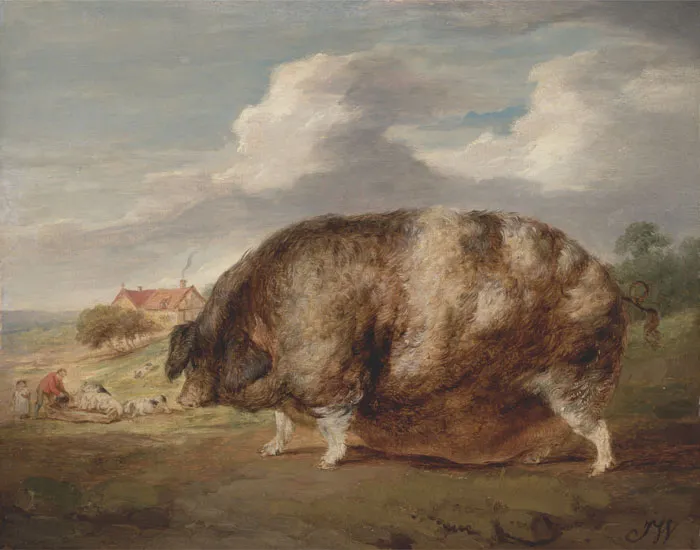
Deemed one of the distinguished animal painters of his time, James Ward is the author of Gloucestershire Old Spot, which represents a huge pig in a rural landscape.
14points
#23 Mares And Foals Without A Background (1762) By George Stubbs
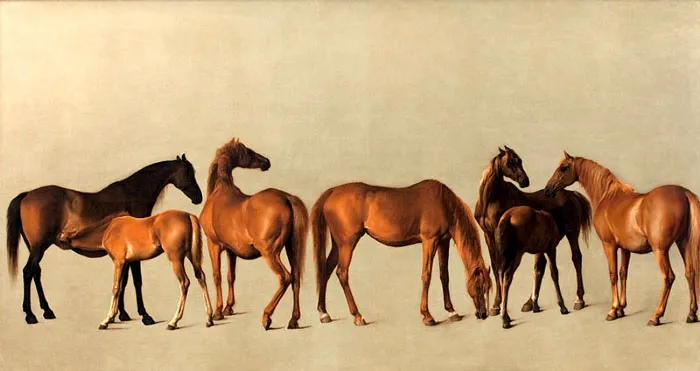
George Stubbs’ work was influenced by naturalism, which encouraged painters to represent subjects more accurately, and his series of horse paintings clearly indicate this. It’s believed that George Stubbs used this painting with no background as inspiration for his Mares And Foals In A River Landscape.
Report
14points
#24 Le Chat Blanc (1894) By Pierre Bonnard
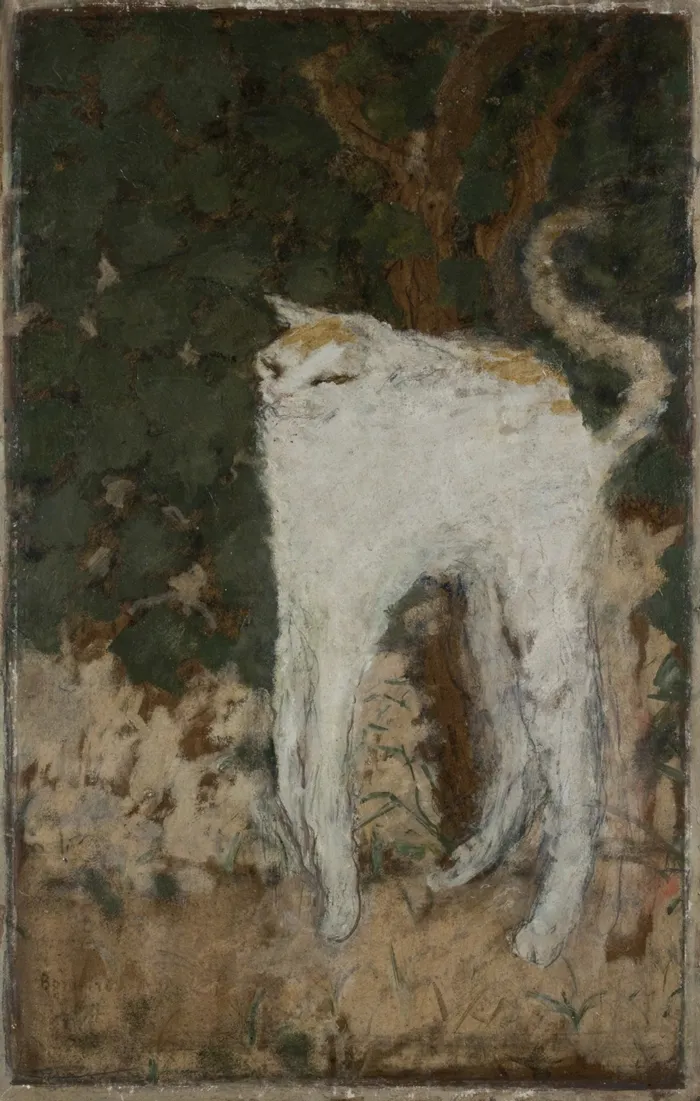
Pierre Bonnard’s work heavily features cats, whether as a simple detail in the background or as the central subject, like in Le Chat Blanc. Here Bonnard used distortion to create a comical image of a white cat arching its back. The cat appears disproportionately curved on its long legs, head tucked back, eyes slit, and expression cunning.
Report
12points
#25 Tiger In A Tropical Storm (1891) By Henri Rousseau
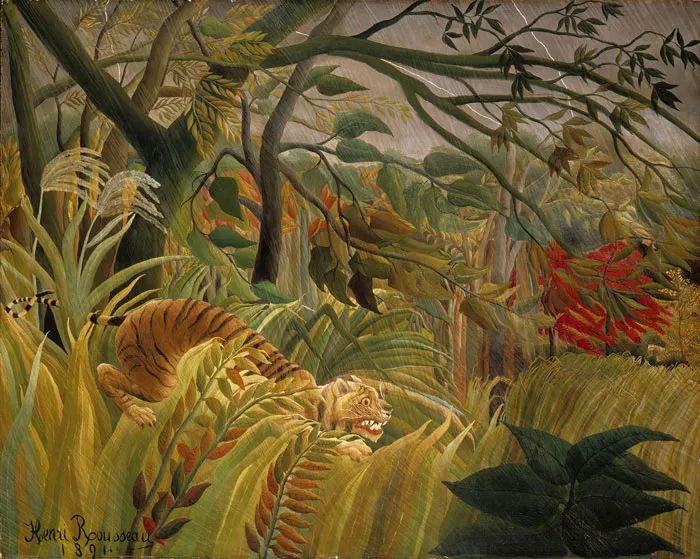
Tiger In A Tropical Storm is the first jungle painting Henri Rousseau produced. A remarkable aspect of this series is that the locations are entirely imaginary: Rousseau never left France, nor did he see what a real jungle looked like. It’s not quite clear if the tiger is getting ready to jump on its prey or simply cowering from the flash of lightning in the midst of a raging gale.
Report
12points
#26 The Yellow Cow (1911) By Franz Marc
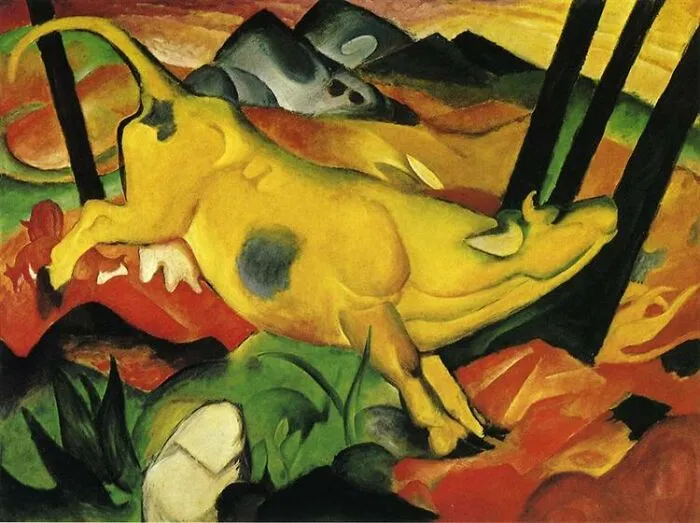
Franz Marc’s The Yellow Cow, a color the artist associated with femininity and sensuality, is an expressionist take on animals in art. A remarkable aspect of the painting is the stark contrast between the dynamic subject and the background, which looks calmer, almost still. It’s located at the Guggenheim, New York.
Report
12points
#27 Wondrous Birds (1892) By Hans Thoma
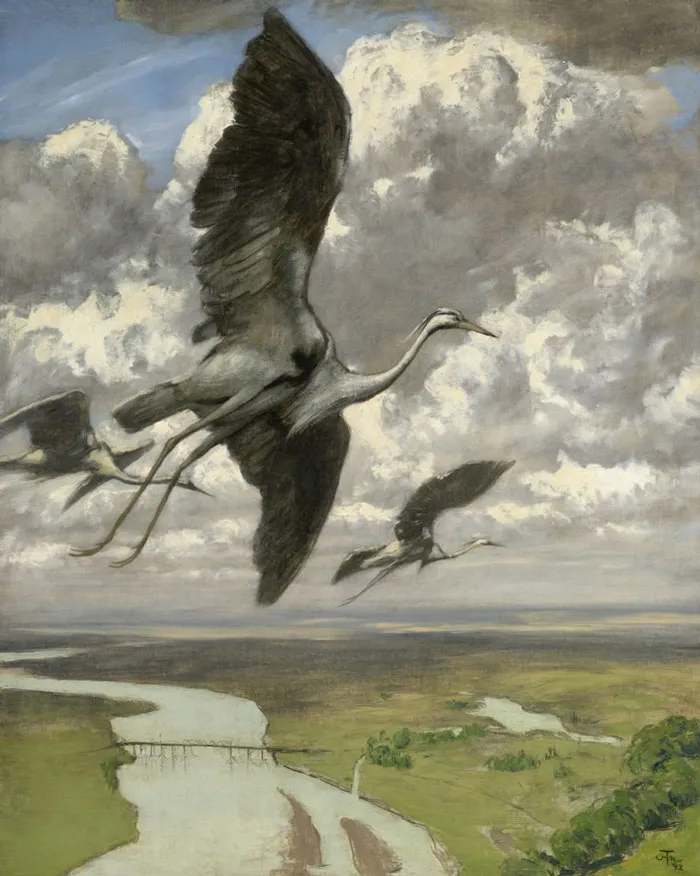
Hans Thoma created several paintings of flying storks, including Wondrous Birds, which shows the storks from the perspective of another bird. This point of view makes it look like the viewer is in the sky too, flying beside the birds. Thoma’s decision to paint storks may have been influenced by his interest in German folklore, where storks are said to bring fortune to families.
Report
12points
#28 Alligators (1917) By John Singer Sargent
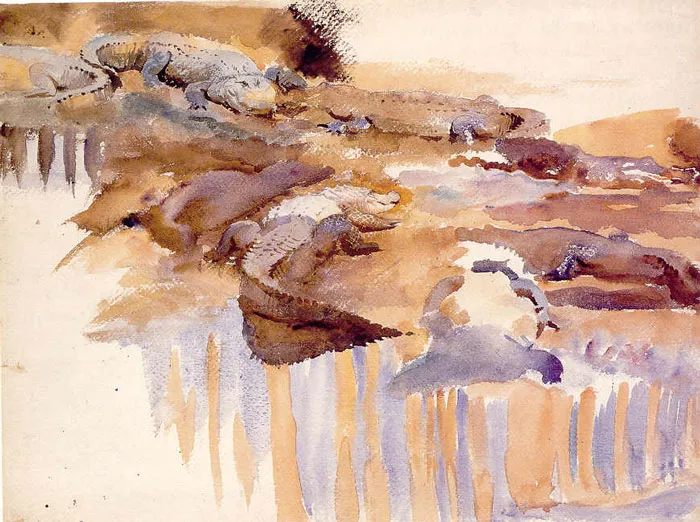
Watercolor represented a vital aspect of Sargent’s works, and he frequently looked to it as a way to personal expression. This painting of alligators appears to have been abandoned and was probably used to prepare for another work, Muddy Alligators.
Report
12points
#29 Two Owls Fighting Over A Rat (1713) By Hans Georg Müller
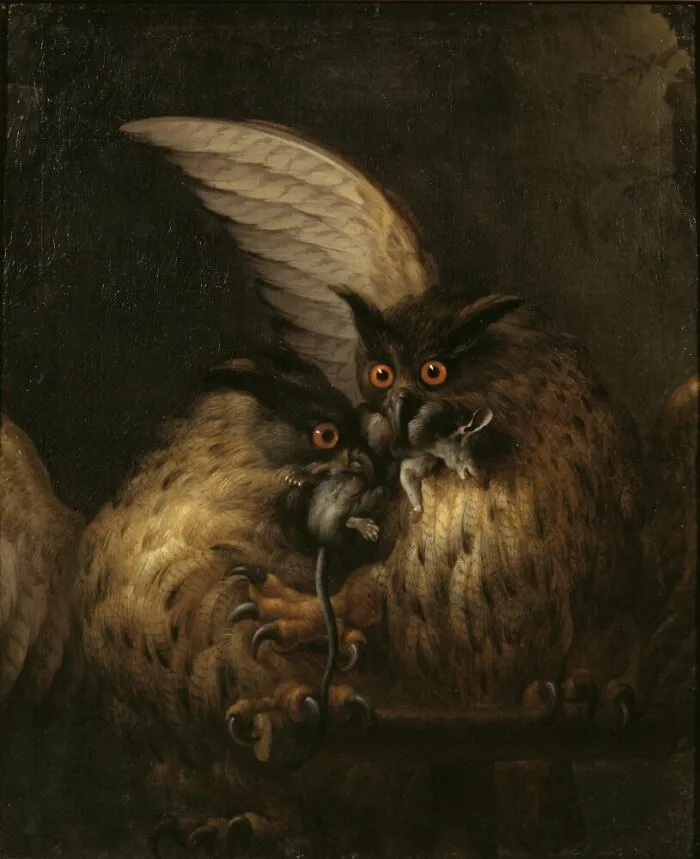
Hans Georg Müller was born in Germany and immigrated to Sweden. He was a painter who also worked as a drawing instructor. Among his students, we find Carl Gustaf Tessin, an art collector who owned this painting for a long time. Two Owls Fighting Over A Rat is a lively depiction of two owls, active in the night hours, trying to steal dead prey from one another.
Report
11points
#30 Napoleon Crossing The Alps (1800) By Jacques-Louis David
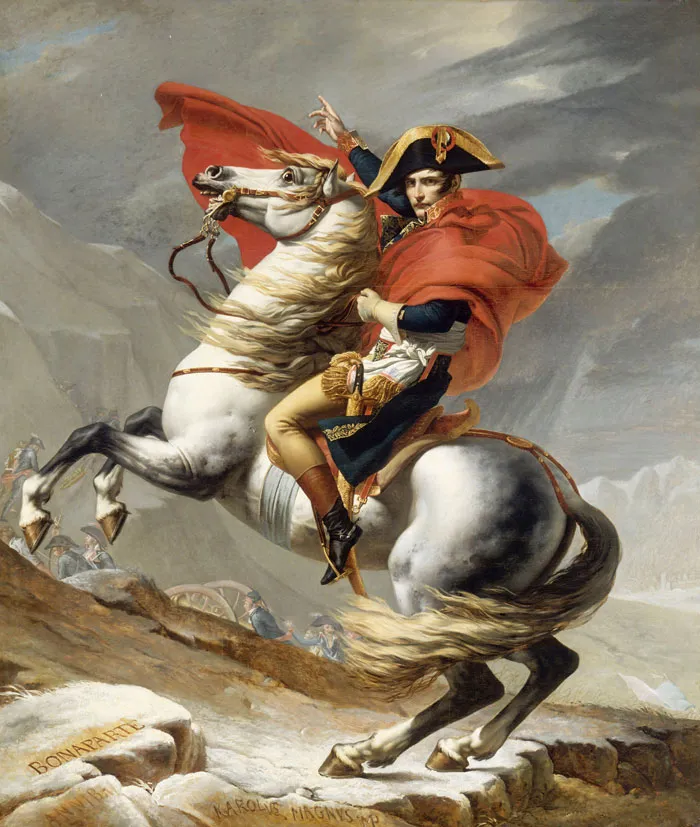
Among the most commonly reproduced representations of Napoleon, the name actually refers to a series of five paintings initially commissioned by the King of Spain. Like many equestrian portraits, a genre favored by royalty, Napoleon Crossing The Alps is a portrait of authority. It is considered pure propaganda instead of art by many, with Bonaparte specifically asking Jacques-Louis David to portray him as “calm, mounted on a fiery steed.”
Report
11points
#31 The Nubian Giraffe (1827) By Jacques-Laurent Agasse
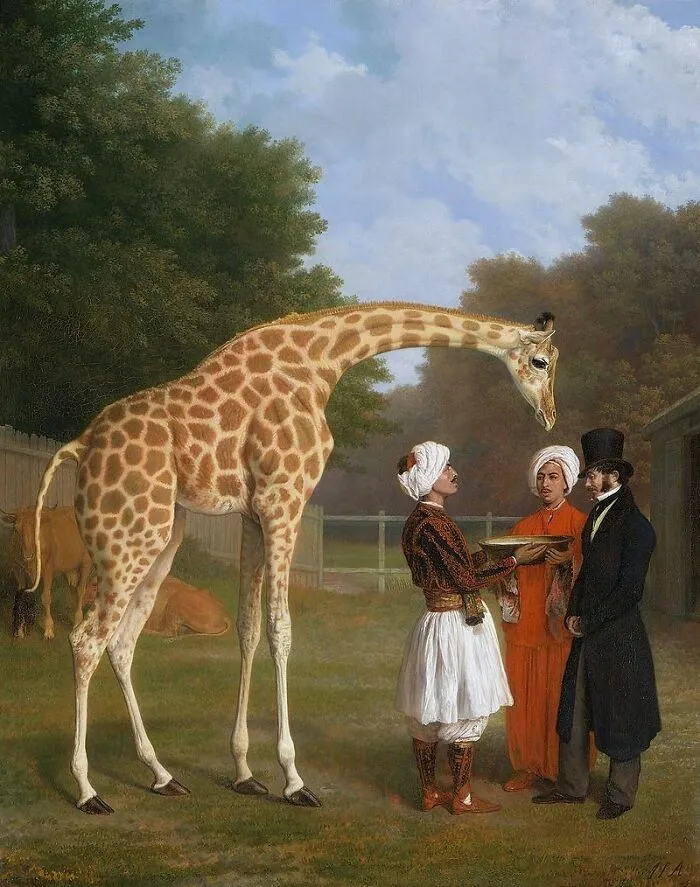
This giraffe was sent to George IV as a gift from Mehmet Ali, Pasha of Egypt, in 1827. The animal died only two years later. Agasse’s work is a portrait of the noble animal in captivity, with his keepers trying to persuade him to drink. The fact his long neck is so bent is a symbol of his poor condition.
Report
11points
#32 A Little Girl And Her Sheltie (1892) By Charles Burton Barber
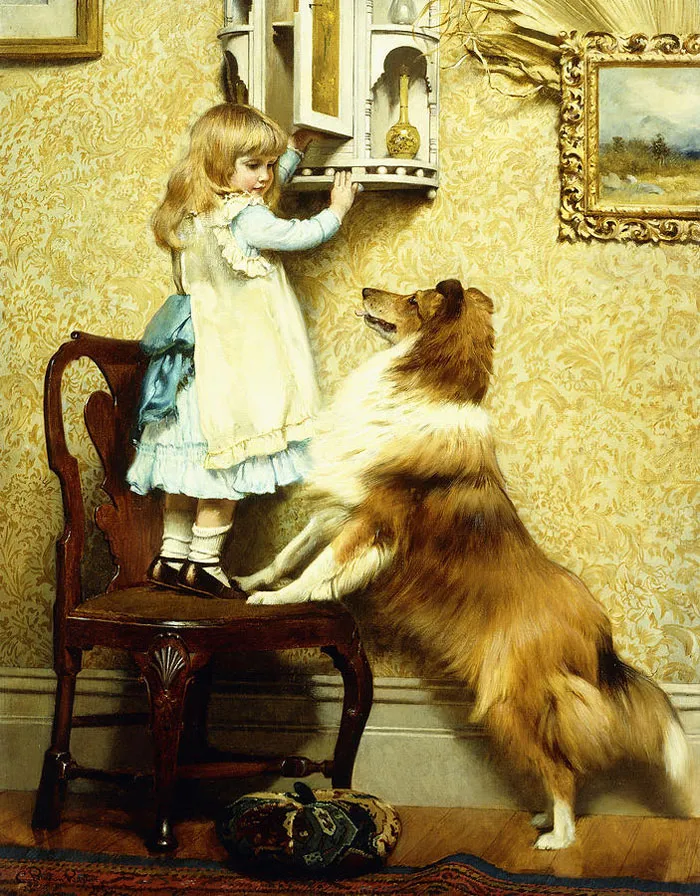
Charles Burton Barber was a British painter who gained recognition for painting children and their pets. He was regarded as one of Britain’s finest animal painters and received commissions for 25 years from Queen Victoria herself to portray her with her grandchildren and dogs.
Report
11points
#33 The Entry Of The Animals Into Noah's Ark (1613) By Jan Brueghel The Elder
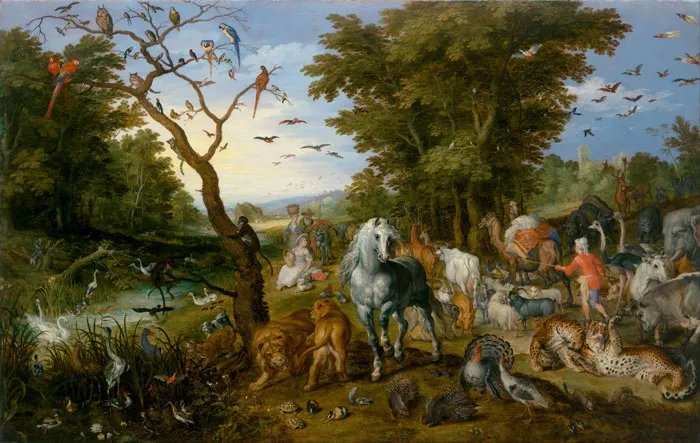
An animal painting with religious undertones, it reproduces the story of Noah and how God instructed him to build an ark and save a male and female of every animal species. The exploration of the Americas in the 1500s led to an increased interest in animals and nature. By the time Brueghel started this painting, many animals from the new continent were already familiar enough to European artists to be painted with precision.
Report
10points
#34 Hound Coursing A Stag (1762) George Stubbs
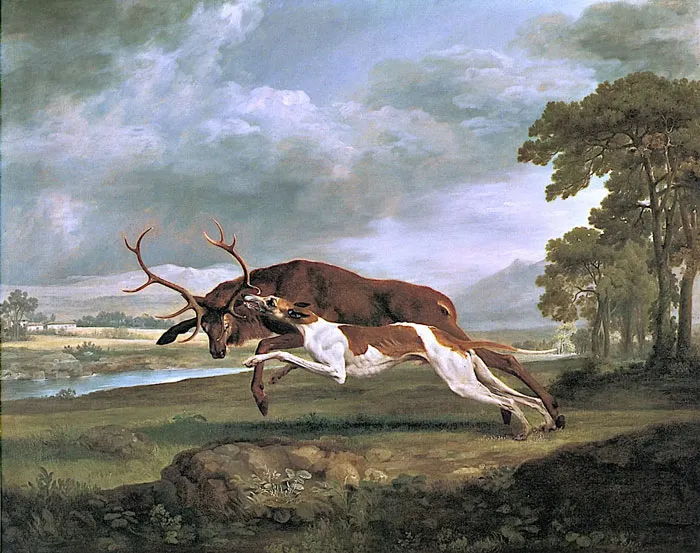
Despite Stubbs’s success coming primarily from his paintings of horses, the British artist also had a knack for capturing the beauty of other animals, like dogs and exotic animals. Hound Coursing A Stag is on display at the Philadelphia Museum of Art.
Report
10points
#35 The Turkeys (1877) By Claude Monet
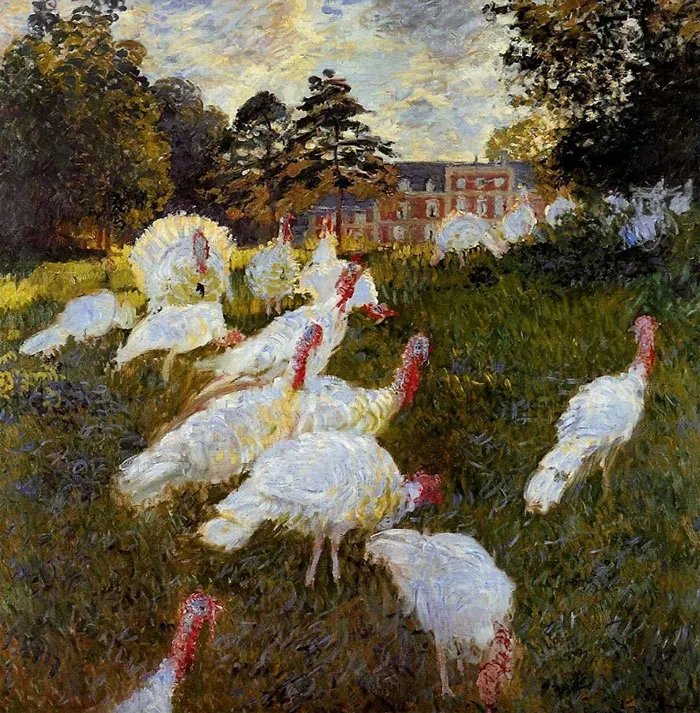
Claude Monet’s painting shows a flock of turkeys wandering at the Chateau of Rottenburg in Montgeron. It’s part of a series of four decorative panels commissioned by Ernest Hoschedé, owner of the estate, who critics thought wanted to use the panels to represent the estate during the four seasons.
Report
10points
#36 Mogyeon (16th Century) By Yi Am
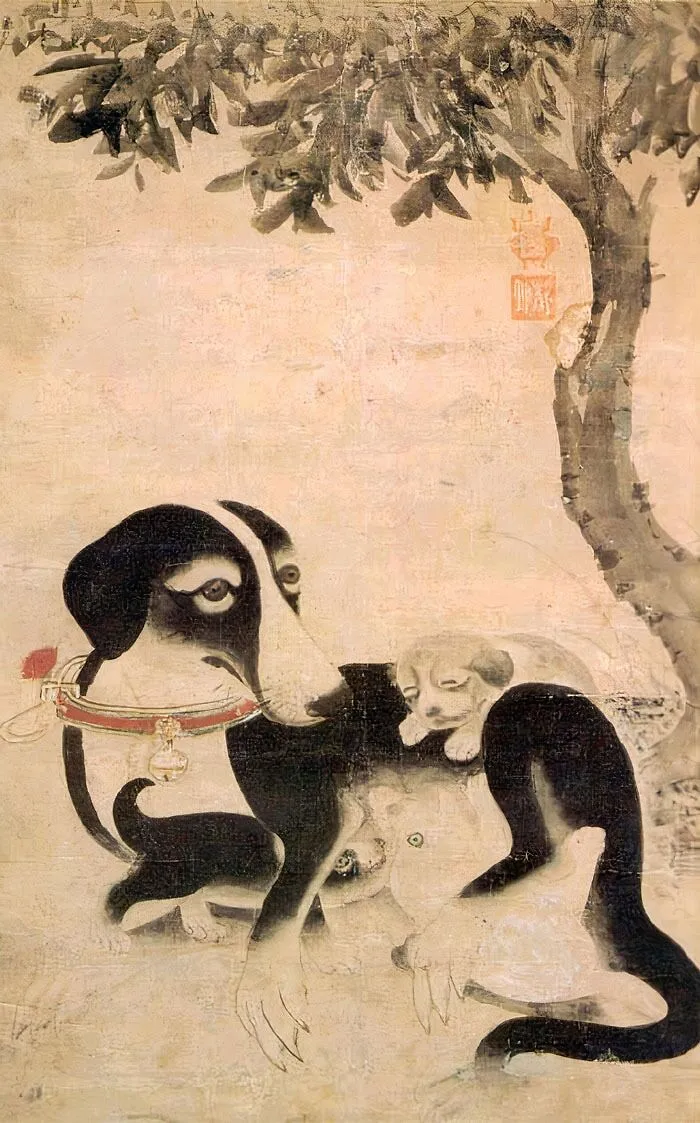
Mogyeon, also known as Mother Dog And Puppies, was realized by Yi Am, one of Korea’s most influential animal painters. Active during the Joseon dynasty, Yi Am developed his own personal style, gradually moving away from the traditional Chinese school of painting. The scene depicted here is entirely focused on this warm moment, with the puppies visibly relaxed, comforted by their mother’s presence.
Report
10points
#37 Cat Among Roosters (1706–1710) By Jacob Bogdani
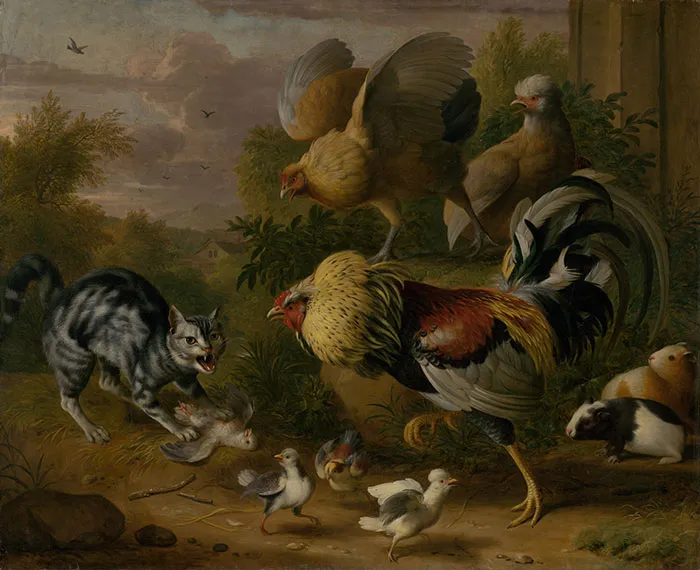
Jakob Bogdány was a Hungarian artist well known for his depictions of birds. Cat Among Roosters illustrates a typical animal scene of the Baroque period, especially in Dutch art of the 17th century. The painting is rich with realistic details that bring into sharp focus the struggle for life of a chick attacked by a cat.
Report
10points
#38 Lioness Reclining (1855) By Eugene Delacroix
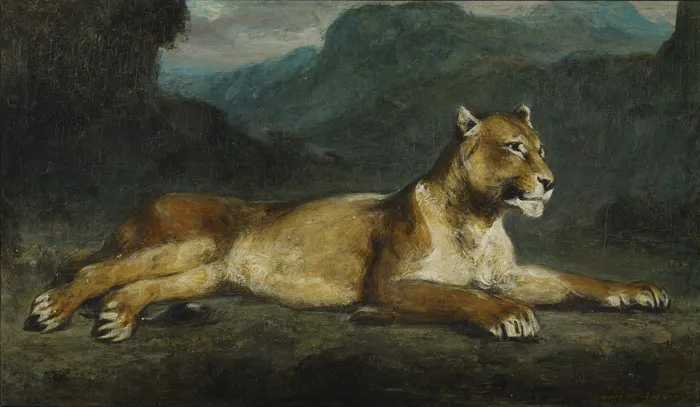
Lioness Reclining is an example of animal painting in the Romanticism style, realized by Eugène Delacroix in 1855.
Report
10points
#39 Snowy Heron Or White Egret (1835) By John James Audubon
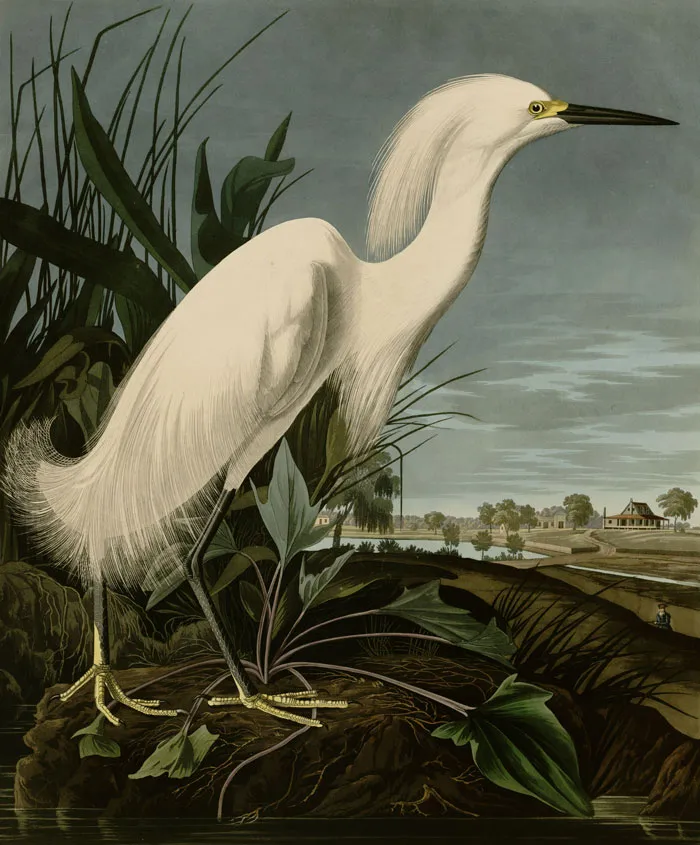
John James Audubon was a naturalist painter with a mission: to make a complete illustrated record of all the bird species in North America. He was renowned for his extensive studies and detailed illustrations, and some of the scientific names he published are still in use by the scientific community today. The one depicted here is a beautiful species found in Florida and Louisiana.
Report
10points
#40 The Goldfinch (1654) By Carel Fabritius
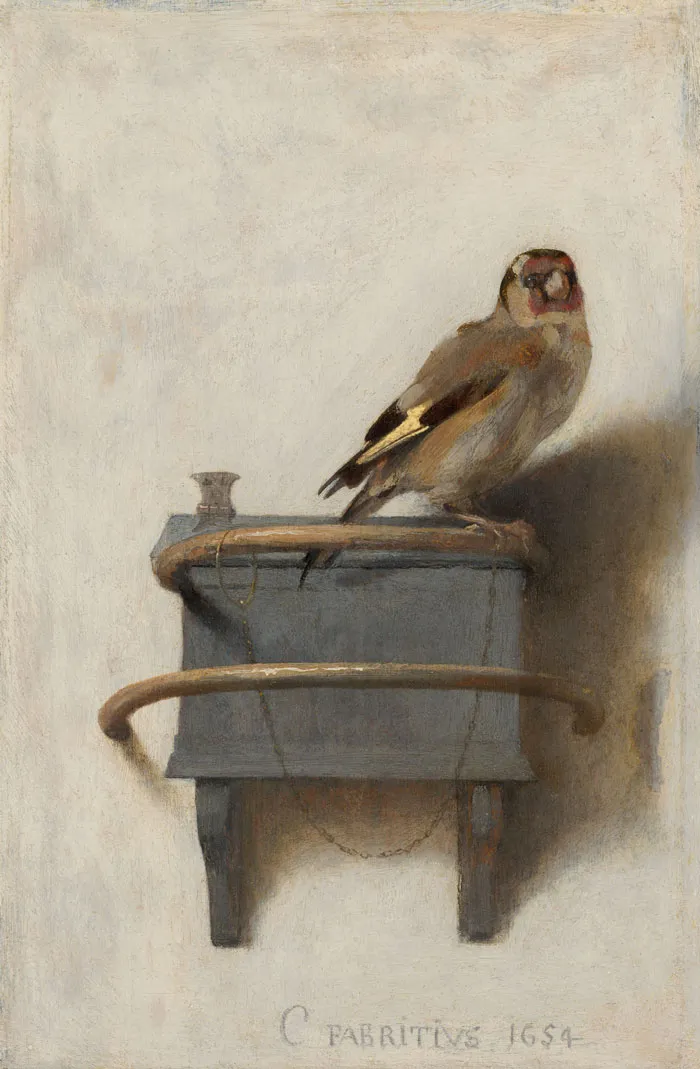
Painted by Carel Fabritius, an exponent of the Dutch Golden Age, The Goldfinch is now part of the Mauritshuis collection in The Hague, Netherlands. The painting depicts a life-size European goldfinch, a colorful species believed to bring health and good fortune.
Report
9points