







A wise woman once said that well-behaved women seldom make history and it turns out that she might have been right. Depending, of course, on who you ask.
For centuries, women have had to fight for their rightful place in society. We don't hear much about those who simply sat down and obeyed the rules. It's often the fierce females, who dared to go against the grain, that might finally earn their flowers. But not always. There are many women who did remarkable things, and hardly ever get spoken about.
Thankfully, there's a community dedicated to honoring them. Women In World History has more than 570,000 followers, and shares photos and stories of women who changed the world in their own special ways. Bored Panda has put together a list of the page's best posts. From musicians, to models, doctors, whistle-blowers and extraordinary mothers, these just a few of the tales that deserve to be told.
#21
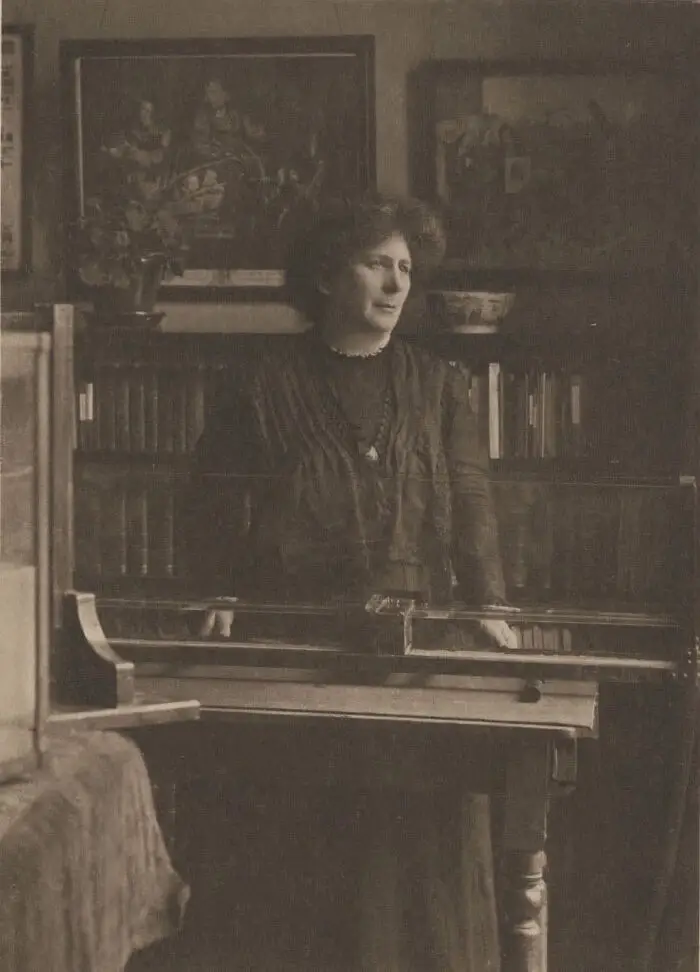
When p****n gas drifted across the battlefields of World War I, soldiers reached for an invention created by a woman many people had spent years insisting didn’t belong in science.
It wasn’t the achievement that made Hertha Ayrton remarkable. It was how many times she refused to disappear before she ever made it.
Long before the war, electricity posed a frustrating mystery. Electric arc lamps illuminated streets, factories, and public spaces, but they flickered unpredictably, hissed loudly, and often failed without warning. Engineers struggled to explain why.
Ayrton became obsessed with the problem. Rather than accepting the conventional wisdom, she conducted painstaking experiments that revealed the instability came from the behavior of the carbon electrodes themselves. Her research transformed understanding of electric arcs, making lighting systems more reliable and influencing electrical engineering for decades.
Recognition, however, arrived slowly.
Despite becoming one of Britain’s leading electrical researchers, Ayrton encountered barriers her male colleagues never faced. She became the first woman to read her own paper before the Institution of Electrical Engineers and, in 1899, the first woman admitted as a full member. Yet when she was proposed for election to the Royal Society, she was ruled ineligible because, under the law at the time, married women could not be elected as Fellows.
Then history took another unexpected turn.
During World War I, p****n gas became one of the conflict’s most terrifying weapons. Ayrton designed a simple hand-operated fan that could quickly disperse deadly gas from trenches. Thousands were produced and distributed to British forces, giving soldiers a practical t**l against an invisible threat.
Hertha Ayrton never commanded an army or held political office. She solved problems that others overlooked, challenged assumptions that others accepted, and quietly left her fingerprints on both modern engineering and wartime survival. Sometimes the people who change history aren’t the loudest voices in the room—they’re the ones who refuse to stop asking why.
Report
16points
#22
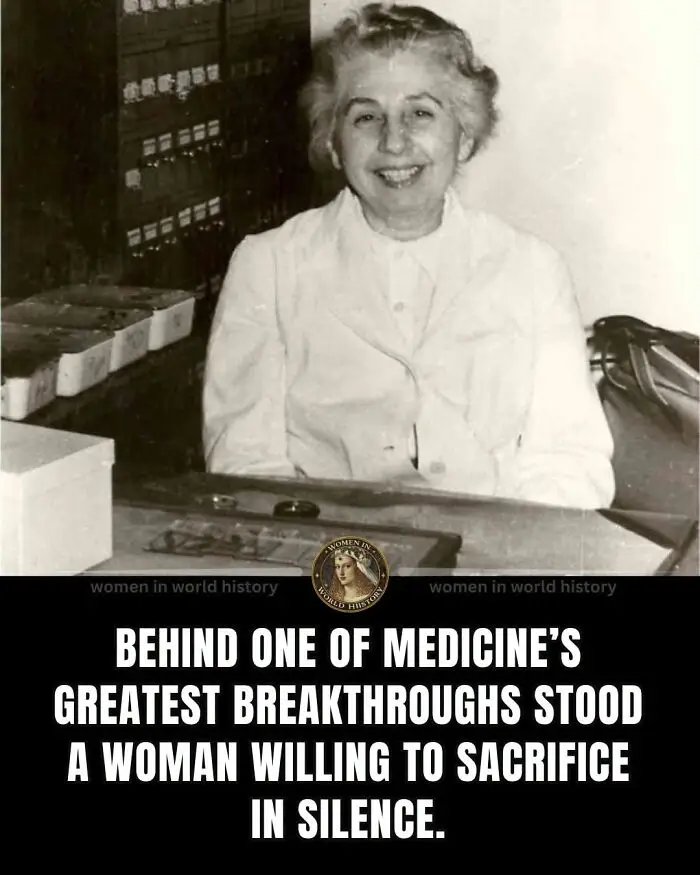
For more than two decades, one woman quietly helped change the future of medicine.
Her name was Andromachi Papanikolaou. While her husband, Greek physician Georgios Papanikolaou, worked to develop a reliable method for detecting cervical cancer before symptoms appeared, Andromachi volunteered herself as his research subject.
Day after day. Year after year.
For approximately 21 years, she underwent cervical smear testing so he could refine what would eventually become the Pap test. It was repetitive, uncomfortable, and offered her no personal fame. She did it because she believed the work mattered.
That extraordinary act of trust and commitment helped transform women’s healthcare forever.
Before the Pap test, cervical cancer was one of the leading causes of cancer deaths among women. The ability to detect abnormal cells before they became life-threatening changed everything. Over the decades, routine screening has prevented countless cases of invasive cancer and saved millions of lives around the world.
History usually remembers Georgios Papanikolaou for the breakthrough, and rightly so. But behind one of medicine’s greatest advances stood a woman who quietly gave her own body, her patience, and more than two decades of unwavering support to make that breakthrough possible.
Scientific discoveries are rarely the work of one person alone. Sometimes they’re built on the dedication of someone whose name almost disappeared from history.
Andromachi Papanikolaou never accepted a Nobel Prize, never became famous, and never sought recognition.
Yet every woman whose life has been protected by a Pap test is part of her legacy.
Report
16points
#23

Most adults would have ignored it.
A 9-year-old girl decided to investigate.
After using a public restroom hand dryer, Nora Keegan noticed her ears were ringing. She also saw other children covering their ears whenever the machines turned on. Instead of assuming that was normal, she asked a simple question:
Could these hand dryers actually be too loud for children?
With help from her parents, Nora spent the next several years measuring the sound levels of hand dryers in libraries, restaurants, arenas, and other public places. She tested them from different heights and distances, recognizing that a child’s ears are much closer to the machines than an adult’s.
Her findings were startling.
Many h**h-speed hand dryers exceeded 100 decibels—far louder than manufacturers claimed and well above levels considered safe for repeated exposure in children. Some were loud enough to leave users with ringing ears after only brief use.
What began as a fifth-grade science project didn’t end at the science fair. Nora kept collecting data, refining her methods, and expanding her research. Nearly four years after asking that first question, her study was accepted for publication in the Canadian medical journal Paediatrics & Child Health—an achievement few adults ever accomplish.
The research attracted international attention, and Dyson even invited Nora to speak with one of its acoustic engineers about designing quieter hand dryers.
It’s a powerful reminder that scientific breakthroughs don’t always begin in a laboratory. Sometimes they begin with a child who notices something everyone else has learned to ignore—and refuses to stop asking why.
Report
16points
#24
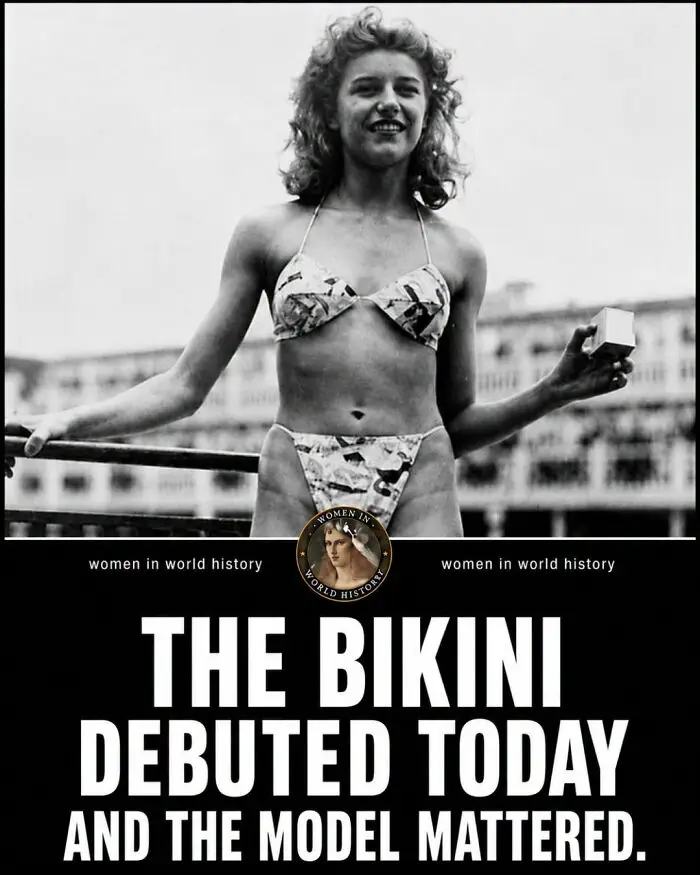
On July 5, 1946, the woman who changed fashion history was not a supermodel, an actress, or an aristocrat. She was a 19-year-old Parisian nude dancer named Micheline Bernardini.
French engineer-turned-designer Louis Réard had created what he believed was the world's smallest swimsuit. It consisted of just four tiny triangles of fabric, exposing the wearer's navel—something almost unheard of in Western fashion at the time. Réard named it the bikini, borrowing the name from Bikini Atoll in the Pacific, where the United States had recently conducted nuclear b**b tests. He hoped his swimsuit would create an equally explosive reaction.
He was right.
There was just one problem.
No professional fashion model would wear it.
The design was considered so revealing that established runway models feared it would ruin their careers. In postwar Europe, even two-piece swimsuits typically covered the navel. Réard's creation crossed a line many believed respectable women should never approach.
Desperate, Réard turned to Micheline Bernardini, a performer at the Casino de Paris who was already comfortable appearing on stage in revealing costumes. Unlike the fashion models who refused, Bernardini accepted immediately.
Standing beside the Piscine Molitor swimming pool in Paris, she smiled confidently as photographers crowded around her. She even carried a small matchbox, demonstrating Réard's claim that the entire swimsuit was so tiny it could fit inside it.
The photographs raced around the world.
Some newspapers treated the bikini as a moral scandal. Others called it indecent or outrageous. In several countries—including Italy, Spain, Belgium, and parts of the United States—the bikini was restricted or outright banned from many beaches for years.
Yet Bernardini's gamble paid off.
Within days, she reportedly received more than 50,000 fan letters, an astonishing number for someone who had been virtually unknown before the event. She instantly became the face of one of the most controversial fashion launches in history.
Unlike many fleeting celebrities, Bernardini embraced the attention. She continued performing for years and later said she had never regretted saying yes when everyone else had said no.
Ironically, history often remembers Louis Réard as the inventor of the bikini—but without Micheline Bernardini's willingness to wear it, one of the most iconic garments of the twentieth century might never have made its unforgettable debut.
Report
15points
#25
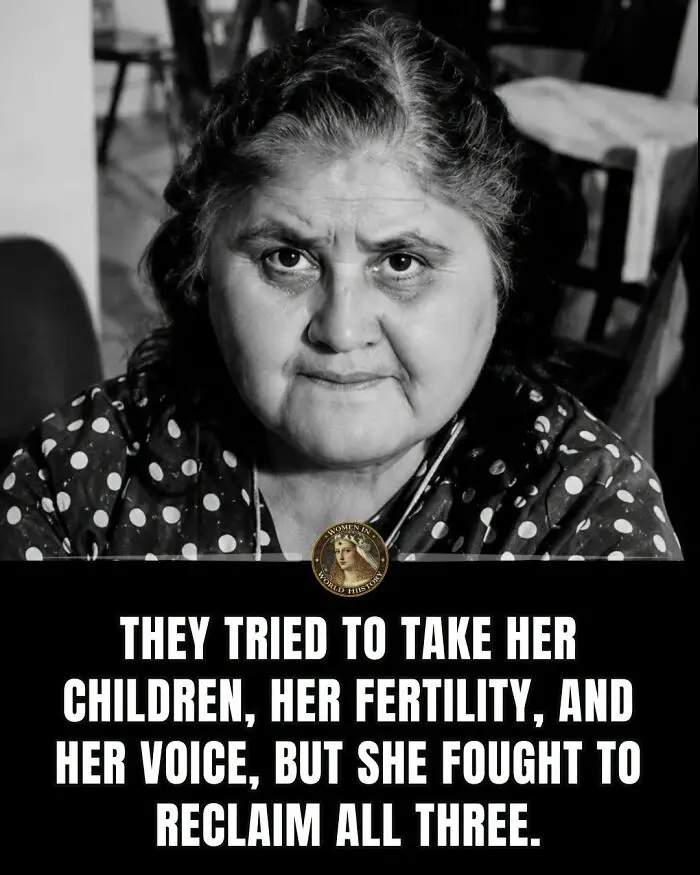
Norma Jean Serena was an Indigenous mother who took the institutions that violated her family to court.
In 1970, shortly after Serena gave birth at a Pennsylvania hospital, doctors surgically removed her fallopian tubes. She maintained that she had never requested sterilization, had never knowingly consented to it, and was not even told clearly that the procedure had been performed.
At nearly the same moment, welfare officials removed her newborn and had already placed two of her other children in foster homes. A caseworker later admitted recommending sterilization because she considered Serena’s children a “burden on society”—a statement saturated with racism, ableism and contempt for a poor Indigenous mother’s right to build her own family.
Serena refused to disappear quietly.
She fought for years to regain custody of her children, following every instruction given to her even as officials worked behind her back to keep the family separated. She eventually recovered her children and filed a federal civil-rights lawsuit against the hospital, doctors and welfare employees responsible.
The jury awarded the Serena family damages for the deception and obstruction surrounding the removal of her children. But it accepted the hospital’s claim that she had consented to sterilization—a painful legal defeat that exposed how easily institutions could dismiss a woman’s account of what had been done to her own body.
Norma Jean Serena’s case became one of the earliest major legal challenges to frame sterilization abuse as a violation of civil rights. Her fight helped drag a hidden national scandal into public view: thousands of Native American women were sterilized during the 1960s and 1970s, often under coercive conditions or without meaningful consent.
They tried to take her children, her fertility and her credibility.
They did not take her voice.
Report
15points
#26
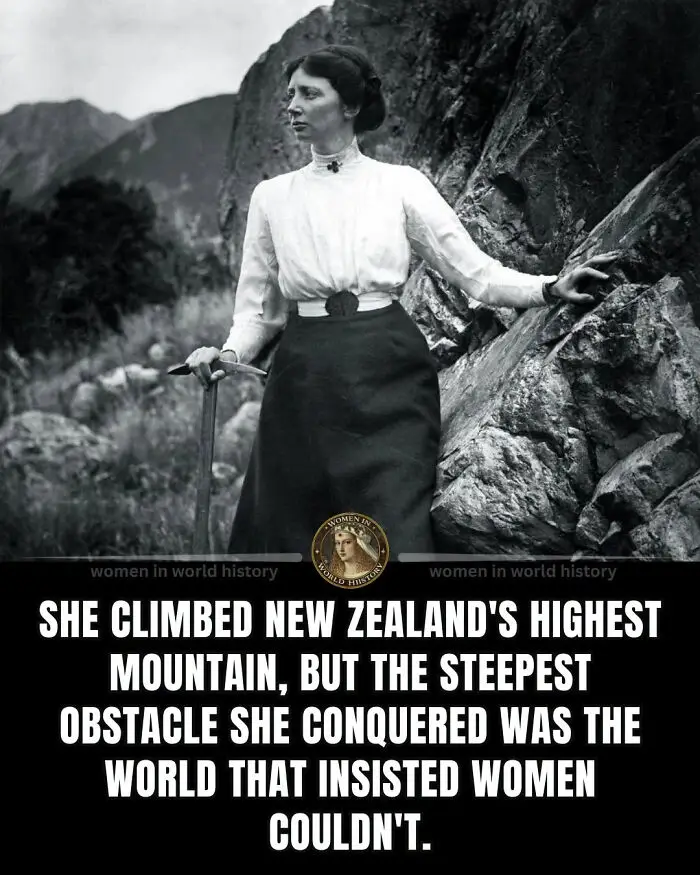
Born in Sydney, Australia, in 1882, Freda Du Faur grew up in a wealthy family but developed an unusual passion for climbing and exploring the rugged Australian bush. At a time when mountaineering was considered an exclusively male pursuit, she taught herself rock climbing and dreamed of tackling the towering peaks of New Zealand's Southern Alps after seeing photographs of Aoraki in 1906.
Her greatest obstacle wasn't the mountain—it was society. Respectable women were expected to avoid dangerous sports altogether. When Du Faur began climbing with renowned guide Peter Graham, critics were scandalized that an unmarried woman would spend nights in the mountains with a male guide. To satisfy Edwardian notions of propriety, she was required to bring an inexperienced male chaperone on expeditions. Even her clothing became controversial. Rather than wearing impractical ankle-length dresses, she climbed in knickerbockers covered by a knee-length skirt, a compromise that still drew criticism from both men and women.
Du Faur refused to let convention stop her. She trained relentlessly, spending months improving her strength and endurance before attempting Aoraki. On December 3, 1910, accompanied by brothers Peter and Alec Graham, she reached the summit of New Zealand's highest mountain, becoming the first woman ever to do so. Even more astonishing, the team completed the ascent in just six hours, beating the existing speed record by roughly two hours. They spent two hours on the summit before descending safely, an achievement that stunned the mountaineering world.
Remarkably, that climb was only the beginning. Over the next few seasons she completed numerous first ascents, including peaks that now bear names she chose, and in 1913 became part of the first party to traverse all three summits of Aoraki—still regarded as one of the classic climbs of the Southern Alps. Her exploits proved that skill, preparation, and determination mattered far more than gender.
Away from the mountains, Du Faur shared a lifelong, deeply devoted relationship with Muriel Cadogan. While they could never openly acknowledge their partnership in an era hostile to same-s*x relationships, historians widely regard the two women as life partners. After Cadogan died unexpectedly in 1929, Du Faur never fully recovered from the loss. She died in 1935, only days before her fifty-third birthday.
Report
14points
#27
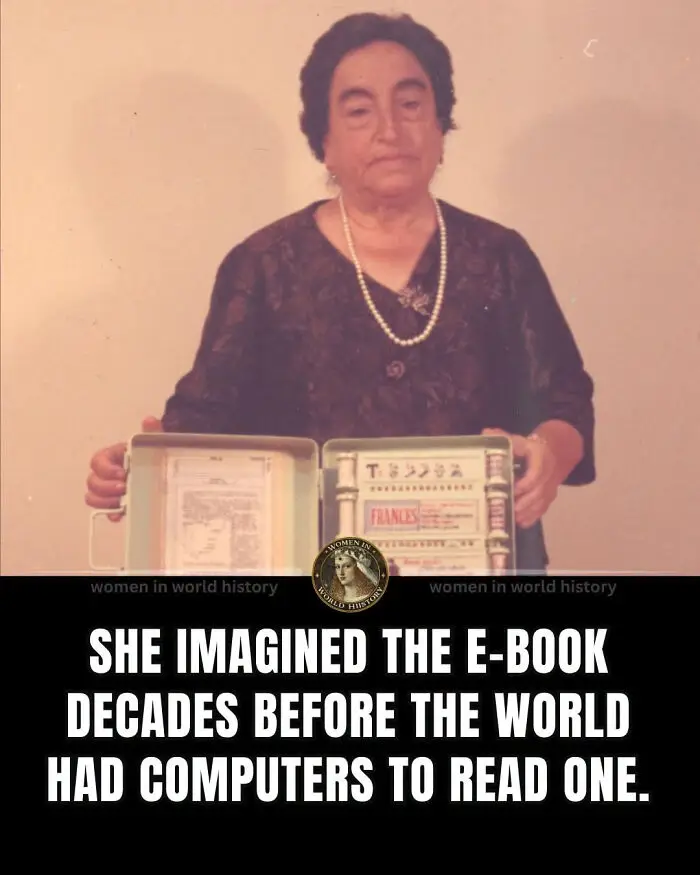
Long before people argued over Kindles, tablets, or digital books, one schoolteacher was asking a remarkably modern question:
Why should children have to carry so many heavy books?
The question stayed with Ángela Ruiz Robles, a Spanish educator who spent decades watching students struggle under the weight of textbooks while relying on teaching methods that had changed very little. She believed there had to be a better way—not just to make learning easier, but to make children more curious about learning itself.
So she began designing one.
In 1949, she patented what she called the Mechanical Encyclopedia. It wasn’t electronic in the way we think of today, but its underlying idea was astonishingly familiar. Instead of requiring separate books for every subject, the device used interchangeable reels containing different lessons. Buttons and mechanisms allowed students to move through content, enlarge text, illuminate pages for easier reading, and even adapt the material to individual subjects. It was portable, reusable, and designed to replace stacks of textbooks with a single learning device.
Her vision reached far beyond clever engineering. Ruiz Robles imagined a future where education was lighter, more accessible, and tailored to each student rather than limited by printed pages. She hoped her invention would reduce costs for families while making learning more engaging for children.
A prototype was eventually built, attracting attention and admiration. She was even offered opportunities to manufacture it abroad. Yet she refused to move production outside Spain, hoping it could be developed in her own country. The investment never came, and the Mechanical Encyclopedia never entered mass production.
Today, millions of people carry digital libraries in their pockets without realizing that one of the earliest visions of the e-book came from a teacher who simply wanted children to enjoy learning a little more.
Report
14points
#28
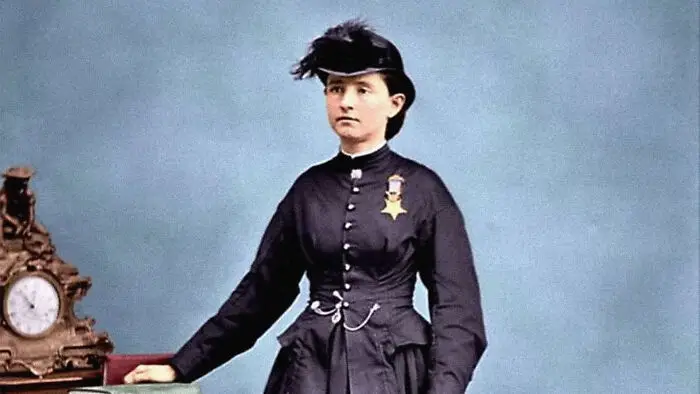
Mary Edwards Walker refused to accept the limits society placed on women. Long before the Civil War, she earned a medical degree at a time when female physicians were almost unheard of. She wore practical clothing instead of restrictive dresses, challenged Victorian expectations, and insisted that her skills as a surgeon mattered more than her gender.
When the Civil War erupted, the U.S. Army repeatedly refused to commission her as a surgeon simply because she was a woman. Rather than walking away, Walker volunteered anyway, treating wounded soldiers and civilians near some of the war's bloodiest battlefields. She often crossed dangerous front lines to care for the injured, a decision that eventually led to her capture by Confederate forces in 1864. Accused of being a spy, she spent months as a prisoner of war before being exchanged.
In 1865, President Andrew Johnson awarded Mary Edwards Walker the Medal of Honor for her extraordinary service, making her the first—and for more than a century, the only—woman ever to receive the nation's highest military decoration.
But her greatest battle was still ahead.
In 1917, the government reviewed hundreds of Medal of Honor recipients and concluded that Walker's award no longer met newly tightened eligibility standards because she had served as a civilian contract surgeon rather than as a commissioned officer. She was ordered to return the medal.
She refused.
Walker continued wearing it every day for the rest of her life, insisting she had earned it through courage, sacrifice, and service under fire. She died in 1919 without ever surrendering the decoration.
Nearly sixty years later, in 1977, the U.S. government reversed its decision. Her Medal of Honor was officially restored, recognizing what Walker had believed all along: that heroism is measured by actions, not by titles or gender.
Mary Edwards Walker didn't just become the first woman to receive the Medal of Honor. She spent the rest of her life proving she deserved it.
Report
14points
#29
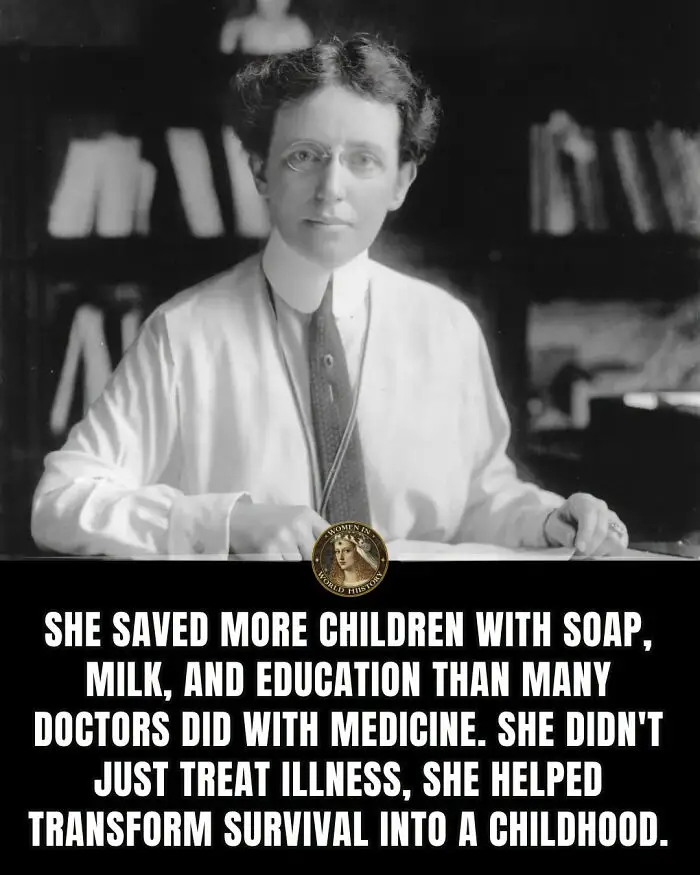
At the turn of the twentieth century, New York City was losing thousands of infants every year. In the crowded tenements of the Lower East Side and other immigrant neighborhoods, poverty, unsafe milk, poor sanitation, and limited access to medical care made childhood a dangerous struggle for survival. Many people accepted these deaths as inevitable. Dr. Sara Josephine Baker refused to.
Born in 1873, Baker became one of America's most influential public health physicians at a time when few women entered the profession. Working for New York City's Department of Health, she focused on a simple but revolutionary idea: preventing illness was often more effective than treating it after the fact.
Rather than waiting in hospitals for sick children to arrive, Baker went directly into the neighborhoods where families needed help most. She organized teams of nurses who visited mothers in their homes, teaching practical lessons about infant care, nutrition, hygiene, and disease prevention. She established baby health stations where mothers could receive guidance and safe milk for their children.
One of her most famous achievements was helping reduce infant mortality through campaigns that promoted pasteurized milk and proper feeding practices. She also created systems to monitor newborns and identify children who needed medical attention before minor problems became deadly.
Baker's work produced remarkable results. During her career, New York City's infant death rate dropped dramatically, saving countless young lives. She often battled bureaucracy, political resistance, and public skepticism, but she persisted because the numbers told a clear story: children were surviving.
Her impact extended beyond New York. Baker became the first director of the Bureau of Child Hygiene and later advised governments and organizations on public health policy. By the time she retired, many of the practices she championed had become standard.
Report
14points
#30
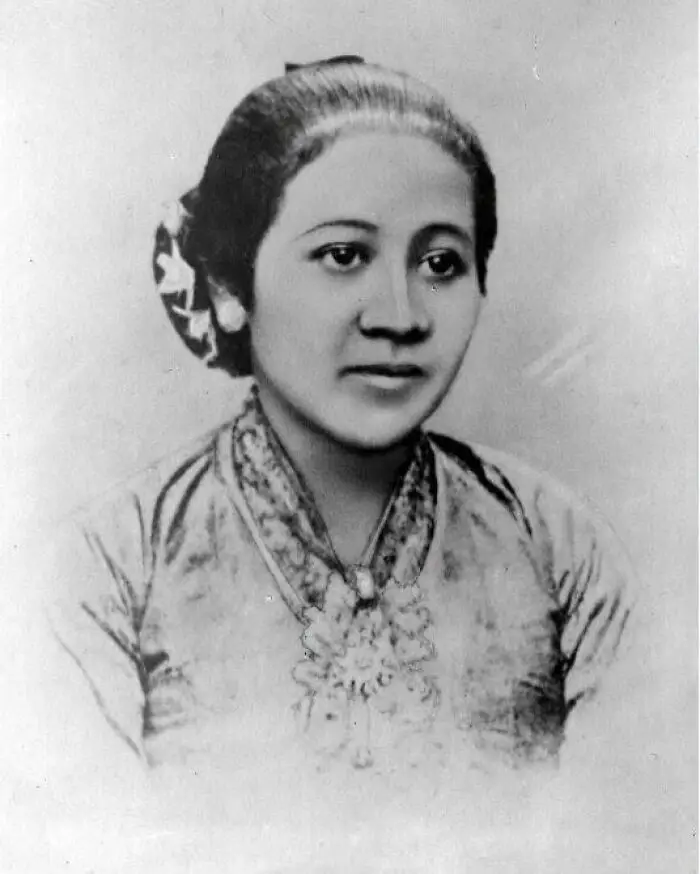
Raden Ajeng Kartini was born into privilege, but privilege did not mean freedom.
Born in 1879 on the island of Java in what is now Indonesia, Kartini was the daughter of a local aristocrat under Dutch colonial rule. As a child, she attended school and showed an extraordinary hunger for learning. Then, at age 12, her education abruptly ended.
According to Javanese custom, noble girls were expected to enter a period of seclusion before marriage. While her brothers continued their studies, Kartini was largely confined to her home, cut off from the world she longed to explore.
Many people would have accepted their fate.
Kartini did not.
Unable to attend school, she educated herself. She read books, newspapers, and magazines. She corresponded with Dutch friends and intellectuals, filling letter after letter with questions about education, women's rights, poverty, religion, and the future of her country.
What makes her story remarkable is that she was fighting two powerful systems at once: colonial inequality and restrictions placed on women within her own society.
She never called for the destruction of her culture. Instead, she imagined a future where girls could be educated, think independently, and participate more fully in public life.
In 1903, she married, but continued advocating for women's education and even opened a school for girls. Tragically, she died the following year at just 25 years old, only days after giving birth to her first child.
Most reformers spend decades building a legacy.
Kartini had barely reached adulthood.
After her death, her letters were published and became a sensation. They inspired generations of Indonesians and helped turn girls' education into a national cause.
Today, she remains one of Indonesia's most admired national figures.
Kartini never lived to see the future she imagined.
But millions of women have.
Report
14points
#31
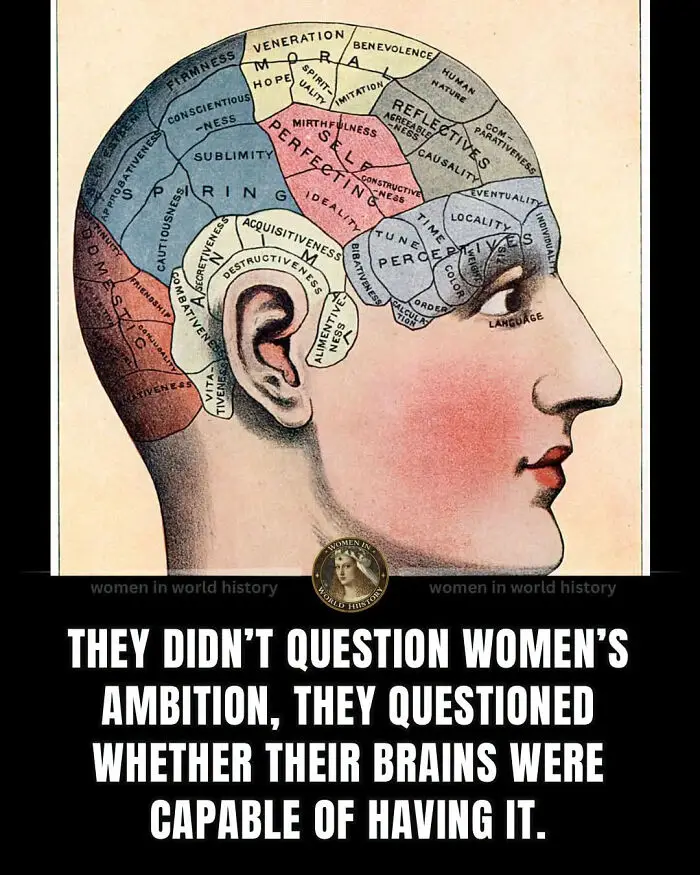
One of the biggest obstacles women faced in science wasn’t a lack of talent—it was a theory.
During the 19th century, anatomists carefully measured skulls and brains, noting that women generally had smaller brains than men. To many Victorian scientists, the conclusion seemed obvious: a smaller brain must mean a smaller intellect.
What they failed to understand was that brain size closely correlates with overall body size, not intelligence.
The misconception didn’t stay inside laboratories. It became a justification for excluding women from universities, scientific societies, and medical schools. Some physicians even warned that too much education would divert blood away from a woman’s reproductive organs, damaging her fertility or making her incapable of motherhood.
One Harvard physician argued that rigorous study could permanently harm a woman’s health. Others claimed women lacked the emotional stability required for science because menstruation supposedly made them irrational for part of every month.
The irony is impossible to ignore.
While these theories were being presented as settled science, women like Ada Lovelace were laying the foundations of computer programming. Sofia Kovalevskaya was transforming mathematics. Marie Curie would go on to win not one, but two Nobel Prizes. Countless women were making discoveries while simultaneously being told their minds weren’t capable of making discoveries.
Today, these Victorian theories are remembered as cautionary examples of how cultural assumptions can masquerade as scientific fact. The measurements were real. The conclusions were not.
Report
13points
#32
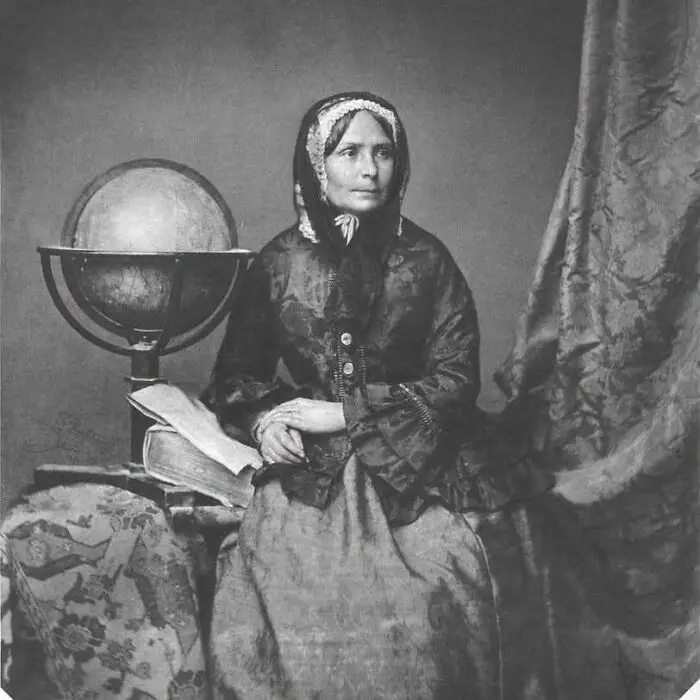
Ida Pfeiffer was not supposed to become one of the greatest travelers of the 19th century.
She was born in 1797 in Vienna, married young, raised two sons, and spent decades living the life society expected of a respectable woman. Then, at age 45—an age when many women of her era were expected to settle quietly into domestic life—she did something almost unthinkable.
She packed a small bag and left.
Not with a husband.
Not with an expedition team.
Not with government funding.
Alone.
What followed was one of the most extraordinary travel careers in history.
Between 1846 and 1855, Pfeiffer traveled roughly 240,000 kilometers by sea and another 32,000 kilometers by land. She crossed deserts, sailed through storms, trekked across remote regions, and visited places many European men never dared to see. She became one of the first women to circle the globe—and then she did it again.
Her journeys took her through South America, the Middle East, Southeast Asia, China, India, Africa, and the Pacific Islands. She often traveled on the cheapest ships available, stayed in modest lodgings, and survived on a budget that baffled wealthier explorers. Adventure was not a luxury for Pfeiffer. It was a mission.
What makes her story even more remarkable is that she financed much of it herself.
After each journey, she wrote detailed travel books filled with observations about the people, landscapes, customs, and cultures she encountered. Works such as *A Lady's Voyage Round the World* became international bestsellers and were translated into seven languages. Readers were fascinated by a woman who had gone farther than most men could imagine.
But Pfeiffer was more than a travel writer.
She collected thousands of insect, plant, and geological specimens for European museums and scientific institutions. Many scholars considered her observations valuable contributions to ethnography and natural history.
Yet even her achievements could not overcome every barrier. The prestigious Royal Geographical Society refused her membership simply because she was a woman.
Other institutions saw her value. The geographical societies of Paris and Berlin made her an honorary member instead.
By the time she died in 1858, Ida Pfeiffer had accomplished something far larger than two trips around the world. She proved that curiosity, courage, and determination were not male traits. They were human ones.
Long before solo travel became a dream sold on social media, a woman carrying little more than a notebook and relentless determination had already shown the world how far one person could go.
Report
13points
#33
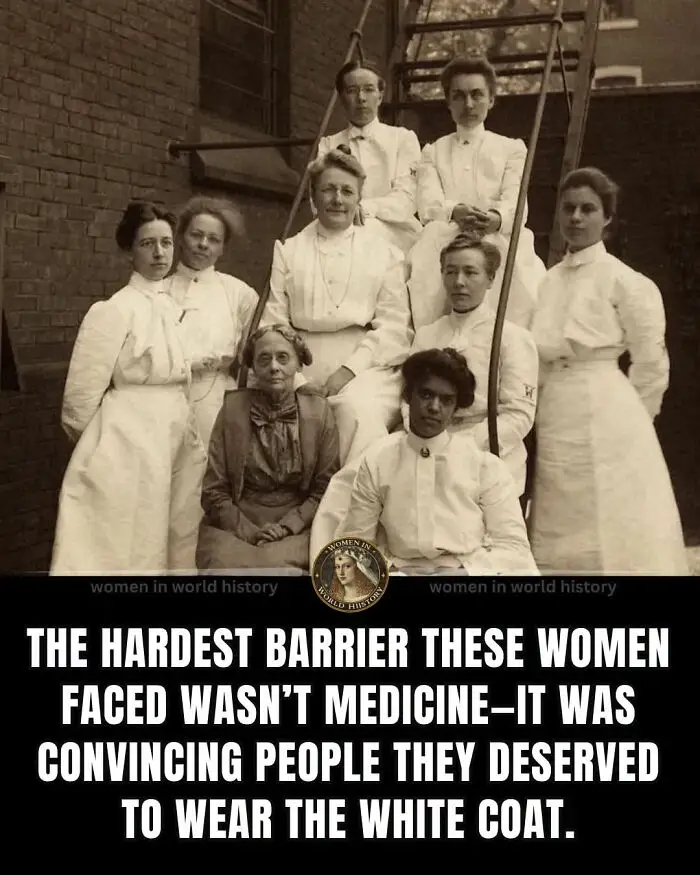
One sentence was enough to end the appointment.
“I won’t be touched by a woman.”
A patient would discover that the doctor waiting to examine him wasn’t a man, refuse treatment, and walk out. Others demanded a different physician before the consultation had even begun. The objection often had little to do with skill. It was the simple fact that the person wearing the white coat was a woman.
That contradiction became increasingly common during the late 19th century as women fought their way into medical schools and earned the same qualifications as their male colleagues. A diploma, however, did not guarantee acceptance. Many hospitals quietly limited female physicians to treating women and children, not because they lacked training, but because administrators feared male patients would refuse their care.
The irony was impossible to ignore.
The very same men who rejected a female doctor often accepted treatment from female nurses without hesitation. Nursing was praised as an extension of a woman’s nurturing nature. A nurse could comfort the sick, change bandages, and remain at a patient’s bedside for hours. But the moment a woman became the person making the diagnosis, giving the orders, or leading the operation, many believed she had crossed an invisible line.
Medicine wasn’t simply about healing. It was about authority.
Victorian society had long accepted women as caregivers, yet many struggled with the idea of a woman occupying the highest position in the room. Critics claimed surgery demanded decisiveness, emotional detachment, and leadership—qualities they insisted belonged to men alone. Some even argued that studying anatomy or performing operations would make women less feminine.
History had other plans.
As epidemics spread, hospitals filled, and skilled women physicians quietly proved themselves again and again, many skeptical patients changed their minds only after experiencing their care firsthand. Competence accomplished what arguments rarely could.
Report
12points
#34
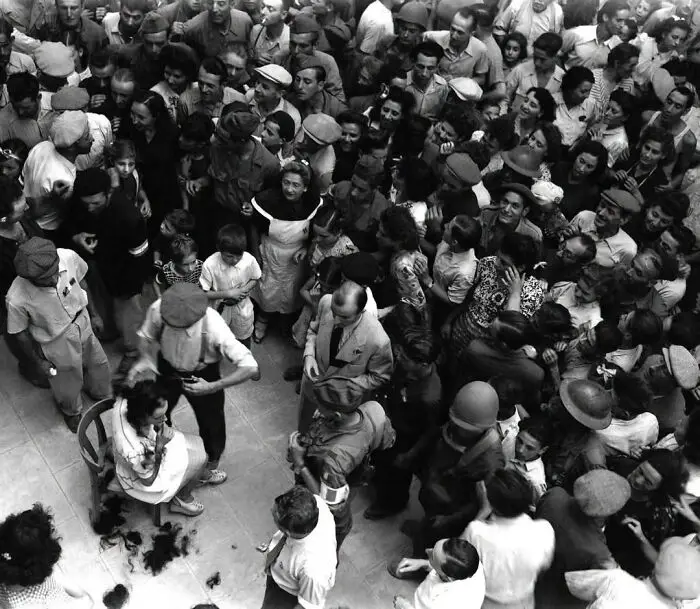
While crowds celebrated the end of N**i occupation, thousands of French women found themselves publicly humiliated, their heads shaved before jeering neighbors in ceremonies meant to punish what was called collaboration horizontale—"horizontal collaboration."
The reality, however, was often far more complicated.
When Germany occupied France in 1940, life became a daily struggle. Food was scarce, jobs disappeared, and simply surviving could require impossible choices. During those four years, relationships developed between French women and German soldiers. Some were genuine romances. Some women married German servicemen or became engaged. Others exchanged companionship for food, protection, or medicine for their families. Some were coerced or s*xually a**aulted. And a much smaller number actively supported the N**i regime by informing on Resistance members or working for German authorities.
As Allied forces and the French Resistance liberated towns in the summer of 1944, anger that had been building for years exploded. Many collaborators fled or escaped justice, but women accused of fraternizing with Germans were highly visible and easy targets. Across France, an estimated 20,000 women had their heads shaved, often in town squares before enormous crowds.
The punishments were deliberately theatrical. Women were forced into public squares, their hair hacked off with scissors or clippers, and in some places they were branded with swastikas, stripped partially naked, paraded through the streets, or forced to carry their children—children derisively called "German babies." The goal was not simply punishment but public shame.
This famous photograph, taken in the town of Gémenos on August 31, 1944, shows one such scene. A woman sits silently in a chair while her hair lies scattered across the floor. Around her, hundreds of spectators press in to watch. Some stare solemnly. Others smile. Children weave through the crowd. The image captures not only the punishment but also the unsettling spectacle it became.
Historians today caution against viewing every shaved woman as a traitor. Many had committed no crime under French law. While some had indeed denounced Resistance fighters or knowingly aided the occupiers, many others were punished solely because they had loved—or were believed to have loved—a German soldier. In the emotional aftermath of liberation, these women became convenient symbols onto whom communities projected years of fear, humiliation, and rage.
The head shaving itself was not an official sentence imposed by the French government. It was largely an act of épuration sauvage ("wild purge"), carried out by local Resistance groups, militias, or angry civilians before formal courts were fully restored. In many cases, due process played little or no role.
Report
11points
#35

When Patricia Bath was a child growing up in Harlem, she noticed something that would shape the rest of her life. Patients in poorer neighborhoods were far more likely to lose their eyesight than those in wealthier communities. Rather than accepting that inequality, she decided to spend her life changing it.
Bath became one of the first Black women to complete a residency in #ophthalmology in the United States and later became the first woman to chair an ophthalmology residency program. Throughout her career, she refused to separate medicine from social justice, arguing that vision care should be a basic human right rather than a privilege.
Her greatest breakthrough came in the 1980s with the invention of the Laserphaco Probe, a device that used laser technology to remove cataracts with greater precision before replacing the damaged lens. The innovation made cataract surgery safer and more effective, restoring sight to patients who had often been considered untreatable. In 1988, Bath became the first Black woman physician in the United States to receive a patent for a medical invention.
But her influence extended far beyond the operating room. She co-founded the American Institute for the Prevention of Blindness, promoted community eye screening programs around the world, and championed what she called "community ophthalmology"—bringing quality eye care to underserved populations instead of waiting for patients to come to hospitals.
Millions of people have benefited from advances in cataract surgery, and countless young physicians have followed a path that Bath helped open. She didn't just restore vision. She changed who had the opportunity to see, to heal, and to imagine a future that once seemed impossible.
Report
11points
#36
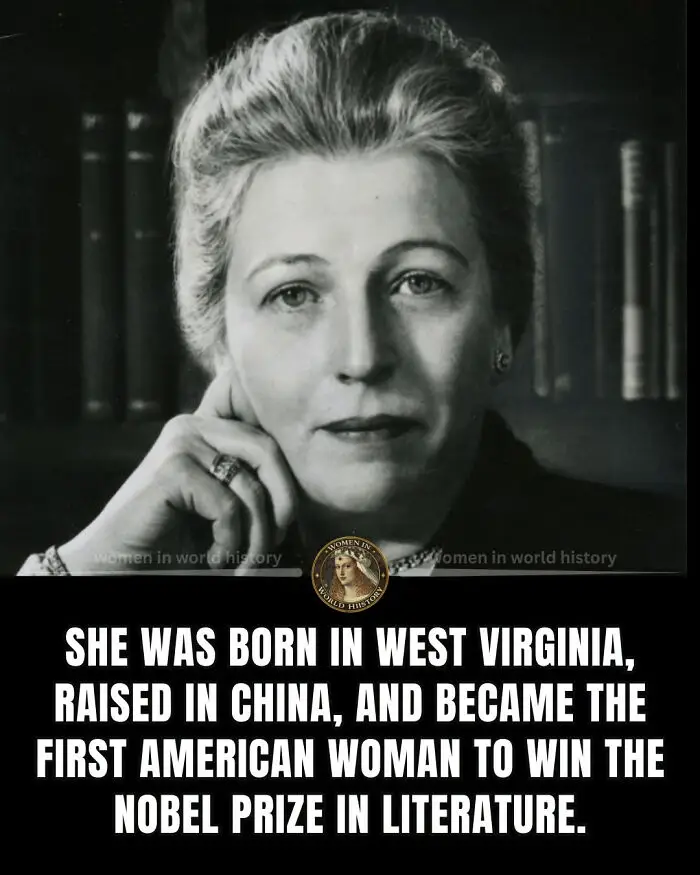
Pearl S. Buck spent her life crossing worlds. Born on June 26, 1892, in Hillsboro, she was only a few months old when her missionary parents took her to China, where she grew up speaking Chinese before English. While many Western writers viewed China as mysterious or exotic, Buck wrote about it from the perspective of ordinary people whose lives she had witnessed firsthand. Farmers, mothers, laborers, and families became the heart of her stories, giving millions of Western readers a rare glimpse into a society they knew almost nothing about.
That perspective changed her life. In 1931 she published The Good Earth, the sweeping story of a poor Chinese farming family struggling through famine, fortune, and heartbreak. The novel became an international sensation, won the Pulitzer Prize for Fiction, and helped make Buck the first American woman ever awarded the Nobel Prize in Literature. Her work was praised not only for its storytelling, but for encouraging Western audiences to see Chinese people as fully human at a time when stereotypes often dominated popular culture.
Yet Buck's legacy extends far beyond literature. Deeply moved by the discrimination faced by mixed-race and Asian children after the World War II era, she turned much of her energy toward humanitarian work. She founded adoption agencies that challenged the racial barriers of the time and advocated for children whom many organizations refused to place simply because of their heritage. She also established foundations dedicated to improving the lives of vulnerable children around the world.
Pearl S. Buck's story is more complex than that of a celebrated novelist. She became a cultural bridge between East and West, though modern scholars continue to debate how accurately her work represented China and how much it reflected Western expectations. That conversation has only added to her significance. Her books, activism, and willingness to confront prejudice remind us that stories have the power not only to entertain, but to shape how entire cultures see one another.
Report
11points
#37
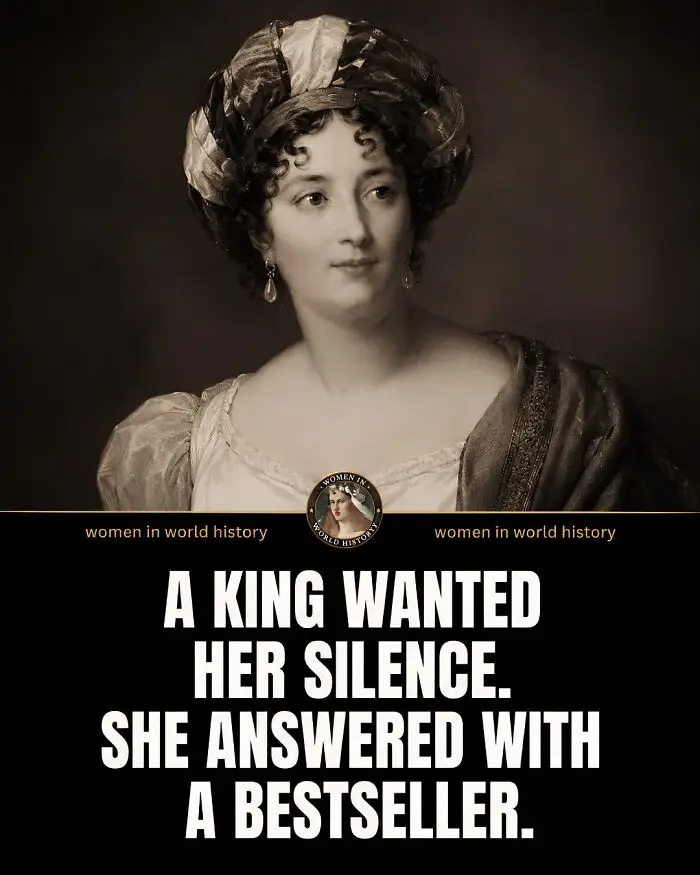
Napoleon Bonaparte could defeat armies across Europe.
But one of his most relentless opponents never commanded a single soldier.
She carried a pen.
Germaine de Staël was one of the most brilliant writers and political thinkers of her generation. The daughter of Jacques Necker, Louis XVI's finance minister, she grew up surrounded by Europe's greatest intellectuals and developed an unfortunate habit—for emperors—of saying exactly what she thought.
Napoleon despised independent minds, especially those with influence.
The feeling was mutual.
De Staël openly criticized his growing dictatorship, accusing him of replacing the ideals of the French Revolution with personal ambition and censorship. Napoleon reportedly complained that she "teaches people to think who never thought before."
That was precisely the problem.
Unable to silence her through debate, he tried something else.
He banished her from Paris, ordering her to stay at least forty leagues from the city. Police monitored her movements. Her correspondence was intercepted. Friends who visited her risked falling out of favor with the regime.
Many expected exile to end her career.
Instead, it made her famous.
From her estate on Lake Geneva, she transformed exile into an international salon, attracting writers, philosophers, diplomats, and artists from across Europe. If Napoleon controlled Paris, Germaine de Staël created a new intellectual capital beyond his reach.
Then she struck back with a book.
In 1810 she completed *De l'Allemagne* (*On Germany*), celebrating German philosophy, literature, and culture while quietly exposing everything Napoleon's empire lacked: intellectual freedom, independent thought, and respect for individual conscience.
Napoleon understood the danger immediately.
Before the book could reach readers, he ordered the entire first printing—around 10,000 copies—to be seized and destroyed.
Few authors have received a more dramatic review.
De Staël escaped France with a surviving manuscript, traveling through Austria, Russia, Sweden, and eventually England. In 1813, the book was finally published beyond Napoleon's reach.
It became one of the most influential works of the nineteenth century, introducing countless readers to German Romanticism and helping reshape European literature.
The emperor who tried to erase her words is remembered for his battles.
The woman he tried to silence is remembered for proving that ideas can outlive empires.
Report
10points
#38
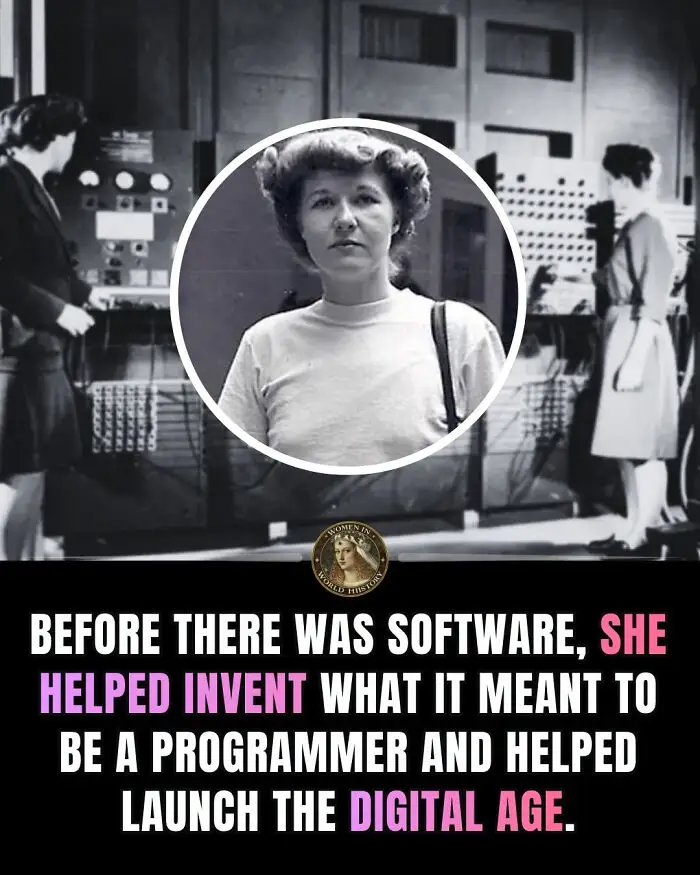
Long before Silicon Valley became synonymous with technology, a young woman from rural Missouri helped program one of the most important machines ever built.
Jean Bartik was born in 1924 and grew up on a farm where opportunities for women in mathematics were limited. Fascinated by numbers, she studied mathematics at Northwest Missouri State Teachers College and graduated at a time when World War II was transforming both society and technology. In 1945, she joined the University of Pennsylvania as a human “computer,” one of many women hired to perform the tedious calculations needed to produce artillery firing tables for the U.S. Army.
The work demanded extraordinary precision. Before electronic computers existed, these calculations were performed by hand or with mechanical calculators, and a single mistake could affect battlefield accuracy. But Bartik's career was about to take an unexpected turn.
When the Army funded the construction of the Electronic Numerical Integrator and Computer—better known as ENIAC—six women were selected to program it. Bartik was one of them. The challenge was unlike anything that had existed before. There were no programming languages, manuals, or computer science courses. The women had to study engineering diagrams, understand the machine's logic, and determine how to make thousands of electronic components work together to solve complex mathematical problems.
Programming ENIAC meant physically configuring the machine. Bartik and her colleagues connected cables, adjusted switches, and rewired panels to create instructions. What they were doing would later become known as software development, but at the time the field did not even have a name.
When ENIAC debuted in 1946, it could perform calculations thousands of times faster than human operators. The achievement marked the beginning of the computer age. Yet while the machine became famous, the women who programmed it were largely overlooked for decades. Photographs often identified them as models or assistants rather than the experts who made the computer function.
Every smartphone, laptop, and digital device in use today traces part of its lineage back to the groundbreaking work she and her colleagues performed in a room filled with wires, switches, and possibility.
Report
10points
#39

Most people remember Nancy Astor because of her legendary feud with Winston Churchill.
The insults were unforgettable.
"If I were your wife, I'd p****n your tea."
"If I were your husband, I'd drink it."
and
"Winston, you're drunk."
To which Churchill famously replied:
"My dear, you are ugly, but tomorrow I shall be sober and you will still be ugly."
The exchange became one of the most famous political comebacks in history.
But reducing Nancy Astor to a witty quote misses the far more remarkable story.
She was born in Virginia in 1879, into a family devastated by the aftermath of the American Civil War. Her first marriage ended in divorce at a time when divorced women often faced social ruin. Seeking a fresh start, she moved to England, married wealthy businessman Waldorf Astor, and entered a world that was almost entirely controlled by men.
Then history unexpectedly opened a door.
In 1919, when her husband inherited a title and moved to the House of Lords, his seat in the House of Commons became vacant. Nancy decided to run for it herself.
The idea seemed absurd to many people.
Women in Britain had only recently gained limited voting rights. Parliament was still overwhelmingly male. Politics was considered no place for a woman, especially one who was outspoken, opinionated, and unwilling to stay quiet.
She won.
Nancy Astor became the first woman to take her seat in the British House of Commons.
Not the first woman elected, but the first woman to actually walk into Parliament, sit among hundreds of men, and demand to be heard.
The experience was rarely pleasant. She endured ridicule, hostility, and constant scrutiny. Critics attacked her voice, her appearance, her accent, and her presence itself. Yet she remained there for more than two decades.
Her record was complicated. Some of her views have drawn significant criticism from historians, and parts of her legacy remain controversial. But her achievement cannot be ignored.
Long before women were common in government, Nancy Astor forced her way into one of the most powerful political institutions in the world.
Report
10points
#40
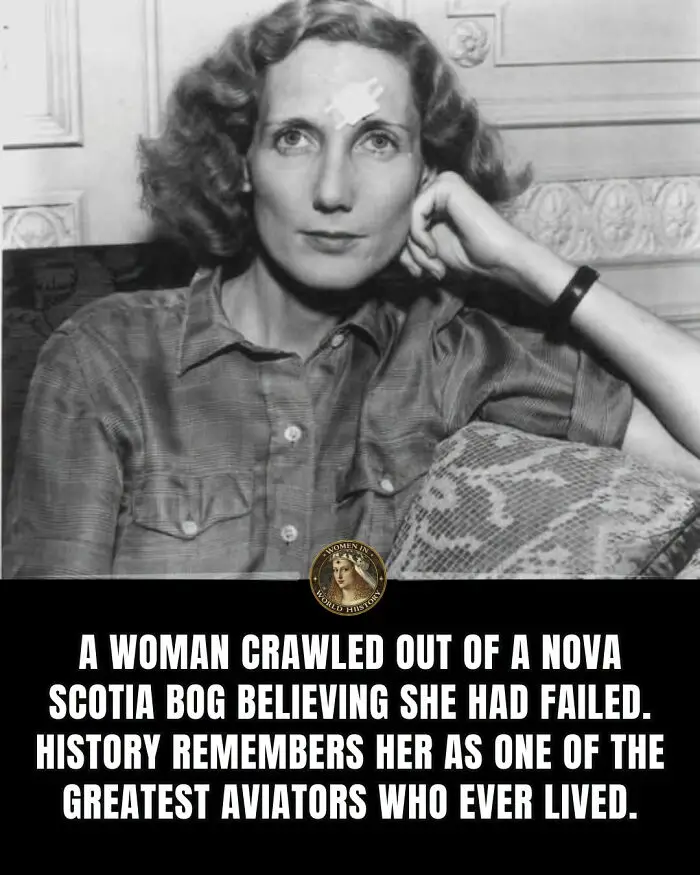
Just after noon on September 5, 1936, two fishermen in Cape Breton, Nova Scotia, saw a woman struggling through the bog.
She was bleeding. Her once-white flying suit was stained black with peat up to the waist. Somewhere behind her, half-buried in the moss, was her single-engine Percival Vega Gull, its nose driven into the marsh, its tail lifted helplessly into the air.
When the fishermen reached her, she gave them a sentence almost too strange to believe.
“I’m Mrs. Markham,” she said. “I’ve just flown from England.”
The woman was Beryl Markham, thirty-three years old, and she had just completed one of the most daring flights of the golden age of aviation.
She had become the first person to fly solo, nonstop, from Europe to North America, and the first woman to fly solo, nonstop, east to west across the Atlantic.
That direction mattered.
Flying west meant fighting the prevailing winds instead of riding them. It meant pushing into bad weather, mechanical strain, exhaustion, and uncertainty over thousands of miles of open ocean. Her intended destination was New York, but fuel trouble forced her down in Nova Scotia, where the bog caught her aircraft before the city ever could.
At first, Markham believed she had failed.
The world disagreed.
Taken to a farmhouse, bruised and shaken, she asked for tea and a telephone. Directed to a small emergency phone built near the rocks in case of shipwrecks, she calmly asked the operator to notify the airport — and send a taxi.
Soon, congratulations poured in from around the world. Amelia Earhart praised the flight as a great achievement. New York welcomed Markham with a motorcade, headlines, and a suite at the Ritz-Carlton.
Beryl Markham had aimed for New York and landed in a bog.
But history knew exactly where she belonged.
Report
10points