



The wait is over. Everyone who was enjoying 2017, 2016 and 51 earlier 'Wildlife Photographer of the Year' (WPY) competitions has just received this year's biggest treat. London's Natural History Museum announced the winners of the 2018 photo contest, and the beautiful pictures reveal the abundance, beauty, resilience, and vulnerability of life on Earth.
The winning wildlife photography stills were chosen from more than 45,000 entries from 95 countries for their artistic composition, technical innovation and accurate interpretation of the natural world. The international jury awarded the grand title to Dutch photographer Marsel van Oosten for his shot, titled "The Golden Couple." The breathtaking picture features a pair of endangered golden snub-nosed monkeys in central China’s Qin Ling Mountains. "It is a symbolic reminder of the beauty of nature and how impoverished we are becoming as nature is diminished," Roz Kidman Coz, the chair of the judging panel, said in a press release. "It is an artwork worthy of hanging in any gallery in the world." Golden snub-nosed monkeys only live in this particular part of China, and their numbers are steadily decreasing, mainly because of habitat loss from commercial logging and firewood collection.
"As we were going through the pictures of animals and nature, we just kept coming back to this one," Roz Kidman Coz added. "It's almost like a stage set. I think what makes it are the colors and the lighting. These monkeys normally feed in the trees, but somehow Marsel managed to catch them on the ground, and he's carefully thrown a very gentle flash on to the scene to illuminate that amazing fur."
"This image was shot on my first trip to the Qinling mountains," Marsel van Oosten told Bored Panda. "I spent five days on this location. Since then I have been there two more times."
"I was planning to visit China for landscape photography but decided to check out what kind of wildlife China has apart from pandas. After doing some research, I stumbled across the snub-nosed monkeys. There are two main species; the golden snub-nosed monkeys and the black snub-nosed monkeys, and they both look amazing. Not only that, [but] they're also endangered species, so all the more reason to photograph them."
"My main objective for the golden snub-nosed monkeys was to show the beautiful long guard hairs on the back of one of the males," the photographer added. "To show those hairs I needed to be slightly behind the monkey, which made it difficult to show the face. Luckily, both monkeys in this image looked up at an altercation in the larger group of 50 monkeys - the perfect moment for me to get the animal photography shot I wanted."
"What makes this image better than most of the other ones I've shot is the fact that the background is near perfect: there is some light shining through the canopy in the upper right corner, the rock on which the male is sitting has some beautiful texture, and the trees to the left really complement the scene. Very often when the subjects adopt the perfect pose, the background is not great, or vice versa. What takes this image to the next level for me, is the light. I used an off-camera flash to bring out the color and the texture in the fur. My wife Daniella was standing on the right, just outside the frame, holding the flash which I controlled remotely. The almost painterly light was exactly what I wanted."
Van Oosten wanted to direct everyone's attention to the current mass extinction of plants and animals, too. "Unlike past mass extinctions, caused by events like asteroid strikes, volcanic eruptions, and natural climate shifts, the current crisis is almost entirely caused by humans. Ninety-nine percent of currently threatened species are at risk because of human activities."
"If current rates of human destruction of the biosphere continue, half of all plant and animal species of life on earth will be extinct within 100 years."
"If current rates of human destruction of the biosphere continue, half of all plant and animal species of life on earth will be extinct within 100 years."
"Perhaps one of the most striking elements of the present extinction crisis is the fact that the majority of our closest relatives - the primates - are severely endangered. About 90 percent of them lives in tropical forests, which are disappearing quickly. The IUCN estimates that almost 50 percent of the world's primate species are at risk of extinction. Overall, the IUCN estimates that half the globe's 5,491 known mammals are declining in population and a fifth are clearly at risk of disappearing forever with no less than 1,131 mammals across the globe classified as endangered, threatened, or vulnerable."
"The golden snub-nosed monkey is endangered due to habitat loss. For instance, lichens are the main staple of the monkey's diet and dead trees contain the most lichen. Unfortunately, dead trees are harvested, thus reducing the quality of the habitat and availability of food. The monkey is a highly selective feeder, so damage to its habitat seriously impacts the species. There are less than 4,000 of these animals left."
"Successful wildlife conservation starts with awareness, and most people don’t even know this species exists. I hope that my photograph will help to spread awareness about this species and that people will realize that not only the rhinos, tigers and polar bears are worth worrying about."
More info: nhm.ac.uk
#21 "The Meerkat Mob" By Tertius A Gous, South Africa, Highly Commended 2018 Behaviours Mammals
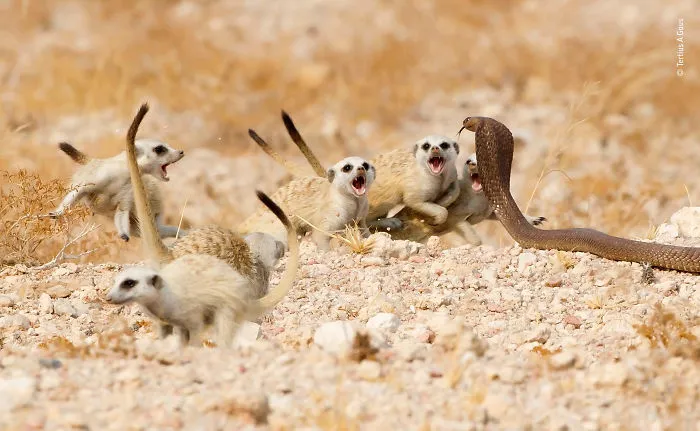
Rearing its head, an Anchieta’s cobra lunged towards two meerkat pups. Reacting instantly, their 20-strong pack ran back to the warren and split into two – half ushering the pups away, the other half advancing towards the snake, growling and fluffing up their coats. Focusing on the snake’s classic profile, Tertius caught the meerkat mob’s fear and aggression.
This scene is rare – there are few records of an Anchieta’s cobra attacking a meerkat pack. In a group, the mammals have the advantage, using a system of alarm calls to notify others of predators and to co-ordinate a mobbing of the attacker. This snake was just an opportunistic hunter looking to snatch one of the p ups before the pack arrived.
Report
121points
#22 "Eye To Eye" By Emanuele Biggi, Italy, Highly Commended 2018 Animals In Their Environment
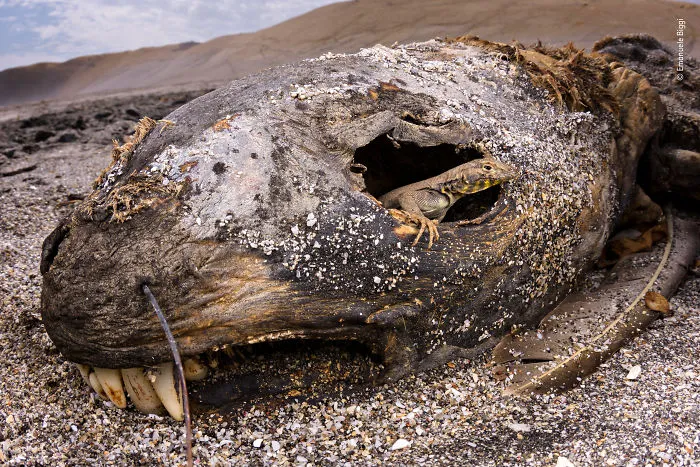
As Emanuele walked along the beach, the stench of rotting sea lion carcasses was almost unbearable. He had seen insects feeding on the corpses, but knew when he saw the iguanas eating the insects that he’d found something interesting. Lying on the sand, choked by the vile smell, he caught this iguana peeping through an eye socket.
With a colony of 15,000 South American sea lions nearby, the beach of Paracas National Reserve is a graveyard for the ones that have succumbed to illness or injury. Others die in occasional mass events triggered by El Niño, where ocean temperatures rise temporarily. The iguanas survive here on the sand, where little vegetation grows, by feeding on insects instead.
Report
119points
#23 Ghost Trees By Frans Lanting, The Netherlands, Winner 2018 Wildlife Photographer Of The Year Lifetime Achievement Award
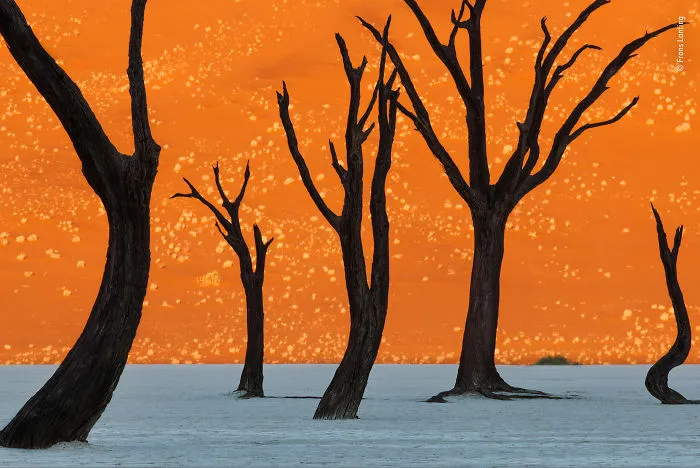
A river once flowed through this remarkable place in the dunes of Namibia, but it changed course. The camelthorn trees that once flourished here are now just sculptural skeletons on a rock-hard clay pan. But backed by soaring dunes glowing with sunrise light, they are monuments to a time of abundance.
Report
118points
#24 "Mud-Rolling Mud-Dauber" By Georgina Steytler, Australia, Winner 2018 Behaviours Invertebrates
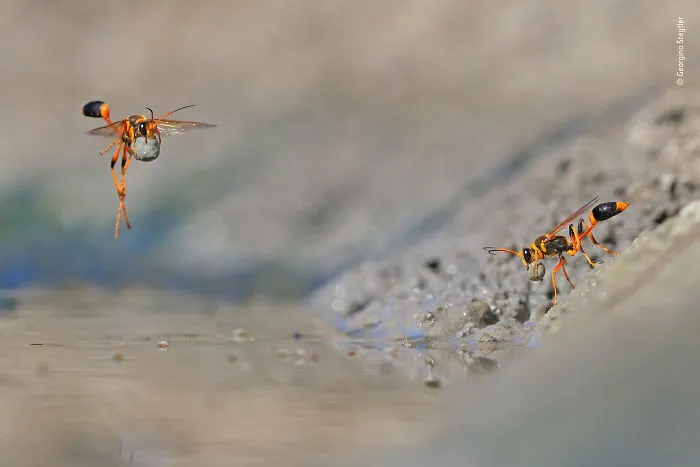
Georgina was at the waterhole early to photograph birds, but her attention was diverted to these industrious wasps. They were busy at the water’s edge, rolling the soft mud into balls and carrying them to their nearby nests. For a good angle, she lay in the mud, then pre-focused on a likely flight path and began shooting continuously.
The female mud-dauber wasps use the mud balls to build their nests. Collecting them into clusters, they then carve chambers inside the balls into which the females lay their eggs. Before closing each one up, the wasps insert the paralysed bodies of orb-weaving spiders as food for their larvae when they hatch.
Report
108points
#25 Autopsy By Antonio Olmos, Mexico / Uk, Highly Commended 2018 Wildlife Photojournalism
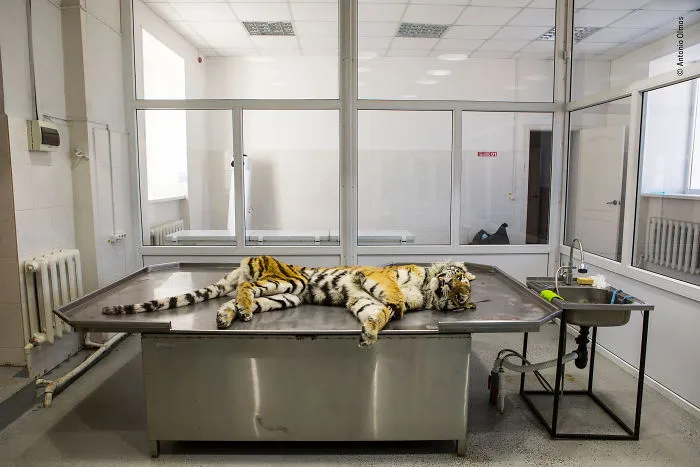
A young Siberian tigress is laid out, awaiting an autopsy. Its emaciated body was found under a car, missing a forepaw. Undoubtedly, it had chewed off its own foot after being caught in a poacher’s trap. Unable to hunt, it would have slowly starved to death. For Antonio, seeing such a majestic animal reduced to this was heartbreaking.
Siberian tigers have been hunted almost to extinction, with barely 360 left in the wild. Despite being classified as endangered for the past few decades, their numbers continue to decline, as they are hunted by poachers and their homes are lost to deforestation. Human disregard continues to decimate tiger populations, leaving their fate hanging in the balance.
Report
106points
#26 "Night Snack" By Audun Rikardsen, Norway, Highly Commended 2018 Under Water
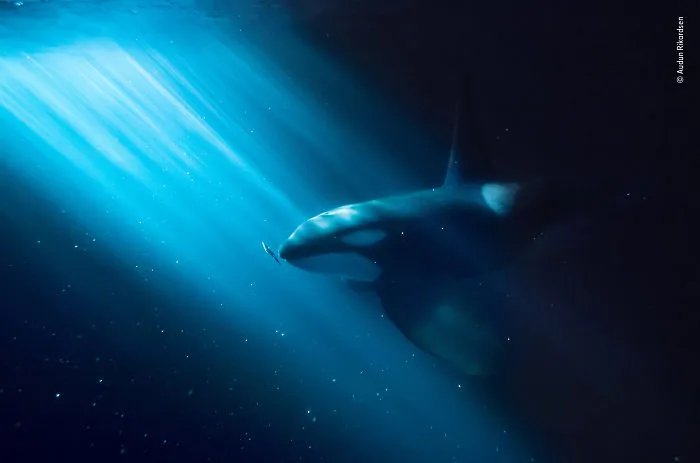
Large numbers of herring were overwintering in the northern fjords, attracting hundreds of predators and night fishing boats. The killer whales had realised that the sound of nets being hauled up meant the possibility of an easy meal. Audun asked the fishermen to angle their strongest light into the water, to capture his shot.
Killer whales are the largest members of the dolphin family. Although one species, it’s now thought there are several kinds living in different areas, using specific hunting strategies and social structures. This is a male eastern North Atlantic form, which is known to work together with other killer whales to herd fish into dense shoals.
Report
103points
#27 Tigerland By Emmanuel Rondeau, France, Highly Commended 2018 Animals In Their Environment
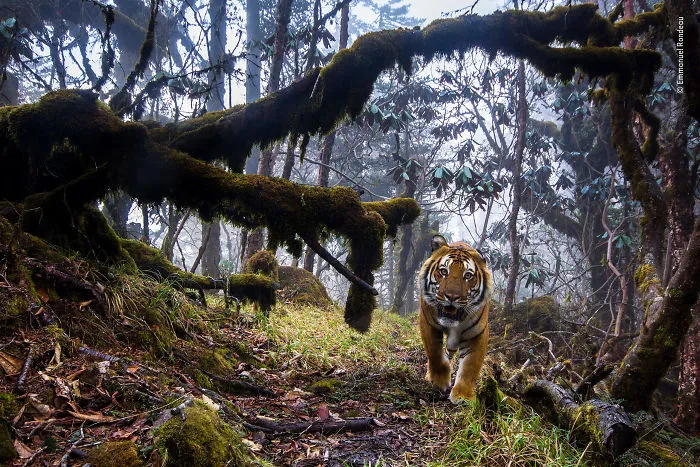
Accompanied by rangers, Emmanuel had climbed 700 metres to set up eight cameras, selecting areas with previous tiger sightings and evidence of recent use such as tracks, scratches and faeces. ‘The forests were nothing like I had ever seen,’ he says. ‘Every species was something new.’ Twenty-three days later, this Bengal tiger gazed directly into one of his cameras.
In the Kingdom of Bhutan, tigers are making a comeback. There are now thought to be 103 tigers living in the wild there – almost a third more than the last count in 1998. As Bhutan has developed, the country has created a network of wildlife corridors from one national park to the next to allow wildlife to roam relatively undisturbed.
Report
102points
#28 "Overview" By Cameron Mcgeorge, New Zealand, Highly Commended 2018 15–17 Years Old
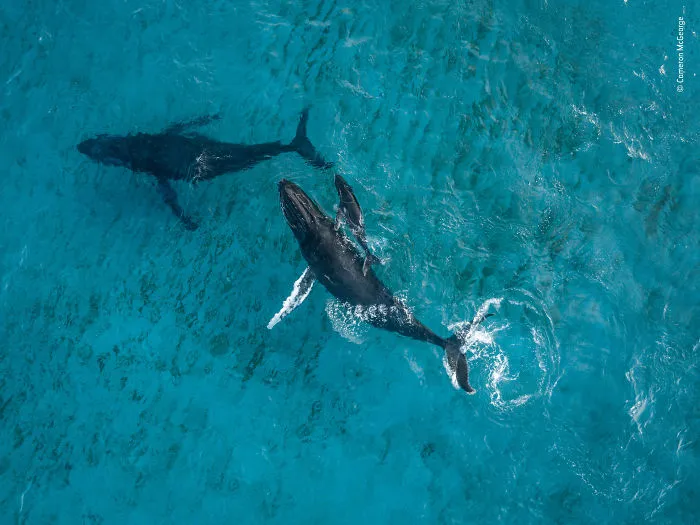
Cameron built his first drone with his father in 2013, all the while dreaming of photographing whales from the air. Four years later he achieved his ambition, capturing this spectacular shot of a humpback whale, its calf and their accompanying male escort. For Cameron, this image is a unique perspective of ‘nature’s most breathtaking subjects’.
These whales are part of a group known as the Tongan tribe, which is classed as endangered. It lives isolated from other breeding groups, and so numbers have fallen dramatically. Sightings such as this bring hope that the population is recovering. This calf is just a few days old, and the male, hoping to mate with the mother, will defend them both from predators.
Report
94points
#29 "Flight" By Sue Forbes, Uk, Highly Commended 2018 Behaviours Birds
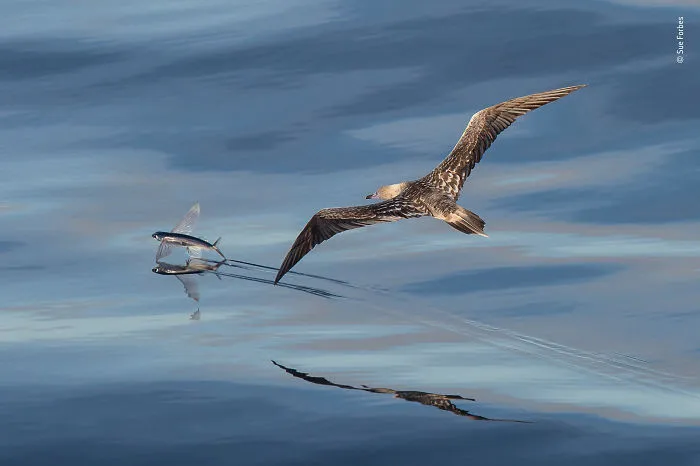
After days of rough seas, Sue woke to find tranquil water and a single young booby circling. ‘Suddenly, a fish leapt out,’ she says, ‘and down came the booby’. With quick reactions, her camera already poised, she captured the fleeting moment of the bird in hot pursuit, reflected in the painterly water.
Boobies are extraordinarily lean, aerodynamic birds. Adults are nimble enough to catch moving targets, but this juvenile might just be practicing. The fish has broken the surface, and is gliding on its stiff pectoral fins. It does this to escape underwater predators, such as tuna and marlin, but this makes it vulnerable to attack from above.
Report
93points
#30 "The Catch" By Robert Irwin, Australia, Highly Commended 2018 11–14 Years Old
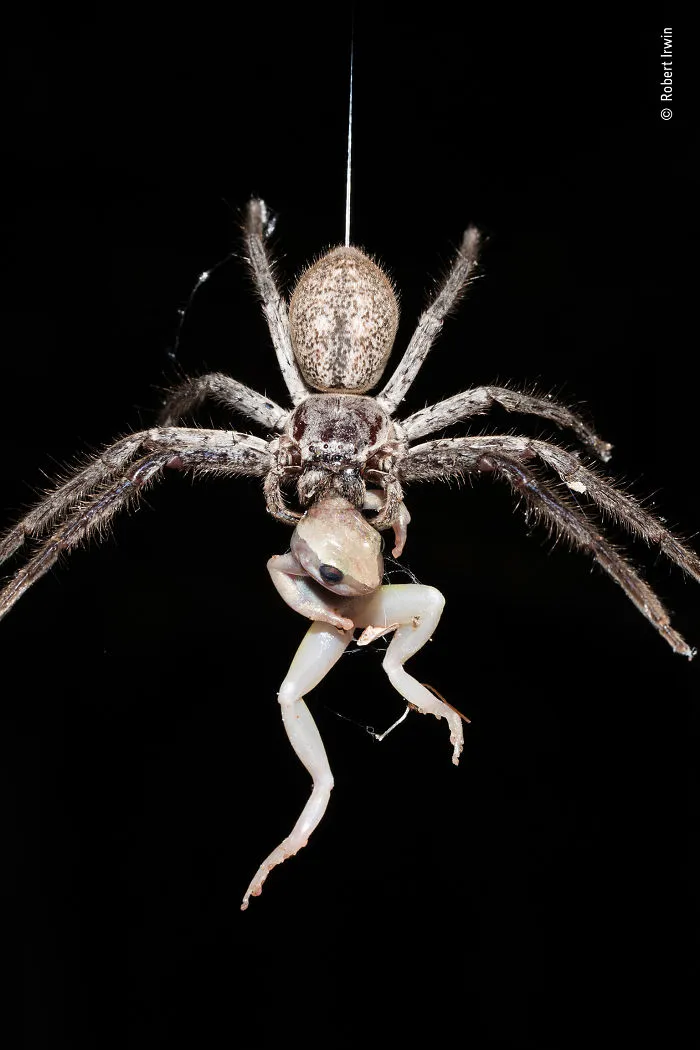
Robert was trudging through dense woodland at night when he saw the huntsman spider, dangling in mid-air, clutching a dead frog. ‘It was fascinating to see it manipulating the frog with its front legs while gripping it with its fangs,’ he said. ‘To see it predating an animal so large was extraordinary.’
Huntsman spiders don’t build webs. Instead they hunt their prey, usually stalking large insects and other spiders, but also occasionally frogs. This one probably fell off a branch while struggling with the frog, and was left hanging dramatically from a silk anchor line. It had set this up as a precaution against such an event.
Report
89points
#31 "Witness" By Emily Garthwaite, Uk, Highly Commended 2018 Wildlife Photojournalism
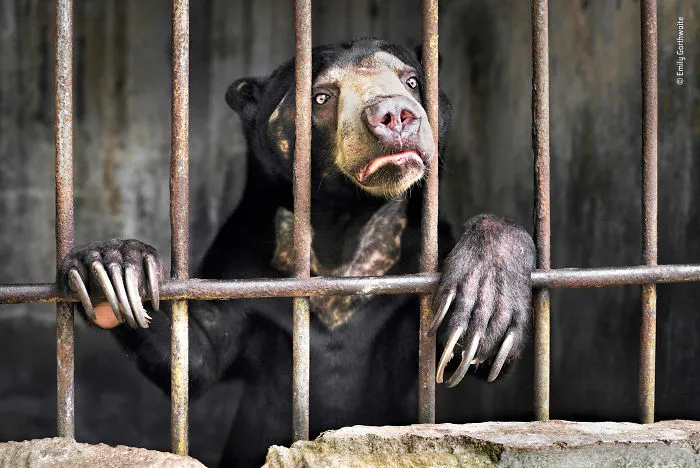
When Emily approached, the young sun bear hurried to the front of its filthy zoo cage, seemingly eager to interact with her. Yet when it spotted its keeper, its demeanour changed. As the keeper poked and provoked the bear ‘he started screaming,’ said Emily. ‘I’ve never heard such an awful noise, it was very frightening.’
Sun bears are the world’s rarest bears, yet are commonly exploited for their gall bladders and bile. In traditional Chinese medicine the bile is thought to treat a range of ailments, from hangovers to hepatitis. Cubs are farmed, sometimes living permanently with a catheter used to drain the bile.
Report
83points
#32 Ice-Cave Blues By Georg Kantioler, Italy, Highly Commended 2018 Earth’s Environments
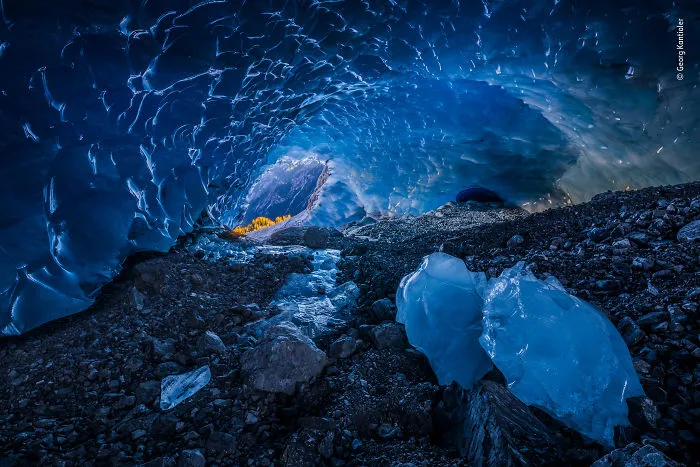
Last time Georg tried to enter this ice cave, it was deemed too dangerous, due to excessive ice melt. But on this cooler day he made it in. With the sound of dripping water and the creak of the glacier shifting, he used natural light to capture the interior, including the distant larch trees and alpine scenery. ‘A breathtaking yet daunting experience,’ he says.
Glacier caves are often carved out by water running through or under a glacier’s ice. Unlike ice caves that are present all year round, glacier caves are seasonal. Global warming has caused some glaciers to completely disappear and others to retreat, meaning caves such as these are becoming less frequent or inaccessible.
Report
70points
#33 "The Vision" By Jan Van Der Greef, The Netherlands, Winner 2018 Black And White
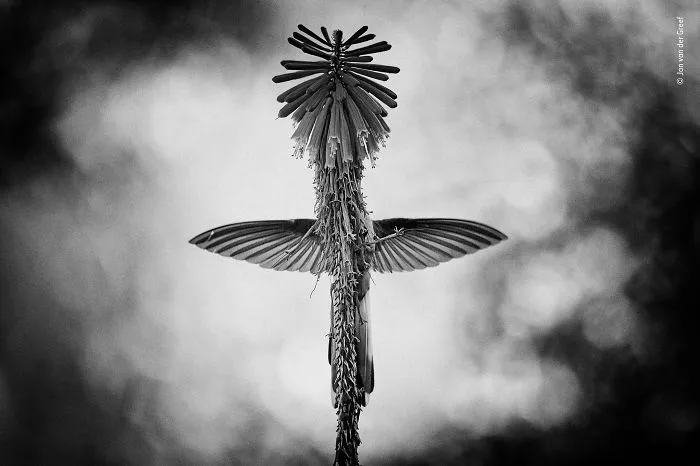
From the garden of his hotel, Jan noticed that when the hummingbirds rotated around this plant’s spikes, and closed their tails for a moment, a beautiful cross appeared. From the low position of his wheelchair, it took him two half days to get the perfect shot, ‘their fast movements to me symbolise the freedom of our imagination,’ he says.
Endemic to Peru, the bearded mountaineer hummingbird spends its day feeding on sweet, nectar-rich plants. Unlike the hummingbird, the showy, dramatic torch lily seen here is not native to the region, but has become a popular food source for these hummingbirds. They are attracted by the delicious nectar of its bright red flowers.
Report
66points
#34 "The Sad Clown" By Joan De La Malla, Spain, Winner 2018 Wildlife Photojournalism
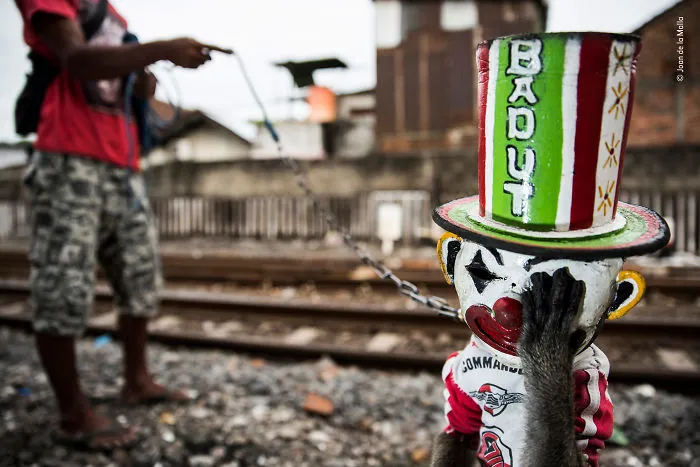
Timbul, a long-tailed macaque, puts his hand to his face to try and relieve the discomfort of his mask, while being trained to stand upright for a street show. Sights such as this are common in Indonesia, and Joan spent a long time gaining the trust of the monkey’s owners. ‘They are not bad people,’ she says. Most are earning money to send their children to school.
Macaques like Timbul live in awful conditions, deprived of the social relationships they need to thrive. They work many hours, dancing and riding bikes, movements that are unnatural and uncomfortable. Animal charities are working to enforce legislation that makes it illegal to take young monkeys from the wild or to trade in them without a permit.
Report
66points
#35 Eyes Of The Night By Frans Lanting, The Netherlands, Winner 2018 Wildlife Photographer Of The Year Lifetime Achievement Award
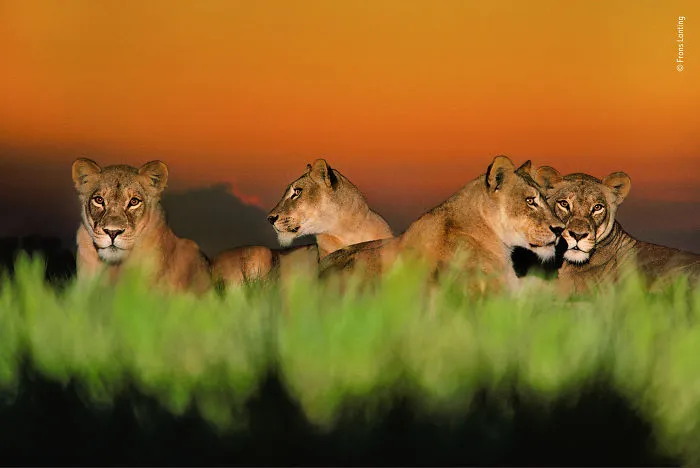
I like to get eye to eye with the animals I photograph and portray them as individuals. I followed this pride of lionesses for several weeks, and got to know their most intimate moments. Here at dusk, with eyes and ears scanning the bush, they are awake and ready to hunt.
Report
66points
#36 "Bear Territory" By Marc Graf, Austria, Highly Commended 2018 Animals In Their Environment
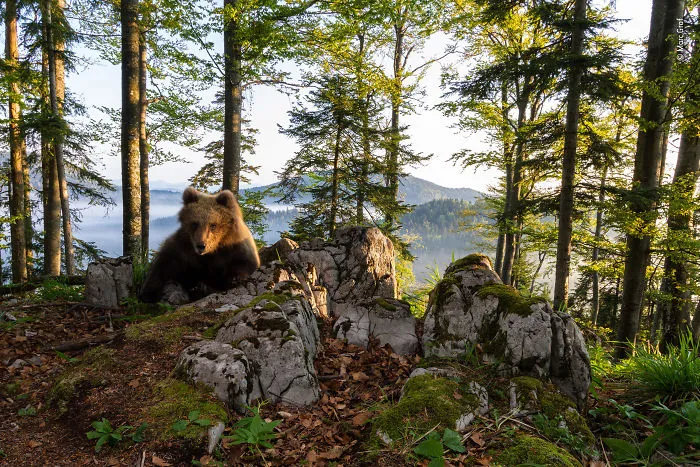
The brown bears of Notranjska Regional Park are cautious, and so avoided the area where Marc had set up his camera trap, aware something had changed in their environment. However, after 14 long months the box protecting the camera lost all its scent, and the bears finally acclimatised. One morning a young bear strolled up the hill at sunrise ready for its close-up.
Brown bears were once found throughout much of Europe, but today their range is greatly diminished and fragmented. While the trend for Slovenia’s brown bear populations shows a steady growth, just a short distance away in Marc’s Austrian homeland there are very few bears left – their biggest threat is conflict with humans.
Report
64points
#37 "Late-Night Feed" By Susan Scott, South Africa, Highly Commended 2018 Wildlife Photojournalism
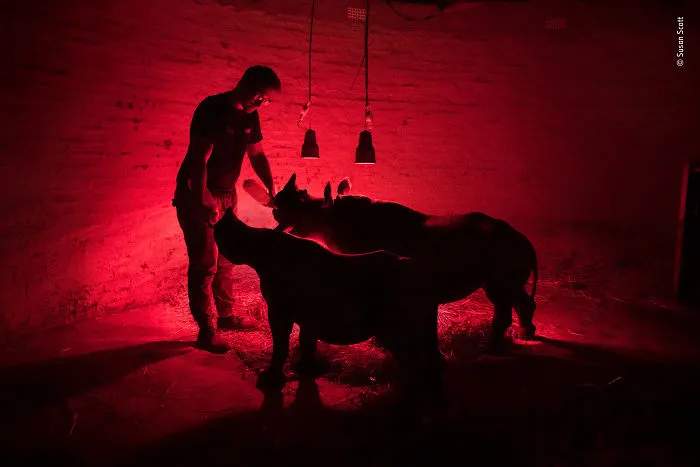
It took Susan two years to convince the orphanage to allow her access – the bond between rhino calves and their carers is fiercely protected. Moving quietly, she was careful not to disturb these two, Nandi and Storm, as they were fed by their carer under infrared lamps to minimise heat loss. For Susan, this image is ‘a peaceful moment amid tremendous violence’.
Despite conservation efforts, black rhinos remain critically endangered, as demand for their horn for use in alternative medicine fuels poaching. Nine months after Susan took her photograph, the orphanage was attacked, the carers assaulted and two white rhinos killed. Nandi and Storm were spared – their horns deemed too small to be worth the trouble.
Report
64points
#38 "Looking For Love" By Tony Wu, Usa, Highly Commended 2018 Animal Portraits
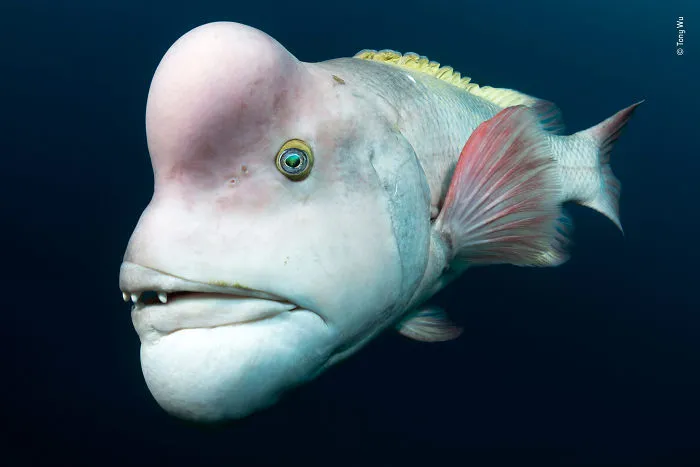
Tony was on a mission – he wanted to capture an image that portrayed the ‘unique expression and burning desire of a male in love’. His subject was the Asian sheepshead wrasse, a fish found near Sado Island. After years of planning, and amid torrential rain, he finally found an earnest suitor for his portrait. ‘This,’ he says, ‘is the face of a fish looking for love’.
If there are no dominant males in the school of Asian sheepshead wrasse, larger, older female wrasse will change sex. The transformed fish will use its bulbous head, which turns red in the breeding season, to gain control over other males, attracting a harem of females in the process. It will then mate with these females dozens of times a day.
Report
63points
#39 "Mister Whiskers" By Valter Bernardeschi, Italy, Highly Commended 2018 Animal Portraits
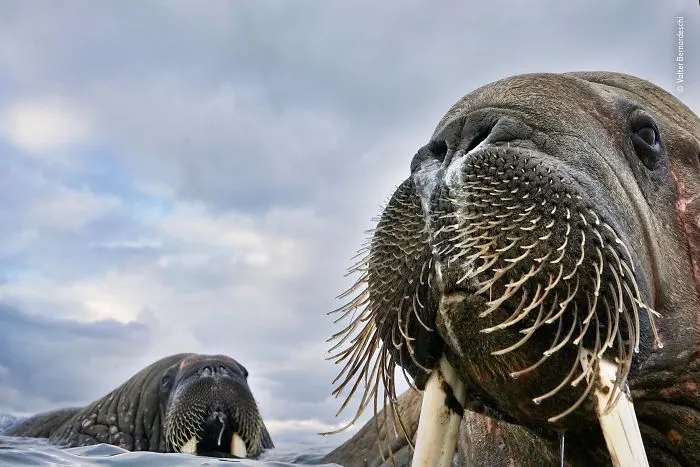
Extending his camera ahead of him using two monopod poles and a float, Valter slipped into the icy water to photograph the walruses he had spotted from his dinghy. This caught the attention of some curious youngsters who began to swim towards him. Exhilarated by this peaceful encounter, Valter captured this intimate portrait from a pole’s length away.
These walruses are likely to live for up to 40 years, spending their days trawling the seafloor, using their whiskers and muzzles to find and extract food. Their thick skin protects them from the cold as they forage mainly for molluscs, such as clams. In the Arctic water, blood flow to the surface of their skin is reduced to retain heat.
Report
63points
#40 Javier Aznar González De Rueda, Spain, Winner 2018 Wildlife Photographer Portfolio Award
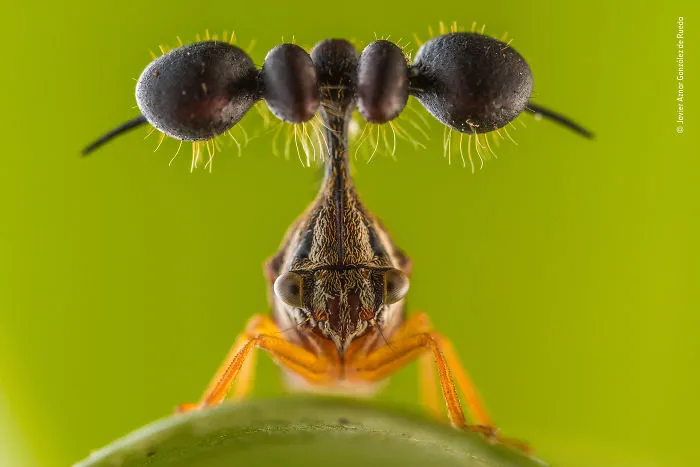
Little Big Head
Javier found just two of this species of treehopper in the three months he spent looking for them. The first flew away before he could photograph it. Taking great care not to scare this small bug away, he captured its portrait head-on for maximum impact.
Javier found just two of this species of treehopper in the three months he spent looking for them. The first flew away before he could photograph it. Taking great care not to scare this small bug away, he captured its portrait head-on for maximum impact.
Nearly all treehoppers have enlarged structures known as helmets, which develop from wing-like forms at the front of the thorax and then fuse above the body. These often disguise treehoppers as thorns or leaves to match their host plants. This one is perhaps mimicking an ant to deter predators, or by simply being difficult to swallow.
Report
61points