



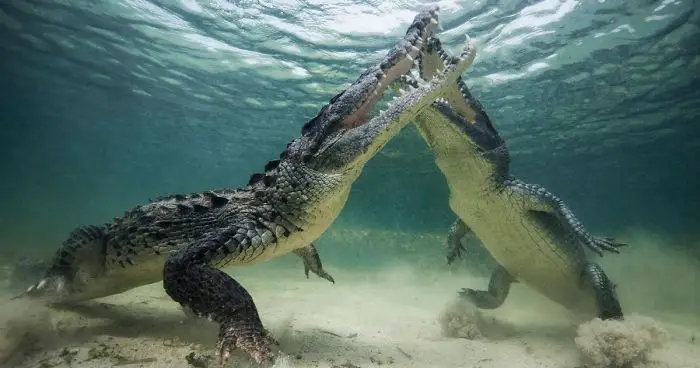

A ceremony at the Natural History Museum, London, has revealed the results of the Wildlife Photographer of the Year contest, and the winning photos are worth all of the attention they can get. This year, the annual competition has attracted nearly 50,000 entries from 92 countries and the organizers were kind enough to share them.
Photojournalist Brent Stirton has won the Grand Title for his picture of a black rhino's mutilated body. According to judge Roz Kidman Cox, his image was "symbolic of one of the most wasteful, cruel and unnecessary environmental crimes, one that needs to provoke the greatest public outcry." The shot was also included in Stirton's entry to the World Press Photo 2017 Nature category where his story won the first prize as well.
The powerful photo will go on show alongside 99 others at the Wildlife Photographer of the Year exhibition which opens on Friday October 20 at the central London museum.
More info: nhm.ac.uk
#81 'When Worlds Collide' By Fred Zacek, Estonia, 10 Years And Under Finalist
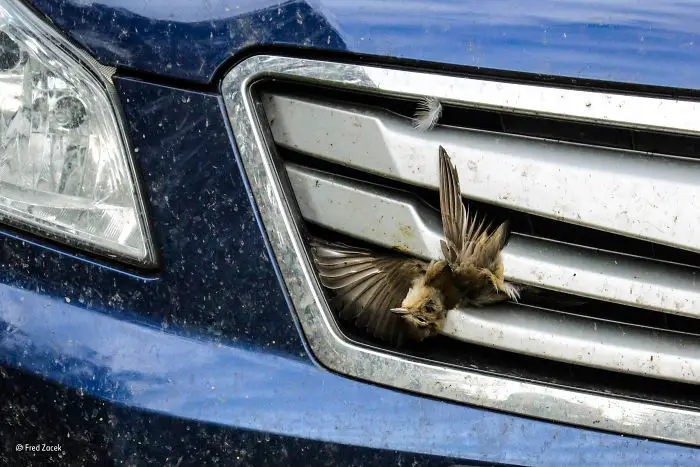
Fred’s family often spend their summers looking for wildlife to photograph. One evening, a small bird flew right in front of the car. When they reached their destination, Fred was shocked to see that they had hit the bird, which was probably a warbler. Five years old at the time, Fred took this photograph ‘to remember a sad moment’.
Estonia is a small country that is big on biodiversity. The combination of pristine forests and widespread wetlands attract a wealth of species, including bears, wolves, lynx and wild boar. Located on the migratory flight path to the Arctic, Estonia boasts some of the best birdwatching in Europe.
Report
8points
#82 'The Incubator Bird' By Gerry Pearce, UK/Australia, Behaviour: Birds Winner
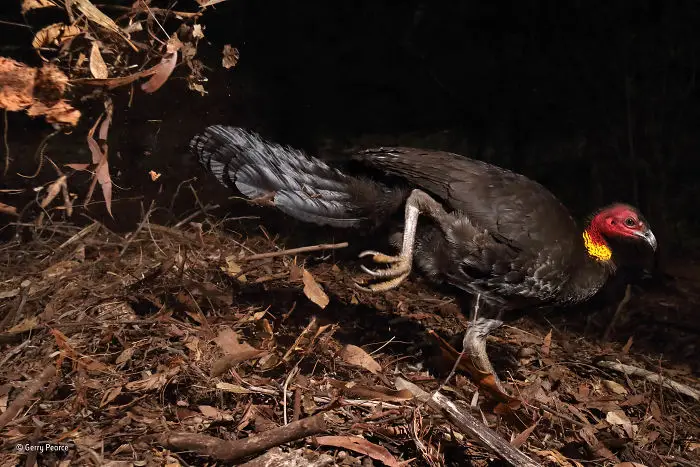
For four long months, this male brush turkey worked tirelessly to tend his nest mound. It was imperative that his eggs, buried deep under the rotting vegetation, were kept at 33°C. For Gerry, the turkey’s repetitive nature was an opportunity to experiment, enabling him to ‘come up with new and interesting ways’ to capture a ‘commonplace subject’.
The brush turkey is one of a handful of birds, the megapodes, who incubate their eggs with heat generated from rotting vegetation. Using sensors in their upper bill, they constantly monitor the mound’s temperature. Too hot and they must remove leaf litter, too cool and (like this male) more insulation must be piled on.
Report
7points
Both articles delve into the concept of conservation and art intersecting with nature to create impactful messages. For instance, the first article showcases a remarkable underwater art installation designed to foster marine life, while the second article features awe-inspiring wildlife photography, highlighting the urgency of protecting endangered species.
To further explore how art and conservation can intertwine to create awareness and encouraging environmental initiatives, one might consider examining how art plays a pivotal role in ecological projects.