





It's crazy to think that we once believed the Earth was flat, and that if you walked a few steps too far, you'd fall right off into who knows what. Nowadays, we're sending crews to space, inventing cures for strange diseases, and employing robots to do the jobs of human beings.
Thanks to the smart men and women who dedicate their lives to studying science, human beings have come a long way. But as much as we like to think we know it all, we actually really don't. And here's the evidence: someone once asked the scientists out there, "What's craziest or weirdest thing in your field that you suspect is true but is not yet supported fully by data?" and they woke to more than 12,000 responses.
Astrobiologists, psychiatrists, paleontologists, computer scientists, and others all came forward to share their theories and research that they believe to be fact. Since the original thread is now more than a decade old, some of the answers have already proven to be true. Others, not so much. But we found the entire brainy discussion interesting nonetheless. Here are the top responses...
#41
Physics
I'm surprised no-one has said string theory(/theories) yet. It lacks any observational data as the particle accelerator required to gain any data to prove/disprove it would need to be roughly the size of the solar system and would require enough power per second to keep the majority of the earth powered for a year. So, we're nowhere near being able to measure it.
I'm surprised no-one has said string theory(/theories) yet. It lacks any observational data as the particle accelerator required to gain any data to prove/disprove it would need to be roughly the size of the solar system and would require enough power per second to keep the majority of the earth powered for a year. So, we're nowhere near being able to measure it.
Report
5points
#42
Mathematics
There are probably an infinite number of twin primes. A twin prime pair is two primes whose difference is 2 (eg. 3,5 11,13 41,43)
Previously it wasn't known if there were an infinite number of ANY prime pairs (given some number n, are there an infinite number of n-prime pairs where the difference between the two primes is n)
As of now the twin prime conjecture has yet to be proven but lately there has been a lot of progress through the Elliot-Halberstam conjecture by Yitang Zhang. Recently Yitang Zhang was able to bring the minimum gap between primes down from infinity to 70 million (so there are an infinite number of 70,000,000-prime pairs). Though there is a lot of work to go since the Elliott-Halberstam conjecture has a limit of proving that there are an infinite number of 16-prime pairs (pairs of primes with a difference of 16).
My apologies if I got anything wrong, mathematics isn't actually my field but some of my colleagues are quite excited about it.
EDIT: Seems 42 isn't a prime number, and dang I was hoping so much it would be haha. Also I've learned if I want people to respond right away, I just need to make a small mistake somewhere.
Report
4points
#43
Epidemiology
In the United States, there is absolutely no etiologic/biologic difference between race/ethnic groups' risk of various chronic diseases, including but not limited to the [Hispanic Paradox](http://en.wikipedia.org/wiki/Hispanic_paradox), [the association between African-Americans and increased risk of diabetes](http://www.diabetes.org/living-with-diabetes/complications/african-americans-and-complications.html), the higher prevalence of chronic heart disease and COPD among African Americans, and the myriad of race/cancer associations.
I suspect a majority of these associations are consequences of differences in socioeconomic challenges, health disparities, cultural practices (such as foods consumed, exercise practices, etc.), and other learned behaviors.
Report
4points
#44
Business Administration
Corporations will start to be measured and graded by how productive they are in a scale immediate-global community.
Basically, crowdfunding will begin to start, maintain and break entire business companies. It's basically going to be the foundation stone of capitalism 2.0. It's going to absorb principles of communism into itself, making transparent models of managing so rooted no one will be able to tell what a company ISN'T doing.
Just so you have an idea. We're looking at an immediate future where a consumer receives a code which lets him access how and when a dairy product was made, together with on-demand access to the manufacturer's CCTV (yes, even the slaughterhouses).
Report
4points
#45

Computer Security
Generating random numbers isn't hard, it's just that we've ignored all the easy ways of doing it because they might fail somewhere.
It is precisely the fact that it's difficult to measure randomness, that makes it so tricky to deal with this.
Generating random numbers isn't hard, it's just that we've ignored all the easy ways of doing it because they might fail somewhere.
It is precisely the fact that it's difficult to measure randomness, that makes it so tricky to deal with this.
3points
#46
Engineering
Not necessarily supported by data, my opinion. I believe that in the next 20 years the world is going to undergo a minor economic upheaval due to stagnation of the progression of microelectronics along the Moore's Law curve. We've been enjoying the fruits of this for the last 50 years, but as we approach transistors that are single atoms in at least one dimension, the rate of progress will be unsustainable. Already we have seen an exponential increase in the cost of following the curve.
To be fair, there are many ways that this problem will be mitigated somewhat. Different materials will help us to once again start running things faster (rather than just putting more functionality in the same area). 2.5 and 3D die stacking technologies will help. Etc. Etc. But the fact is, we've been pushing along this curve mostly with silicon, mostly by overcoming *relatively* easy lithography and materials challenges, and that has enabled a pace of progress that other methods will not be able to maintain.
I don't see us hitting a brick wall, just a significant slowing. And it is worth mentioning that many pundits, most much smarter than I, have predicted such dire results in the past and have all been wrong.
But if true, the economic effects of the semiconductor industry slowing down could be substantial. It is one of the few industries where significantly increased value/$ over time has been a dependable engine of progress.
Report
3points
#47
Geography
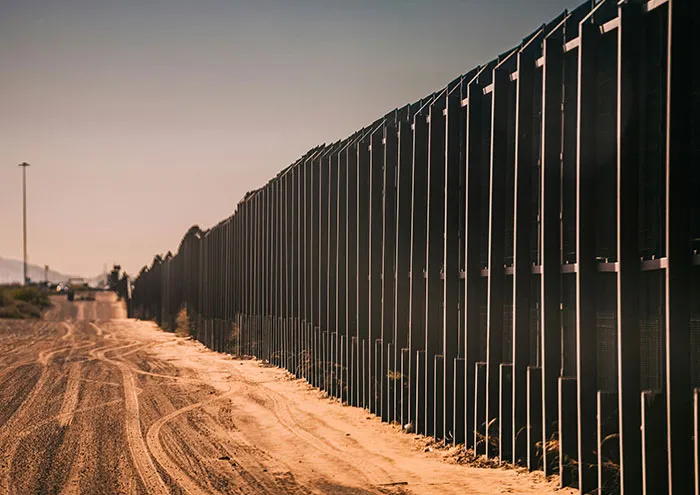
That you can figure out the routes illegal immigrants will take in crossing borders on foot based on hill slopes. Initial data seems to confirm it, but there's so little work done on it out there. Basically, as far as we can tell, human beings will avoid steep stuff at all costs. The problem is that most studies are done on concrete with established pedestrian areas, and you can't just ask an illegal immigrant to tell you what route he took on foot because most of them actually don't know.
That you can figure out the routes illegal immigrants will take in crossing borders on foot based on hill slopes. Initial data seems to confirm it, but there's so little work done on it out there. Basically, as far as we can tell, human beings will avoid steep stuff at all costs. The problem is that most studies are done on concrete with established pedestrian areas, and you can't just ask an illegal immigrant to tell you what route he took on foot because most of them actually don't know.
Report
2points
#48
Biology/Immunology
That the high salt in our western diet is partially responsible for the increase in autoimmune conditions in the west.
There is other weird stuff happening in immunology, like modifying bacteria (listeria) to be vaccines for cancer and other diseases. There's also stuff about being able to smell MHC types and immune system quality.
Report
2points
#49
Does classic Roman history count?
I have two, about two of the greatest poems of the classic times. Firts off, Ovidius.
Ovidius, after writing his famous epic, made several poems about how he was banished from Rome to a small town near the Black sea because of "Carmen et error". A song and a mistake. However, what these two factors are, is never specified. He also never seems to have actually fought his punishment. All he did was create a load of poems where he rants and curses. It is believed now by more and more people that Ovidius was never banished, but that this was just a form of comedy, and he performed these poems in Rome while everyone was just laughing their a*s off.
Second, Catullus. Catullus wrote an entire series of poems about his affair with Lesbia. Lesbia (a fake name, the "real" Lesbia, who the character is based on was most likely named Clodia) was a married woman, who had multiple boyfriends, and their relationship had many ups and downs. I believe that Lesbia never existed, and was just a character (possibly based on Clodia), made up by Catullus when he needed inspiration for his poems.
The biggest piece of evidence here is the fact that Lesbia's looks are never properly described. Only in one poem you vaguely get to know what she might have looked like. This was probably just Roman stand-up.
Edit: I have another fun one.
The Parthenon in Athene, Greece, widely assumed to be (the most famous) temple ever, might not have been a temple.
You see, you were never, not under any circumstances supposed to enter a temple. A god lived in a temple, and entering the temple was like walking into the god's house uninvited. But then why did the parthenon have a huge statue of the godess Athena *inside* the temple? The only way that would be visible is if looked at through the (half) open doors, when the sun is about right. Or you'd have to enter the temple.
I heard a claim it was a treasury. I'm not sure how I feel about that, but I'm pretty sure it's not a temple.
Report
2points