





It's crazy to think that we once believed the Earth was flat, and that if you walked a few steps too far, you'd fall right off into who knows what. Nowadays, we're sending crews to space, inventing cures for strange diseases, and employing robots to do the jobs of human beings.
Thanks to the smart men and women who dedicate their lives to studying science, human beings have come a long way. But as much as we like to think we know it all, we actually really don't. And here's the evidence: someone once asked the scientists out there, "What's craziest or weirdest thing in your field that you suspect is true but is not yet supported fully by data?" and they woke to more than 12,000 responses.
Astrobiologists, psychiatrists, paleontologists, computer scientists, and others all came forward to share their theories and research that they believe to be fact. Since the original thread is now more than a decade old, some of the answers have already proven to be true. Others, not so much. But we found the entire brainy discussion interesting nonetheless. Here are the top responses...
#21
Astrobiology/planetary science
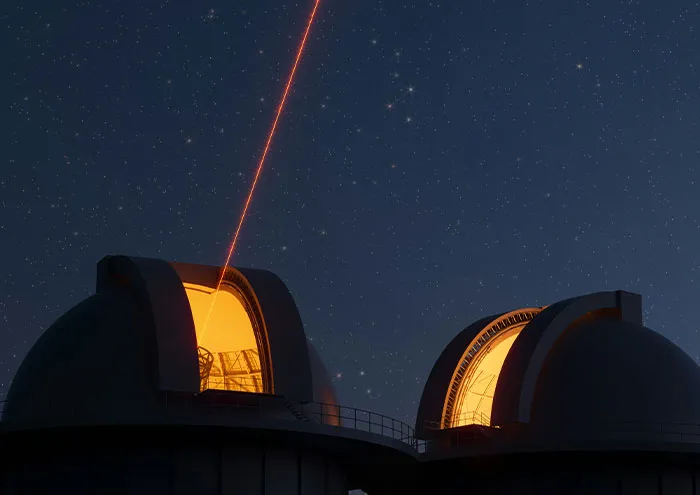
There are most likely billions of 'Earth-like' planets in the galaxy (not really controversial, but so far observational data has not found many - this likely a technological or methodological shortcoming rather than the product of a representative sample) and that life, perhaps not advanced or intelligent, likely exists on many of them.
There are most likely billions of 'Earth-like' planets in the galaxy (not really controversial, but so far observational data has not found many - this likely a technological or methodological shortcoming rather than the product of a representative sample) and that life, perhaps not advanced or intelligent, likely exists on many of them.
Report
9points
#22

Stock Market
Even if there have been thousands of papers written on the stock market in the past decades, they all seem to contradict eachother. We now know the performance of stocks is influenced by a number of firm factors:
- Analyst coverage
- Size
- Book-to-market value
- Leverage
- Institutional ownership
- ....
Yet even including all these factors, it's rare to find a study that arrives at a greater explanatory value than 15%. There are fortunes being spent in the stock market each day, and we still don't have a clue what causes the movement. This means that after the data comes in, we are "only" able to explain about 85% of the variance.
Personally, I'm sure that more than anything else insider trading and herd behaviour is responsible for the rise in stock prices. Look at the London Whale Scandal at JP Morgan, where *one* banker took on such huge positions that he was able to manipulate the market. Despite this, he was responsible for losing $2 billion.
Other than that, there was the [libor scandal](http://en.wikipedia.org/wiki/Libor_scandal), where bankers basically manipulate their trades in order manipulate their earnings.
Combining these two, I am **personally** rather sure that most of the movements in the stock market can be explained these days by investment bankers arranging to buy certain stocks at certain times, to start a snowball effect and rack in huge profits. To be clear, this is my personal opinion and is not supported by any data whatsoever. I might as well be completely wrong and there is simply a large control variable we haven't discovered yet. This can be random as well, some researchers have even discovered that on average, stock returns are significantly higher in January than in other months.
I don't want to sound like a "WAKE UP SHEEPLE" person, but if anything the past months have shown us, it's that the banks have both the money and people necessary to manipulate the stock market. At his peak, Jerome Kerviel had invested more than $50 billion dollars in the stock market. And that's just one small trader.
Report
8points
#23
Biology/Evolution
It'd be awesome to settle the arguments about the theropod origin of modern birds once and for all. Its frustrating because of how far back in the evolutionary timeline we have to look in order to get a picture of when birds first emerged. I mean, we don't even know for sure how birds developed flight! Did they climb and glide or jump and flap for short distances?
Really the only way us wildlife biologists will get some answers is if some nice geneticist or paleontologist makes a breakthrough discovery haha.
EDIT: Everyone seems to be missing the fact that the topic is about ideas that aren't fully supported. While the idea that birds evolved from theropod dinosaurs is in fact the most popular and widely held opinion, it is still technically a *theory* and has not been completely proven.
I was giving an example of something I thought might advance in my professional field and to spark some interesting discussion (mission accomplished). I mean, its not like popular biological opinions have ever been wrong, right?
EDIT 2: Alright everyone, I am not suggesting that most of the scientific community is wrong. I'm just stating that because this is a theory, I thought it would fit in a thread about ideas that aren't fully supported.
Also, of course I believe in evolution.
Report
8points
#24
Classics/archaeology/ancient science
A little late to the game on this one, and I'm not exactly a scientist, but here's my weird fact that may be true, although is based on tenuous evidence.
What we've found definitively in anthropological studies of cultures with a strong oral tradition (the one I'm familiar with is studies of peoples in the Balkans) is that oral memory is a lot better in other cultures that rely less on writing. That, for instance, is why the Iliad and Odyssey could be passed down by oral tradition for centuries before they were written down, relatively intact.
As a result of this, some scholars have made the case that the date of the fall of Troy is preserved in the Iliad and Odyssey, based on their descriptions of astronomical phenomena (some of which are more dubious readings than others). The date given by the astronomical dating lines up with the date archaeologists have determined for the destruction of Troy VIIa, which the consensus of scholars accepts to be the Homeric Troy.
Report
8points
#25

Computer science/machine learning
There is a reasonable chance that, within the next 10 years, computers that analyze large bodies of data and make statistical predictions will be able to make much better routine strategic decisions at almost every layer of society than actual humans. This means many of the decisions that pertain to economics, politics, etc. At some point this will likely start having a major impact on the structure of society, as there won't be all that much room for argument when the computer says that some decision is or is not optimal.
Some current signs that point to this, for example, are the story about an automated Target marketing campaign that detected that a teenage girl was pregnant before her own father knew about it. Automated data analysis (when data is available) is simply better at predicting common events than real people. Why then would a corporation for example rely on human executives to make decisions about acquisitions and mergers? Why would a politician use human strategists to choose policy positions? And if a politician makes decisions by computer, why do we need the politician?
This will raise some interesting questions. Should we still use human juries and judges when computers can determine guilt or innocence with much greater accuracy? What happens when a human jury convicts a man, and the innocence project makes an appeal on the basis that the judge-o-matic predicts that the man's chance of having actually committed the crime is 0.000001%?
Should we have politicians set the tax rate, when computers can do it better to optimize both economic growth and government performance?
I would emphasize that this has little to do with "AI" -- it's not intelligence, just prediction. And we'll have to contend with this issue long before computers become "intelligent" in the conventional sense. It also doesn't apply to rare, unprecedented events (so a computer won't tell you whether we'll invent cold fusion), but it will very much apply to events that have happened before (recessions, political unrest, effect of taxation on the economy, etc).
Report
7points
#26

Chemistry
A lot of the accepted mechanisms for the way reactions occur are incomplete at best. Example, water and alkali metals go boom. The accepted mechanism is that the metal dissolves and loses an electron which goes to an H+ to make H which combines with another H to make H2. Then the heat causes the H2 to combust. However recent observations of various colors associated with metal vapor evolving durring the reaction suggest the metal may be vaporizing at the interface with water and that this reaction is occurring in the gas phase rather than a simple dissolution of the solid and subsequent electron exchange.
Edit: So a lot of people don't like the alkali metal with water example, so here is a bit about my own research. I am working with a material that has been known since the 50's. It wasn't thought to be too exciting, but we understand more about the mechanism by which it forms now. We have been able to use this knowledge to add a simple compound to the mixture that actually slows the formation of the material. This has lead us to creating the highest resolution photo resist in the world.
7points
#27
Cancer Biology
As a few other biology people have pointed out, we're now very close to being able to practically (cost-wise) sequence genomes routinely in clinical practice. A *large* portion of cancer research going on now is focusing on how to take that sort of information (i.e. your cancer has these 56 mutations) and develop a therapy that is specific *for you!*
The first proof of concept d**g for this type of approach (known as personalized medicine) is Erlotinib, a med that specifically shows action in patients with mutations in the EGFR gene. It's been in the clinic for several years now.
In the near future, cancer physicians will have a whole suite of these sorts of targeted meds (which work extremely well for a subset of patients while having little side effect) to give in combinations dependent on which mutations are present in your cancer. This might be a little more than 10 years out, but it is exciting and will yield positive results all along the way.
Report
7points
#28
Biology
When personal genomic sequencing becomes readily accessible, even as a routine medical service (much like a physical), we should be able to place the data into a controlled anonymized database and use statistical analysis to essentially link most disease states and predispositions to their genotypic bases. There are loads of "combinitoric blackholes" in the genome data right now, since we haven't been able to collect large-scale, high-throughput disease/genotype relationships on a genomic scale yet due to the expense.
Have a look at the company 23andme for an example of a smaller scale version of this. They represent a good first step towards breaking the cost down and making personal genomics accessible regardless of socioeconomic status.
6points
#29
Anesthesiology
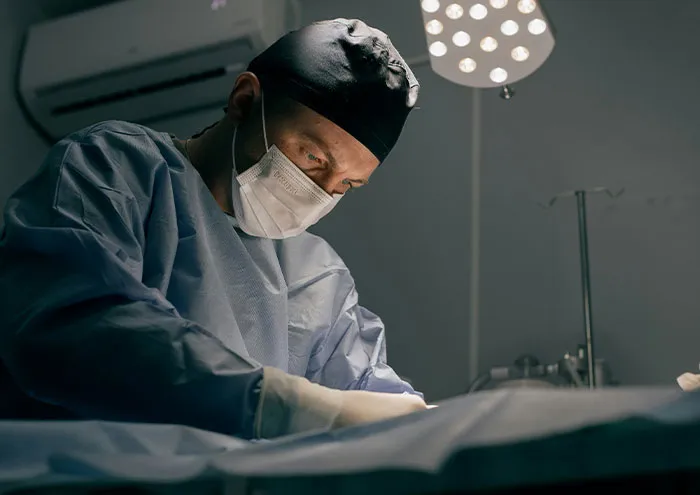
Surgery and other actions that can aggravate the inflammatory response might be a contributing factor to neurodegenative disorders similar to Alzheimers. There have been some preliminary studies on stuff like this and the data seems promising, but we have to take into account the effects of different types of anesthesia, different types of surgery, etc.
EDIT:
To all the people asking for papers, I don't have any. This is all speculation. I thought that it was clear by the question posed by the thread. There's no hardcore proof that I can provide for you at this time. My apologies. I have a hard copy of a paper that was submitted to some journal, but it was rejected because it didn't take a couple of key factors into account, so unfortunately, there's no link to it.
Also, poor word choice on my part. While I will refer to it as Alzheimer's Disease, I'm really talking about general neurodegeneration that can resemble Alzheimer's Disease. Many of the markers that we're testing for are the same.
6points
#30
Biology
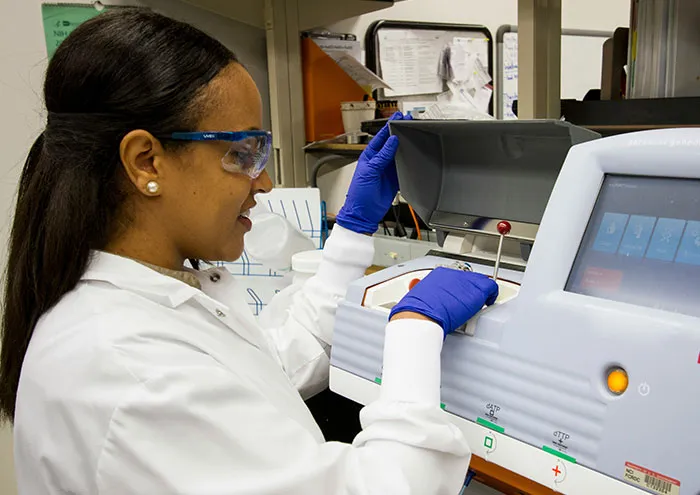
It's not really that crazy (at least I don't think it is), but I firmly believe that human sexuality is grounded in a genetic basis.
Unfortunately, the only studies I'm aware of that got solid results on genetic control of sexuality were those performed on small model organisms such as *Drosophila.* Neurological studies on more complex animals - especially humans - are difficult enough, and sexuality is thought to be governed by a convoluted web of interacting neurological components.
There *have* been studies on humans that identified distinct phenotypes between hetero- and homosexuals' brains. For instance, my memory's a little foggy but I recall one example where certain brain activity patterns of a homosexual male more closely resembled those of a typical heterosexual female than those of a heterosexual male. But that's hardly enough for us to establish a clear link.
Of course, it doesn't really matter how much data we ever get on human sexuality and genetics; it's one of those topics where there will always be those who deny it because it conflicts with what they feel *must* be true.
**Edit:** For clarification, I do believe epigenetic factors also play a role (and perhaps are more impactful) in governing sexuality. The only reason I neglected to mention them in my original post is because I feel that a genetic basis for homosexuality is much more controversial.
6points
#31
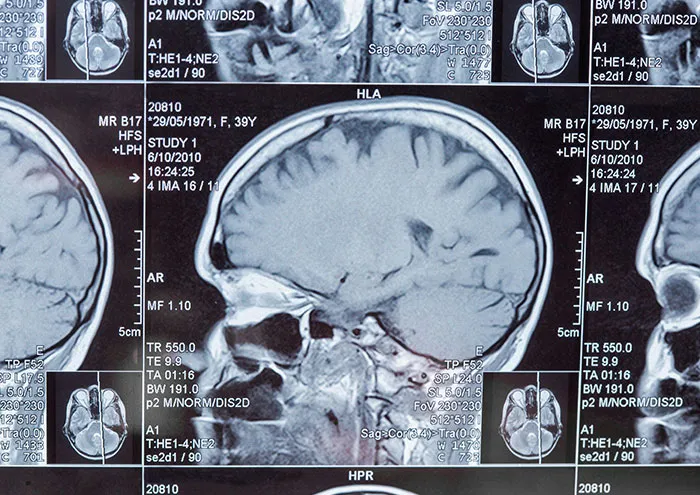
Psychiatry/Psychotherapy
That bipolar, depression, epilepsy, schizophrenia, and several other "brain" disorders are much more similar than we already know.
There's already some correlative literature, but it's in it's infancy.
See psychogenic nonepileptic seizure disorder for one example. Also, the use of an anti psychotic medication such as Abilify for (now FDA approved treatment of) SSRI/SNRI resistant depression seems to suggest a more systemic issue than clinical depression has traditionally been viewed (as a unipolar disorder).
Report
6points
#32
Tissue engineering
We are going to find a biological recipe for creating self-assembled tissues from scratch.
Developmental biological processes can turn a single-celled zygote into an adult human. It's pretty incredible when you think about it. Somewhere buried in the complexity of metazoan biology are a set of 'origami-like' rules that allow growing tissues to self-assemble into larger tissues and organs. If we can model and manipulate these programs with precision, we can engineer just about any tissue we like.
A lot of people are familiar with '3D organ printing' as a route to organ manufacturing, but I think its a dead end without more knowledge of biological self-assembly. If we can't control how tissues develop, the organs will fall apart as soon as they are printed. The missing pieces of tissue self-assembly are quantitative models for tissue morphogenesis, which are being filled in as we speak by advances in *in vitro* tissue culturing and molecular biology (like viruses that can measure gene activity over time with good spatial resolution).
Report
6points
#33
How many of these people are experts in their field, and how many are claiming to be?
I'm strongly bothered by this thread simply because there are people who'll just say anything to prove their point.
I'm strongly bothered by this thread simply because there are people who'll just say anything to prove their point.
Report
6points
#34
[Psychology/Biology]
This is kind of out there, but I believe hormonal birth control plays a role in a subset of divorces and in the birth of children with poor immune systems. I think most people are familiar with the t-shirt study that found women were attracted to the smell of men with dissimilar immune systems and that they felt t-shirts with similar immune systems smelled like their father or brother.
Women on hormonal birth control did not perform well in that study - they often picked similar immune systems as more attractive. A massive percentage of women are on birth control during their dating years and when they meet their husbands. After marriage, another percentage of those women will stop taking hormonal birth control in order to have children. What happens then?
If you have a woman who marries a man who is a poor genetic match - someone she may not have wanted to be with if she wasn't on birth control - when she goes off of her birth control, it stands to reason that her perception of her husband may change. Given that her body and personality will be going through a change while her hormones are re-regulated, her husband's view of her may change as well. It would not surprise me if this subconscious change contributes to divorce rates. In addition, should those hypothetical people have children, the child may have a poorer immune system due to the lack of genetic variance between its parents.
Edit: Ladies, please don't let this scare you off of your hormonal birth control. The point of this thread was to share something weird that *isn't fully supported by data.* I do not have any studies that say that these changes in odor preference actually cause divorce or poor genetic variance in children. Mate selection is confusing and odor is not the only determining factor (you don't need a scientist to tell you that!) The only pieces of information here that are supported by any data are that women are capable of smelling similar and dissimilar immune systems and that their ability to do that may be altered when they are on birth control. Nothing more.
5points
#35
Report
5points
#36

An interesting observation:
The response lengths in this thread follow the Average Dissertation Length (proportionally) for each corresponding field.
Not too surprising, but I thought it was interesting.
The response lengths in this thread follow the Average Dissertation Length (proportionally) for each corresponding field.
Not too surprising, but I thought it was interesting.
Report
5points
#37
Cetology
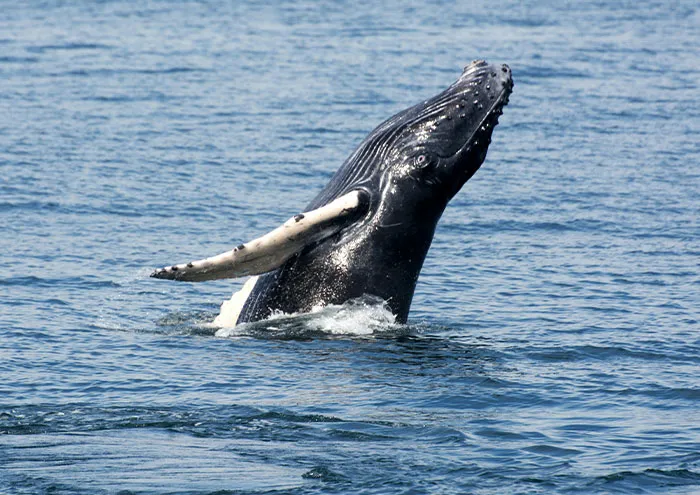
It is suspected that at least some baleen whales can echo locate to at least a rudimentary extent, this is due to several recordings of abnormal whistles produced during the rescue of several humpback whales on different occasions (humpback whales occasionally get lost in river systems and need to be aided in getting out). Also, it is likely that bottlenose (and possibly other) dolphins are able to follow magnetic lines, a likely reason for many beachings. Currently there is some observed evidence of this however there has not been a mechanism for this navigation that has been isolated as of yet. (not a surprise as it takes about a dozen or so nerve cells to do this and dolphins have over 1,000,000,000,000 cells in their body).
It is suspected that at least some baleen whales can echo locate to at least a rudimentary extent, this is due to several recordings of abnormal whistles produced during the rescue of several humpback whales on different occasions (humpback whales occasionally get lost in river systems and need to be aided in getting out). Also, it is likely that bottlenose (and possibly other) dolphins are able to follow magnetic lines, a likely reason for many beachings. Currently there is some observed evidence of this however there has not been a mechanism for this navigation that has been isolated as of yet. (not a surprise as it takes about a dozen or so nerve cells to do this and dolphins have over 1,000,000,000,000 cells in their body).
Report
5points
#38
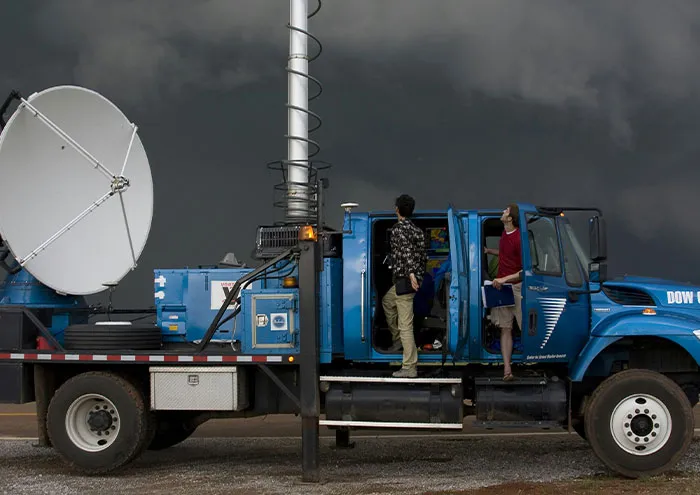
I am a student in meteorology. This is more of a technological advance than something that needs to be "proven". Within the next 10-20 years, most cars or cell phones will have microchips in them who's sole purpose is to record the current data (such as temp, wind, etc). This will allow for millions upon millions of data points which in turn will greatly increase the grid spacing for forecast models. In layman's terms, forecast accuracy and forecast personalization will be near pristine, down to the seconds. Microchips are already cheap enough, we just need the proper computing power to process all of that data in real time. Supercomputers to the rescue!
Report
5points
#39
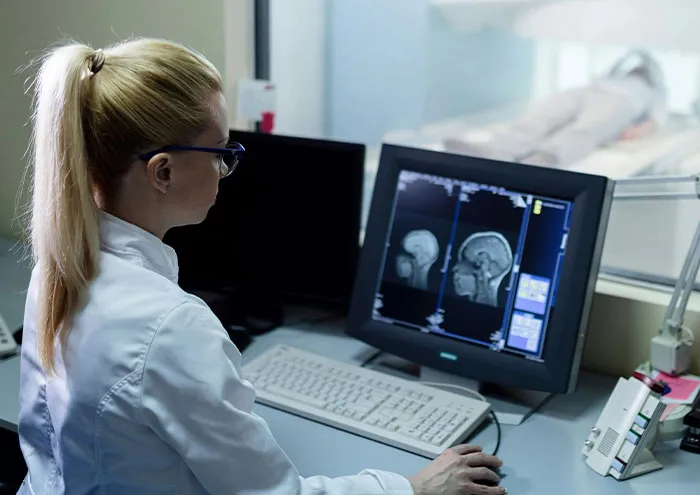
Epilepsy: in severe cases patients have all connections to one half of their brain severed to control seizures. No input, no output, and no communication with the rest of the brain, but that half remains active for the rest of their lives. For these people, aspects of their personality and memories disappear forever on the day of their surgery, because their neuroanatomical substrates resided in that hemisphere. If that half has no input but continues to fire, what is it doing? Wondering who turned the lights out? Remembering the good times? Slowly spiraling into senseless patterns of neural firing akin to dementia? I'd love to find out.. '
**EDIT**: The split-brain procedure is actually something else entirely - Severing the corpus callosum. This isn't what I'm referring to, which is the seldom-used hemispherectomy; specifically the method in which the hemisphere remains in the head to avoid complications surrounding the pressure change upon removing it.
**EDIT**: The split-brain procedure is actually something else entirely - Severing the corpus callosum. This isn't what I'm referring to, which is the seldom-used hemispherectomy; specifically the method in which the hemisphere remains in the head to avoid complications surrounding the pressure change upon removing it.
Report
5points
#40
Chemistry/Pharmaceuticals
Most batch based med manufacture will move to continuous processes over the next 20 years. It's cheaper, greener, produces more product in less time and the quality control is much more robust. (I'm currently working in the field, there are about 8 of us working on it in one of the 10 biggest med companies in the world).
Most batch based med manufacture will move to continuous processes over the next 20 years. It's cheaper, greener, produces more product in less time and the quality control is much more robust. (I'm currently working in the field, there are about 8 of us working on it in one of the 10 biggest med companies in the world).
Report
5points