



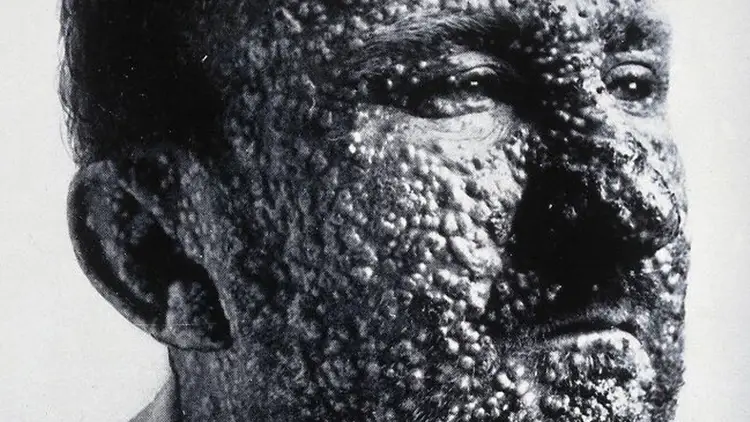


We’ve come a long way since public dissections were sold-out theatrical shows and syphilis had doctors depending on dangerous guesswork. Back then, medicine relied mostly on trial, error, and superstition. Because basic science was still a mystery, treatments once hailed as cutting-edge — like mercury ointment or pills — now read like straight-up horror plots.
Thankfully, medical historian @drlindseyfitzharris has plenty of information on these bizarre relics, and we’ve rounded up the weirdest oddities from her collection for a wild look at the past.
Side effects of scrolling through this list may include a sudden gratitude for modern anesthesia.
#21
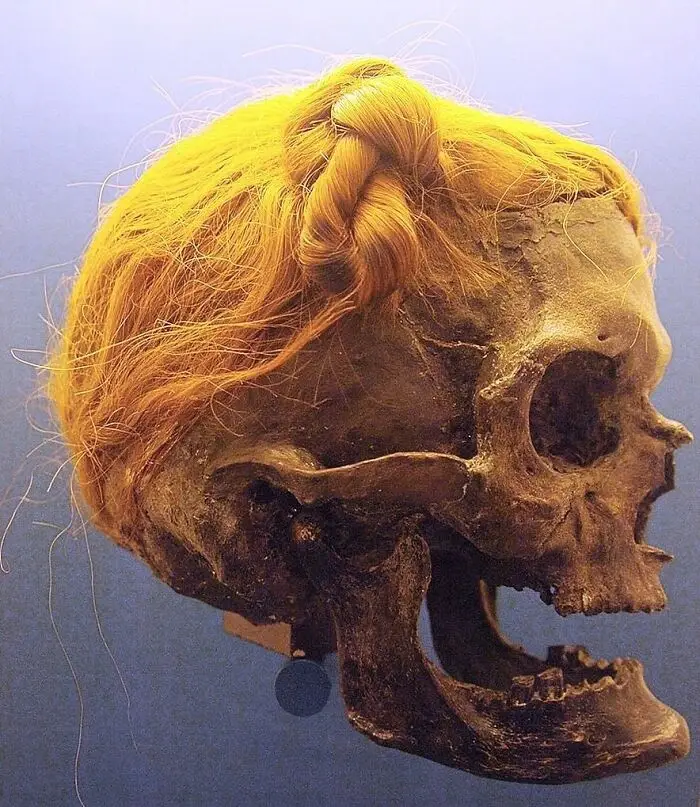
Osterby Man is a bog body of which only the skull and hair survive. It was discovered in 1948 by peat cutters to the southeast of Osterby, Germany. The hair is unusually well preserved and is tied above the right temple in a Suebian knot. The Suebian knot indicates the man d**d in the Late Iron Age or the Roman period, and radiocarbon dating likewise indicates a date between 75 and 130 A.D.
A bog body is a human cadaver that has been naturally mummified in a peat bog. Unlike most ancient human remains, bog bodies have retained their skin and internal organs due to the unusual conditions of the surrounding area. These conditions include highly acidic water, low temperature, and a lack of oxygen, and combine to preserve but severely tan their skin. While the skin is well-preserved, the bones are generally not, due to the acid in the peat having dissolved the calcium phosphate of bone.
A bog body is a human cadaver that has been naturally mummified in a peat bog. Unlike most ancient human remains, bog bodies have retained their skin and internal organs due to the unusual conditions of the surrounding area. These conditions include highly acidic water, low temperature, and a lack of oxygen, and combine to preserve but severely tan their skin. While the skin is well-preserved, the bones are generally not, due to the acid in the peat having dissolved the calcium phosphate of bone.
Report
3points
Even today, doctors likely use treatments that future generations will find shocking. That’s because medical knowledge is always growing, and proper studies can be too expensive or take too long to run. Knowing how easily bad ideas once passed as gospel teaches us to ask better questions today.
So the next time you go in for a routine checkup, don’t take your care for granted… stay curious and speak up.
#22
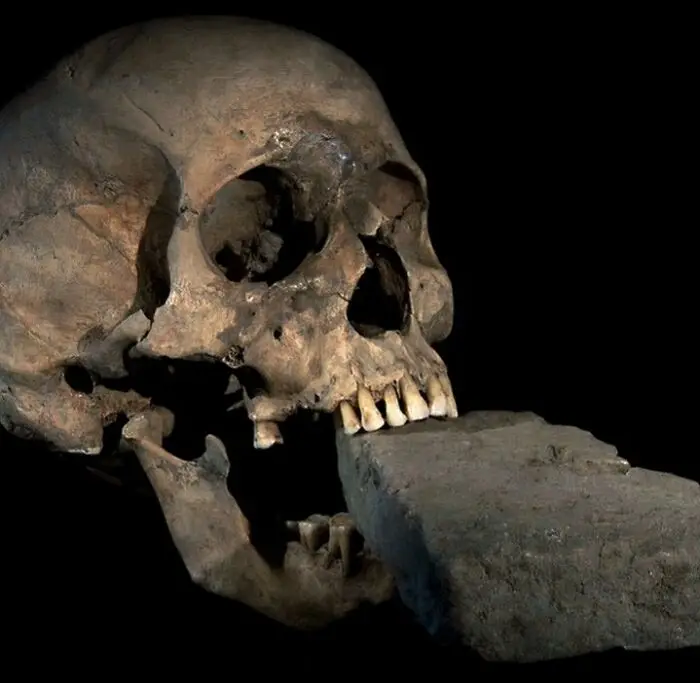
Italian researchers have unearthed the remains of a female "vampire" in Venice, buried with a brick jammed between her jaws to prevent her feeding on victims of a plague which swept the city in the 16th century. Matteo Borrini, an anthropologist from the University of Florence, said the discovery on the small island of Lazzaretto Nuovo in the Venice lagoon supported the medieval belief that vampires were behind the spread of plagues like the Black D***h.
The skeleton was in a Venetian plague pit on Lazzaretto Nuovo, which lies two miles northeast of Venice and was used as a sanatorium for plague sufferers. The succession of plagues which ravaged Europe between 1300 and 1700 fostered the belief in vampires, mainly because the decomposition of corpses was not well understood. For instance, as the human stomach decays, it releases a dark "purge fluid” which can flow freely from a corpse's nose and mouth. Since tombs and mass burials were often reopened to add new bodies, Italian gravediggers saw these scenes and confused the “purge fluid” with traces of vampire victims' blood.
The skeleton was in a Venetian plague pit on Lazzaretto Nuovo, which lies two miles northeast of Venice and was used as a sanatorium for plague sufferers. The succession of plagues which ravaged Europe between 1300 and 1700 fostered the belief in vampires, mainly because the decomposition of corpses was not well understood. For instance, as the human stomach decays, it releases a dark "purge fluid” which can flow freely from a corpse's nose and mouth. Since tombs and mass burials were often reopened to add new bodies, Italian gravediggers saw these scenes and confused the “purge fluid” with traces of vampire victims' blood.
Report
3points
#23
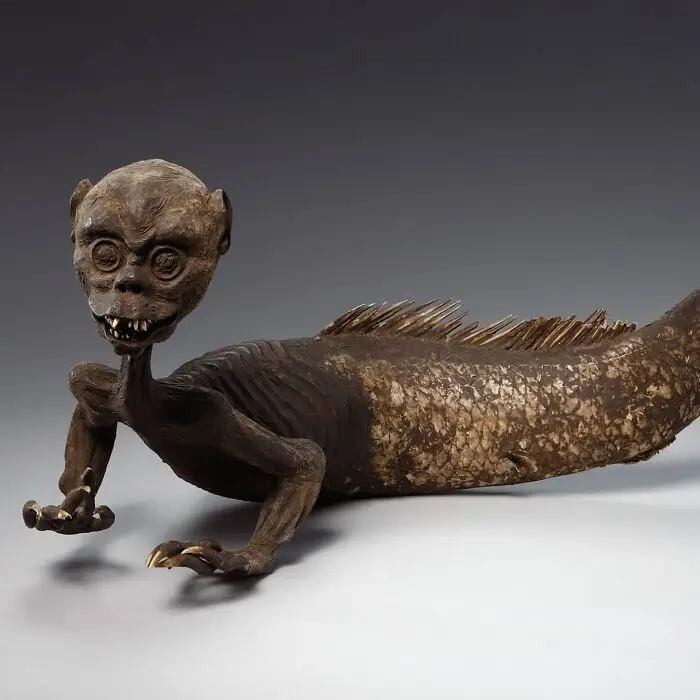
A Victorian merman. Objects like this were sometimes made from the torsos of monkeys and the tails of fish. They were displayed by showmen like P. T Barnum to audiences who believed they were real. This particular one is on display at the Horniman Museum in the UK. It was recently x-rayed and curators discovered it had a wooden and wire frame inside with fish skin stretched over its tail. It has rows of teeth that were carved from bone and the hair is human.
Report
3points
#24
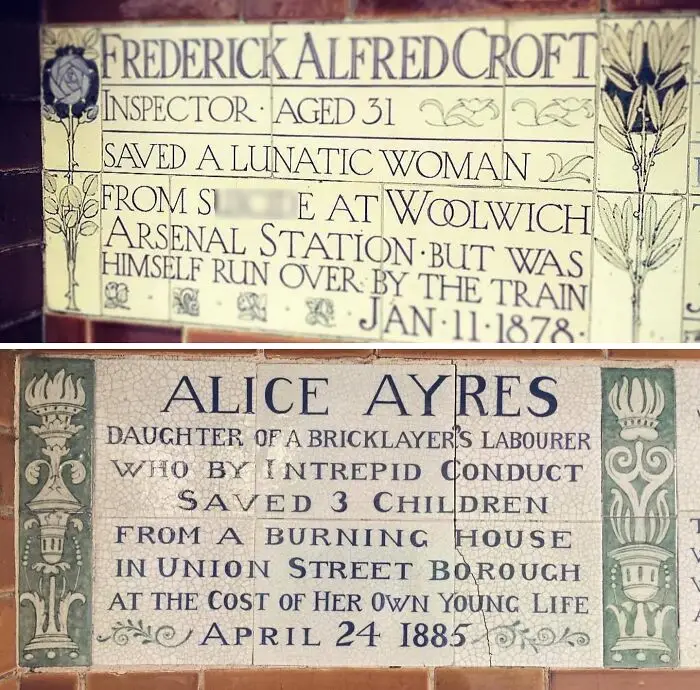
In 1887, the artist George F. Watts proposed a tribute of a different sort for Queen Victoria’s Golden Jubilee. He believed art could act as a force for social change & suggested a monument celebrating "heroism in every-day life." Watts referred to Alice Ayres, a nursemaid who d**d in 1859 in a fire after she saved the lives of her employer’s children by throwing a mattress out the window and dropping them to safety. She was then overcome by the fumes and stumbled out of the window to her d***h.
Watts proposed that a marble wall inscribed with the names of everyday heroes be built in Hyde Park. Sadly, his suggestion could not garner enough support. Then, in 1898, Henry Gamble—a longtime friend of Watts—acquired the land which would later be called Postman’s Park. Watts suggested that the memorial be built there.
On 30 July 1900, the 50 foot long wall with space for 120 ceramic plaques was unveiled to the public. Watts, who was 83 years old, was too ill to attend the ceremony. He d**d 4 years later. Over several decades, plaques were added to the wall, many of the names chosen from Watts’s collection of newspaper clippings he had accumulated over the years about "everyday heroes." In 1931, the 52nd plaque commemorating the life of Herbert Maconoghu—who d**d aged 13 while trying to rescue two drowning classmates—was placed. This would be the last name added to the wall in the 20th century.
The wall fell from fashion and it seemed that no names would ever be added again. Then in 2007, a man named Leigh Pitt d**d while rescuing a 9-year-old boy from drowning in a canal in Thamesmead. His colleagues and fiancée approached the Diocese of London and a new plaque commemorating Pitt’s heroic actions was added in 2009.
Today, Postman’s Park attracts only a handful of visitors who are drawn, perhaps, to the strangeness of the Victorian d****s chronicled on Watts’s wall. After all, not many people are trampled under the hooves of runaway horses, or d*e in theatre fires these days. In this way, the plaques are as much a historical testament to an era long gone as they are to the lives of the people whose names adorn them.
Report
3points
#25
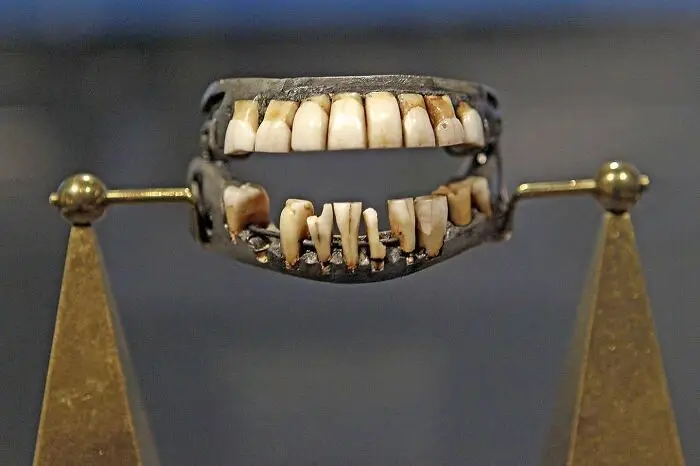
Contrary to popular belief, GEORGE WASHINGTON’S DENTURES were not wooden. At his inauguration in 1789, he only had one tooth left. John Greenwood—a dentist from New York—fashioned a set of dentures from ivory, and a mixture of cow & human teeth. Unsurprisingly, tooth loss was a common problem in the 18th century. Toothbrushes made of coarse horse hair often did more harm than good.
The wealthy might choose to have a “live” tooth implanted. The recipient had the rotten tooth removed before a selection of donors (usually poor working class people who were paid), who would then have their own healthy teeth extracted until the right size was found. Afterwards, it was affixed using a silver wire. Having a “live” tooth implanted was a costly endeavor. Compounding the problem was the fact that surgeons were unknowingly transmitting diseases like SYPHILIS into patrons’ mouths from infected donors. Because of this, a market for dentures soon arose.
Early versions were made of ivory or animal bone, and incorporated the teeth of executed criminals or exhumed bodies. Although cumbersome and painful to wear, dentures were in a high demand. To keep up with it, practitioners needed access to healthy teeth in large quantities. WATERLOO TEETH, as they became known, referred to any teeth stolen from the mouths of d**d soldiers in the 19th century, and was a term employed during the Crimean & American Civil Wars.
George Washington was acutely aware of his dental problems. Over the years, he kept several of his pulled teeth inside a locked desk drawer at Mount Vernon to use later for a set of dentures. According to Mount Vernon, some of the teeth used to make the dentures may have also come from Washington’s slaves - though the document is unclear. Sadly, this was not uncommon, and we must keep it in mind when contextualizing objects like this.
Report
3points
#26
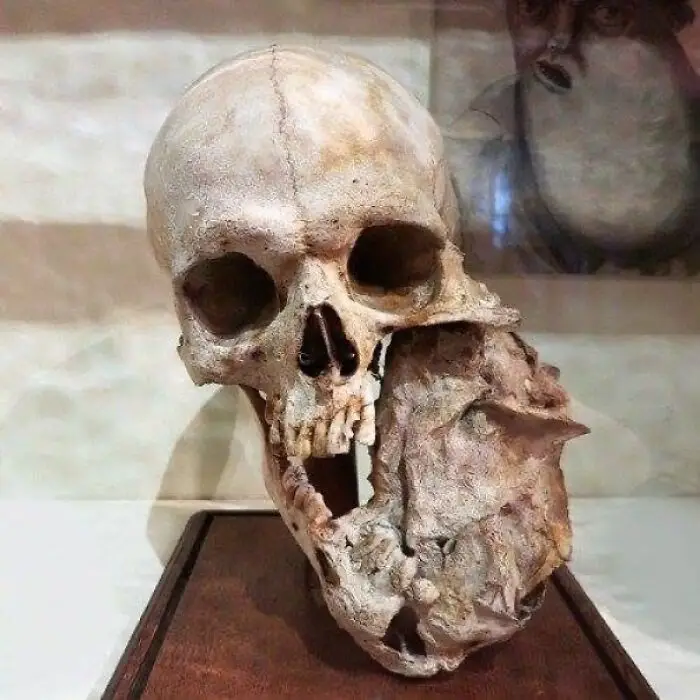
Skull with a mandibular tumour from the Bleuland Cabinet at the University Museum Utrecht. All objects in this historic cabinet come from the private collection of Jan Bleuland (1756-1838) and were used by him for educational purposes. The museum features an extensive collection of skeletons, organs, fetuses and body parts in formaldehyde.
This object is mind-blowing when you consider how awful it would have been for the patient living in an era when surgical options would have been extremely limited as there was no anesthesia and no concept of germs.
This object is mind-blowing when you consider how awful it would have been for the patient living in an era when surgical options would have been extremely limited as there was no anesthesia and no concept of germs.
Report
3points
#27
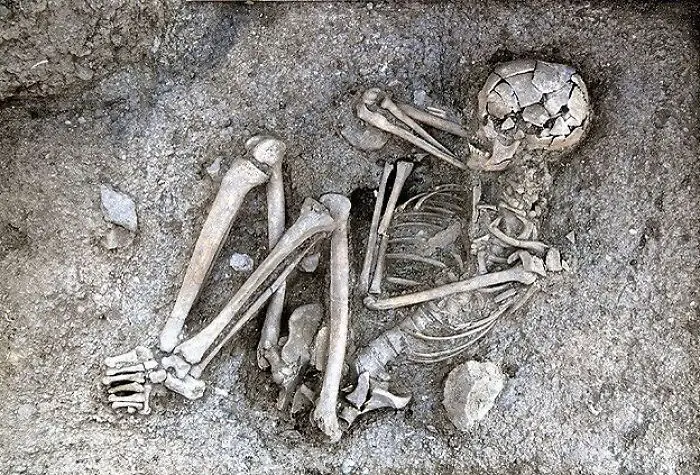
British archaeologists have found what they say is the world's oldest complete example of a human being with metastatic cancer and hope it will offer new clues about the now common and often fatal disease. Researchers from Durham University and the British Museum discovered the evidence of tumors that had developed and spread throughout the body in this 3,000-year-old s
keleton found in a tomb in modern Sudan in 2013. Analyzing the skeleton using radiography and a scanning electron microscope, they managed to get clear imaging of lesions on the bones which showed the cancer had spread to cause tumours on the collar bones, shoulder blades, upper arms, vertebrae, ribs, pelvis and thigh bones. Despite being one of the world's leading causes of d***h today, cancer is virtually absent in archaeological records compared to other diseases, so this discovery is very important.
keleton found in a tomb in modern Sudan in 2013. Analyzing the skeleton using radiography and a scanning electron microscope, they managed to get clear imaging of lesions on the bones which showed the cancer had spread to cause tumours on the collar bones, shoulder blades, upper arms, vertebrae, ribs, pelvis and thigh bones. Despite being one of the world's leading causes of d***h today, cancer is virtually absent in archaeological records compared to other diseases, so this discovery is very important.
Report
3points
#28
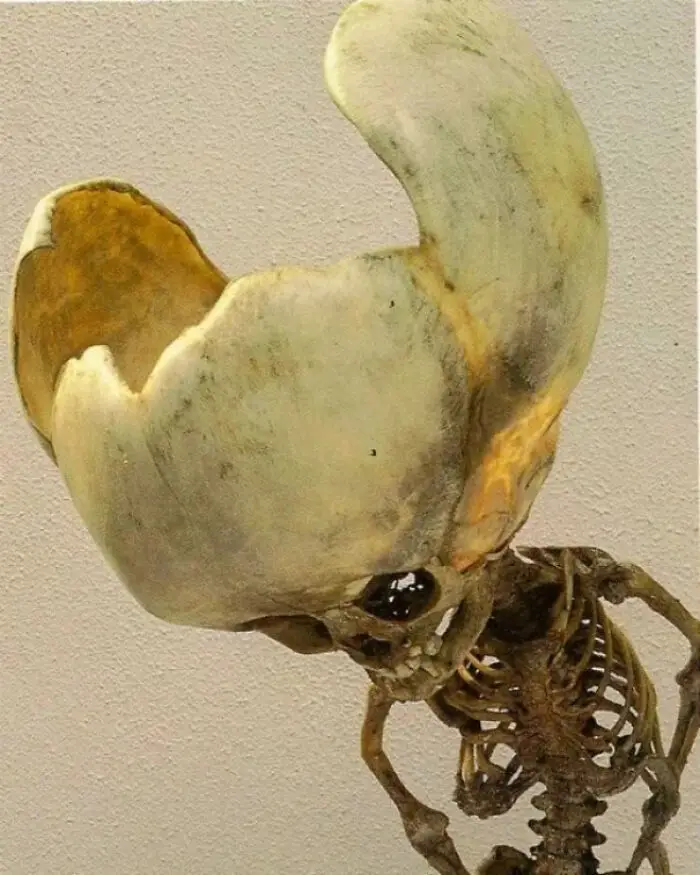
This skull from the 19th century is of a child who d**d from hydrocephalus.
Hydrocephalus (from Greek hydro-, meaning "water", and kephalos, meaning "head") is a medical condition in which there is an abnormal accumulation of cerebrospinal fluid in the brain. This causes increased intracranial pressure inside the skull and may cause progressive enlargement of the head if it occurs in childhood, potentially causing convulsion, tunnel vision, and mental disability. It was once informally called “water on the brain,” and was almost always fatal in earlier periods. While the condition is still incurable, it can now be managed by placing a drainage tube (shunt) between the brain ventricles and abdominal cavity.
With this particular specimen, the skull has opened up like a flower due to the high volume of fluid in the brain. It is currently at the University Museum, Utrecht, the Netherlands.
Report
3points
#29
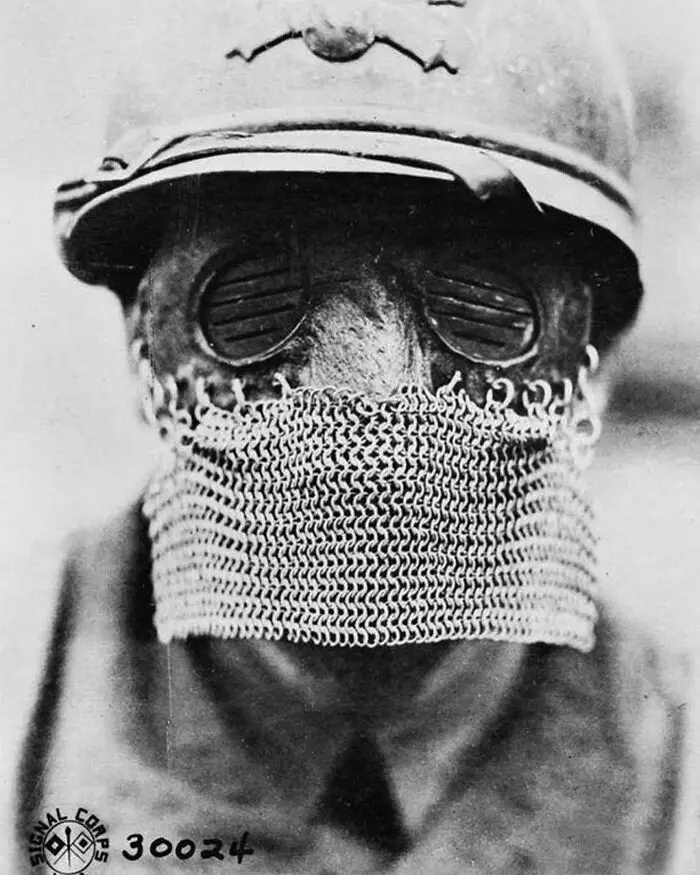
This is a mask worn by tank crews. Shaped to fit around the eyes & nose, the (chain) mail protected against "bullet splash" caused by explosions as the tank came under fire. Tanks—which first appeared in September 1916—also left their crews susceptible to burns due to unprotected gas tanks which could ignite when hit. Lieutenant Stanley Cohen remembered trying to pry open an escape hatch that had been jammed when his tank had been hit by a shell. He eventually escaped, but was severely disfigured as a result of the strike.
Mankind’s military technology at the start of the war wildly outpaced its medical capabilities. Bullets whizzed through the air at incredible speeds. Shells and mortar bombs exploded with a force that flung men around the battlefield like rag dolls. And a deadly new threat in the form of hot chunks of shrapnel—coated in the filth and bacteria of the battlefield—wrought terrible injuries on its victims. Noses were blown off, jaws were shattered, tongues were torn out, and eyeballs went missing. In some cases, entire faces were obliterated: “We stood there a moment, horrified: the man had almost no face left,” remembered one officer.
Mankind’s military technology at the start of the war wildly outpaced its medical capabilities. Bullets whizzed through the air at incredible speeds. Shells and mortar bombs exploded with a force that flung men around the battlefield like rag dolls. And a deadly new threat in the form of hot chunks of shrapnel—coated in the filth and bacteria of the battlefield—wrought terrible injuries on its victims. Noses were blown off, jaws were shattered, tongues were torn out, and eyeballs went missing. In some cases, entire faces were obliterated: “We stood there a moment, horrified: the man had almost no face left,” remembered one officer.
Report
3points
#30
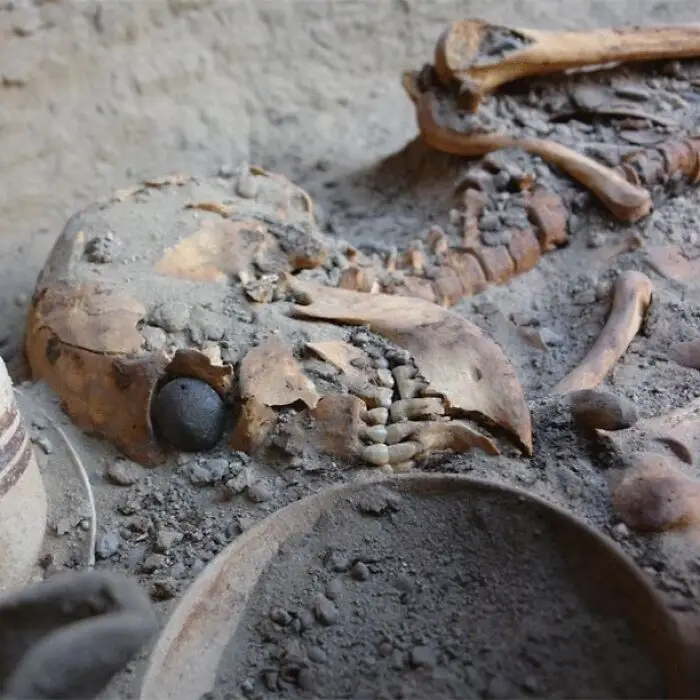
This prosthetic eye made from a mixture of natural tar and animal fat is nearly 5,000 years old. It was discovered by Dr. Seyed Mansour Seyed Sejjadi and his team near the city of Zabol in Iran in 2007. It's the earliest example of an ocular prosthesis in the medical history. The prosthetic eye, which was once painted gold, was worn by a woman who stood 6’ tall. Some researchers have speculated that she may have been an ancient priestess.
Report
3points
#31
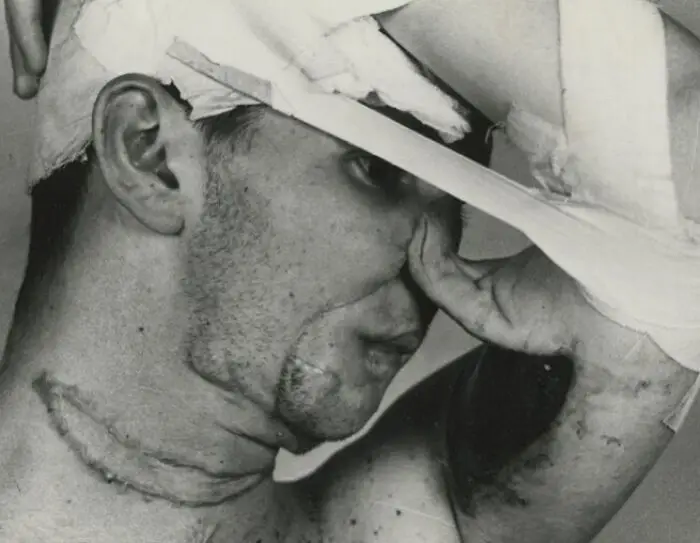
Rhinoplasty dates back thousands of years. Around 600 B.C., the Indian surgeon Sushruta devised a method for reconstructing the nose which involved cutting a section of skin from the either the forehead or the cheek and attaching it to the bridge of the nose to maintain a steady blood supply. After the skin attached itself to the new site, the flap was then twisted into place and sewn over the damaged area. This photo, which demonstrates a similar technique, is from 1943.
Sushruta’s technique—later dubbed the “Indian method”—made its way into Europe shortly before the Renaissance. In 1432, a surgeon named Gusto Branca obtained a license to open a shop in Catania, Sicily, where he used skin flaps from the cheek and forehead to reconstruct noses. A few years later, his son Antonio improved upon this method by choosing an esthetically less important donor site, the arm. The patient could be bound like the man in this photo for as many as forty days while the graft established a body supply.
This method was popularized in the 16th century by an Italian surgeon named Gaspare Tagliacozzi. Tagliacozzi’s work was motivated in part by an increase in nasal injuries inflicted by rapiers, the duelist’s new weapon of choice. But many people sought a surgical solution due to the growing association of nasal disfigurement with syphilis, a disease that had made its first appearance in Europe around this time.
Report
3points
#32
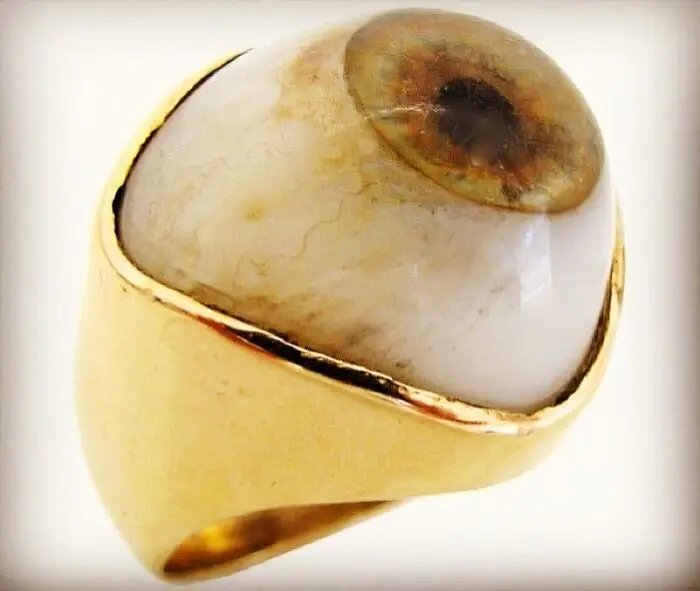
This Victorian mourning ring from the late 19th century was made from the deceased person’s glass eye. Would you wear something like this?
The first in-socket artificial eyes made in the 15th century were gold with colored enamel. In the latter part of the 16th century, the Venetian glass artisans discovered a formula that could be tolerated inside the eye socket. These early glass eyes were crude, uncomfortable to wear, and very fragile.
Even so, the Venetian method was considered the finest in the world. In the mid-19th century, glass artisans in Thuringia, a region in eastern Germany, developed a superior glass formula for the making of artificial eyes. Glass eye making was introduced in the United States in the mid-1800s by immigrant German ocularists. In the 1940s, glass was replaced by plastics, which were more comfortable for the wearer and lasted longer.
Report
3points
#33
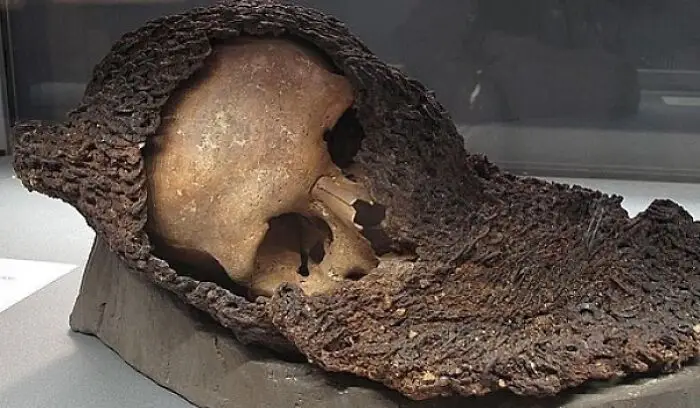
Medieval skull fused with (chain)mail. This soldier d**d at the Battle of Visby in 1361 on the island of Gotland, Sweden. The d**d were buried in several mass graves until they were discovered in the early 20th century. Between 1905 and 1928, more than 1100 human remains were unearthed.
Researchers believe that the men were buried quickly after battle, and therefore interred with their equipment and armor, which makes this a rich archeological site. There are several examples of (chain)mail shirts, coifs, gauntlets, and a variety of weapons. You can find it all on display in the Gotland Museum.
Researchers believe that the men were buried quickly after battle, and therefore interred with their equipment and armor, which makes this a rich archeological site. There are several examples of (chain)mail shirts, coifs, gauntlets, and a variety of weapons. You can find it all on display in the Gotland Museum.
Report
2points