







#21
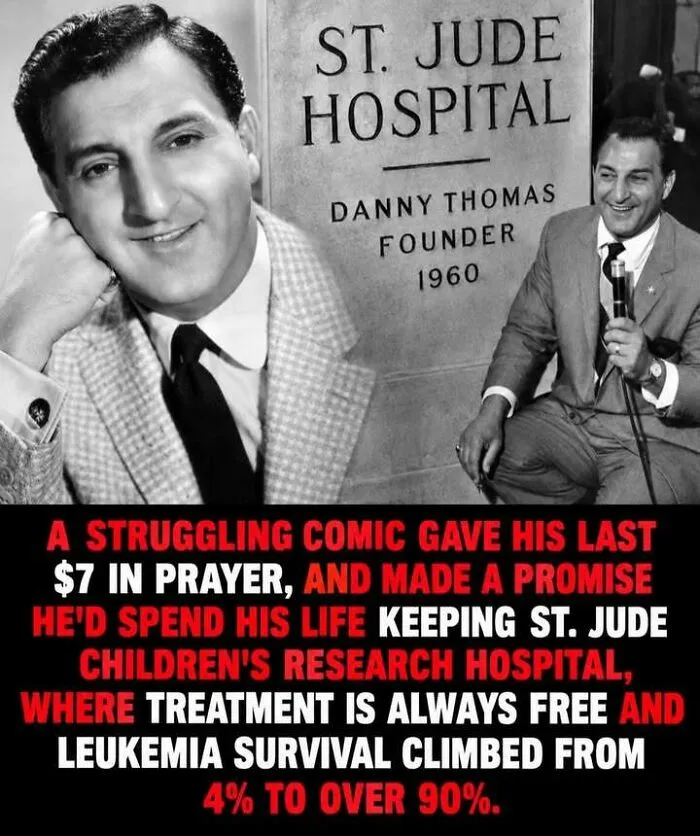
Danny Thomas wasn't famous yet. He wasn't even stable. In 1940 he was a struggling nightclub comic in Detroit, barely scraping by, with a new baby at home and no idea how he'd support her. Out of options, he walked into a church, emptied his pockets, dropped his last seven dollars into the collection box, and made a desperate bargain with St. Jude Thaddeus, the patron saint of lost causes: help me find my way, and I'll build something in your name.
The very next day, he landed a job paying ten times what he'd just given away.
His career exploded after that. Radio, television, film. Danny Thomas became a household name. But the promise he'd whispered in that Detroit church never faded into the past. It grew into something bigger: not just a shrine, but a place where the most hopeless medical cases in childhood could find a fighting chance.
He picked Memphis. He spent years fundraising, calling in favors from celebrities, and building a mission around one radical idea. In 1962, St. Jude Children's Research Hospital opened with a rule no one in American medicine had tried before: families would never pay. Not for treatment, not for travel, not for housing, not for food.
It shouldn't have worked. It did.
St. Jude became a global force in pediatric research. When it opened, a child diagnosed with leukemia had roughly a 4% chance of survival. Today, that number is above 90%, a shift St. Jude helped engineer through decades of research shared freely with hospitals worldwide.
Danny Thomas is buried on the hospital grounds today, resting next to the vow that shaped his entire life: "No child should die in the dawn of life."
“Here, you'll find a treasure trove of strange but true facts, covering everything from quirky historical events and rare natural phenomena to unusual trivia and mind-bending science,” the admin and mod team running the nearly-million-member group writes.
“Whether you're here to share your favorite weird facts, discover new ones, or simply enjoy the unusual and unexpected, you've found the right place.”
#22
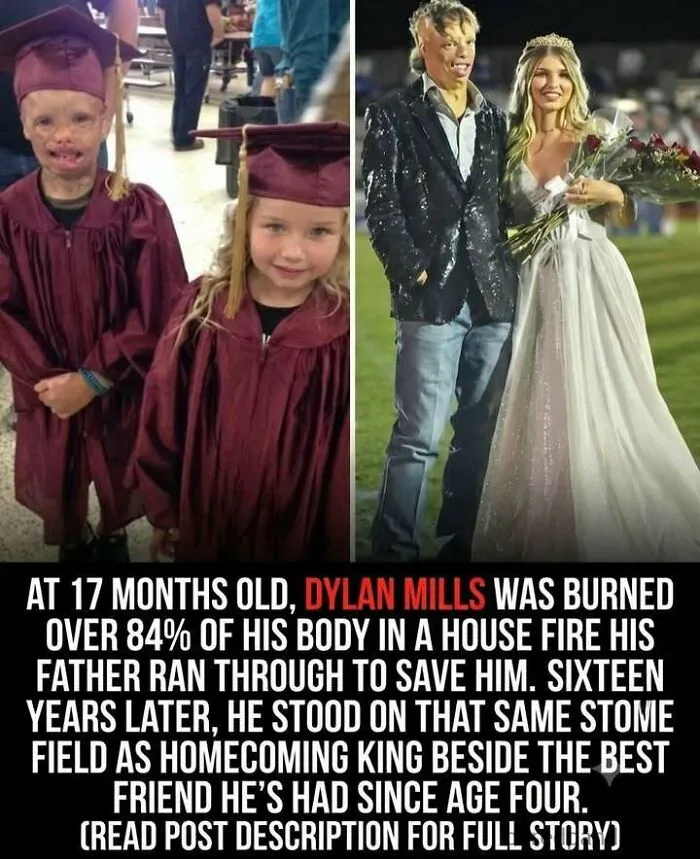
Bryan Mills ran straight into the flames to reach his 17-month-old son, Dylan and pulled him out. Bryan came away with burns covering 30% of his body. Dylan's covered 84%. He was flown to a children's hospital in Shreveport, and what followed was years of surgeries, skin grafts, and slow, hard-won recovery. Nobody could promise he'd make it.
This September, Dylan walked onto the field at Tarkington High School under the Friday night lights and was crowned Homecoming King.
Beside him, wearing the Homecoming Queen's crown, was Ashlyn Primeaux. The two have been inseparable since they were four years old same kindergarten class, same eighth-grade promotion, and eventually, each other's prom date. So when their names were called that night, it wasn't just a title. It was two decades of friendship standing in the spotlight together.
Dylan didn't stop there. He went on to play varsity baseball and basketball, graduating with Tarkington's Class of 2026 the same kid doctors once weren't sure would survive infancy, now living a full, wide-open life.
A crown doesn't capture everything Dylan and his family went through to get to that field. But that night said something anyway: the boy who fought to live was standing in the light, surrounded by people who never left his side.
#23
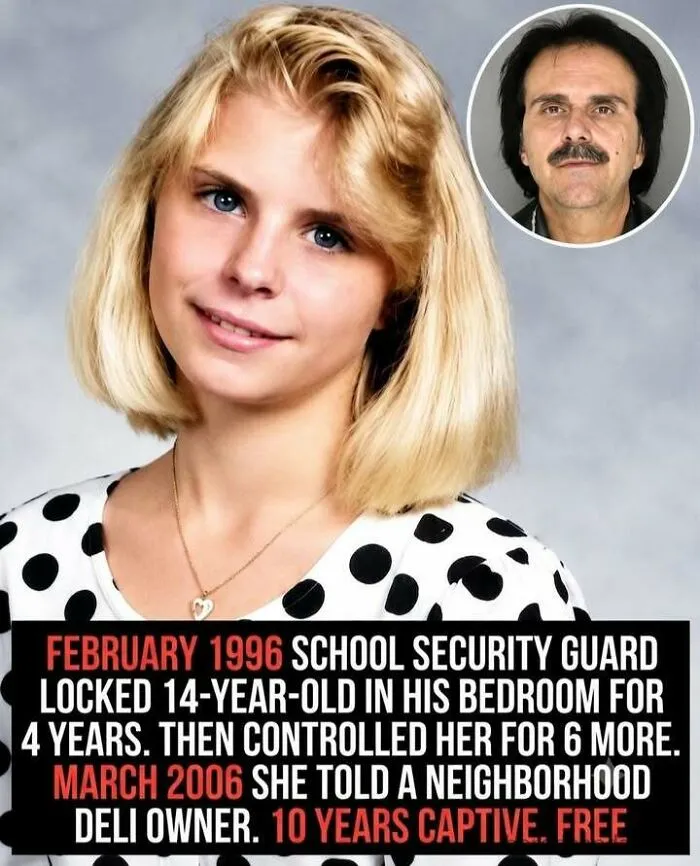
In February 1996, 14-year-old Tanya Kach walked away from her McKeesport, Pennsylvania home and vanished. Police opened a missing person case. Family and neighbors were left with no answers. For years, she was just another name on a missing persons list presumed by some to be a runaway, by others to be gone for good.
The truth was far darker. Tanya hadn't run away. She had been groomed by Thomas Hose, a security guard at her school who was decades older than her, and taken to live in his home — just blocks from where she'd grown up. For nearly a decade, she was kept isolated there, cut off from her family, her friends, and any semblance of a normal life, while Hose exerted near-total control over her world.
Then, in 2006, everything changed. Tanya finally found a way out, reaching a neighbor for help and setting her escape and the truth in motion. Hose was arrested and later convicted for what he'd done.
Since then, Tanya has chosen to speak publicly about what she survived, using her story to raise awareness about grooming and long-term abuse and to show that survival and rebuilding a life afterward are possible.
#24
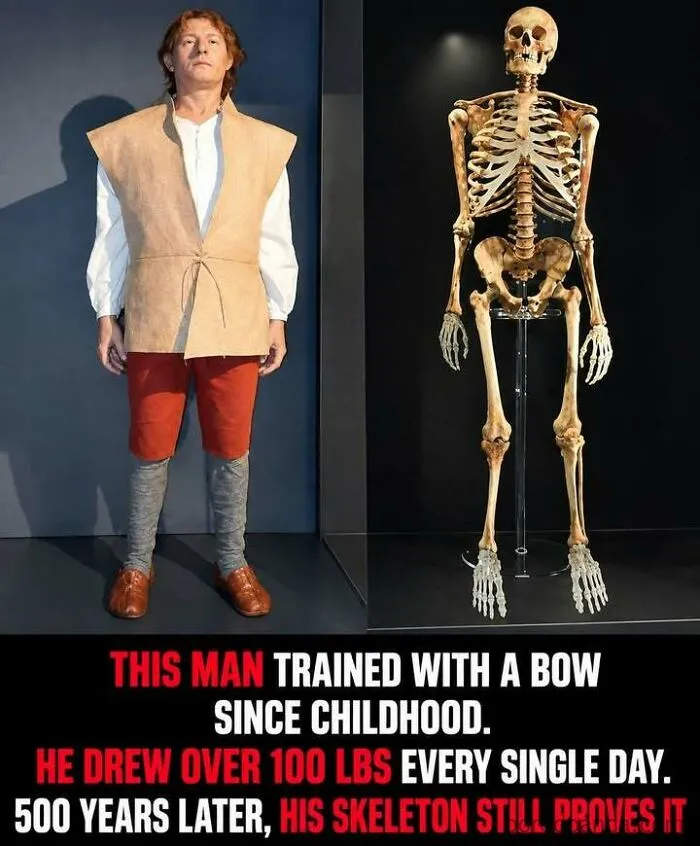
Dig up the skeleton of a medieval English longbowman and you won't need a name tag to know what he was. His bones will tell you.
Archers in medieval England started training almost as soon as they could walk, drawing bows that eventually required pulling over 100 pounds of resistance with every shot repeated thousands of times over a lifetime. That's not a casual hobby. That's a full-body demand, and the skeleton had no choice but to answer it.
The most striking evidence shows up on one side of the body. The bones of the drawing arm and shoulder usually the left grew visibly thicker and denser than their counterparts on the other side. This isn't subtle. Archaeologists can spot it centuries later, a permanent asymmetry baked into the skeletal frame itself, caused by muscle attachments pulling on bone over and over until the bone remodeled itself to keep up.
It's a phenomenon researchers call bone hypertrophy living tissue responding to mechanical stress by literally building more of itself, exactly where it's needed most.
Here's what makes it wild: these men are long gone, their armor rusted, their bows rotted to dust. But their skeletons still carry the signature of a life spent at war. Bone doesn't lie, and it doesn't forget.
It's a quiet reminder that the human body isn't a fixed structure it's a living record, constantly rewriting itself based on what you ask of it. Every rep, every repeated strain, every habit leaves a mark. Most of us just don't pull warbows for a living.
We want to hear your take.
What are the strangest, spookiest, and most bizarre things you’ve recently learned about science, history, etc., that you think everyone should know?
What do you personally do to ensure that you’re reading reliable and trustworthy sources online?
How do you stay curious about the world with so many daily responsibilities? Share your perspective in the comments.
#25
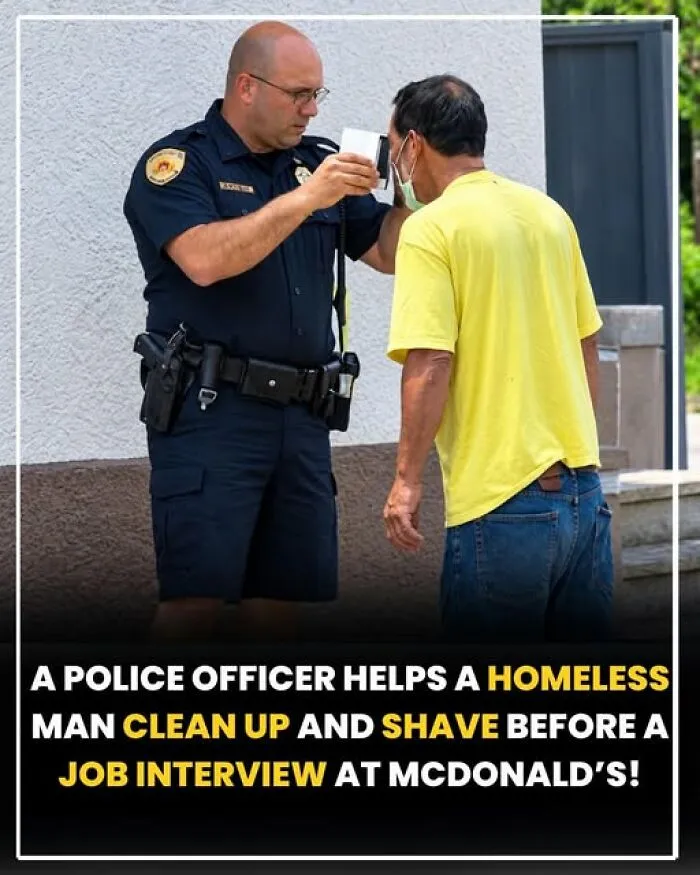
At the time, Phil was living on the streets when he went to apply for a job at a nearby McDonald’s. The position was within reach, but he had been told to come back clean-shaven. The problem? His electric razor wasn’t working properly, and he didn’t even have a mirror to see how he looked.
Officer Carlson realized there was something he could do. Instead of simply giving him advice, he took the razor and helped Phil finish shaving right outside the gas station. A bystander captured the moment in a photo, and the image quickly drew attention online.
But the most important part happened after that photo was taken. With the help of several people, Phil was able to get the documents he needed and return to the recruiter. This time, nothing was standing in the way of the opportunity he had been offered.
He was eventually hired. A few minutes, an unexpected helping hand, and a job opportunity — sometimes, a little help at the right moment can truly change the course of someone’s story.
#26

#27
#28
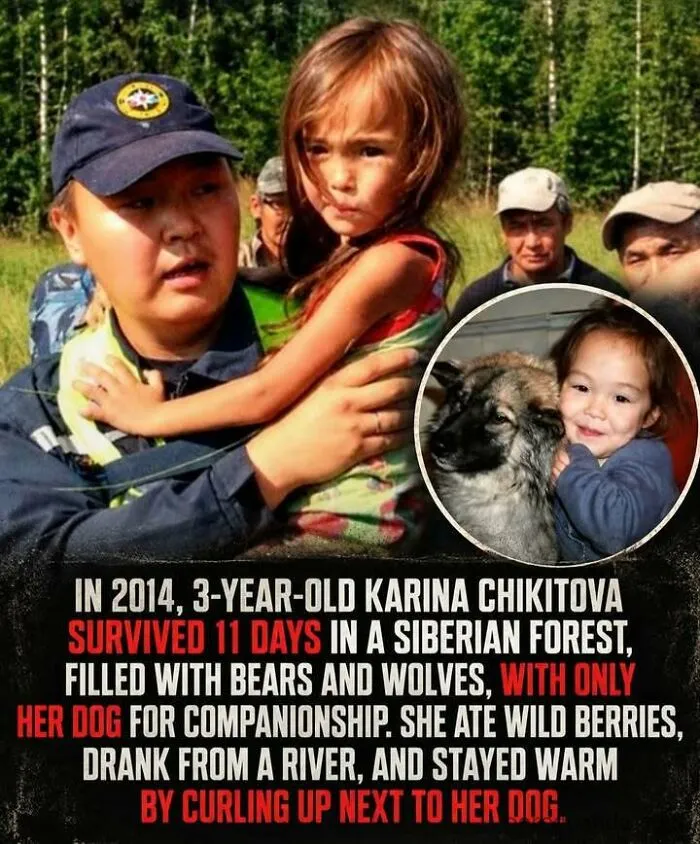
In July 2014, little Karina Chikitova set off into the taiga of Yakutia, Russia, apparently trying to find her father. Nobody realized she was missing for four days. The village was remote, and the phone signal was almost nonexistent.
Then came a massive search. More than 100 people, hunters, soldiers and rescuers, combed the wilderness. But a tiny child curled up in tall grass is almost impossible to spot, even from the air.
For days, Karina survived on wild berries and river water. At night, when the freezing cold crept in, she held on to her dog.
Think about that. No adult. No shelter. Just a small child and a loyal dog who refused to leave her side.
After about nine days, the dog made its way back to the village. Rescuers feared the worst. But they sent search dogs along its trail, and the next morning, Karina was found lying in the grass, alive.
Eleven days in the wild, and she survived with only scratches and mosquito bites.
Dogs don't understand headlines or heroism. They only understand love and loyalty. And sometimes, that is enough to bring a little girl home.
#29
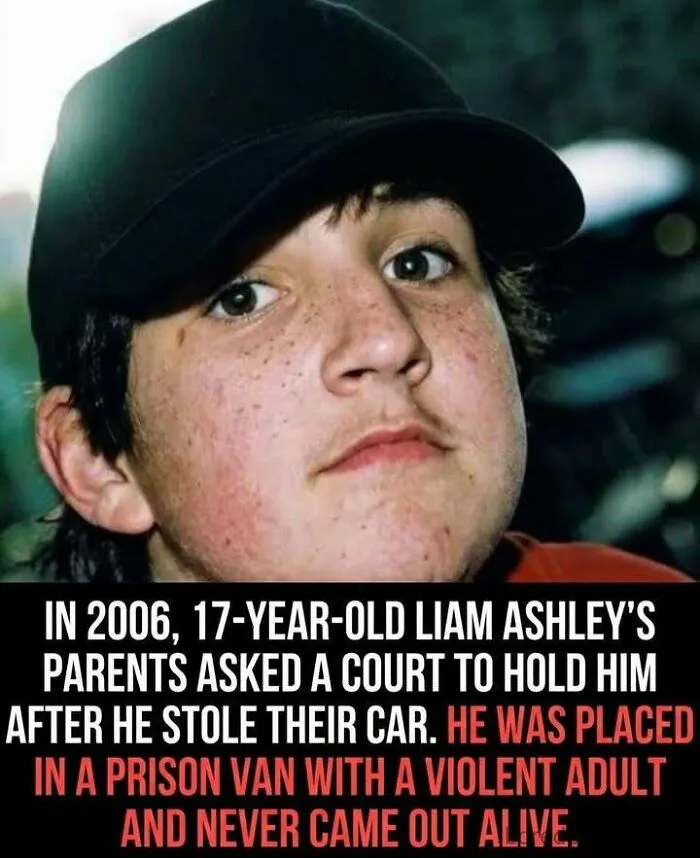
In August 2006, 17-year-old Liam Ashley took his parents' car. It was a teenager's mistake, nothing more. His parents, worn out and desperate, asked the court to keep him in custody. They hoped a short stay would teach him a lesson.
It was meant to be a scare. Nothing more.
On 24 August, Liam was loaded into a prison van bound for Auckland's remand prison. Inside was George Baker, a 25-year-old with a long record of violence. The system had labelled Liam a vulnerable youth who should have been kept apart from adult offenders. Baker was flagged as an at-risk prisoner who also needed separating.
But nobody passed those warnings to the security company driving the van.
By the time the doors opened, Liam was unconscious. He died in hospital the next day.
His parents had trusted the system to protect their son, and it failed him at every step. Investigators later found his death could have been avoided if the rules had been followed. Baker was sentenced to life in prison, and New Zealand changed how it transports prisoners.
Liam's parents wanted a lesson for their son. Instead, an entire country got one.
#30
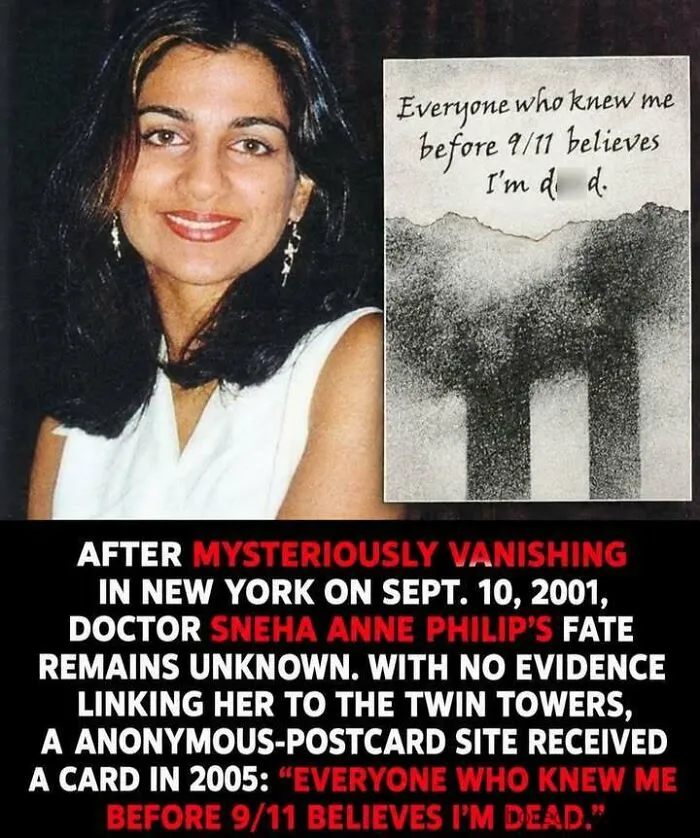
Sneha Anne Philip was last seen on September 10, 2001. Not the 11th. The night before. A young doctor, bright and full of plans, she stepped out into New York and never came home. No footage. No witness. No trace at Ground Zero, no name among the confirmed lost.
And yet because she disappeared on the eve of the worst day in the city's history, the world simply absorbed her into it. Her family fought for years just to keep her death certificate honest: she was never proven to be anywhere near the towers. She was just gone.
Then, in 2005, an envelope arrived at PostSecret, the anonymous confession project where strangers mail in their darkest truths on homemade postcards. No return address. No signature. No way to trace it.
On one side: a hand-inked drawing of the Twin Towers, smoke rendered in dense, deliberate stippling, billowing upward like it was still falling in real time. On the other, in looping handwriting:
"Everyone who knew me before 9/11 believes I'm dead."
Postcard curators had no way to verify the sender. It could've been art. It could've been a stranger's dark joke. Or it could've been Sneha somewhere out there, watching the world bury her.
Twenty-five years later, she's still just... missing.
#31
Han used a multipurpose lunchbox that served several purposes. It could be used as a cooking pot, a water container, and even a seat.
The driver's cab was not comfortable either. The windows had to stay open no matter what season it was. Han explained that drivers needed to lean out of the windows to watch the railway line and the signals ahead.
In 1996, Han moved from steam locomotives to diesel trains, marking another step forward in his career.
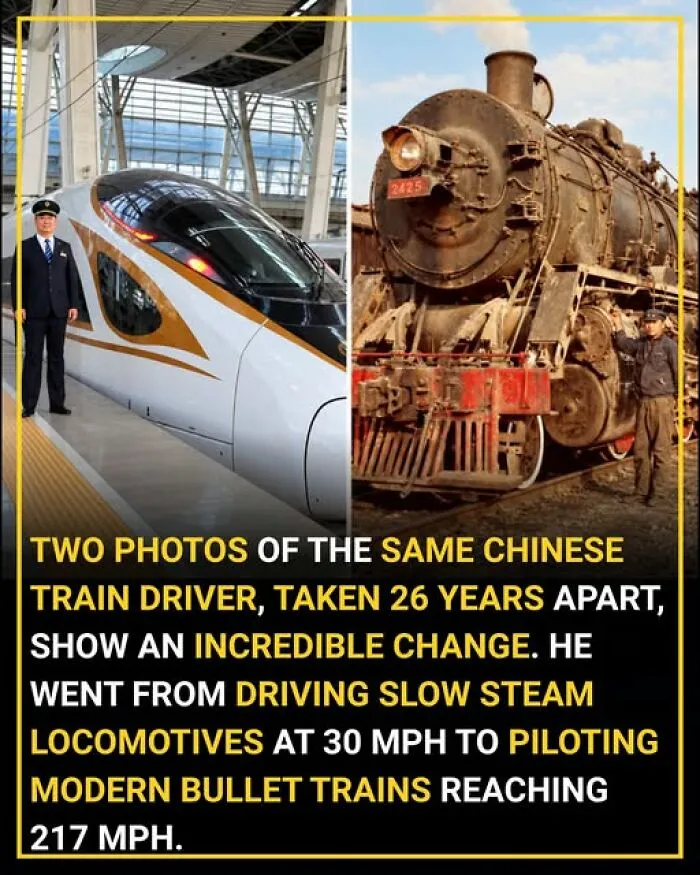
Then, by 2018, everything had changed dramatically. After 26 years of working on the railways, Han was driving China's modern Fuxing bullet train. Unlike the old steam locomotives he once drove, the Fuxing could travel at speeds of around 217 miles per hour.
Two widely shared photographs showed just how much Han's career had changed. One showed him standing beside an old steam locomotive, while another showed him beside a modern Fuxing bullet train.
His career became a powerful example of how quickly China's railway system had changed. During the same period, China invested heavily in its railway infrastructure as its economy grew rapidly.
Han's journey from slow steam trains to high-speed bullet trains reflects not only his own 26-year career, but also the huge transformation of China's railways.
#32
#33
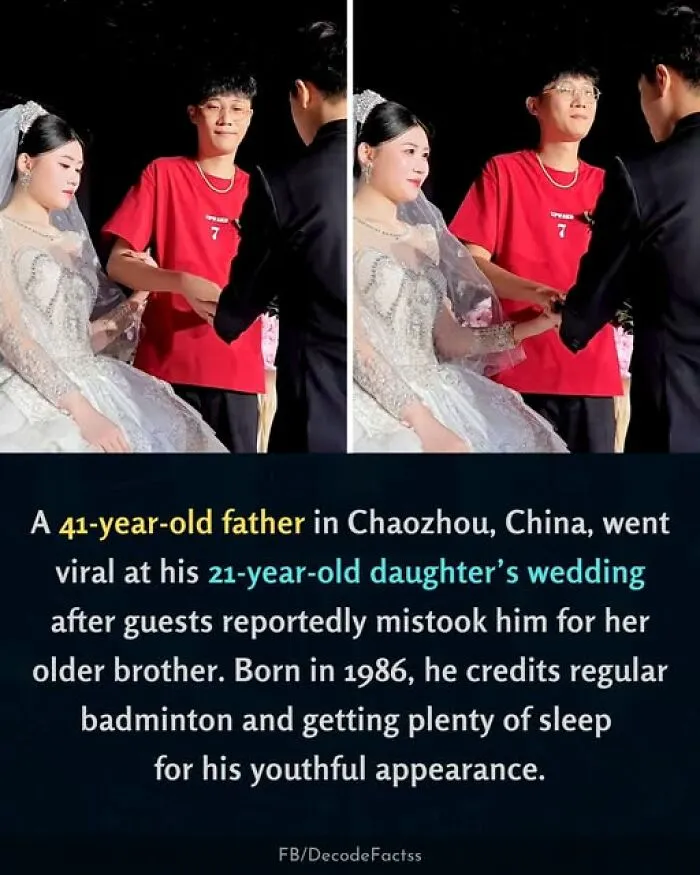
When asked about his youthful appearance, Zheng said he maintains a healthy routine and gets plenty of sleep, reportedly around 10–12 hours a day. He also plays badminton three to four times a week. The story was originally reported by Chinese outlet Haibao News and was later covered by outlets including World Journal and VnExpress International.
#34
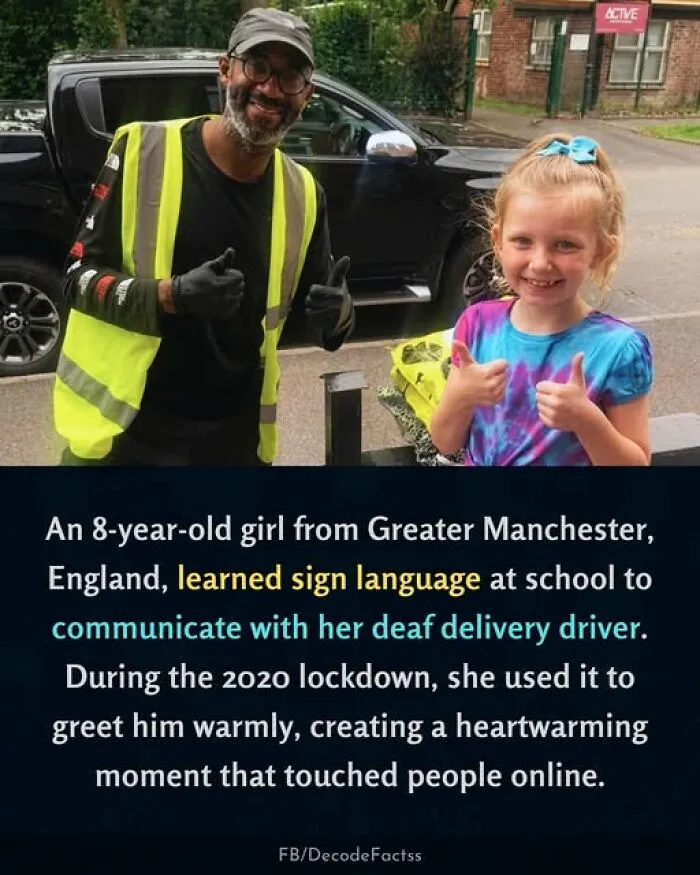
During one delivery, Tallulah used sign language to greet Tim and wish him a good day. Her mother recorded the sweet interaction and shared it online, where it attracted widespread attention. What made the moment special was its simplicity: a young girl making an effort to communicate with someone in a way he could understand, showing how a little thoughtfulness can make everyday encounters more meaningful.
#35
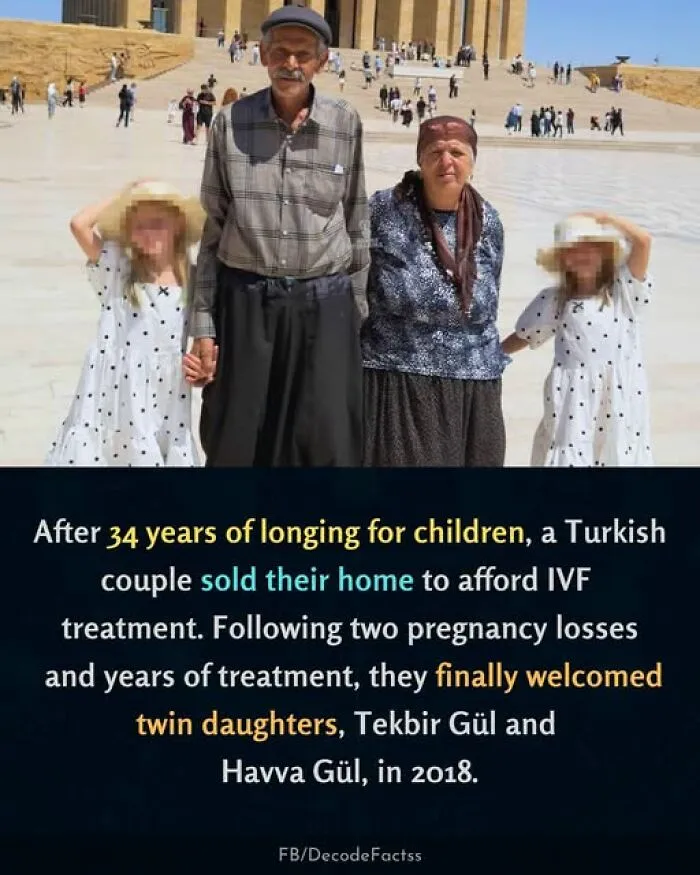
In 2018, their dream finally came true when they welcomed twin daughters, Tekbir Gül and Havva Gül. After 34 years of waiting, the couple began a new chapter of family life with their two little girls. Their story is a beautiful reminder that every family's journey is different, and the path to parenthood can look different for everyone.
#36
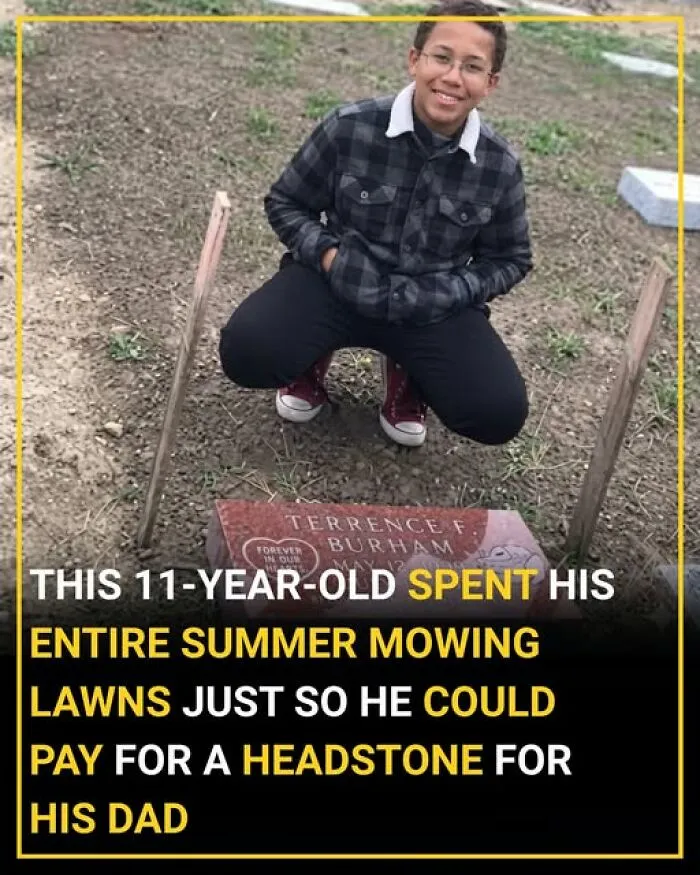
He had never met him. Never shared a birthday. Never got a hug. Never heard him say, "I'm proud of you." But Brandon couldn't bear the thought that his father had no name marking where he rested.
So all summer long, he mowed lawns, ran lemonade stands, and took on small jobs, saving every dollar he could.
His goal was simple: To give his dad a proper headstone.
Reports say Brandon managed to save around $400 before a local monument company heard about what he was doing.
They were so moved by his determination that they donated the gravestone instead.
Even then, Brandon didn't step aside. He helped choose the design himself, making sure it reflected the father he never had the chance to know.
It started as one little boy's mission to honor his dad. And it inspired others, and his story later grew into efforts to help more families with memorial costs.
Sometimes, love isn't measured by the time you had together.cSometimes... It's measured by what you're willing to do for someone you never got the chance to meet.
#37
It happened so fast that everything was left exactly where it lay: weapons, jewelry, pottery, all frozen in place. Archaeologists call it an Iron Age Pompeii.
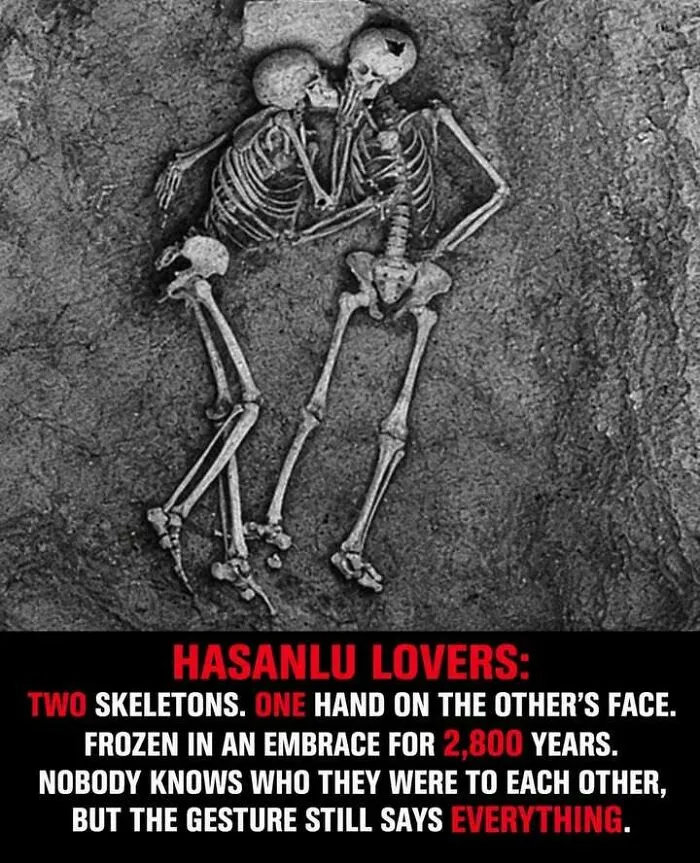
In 1972, excavators opened a small mudbrick-and-plaster bin and found two skeletons face to face. One had a hand resting against the other's face. Their heads lay on a single stone slab. It looked like an embrace, or a kiss. Nothing else was buried with them.
The photos went around the world, and the pair became known as the Hasanlu Lovers.
Here's the twist: skeletal analysis showed both were young adult males, one around 19 to 22 and the other around 30 to 35. Neither has an obvious fatal wound, though soft-tissue injuries wouldn't show on bone anyway.
So who were they? Maybe partners. Maybe brothers, or father and son. Maybe two strangers who reached for each other in the worst moment of their lives. They might have died sheltering together, or been placed that way afterward.
The bones can't tell us. What they preserve is a gesture: a hand on a face, at the end of everything. And after nearly three thousand years, that's enough to make us stop and wonder.
Some things history keeps to itself.
#38

#39

#40
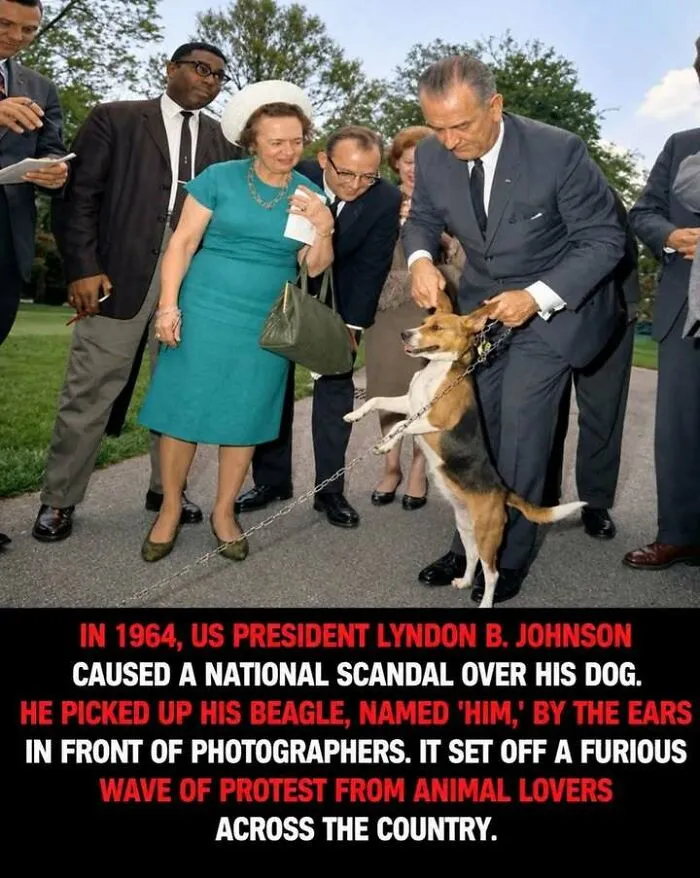
May 1964. A White House lawn, a beagle named Him, and one split-second decision that would spark a firestorm bigger than most political scandals of the era.
President Lyndon B. Johnson loved his dogs genuinely. Him and his sister Her were practically fixtures at the White House, trotting through press conferences and greeting foreign dignitaries. But on this particular day, surrounded by photographers, Johnson reached down and lifted Him by his long floppy ears, letting him dangle mid-air while the beagle yelped in protest.
The cameras caught everything.
Within days, the photo ran in newspapers coast to coast. The public reaction was swift and brutal. Letters flooded the White House. The ASPCA condemned it. Editorial cartoonists had a field day. Even Johnson's own aides reportedly winced when the photo hit print.
Johnson, stunned by the backlash, defended himself publicly insisting it didn't hurt the dog and that he'd done it plenty of times before. Few were convinced.
It remains one of the strangest footnotes in presidential history: a leader who survived Vietnam protests and civil rights battles, nearly undone in the court of public opinion by his own beagle's ears