





Some facts are fun for a moment. You know the type. Those well-worn favorites that pop up in every quiz night or pop out of every Christmas cracker. Others come with a story attached—a name, a face, some texture. Those, in my mind at least, are the ones that really stick. Maybe it’s a remarkable moment that almost slipped through history’s cracks. A small win that deserves more attention than it ever got. A record that’s finally been set straight. Or maybe a strange, unexpected reminder that humanity isn’t completely horrible after all.
These are exactly the kinds of interesting facts shared by the “Weird Facts” accounts on Instagram and Threads. From lessons hidden in history to straight-up curiosities, we’ve rounded up some of the best. Keep reading for a few you might just find weirdly hard to forget.
#41
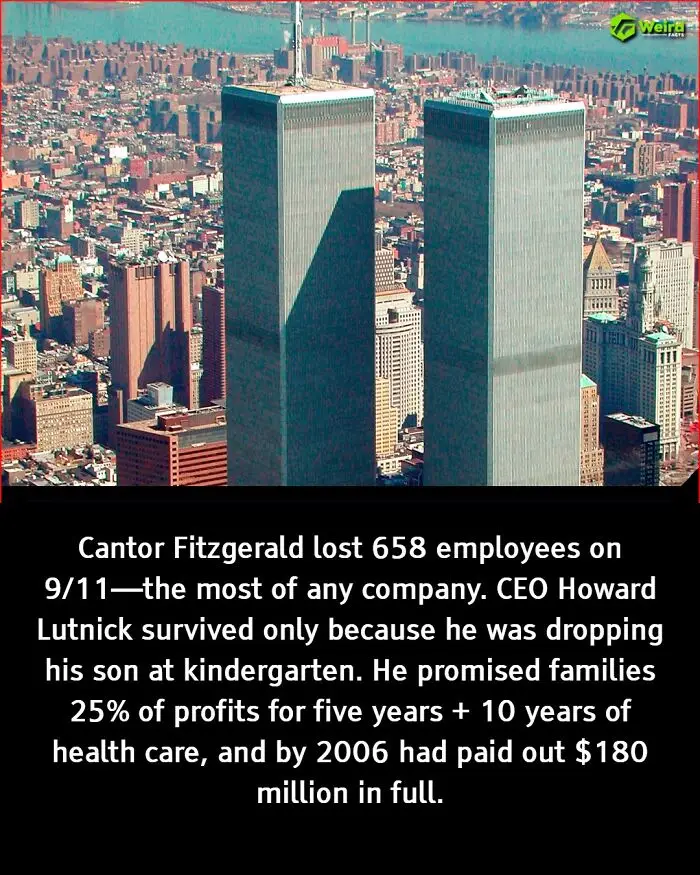
Cantor Fitzgerald, located on the top floors of the World Trade Center's North Tower, lost 658 employees—two-thirds of its workforce—on September 11, 2001.
CEO Howard Lutnick survived only because he was dropping his son off for his first day of kindergarten. In the aftermath, Lutnick pledged 25% of the firm's profits for five years to the families of the victims, plus ten years of health insurance coverage. The company also established the Cantor Fitzgerald Relief Fund.
By September 2006, on the fifth anniversary, Cantor had fulfilled the commitment, distributing a total of $180 million directly to the families.
Report
16points

#43

You know those days you’re watching Dr. Oz, and he drops some “miracle” tip that sounds too good to be true?
Turns out… a lot of them kinda are.
A team of Canadian doctors from the University of Alberta analyzed 40 full episodes. Their verdict? Almost 4 out of every 10 recommendations lacked any real scientific backing, and another 15% went directly against established medical evidence.
It’s wild how one of the most watched health shows on TV was pushing advice that didn’t always hold up.
Have you ever tried a “Dr. Oz recommendation” that turned out to be total hype… or actually worked...
Report
15points
#44
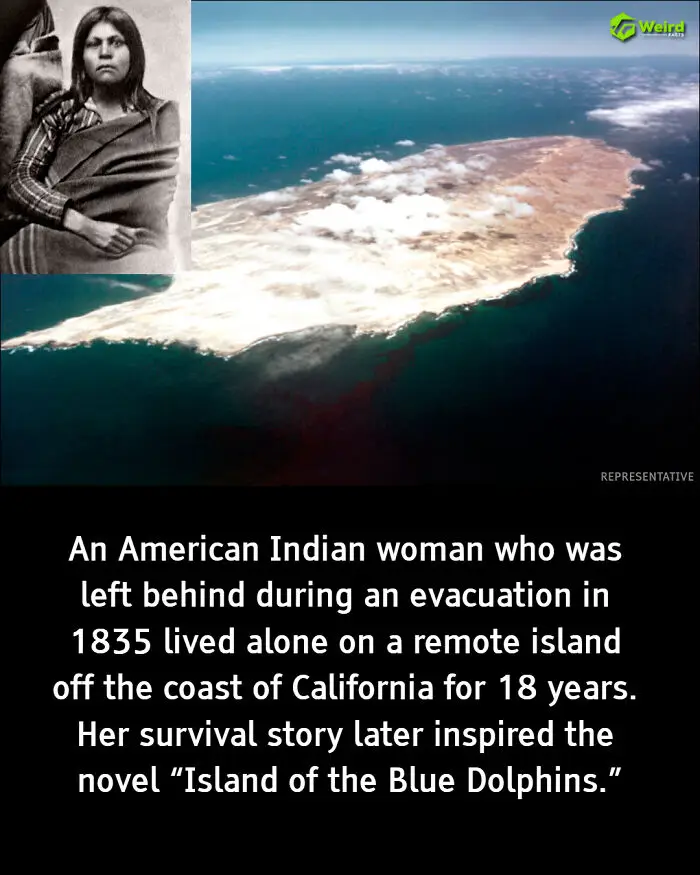
In 1835, missionaries evacuated the Native Nicoleño people from San Nicolas Island, one of California’s Channel Islands. In the confusion, a woman was accidentally left behind. Known later as the “Lone Woman of San Nicolas Island,” she survived entirely alone for about 18 years, living off seafood and crafting tools from what washed ashore.
In 1853, she was discovered and brought to the mainland, where she was baptized Juana Maria, but she d**d just seven weeks later. Her real name was never recorded, and much of her life remains a mystery. Her extraordinary survival inspired Scott O’Dell’s classic children’s novel Island of the Blue Dolphins (1960), which introduced her story to generations worldwide.
Report
15points
#45
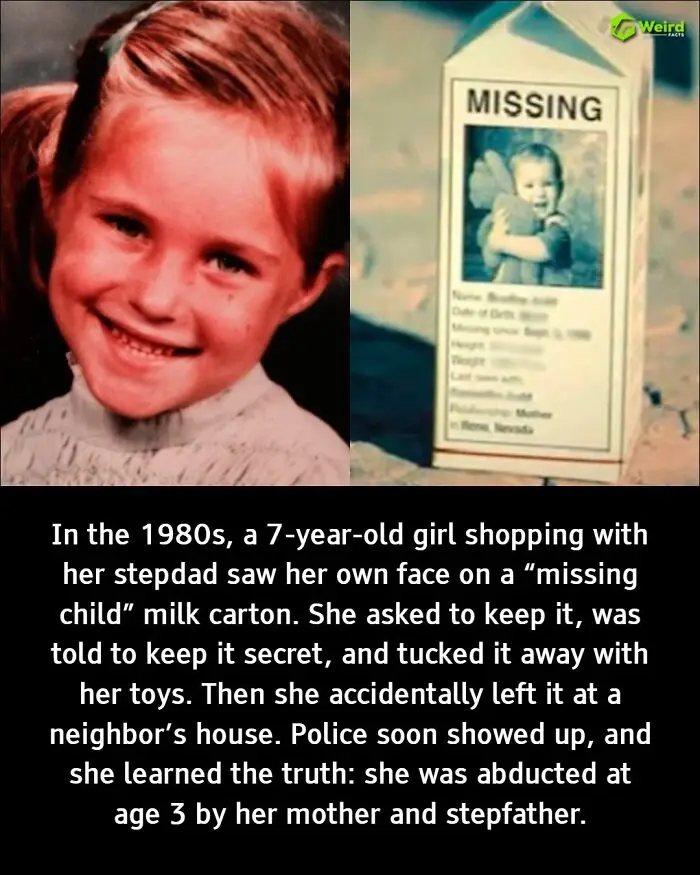
Bonnie Lohman was 3 years old when she was abducted by her mother and stepfather, taken from her father’s care. Her case wasn’t the typical fit for the milk carton program, but her father still managed to get her photo printed.
A few years later, when Bonnie was 7, she was in a grocery store with her stepfather and spotted her own face on the side of a milk carton. She recognized the picture, but didn’t understand what it meant. She asked to keep the cut-out image and was allowed to—on the condition that she kept it secret.
Her neighbors later learned who she was after the carton was accidentally left behind in a bag of toys at their house. They contacted authorities, and Bonnie was reunited with her father. Bonnie is one of the few success stories of the milk carton programme.
Report
15points
#46
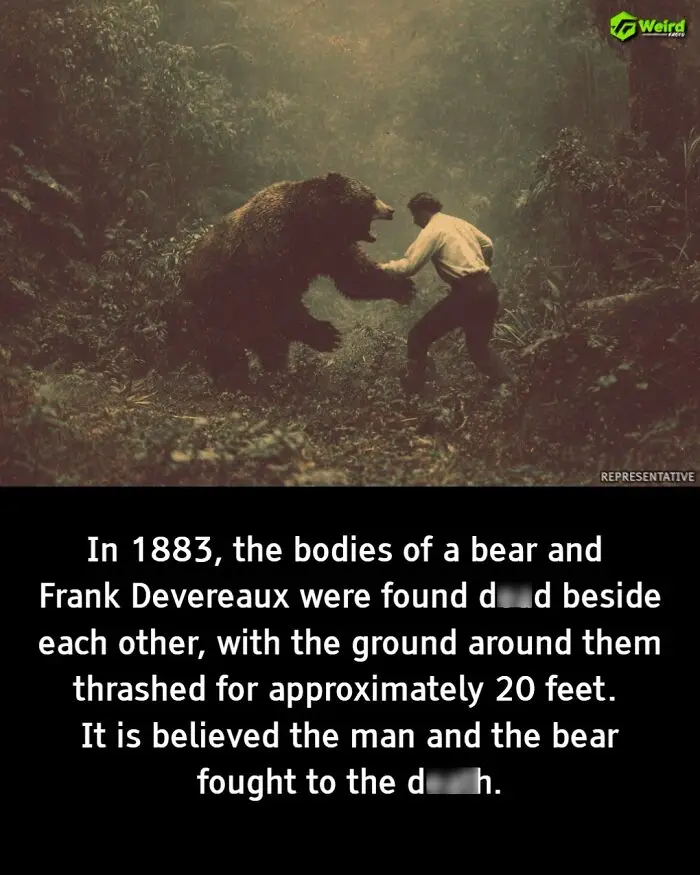
In September 1883, near Cheboygan, Michigan, searchers found a grim scene in the woods: Frank Devereaux’s body lying close to a d**d bear.
The ground around them was torn up for about 20 feet, like a fight had exploded in the dirt and brush. With no witnesses, the best guess from historical accounts was that Devereaux met the bear alone, likely wounded it first, and then got fatally mauled—before the bear finally collapsed and d**d too.
A brutal, eerie reminder of what the “frontier” could mean back then: sometimes you didn’t just encounter wildlife… you didn’t walk away from it.
Report
14points
#47
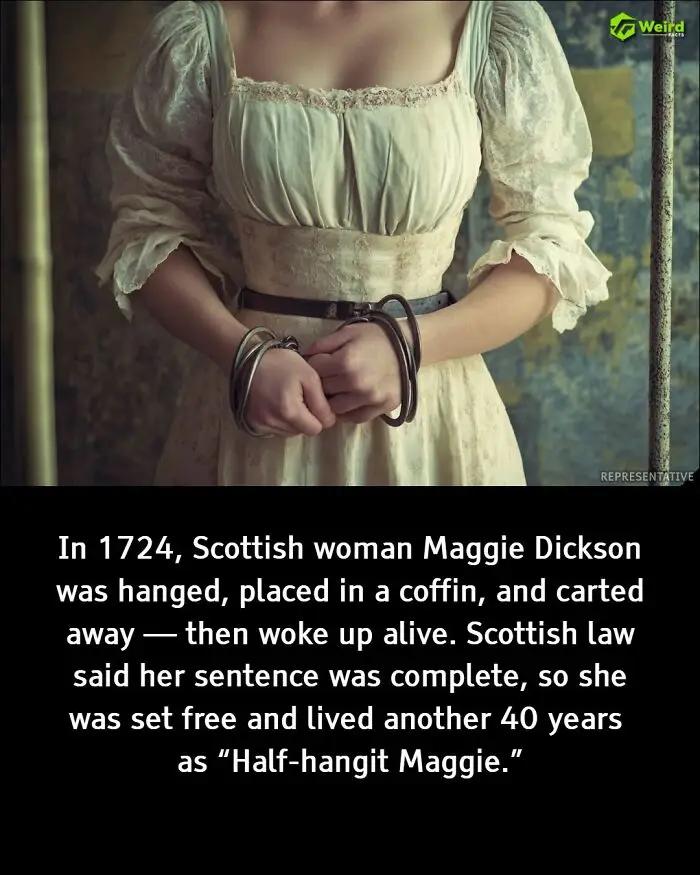
In 1724, Maggie Dickson, a fishwife from Musselburgh, was hanged in Edinburgh’s Grassmarket after being convicted under the Concealment of Pregnancy Act.
She was pronounced d**d, placed in a coffin, and the cart set off for her burial in Musselburgh.
On the way, the coffin began banging; when the lid was opened, Maggie was alive. Under Scots law, her sentence had already been carried out, so she could not be hanged again.
She lived another forty years, became a local celebrity known as “Half-hangit Maggie,” and d**d around 1765. The story has been retold for nearly 300 years and is still remembered in Edinburgh folklore.
Report
14points
#48
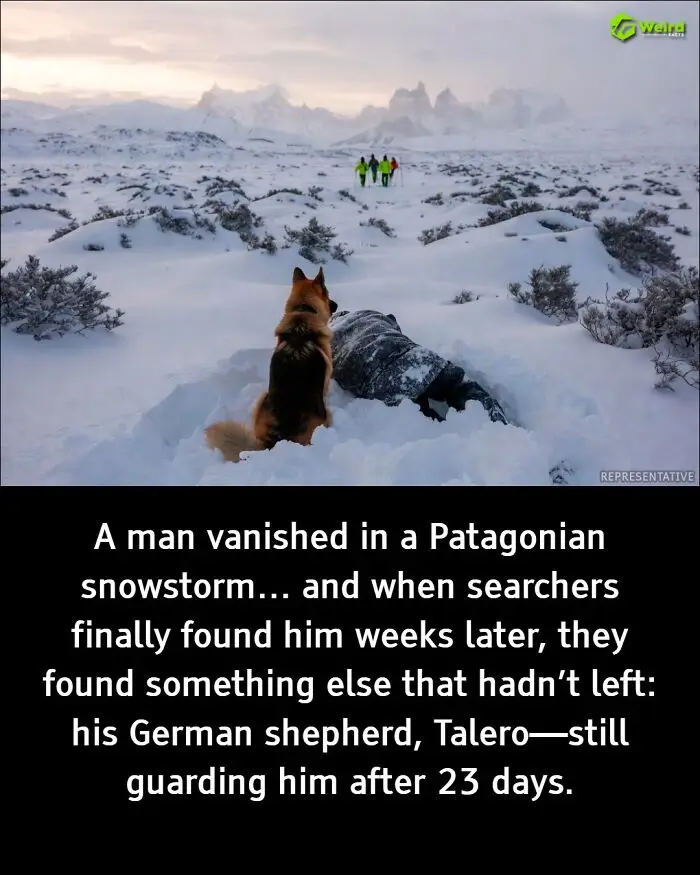
In 2013 in Patagonia, Argentina, a man named Bernardo Leónidas Quirós went missing after his car broke down in a remote area. Reports say he walked off with his German shepherd, Talero, to find help, but he got lost in a snowstorm and d**d from the cold.
When rescuers found his body 23 days later, Talero was still there, guarding him. Reports said the dog kept predators away and may have tried to keep him warm by staying close.
A heartbreaking reminder of a dog’s loyalty — even to the very end.
Report
14points
#49
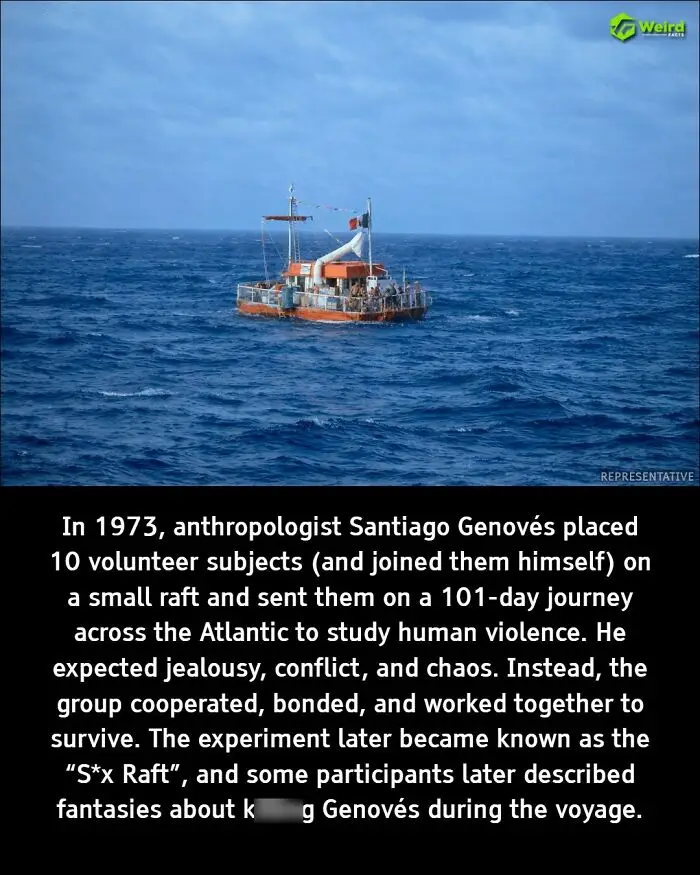
In 1973, anthropologist Santiago Genovés launched a radical social experiment. He placed 10 volunteer subjects (and joined them himself) on a small raft called Acali and sent them on a 101-day journey across the Atlantic Ocean, from the Canary Islands toward Mexico.
Genovés believed he could uncover the root causes of human violence. His theory was controversial: he suspected that se*xual attraction and social tension were major triggers of aggression.
To test it, he deliberately chose a group of young, attractive participants from different cultures and confined them together in a stressful environment. Genovés expected arguments, jealousy, and eventually violence. His plan was simple: observe and record the chaos.
But something unexpected happened. Instead of fighting, the crew cooperated. They shared responsibilities, solved problems together, and supported one another through storms, exhaustion, and fear on the open ocean. Frustrated that his theory wasn’t proving correct, Genovés reportedly began provoking tension himself.
He read private survey responses aloud and tried to stir conflict among the crew. The result was not what he expected. Rather than turning on each other, the participants united against him.
According to several crew members interviewed years later, they even recalled discussing throwing the scientist overboard. The experiment, known as the Acali Experiment, ended without the violence Genovés had predicted.
Instead, it left many observers with a different takeaway: In the Acali case, when people were forced to survive together, cooperation often emerged more naturally than conflict.
Report
13points
#50

In September 2014, during Chinese President Xi Jinping’s state visit to India, an English-language news bulletin on India’s state broadcaster DD News went viral for an embarrassing slip.
The casual newsreader on a late-night or early-morning bulletin misread Xi’s name, shown in all caps on the teleprompter, and pronounced it as “Eleven Jinping,” apparently mistaking “XI” for the Roman numeral eleven.
Senior officials at DD called it an “unpardonable” or “big” mistake; the anchor, a part-time casual employee, was promptly removed from the newsreader panel, with some describing the move as sacking her and others as de-barring her from newsreading for a period.
The gaffe drew widespread media coverage and social-media jokes, becoming one of the better-known on-air bloopers in Indian television news.
Report
12points
#51
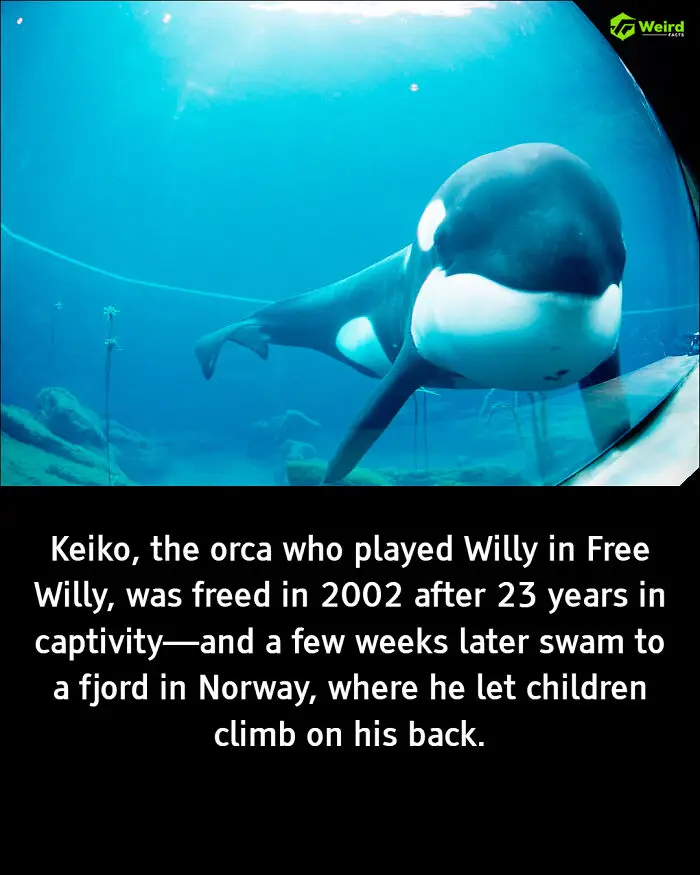
Keiko was a male orca famous for his role in the 1993 film Free W***y. Captured in 1979, he spent about 23 years in captivity before being relocated and rehabilitated for release.
On 15 July 2002, he was released from an Icelandic sea pen and became the first captive orca to be fully released back into the ocean. A few weeks later, he travelled about 1500 km to Norway’s Skålvik Fjord where, despite his freedom, he continued seeking human contact. In that fjord he became a sensation—visitors observed him allowing children to climb on his back and interact with him in water.
His story remains one of the most high-profile attempts to return a captive marine mammal to the wild.
Report
12points
#52
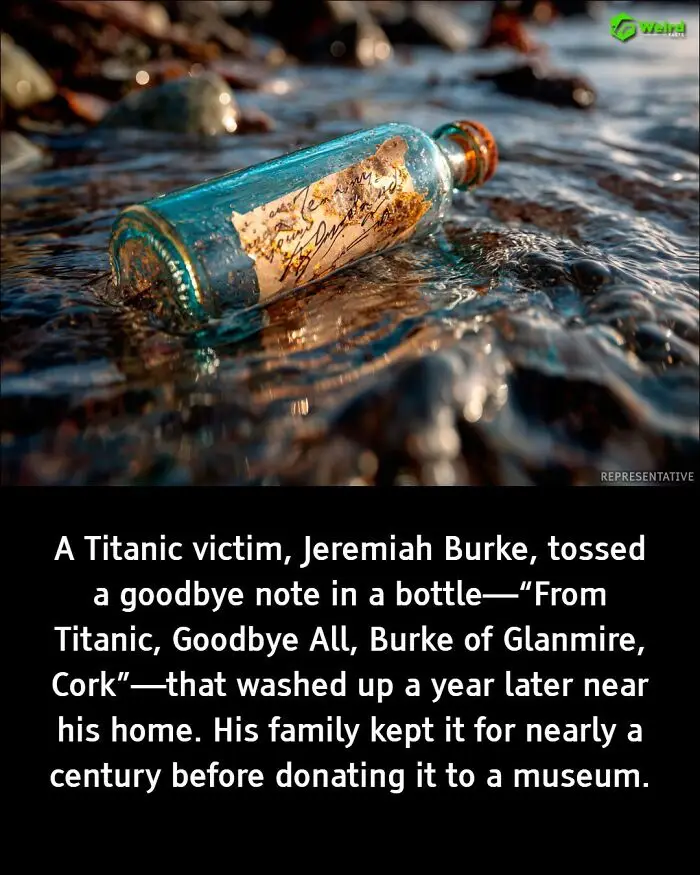
Nineteen-year-old Jeremiah Burke from Glanmire, County Cork, boarded the Titanic at Queenstown on 11 April 1912.
Before he left, his mother Kate gave him a small bottle of holy water to carry on the journey. Sometime before the ship went down, Burke wrote a brief farewell note on a scrap of paper, placed it inside the bottle, tied it shut with one of his shoelaces, and threw it into the sea.
In the summer of 1913, the bottle washed ashore at Dunkettle, only a few miles from his family home. Burke’s family recognised both his handwriting and the holy-water bottle his mother had given him. They kept the note as a treasured family relic for nearly a century.
In 2011, the family donated it to Cobh Heritage Centre, where it remains on public display.
Report
12points
#53
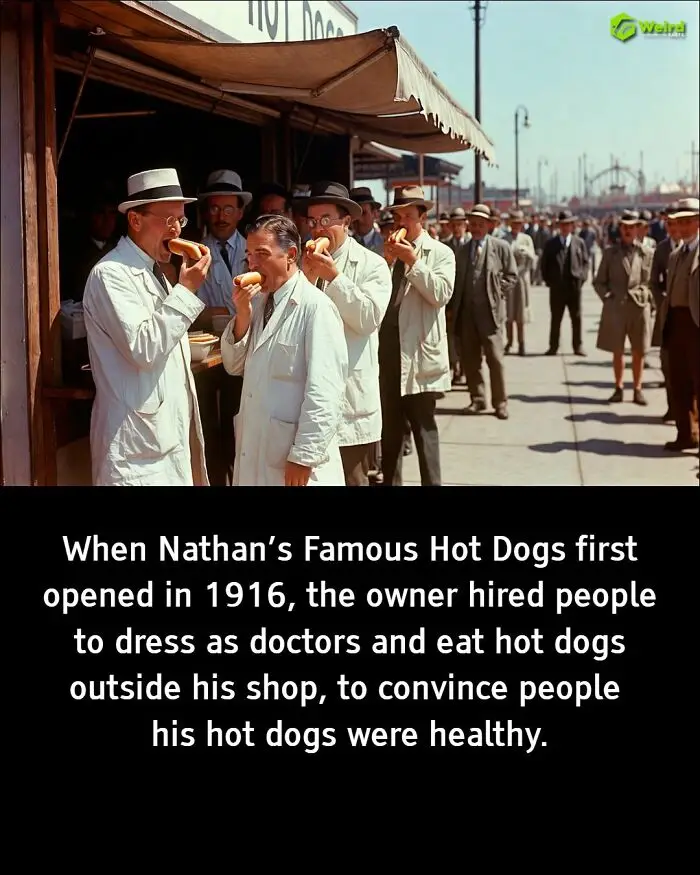
In 1916, Nathan Handwerker opened a hot-dog stand at Coney Island — but people didn’t trust cheap meat back then.
So he pulled a clever move: he had men in white coats eat the hot dogs in public. Customers assumed they were doctors, figured the food must be safe, and lined up.
The trick worked — and Nathan’s became a Coney Island legend.
Report
11points
#54
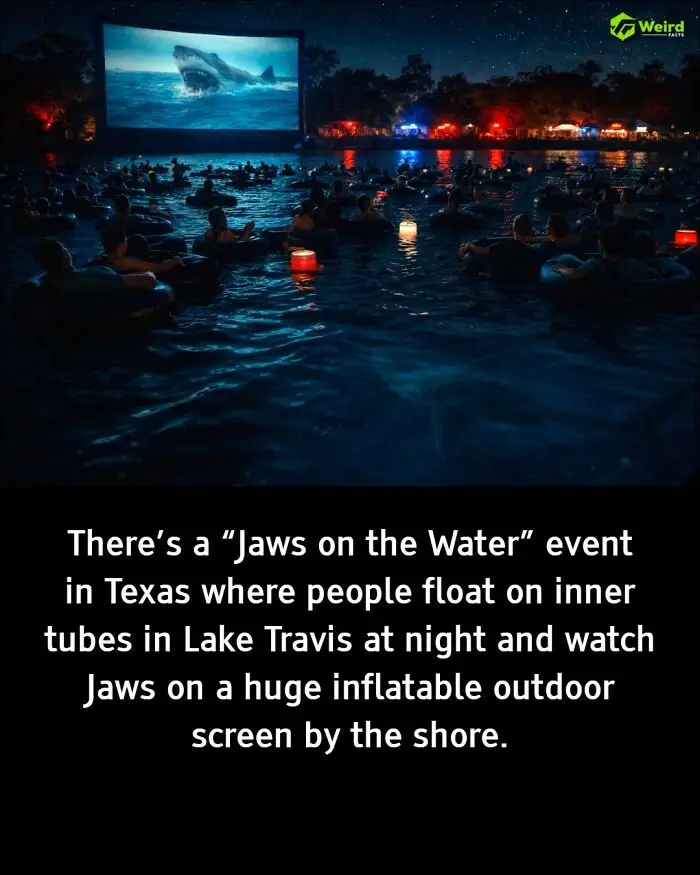
In Texas, Alamo Drafthouse hosts “Jaws on the Water,” a screening where you don’t sit in theater seats—you float.
People watch Jaws at night while bobbing on inner tubes in Lake Travis, with the movie playing on a huge inflatable screen set up along the shore. Some events even add playful scares, like scuba divers lightly tugging at swimmers’ feet during key moments.
It’s a real, organized movie night designed to make the classic shark film feel a lot more immersive.
Report
11points
#55

In early March 2026, Tom Chan, a math teacher at Lowell High School in San Francisco for over 20 years, was placed on indefinite leave after parents raised concerns about the content of his ninth-grade Algebra I quizzes.
The quizzes included problems that calculated the monetary cost of dating girls based on their weight (e.g., “A typical girl that weighs 120lbs will cost you $55” - derive the variation equation, then calculate for someone weighing 220lbs or what weight you could afford for $5).
He also ran a YouTube series “Grades vs. Dignity” where students performed dance routines in class in exchange for extra credit points.
Former students say this kind of content had appeared on his quizzes for years and they feared he could hurt their grades or college recommendations if they complained.
The incident sparked widespread discussion about appropriate classroom content and teacher accountability.
Report
11points
#56
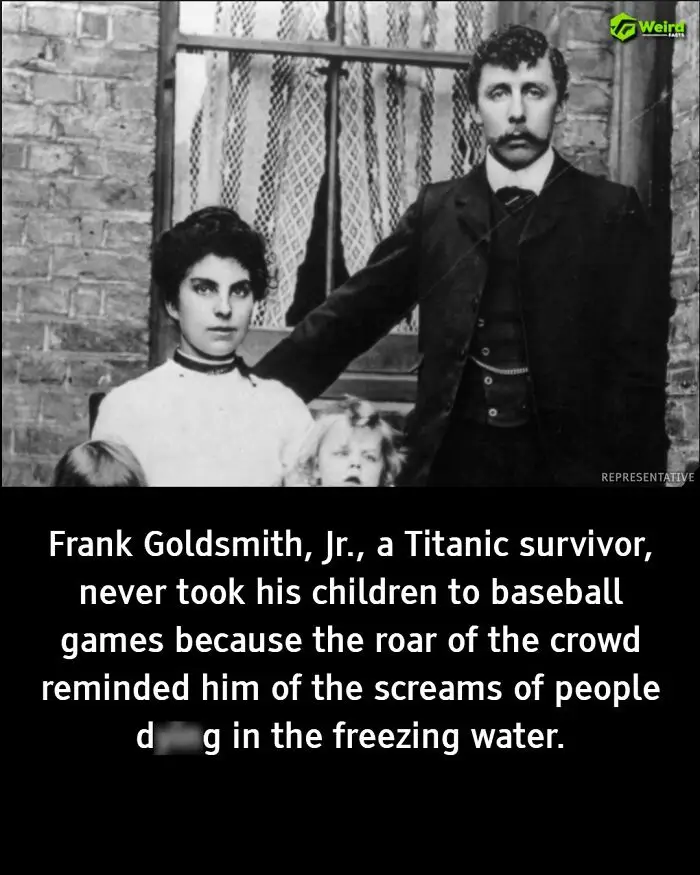
Frank Goldsmith (often called “Frankie”) was a nine-year-old third-class passenger on the Titanic, traveling from England to Detroit with his parents. When the ship sank, he and his mother escaped in a lifeboat, but his father perished.
Goldsmith later settled in Detroit near Tiger Stadium, home of the Detroit Tigers. The cheers of baseball crowds echoed the screams of drowning victims he heard that night, traumatizing him. As a result, he said the stadium crowds were hard for him to be around.
His experiences were detailed in his memoir, ‘Echoes in the Night’, published by the Titanic Historical Society in 1991.
Report
11points
#57
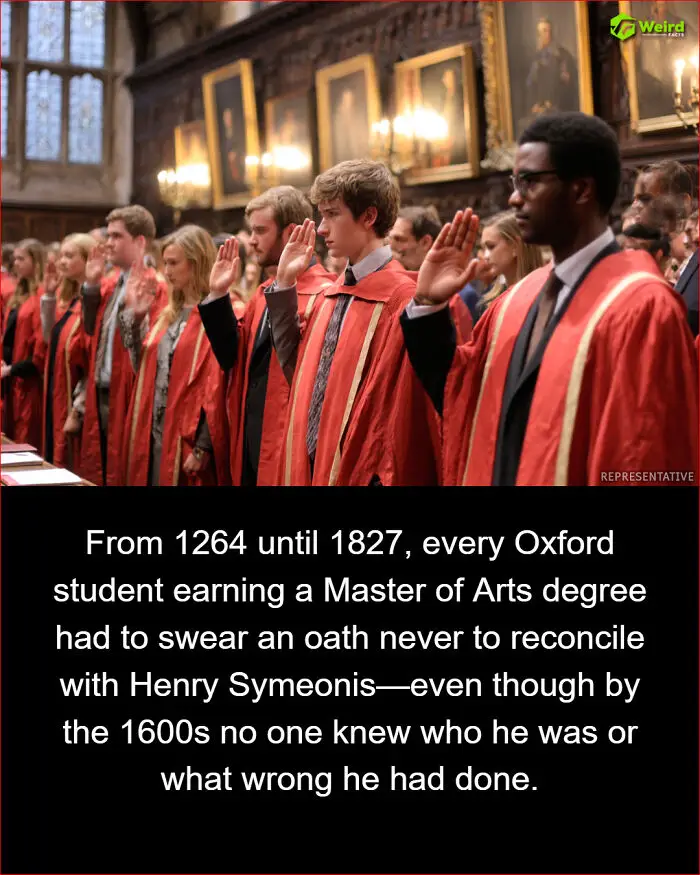
Henry Symeonis: The Mystery Villain of Oxford's Lost Tradition
In 1264 Oxford inserted an unusual clause into its statutes: any Bachelor proceeding to a Master of Arts had to swear never to be reconciled with Henry Symeonis. Symeonis, a wealthy Oxford townsman, had been involved in the 1242 m****r of a student, fined and banished.
In March 1264 King Henry III suspended the university (for security reasons amid war) and two weeks later pardoned Symeonis, ordering that the university not withdraw on account of his return—stoking town-gown resentment. Over time Oxford forgot who Symeonis was; a 1651/2 bid to delete the oath failed, and it survived until February 1827, when Convocation finally abolished it.
Archivist Reginald Lane Poole rediscovered Symeonis’s identity in 1912. The episode shows how a medieval quarrel can echo in rules long after its meaning is lost.
Report
10points
#58
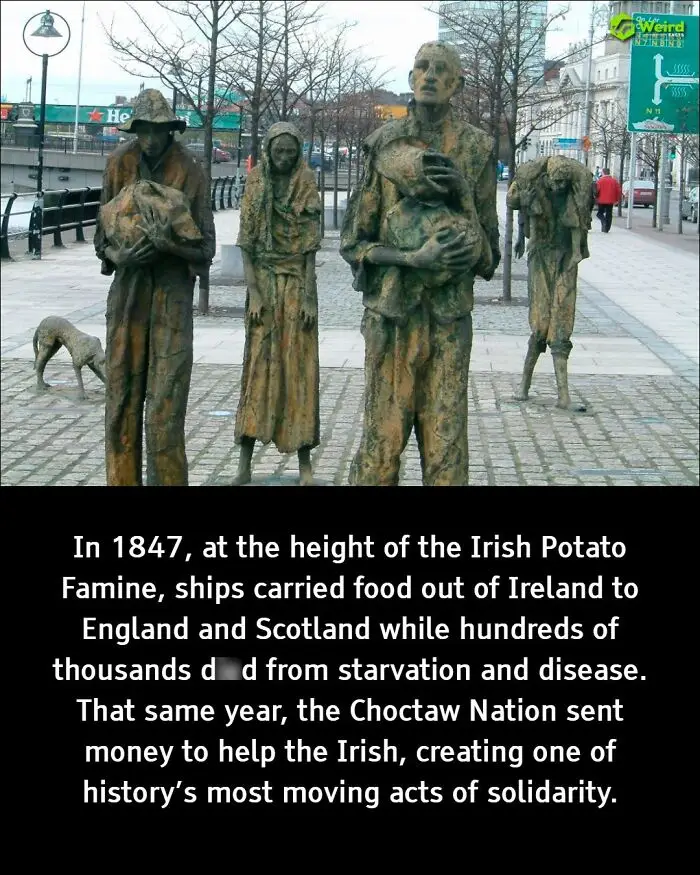
In 1847, the worst year of the Irish Potato Famine (known as “Black ’47”), ships carried food from Ireland to British ports while people in Ireland d**d of starvation and famine-related diseases.
At the same time, the Choctaw Nation in Oklahoma.. still recovering from their own forced removal on the Trail of Tears.. collected $170 from their members and sent it to Ireland to help feed the starving.
The donation was small but deeply meaningful, showing solidarity between two peoples who had both suffered great hardship.
Today the Choctaw–Irish connection is remembered as a powerful act of empathy; Ireland has since repaid the kindness with aid and visits during times of need.
Honestly, this is one of those stories that proves a gift does not have to be huge to be unforgettable.
Report
10points
#59

On April 15, 2026, at Wonder Junior High School in West Memphis, Arkansas, 56-year-old teacher Tracy Matthews told a student who addressed him as “bruh,” “I’m not your bruh, I’m your sir.”
When the student replied, “My bad, lil bruh,” Matthews allegedly grabbed the student by the shirt, pushed him against a desk, followed him out of the classroom, pinned him against a wall, and choked him, making it difficult for the student to breathe.
The entire confrontation was captured on school surveillance video. West Memphis Police arrested Matthews the same day and charged him with aggravated a*****t, a felony.
Report
8points
#60
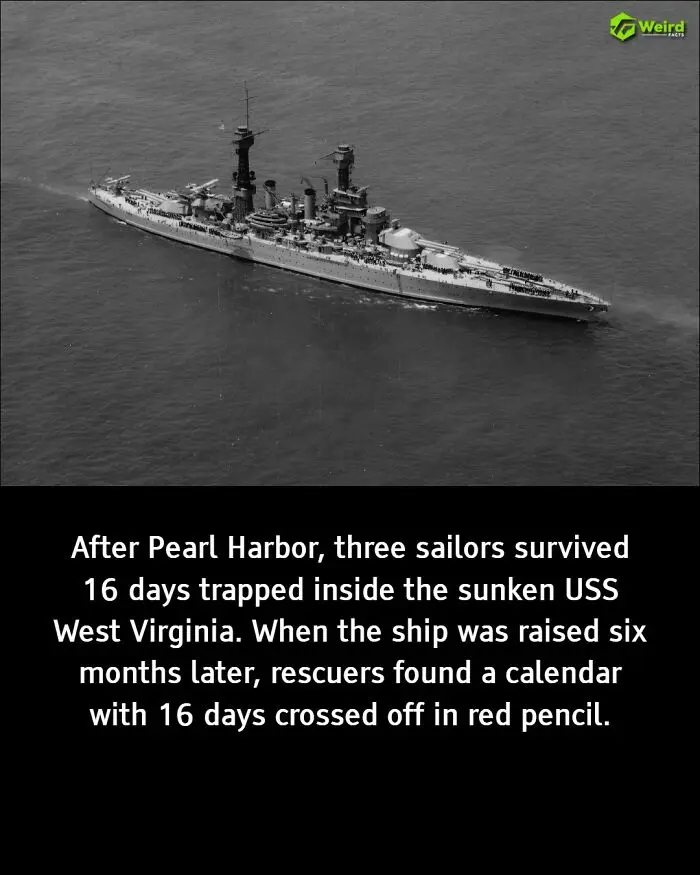
After the Japanese attack on Pearl Harbor on December 7, 1941, the battleship USS West Virginia sank at her berth with heavy loss of life. When salvage crews later refloated the ship in May 1942, they found the bodies of three sailors in an unflooded storeroom deep inside the hull.
The compartment held haunting clues: a calendar with dates crossed off from December 7 through December 23, emergency rations had been eaten, and a manhole to fresh water had been opened. The official salvage report said the evidence indicated the men had adequate food and water but eventually d**d from oxygen deficiency.
The three men are widely identified as Ronald Endicott, Clifford Olds, and Louis “Buddy” Costin. The calendar suggests they may have survived there until about December 23, waiting in darkness for a rescue that never came.
Report
7points


