




Growing up, people imagine themselves in all sorts of fields of work, from businessmen and businesswomen, to princes and princesses, presidents, dancers, chefs, and beyond. Though, as kids, many of them aspire to do something to make the world a better place – a safer place, a nicer place, which often means trying to become a nurse or a police officer.
But guardian angels come in all shapes and forms, and for many people, it’s bodyguards that make the world a safer place. Some people on Quora were curious about what being a bodyguard entails, so they started discussions about what it’s like to be responsible for the safety of a celebrity, a wealthy person, or a billionaire. Many representatives of the profession shared their stories, so if you, too, are curious to learn about their experiences, scroll down to find their answers on the list below.
#21

It depends on the client… I have heard dozens of horror stories about clients who were abusive or out of control that refused to comply with the security agreement after a few drinks. Trying to start fights that the bodyguard was expected to finish were a common problem, as was attempting to ditch a bodyguard assigned to them by parents or employer. Thankfully, I never worked through an agency and was able to pick and choose who I would work for. I turned down a lot of jobs, even though I needed the money, because to me a client is like family… and if I do not like or trust you, it just isn’t gonna work.
Most of the time, being a bodyguard is very boring. Many clients are stalked by mentally disturbed persons, some are a potential kidnapping risk for ransom or leverage, and a select few are green lit for assassination. You need to analyze the risk assessment then perform a security audit of their home and workplace. However, the average client is not high risk. You are there just in case.
I would be a friend and confidante to the client… sometimes one of the few people in the world they could trust. We would often have long conversations on a variety of topics. I used to do a lor of driving, taking them all over town to run errands and attend meetings. Often I would accompany them to nightclubs or private parties. I needed to set a lot of people straight. Nearly always, this was accomplished without violence. They never noticed the sap or switchblade in my hand. They just suddenly realized that the little quiet guy in the leather jacket and boots was a lot scarier than they were, and rapidly excused themselves.
I studied several styles of martial art in my teens and twenties. When you are 5′8″ and 150#, fancy moves do not work so well against someone looming over you at 6′4″ and 300#. I just turned 50 and have a prosthetic limb and spectacles… the last fight I was in was with two guys half my age tweaked out on methamphetamine. Afterwards, I was told I wasn’t allowed to stab people at that club anymore, which was embarrassing, but we haven’t had any problems since. Usually it’s boring. I stand in the corner, sipping my rye and smoking a clove, watching the fancy lady hold court, and then we all go out and have pancakes. Most of the problems we have are on the walk through the parking lot after closing. A really BRIGHT flashlight in the eyes usually puts a quick stop to that… blind them and keep walking.
Other bodyguards will have other experiences. My past work was unlicensed and quasi-legal and I never wore a suit. My first client was one of the biggest marijuana distributors in upstate New York way back in the early 1990s when it was a major felony to possess a few ounces. I did some pro bono work for stalking victims. Worked with a few minor celebrities (well, p**n stars anyway). Currently ride shotgun for the fancy lady in her 18 wheeler full of pharmacueticals, which has a high risk of hijacking… she used to have a lot of crazy stalkers who were problematic whenever she returned to her hometown… ended up marrying her and retiring. She drives me around now, it’s nice. Wrote her memoirs for her last year, she has had a far more interesting life than I have. “QUEEN” by C. R. Jahn on amazon.
C. R. Jahn, author of FTW Self Defense
8points
#22
that is very depends on who is the a high-net worth, if is a businessman, celebrity, politician or high risk person who is on the police’s radar.
Anyway the work is very fulfilling although it is not as glamours as people might think. you are travel a lot and exposes to amazing lifestyle but at the end your are working to protect someone live ,not to have fun.
for me in Johannesburg there is the high crime rate aspect which make the work very different compare to secure someone who lives in Zurich.
8points
#23
Fortunately and unfortunately more than one, in fact several as either a detail member or team leader, on both a short term basis as well as several months.
Not sure exactly what you are looking for beyond that answer. I will NOT discuss who, what, when. where or why about any client so that avenue is closed. I will also not provide specific details that will identify a client OR a team member.
I can tell you that a good number of celebrities (movie/TV/radio people, well known for good and bad reasons, some self-proclaimed, and business, politically, and economically widely-known) are just like everyone else. They have issues and concerns about family and friends; they wonder if or when they will work again; they are concerned about income and outflow of money, though on a vastly different scale than most people. Some hire protection and some have protection provided as part of a contract such as on movie sets, foreign countries, and travel back and forth.
I have found that celebrities (a loosely defined term here) who have protection and security forced (?) upon them are often difficult with which to deal on a daily basis. They start out dissatisfied and go downhill from there. They tend to think of “S&P” as babysitters and there to keep them from doing things rather than to protect them from something bad happening. Usually within a day or so, and having tried the friendly method of explaining “how things are going to be” a more direct sort of understanding is required and we always referred to those as “come to Jesus” meetings.
We worked for a client once who had abdicated his responsibility for parental guidance some time before we came into the picture. His spouse did the best that she could but all the children were for the most part “rudderless” and thought that they could set their own boundaries. Unfortunately for us their idea of boundaries and our understanding of the term were miles apart. We spent that better part of the first week “rounding up the escapees” rather doing our real jobs. Every day was a crisis of some sort while dad was out of the house. We resolved that particular problem by having a “family come to Jesus” meeting in which it was clearly explained to all of them what the threats were and how from that point on EVERYONE would act. Security was tightened up severely and then over the course of the next few months loosened as they each earned our trust. Dad got reengaged and it turned out to be good for everyone. We worked for them beyond the original contract for several years and were welcomed guests after most of us were off on other details. A good result from a tough beginning through the use of an honest appraisal of their situation. Not all end anywhere near that well when the client (not necessarily the entity paying for the service) feels we are imposed upon them. Sometimes that relationship is strained throughout the life of the contract.
Again, the vast majority of people who require “S&P” or one of its close spinoffs, like hostage negotiation, hostage recovery, and threat nullification, are willing and understanding of their and our needs (like access, control, space, rules) and are generally thankful when the issues are resolved in their favor. There are always a few soreheads in every generalized group and celebrities are no exception.
8points
#24
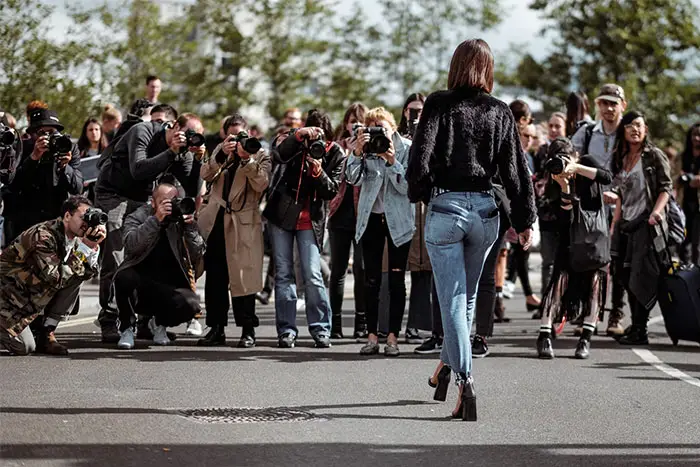
While I served as personal protection for several celebrities, and continue to do so on a limited basis, I was actually initially surprised at how rare the presence of dedicated protection agents, actually is. The most common situation in which the presence of personal security is advantageous would be a high profile celebrity making a public appearance where they will be mixing with the general public while representing an entity or concept that attracts conflict. Some celebrities seem to be in a constant state of increased need of security due to their personal political issues or the particular mix of philosophical, religious, or moral perceptions of the crowd or audiences. I also served in this function on productions where there were Union issues. The short answer, (yeah, I know: too late for a short answer…) is that most of the time, celebrities live their lives very much like the rest of us. They go about their daily business, driving themselves to work, the grocery store, picking up the children from school, going to doctor appointments and visiting friends, having lunch at Denny’s… Pretty much like you and me.
7points
#25

You get used to them always being there simply because they have to be. Michael preferred to have bodyguards around because he had experienced what it was like if they were not. I found it strange at first but, you get used to it. Also, they know when to be discreet. It is all part of their job to be so. Plus, they are respectful, again, it is part of their job.
7points
#26
Well friends, Billionaires, due to their immense wealth and high-profile status, often employ security measures to protect their safety and privacy. While the specific security arrangements can vary from person to person, it is not uncommon for billionaires to have a significant security presence and special treatment regarding their safety and daily activities.
One of the primary security measures employed by billionaires is the use of personal bodyguards or close protection teams. These professionals are highly trained in personal security and are responsible for ensuring the safety of the billionaire and their immediate family members. The number of bodyguards can vary depending on the individual's perceived threat level, lifestyle, and specific security needs. Some billionaires may have a small team of dedicated bodyguards, while others may employ a larger security detail.
In addition to personal bodyguards, billionaires may also have security measures in place at their residences, including gated communities, high-tech surveillance systems, and 24/7 security personnel. These measures help to maintain a secure environment and protect the privacy of the billionaire and their family members.
When it comes to traveling, billionaires often have access to private jets or luxury transportation services that prioritize their security and comfort. This can include advanced security screenings, private terminals, and dedicated security personnel to ensure a smooth and secure travel experience.
Furthermore, billionaires may receive special treatment and privileges at high-end establishments, including hotels, restaurants, and clubs. I can testify since I already had some clients of this level visiting Brazil in the past. This can range from discreet entrances and private areas to enhanced security measures to maintain their privacy and exclusivity.
It is important to note that the extent of security measures and special treatment for billionaires can vary depending on the individual and their personal preferences. While some billionaires may choose to have a highly visible security presence, others may opt for more discreet security arrangements.
The reasons behind these security measures are multifaceted. Billionaires often possess substantial assets, are involved in high-stakes business dealings, and may face potential risks such as kidnapping, extortion, or public attention. Protecting their safety and privacy allows them to focus on their professional endeavors and maintain a sense of security in their personal lives.
3 examples of billionaires that illustrate what I´m saying:
Mark Zuckerberg, the billionaire co-founder of Facebook, is known for his extensive security measures. He reportedly has a team of around 16 bodyguards who accompany him at all times, both in his professional and personal life. His security team includes former Secret Service agents and other highly trained professionals. In addition to personal protection, Zuckerberg's residences are equipped with advanced security systems and he travels in private jets to ensure a secure and efficient travel experience.
Elon Musk, the billionaire CEO of Tesla and SpaceX, is another prominent figure who prioritizes personal security. Musk has mentioned in interviews that he receives threats due to his high-profile status and outspoken nature. As a result, he has a team of bodyguards who provide him with round-the-clock protection. Furthermore, his residences and company facilities have robust security systems in place to ensure the safety of both himself and his assets.
Oprah Winfrey, the media mogul, and billionaire, is known for her global influence and philanthropic efforts. With such fame and wealth comes the need for heightened security. Winfrey has employed a team of professional bodyguards for many years, ensuring her personal safety during public appearances and events. Additionally, her properties are well-secured with advanced surveillance systems and tr
7points
#27

I own and work at an executive protection company. I have specialists with all sorts of working backgrounds, some from military, federal law enforcement, law enforcement, and backgrounds of working a “regular” 9–5 work schedule at a regular business.
Obviously I pay some employees differently than others. I have/have been in the position where I’ve payed a specialist right around $150,000 a year plus benefits and insurance. Obviously that specialist was highly trained and was a great employee to work with. On the other hand, the lowest salary I pay currently is around $57,000 plus benefits and insurance.
It takes time to earn a salary, and even more time to earn respect. If you wrap your mind around only getting paid what you want you won’t be happy. You need to earn the salary you get paid, and be accepting of it. If you want more pay, work harder, and show more commitment. Don’t complain you get a lower salary than others when you often get complaints and warnings, even if you’ve worked at your job for several years.
7points
#28
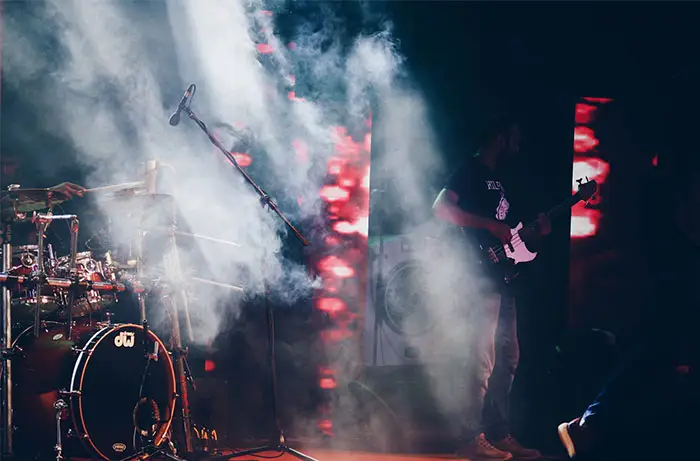
My dad was a sort of improvised bodyguard for a Chinese singer once. He was playing in her band which was on a bit of a national tour of China; he was asked to act as a bodyguard. He was of course skeptical, as my dad is one of the least violent people in the world (heck he's only been in one fight, though he won it). He protested, saying he doesn't know any martial arts or anything.
Her response, which turned out to be true, is that since he was a 6'2" portly man he would be much bigger than almost anyone around. Long story short, many fabulous concerts happened and everyone was slightly intimidated.
Her response, which turned out to be true, is that since he was a 6'2" portly man he would be much bigger than almost anyone around. Long story short, many fabulous concerts happened and everyone was slightly intimidated.
7points
#29
Not totally related, but a fun story nonetheless.
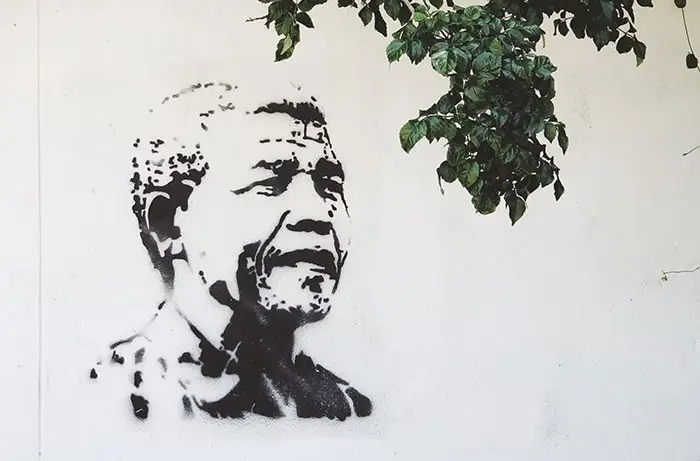
My dad worked in dignitary protection in the late 80s/early 90s. One person he had to escort around was Nelson Mandela. On a long private flight with Mandela (maybe 12 passengers on board) a pork chop dinner was served. Unfortunately, the crew only brought enough meals for everyone to have one serving. Unknowingly, Mandela asked for seconds before my dad had a chance to eat, so my Dad had to starve on this eight-hour flight. When news broke that Mandela died in 2013, my dad texted me something along the lines of "That pork chop-stealing SOB finally got what was coming to him!"
My dad worked in dignitary protection in the late 80s/early 90s. One person he had to escort around was Nelson Mandela. On a long private flight with Mandela (maybe 12 passengers on board) a pork chop dinner was served. Unfortunately, the crew only brought enough meals for everyone to have one serving. Unknowingly, Mandela asked for seconds before my dad had a chance to eat, so my Dad had to starve on this eight-hour flight. When news broke that Mandela died in 2013, my dad texted me something along the lines of "That pork chop-stealing SOB finally got what was coming to him!"
6points
#30

My aunt got to meet Bob Dylan in Europe. She work as a guard for the military or police and she was guarding backstage when he walk right past her on the the stage. After she go his autograph, by since she had no paper, she used the back of a receipt she found in her wallet. And guess what, while my photos are in her basement rotting away, the BJs receipt gets to hang proudly on the staircase.
5points