




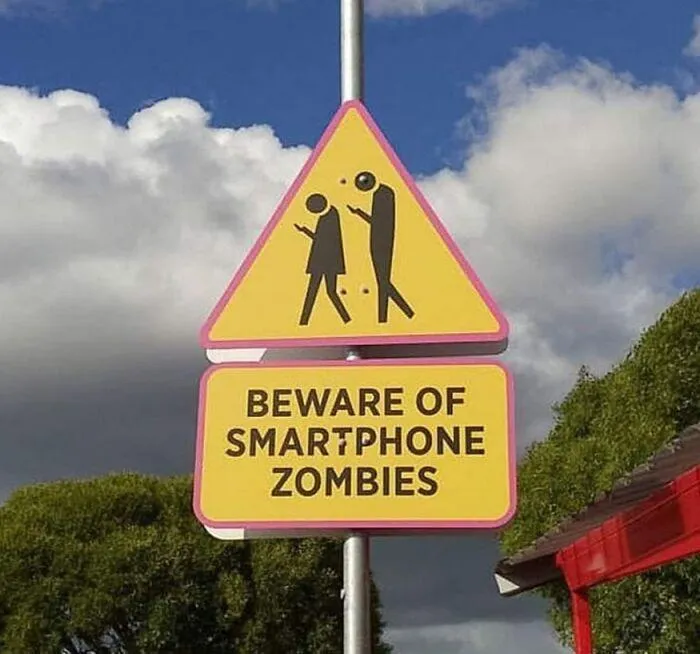
Signs are an important part of everyday communication because they allow people to exchange information quickly, often without having to speak the same language. As Psychology Today explains, they serve several purposes, from warning people about potential hazards to helping them navigate unfamiliar places and understand public rules.
Road signs, emergency exit symbols, parking notices, and other visual messages help coordinate people's behavior and make shared spaces easier to use. Their effectiveness largely comes from their simplicity. Recognizable colors, shapes, arrows, and symbols can communicate information at a glance, even in busy or noisy environments where spoken instructions might be missed.

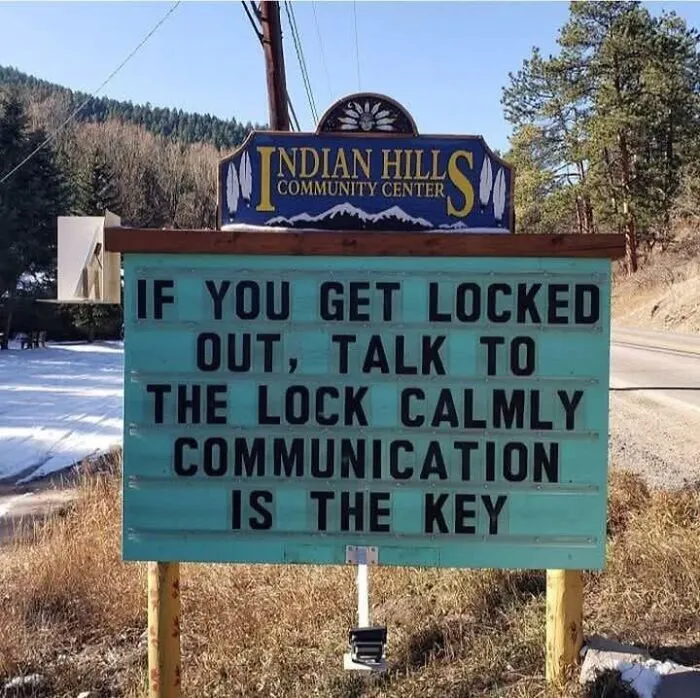

However, for a sign to serve its purpose, people need to understand what it is telling them. When its message is unclear, the very thing designed to make everyday life easier can become an additional source of frustration. This is partly because people have limited mental capacity for processing information at any given moment.
They should be able to look at a sign, understand its meaning, and decide what to do. If they instead have to reread it, guess what certain words mean, or figure out which instruction takes priority, the process becomes unnecessarily demanding. Even a relatively simple message can become difficult to follow when its wording or presentation gets in the way.



InnerDrive explores this problem through the psychological concept of cognitive load, which describes the mental effort required to process information. Working memory can only hold a limited amount of information at once, so unclear instructions force people to use some of that capacity to figure out what they are supposed to do.
Ambiguous wording, missing context, unfamiliar terminology, and poorly arranged steps can all contribute to this problem. Contradictory instructions are particularly unhelpful because readers must first work out which message to trust before they can take action.
This unnecessary mental effort is known as extraneous cognitive load, and research into workplace instructions has linked poorly designed guidance to greater mental demands and reduced efficiency.



The wording itself can also make a considerable difference. According to the Stanford Encyclopedia of Philosophy, people do not interpret messages based solely on the literal meanings of individual words. They also rely on context, shared knowledge, expectations, and their own perspectives to understand what someone is trying to communicate.
This means that a sentence can seem perfectly straightforward to the person who wrote it while leaving plenty of room for someone else to interpret it differently. A misplaced word, unclear reference, or missing detail can change the meaning of an entire instruction, sometimes with unintentionally amusing results.



Interestingly, the person creating the message may not recognize these problems before it reaches the public. People tend to assume that others will understand their words in the same way they intended them, overlooking the possibility that readers might interpret them differently.
Research discussed in the encyclopedia found that speakers often overestimate how successfully they communicate their intended meaning. In one experiment involving ambiguous sentences, listeners misunderstood the intended meaning in nearly half of the cases.
This highlights why reviewing written instructions from another person's perspective is so important, particularly when the message needs to be understood quickly without anyone available to explain it.
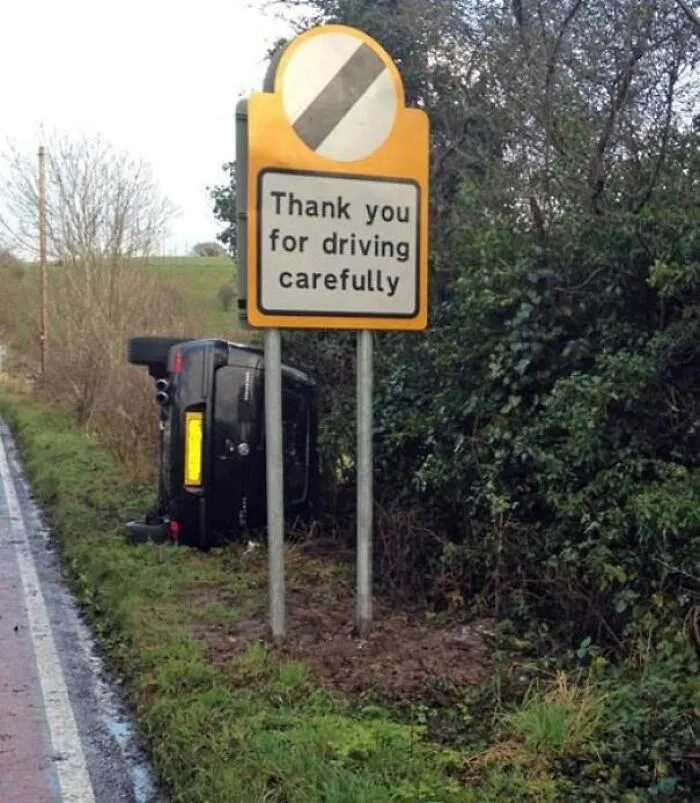

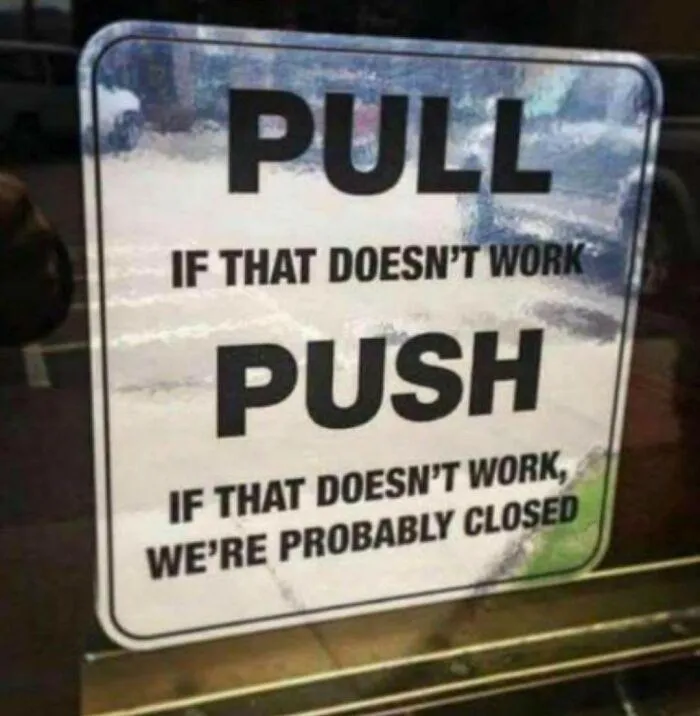
Of course, not every confusing sign is necessarily the result of complicated language. Sometimes, the problem comes from the way different elements are arranged or presented. Colors, symbols, arrows, font sizes, and spacing all influence how people understand visual information.
A sign might contain perfectly reasonable wording but still leave people scratching their heads if its arrows point in the wrong direction or its symbols appear to contradict the written instructions. Good visual communication depends on these elements working together, rather than competing for attention. When they fail to complement one another, the intended message can become much harder to recognize.