



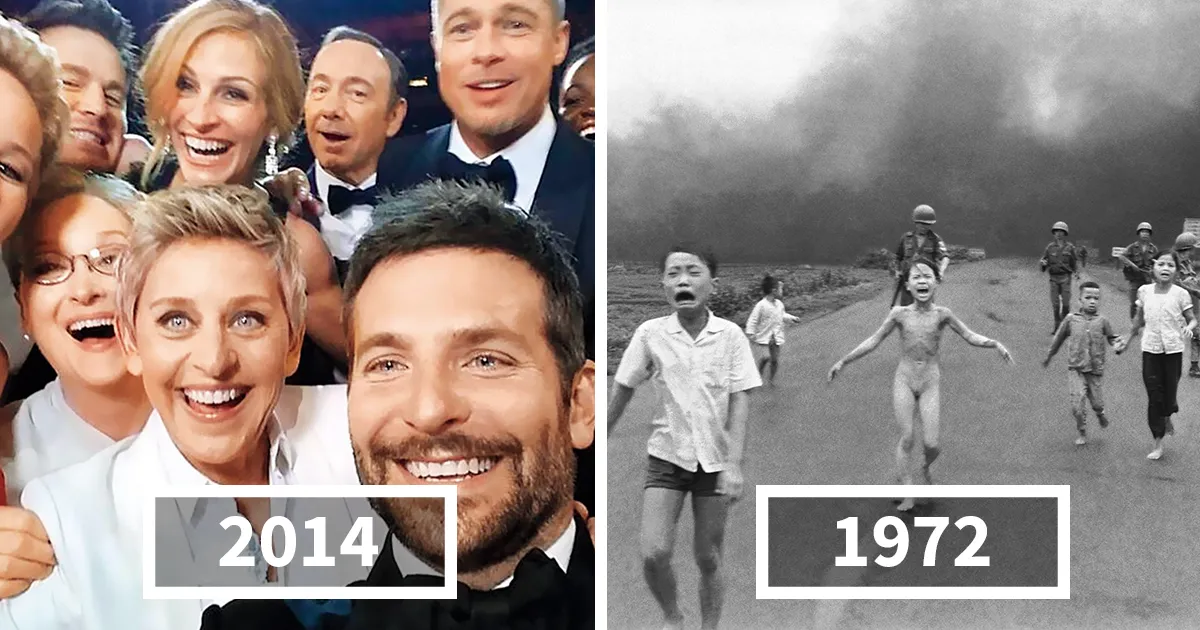

With millions of pictures taken every day, we can easily get lost in the vast world of images. That's why TIME magazine decided to create a list of the 100 most influential pictures ever taken. They teamed up with curators, historians, photo editors, and famous photographers around the world for this task. And now, you can find all of the most famous photos in one place, together with descriptions as to why these famous historical photos are such an important part of our legacy.
"No formula makes for iconic photos," the editors said. "Some rare historical photos are on our list because they were the first of their kind, others because they shaped the way we think. And some cut because they directly changed the way we live. What all of the 100 famous photos share is that they are turning points in our human experience."
The result they ended up with is not only a collection of superb historical photos but incredible human experiences as well. "The best photography is a form of bearing witness, a way of bringing a single vision to the larger world."
Ready to explore the world in a new view through the most famous photos of all time? If so, grab a cup of your favorite beverage and prepare for a journey that might just change the way you look at the world. The photo gallery of the most famous pictures of our age is right at your fingertips!
More info: time.com
#81 The Steerage, Alfred Stieglitz, 1907
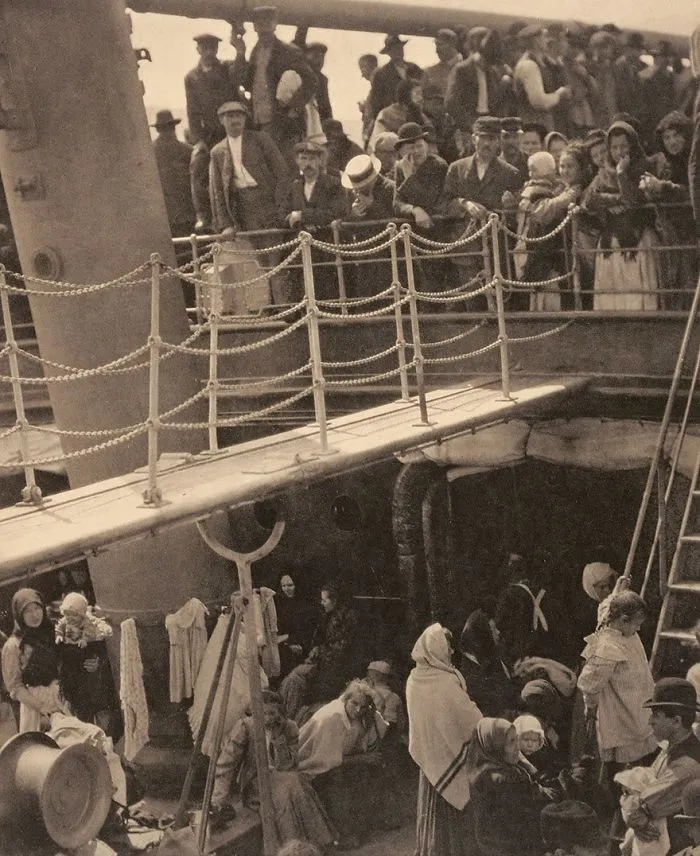
As a leader of the Photo-Secession movement, Alfred Stieglitz searched for beauty through the craftsmanlike creation of photographs, held pioneering exhibitions of his contemporaries, published their works and sought to have the still nascent art form taken as seriously as painting. But as modernism seeped into the cultural ferment in the early 20th century, Stieglitz became mesmerized by the growing cacophony of society, of rising skyscrapers and soaring airplanes, and strove to create what he termed “straight photography,” offering truthful takes on the real world. In 1907 he was sailing to Europe, 4x5 Speed Graflex in tow, when he set off from the first-class deck and came upon the huddled masses in the ship’s steerage. There, the shawled and swathed were crammed together on the compact lower deck, the skewed geometry of the ship emphasizing their claustrophobic accommodations and visually segregating them from those on the upper deck. “A round straw hat; the funnel leaning left, the stairway leaning right; the white drawbridge, its railings made of chain,” Stieglitz later wrote. “I stood spellbound for a while. I saw shapes related to one another—a picture of shapes, and underlying it, a new vision that held me.” Despite its momentary impact, Stieglitz’s photo, with its clear, unapologetic take on life, lay unnoticed for four years. But when he published it on the cover of his magazine Camera Work, The Steerage presented a radical way of thinking about photography, not as a momentary mimic of painting but a wholly formed and unique type of art. Appearing at the time of a seismic revolution in the arts, with the emergence of such seminal figures as the composer Igor Stravinsky and the architect Walter Gropius, this, one of the first “modernist” pictures, helped photography to be seen on a par with these other innovative forms of art. None other than the painter Pablo Picasso admired The Steerage’s cubistic sense and wrote that both he and Stieglitz were “working in the same spirit.”
Report
12points
#82 Trolley To New Orleans, Robert Frank, 1955
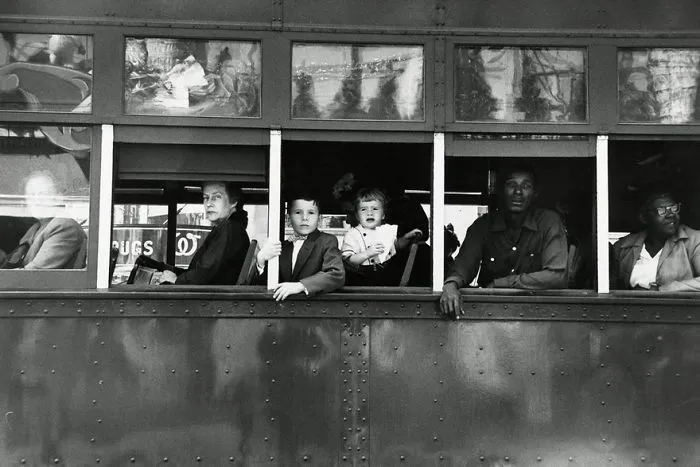
Uncomfortable truths tend to carry consequences for the teller. When Robert Frank’s book The Americans was released, Practical Photography magazine dismissed the Swiss-born photographer’s work as a collection of “meaningless blur, grain, muddy exposures, drunken horizons and general sloppiness.” The book’s 83 images were taken as Frank crisscrossed the U.S. on several road trips in the mid-1950s, and they captured a country on the cusp of change: rigidly segregated but with the civil rights movement stirring, rooted in family and rural tradition yet moving headlong into the anonymity of urban life.
Nowhere is this tension higher than in Trolley—New Orleans, a fleeting moment that conveys the brutal social order of postwar America. The picture, shot a few weeks before Rosa Parks refused to give up her seat on a bus in Montgomery, Ala., was unplanned. Frank was shooting a street parade when he saw the trolley passing. Spinning around, Frank raised his camera and shot just before the trolley disappeared from view. The picture was used on the cover of early editions of The Americans, fueling criticism that the work was anti-American. Of course Frank—who became a U.S. citizen in 1963, five years after The Americans was published—simply saw his adopted country as it was, not as it imagined itself to be. Half a century later, that candor has made The Americans a monument of documentary and street photography. Frank’s loose and subjective style liberated the form from the conventions of photojournalism established by life magazine, which he dismissed as “goddamned stories with a beginning and an end.”
Report
12points
#83 Behind The Gare Saint-Lazare, Henri Cartier-Bresson, 1932
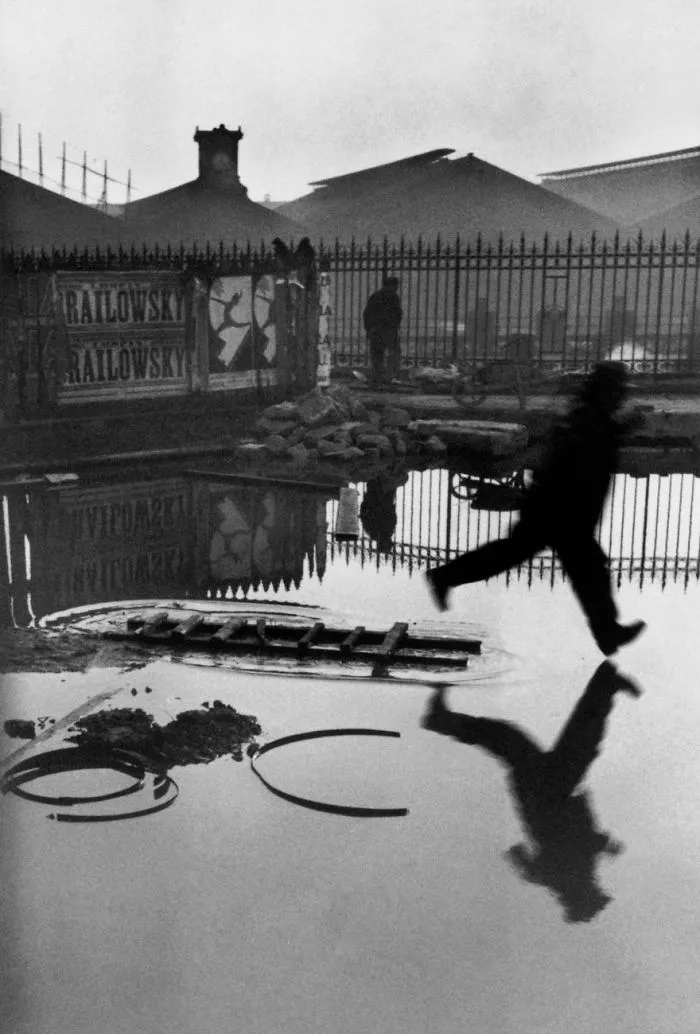
Speed and instinct were at the heart of Henri Cartier-Bresson’s brilliance as a photographer. And never did he combine the two better than on the day in 1932 when he pointed his Leica camera through a fence behind Paris’ Saint-Lazare train station. The resulting image is a masterpiece of form and light. As a man leaps across the water, evoking the dancers in a poster on the wall behind him, the ripples in the puddle around the ladder mimic the curved metal pieces nearby. Cartier-Bresson, shooting with a nimble 35-millimeter camera and no flash, saw these components all come together for a brief moment and clicked his shutter. Timing is everything, and no other photographer’s was better. The image would become the quintessential example of Cartier-Bresson’s “Decisive Moment,” his lyrical term for the ability to immortalize a fleeting scene on film. It was a fast, mobile, detail-obsessed style that would help chart the course for all of modern photography.
Report
10points
#84 Couple In Raccoon Coats, James Vanderzee, 1932
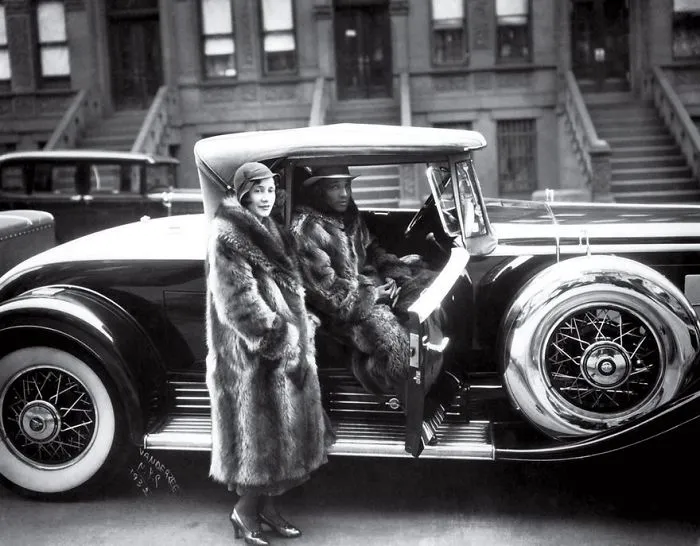
To many white Americans in the 1930s, black people were little more than domestics or sharecroppers. They were ignored, invisible, forgotten. But that was not what James VanDerZee saw when he gazed through his camera lens. Seeking to counter the degrading and widely disseminated caricatures of African Americans in popular culture, VanDerZee not only photographed Harlem weddings, funerals, clubs and families but also chronicled the likes of black nationalist Marcus Garvey, dancer Bill “Bojangles” Robinson and the poet Countee Cullen—the leaders, artists, writers, movers and strivers of the Harlem Renaissance. In his Guarantee Photo Studio and along the neighborhood’s streets, VanDerZee crafted portraits that were meticulously staged to celebrate the images his subjects wanted to project. And nowhere is this pride more evident than in his glowing picture of a handsome couple sporting raccoon coats beside a Cadillac roadster. The swish backdrop—props curated by VanDerZee—challenged popular perceptions about race, class and success and became an aspirational model for generations of African Americans yearning for a full piece of the American Dream.
Report
10points
#85 Androgyny (6 Men + 6 Women), Nancy Burson, 1982
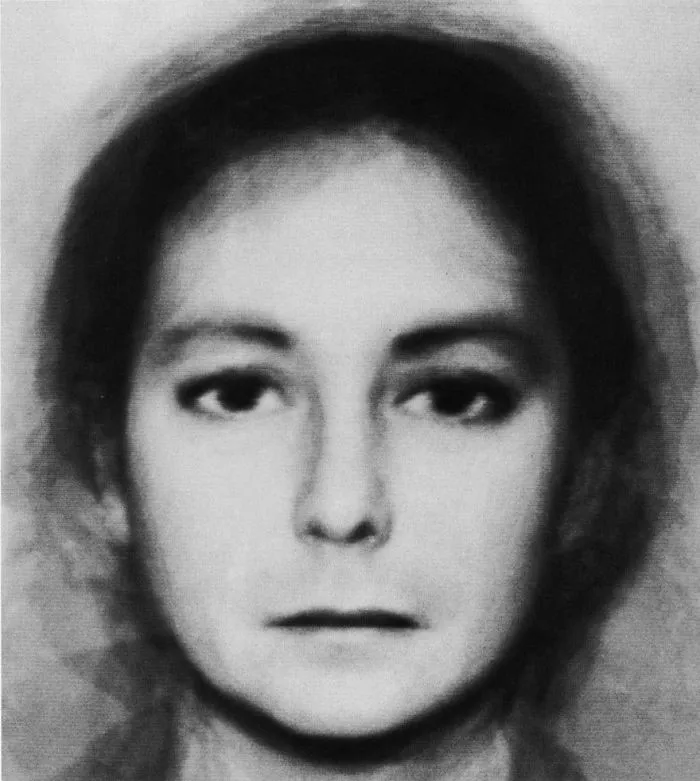
Photography is a perfect medium for recording the past. But until Nancy Burson’s Androgyny, it was useless for predicting the future. Two decades before the shape-shifting enabled by digital photography became ubiquitous, Burson worked with MIT scientists to develop technology that let her craft this composite image of the faces of six men and six women. The effect was revolutionary. Photographs could suddenly be used to project how someone would look, not just how they once did. Burson’s composite work led her to develop pioneering software that could digitally age faces—the first time these images could be based on more than guesses. The Federal Bureau of Investigation acquired Burson’s software to create present-day images of people who had gone missing years earlier, and it has been used to locate numerous missing persons.
Report
10points
#86 Untitled (Cowboy), Richard Prince, 1989
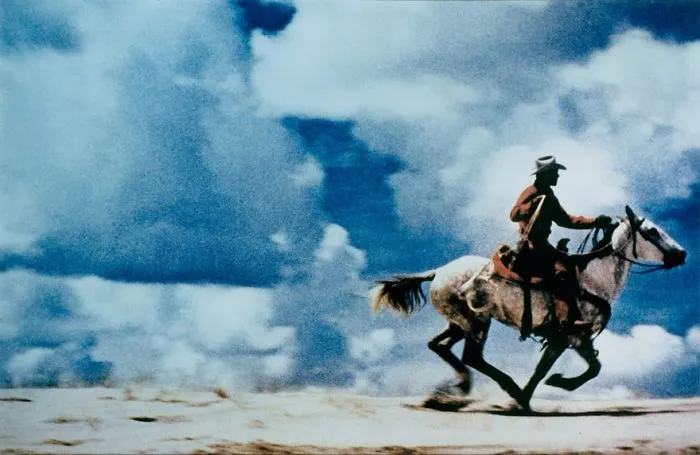
The idea for the project that would challenge everything sacred about ownership in photography came to Richard Prince when he was working in the tear-sheet department at Time Inc. While he deconstructed the pages of magazines for the archives, Prince’s attention was drawn to the ads that appeared alongside articles. One ad in particular caught his eye: the macho image of the Marlboro Man riding a horse under blue skies. And so, in a process he came to call rephotography, Prince took pictures of the ads and cropped out the type, leaving only the iconic cowboy and his surroundings. That Prince didn’t take the original picture meant little to collectors. In 2005 Untitled (Cowboy) sold for $1.2 million at auction, then the highest publicly recorded price for the sale of a contemporary photograph.
Others were less enthusiastic. Prince was sued by a photographer for using copyrighted images, but the courts ruled largely in Prince’s favor. That wasn’t his only victory. Prince’s rephotography helped to create a new art form—photography of photography—that foreshadowed the era of digital sharing and upended our understanding of a photo’s authenticity and ownership.
Report
10points
#87 Bricklayer, August Sander, 1928
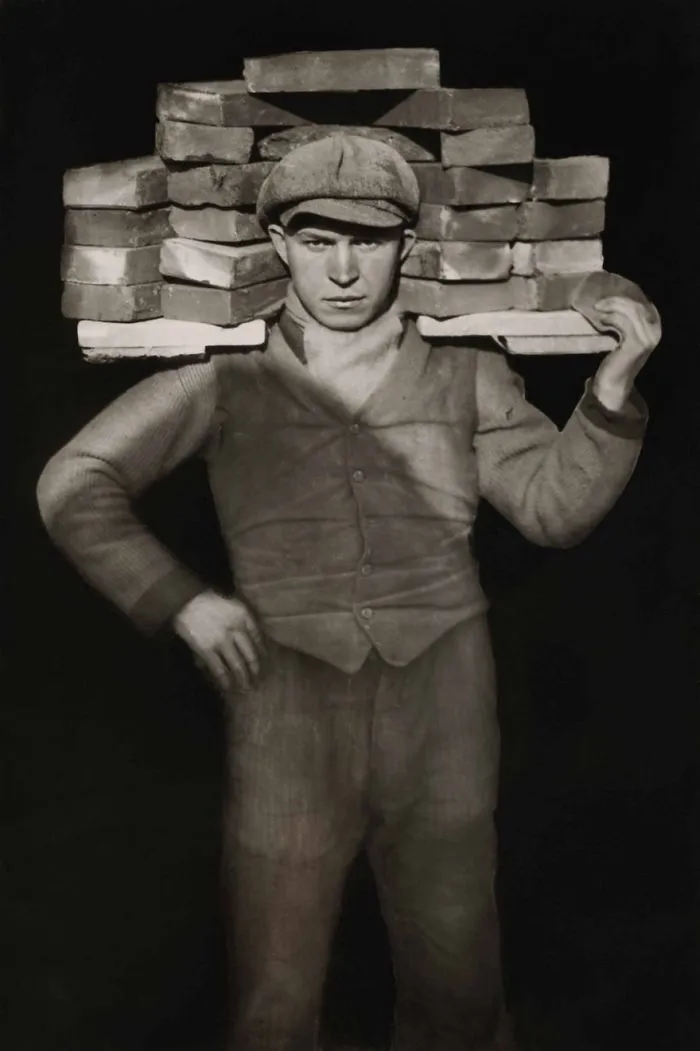
There is a certain formulaic approach to August Sander’s photography. But that was his aim. By presenting doctors, farmers, chefs and beggars all with the same stark directness, the German-born Sander made everyone the everyman. He set out to show that there is much to learn from all layers of society, noting, “We can tell from appearance the work someone does or does not do; we can read in his face whether he is happy or troubled, for life unavoidably leaves its trace there.” Sander’s most celebrated portrait, of a bricklayer in Cologne, Germany, embodies that insight. For while the laborer’s work entails toil and sweat, he maintains a proud bearing. The classical framing, with the lines of the bricks evoking the lines of the bricklayer’s vest, reinforces the dignity of the subject. Which was no small thing for a nation still reeling from the humiliation of World War I. Sander gathered Bricklayer and his other portraits in the monumental People of the 20th Century, the first body of work to document a culture through photography. Sander’s photographs celebrate the importance of the individual, elevating portraiture of ordinary people to art.
Report
8points
#88 The Hague, Erich Salomon, 1930
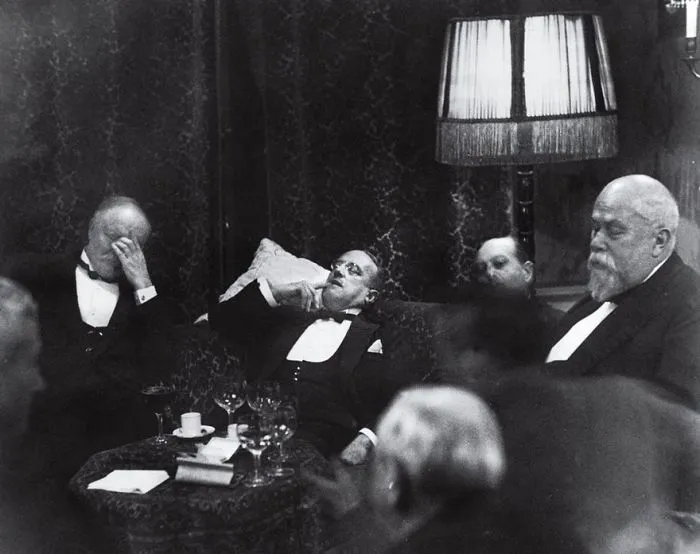
Portly statesmen have long gathered to weigh the fate of nations, cigars and brandy at the ready. But they were always sequestered far from prying eyes. The German photojournalist Erich Salomon changed all that, slipping into those smoke-filled back rooms with a small Leica camera built to shoot in low light. Nowhere was his skill on greater display than during a 1930 meeting in the Hague over German World War I reparations. There, at 2 a.m., Salomon candidly shot exhausted Foreign Ministers after a long day of negotiations. The picture created a sensation when it was published in the London Graphic. For the first time, the public could look through the doors of power and see world leaders with their guard down. Salomon, who died in Auschwitz 12 years later, had created backstage political photojournalism.
Report
8points
#89 Fort Peck Dam, Margaret Bourke-White, 1936
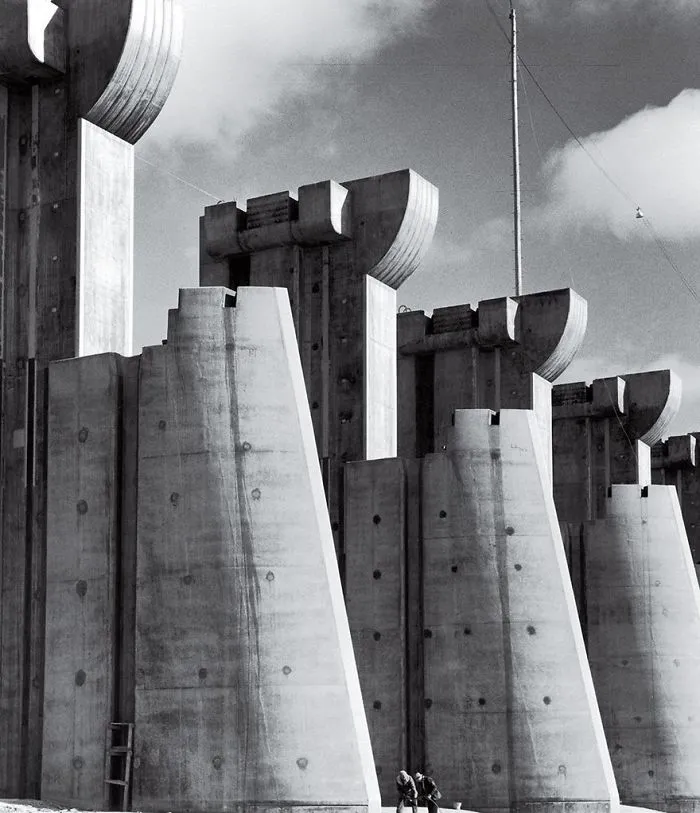
It was to quickly become the most influential news and photography magazine of its time, and LIFE’s November 1936 debut issue proudly announced that it would cover stories of enormous scope and complexity in a uniquely visual way. What better person, thought publisher Henry Luce, than his Fortune magazine photographer Margaret Bourke-White to shoot LIFE’s premier story, on the construction of Montana’s Fort Peck Dam? There, on the cover with the castle-like structure and a photo essay inside, Bourke-White used pictures to give a human feel to an article on the world’s largest earth-filled dam. She did this by focusing not only on the technical challenges of the massive New Deal project in the Missouri River Basin but also on the Wild West vibe in “the whole ramshackle town,” a place “stuffed to the seams with construction men, engineers, welders, quack doctors, barmaids, fancy ladies.” Bourke-White’s cover became the defining image of the magazine that helped define a style of photojournalism and set the tone for the other great LIFE photographers who followed her. As her colleague Carl Mydans, the great war photojournalist, put it, Bourke-White’s influence “was incalculable.”
Report
8points
#90 Untitled Film Still 21, Cindy Sherman, 1978
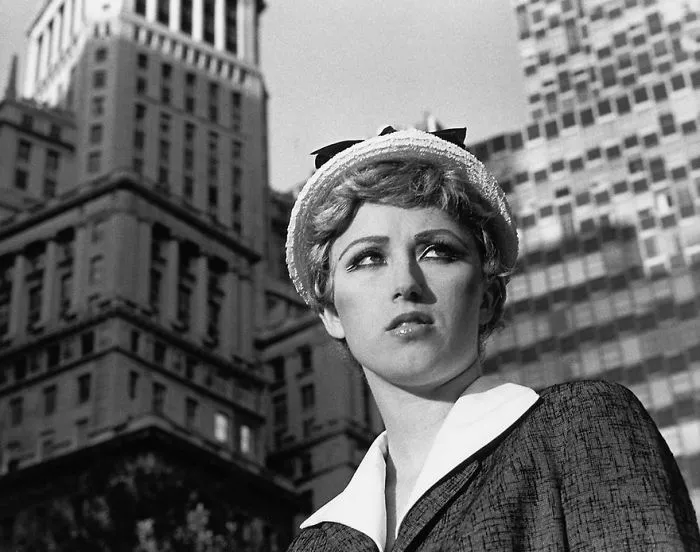
Since she burst onto the art scene in the late 1970s, Cindy Sherman the person has always been obscured by Cindy Sherman the subject. Through inventive, deliberately confusing self-portraits taken in familiar but artificial circumstances, Sherman introduced photography as postmodern performance art. From her Untitled Film Stills series, #21 (“City Girl”) calls to mind a frame from a B movie or an opening scene from a long-since-canceled television show. Yet the images are entirely Sherman’s creations, placing the viewer in the role of unwitting voyeur. Rather than capture real life in the click of a shutter, Sherman uses photography as an artistic tool to deceive and captivate. Her images have become some of the most valuable photographs ever produced. By manipulating viewers and recasting her own identity, Sherman carved out a new place for photography in fine art. And she showed that even photography allows people to be something they’re not.
Report
8points
#91 Brian Ridley And Lyle Heeter, Robert Mapplethorpe, 1979
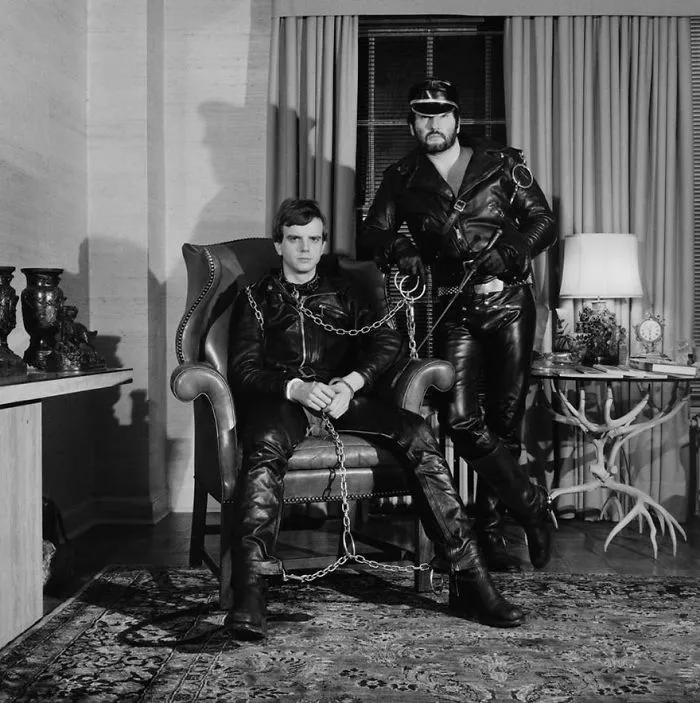
Mainstream American culture had little room for homosexuality in 1979, when Robert Mapplethorpe photographed Brian Ridley and Lyle Heeter in their full sadomasochistic regalia. At work, gay employees were largely closeted. In many states, expressing their love could be criminal. Mapplethorpe spent 10 years during this era documenting the underground gay S&M scene—a world even more deeply shielded from public view. His intimate, highly stylized portraits threw it into open relief, perhaps none more so than Brian Ridley and Lyle Heeter. Both men are clad in leather, with the submissive one bound by chains and the dominant partner holding his reins in one hand and a riding crop in the other. Yet the men are posed in an otherwise unremarkable living room, a juxtaposition that adds a layer of normality to a relationship far outside the bounds of what most Americans then considered acceptable. The picture and the series it was part of blew open the doors for a range of photographers and artists to frankly examine gay life and sexuality.
Nearly a decade later, Mapplethorpe’s work continued to provoke. An exhibit featuring his pictures of gay S&M scenes led to a Cincinnati art museum and its director’s getting charged with obscenity. (Mapplethorpe died of AIDS in 1989, one year before the trial began.) The museum and its director were eventually acquitted, bolstering Mapplethorpe’s legacy as a bold pioneer whose work deserved public display.
Nearly a decade later, Mapplethorpe’s work continued to provoke. An exhibit featuring his pictures of gay S&M scenes led to a Cincinnati art museum and its director’s getting charged with obscenity. (Mapplethorpe died of AIDS in 1989, one year before the trial began.) The museum and its director were eventually acquitted, bolstering Mapplethorpe’s legacy as a bold pioneer whose work deserved public display.
Report
8points
#92 Demi Moore, Annie Leibovitz, 1991
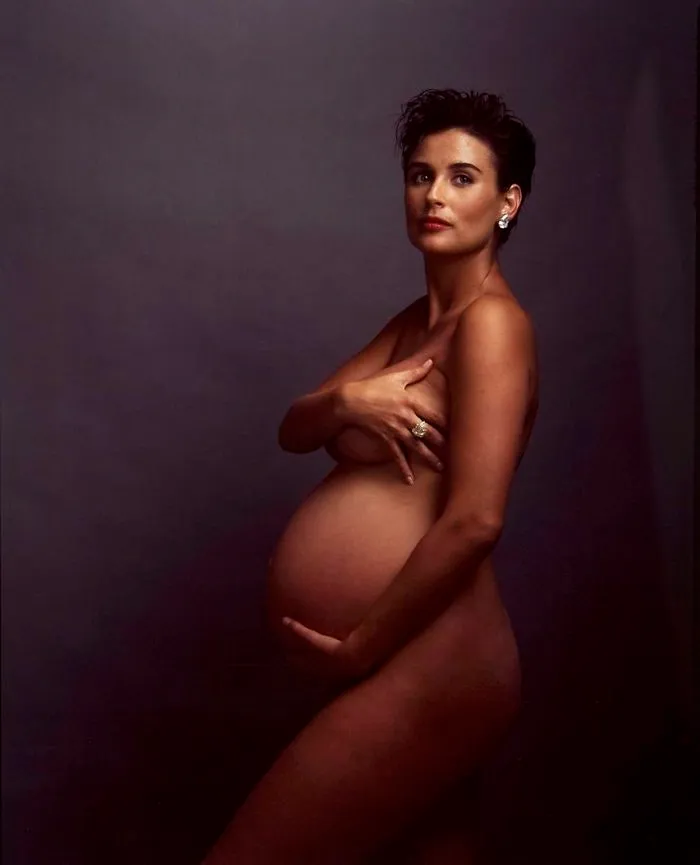
The Hollywood star Demi Moore was seven months pregnant with her second child when she graced the cover of Vanity Fair in nothing but her birthday suit. Such a display was not unusual for Moore, who had the birth of her first child recorded with three video cameras. But it was unprecedented for a mainstream media outlet. Portraitist Annie Leibovitz made an image that celebrated pregnancy as much as it titillated, showing how maternity could be not only empowering but also sexy. The magazine’s editor, Tina Brown, deemed Moore’s act a brave declaration, “a new young movie star willing to say, ‘I look beautiful pregnant,’ and not ashamed of it.” The photo was the first mass-media picture to sexualize pregnancy, and many found it too shocking for the newsstand. Some grocery chains refused to stock the issue, while others covered it up like pornography. It was not, of course. But it was a provocative magazine cover, and it did what only the best covers can: change the culture. Once pregnancy was a relatively private affair, even for public figures. After Leibovitz’s picture, celebrity births, naked maternity shots and paparazzi snaps of baby bumps have become industries unto themselves.
Report
8points
#93 Cathedral Rock, Yosemite, Carleton Watkins, 1861
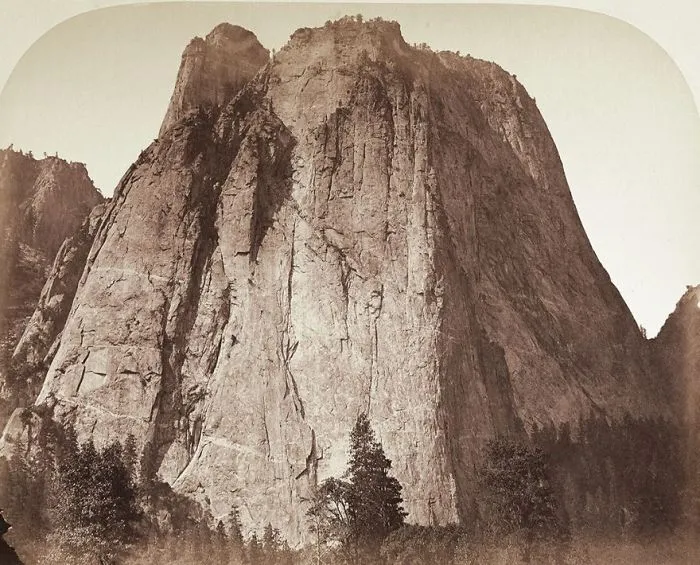
Decades before Ansel Adams ever saw Yosemite’s jagged peaks, Carleton Watkins packed his mammoth plate camera, tripods and a makeshift tent darkroom on mules and ventured into the remote California valley. At the journey’s end, Watkins had 130 negatives that offered the first printed images of Yosemite’s towering masses, glacial geology and jaw-dropping expanse. The images, including Watkins’ intimate view of Cathedral Rock, floored the growing nation’s power brokers. John Conness, a U.S. Senator from California, owned a set of the prints and became an evangelist for the work. On June 30, 1864, President Abraham Lincoln signed into law the Yosemite Grant Act, laying the foundation for the National Park System, which now protects some 84 million acres of land.
Report
7points
#95 Molotov Man, Susan Meiselas, 1979
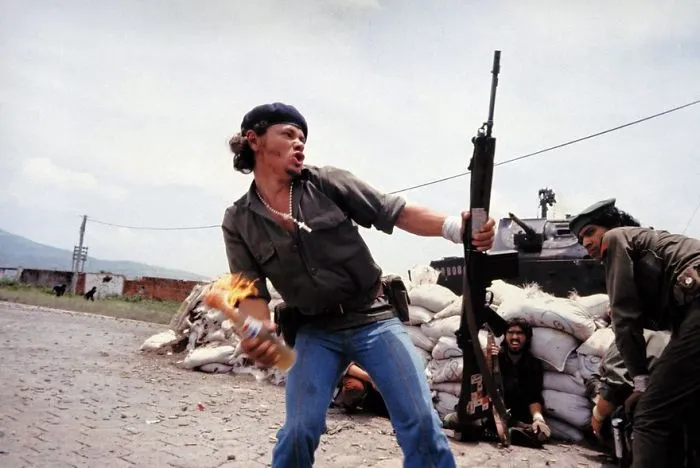
Susan Meiselas traveled to Nicaragua in the late 1970s as a young photographer with an anthropologist’s eye, keen to make sense of the struggle between the long-standing Somoza dictatorship and the socialist Sandinistas fighting to overthrow it. For six weeks she roamed the country, documenting a nation of grinding poverty, stunning natural beauty and wrenching inequality. Meiselas’ work was sympathetic to the Sandinista cause, and she gained the trust of the revolutionaries as they slowly prevailed in the fight. On the day before President Anastasio Somoza Debayle fled, Meiselas photographed Pablo de Jesus “Bareta” Araúz lobbing a Molotov cocktail at one of the last national guard fortresses. After the Sandinistas took power, the image became the defining symbol of the revolution—a reviled dictator toppled by a ragtag army of denim-clad fighters wielding makeshift weapons. Eagerly disseminated by the Sandinistas, Molotov Man soon became ubiquitous throughout Nicaragua, appearing on matchbooks, T-shirts, billboards and brochures. It later became a flash point in the debate over artistic appropriation when the painter Joy Garnett used it as the basis of her 2003 painting Molotov.
Report
6points
#96 North Korea, David Guttenfelder, 2013
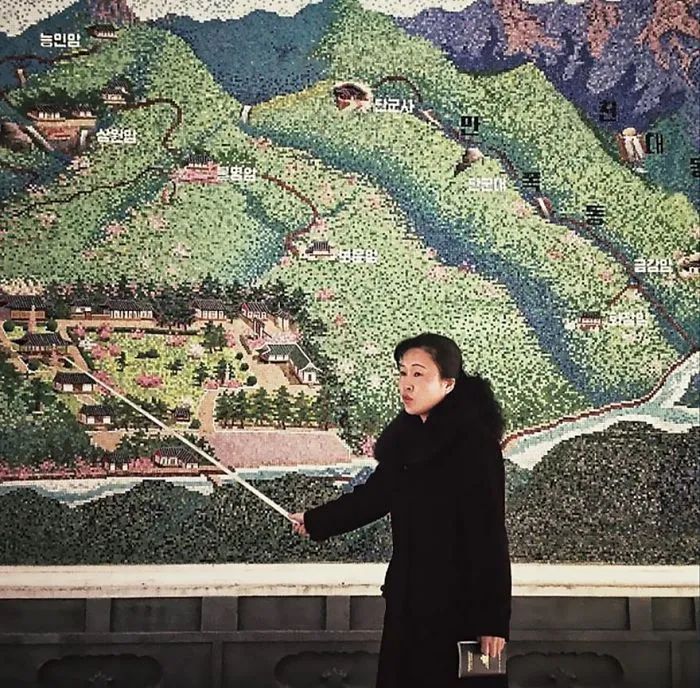
David Guttenfelder was chief photographer in Asia for the Associated Press when it became the first international news organization to open a bureau in North Korea. He started making frequent trips to the country, which had been largely off-limits to foreign journalists and virtually hidden from public view for nearly 60 years. Guttenfelder dutifully chronicled the official events and stage-managed pageants in Pyongyang, but his eye kept wandering to the scenes of daily life just beyond the guided tours. In early 2013, North Korea made a 3G connection available to foreigners, and suddenly Guttenfelder had the ability to share those glimpses with the world in real time. On January 18, 2013, he used his iPhone to post one of the first images to Instagram from inside the notoriously secretive country. “The window [into] North Korea has opened another crack,” he wrote on his widely followed account. “Meanwhile, for Koreans here who will not have access to the same service, the window remains shut.” By using the emerging technology of the sharing age, Guttenfelder opened one of the world’s most closed societies. He also inspired other visiting foreigners to do the same, creating a portrait of the monotony of everyday life not visible in mainstream coverage of the totalitarian state and bringing the outside world its clearest picture yet of North Korea.
Report
6points
#97 The Critic, Weegee, 1943
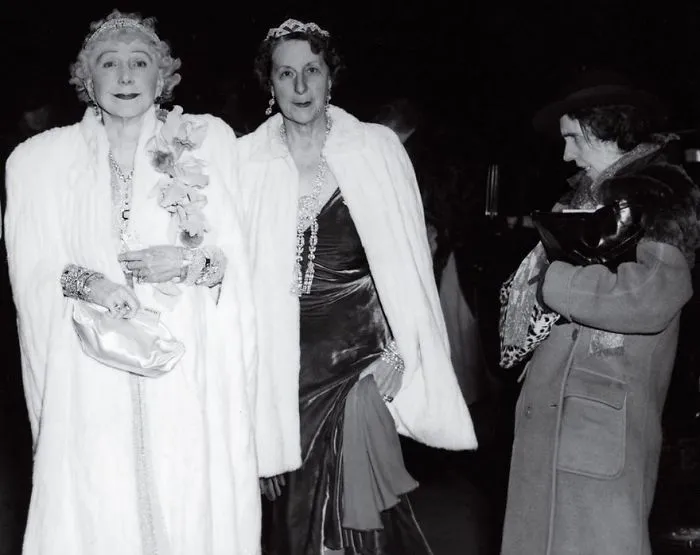
Arthur Fellig had a sharp eye for the unfairness of life. An Austrian immigrant who grew up on the gritty streets of New York City’s Lower East Side, Fellig became known as Weegee—a phonetic take on Ouija—for his preternatural ability to get the right photo. Often these were film-noirish images of crime, tragedy and the denizens of nocturnal New York. In 1943, Weegee turned his Speed Graphic camera’s blinding flash on the social and economic inequalities that lingered after the Great Depression. Not averse to orchestrating a shot, he dispatched his assistant, Louie Liotta, to a Bowery dive in search of an inebriated woman. He found a willing subject and took her to the Metropolitan Opera House for its Diamond Jubilee celebration. Then Liotta set her up near the entrance while Weegee watched for the arrival of Mrs. George Washington Kavanaugh and Lady Decies, two wealthy women who regularly graced society columns. When the tiara- and fur-bedecked socialites arrived for the opera, Weegee gave Liotta the signal to spring the drunk woman. “It was like an explosion,” Liotta recalled. “I thought I went blind from the three or four flash exposures.” With that flash, Weegee captured the stark juxtaposition of fabulous wealth and dire poverty, in a gotcha style that anticipated the commercial appeal of paparazzi decades later. The photo appeared in life under the headline “The Fashionable People,” and the piece let readers know how the women’s “entry was viewed with distaste by a spectator.” That The Critic was later revealed to have been staged did little to dampen its influence.
Report
4points
#98 Chairman Mao Swims In The Yangtze, 1966
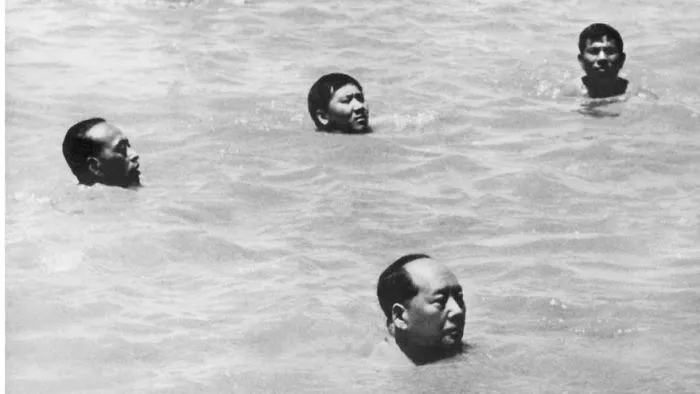
After decades leading the Chinese Communist Party and then his nation, Mao Zedong began to worry about how he would be remembered. The 72-year-old Chairman feared too that his legacy would be undermined by the stirrings of a counterrevolution. And so in July 1966, with an eye toward securing his grip on power, Mao took a dip in the Yangtze River to show the world that he was still in robust health. It was a propaganda coup. The image of that swim, one of the few widely circulated photos of the leader, did just what Mao hoped. Back in Beijing, Mao launched his Great Proletarian Cultural Revolution, rallying the masses to purge his rivals. His grip on power was tighter than ever. Mao enlisted the nation’s young people and implored these rabid Red Guards to “dare to be violent.” Insanity quickly descended on the land of 750 million, as troops clutching the Chairman’s Little Red Book smashed relics and temples and punished perceived traitors. When the Cultural Revolution finally petered out a decade later, more than a million people had perished.
Report
2points
#99 Immersions (Piss Christ), Andres Serrano, 1987
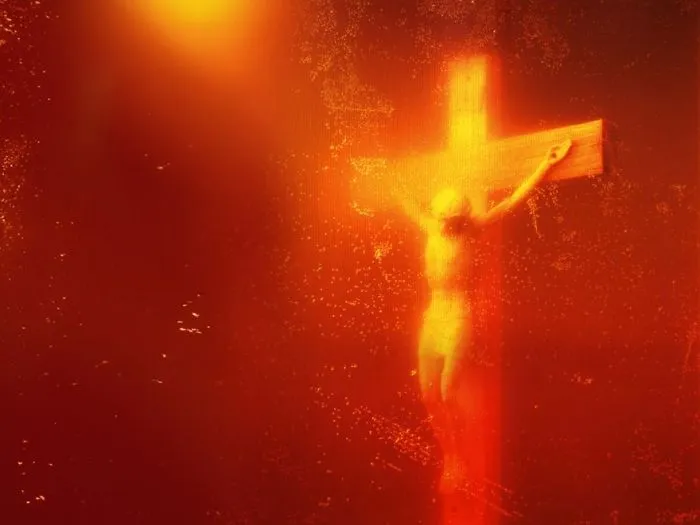
Andres Serrano said he did not intend his 1987 photograph of a crucifix submerged in his own urine to offend; indeed, when it was first displayed in galleries, no one protested. But in 1989, after Piss Christ was exhibited in Virginia, it attracted the attention of an outspoken pastor and, soon after, of Congress. Angry that Serrano had received funding from the National Endowment for the Arts (NEA), Senators Al D’Amato and Jesse Helms helped pass a law requiring the NEA to consider “general standards of decency” in awarding grants. The uproar turned Piss Christ into one of the key fronts in the culture wars of the 1980s and 1990s, alongside the work of Serrano’s fellow NEA recipient Robert Mapplethorpe, and divided a nation over the question of whether the government had the right to censor art.
The battle over Piss Christ has left a dual legacy. The campaign to place the picture outside the boundaries of acceptable art contributed to its fame, inspiring other artists to push limits even further. But those provocateurs are less likely to do so with help from the government: the decency-standards law passed because of Piss Christ was upheld by the Supreme Court in 1998.
Report
2points
#100 Oscars Selfie, Bradley Cooper, 2014
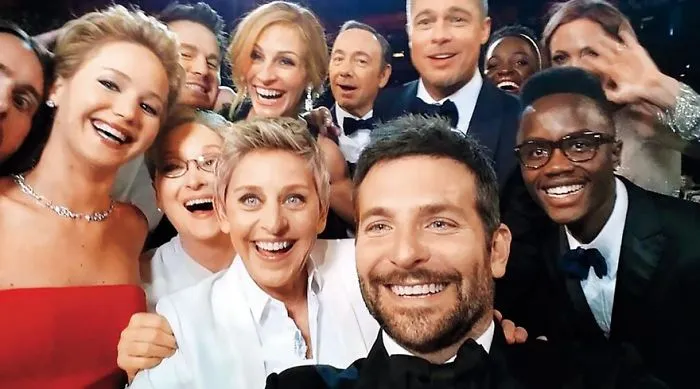
It was a moment made for the celebrity-saturated Internet age. In the middle of the 2014 Oscars, host Ellen DeGeneres waded into the crowd and corralled some of the world’s biggest stars to squeeze in for a selfie. As Bradley Cooper held the phone, Meryl Streep, Brad Pitt, Jennifer Lawrence and Kevin Spacey, among others, pressed their faces together and mugged. But it was what DeGeneres did next that turned a bit of Hollywood levity into a transformational image. After Cooper took the picture, DeGeneres immediately posted it on Twitter, where it was retweeted over 3 million times, more than any other photo in history.
It was also an enviable advertising coup for Samsung. DeGeneres used the company’s phone for the stunt, and the brand was prominently displayed in the program’s televised “selfie moment.” Samsung has been coy about the extent of the planning, but its public relations firm acknowledged its value could be as high as $1 billion. That would never have been the case were it not for the incredible speed and ease with which images can now spread around the world.
It was also an enviable advertising coup for Samsung. DeGeneres used the company’s phone for the stunt, and the brand was prominently displayed in the program’s televised “selfie moment.” Samsung has been coy about the extent of the planning, but its public relations firm acknowledged its value could be as high as $1 billion. That would never have been the case were it not for the incredible speed and ease with which images can now spread around the world.
Report
-25points
Both articles illuminate the power of visual art and photography in capturing and conveying poignant narratives. The first article showcases an ambitious project where over 150 artists collaboratively created illustrations to pay homage to 'Le Petit Prince' by Antoine de Saint-Exupéry. Similarly, the second article curates the 100 most influential pictures ever taken, highlighting the legacy and profound human experiences these images embody.
For an in-depth look at another creative endeavor, explore our piece on how diverse artistic styles were woven together to honor a literary classic, inspired by the fusion of diverse artistic styles.