






People learn a lot from the ones closest to them. Even when they don’t realize it, they constantly watch the behavior of family members and close friends and try to imitate it. In this way, others' daily actions, successes, and failures often shape people’s sense of what’s normal.
However, sometimes people find that what feels normal to them isn’t acceptable to everyone. Some behaviors that feel usual and familiar can actually be harmful.
Someone asked, “Psychologists, therapists, counselors, etc.: What are some things people tend to think are normal but should really be checked out?” A surge of replies flooded in, explaining common misconceptions and worrying signals.
#21
Being an a*****e to everyone . Its something that's become a norm due to their anonymity on internet , and carries out in real life.
Report
15points
What feels normal can differ between cultures, friend groups, families, and other environments. It’s important to recognize and respect the various boundaries and norms. That way, your relationships and community will keep running smoothly.
Have you ever felt like something was normal before you found out otherwise? Share your experiences with other readers in the comments below!
#22

New nurse here! Did my rotation for mental health and one patient in particular took quite an interest in me, he was very polite and very kind, he was chatting up a storm, answered everyone’s questions and repeatedly asked my name. Later, we got to look at patients files and I got his. He had a psychotic break and started hearing God. She told him her name was Courtney and that She had chosen him and he was to find Her and marry Her.
Guess what my first name is. Courtney. They ended up moving me to another part of the hospital after that because he was quite interested. Can confirm: I am definitely not God. Way too much responsibility.
Report
15points
#23

Coping with stress in your relationships by walking away from conversations, saying you've had enough, or going silent.
Coping with feelings of insecurity and anxiety by lashing out at your partner. Eg asking a bunch of questions about one of their acquaintances instead of saying "I feel insecure for these reasons, please talk through it with me"
Been a couples therapist for 10 years, now clinical director of a private practice. So many more but those are two of the most prevalent in couples work.
Report
15points
#24

Trauma reactions - they are very normal for the situation but are not healthy or easy to deal with without help. Our bodies and brains hoard survival responses so I see a lot of people struggling with unhealthy coping skills or habits that at one point kept them safe and helped them survive. This can range from large mood swings, emotional or physical disassociation, difficulty connecting with ones physical or emotional being, and difficulty identifying triggers. I get a lot of childhood a***e survivors who have had issues in therapy before due to this - if your therapist goes in assuming you are able to connect with and name feelings, identify what is weighing on you, etc, they won't be very helpful.
Also my normal therapy PSA is whenever possible please don't wait. There is no such thing as an issue too small for therapy but waiting can cause something to morph into a way bigger issue. I know for a variety of reasons that isn't always feasible but if you can, please do!
15points
#25

If you get weak in the knees, all your face muscles relax or your neck goes limp or you feel like you can’t support your body weight for a split second when you are laughing or experiencing other strong emotions. This is called cataplexy. It is a symptom of narcolepsy, a sleeping disorder where you randomly fall asleep during the day and generally feel excessively sleepy all the time.
Report
15points
#26

Joke? My professor once told us about jokes. Sometimes people use it to hide their mental state. Agreassive or depressed person may use this quite often...
Report
15points
#27
Family based therapist here - it is normal for kids and to annoy, infuriate, disappoint, sadden, and test the sanity of their parents . It is not normal to get no enjoyment out of being a parent. It definitely isn’t all sunshine and rainbows, but if it is chronically miserable with no reprieve, ask for help.
Report
15points
#28
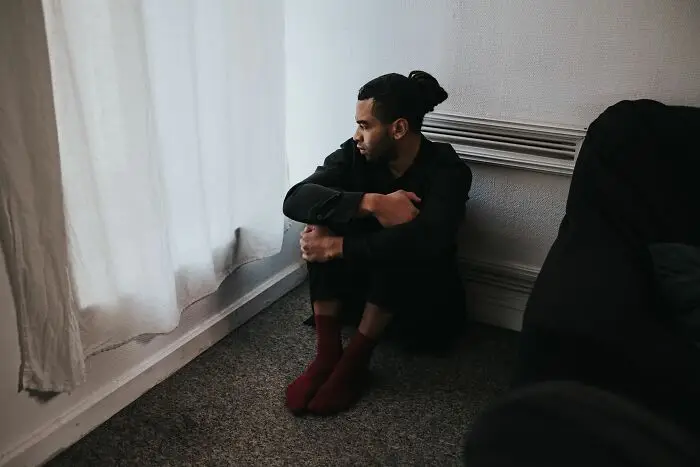
Self-sabotaging behavior can ruin your life quickly. If you have an event in your life that has affected you negatively and you seem to find yourself exhibiting irrational or incongruent behaviors- see a counselor.
You don’t have to have any certain pathology to seek mental wellness counseling.
Edit: a word.
Report
14points
#29
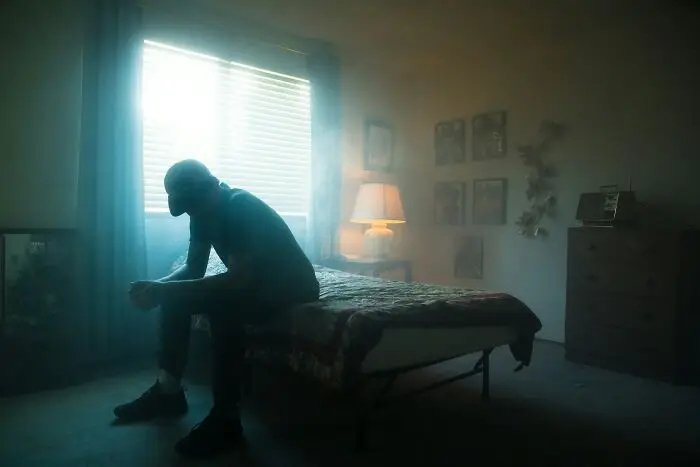
I'm pretty sure Having feelings that change from exstatic to near s******l over the course of mere hours, almost every day, is pretty bad.
Report
14points
#30

Shadow people. One question we asked was if they ever saw, heard or smelled anything others didnt. This came up more often than you might think.
Report
14points
#31

Perfectionism. While a spectrum and everyone wants to do good work, an obsession with perfection is not something to be proud of and definitely not healthy. Healthy work ethic is doing your best, and then letting go, as in recognizing no matter how much effort you put in, the result is, to some extent, out of your control, and that's ok. The intent and effort counts more than the end result, if you get obsessed with the end result only you will hurt yourself because you never have full control over your end result, but you do have full control over the intensity and dedication you will put in (even if that doesn't translate well). It is a fact of life sometimes things don't work out, so people who never, and I mean never, have anything less than flawless work all the time are paying for it somehow, burnout or mental stress or overtime or medication/d***s to keep going or etc. It is pathological to want, or to think you can realistically have, such control that your work is flawless all the time.
Report
14points
#32

A little different of a response, but still important.
If anyone plays video games, browses social media, watches tv, or does any other form of electronic media for greater than 3 hours a day (days off work are exempt), then there is a high probability of an underlying issue causing the behavior.
A true a*******n to video games is estimated to only be 1% to 5% of people who are already playing 2-3+ hours daily. That means anyone else you think has an a*******n actually has a high chance of comorbid disorders and gaming is the outlet.
This can be a ton of things such as depression, anxiety, escapism, ptsd, extreme introversion, lack of ambition or motivation, work stress, relationship stress, and much more.
Reach out to people you know who may sit in bed watching Netflix for hours, always on social media, or playing lots of games. Chances are extremely likely they don't do that because they are truly wanting to every day.
Report
14points
#33
Psychology student here - it's crucial for people in relationships who feel their personality is being smothered or overshadowed by their partner to seek relationship counseling, this tends to happen with younger couples who spend every waking hour either together or communicating over the phone. That sense of losing your autonomy or identity can create huge cognitive dissonance once the feeling becomes more pronounced, and is a major roadblock for many couples to overcome.
Report
14points
#34
I’d like to point out that there are tonnes of things that are normal but are not healthy or ideal. Normal is just what the statistical majority are doing, not what would be best for them. I think the main question should be “what impact is _________ having on my life and relationships?” Rather than wondering how it compares to the average persons experience or behaviours.
Report
12points
#35
Most people experience most things, it is when that "thing" interrupts your ability to function that it is considered an issue. So, for example, if you feel depressed, well, we all feel depressed, but does your depression actually keep you in bed? Prevent you from participating in the activities you were planning on going to? Hope that makes sense!
Report
12points
#36
Counselor here.
The biggest red flag for me that seems to be more common in depressed people is a sudden drop of interest in or they fully stop participating in things they normally love.
For some that’s the final step before s*****e.
Report
12points
#38
I think the number one misconception is that something being normal means you don't need to/ can't get it checked out. You don't have to be severely mentally ill to get help, the only criterium to get help is to need help.
Report
12points
#39
Not being well rested every morning and/ or waking up more than once a night. Please see a sleep specialist if you do this.
Report
12points
#40
Thinking that 5 hours of sleep per night is okay.
Rapid weight gain or loss with no obvious medical cause.
Relationship problems, don't get me f*****g started.
Report
11points


