
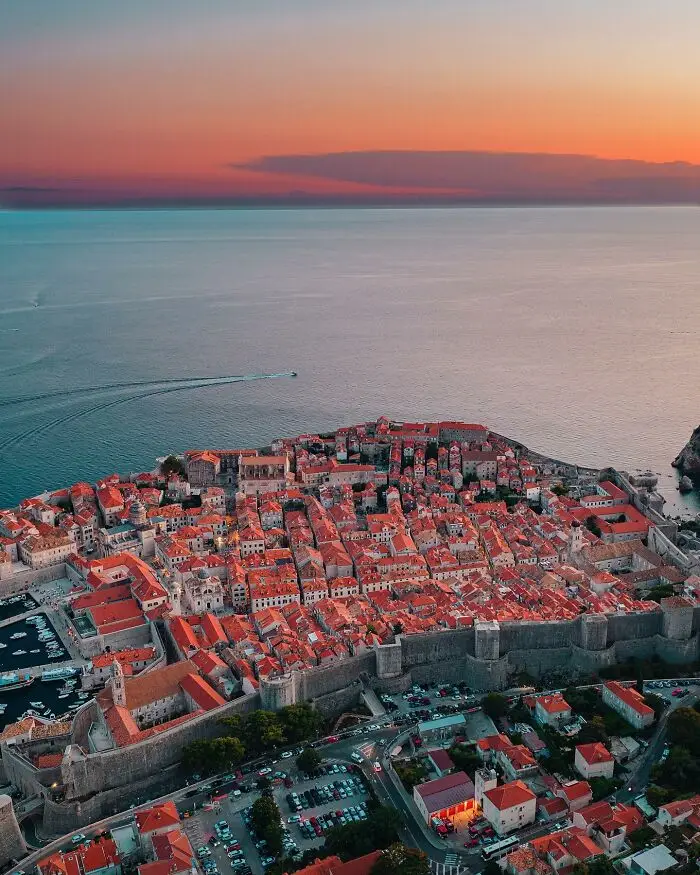
#21 “Dalmatian Athens”
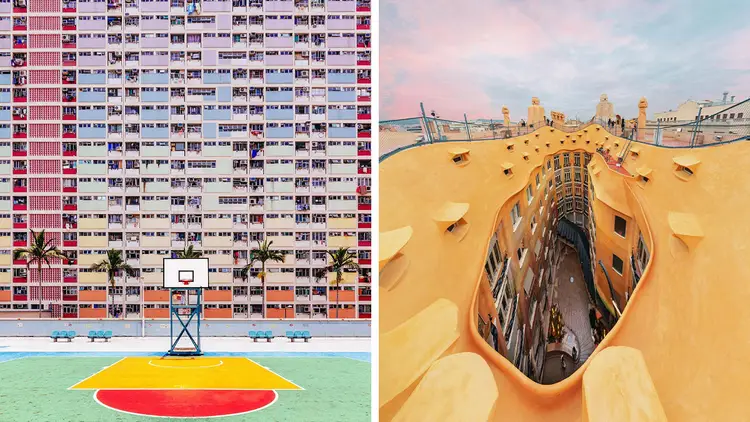
“I tend to plan trips around specific buildings, such as La Muralla Roja in Spain or Yik Fat in Hong Kong, but then spending time in those places, unexpected places and moments arise, and if I’m lucky I can photograph those too. A fire escape in a city I was in for a layover, the back of a marketplace nobody goes through. The world is constantly offering patterns; the only question is whether you’re switched on that day.”
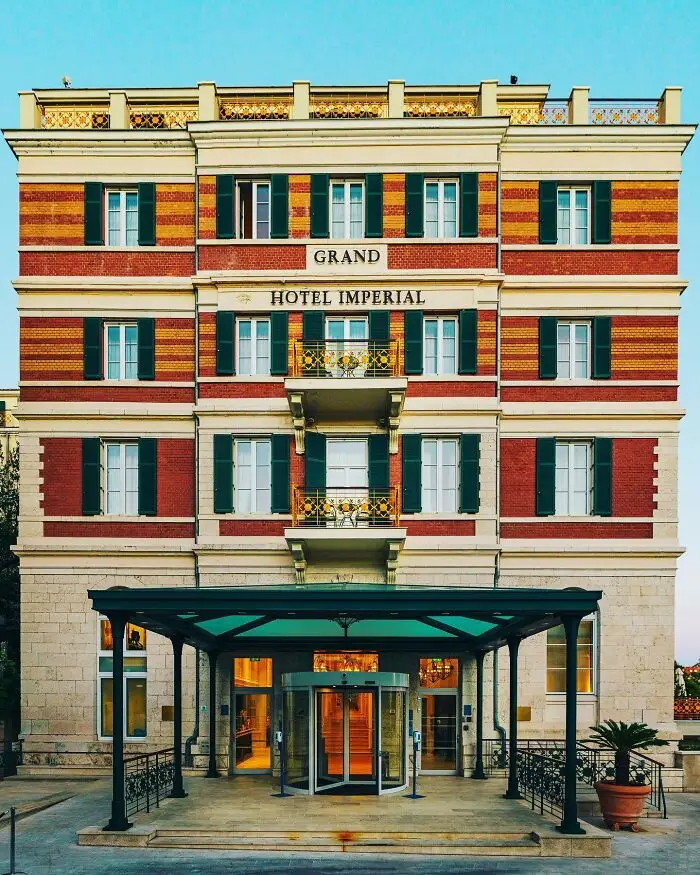
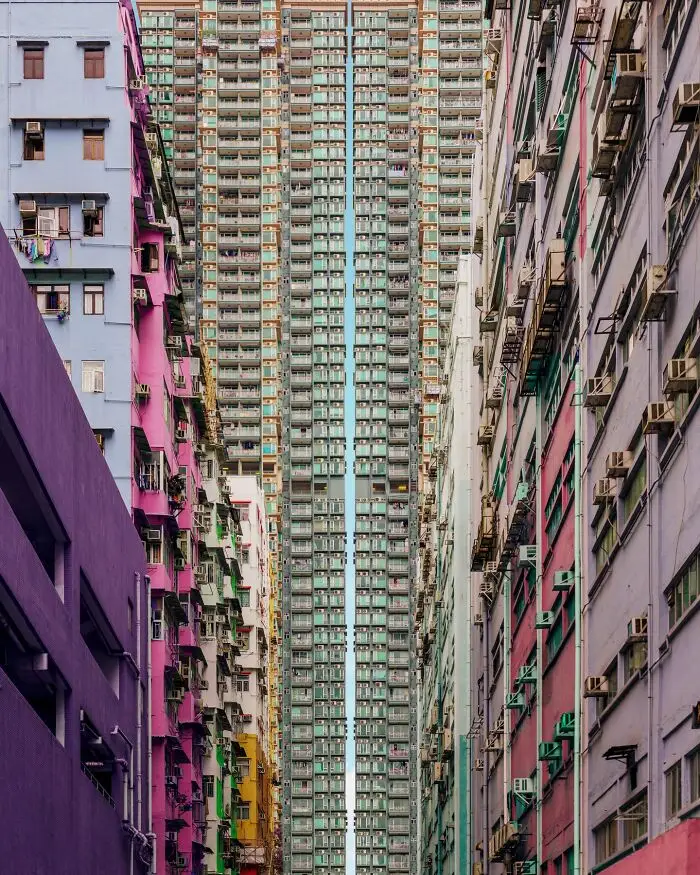
Although architecture provides the structure of his images, he explained that he sees human presence as the element that gives those spaces meaning: “They complete it, absolutely, even when they’re not in frame. Especially when they’re not in frame. The whole subject of my work is that dialogue between the space and the occupant. The modern world is designed around the human experience, so their presence is there even when no one’s around.”
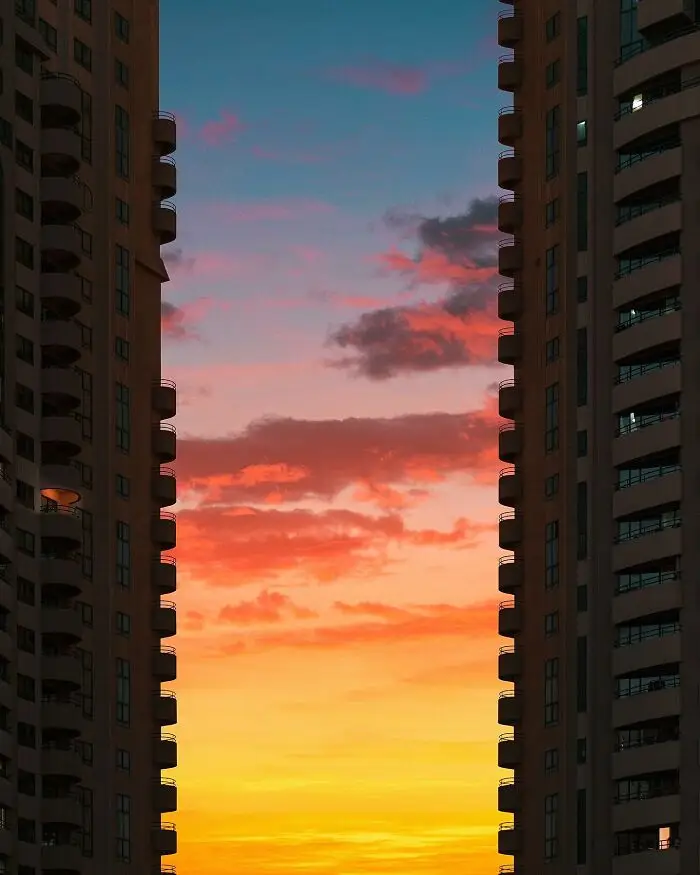
#25 “Be Cute”
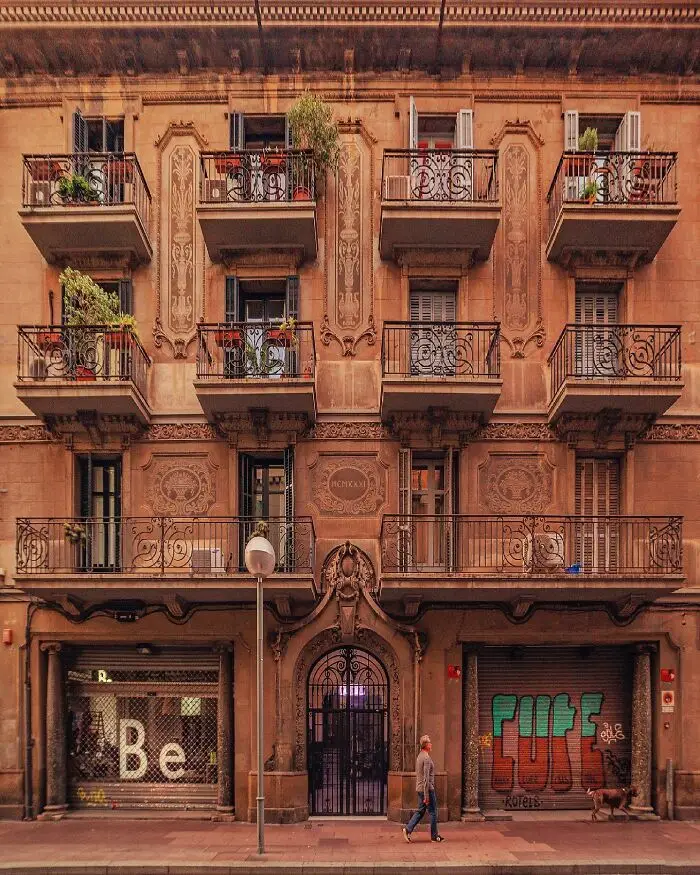
“A perfectly symmetrical façade is a nice exercise; having a person peek out of a window, smoke a cigarette on the balcony, hang sheets on a clothesline, now there’s movement, evidence of life, now it’s a photograph. The building is the grammar, but the people and their movements are what speaks. When an actual person walks into the frame at the right moment, one small figure against a massive geometric wall, it’s a gift. Suddenly there’s scale, fragility, a story. I never ask them to. Waiting is part of the job.”
#26 “Golden Ratio”
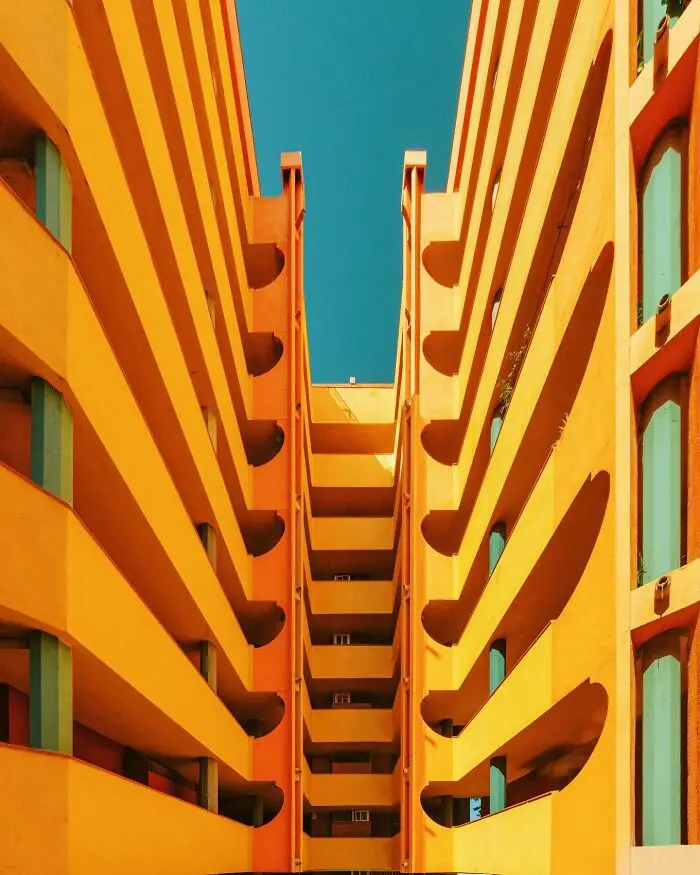
#27 “What Immortal Hand Or Eye, Dare Fame Thy Fearful Symmetry”
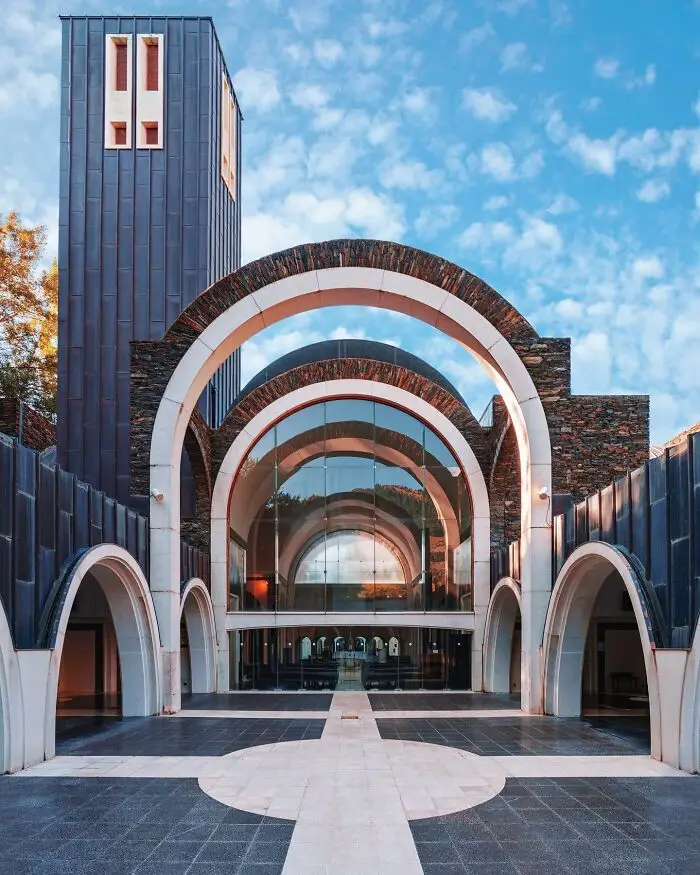
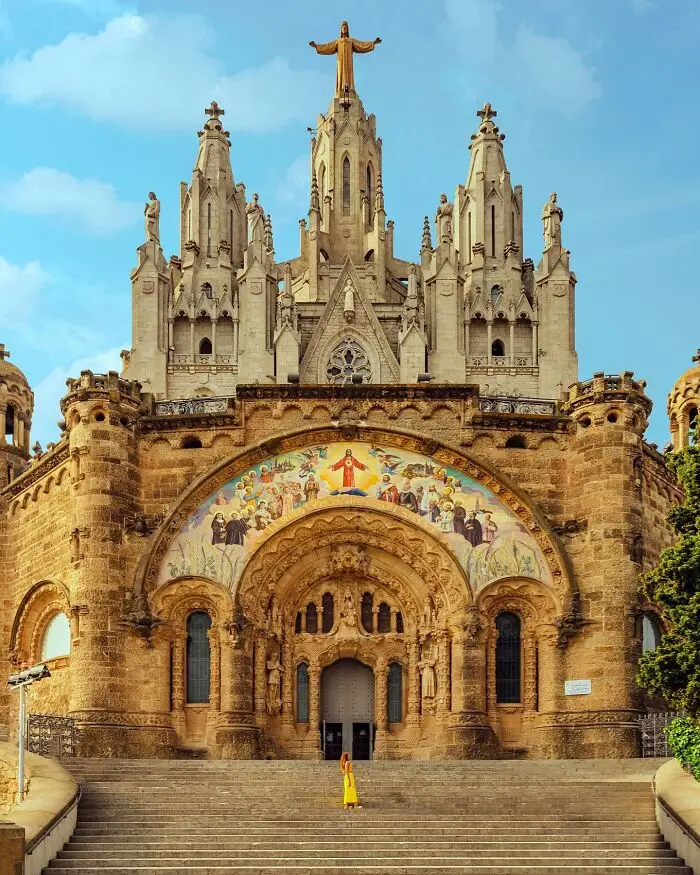
As the fire left the building in blackened ruins with only the original apse and vaulting over the altar and the bell tower remaining Bofill and his team decided to engage in the rebuild applying modern building techniques, without leaving behind Romanesque imagery associated with the fallen structure.
Matias said he's especially drawn to dense and monumental environments because photography can hold the feeling of being overwhelmed more effectively than words: “Art should go looking for the overwhelming. Maybe the feeling of being overwhelmed is hard to put into words, but a photograph can contain it. A lot of my work deals with ‘horror vacui,’ which is Latin for ‘fear of empty space.’”
#28 “Rorscharchitecture”
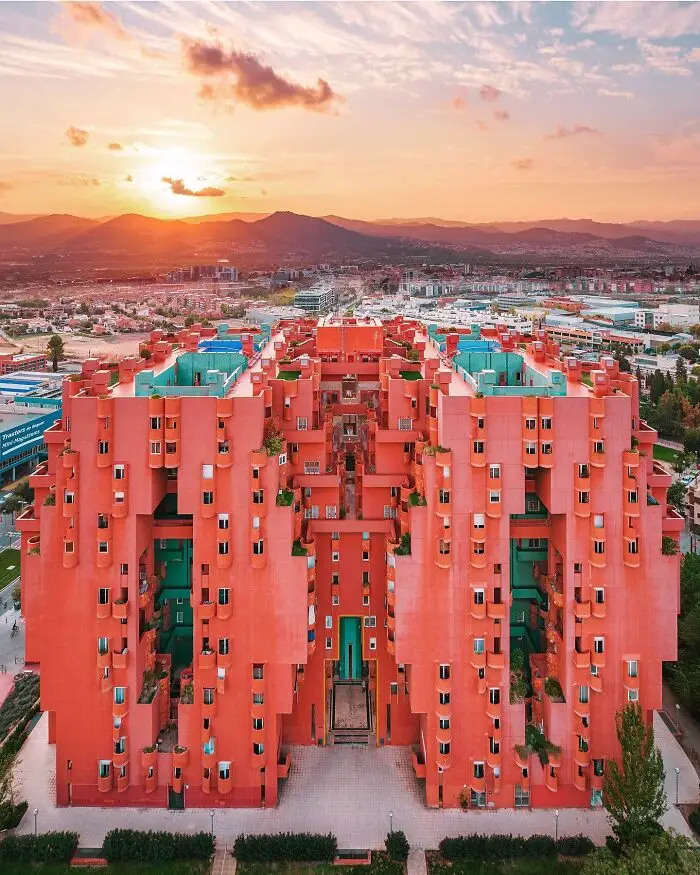
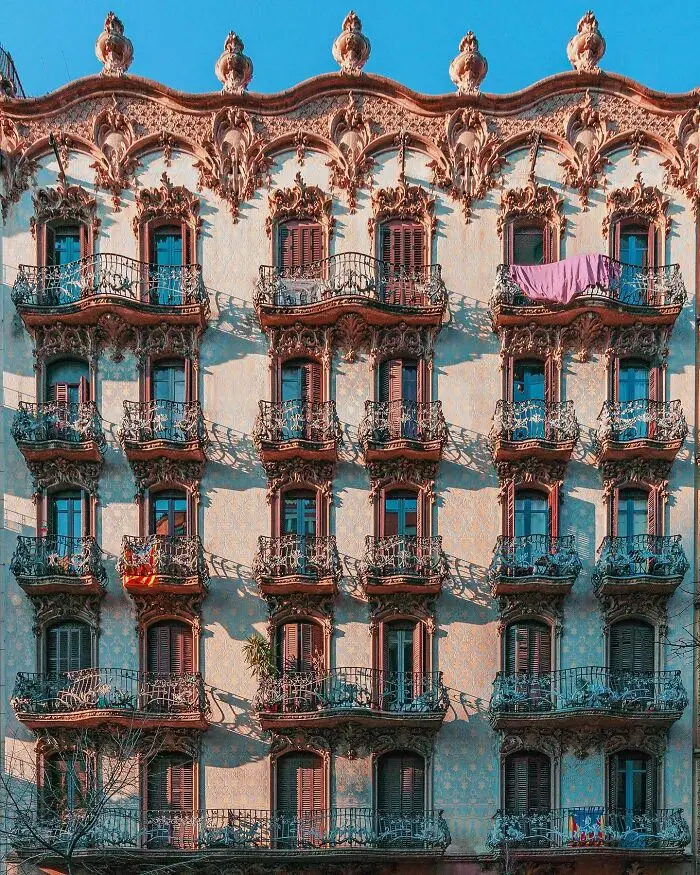
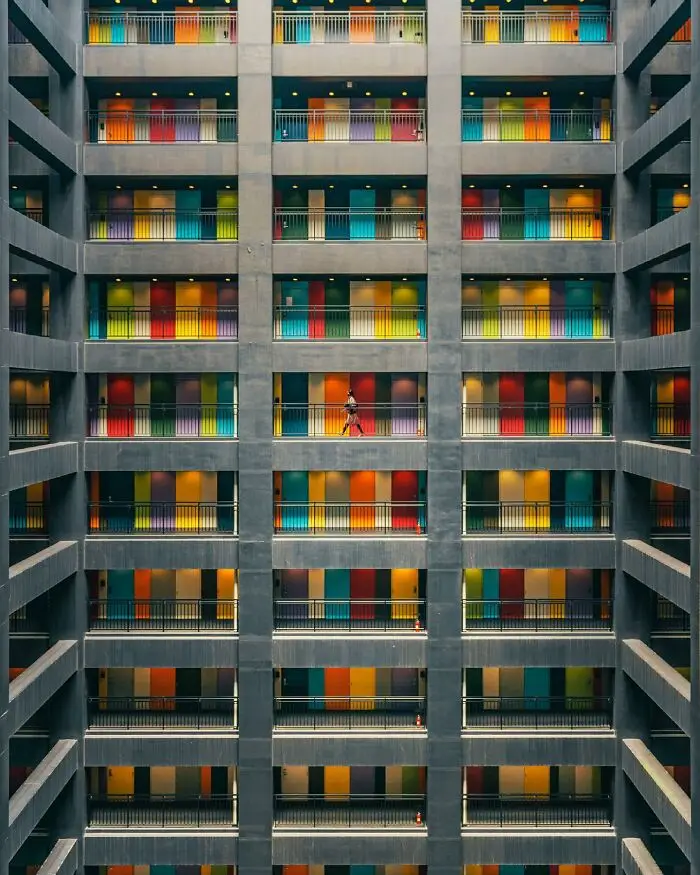
“Brutalist blocks, giant housing estates. They can appear oppressive, but stand in front of one long enough and lose yourself in the infinite lives and moments stored within. Like a grid of memories. What moves me about buildings like Walden 7 or the big estates is the optimism embedded in them. Someone’s attempt to design a better way for thousands of people to live together, and whether or not they succeeded, that ambition is right there in concrete.”
#30 “Oppressive Lines”
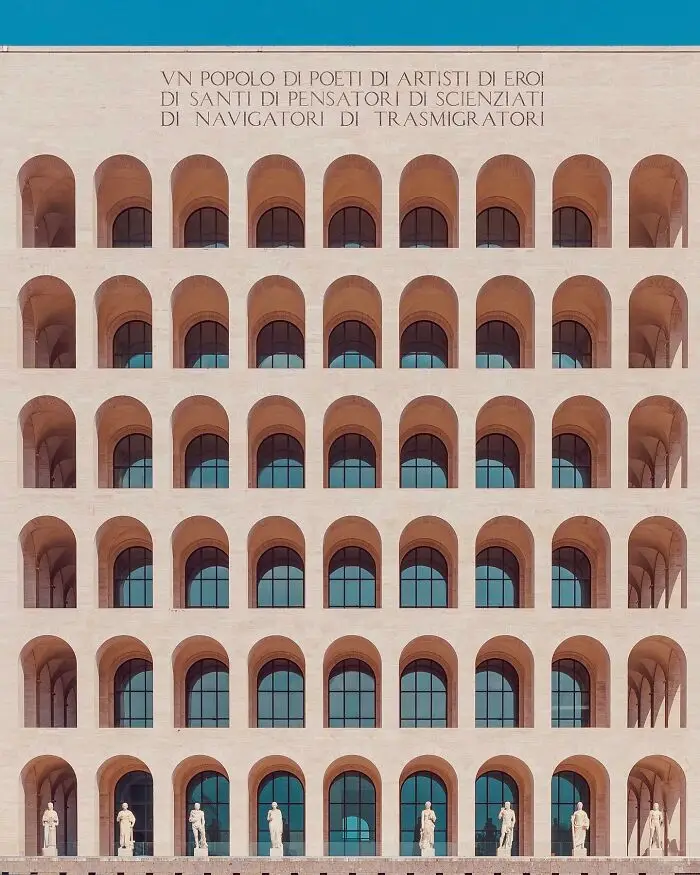
The neo-classical design is meant to display Romanità, which encompasses past, present, and future all inside a single philosphy. The fascist regime's massive aspirations are symbolized by the uniform shape and massive size of the structure. The design itself draws inspiration from and is a reference to the Roman Empire's curved Colosseum with rows of arches.
According to legend, the structure's six vertical and nine horizontal arches are correlated to the number of letters in the Italian dictator Benito Mussolini's name.”
#31 “Into The Fold”
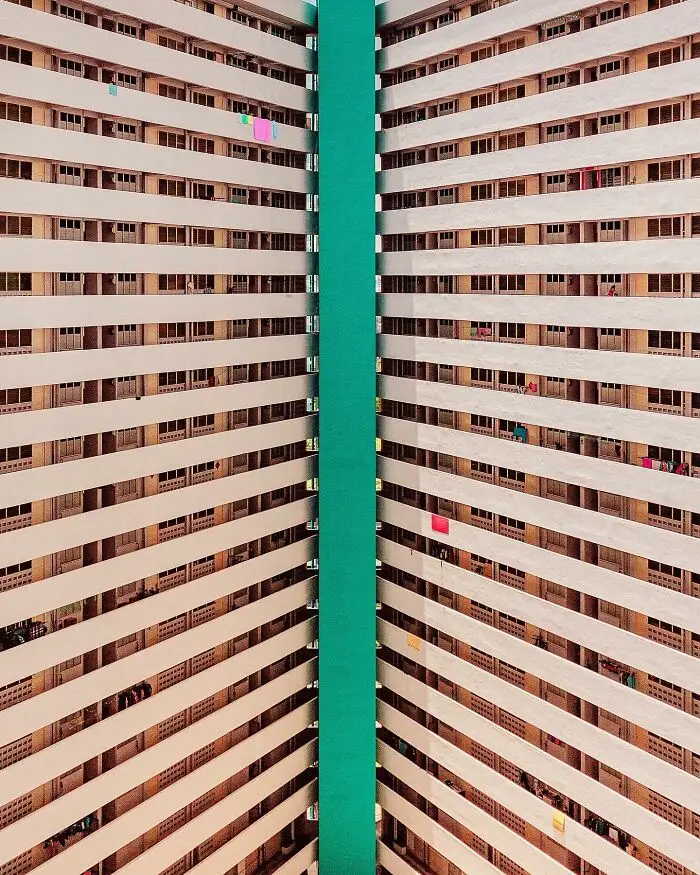
One of my favorite buildings in Singapore with its endless straight lines, giant teal line cutting the white, laundry adding a dash of color, and the giant open center filling everything with light.”
Several architects, styles, and cities continue to inspire him, from ambitious postmodern housing projects to softer, storybook-like compositions: “Ricardo Bofill, endlessly: Walden 7, La Muralla Roja, Barri Gaudí, all of it. Postmodern utopian housing in general. Núñez Yanowsky, the brutalism of the 60s and 70s from Belgrade to London. And there’s the softer register, the Wes Anderson-adjacent compositions. Pastel façades, dead-center symmetry, that storybook flatness, which is a vastly different mood from brutalism but scratches the same compositional itch.”
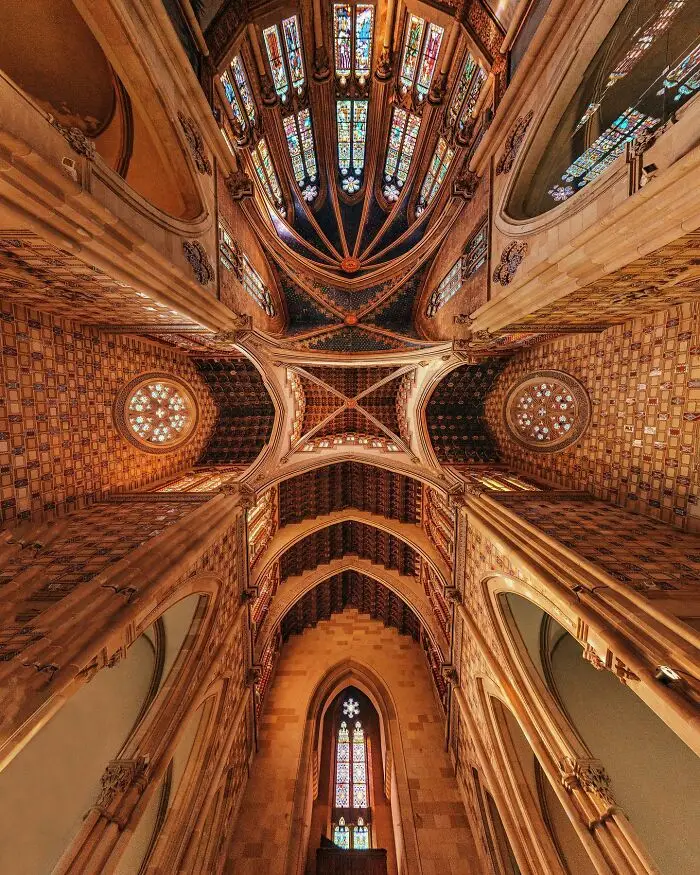
#32 “Temple Expiatori Del Sagrat Cor”
#33 “Concentric Symmetry”
“City-wise, Barcelona is the home base and honestly an unfair advantage, as I will never run out of new buildings to find, views to spot from a helicopter, vantage points to discover. And then I don’t think I’ll ever stop going back to Hong Kong for its naked, unashamed density.”
#34 “Cross Examined”
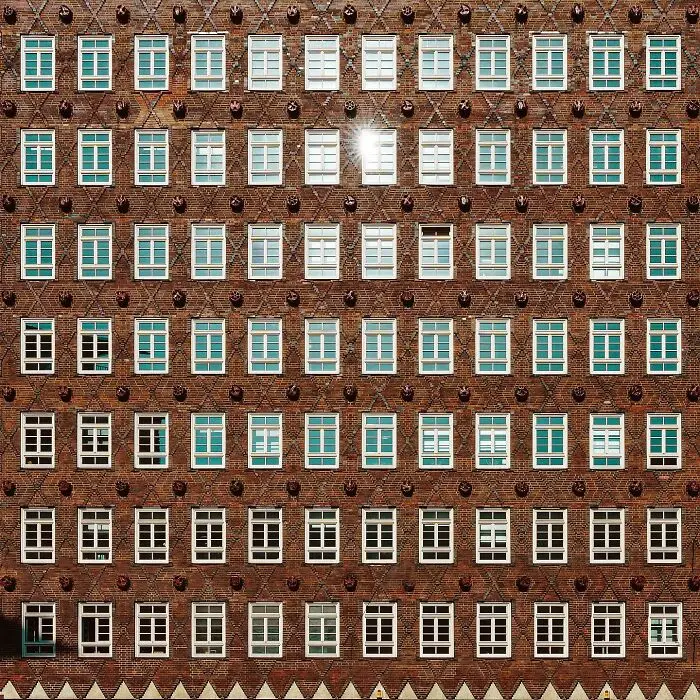
#35 “Bricks In The Wall”
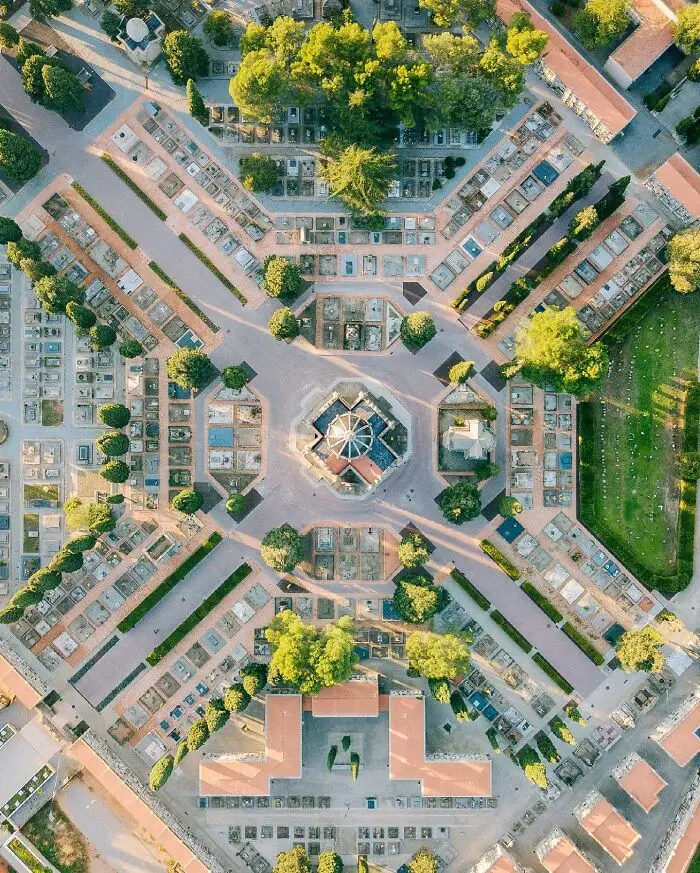
He added that aerial photography is among the most difficult parts of his work, combining extensive preparation with only a few seconds in which to capture the planned composition: “The aerial work is where all four collide. From the ground you control almost everything except light; from a helicopter you control almost nothing. You’ve got a very limited amount of time, the doors are off, you’re strapped in and leaning out, the pilot is doing their best but the machine vibrates, the wind punches your lens, and the composition you planned for weeks exists for about three seconds before it’s gone. Days of preparation, seconds of execution, and then you land, body shaking, and you go for a beer to recover.”
#36 “Ascending Vistas”
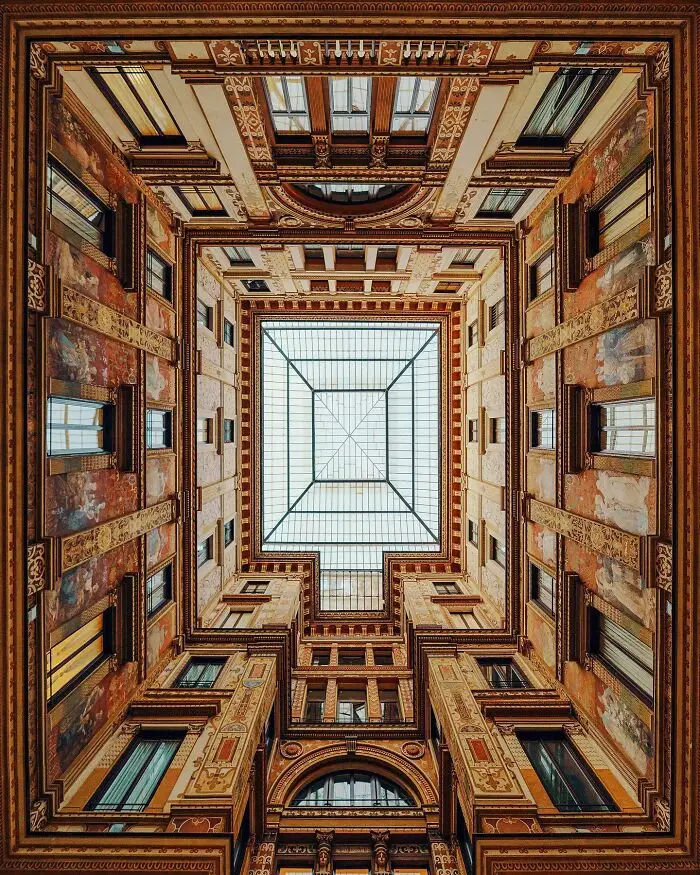
For those hoping to improve their sense of pattern, symmetry, and composition, Matias recommended looking beyond eye level, slowing down, and deliberately limiting what they photograph: “Always look up. Genuinely, that’s ninety percent of it. People tend to focus on what’s at eye level, but that’s precisely why it’s uninteresting. That’s where we live; everybody has already seen it.”
#38 “The Doors Of Perception”
#39 “The Love Below”
“Second: slow down to an almost antisocial degree. The eye can’t find patterns at walking speed; pick one boring building on your own street and give it twenty minutes, and I promise you interesting things start to arise.”
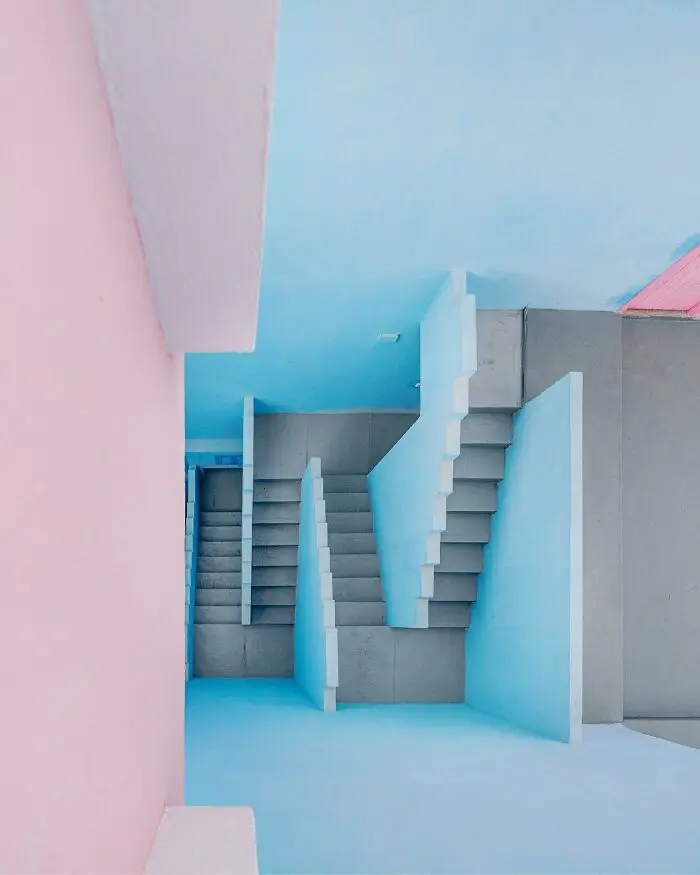
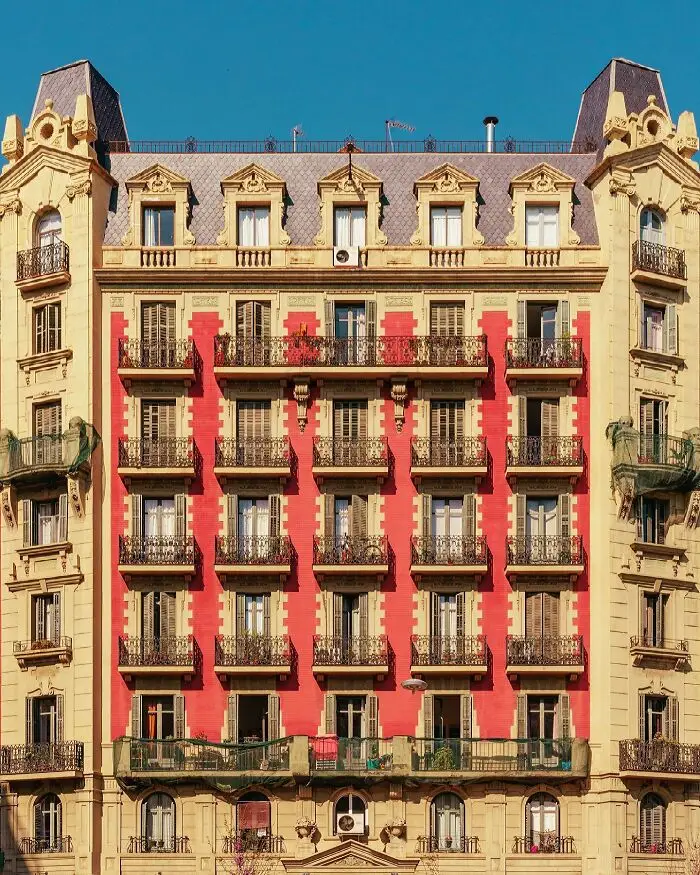
#40 “Pastel Dreamscape”