



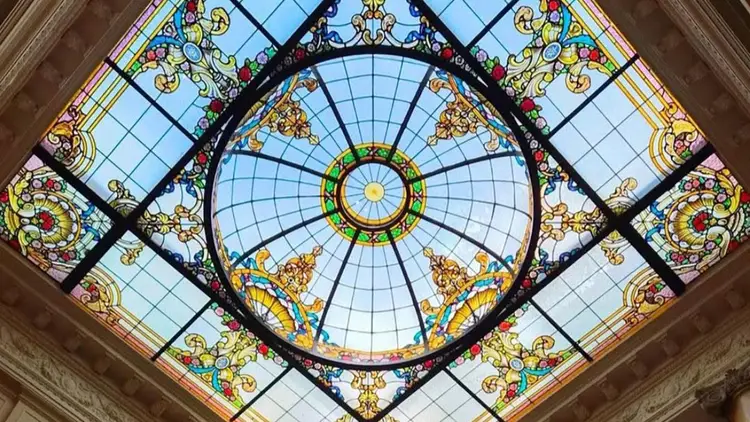

Art Nouveau began as a rebellion. By the 1890s, European cities were filling up with copies of Gothic cathedrals, Renaissance palaces, and Greek temples, and a new generation of architects and designers had had enough of borrowing from the past. They looked to nature instead: the bend of a stem, the spread of a peacock’s tail, the way a vine wraps around whatever it touches. Then they applied it to everything, from facades and staircases to door handles, radiator covers, and dessert spoons.
It was also remarkably short-lived. Within a couple of decades, the style that had looked daringly modern started to look fussy, then simply old-fashioned. Georges Fouquet’s jewelry shop in Paris, designed by Alphonse Mucha down to the last display case, opened on Rue Royale in 1901 and was taken apart as early as 1923. Many buildings had it worse. Victor Horta’s Maison du Peuple in Brussels, one of the movement’s landmarks, was demolished in 1965 despite protests from architects around the world. That loss became a turning point, and Art Nouveau slowly went from embarrassing to precious.
What survived is now spread across the world. Some of it sits in museums and carefully restored villas, but some still stands on ordinary streets, above supermarkets and bank branches, where a carved doorway or a curling balcony outshines everything around it. The Facebook group “The World Art Nouveau” collects these finds from Europe and beyond, and we’ve gathered some of our favorites below.
#1 Hôtel Solvay By Victor Horta
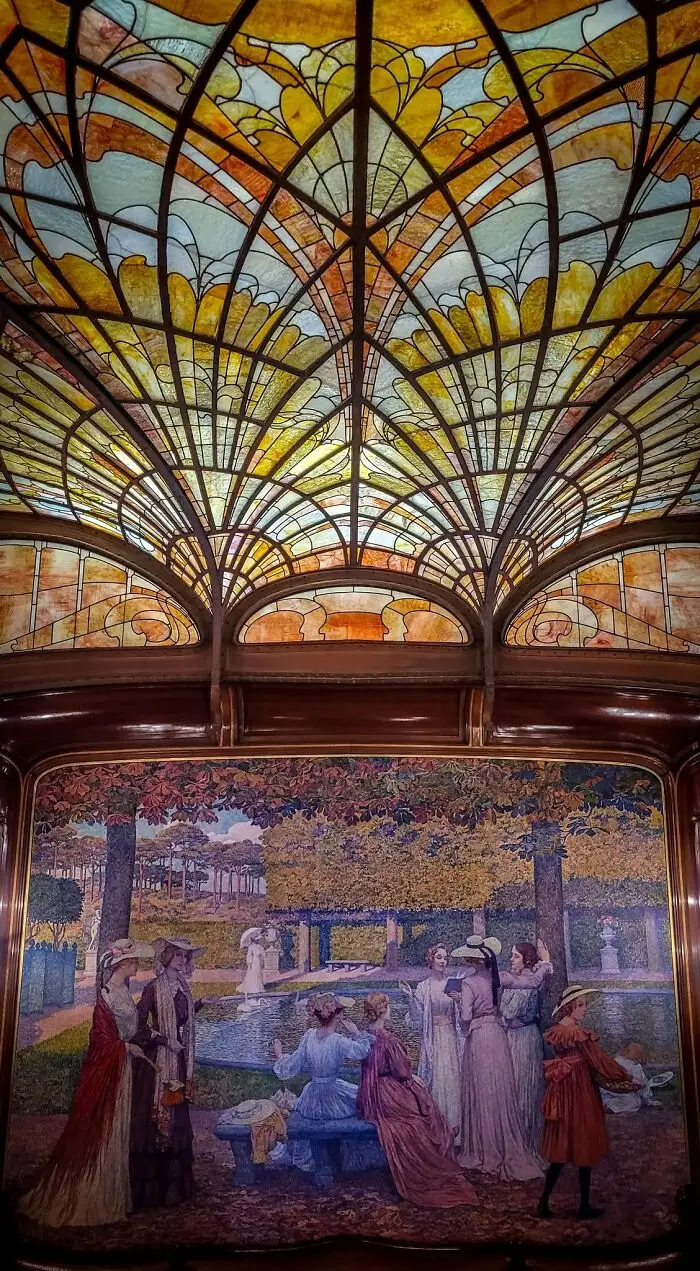
Often called Horta’s residential masterpiece, the Hôtel Solvay was designed by Victor Horta for Armand Solvay, the son of the chemist and industrialist Ernest Solvay, and built between 1895 and 1900, in Art Nouveau style. With a wealthy client and a generous budget, the architect used expensive materials such as marble, onyx, bronze, tropical woods, and designed every detail including the bronze doorbell and the house number, to match the overall style.
Report
23points
#2 Mottl House By Karel Mottl
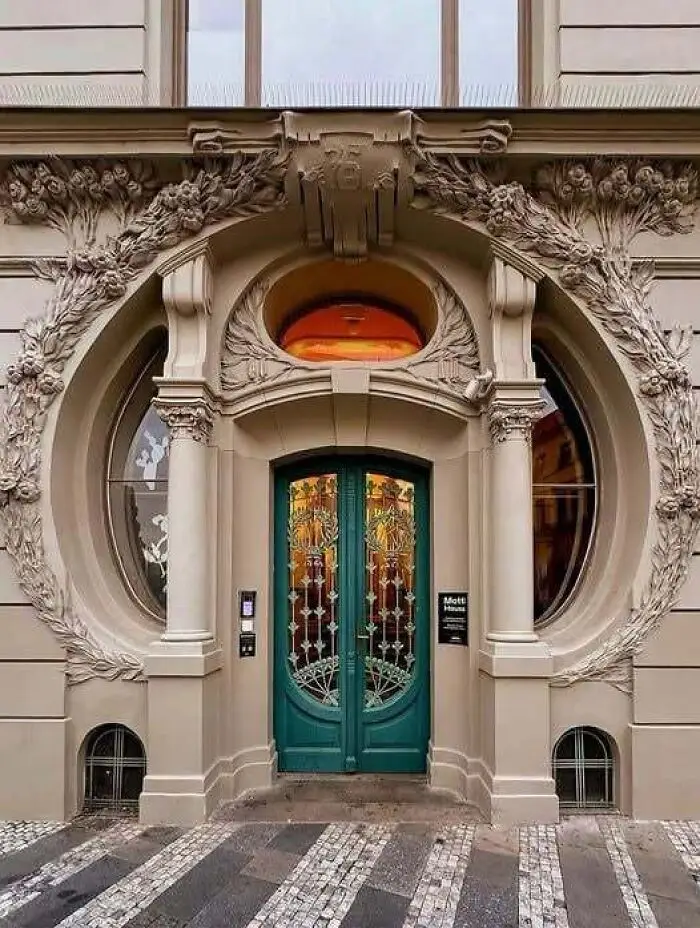
Mottlův dům (Mottl House), Jungmannovo náměstí 1, Prague, Czech Republic, built in 1906.
Karel Mottl designed the building for Vendelín Mottl, the owner of the tailoring business M. Mottl a synové (M. Mottl & Sons), one of Prague’s prominent clothing firms. Its entrance is a small Art Nouveau stage set: a teal double door with wrought-iron grilles over amber glass sits beneath an oval window, flanked by two tall oval windows and wrapped in sculpted garlands of roses and leaves.
Report
20points
#3 Consell De Cent 365 By Jeroni Granell I Mundet
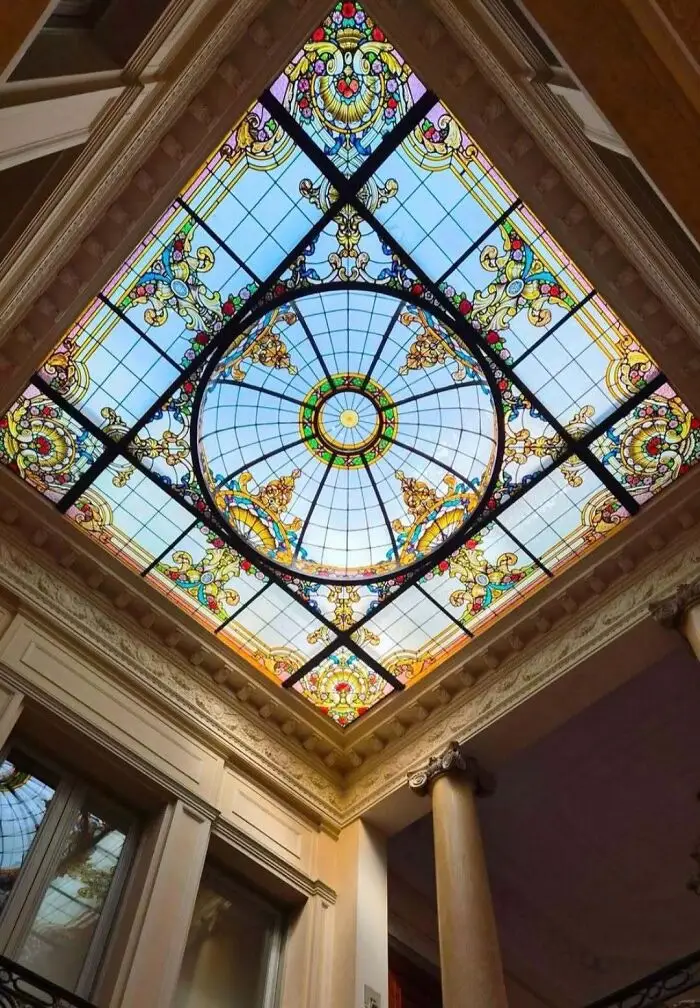
This impressive stained-glass skylight crowns the interior of a mansion at Consell de Cent 365 in Barcelona. A circular dome of pale blue glass sits at its center, framed by golden scrolls, garlands of red and pink flowers, and shell-like ornaments that glow when the light shines through. The mansion was commissioned in 1869 by Laureana Serrano y Martínez and built by architect Jeroni Granell i Mundet. Today, it houses the Association of Industrial Technical Engineers of Barcelona (Col·legi d’Enginyers Tècnics Industrials de Barcelona).
Report
20points
#4 "Turtle Back" Desk Lamp By Tiffany Studios
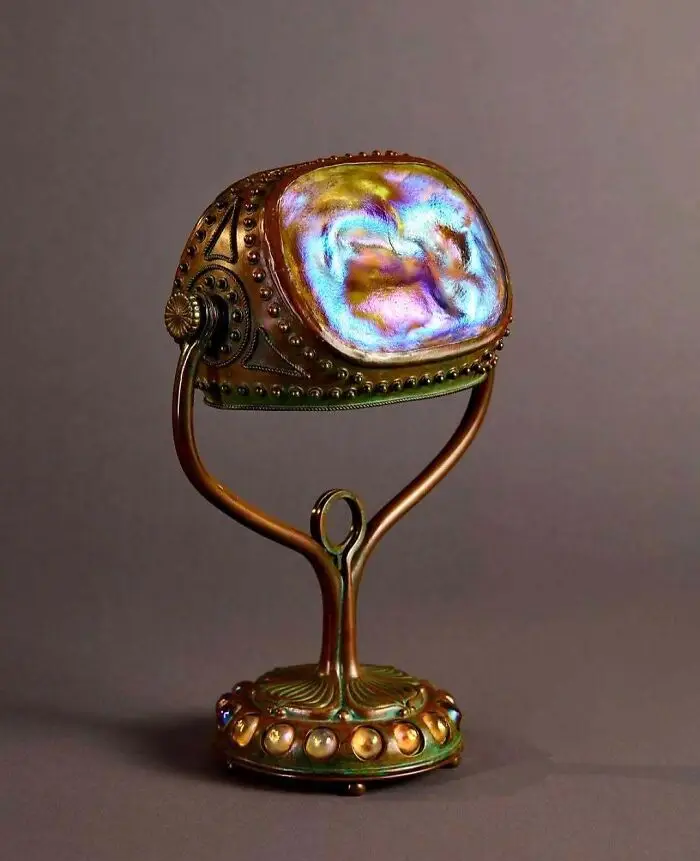
“Turtle-Back” desk lamp, designed by Tiffany Studios around 1900. The lamp is named after its glass. Louis Comfort Tiffany called the large pieces of cast glass with irregular shapes “turtleback,” because they resemble the craggy shapes of a turtle’s shell.
Small pieces like this belonged to the “fancy goods” Tiffany’s firm expanded into around 1900, alongside inkstands, candlesticks, clocks, small boxes, desk sets, tea screens. They were smaller, more affordable luxury items, but still made with the same care as the studio’s famous stained-glass windows and lamps.
Report
19points
#5 The Master Staircase Of Maison Hannon Wrapped In A Fresco By Paul-Albert Baudouin
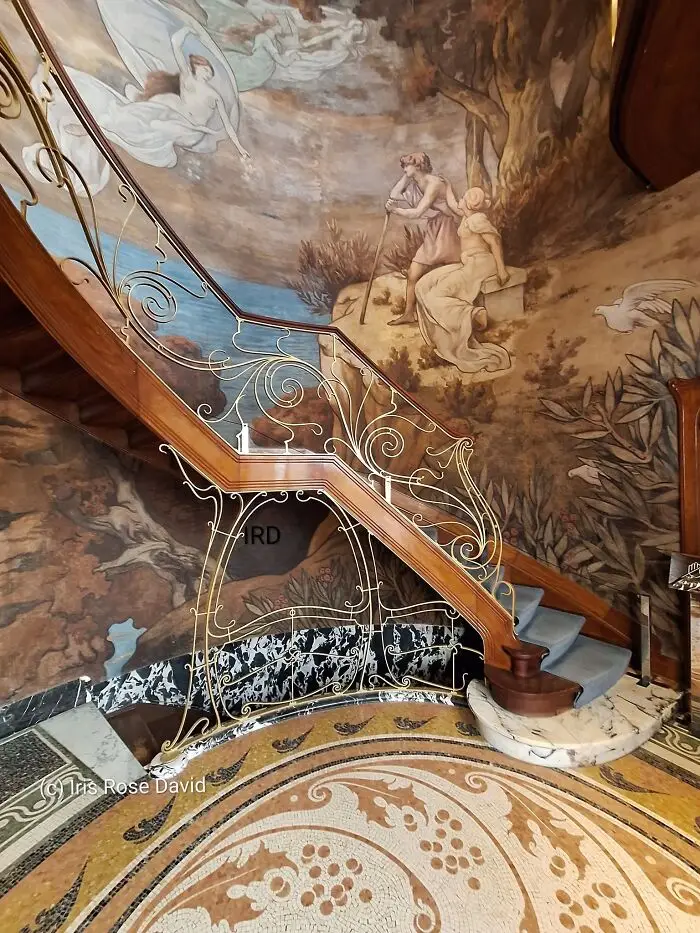
Hannon House (Maison Hannon), Brussels, 1902: the master staircase and its fresco.
The fresco wrapping around the stairwell is The Joys of Life by the French painter Paul-Albert Baudouin. It portrays Édouard and Marie Hannon as shepherds in an allegory of love, while the women floating through the sky, each holding a lyre, stand for the harmony of nature. Baudouin was a follower of Puvis de Chavannes. He painted the fresco between January and March 1904, as part of his effort to revive fresco painting as a demanding, noble technique. A gilded railing of whiplash curves follows the polished wooden banister down to a mosaic floor of swirling plant motifs. The ironwork was made by Pierre Desmedt. The house itself is the only Art Nouveau building by the Belgian architect Jules Brunfaut, who designed it for his close friend Édouard Hannon.
The fresco wrapping around the stairwell is The Joys of Life by the French painter Paul-Albert Baudouin. It portrays Édouard and Marie Hannon as shepherds in an allegory of love, while the women floating through the sky, each holding a lyre, stand for the harmony of nature. Baudouin was a follower of Puvis de Chavannes. He painted the fresco between January and March 1904, as part of his effort to revive fresco painting as a demanding, noble technique. A gilded railing of whiplash curves follows the polished wooden banister down to a mosaic floor of swirling plant motifs. The ironwork was made by Pierre Desmedt. The house itself is the only Art Nouveau building by the Belgian architect Jules Brunfaut, who designed it for his close friend Édouard Hannon.
Report
18points
#6 Art Nouveau Screen With Panels From Alphonse Mucha’s Series Les Heures Du Jour (The Times Of The Day)
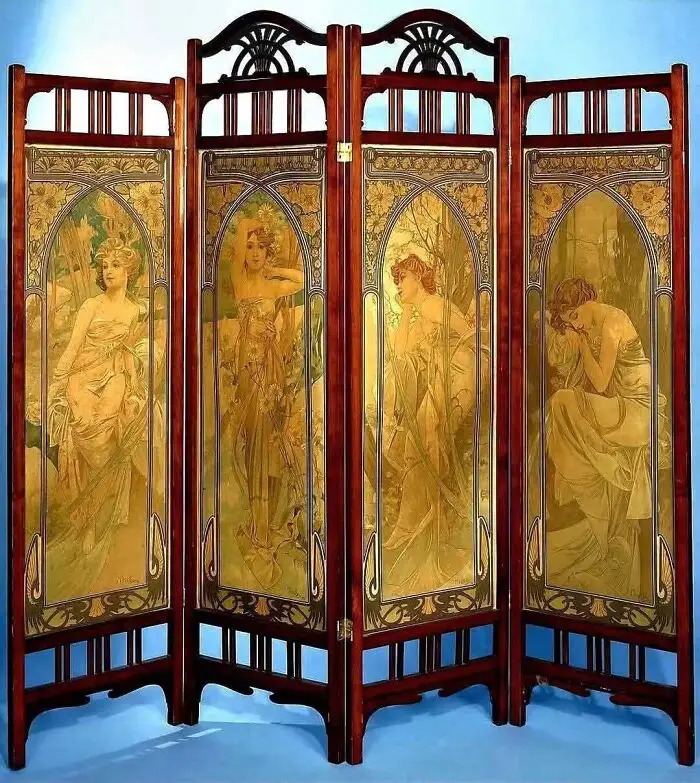
Printed by F. Champenois in Paris, the four color lithographs each show a graceful young woman embodying a different time of day: morning awakening, daytime brightness, evening contemplation and night’s rest.
Report
16points
#7 Erkerzimmer From The Hôtel Gallia By Damon & Colin
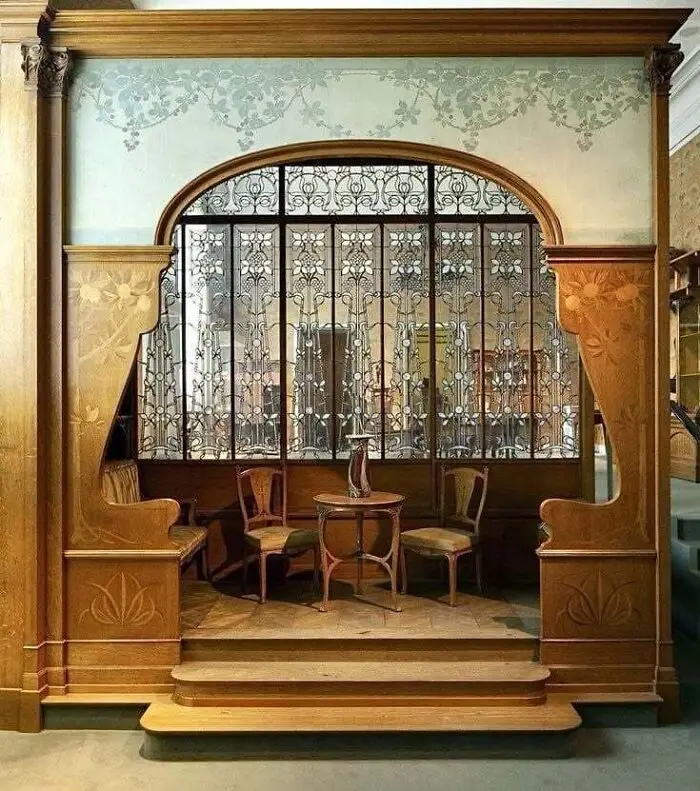
Dining room alcove, or smoking room (Erkerzimmer, German for “bay-window room”), designed between 1894 and 1900 by the Paris design firm Damon & Colin (Maison Krieger) for the Hôtel Gallia in Nice.
The firm behind it had a long history: in 1880, the Krieger furniture house merged with the furniture maker Damon et Colin to become Krieger, Damon et Cie. The whole ensemble is now preserved and on display at the Museum für Kunst und Gewerbe Hamburg (Museum of Art and Design Hamburg) in Germany.
Report
15points
#8 Facade Detail Of Villa Zala By Zala György
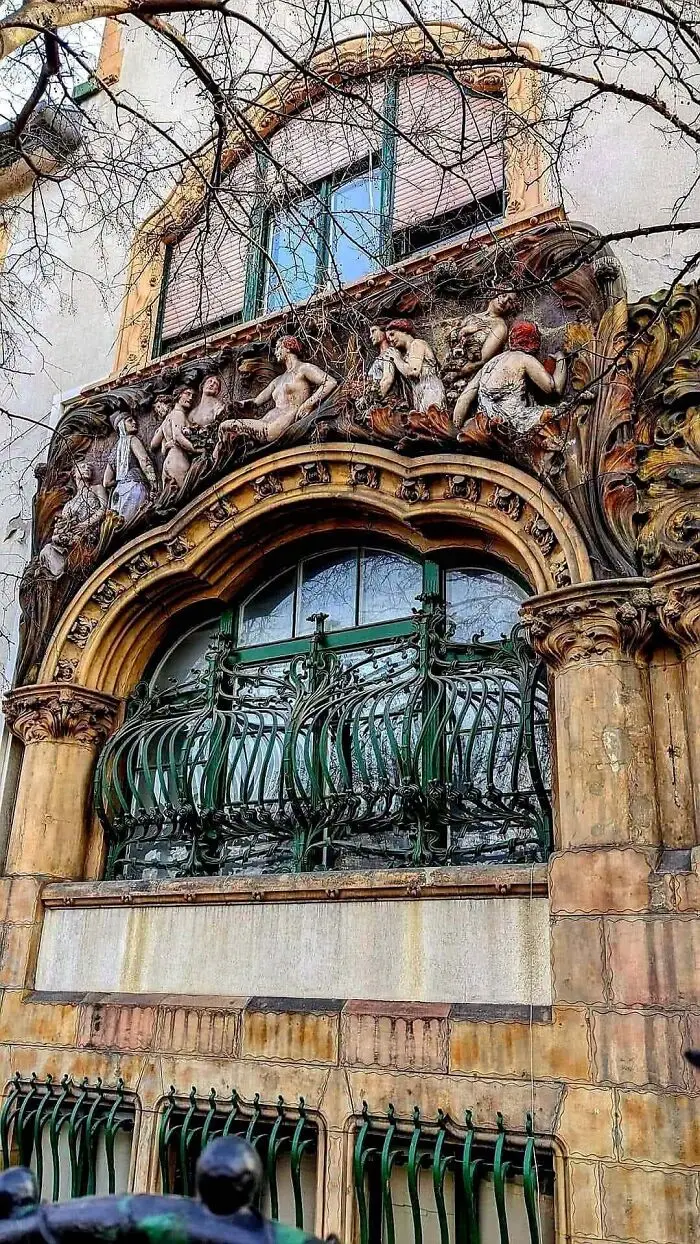
Built in 1898–1901 and partly destroyed in 1941, the villa was designed as a home and studio for the sculptor György Zala.
Report
15points
#9 Dining Room Of Casa Navàs By Lluís Domènech
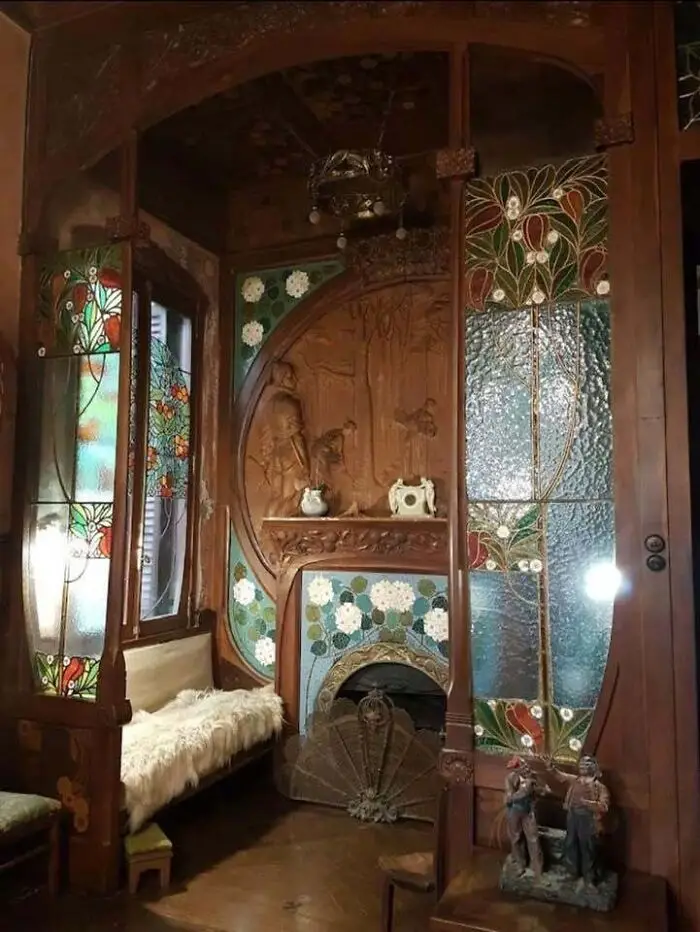
The enchanting Art Nouveau dining room of Casa Navàs (1901–1908) in Reus, Catalonia, Spain.
Designed by master Catalan Modernist architect Lluís Domènech i Montaner, with exquisite woodwork and furnishings by Gaspar Homar, this cozy inglenook fireplace features a carved circular wooden relief, vibrant floral mosaics and luminous stained-glass panels.
Casa Navàs is widely celebrated as the only Art Nouveau house in Europe to have kept nearly all of its original interior decor intact.
Report
15points
#10 Raichle Palace By Ferenc Raichle
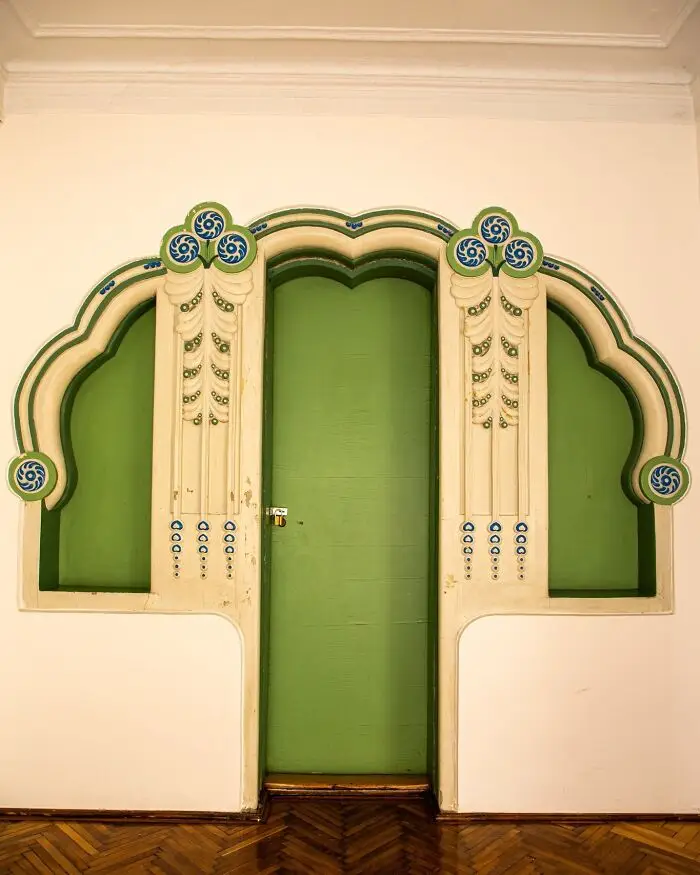
A magnificent green Art Nouveau doorway inside Raichle Palace in Subotica, Serbia.
The palace was designed in 1903 by architect Ferenc Raichle as a family residence, with space for his architectural office and additional rental apartments, but the family didn’t get to enjoy it for long. The Raichle family enjoyed their new house for only four years: they had to move out as early as 1908 because Ferenc filed for bankruptcy and moved to Szeged. This dazzling Art Nouveau mansion is now home to the Modern Art Gallery Subotica.
Report
14points
#11 The "Orchidée" Brush By René Lalique
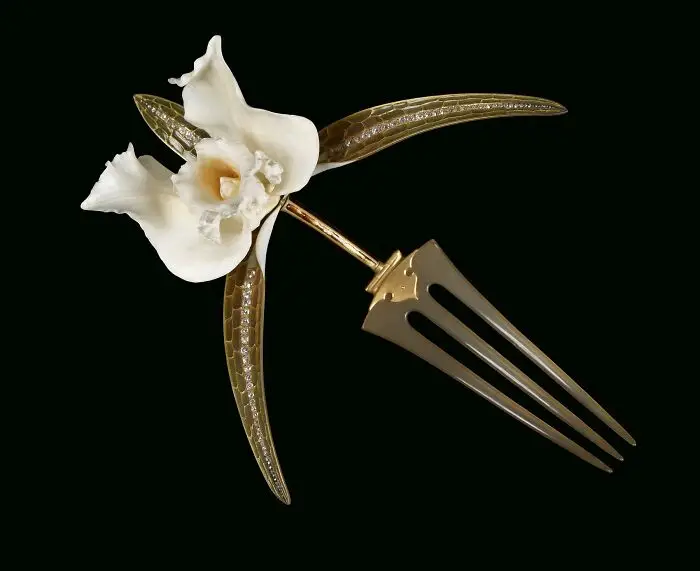
It is the most flamboyant piece acquired by the museum’s founder, Henry Walters, at the 1904 St. Louis World’s Fair.
Report
14points
#12 Entrance Door Designed By Architect Ernest Blerot
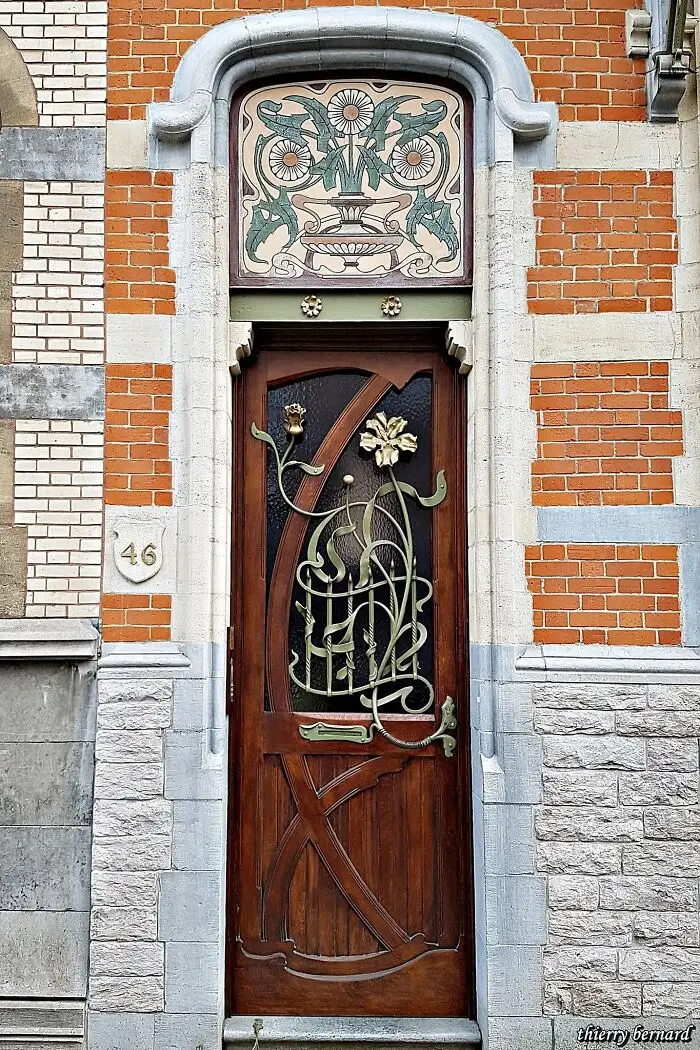
The house holds a special place in Blerot’s career. It was the very first house the 27-year-old architect built, and it also became the Blerot residence. It marked the start of a remarkably productive career: between 1896 and 1910, Blerot completed nearly 80 buildings, 39 of which are listed today, making him one of the most prolific Art Nouveau architects in Brussels.
Report
13points
#13 Celestial Dome Of The Szeged Synagogue By Lipót Baumhorn
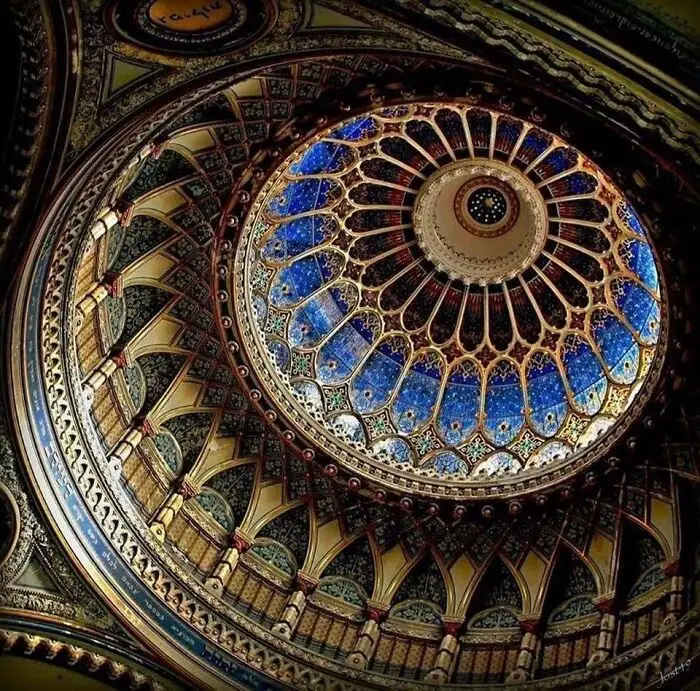
Designed by architect Lipót Baumhorn and completed in 1902, the New Synagogue in Szeged is the second largest in Hungary after the Dohány Street Synagogue in Budapest, and the fourth largest in the world. It’s a masterpiece of the fin-de-siècle Hungarian blend of Art Nouveau and historicist styles, known as Hungarian Secession, combined with Moorish Revival elements. The interior of the great dome, and all of the building’s stained glass, are the work of the artist Miksa Róth. The dome was designed to represent the world. Its deep blue glass is decorated with stars and flowers (representing infinity and faith), and the dome is divided evenly by 24 columns, one for each hour of the day.
Report
12points
#14 Facade Of The Central Industrial School Of Construction By Antonín Hübschmann
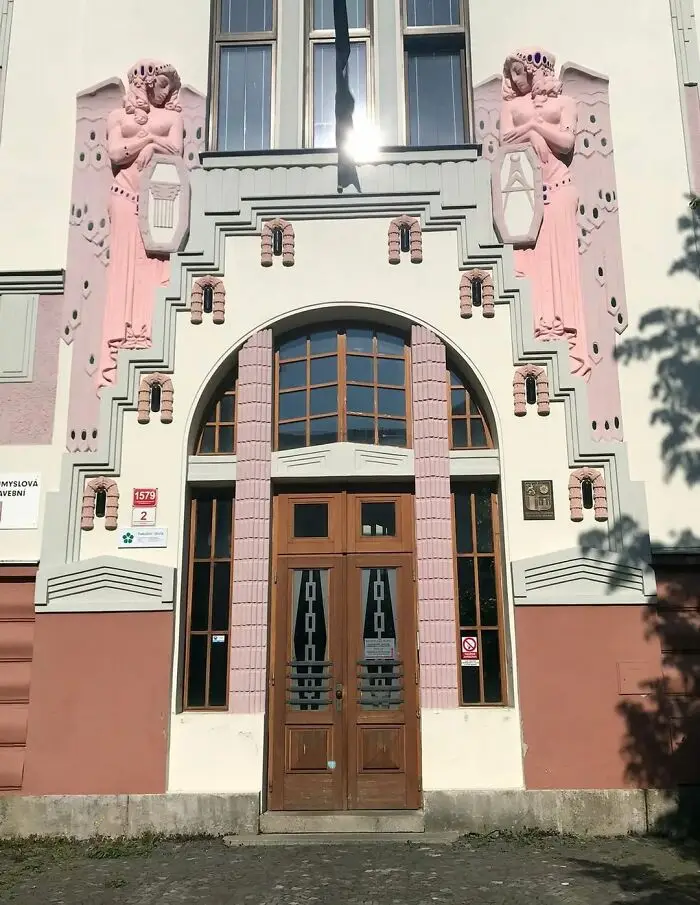
Central Industrial School of Construction (L’école secondaire de génie civil), Resslova 2, České Budějovice, Czech Republic. The secondary school of civil engineering was built in 1910 to designs by architect Josef Záruba-Pfeffermann. The stucco decorations on the facade are the work of Antonín Hübschmann.
Report
12points
#15 Stadtbad Charlottenburg, Berlin’s Oldest Surviving Indoor Swimming Pool, By Paul Bratring
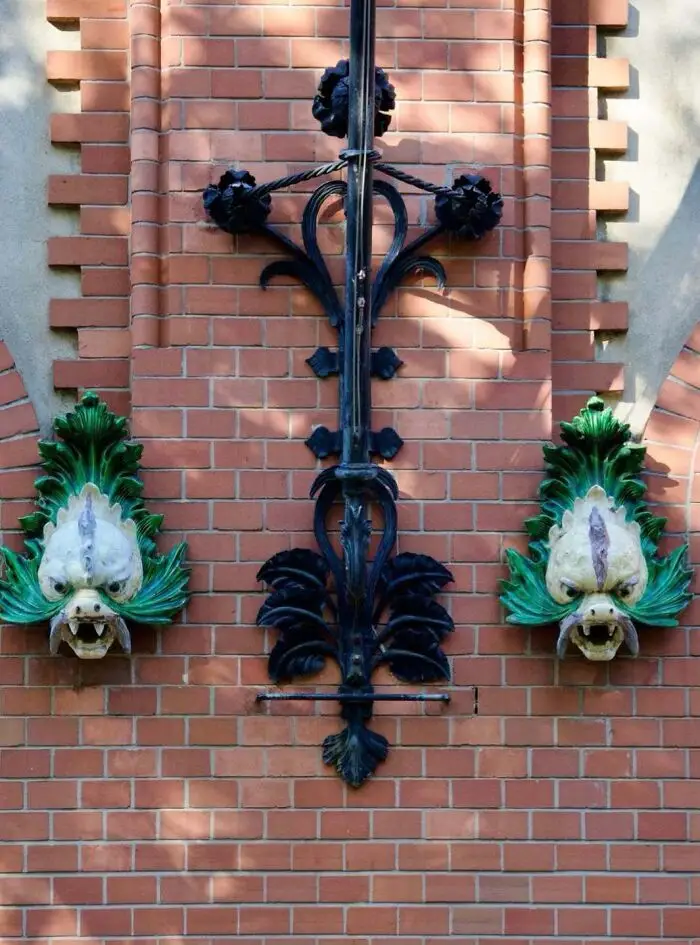
Stadtbad Charlottenburg, Berlin’s oldest surviving indoor swimming pool, was designed by Paul Bratring and completed in 1898. Its red brick facade hints at what’s inside: a pair of glazed ceramic fish heads with bared teeth and leafy green fins guard an ornate wrought-iron lamp bracket, a playful nod to the building’s watery purpose.
Report
11points
#16 Casa Comalat By Salvador Valeri I Pupurull
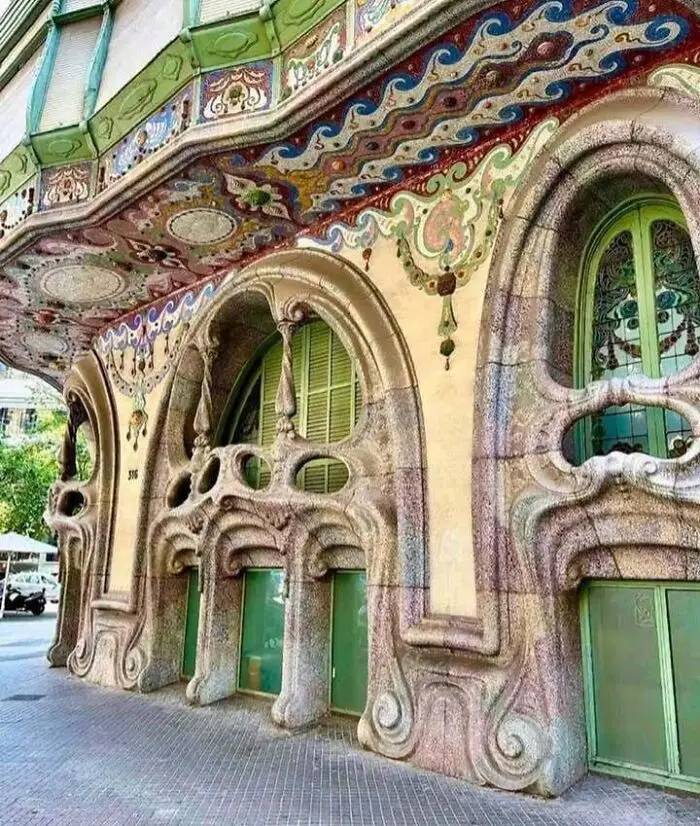
Designed by architect Salvador Valeri i Pupurull and built between 1909 and 1911, this modernist masterpiece has a fascinating double personality. Its main facade on Avinguda Diagonal 442 is formal and monumental, while the rear facade on Carrer de Còrsega, shown here, is playful and organic, with Gaudí-inspired curves, colorful ceramic mosaics and wooden shutters. Today, it’s still a private residential building and one of Barcelona’s finest hidden Art Nouveau gems.
Report
11points
#17 Silver Handbag With Iris Decoration, Attributed To William Comyns
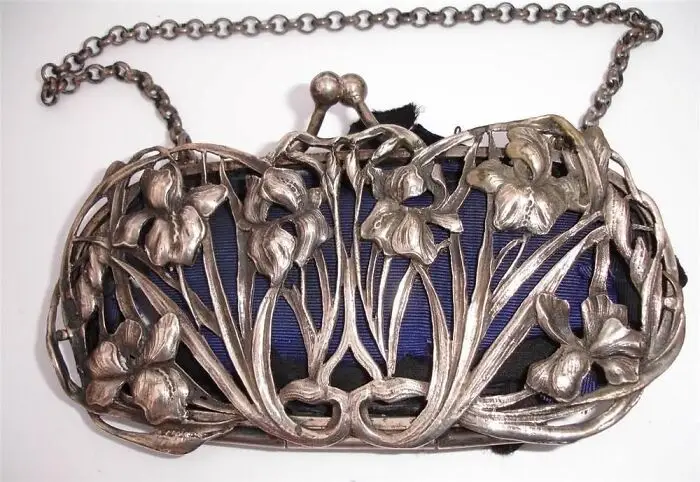
Irises were among the most beloved flowers of Art Nouveau, and on this evening bag they practically burst out of the frame.
Comyns was a celebrated London silversmith active from the late 19th century. The firm was established in London around 1858 when William Comyns purchased the business of Robert Tagg. Its work was retailed by some of the world’s most prestigious firms, including Tiffany & Co., The Goldsmiths & Silversmiths Company, and some items designed by the firm now form part of the collection of the Victoria & Albert Museum, London.
Report
11points
#18 Peony Dish By Gustav Gaudernack
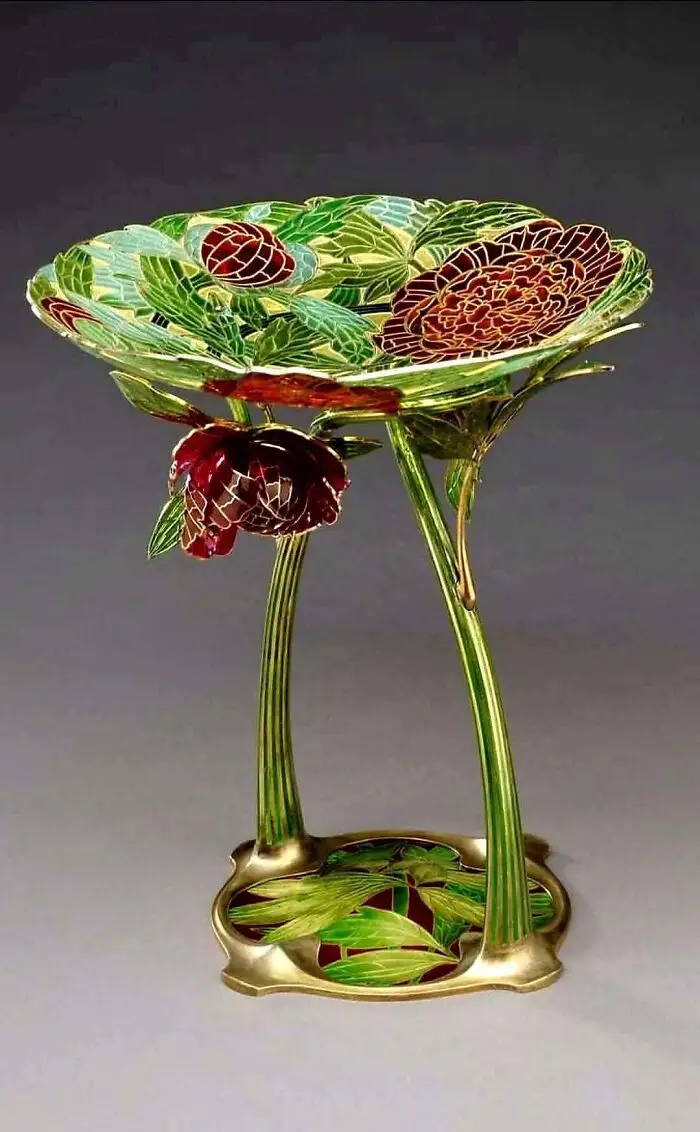
Art Nouveau dish with stem, designed by Gustav Gaudernack, circa 1904. Because of its size and complexity, it’s regarded as an outstanding example of Norwegian Art Nouveau enamel work.
Gaudernack trained in Vienna, moved to Oslo in 1891, and joined the David Andersen firm in 1892. By 1895 he was its main designer, a post he kept until 1910. He made his name between 1900 and 1908 with large plique-à-jour pieces like this one, which he usually made in separate parts and then assembled. A drawing of the piece dated 1904 is said to belong to the Norwegian Embassy in Washington, D.C. The dish stands 22.4 cm (about 8.8 inches) tall and is now in the collection of the Walters Art Museum in Baltimore.
Report
10points
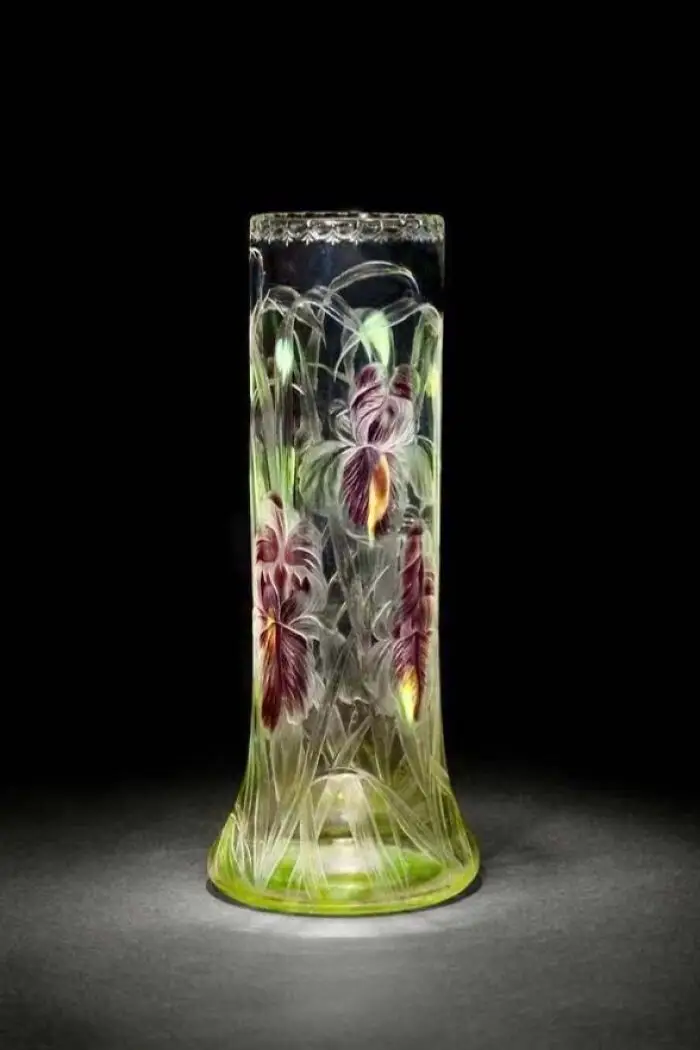
#20 Magnolia Lanterns By Louis Majorelle And Daum Frères
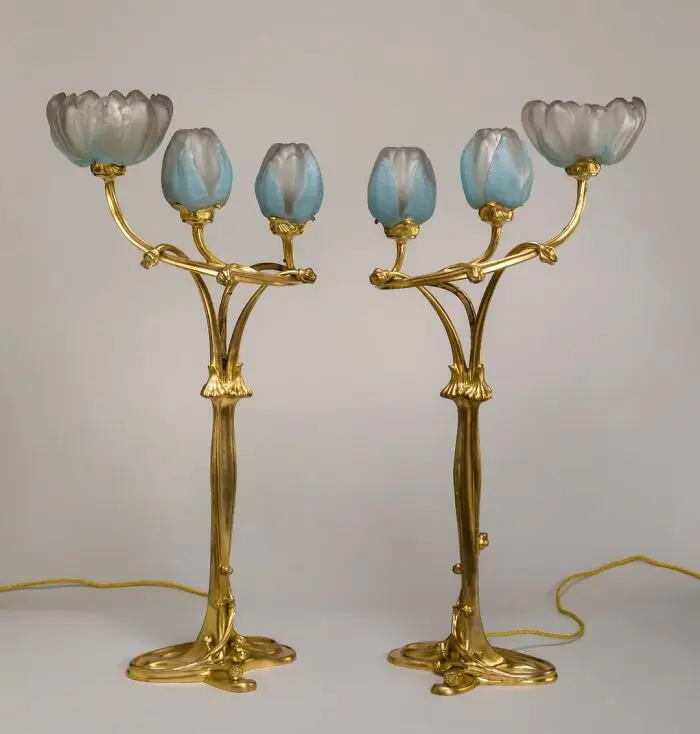
Magnolia Lanterns, created around 1902–1903 through a collaboration between Louis Majorelle (who designed the gilded and patinated bronze structure) and Daum Frères (who made the flower-shaped lampshades). This model was presented at the Exposition de l’École de Nancy in 1903, as well as at the Salon du Mobilier in Paris.
Report
10points

