





After spending a lot of time on Earth, one of the things you’ve probably noticed is that human history can be… well, weirder than weird. In between all the hard-fought battles, seminal treaties, and rousing speeches, you’ll find some truly odd events. Like Napoleon Bonaparte getting swarmed by rabbits in 1807. No, really! We were shocked when we found out, too!
Scroll down for Bored Panda’s collection of some of the most bizarre and unbelievable historical facts that sound completely fake, but are actually true. Check them out below! They’re good for piquing your curiosity about new topics and for impressing your friends the next time you get together.
#21 Napoleon Bonaparte Is Seen As The Father Of Canned Food

During his ambitious military campaigns, Napoleon Bonaparte was faced with a massive logistical problem: how to feed his enormous, constantly moving army. He famously declared that "an army marches on its stomach" and offered a hefty prize of 12,000 francs to anyone who could invent a reliable method of preserving food. The challenge was won in 1810 by a French chef and confectioner named Nicolas Appert. Appert developed a process of sealing food in airtight glass jars and then boiling them, a groundbreaking technique that was the direct precursor to modern canning. Though he never fully understood the science behind why it worked, his invention provided Napoleon's troops with a stable food supply, revolutionized food preservation, and earned him the title "the father of canning."
Report
0points
#22 "Ahoy" Was Almost The Greeting We Would Have Used On The Telephone

Before the invention of the telephone, "hello" was a word used to express surprise, not a common greeting. When the first phone lines were being established, inventor Alexander Graham Bell was adamant that the proper way to answer a call should be "ahoy," a nautical term. However, his rival, Thomas Edison, had a different idea. Edison championed the use of "hello" and instructed the operators at the first telephone exchange in New Haven, Connecticut, to answer all calls with the word. Edison's preference quickly caught on, was printed in early phonebook manuals, and "ahoy" was relegated to the history books, meaning a simple technological rivalry is the reason we don't greet each other like pirates today.
0points
#23 Apparently Abraham Lincoln Had A Very High Pitched Voice

Despite his towering physical presence and a legacy defined by profound, resonant speeches, Abraham Lincoln's actual voice would likely be a surprise to modern ears. Contrary to the deep, commanding tones often used to portray him, historical accounts from those who knew him consistently describe his voice as a shrill, high-pitched tenor. One contemporary journalist even noted that his voice was "sharp, squeaking, piping," and "unpleasant." This small, humanizing detail offers a stark contrast to the monumental, baritone image of the Great Emancipator that has been crafted in popular culture.
Report
0points
#24 Three Sailors Survived 16 Days In A Sunken Ship From Pearl Harbor

After the USS West Virginia was salvaged from the bottom of Pearl Harbor, workers made a grim and heartbreaking discovery. Inside a sealed storeroom, they found the bodies of three sailors. What made the scene truly tragic was a calendar found nearby. On it, the men had used red pencil to mark off the days, indicating that they had survived in an airtight compartment for sixteen days after the ship sank, from December 7th to December 23rd. This small, desperate record revealed that they had lived through the initial attack, only to slowly perish in the dark, trapped beneath the water, long after the battle was over.
0points
#25 Einstein’s Brain Went Missing And Is Still In Pieces

When Albert Einstein died in 1955, he left specific instructions to be cremated so that his body would not be "worshipped." However, the pathologist on duty, Dr. Thomas Harvey, decided to take matters into his own hands and secretly removed Einstein's brain for scientific study. For the next several decades, Harvey kept the brain, sliced into 240 pieces and stored in mason jars, as a strange personal possession. He moved it across the country, at one point keeping it in a cider box under a beer cooler, all while hoping to unlock the secrets of genius. Harvey's bizarre and unauthorized guardianship of the famous brain remained largely unknown to the public until a reporter tracked him down in 1978, revealing one of the weirdest and most macabre footnotes in the history of science.
Report
0points
#26 The"Fat Men's Clubs" Was A Trend In The Late 19th Century

In the late 19th and early 20th centuries, a time when being overweight was a sign of wealth and success, a peculiar social trend emerged: "Fat Men's Clubs." These exclusive social organizations, which popped up across the United States and Europe, had a strict and hefty entrance requirement: members had to weigh at least 200 pounds. The clubs were a place for portly gentlemen to celebrate their size, with annual gatherings that featured massive, multi-course feasts and friendly weigh-ins on industrial scales. It was a short-lived but popular movement that proudly celebrated a physical attribute that would, in just a few decades, be seen as a serious health concern.
Report
0points
#27 Christmas Was Banned In 1659 By The Puritans

In a move that would seem shocking to modern Americans, the Puritan leaders of the Massachusetts Bay Colony actually banned the celebration of Christmas in 1659. The Puritans viewed the holiday as a decadent, pagan festival with no biblical basis, and they were particularly offended by the boisterous, often drunken revelry that was common during English Christmas celebrations at the time. Their law, which imposed a five-shilling fine on anyone caught "feasting" or otherwise observing the day, was part of a broader effort to purify the church of any traditions they deemed unholy. The ban remained in place for 22 years and was so deeply ingrained in New England culture that Christmas didn't become a public holiday in Boston until the mid-19th century.
0points
#28 A 1886 War Only Lasted 38 Minutes
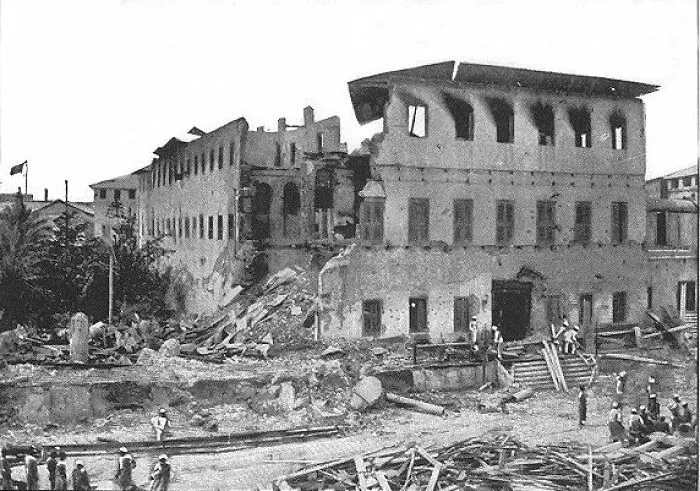
The shortest war in recorded history, a conflict between Britain and Zanzibar in 1896, was over in less time than it takes to watch a sitcom. The "war" began after the pro-British sultan of Zanzibar died and his cousin, Khalid bin Barghash, seized the throne without British approval. When Khalid refused to step down, the British Royal Navy assembled its warships in the harbor and issued an ultimatum. At 9:02 AM on August 27th, they opened fire on the sultan's palace, and by 9:40 AM, the Zanzibari forces had surrendered, officially ending the war after a mere 38 minutes of strafing.
Report
0points
#29 The First Naval Flight From Continental USA To Hawaii Took An Unexpected Turn

In 1925, the U.S. Navy attempted a groundbreaking feat: the first-ever non-stop flight from the mainland to Hawaii. Two naval flying boats took off from San Francisco, but the journey quickly turned into a disaster. One of the planes was forced to ditch in the ocean just a few hundred miles from the coast. The second plane, commanded by John Rodgers, ran out of fuel just short of the islands and was also forced to land in the open ocean. Stranded and with no radio, the crew of five survived for the next nine days by turning their plane into a makeshift sailboat. They ingeniously stripped the fabric from the lower wings to create sails and navigated their way 450 miles to the shores of Kauai, ultimately finishing their "flight" by sea.
Report
0points
#30 The US Postal Service Tried Missile Mail During The 50s

During the height of the Cold War, the U.S. Postal Service decided to get into the rocket age by launching mail from a cruise missile. In a 1959 joint operation with the Navy, a Regulus cruise missile packed with 3,000 pieces of official U.S. mail was fired from the deck of the submarine USS Barbero. The missile successfully flew over 100 miles and landed at a naval air station in Florida, delivering its cargo in just 22 minutes. Upon its successful landing, Postmaster General Arthur Summerfield enthusiastically declared that mail would be delivered by missile "before man reaches the moon." Despite the successful test, the idea was quickly shelved due to the sheer cost and impracticality of using guided missiles for postal delivery, making it a short-lived, though spectacular, footnote in postal history.
Report
0points
#31 First Lady Mamie Eisenhower Gave Jackie Kennedy A Very Cold Welcome

The transition of power from the Eisenhowers to the Kennedys in 1961 was a famously frosty affair, particularly between the outgoing and incoming First Ladies. Mamie Eisenhower, who reportedly held a personal dislike for the Kennedys, gave Jackie Kennedy a notoriously cold and abrupt tour of the White House. The tour was so rushed that Jackie, who had just secretly given birth to her son John Jr. via a difficult C-section, was left physically exhausted. To add a final, petty insult, Mamie allegedly forced Jackie to walk the entire tour, despite knowing about her recent surgery, and neglected to arrange for a wheelchair. This chilly and inhospitable welcome set the tone for a relationship that would remain distant for years.
Report
0points
#32 Richard Nixon's Interesting Final Meal Choice Is A Lie

The story of Richard Nixon's final meal in the White House has long been a piece of political lore, with most accounts claiming it was a simple, sad dish of cottage cheese and pineapple. However, that popular myth is incorrect. According to his personal records, on the evening of August 8, 1974, just hours before he would announce his resignation, President Nixon actually ate a hearty last supper. His final, decidedly less humble meal as president consisted of a beef tenderloin, a baked potato, and a crisp green salad, a far cry from the famously ascetic dish that has come to define his final, lonely hours in the Oval Office.
Report
0points
#33 An Italian Engineer Built His Own Country In The Middle Of The Adriatic Sea

In a wild and short-lived experiment in libertarianism, an Italian engineer named Giorgio Rosa decided to build his own country in the middle of the Adriatic Sea. In 1967, after years of construction, he completed a 400-square-meter platform just outside of Italy's territorial waters. The following year, he declared it the independent "Republic of Rose Island," complete with its own government, currency, and post office. The Italian government, however, was not impressed by this new micronation, viewing it as a clever tax-dodging scheme. Just 55 days after Rose Island declared its independence, the Italian Navy showed up, evacuated the platform, and then, in a dramatic and definitive end, used dynamite to blow it up and send the world's newest country to the bottom of the sea.
0points