

#1

When local civil rights activists heard about it, they decided she was not a good fit as the face of the bus boycott movement. Rosa Parks was already an active civil rights leader and recreated the experience months later to spearhead the bus boycotts in the south and raise awareness for the civil rights movement. Still incredibly risky and daring by Rosa Parks, but the 15 year old Claudette Colvin deserves much more recognition for originating the idea.
Jiggly. Unstable. Slippery. That hospital-tray dessert comparison of Novick’s isn’t just clever—it’s accurate. Because framing history in a way that’s easy for everyone to swallow and digest really is as impossible as nailing Jell-O to a wall (or eating it with a fork).
That’s because, as Jessica Friedlander writes, “history is never free from an agenda.” Even the facts themselves require judgment calls. Which ones make the cut? Whose perspective gets centered? Whose voice gets left out? How does the story end up getting told?
In other words, every fact comes wrapped in a choice—what to include, what to leave out, whose version gets told—and no single serving can contain the whole story, because no historical account can capture every possible perspective.
#2
#3

Part of history’s slipperiness also comes down to the fact that our interpretation of events is continually changing. Sometimes it’s gradual; sometimes it happens all at once, when some new evidence shakes up what we thought we knew.
That’s partly because writing history is never really finished. As historian Kevin M. Levin has written, researching the past means being willing to “hit brick walls along the way,” revising questions as new evidence turns up. But it doesn’t always take a groundbreaking discovery to change the story. Historians are constantly asking new questions, searching different sources, and finding new meaning in decades- or centuries-old documents.
#4

Bantu militias don't see them as people. They view them as another forest creature akin to the gorillas and chimpanzees that live nearby. There is also a degree of mysticism about consuming pygmy meat.
Whenever food gets scarce, pygmy goes on the menu. They butchered entire villages to feed refugee camps and militias.
It's not known about because the main group doing the pygmy eating is also the main secruity force now.
I interviewed several Congolese who ate pygmy when I worked at the UN, and they were remarkably respectful. It was how a hunter might treat deer. They had no hate for them.
It's the most complete dehumanisation I've ever encountered and no one knows about it.
#5
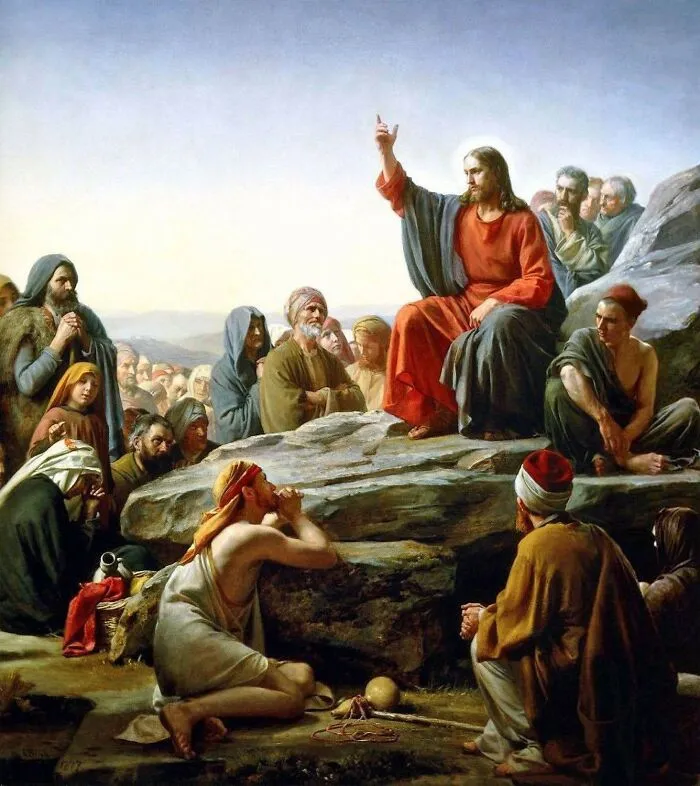
As the American Historical Association (AHA) explains, historians continually reinterpret the past by bringing “new knowledge and experience” to the evidence. In other words, the past may be fixed, but our understanding of it isn’t. Even once a historian settles on an interpretation, it’s fair game for the next generation of scholars to pick apart and rewrite all over again.
And even then, where do you even start? As the AHA also points out, there’s simply too much history for anyone to comprehend—every group of people, every idea, every institution, every civilization has its own tangled backstory. Bringing any kind of order to that vastness is its own impossible task.
So why bother with history at all, if it’s this slippery?
#6

#7
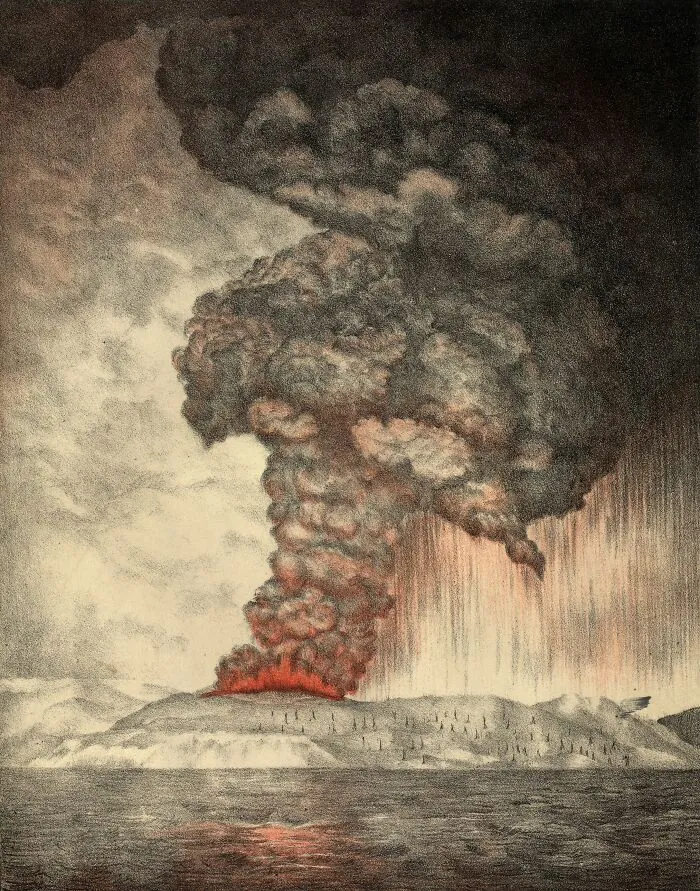
What I mean by that is the sound wave from the eruption circled the earth, then did it AGAIN ~32 hours later (the time it takes a sound to circle the earth at sea level) because it was so loud.
#8

Historian Jason Steinhauer has argued that the real value of studying history lies less in memorizing a fixed set of facts or acing a test and more in this slippery process itself. He says that the “process of historical inquiry—and what it teaches students along the way—is history’s greatest reward.”
This is because studying history teaches us that society is never stagnant, and pushes us to ask how and why things change, who’s driving that change, whose interests it serves, and who gets left out of the story entirely. Through history, he says, we also learn that our actions have consequences.
By analyzing past events, Steinhauer continues, we learn to ask probing questions and challenge our own assumptions. Often, in doing so, we also come to recognize that humans are capable of being both very good and very bad. Taken together, these lessons can encourage us to be more careful readers: skeptical of one-sided stories and more aware of our own biases.
“Most critically,” he writes, “history teaches us who we are.” It’s the backdrop that gives our personal stories meaning.
#9
#10
#11
And that’s exactly why some of the lesser-known facts featured on this list matter. Some are quietly devastating, and a few are so outlandish that they might make you laugh out loud. Some might make you question what you always assumed was fact, while others might introduce you to a side of history you’d simply never come across before.
The past itself may be fixed, but the stories we encounter about it aren’t. And sometimes, a detail that once sat quietly in an archive, a book, or the margins of a much bigger story finds a whole new audience when someone decides it’s worth sharing.
So scroll on, and let us know which ones stick with you.
#12
#13
#14

Edit: 15th century.
#15


#17

#18
#19

#20