



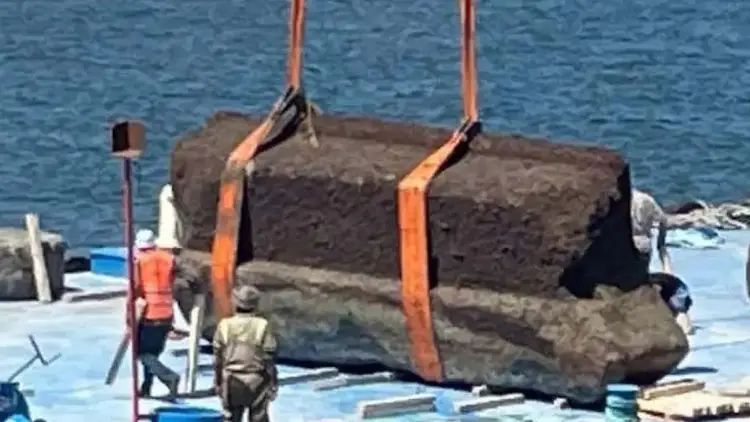


Who are we but a collection of stories? People, cities, countries—all carry memories. 'History Uncovered' is not just about dates and army sizes; this Instagram account aims to show you the world in a way you haven't seen, and it does this by digging up the small details that make the big picture clearer. From ancient civilizations to the recent past, continue scrolling to check out the footprints left behind by those who came before us.
#41
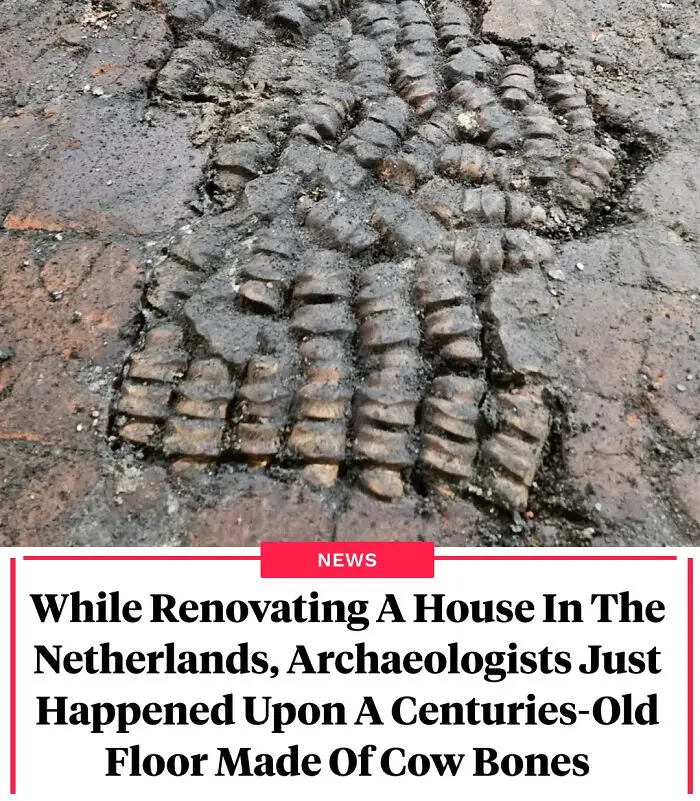
While renovating a house from the early 1600s in Alkmaar, Netherlands, archaeologists happened upon a floor made of cow bones. Crafted with stunning precision, the floor exclusively features metacarpal and metatarsal bones, each carved to the exact same height and arranged in a decorative pattern with some facing up and others facing down. What remains mysterious is why bones were used at all, given that the tile surrounding this portion of the floor was inexpensive and commonplace at the time. Meanwhile, researchers are also baffled as to why these types of bone floors have only ever been uncovered in the province of North Holland and why they feature eerily similar patterns across different cities.
Report
27points
#42 Messages That American Soldiers Wrote On Their Helmets During The Vietnam War.

Report
26points
#43

While preparing for construction near the town of Pacé in the Brittany region of northern France, archaeologists recently unearthed an 1,800-year-old ring along the remains of a Roman road. Discovered in an "exceptional state of preservation," this gold ring is adorned with a type of blue onyx known as nicolo that's inscribed with a depiction of the goddess Venus. Right nearby, archaeologists also uncovered a layer of medieval remains including food silos, cooking pots, and even remnants of 1,300-year-old grains and legumes.
Report
26points
#44
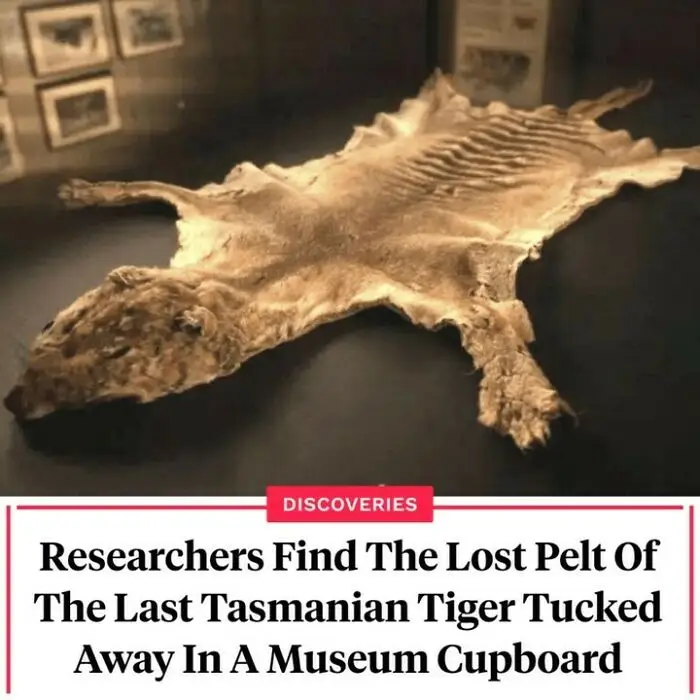
Researchers just stumbled across the pelt and skeleton of the last known Tasmanian tiger in a cupboard at the Tasmanian Museum and Art Gallery, where it had been sitting forgotten since the 1980s. The remains had been used for educational demonstrations for years, and the pelt even had flat spots where students had been allowed to pet the fur. Now, the creature is on display in the museum once more.
Report
25points
#45

In 1983, a Seattle band called Bam Bam recorded their first single. Founded and fronted by a 26-year-old woman named Tina Bell, the band pioneered a signature combination of punk, sludge, and hard rock that would come to define the Seattle grunge sound — nearly a decade before Nirvana's "Nevermind." Although Bell and Bam Bam only released two singles and one EP, they were a decade-long staple of the Seattle club scene, where future members of bands like Soundgarden, Pearl Jam, and even Guns N' Roses watched them for inspiration.
Report
25points
#46
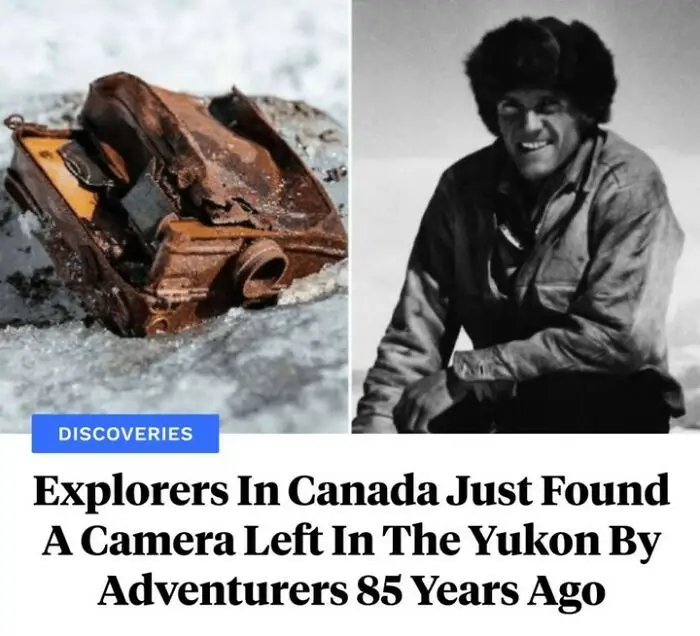
An expedition recovered several cameras abandoned on a Yukon glacier 85 years ago. In 1937, famed mountaineers Bradford Washburn and Robert Bates were forced to abandon the supplies during a treacherous trek on Canada's Mount Lucania. By mapping out how the glacier had moved over the past eight decades, a team of scientists and mountaineers was able to pinpoint where the explorers had abandoned their equipment.
The expedition came across a number of Washburn's cameras, including a Fairchild F-8 aerial shutter camera, two motion picture cameras with film, a DeVry "Lunchbox" camera model, and a Bell & Howell Eyemo 71. They also found climbing gear, tents, and cooking items, including part of a T-bone steak. But the most enticing finds are certainly the cameras, many of which contain film that the recovery team is hopeful can be developed.
The expedition came across a number of Washburn's cameras, including a Fairchild F-8 aerial shutter camera, two motion picture cameras with film, a DeVry "Lunchbox" camera model, and a Bell & Howell Eyemo 71. They also found climbing gear, tents, and cooking items, including part of a T-bone steak. But the most enticing finds are certainly the cameras, many of which contain film that the recovery team is hopeful can be developed.
Report
24points
#47
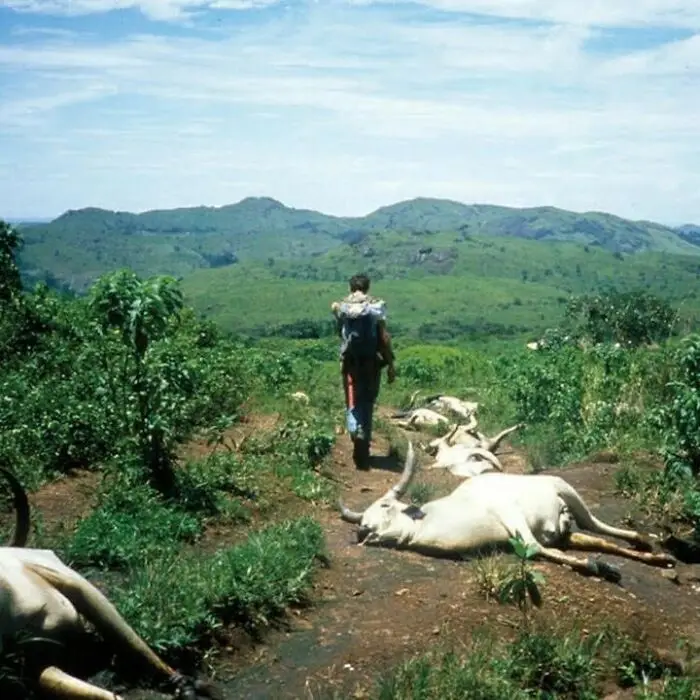
In 1986, an enormous gas cloud erupted from Lake Nyos in Cameroon — and k**led more than 1,700 people and 3,500 animals. The region was long plagued by volcanic activity, and scientists believe that carbon dioxide had been steadily leaking into Lake Nyos for years, creating an explosive time bomb that was eventually triggered by a disturbance, perhaps a landslide or a small earthquake. This resulted in the deadly cloud of carbon dioxide, which was so dense that it displaced the oxygen in the air and created an unbearably suffocating environment for humans and animals who were unfortunate enough to be in its path. Most victims' deaths were so quick that they showed no signs of visible harm or struggle, and hauntingly, many had simply dropped dead wherever they were in their final moments.
24points
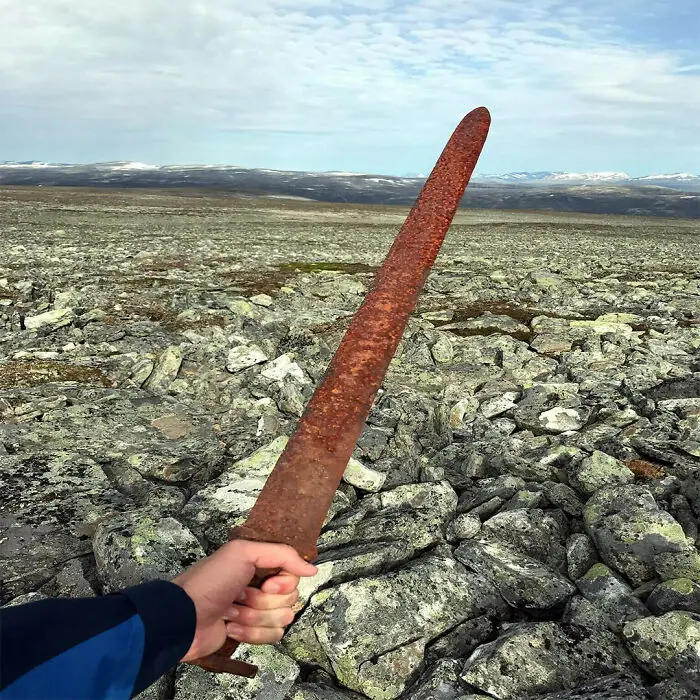
#48 In 2017, Reindeer Hunters In Norway Were Shocked To Discover A 1,200-Year-Old Viking Sword. While The Blade Was Rusted, It Was Remarkably Well-Preserved Thanks To The Extreme Cold And Low-Pressure Environment It Was Found In
Report
21points
#49
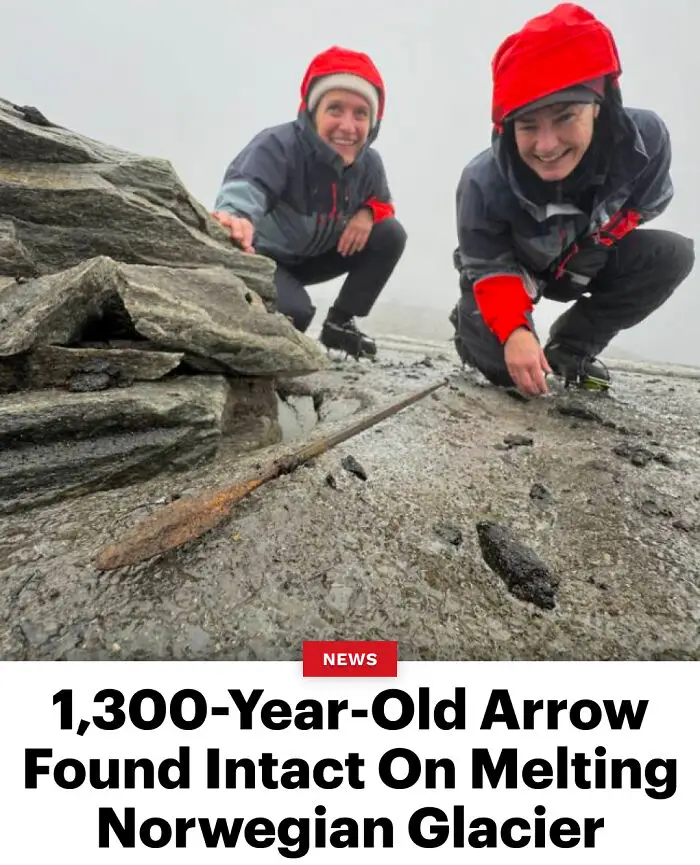
Archaeologists just made an "incredible" find on the surface of glacial ice in Norway: a remarkably well-preserved arrow dating back 1,300 years.
This pre-Viking artifact was discovered on the Lendbreen ice patch by a team of researchers from the group Secrets of the Ice, a specialized archaeological program focused on glaciers and ice patches. Archaeologists from the team say they have made a number of exciting discoveries from the melting glaciers.
This pre-Viking artifact was discovered on the Lendbreen ice patch by a team of researchers from the group Secrets of the Ice, a specialized archaeological program focused on glaciers and ice patches. Archaeologists from the team say they have made a number of exciting discoveries from the melting glaciers.
Report
18points
#50
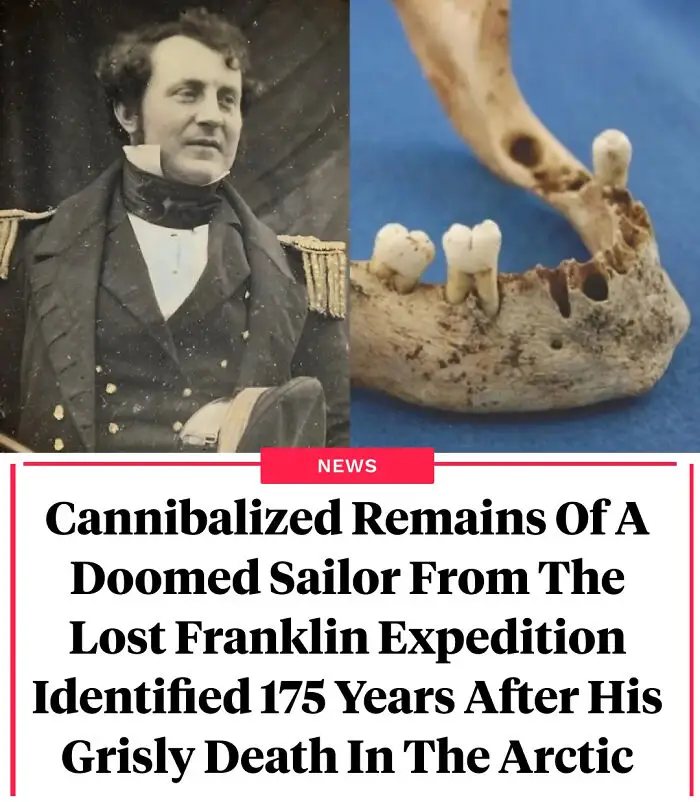
On May 19, 1845, two ships carrying 129 men set off from England under the command of Sir John Franklin in search of the Northwest Passage through the Arctic — and were never seen again. Ever since, historians have slowly been piecing together what happened to the doomed sailors aboard the HMS Terror and the HMS Erebus in what's known as the "Lost Franklin Expedition." Researchers working in the frigid islands of northern Canada have unearthed frozen corpses often called "ice mummies," collected chilling eyewitness accounts from local Inuits describing mass cannibalism, and discovered dozens of bones with cut marks showing that the bodies were butchered.
Now, for just the second time, some of those bones have been identified, as researchers have concluded that a mandible uncovered on King William Island belonged to Erebus captain James Fitzjames. He survived the expedition's initial stranding in the Arctic ice and tried to lead the 105 survivors toward safety before succumbing to starvation and the elements in June 1848. Evidence shows that the survivors then butchered his remains and ate them.
Now, for just the second time, some of those bones have been identified, as researchers have concluded that a mandible uncovered on King William Island belonged to Erebus captain James Fitzjames. He survived the expedition's initial stranding in the Arctic ice and tried to lead the 105 survivors toward safety before succumbing to starvation and the elements in June 1848. Evidence shows that the survivors then butchered his remains and ate them.
Report
15points