





Who are we but a collection of stories? People, cities, countries—all carry memories. 'History Uncovered' is not just about dates and army sizes; this Instagram account aims to show you the world in a way you haven't seen, and it does this by digging up the small details that make the big picture clearer. From ancient civilizations to the recent past, continue scrolling to check out the footprints left behind by those who came before us.
#21

In 1980, 19-year-old Jean Hilliard was found "frozen solid" in Minnesota on a -22-degree day. After encountering car troubles, she tried to get help from her friend Wally Nelson but accidentally tripped, fell, and lost consciousness on the way to his home. Nelson, who had no idea that Hilliard needed assistance until he discovered her frozen body near his home six hours later, was sure that she had died — until he saw "bubbles" coming out of her nose.
Luckily, Nelson acted quickly and took her to the hospital, where doctors were horrified by the extent of her hypothermia. In fact, her skin was reportedly so hard that it couldn't be punctured with a hypodermic needle. But thanks to heating pads — and, her family says, "a lot of prayer" — Hilliard was awake and talking in just a matter of hours. And her only problem when she left the hospital was her blistered toes.
Luckily, Nelson acted quickly and took her to the hospital, where doctors were horrified by the extent of her hypothermia. In fact, her skin was reportedly so hard that it couldn't be punctured with a hypodermic needle. But thanks to heating pads — and, her family says, "a lot of prayer" — Hilliard was awake and talking in just a matter of hours. And her only problem when she left the hospital was her blistered toes.
Report
40points
#22

In the 1920s, the United States Radium Corporation encouraged its young female workers to use their lips to sharpen the points on the brushes they used to paint watch dials. Little did these women know that this paint was so toxic that it would soon cause them to lose their jaws — and their lives.
The hundreds of young women who worked in these factories were exposed to so much radioactive radium that they used to come home glowing in the dark. Then they found that the exposure caused their vertebrae to collapse, their jaws to fall off, and their lives to end slowly after agonizing battles with cancer.
And while the men who worked in these factories wore lead aprons to protect themselves from radiation, the women were given nothing. By 1924, after dozens of young women were sick or dead, the United States Radium Corporation fought off lawsuits and bad press by saying the fatalities were from STDs.
Report
39points
#23 "It Was Quite A Surprise To Find It There A Few Centimeters Beneath The Ground"
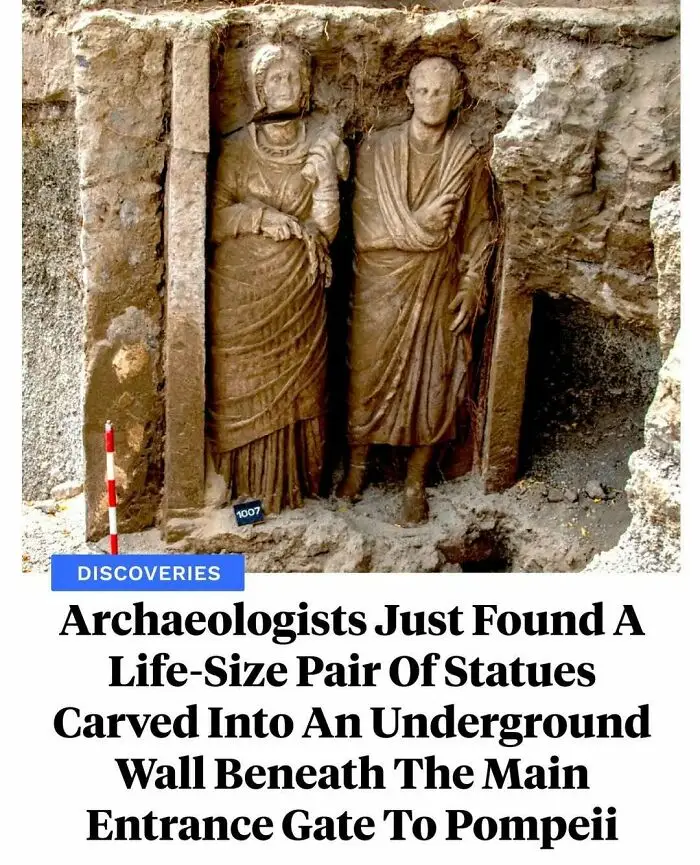
Archaeologists excavating the Porta Sarno necropolis, right beneath the main entrance gate to Pompeii, just uncovered a life-size relief featuring a pair of statues carved into the underground walls. The relief depicts a woman and a man standing side by side, but without an inscription of any kind, experts remain unsure about their relationship. The woman's jewelry and laurel leaves lead researchers to suspect that she was a priestess of Ceres, goddess of agriculture, fertility, and motherly relationships. And while nothing is known about the man, he's flanked by the preserved root of an ancient tree that once grew up out of the tomb.
Report
39points
#24

In 1944, Army dentist Benjamin Lewis Salomon found himself 50 yards from the front lines in Saipan, with Japanese soldiers quickly approaching. Salomon ordered the aid tent he was in with over 30 wounded soldiers to be evacuated while he held off the attackers. When his infantry would later return, they found Salomon surrounded by 98 dead Japanese soldiers Salomon had been shot 76 different times, 24 of them while he was potentially still alive.
His infantrymen immediately began preparing a recommendation for the Medal of Honor, which was initially denied. The rules at the time stated that medical professionals aren't supposed to bear arms against the enemy. Ultimately, in 2002, President George W. Bush posthumously awarded the Medal of Honor to Benjamin Salomon.
His infantrymen immediately began preparing a recommendation for the Medal of Honor, which was initially denied. The rules at the time stated that medical professionals aren't supposed to bear arms against the enemy. Ultimately, in 2002, President George W. Bush posthumously awarded the Medal of Honor to Benjamin Salomon.
Report
39points
#25
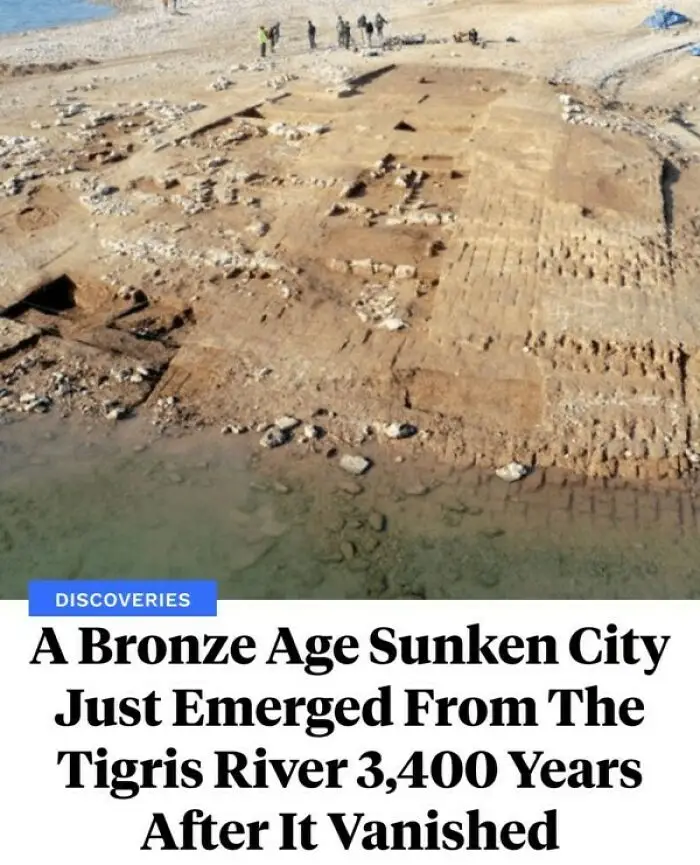
Between 1550 and 1350 B.C.E., the powerful Mitanni Empire controlled a vast territory spanning from present-day Turkey to Iraq before the Assyrians took over. One of their primary seats of power was the fabled city of Zakhiku, an administrative and industrial hub that sat on the eastern bank of the Tigris River near what's now Mosul, Iraq. Though little is known about the city or even the Mitanni Empire itself, tales of Zakhiku have fascinated scholars ever since.
Now, archaeologists believe they've finally found the lost city of Zakhiku — after it emerged from the Tigris due to extreme drought. Archaeologists were stunned at the relatively intact state of the city's mud brick walls, especially after being submerged in the Tigris for so long. Some experts believe that the earthquake that destroyed the city 3,400 years ago buried the small pieces of the city that did survive under rubble, thus preserving them since the Bronze Age.
Now, archaeologists believe they've finally found the lost city of Zakhiku — after it emerged from the Tigris due to extreme drought. Archaeologists were stunned at the relatively intact state of the city's mud brick walls, especially after being submerged in the Tigris for so long. Some experts believe that the earthquake that destroyed the city 3,400 years ago buried the small pieces of the city that did survive under rubble, thus preserving them since the Bronze Age.
Report
39points
#26

"I really loved it. I thought if you have to die you have to die sometime, that was my attitude. I just thought I want to put everything I've got into serving the army to bring the enemy down, and we did shoot them down."
Annie Ferguson was just 19 years old when she joined the British war efforts in 1942. Just two weeks after she enlisted, Ferguson was already going through rigorous gun training to learn how to shoot down German planes.
Annie Ferguson was just 19 years old when she joined the British war efforts in 1942. Just two weeks after she enlisted, Ferguson was already going through rigorous gun training to learn how to shoot down German planes.
Report
39points
#27 "There Are Plenty Of Roman Portrait Sculptures In The World. There’s A Lot Of Them Around. They’re Generally Not In Goodwills"

A marble statue sold at a Texas Goodwill for $34.99 has turned out to be a priceless Roman artifact once owned by King Ludwig I of Germany. The bust was part of Ludwig I's collection at a museum in Bavaria, but it vanished after the Allies bombed the building in 1944. Experts suspect that it was likely looted by an American soldier and then brought illegally to the United States. Then, nearly 80 years later, a woman shopping for secondhand items to resell found it "on the floor, under a table" and decided to buy it because, "It looked pretty dirty, pretty old" — and then she discovered the statue's astounding story.
Report
37points
#28 "I've Been Detecting For Many Years Now And Found Some Wonderful Things, But To Find A Piece Of Gold From The Viking Age, That's Really Something Else"

Ronald Clucas has been using his metal detector for 50 years and has found some incredible treasures along the way — but he just made his greatest discovery yet. While searching the Isle of Man, located in the Irish Sea, Clucas recently uncovered a section of a 1,000-year-old Viking armband made of gold. Made of eight gold rods braided together into an intricate pattern, this piece was undoubtedly the work of a master goldsmith. The other sections of the band had been purposefully cut off long ago, likely as currency in a trade of some kind, before the newly-uncovered section was carefully buried in what's believed to be a sacrifice to the gods.
Report
37points
#29
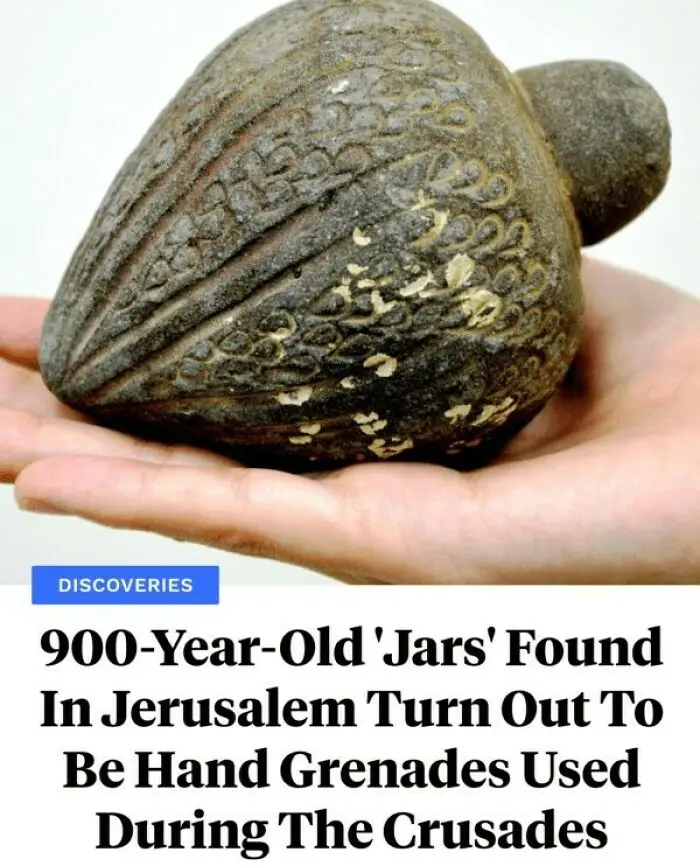
For decades, archaeologists working throughout the Middle East had been finding peculiar conico-spherical containers dating to between the 9th and 15th centuries. Experts long believed that these "jars" were simply used to hold oils and medicines, act as smoking pipes, or even serve as vessels for drinking beer. To this day, they're housed in museums all over the world, many of them sitting largely untouched as experts could only guess at their true purpose and significance.
But now, astonishing research has discovered what these "jars" really were: hand grenades used during the Crusades. Medieval texts dating back to the Crusades had long described incendiary devices akin to hand grenades being used in battles like the pivotal 1187 siege of Jerusalem, but archaeologists simply didn't think that this kind of technology was possible so long ago — until now.
But now, astonishing research has discovered what these "jars" really were: hand grenades used during the Crusades. Medieval texts dating back to the Crusades had long described incendiary devices akin to hand grenades being used in battles like the pivotal 1187 siege of Jerusalem, but archaeologists simply didn't think that this kind of technology was possible so long ago — until now.
Report
34points
#30

John Nash excelled in math from an early age, and after graduating from Carnegie Mellon with two degrees in the subject in 1948, he decided to pursue his doctorate at Princeton. One reference letter he submitted with his application to the program simply read, "This man is a genius." In 1951, he accepted a position as a math professor at the Massachusetts Institute of Technology, where he solved a classical unsolved problem and published research papers on differential geometry and economic game theory. However, Nash's promising academic career came to an end in 1959 when he was diagnosed with schizophrenia. Despite spending the better part of a decade involuntarily hospitalized, he went on to publish several more renowned papers — and even won a Nobel Prize in economics in 1994.
Report
34points
#31
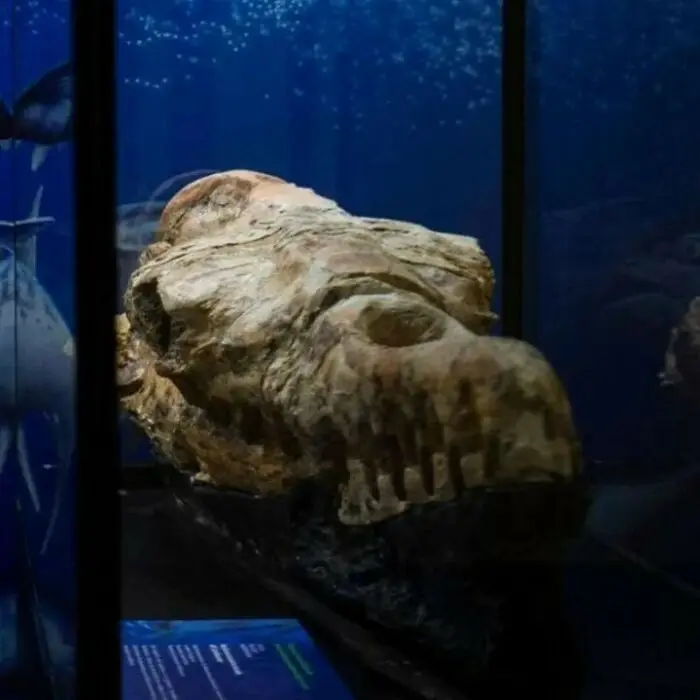
Paleontologists in Peru recently unearthed an incredibly well-preserved skull that they believe belongs to a previously undiscovered species of basilosaurus. More than 36 million years ago, the basilosaurus ruled the seas that covered what is now the Peruvian desert. These eel-like mammals grew to more than 55 feet in length and used their sharp teeth to eat penguins, tuna, and even sharks. This particular specimen was likely 39 feet long, about the size of a city transit bus.
Report
34points
#32
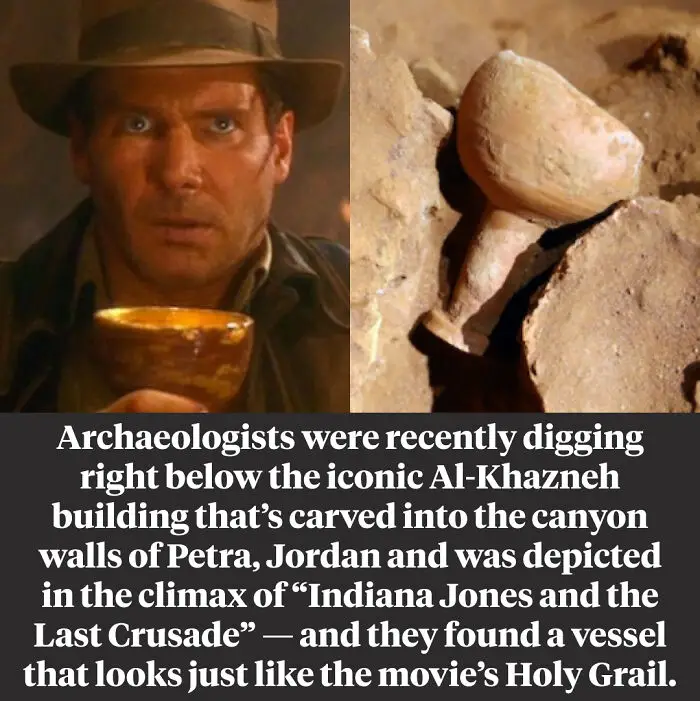
Approximately 2,000 years ago, the Nabateans carved an entire city into the canyon walls in the desert of Petra, Jordan. The city's largest and most striking building is known as Al-Khazneh, which may have served as a treasury or temple, and was famously featured in the 1989 film "Indiana Jones and the Last Crusade," where it served as the resting place of the Holy Grail.
Now, archaeologists digging right beneath Al-Khazneh have uncovered an ancient tomb filled with 12 skeletons — and one of them was clutching a vessel that looks remarkably like the film's Holy Grail. "When we spotted what looked like a chalice, all of us just froze," said archaeologist Josh Gates. "It looked nearly identical to the Holy Grail featured in 'Indiana Jones and the Last Crusade,' set in the ancient building directly above the tomb. It was the ultimate moment of life imitating art."
Now, archaeologists digging right beneath Al-Khazneh have uncovered an ancient tomb filled with 12 skeletons — and one of them was clutching a vessel that looks remarkably like the film's Holy Grail. "When we spotted what looked like a chalice, all of us just froze," said archaeologist Josh Gates. "It looked nearly identical to the Holy Grail featured in 'Indiana Jones and the Last Crusade,' set in the ancient building directly above the tomb. It was the ultimate moment of life imitating art."
Report
33points
#33

When the eruption of Mount Vesuvius obliterated the Roman city of Pompeii in 79 C.E., victims endured unimaginable terror in their final moments before being buried in ash, pumice, and debris. And because archaeologists later made plaster casts of the imprints that victims left behind, we can see near-perfect replicas of the people of Pompeii, frozen in the last instant before death. These "bodies of Pompeii" paint tragic scenes of victims cowering and embracing as a 20-foot layer of ash suffocated the city — but it turns out that some of experts' assumptions about these moments were wrong.
Researchers recently took DNA samples from five victims, including an embracing pair known as the "Two Maidens" and a presumed family of four found at the "House of the Golden Bracelet." But the new analysis shows that the so-called maidens, previously thought to be a mother and daughter or a pair of sisters, actually consisted of one woman and one man who weren't related at all. Meanwhile, researchers found that the "family" likewise weren't related and that the supposed mother of the group was actually a man. In addition, that man was found to have black hair and dark skin, suggesting that he may have been an enslaved person from North Africa or an immigrant from the eastern Mediterranean, further complicating historians' understanding of Pompeii's demographics at the time of the tragedy.
Researchers recently took DNA samples from five victims, including an embracing pair known as the "Two Maidens" and a presumed family of four found at the "House of the Golden Bracelet." But the new analysis shows that the so-called maidens, previously thought to be a mother and daughter or a pair of sisters, actually consisted of one woman and one man who weren't related at all. Meanwhile, researchers found that the "family" likewise weren't related and that the supposed mother of the group was actually a man. In addition, that man was found to have black hair and dark skin, suggesting that he may have been an enslaved person from North Africa or an immigrant from the eastern Mediterranean, further complicating historians' understanding of Pompeii's demographics at the time of the tragedy.
Report
33points
#34

Legend holds that when Spanish conquistador Francisco Pizarro asked the Inca chiefs of modern-day Peru how they selected their shamans, they replied that candidates had to be tested by making a pilgrimage to a magical realm in the north known as "the land of the spheres." And while this may sound like mere myth, archaeologists keep finding massive stone spheres buried just below the surface of the Earth in Costa Rica — which some experts believe is proof of Pizarro's tale.
For centuries, fantastical myths have surrounded these stones, including that they were created using magic potions or that they originally came from the sunken city of Atlantis. Meanwhile, scientists have remained baffled for decades. What we do know is that these spheres were created by hammering away at large boulders of limestone, sandstone, or gabbro that were then polished with sand — and that they can tip the scales at a whopping 15 tons. However, their true purpose remains unknown to this day.
Recently, archaeologists digging in the Puntarenas Province unearthed six more of these stones, the largest measuring more than six feet in diameter. Nevertheless, experts still don't know how exactly the country's ancient inhabitants carved these spheres with primitive tools or why they made them in the first place.
Report
32points
#35

As the Vietnam War drew to a close and U.S. forces began pulling out, the American government initiated a daring, last-ditch effort called Operation Babylift. But this was no military offensive. Instead, the plan was to evacuate as many orphaned children as possible and find them safe haven in homes across America and abroad.
In just three weeks between April 3 and April 26, 1975, Operation Babylift rescued a whopping 3,300 orphans, loading them onto whatever planes could be spared. In all, some 30 flights left Vietnam carrying virtually nothing but young children and infants, some of them nestled into padded cardboard boxes and placed on the seats. And when planes were running short, American civilians pitched in. One Connecticut businessman named Robert Macauley personally saved 300 kids after mortgaging his house in order to charter a Boeing 747.
In just three weeks between April 3 and April 26, 1975, Operation Babylift rescued a whopping 3,300 orphans, loading them onto whatever planes could be spared. In all, some 30 flights left Vietnam carrying virtually nothing but young children and infants, some of them nestled into padded cardboard boxes and placed on the seats. And when planes were running short, American civilians pitched in. One Connecticut businessman named Robert Macauley personally saved 300 kids after mortgaging his house in order to charter a Boeing 747.
Report
32points
#36 "That's The One Kind Of Spooky Element, That We're Still Not Sure How It Came Back To Be Here."

Henry Darby of the Swansea Building Society in Wales was recently sorting through the mail when a postcard fell out of the stack. Adorned with a print by English artist Edwin Henry Landseer on one side and inscribed with a short message on the other, there was nothing particularly remarkable about it — until Darby saw that it had been sent in 1903.
On August 23rd of that year, a man named Ewart mailed this postcard to Miss Lydia Davies at 11 Cradock Street, offering a brief apology for not being able to acquire a pair of something, which is not explicitly identified in the text. Records indeed show that Davies lived at that address at that time, but no one knows who exactly Ewart was, what he was writing about, or, most of all, why this postcard simply showed up in the mail 121 years after it was sent.
On August 23rd of that year, a man named Ewart mailed this postcard to Miss Lydia Davies at 11 Cradock Street, offering a brief apology for not being able to acquire a pair of something, which is not explicitly identified in the text. Records indeed show that Davies lived at that address at that time, but no one knows who exactly Ewart was, what he was writing about, or, most of all, why this postcard simply showed up in the mail 121 years after it was sent.
Report
30points
#37

In 1922, the silent film "Nosferatu" was released in Germany, featuring the terrifying vampire Count Orlok. This blood-sucking villain quickly attracted attention, especially since he was clearly based on Bram Stoker's Dracula. In fact, promotional materials for the movie openly stated that the film was "freely adapted" from Stoker's famous horror novel. But there was one problem: The filmmakers had failed to contact Stoker's widow Florence.
When the news about "Nosferatu" reached Florence in London, she was furious, especially since her main source of income was her late husband's book. She attempted to sue, only to find out that the film company behind "Nosferatu" had gone bankrupt. After a three-year legal battle, a German judge ruled that all copies of "Nosferatu" should be destroyed. But by that point, copies of the movie had already made their way to the United States, where they were considered to be in the public domain. These copies quietly spread elsewhere, gradually turning the film into a somewhat taboo cult classic. And after the copyright on "Dracula" expired across the world in the 1960s, the once-controversial film could legally be shown anywhere.
When the news about "Nosferatu" reached Florence in London, she was furious, especially since her main source of income was her late husband's book. She attempted to sue, only to find out that the film company behind "Nosferatu" had gone bankrupt. After a three-year legal battle, a German judge ruled that all copies of "Nosferatu" should be destroyed. But by that point, copies of the movie had already made their way to the United States, where they were considered to be in the public domain. These copies quietly spread elsewhere, gradually turning the film into a somewhat taboo cult classic. And after the copyright on "Dracula" expired across the world in the 1960s, the once-controversial film could legally be shown anywhere.
Report
29points
#38
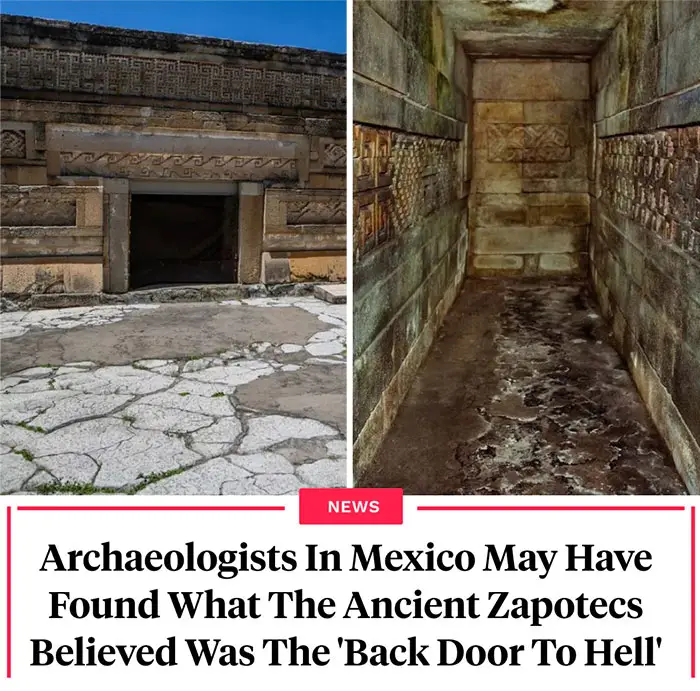
More than 1,000 years ago, the Zapotec people of Mexico founded Mitla, which became a religious and ceremonial center. (more facts about Mexico)
They called it "the place of the dead" because they believed the caves beneath the ancient city were an entrance to the underworld. In the 17th century, a visiting friar named Francisco de Burgoa even described Mitla as "the back door of Hell" and wrote of burial chambers for kings, high priests, and fallen warriors.
However, because the Spanish had destroyed the Zapotec temples and erected their own churches atop them, archaeologists could never find any evidence of these chambers — until now.
Recently, researchers discovered what appears to be a labyrinth of caverns, tunnels, and rooms beneath Mitla. Their most significant find was a large void beneath the altar of the Church of San Pablo Apostol, which was built on the ruins of the most sacred Zapotec temple.
Experts say this is "no coincidence" — and it may even be the chamber where Burgoa claimed ancient kings were buried with "feathers, jewels, golden necklaces, and precious stones."
Report
29points
#39
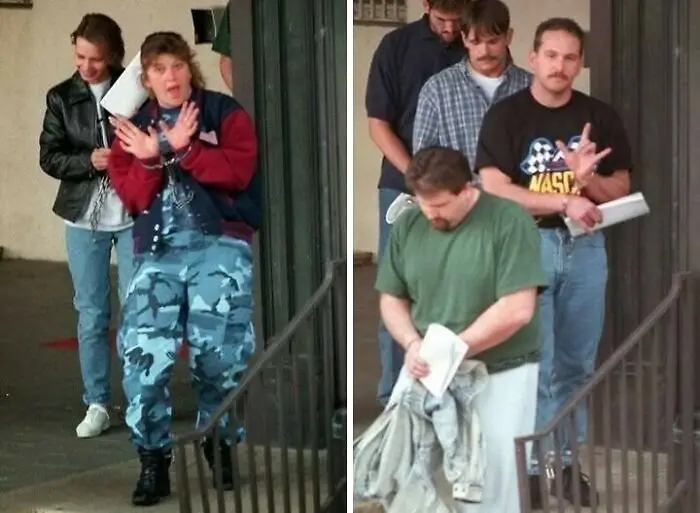
On this day in 1997, thieves stole $17.3 million from an armored car company's vault in Charlotte, North Carolina, in what was the second-largest cash robbery in U.S. history to date — but it quickly turned into a comedy of errors that ended with their capture. One thief walked into a bank and tried to deposit a large stack of bills that still had the company's band wrapped around it, while another thief asked a bank teller, "How much can I deposit before you have to report it to the feds?"
Report
29points
#40

When archaeologists in Norway recently received a message from a hiker about a possible ancient artifact that had emerged from the melting ice in the Jotunheim Mountains, they rushed into action. The weather forecast called for snow later that day, and they knew that if they waited too long, an invaluable piece of history could be lost forever. And when they arrived at the site, they were astonished to find an ancient leather sandal. They dated it to 300 C.E. and noted that it followed the fashion of sandals worn in the Roman Empire during that same time period. Researchers believe that it would have been worn with scraps of fabric or animal hide that were fashioned as primitive socks.
Report
28points