



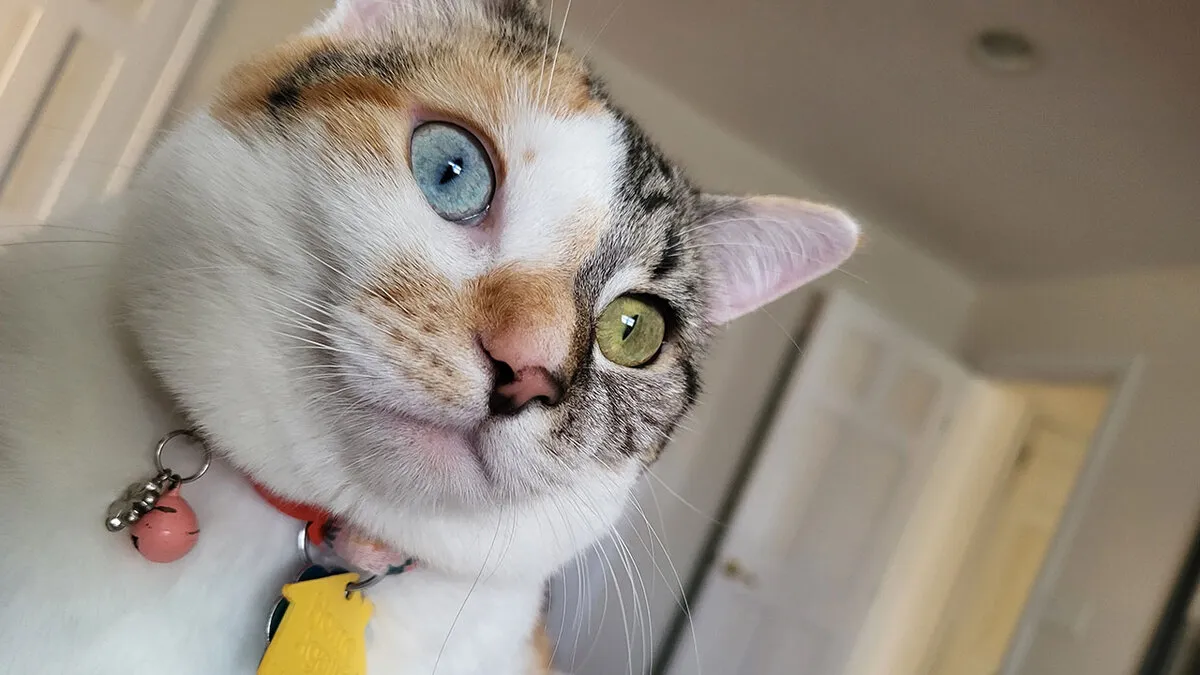

Some cats have unusual markings, others have striking eyes, and a lucky few seem to have won the genetic lottery. But Cleo, an adorable rescue cat with a remarkable combination of physical characteristics, might be one of the most unusual felines we’ve come across. At first glance, it’s her appearance that catches your attention. Her face features a striking division of orange, white, and dark tabby markings, while her eyes are two completely different colors: one bright blue and the other yellow-green. But as her family discovered, Cleo’s most fascinating traits go far beyond her appearance.
Her owners adopted Cleo from the North Shore Animal League of America in December 2025. While reviewing her veterinary records, they discovered something extraordinary. According to the shelter’s medical documentation, a blood test revealed that Cleo had two different cell populations: about 70% carried XX chromosomes, and 30% carried XY chromosomes.
Keep scrolling to meet Cleo and see the beautiful features that make this rescue kitty so extraordinary. We’d love to know which of her unusual characteristics catches your eye the most!
Meet Cleo, an extraordinary rescue cat whose unusual appearance is only part of her fascinating story
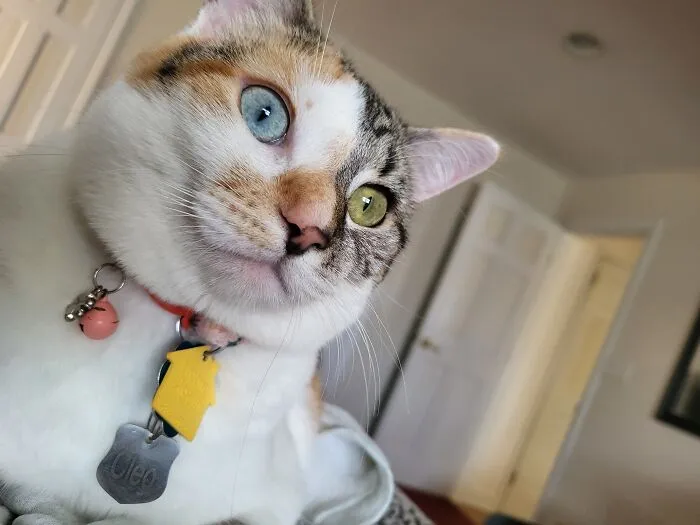
Her family adopted her from North Shore Animal League of America in December 2025
Normally associated with female and male development, respectively, these chromosome combinations don’t typically coexist in an animal’s blood. Cleo’s records also documented an intersex condition, meaning her reproductive anatomy had developed differently from what would ordinarily be expected.
The shelter noted that Cleo had male reproductive organs, which were removed during her sterilization procedure. Fortunately, veterinarians reported no urinary tract problems and did not anticipate long-term complications related to her condition.
One of Cleo's most striking features is her differently colored eyes, a condition known as complete heterochromia
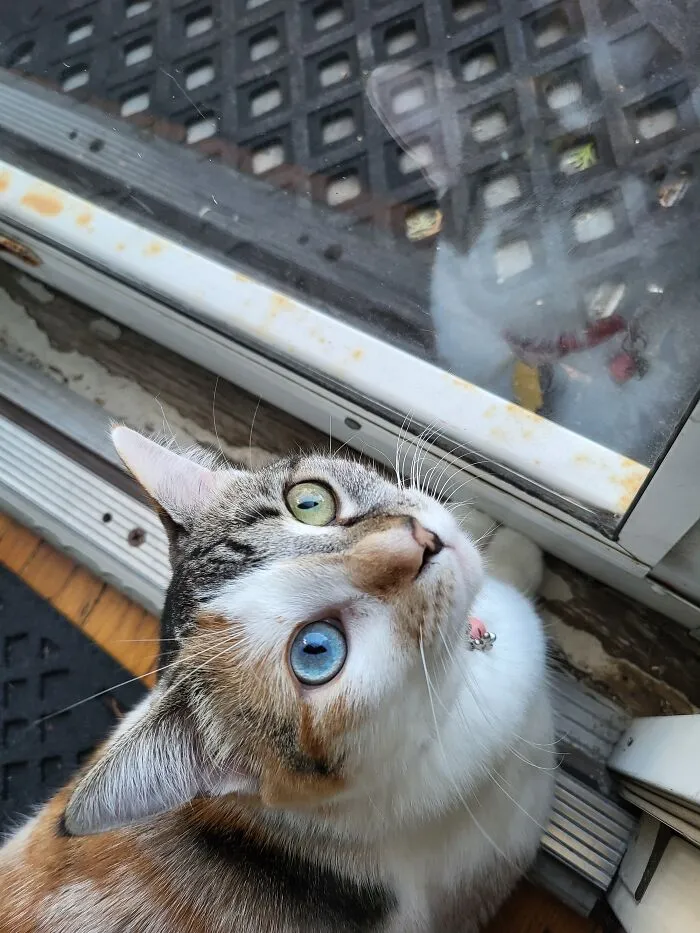
Her face also features a remarkable division between orange, white, and dark tabby markings
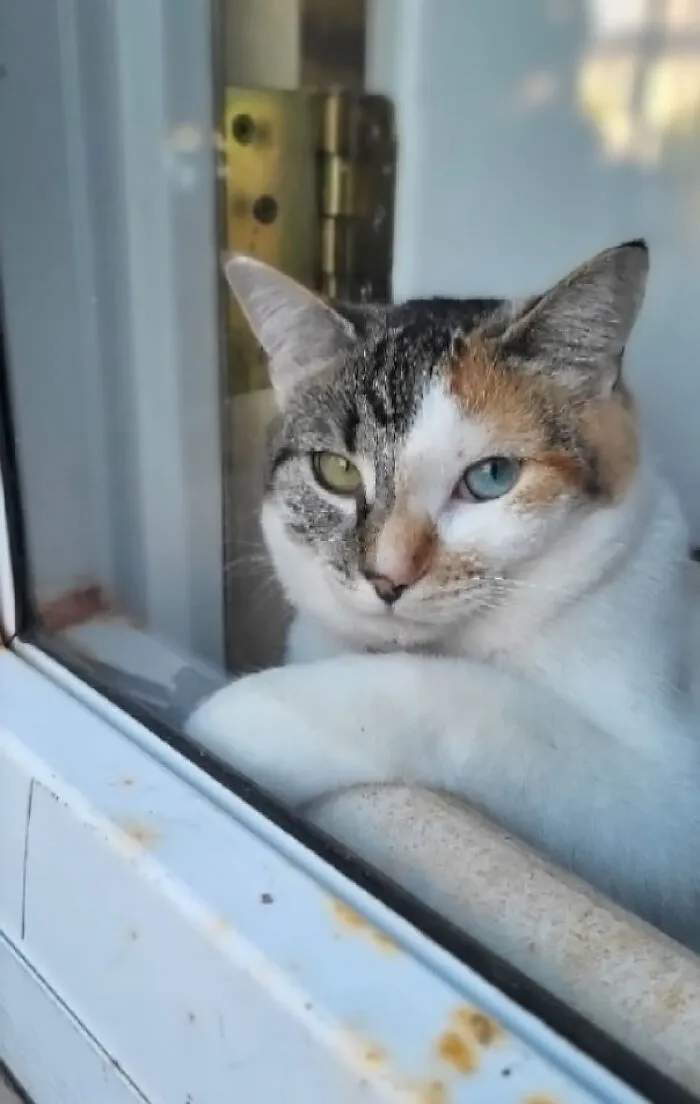
Her owners believe Cleo is a true chimera. In genetics, chimerism occurs when an individual contains cells originating from more than one fertilized egg. One way this can happen is when two very early embryos combine during development, resulting in a single animal carrying two distinct genetic cell populations.
However, Cleo’s veterinary paperwork also identifies other possible explanations, including blood-cell chimerism and mosaicism, a condition in which genetically different cells develop from the same fertilized egg. Further testing would be necessary to determine which process accounts for her results.
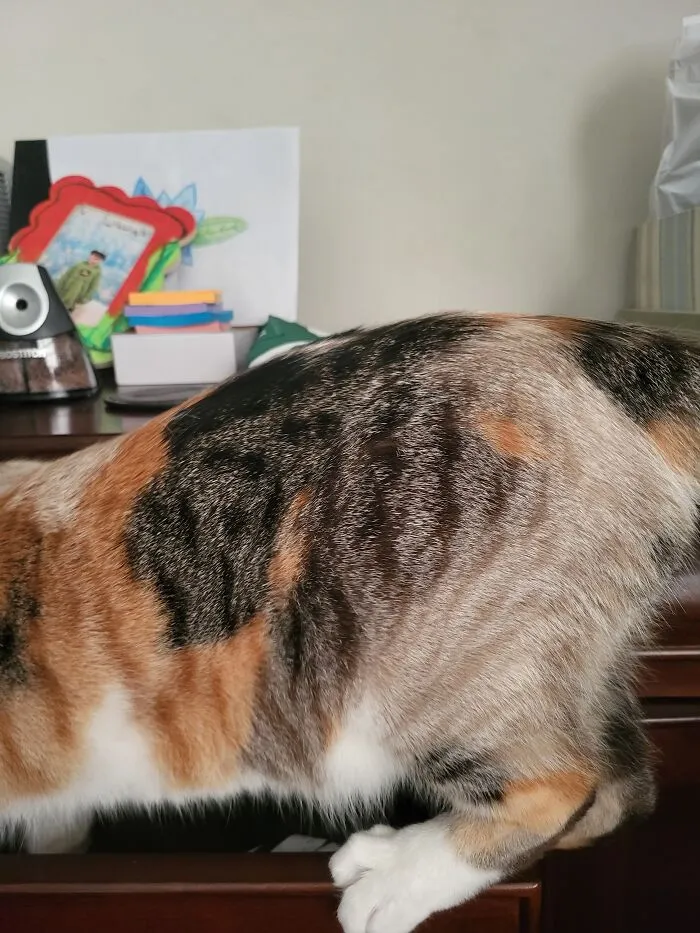
The unusual combination of colors and patterns continues across the rest of her body
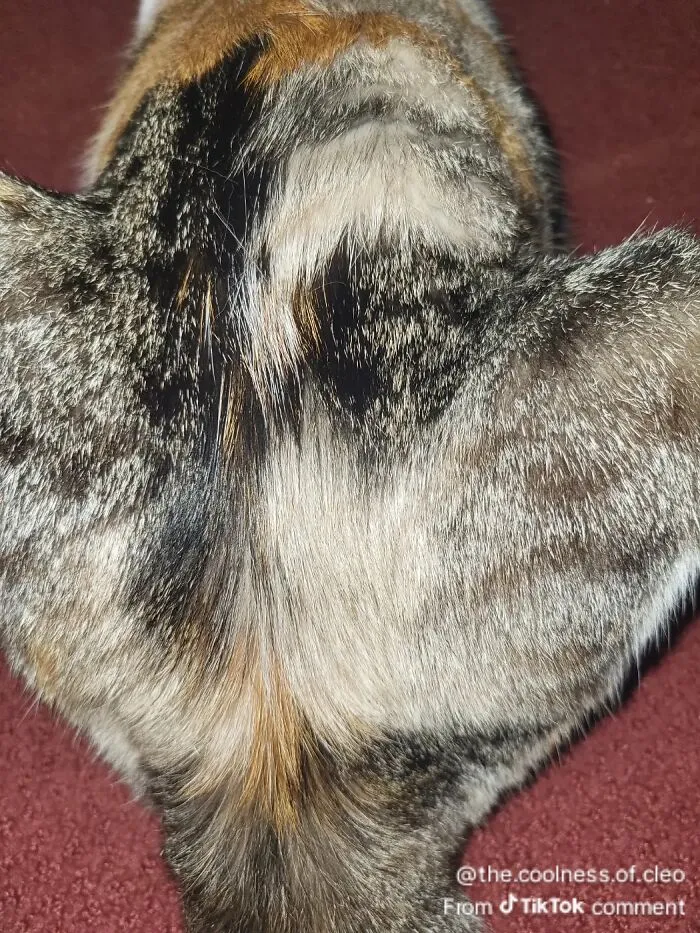
Her owners believe some of these distinctive markings could be linked to an additional genetic mutation
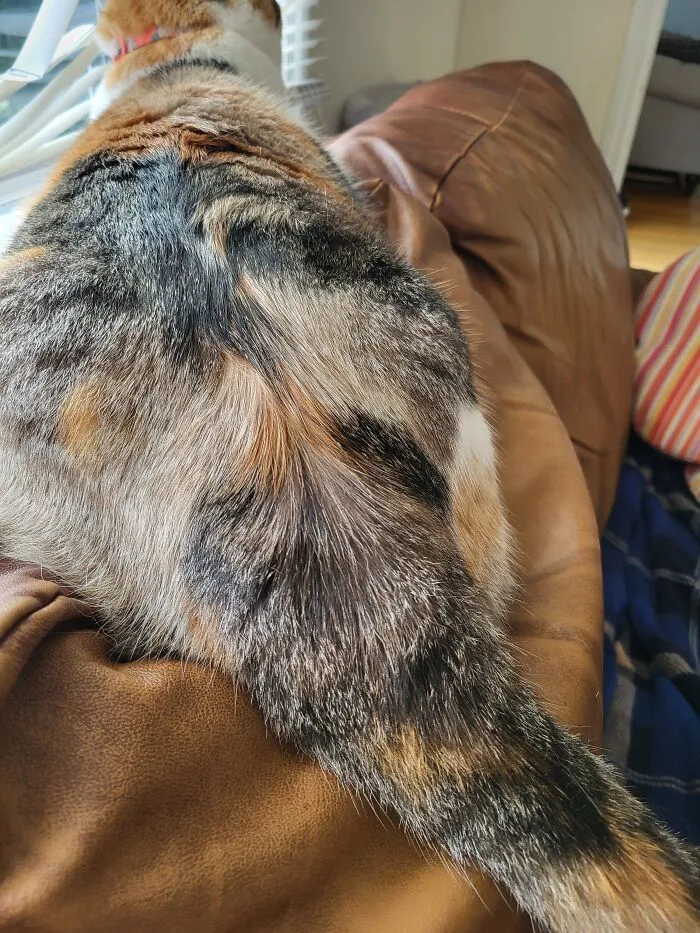
Interestingly, a cat’s appearance alone cannot establish whether it is a chimera. According to research published in Current Biology, the familiar orange-and-black patches of ordinary tortoiseshell and calico cats come from a natural process called X-chromosome inactivation. During early development, cells switch off one of their two X chromosomes, creating different areas of pigmentation.
This means that even a cat with a sharply divided face isn’t necessarily a chimera. Nevertheless, scientists have documented genuine feline chimerism. A 2026 study described an XX/XY chimera whose genetic characteristics were investigated through blood, hair follicles, and saliva samples.
A veterinary blood test revealed that approximately 70% of her tested cells carried XX chromosomes, while 30% carried XY chromosomes
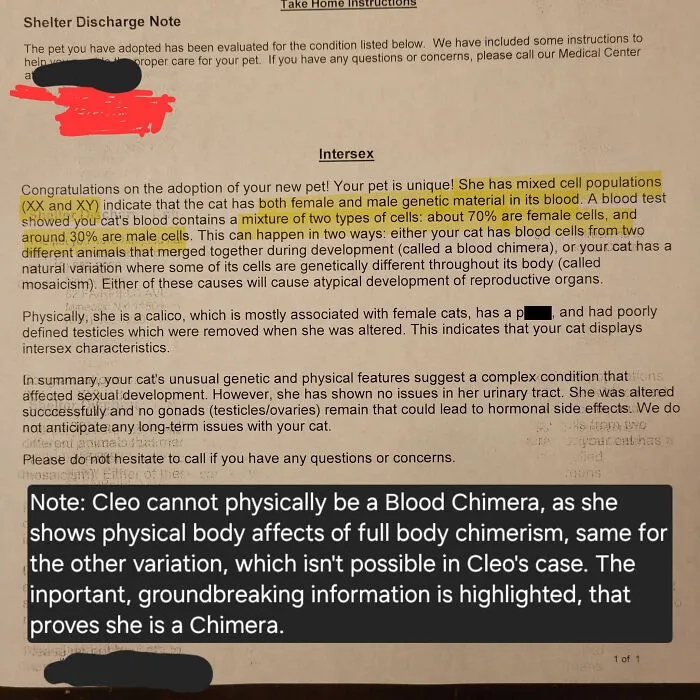
Her family believes Cleo is a rare genetic chimera, although further testing would be needed to determine exactly how her unusual genetics developed
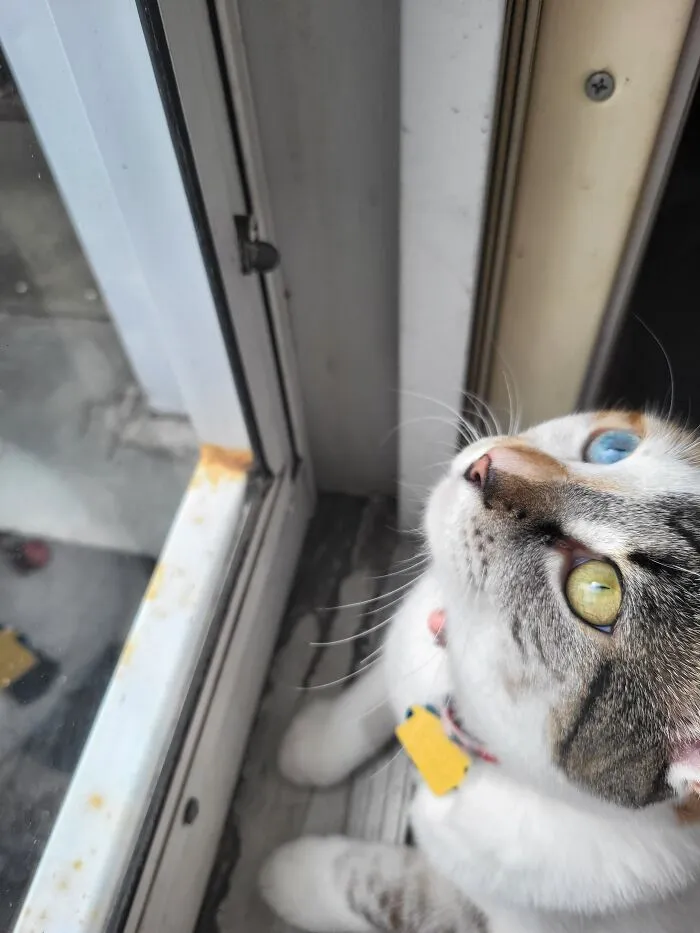
Cleo’s remarkable eyes have their own fascinating explanation. She has a condition known as complete heterochromia, which occurs when the two irises develop with different amounts of pigmentation. According to Cats Protection, this condition generally doesn’t affect a cat’s vision.
Her family also suspects that some of Cleo’s distinctive coat patterns could be influenced by a somatic mutation, a genetic change that occurs after conception. Although additional genetic testing hasn’t established this, it adds another interesting question to her already unusual story.
Regardless of how exactly rare Cleo's appearance and genetics are, she is one uniquely beautiful cat
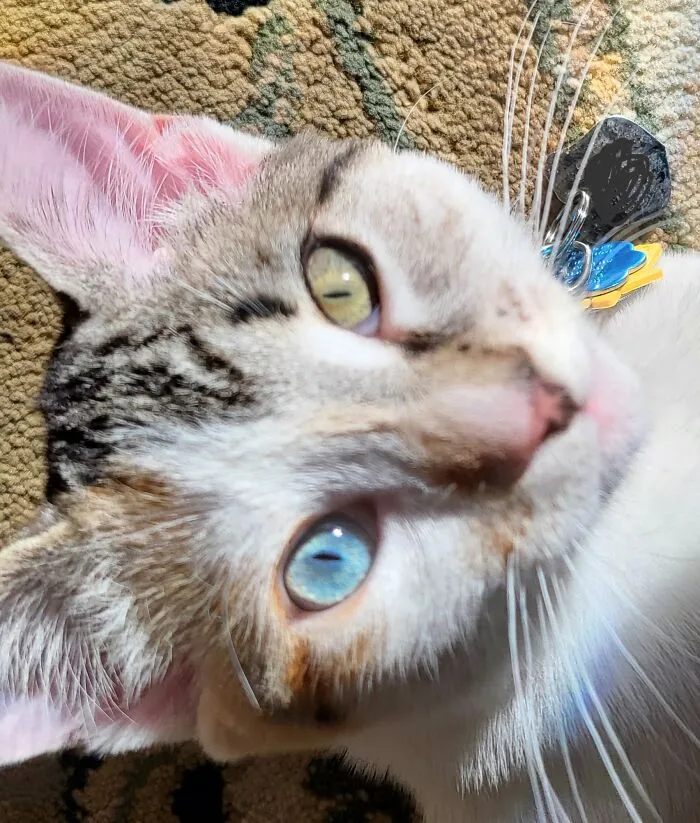
Cleo’s remarkable eyes have their own fascinating explanation. She has a condition known as complete heterochromia, which occurs when the two irises develop with different amounts of pigmentation. According to Cats Protection, this condition generally doesn’t affect a cat’s vision. Her family also suspects that some of Cleo’s distinctive coat patterns could be influenced by a somatic mutation, a genetic change that occurs after conception. Although additional genetic testing hasn’t established this, it adds another interesting question to her already unusual story.
Exactly how rare Cleo’s particular combination of traits might be remains difficult to calculate. Genuine feline chimerism has appeared in veterinary case reports, but there isn’t enough population-wide genetic information to establish which living cat is the rarest. What makes Cleo’s story particularly special, however, is that her genetic differences were discovered almost by accident, after she had already found her forever home. And while there may still be some mysteries hidden in her DNA, one thing is certain: Cleo is an extraordinary little cat whose family couldn’t be happier to have found her.
“We are so excited to share Cleo with the world!” her owners told Bored Panda.

