



Psychology is the scientific study of the mind, behavior and human experience. Diving into this field can help us better understand ourselves and everyone else that we encounter. But it’s an extremely complex discipline. So if you’re looking to learn more about psychology in an easy, digestible way, you’ve come to the right place.
We took a trip to Psychology Posts on Instagram and gathered their most fascinating fun facts below. Hopefully, these images will teach you something new and give you a fresh perspective on how humans work. Enjoy scrolling through, and be sure to upvote the posts that you think everyone could benefit from reading!
#41
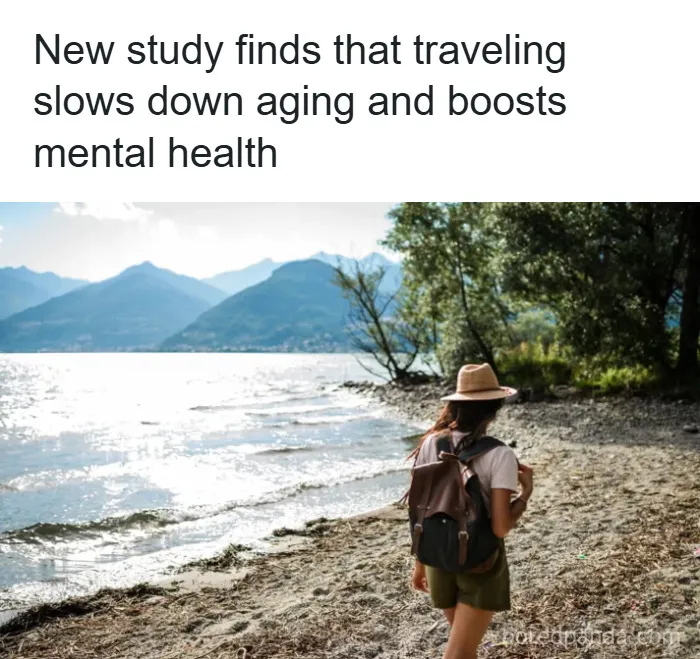
By immersing yourself in new environments, cultures, languages, and experiences, you’re giving your brain a powerful workout.
These new experiences create fresh neural pathways, helping to maintain brain plasticity - the brain’s ability to form new connections, which is key for maintaining memory and mental sharpness as we age.
Report
15points

#43
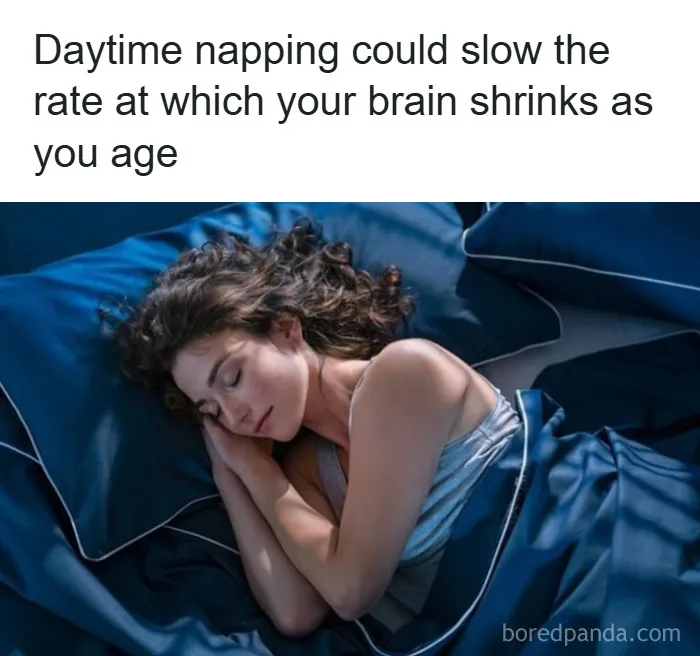
The study analysed data from people aged 40 to 69 and found a causal link between habitual napping and larger total brain volume - a marker of good brain health linked to a lower risk of dementia and other diseases.
While the researchers did not have information on nap duration, earlier studies suggest that naps of 30 minutes or less provide the best short-term cognitive benefits, and napping earlier in the day is less likely to disrupt night-time sleep.
Report
14points
#44

Most people think strict parenting produces better-behaved kids.
However, research studies on discipline consistently show that strict, or authoritarian, child-raising actually produces kids with lower self esteem who behave worse than other kids, and therefore get punished more. Strict parenting actually tends to create behavior problems in children.
Report
14points

#46

When we cry, these stress-related substances are released, which may contribute to a sense of relief and relaxation.
Beyond hormone regulation, crying activates the parasympathetic nervous system (PNS), which helps restore the body to a calmer state after experiencing stress.
This activation slows the heart rate, promotes relaxation, and enhances mood recovery.
Some studies suggest that crying also increases the production of endorphins and oxytocin, which contribute to feelings of comfort and well-being.
Beyond hormone regulation, crying activates the parasympathetic nervous system (PNS), which helps restore the body to a calmer state after experiencing stress.
This activation slows the heart rate, promotes relaxation, and enhances mood recovery.
Some studies suggest that crying also increases the production of endorphins and oxytocin, which contribute to feelings of comfort and well-being.
Report
14points
#47
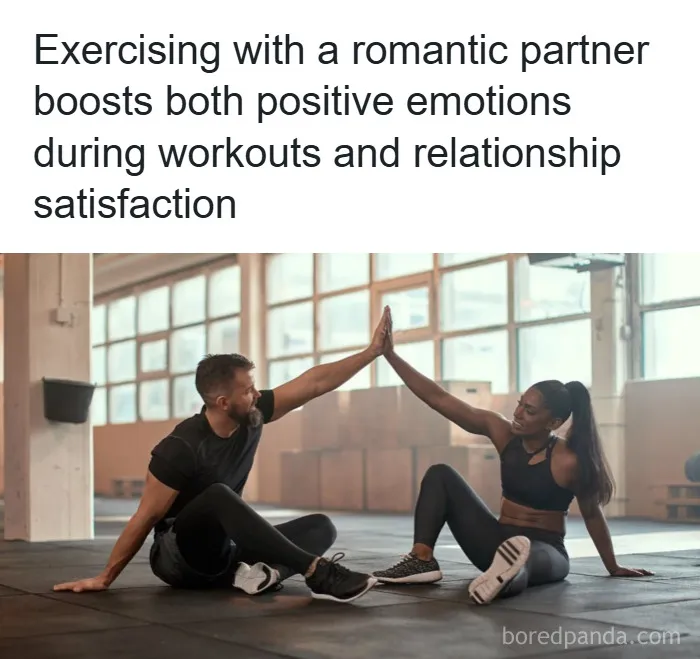
Research shows that people are more successful at exercising if they do so together with their romantic partner.
Multilevel models showed that on days when people exercised with their romantic partner, they experienced higher positive affect during exercise, higher daily positive affect, and were more satisfied with their relationship compared to days when they exercised without their partner.
Report
11points
#48
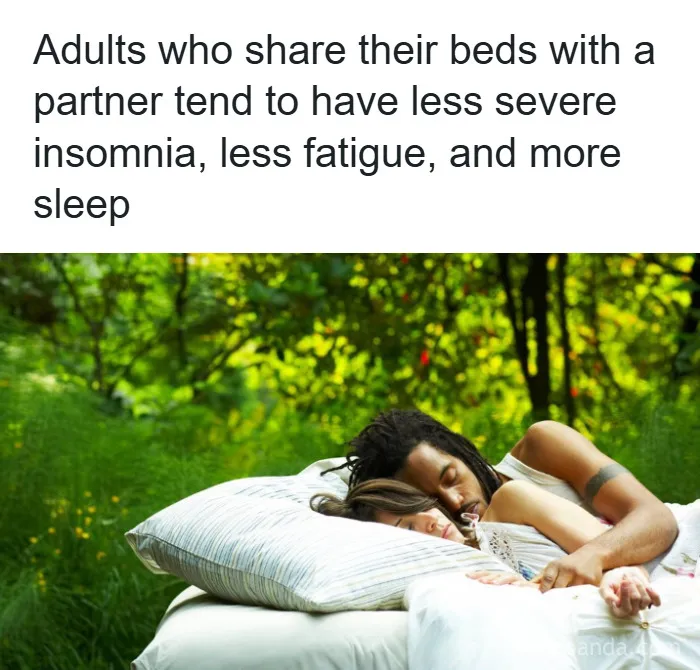
Young healthy heterosexual couples underwent sleep-lab-based sleep study of two sleeping arrangements: individual sleep and co-sleep.
Data were analyzed comparing co-sleep vs. individual sleep. Interaction effects of the sleeping arrangement with gender, chronotype, or relationship characteristics were moreover tested.
As compared to sleeping individually, co-sleeping was associated with about 10% more REM sleep, less fragmented REM sleep, longer undisturbed REM fragments, and more limb movements.
Report
11points
#49
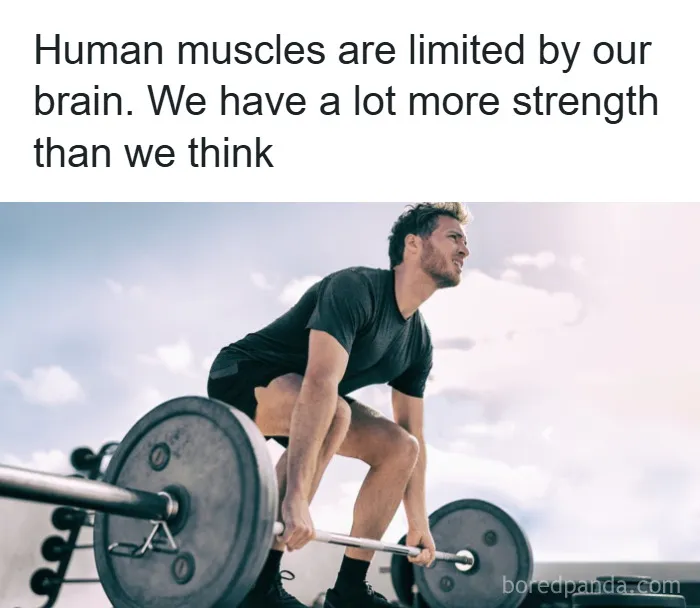
Our movements are controlled by the contraction of muscles through signals relayed by nerves. When going about our daily lives, our bodies tend to use whatever the least amount is of muscle-and-nerve "motor units" to perform an action.
Estimates vary, but researchers have pegged the amount of muscle mass recruited during maximal exercise at around 60%; even elite athletes who have trained to get more output from their musculature might only harness around 80% of their theoretical strength.
Why do we keep so much in reserve? Safety, essentially. If we were to exert our muscles to or beyond their absolute maximum, we could tear muscle tissue, ligaments, tendons and break bones, leaving us in dire straits.
"Our brains are always trying to make sure we don't get pushed too far to where we actually damage something," says Zehr. "If you actually used all the possible force or all the possible energy you could to complete exhaustion, you'd wind up getting into a situation where you might die."
Report
10points