






History classes in school primarily tackle significant events in a particular country or the life stories of renowned figures throughout time. And because there is so much ground to cover, it would be impossible to learn all about them.
That’s where social media pages like Historyfeels come in. With compelling photos and equally captivating backstories about pop culture icons, everyday people, and powerful moments that left a mark over time, these posts may enliven you, especially if you consider yourself a history buff.
You likely won’t often see many of these tidbits of information discussed in classrooms. Scroll through and maybe learn something new today.
#41
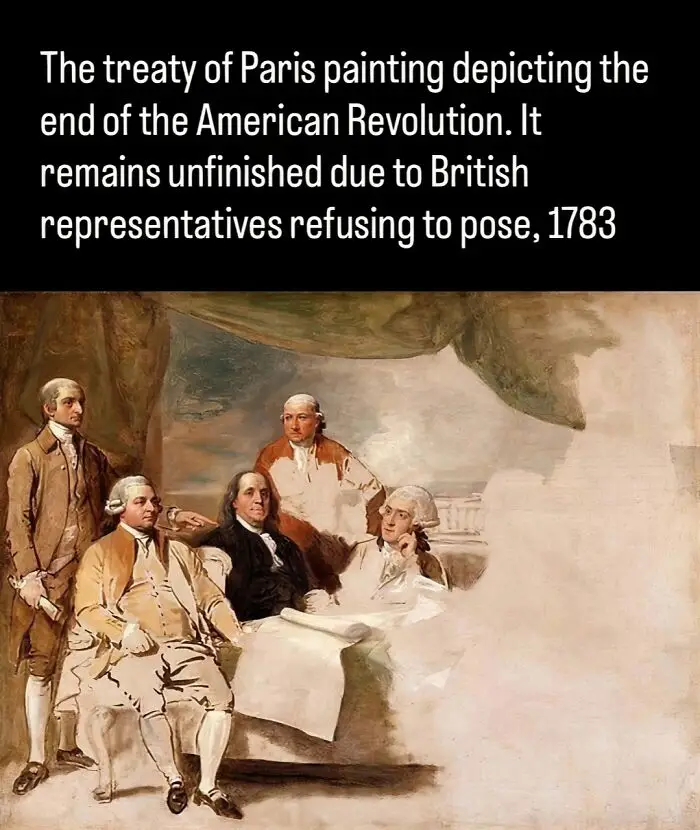
It depicts the American delegation, John Jay, John Adams, Benjamin Franklin, Henry Laurens, and William Temple Franklin, gathered in Paris to negotiate peace terms. However, the British representatives, led by Richard Oswald, refused to pose, embarrassed by the defeat. As a result, the right half of the canvas remains blank. The treaty, signed on September 3, 1783, officially recognized American independence and ceded territory east of the Mississippi River to the United States. West, a respected painter in both Britain and America, never completed the piece, leaving it a symbolic reminder of the tension and imbalance that lingered even in peacetime.
Report
17points
#42
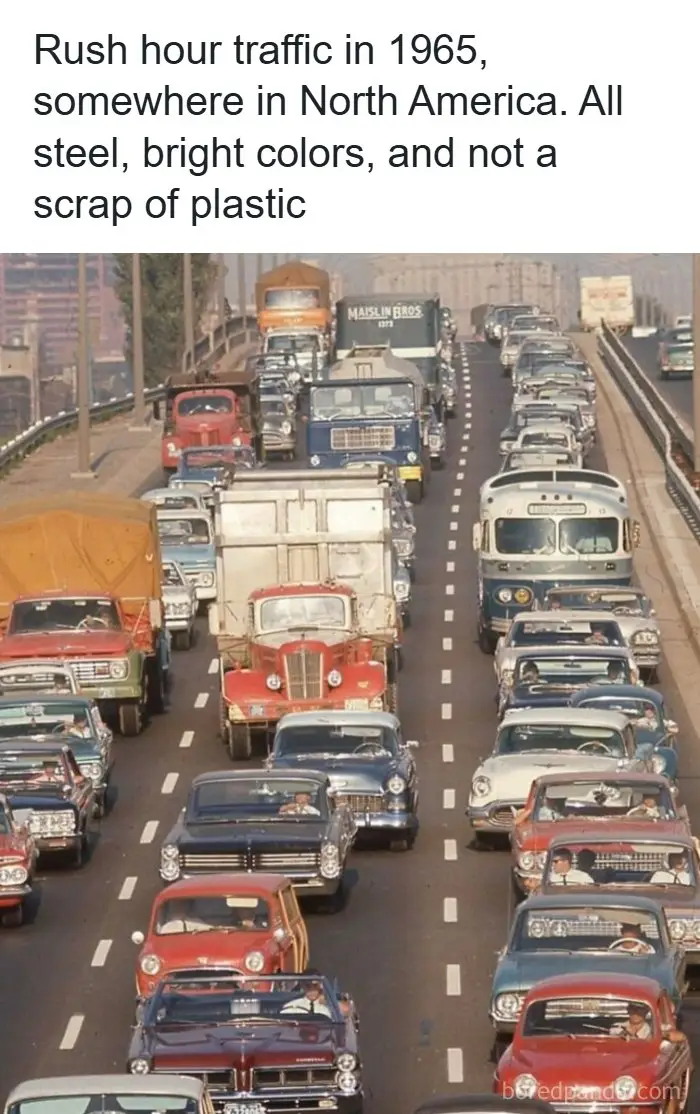
Photo by Frank Grant. This photograph from 1965 captures the essence of mid-20th-century motoring in North America. The scene, showing a packed highway during rush hour, is filled with an incredible variety of cars, buses, and trucks, all made of heavy steel and painted in bold, distinctive colors. It was a time before plastic trim, lightweight materials, and aerodynamic designs dominated the automotive industry.
The vehicles seen here reflect an era when American car culture was at its height. Families prized their big, chrome-covered sedans; pickup trucks were becoming staples of suburban life; and buses and delivery trucks symbolized the growing reach of urban and commercial infrastructure. Each car had its own unique look, often easily distinguishable from the next—something that stands in stark contrast to the more uniform designs of many modern vehicles.
The mid-1960s was also a time of immense growth for highways, with the U.S. interstate system expanding rapidly after its creation in the 1950s. As suburbs flourished, daily commuting became a central part of American life. This photo freezes one such moment in time, an everyday rush hour that now feels like a colorful snapshot of a bygone era, when cars were heavier, louder, and proudly built to last.
Report
16points
#43
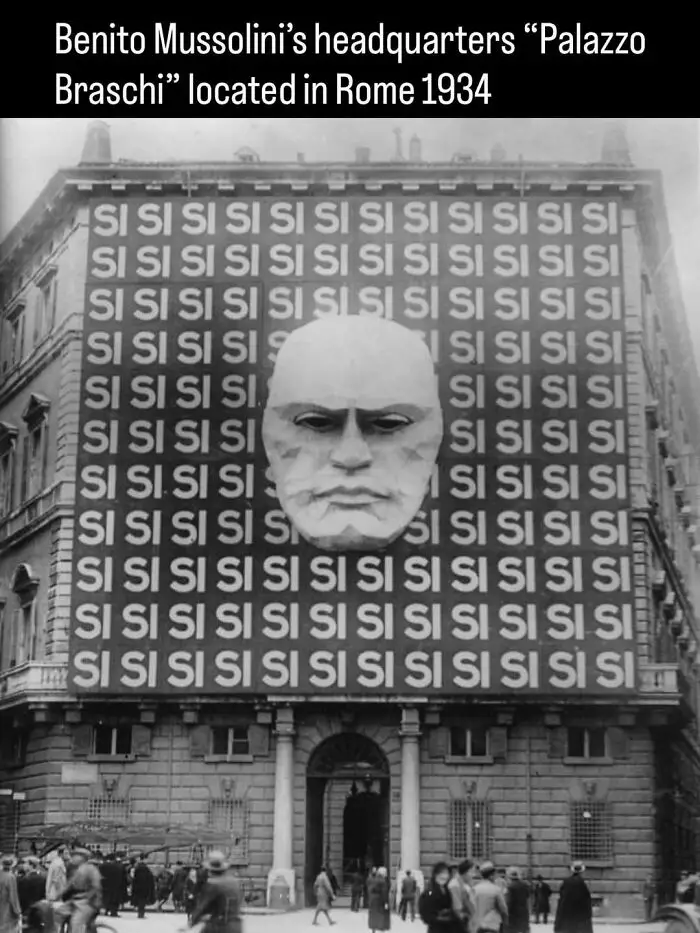
This image shows the Palazzo Braschi in Rome during the height of Benito Mussolini’s regime in the 1930s. Draped across the building is a massive propaganda display featuring a giant sculpted face of Mussolini and the word “SÌ” (“YES” in Italian) repeated in bold letters. The display was part of a referendum campaign in 1934 where Italians were asked to approve Mussolini’s one-party rule. Voters were presented with a single ballot question, a “yes” vote was effectively a pledge of loyalty to the regime. According to official records, the result was overwhelmingly in favor, though historians widely regard it as a sham election in a climate of fear and repression. The sheer scale of the display symbolizes the cult of personality Mussolini built around himself, one of the defining features of 20th-century totalitarianism.
Report
15points
#44
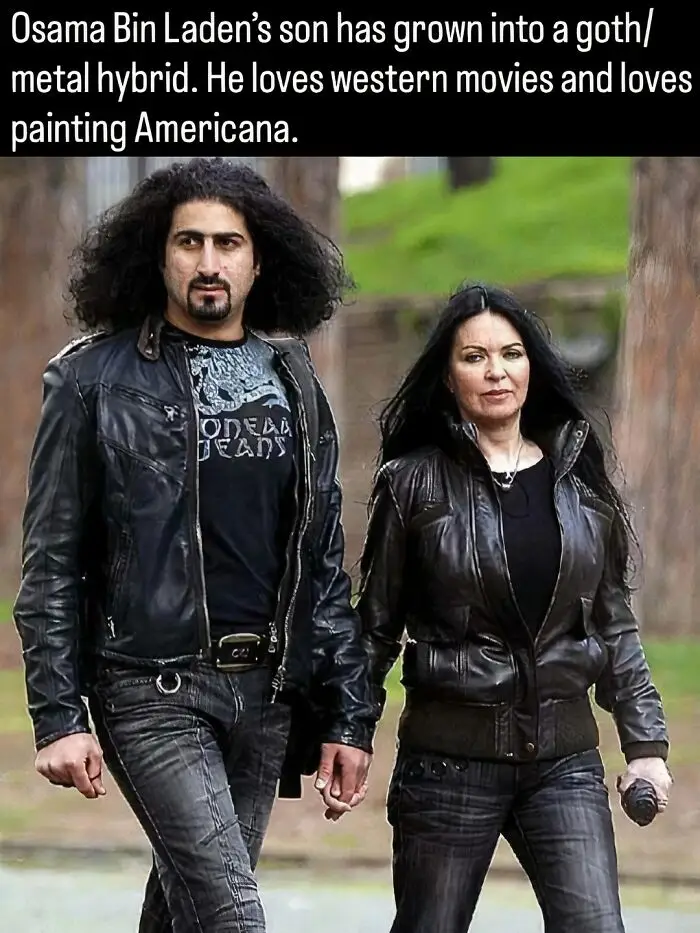
This was two weeks before the country’s transfer of power from Bush to Obama. Bush, a Republican, and Obama, a Democrat, met privately for about 30 minutes ahead of the wider gathering. Then former Presidents Jimmy Carter and Bill Clinton, both Democrats, and Republican George H.W. Bush, the current president’s father, met Bush and Obama in the Oval Office for a photo session with journalists. It was the first such gathering of former U.S. heads of state at the White House in 27 years. “I want to thank the president-elect for joining the ex-presidents for lunch,” the younger Bush told Obama, who stood next to him, nodding. “One message that I have and I think we all share is that we want you to succeed. Whether we’re Democrat or Republican, we care deeply about this country,” Bush said.
Report
14points
#45
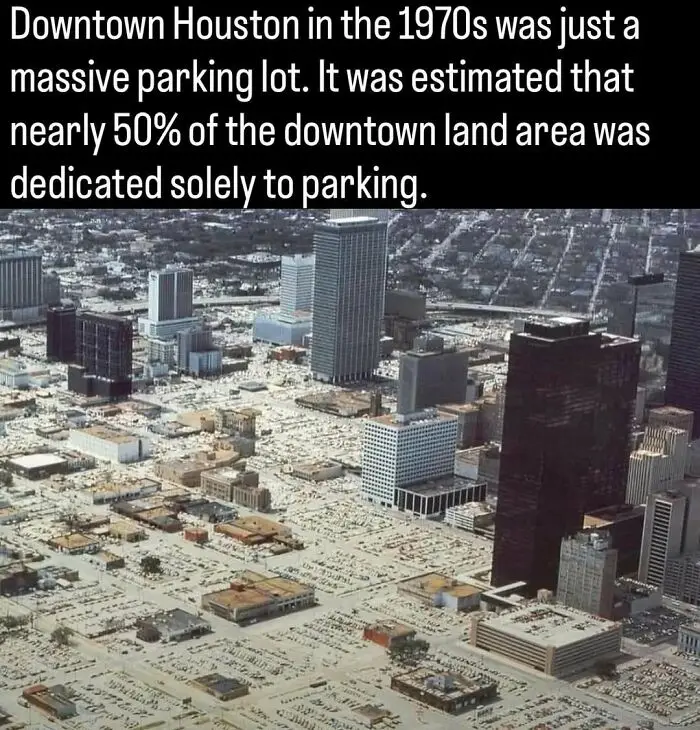
In fact, there were so many lots that some blocks had more parking spaces than the buildings had workers, earning the city the unofficial nickname “The Concrete Prairie.”
This image captures a surreal urban landscape, towering office buildings rising from a desert of concrete, where cars far outnumbered pedestrians.
At the time, Houston’s rapid expansion and car-centric culture meant city planning heavily prioritized vehicle access over walkability or public transit.
The result was a downtown core where blocks that could have held parks, housing, or storefronts were instead flattened for parking. It reflected the era’s philosophy: growth at all costs, with little concern for urban density or mixed-use development.
Though it gave downtown workers easy parking, it left the area feeling lifeless after hours. Today, many of those lots have since been developed into residential towers, green spaces, and cultural centers, but this photo remains a powerful snapshot of how dramatically Houston has transformed.
Report
14points
#46

James Cameron’s Titanic (1997) made history in more ways than one. Beyond its record-breaking box office run and 11 Oscar wins, it also became the first film to earn Academy Award nominations for two different actors playing the same role.
Kate Winslet was nominated for Best Actress for her portrayal of young Rose DeWitt Bukater, while Gloria Stuart, who played the older Rose recounting the story decades later, was nominated for Best Supporting Actress.
It highlighted the film’s unique storytelling structure, bridging past and present through Rose’s memories. Winslet was only 22 at the time, one of the youngest Best Actress nominees ever, while Stuart, at 87, became the oldest acting nominee in Oscar history.
Fun Fact: The other time it’s happened? Also Kate Winslet… Her and Judi Dench both received Oscar nominations for playing novelist Iris Murdoch in the 2001 film Iris.
Report
13points
#47
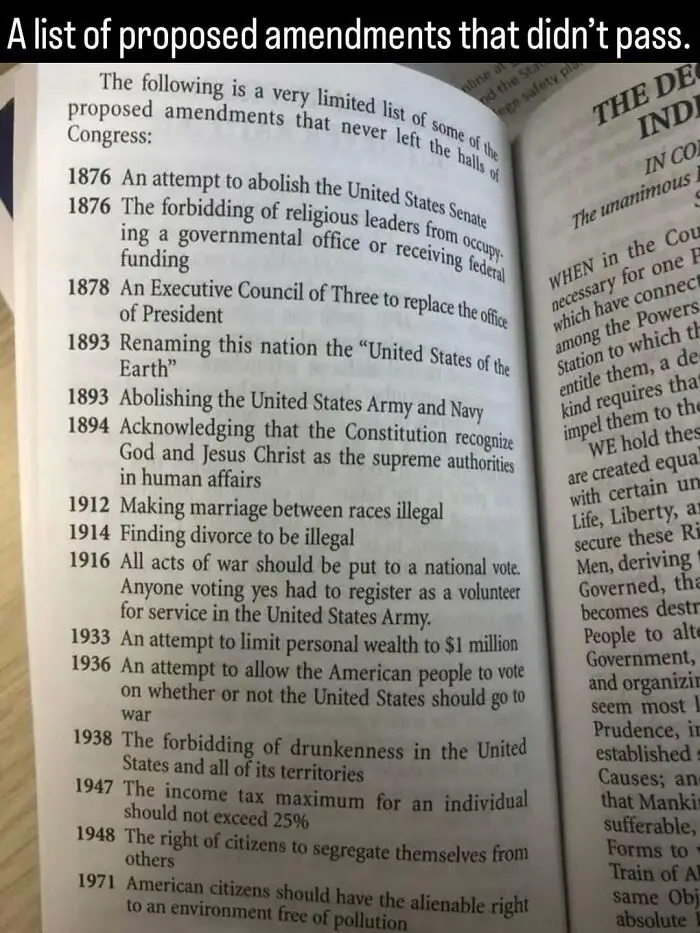
Over the years, Americans have proposed some unusual constitutional amendments, many of which never made it past Congress. In 1810, the Titles of Nobility Amendment would have stripped U.S. citizenship from anyone who accepted a foreign title. In 1861, the Corwin Amendment tried to make slavery permanently legal, a last-ditch effort to prevent the Civil War. Others were more eccentric: an 1878 proposal sought to replace the presidency with an “Executive Council of Three,” while in 1893 another would have renamed the country the United States of Earth. In 1933, one amendment aimed to cap personal wealth at $1 million; another in 1938 sought to ban drunkenness nationwide. Some came close to reality, like the 1924 Child Labor Amendment or the still-pending Equal Rights Amendment. Which ones should have passed?
Report
13points
#48
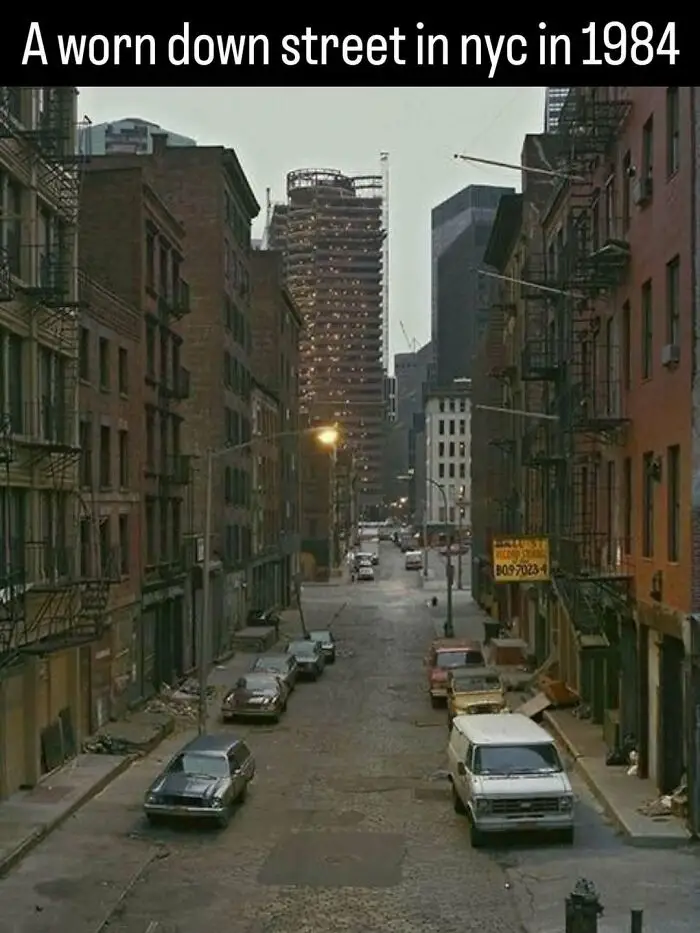
This photo captures a worn-down street in New York City in 1984, taken from the on-ramp of the Brooklyn Bridge facing south on Water Street. At the time, this area was close to the financial district but still carried the grit of pre-redevelopment Manhattan. The sign on the right advertises a record storage company, using the old phone number format where the first two digits were letters (“BO”), and the dash at the end indicated multiple lines before call waiting became standard. No area code appears, since all five boroughs shared 212 until 718 was introduced later in 1984. The building under construction in the background is One Seaport Plaza, now a well-known downtown landmark. Many of the foreground buildings still exist, including the Peck Slip School. The analytics show the number one city of historyfeels followers is New York City so New Yorkers please feel free to add additional context..
Report
12points
#49
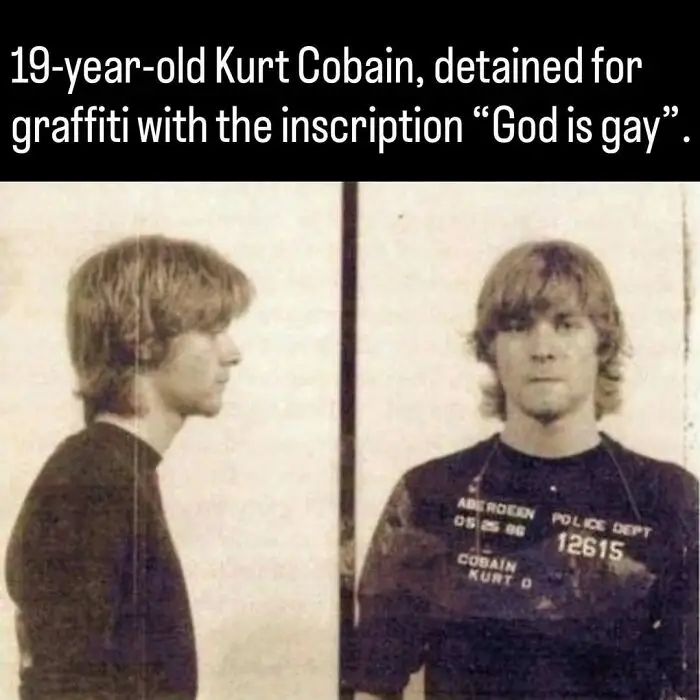
In May 1986, a 19-year-old Kurt Cobain was arrested in his hometown of Aberdeen, Washington, for spray-painting graffiti on public property. Among his tags was the provocative phrase “God is gay,” alongside other rebellious slogans that reflected both his disdain for authority and his desire to challenge societal norms. Cobain, who would later become the frontman of Nirvana and a voice of a generation, was already displaying the anti-establishment tendencies and raw honesty that would define his music. The arrest led to a mugshot that has since become a piece of rock history. Cobain was charged with vandalism and briefly jailed before being released. His punishment was relatively minor, he paid a small fine and was placed on probation.
Report
12points
#50
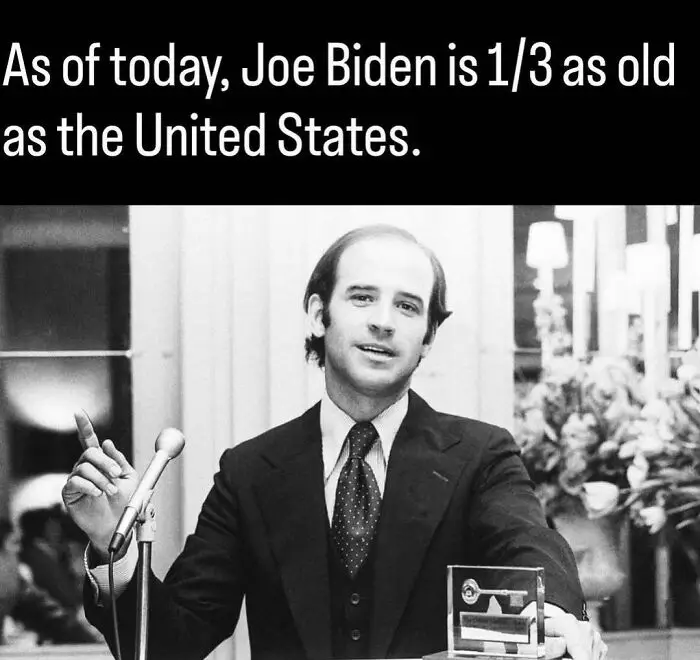
Here is the Math: The United States was founded on July 4, 1776. From that date to January 27, 2026, the nation has existed for 91,152 days. Joe Biden was born on November 20, 1942. From his birth to January 27, 2026, he has lived 30,384 days. When you divide those numbers: 30,384 ÷ 91,152 = 0.3333 In other words, Joe Biden has been alive for exactly one third of the United States’ existence. Biden entered national politics at an unusually young age, becoming one of the youngest U.S. senators ever elected when he won a Delaware Senate seat in 1972 at just 29 years old. Added fact: Biden is the only U.S. president whose lifespan overlaps with nearly every major geopolitical era of the modern United States, from World War II to the AI age.
Report
11points
#51

The only confirmed record located was a Veterans Legacy Memorial page for Schmuck. According to the listing, he passed away in 2007, meaning he obviously survived the war.
The page also showed that he was awarded the Purple Heart, a decoration given to service members wounded or lost their lives as a result of enemy action.
The 173rd Airborne earned the nickname “The Sky Soldiers” and made the only U.S. combat parachute jump of the Vietnam War during Operation Junction City in 1967. It was a massive airborne attack involving nearly 1,000 paratroopers, the largest U.S. airborne operation since World War II. A first combat jump wasn’t symbolic, it meant descending into contested jungle terrain, often under the threat of small-arms fire, landing with 60–100 pounds of gear, and moving immediately into operations.
Note: The average U.S. infantryman in Vietnam was just 22 years old. More than 2.7 million Americans served in the war; over 58,000 perished. In 1967 alone, U.S. troop strength in Vietnam surged past 485,000 as combat operations intensified.
Added fact: The 173rd Airborne Brigade earned 14 campaign streamers in Vietnam and was awarded a Presidential Unit Citation for extraordinary heroism in combat.
Report
10points