






It’s easy to feel like the entire world is just a non-stop loop of heavy headlines, political noise, and stressful global conflict. But staying informed shouldn’t have to mean constantly draining your mental battery.
You should also know that an incredible 11-year-old recently logged 100 volunteer hours simply reading stories to shelter animals to keep them calm. Or that a Golden Retriever once decided to follow a Google Maps snapper around, casually photobombing over 1,000 street-view photos.
For a much-needed dose of positivity, we took a deep dive into @WolfofX — an account with some of the most heartwarming stories from around the globe.
Stop the doomscrolling and read these wholesome wins and acts of pure kindness that will most likely restore your faith in humanity.
#41
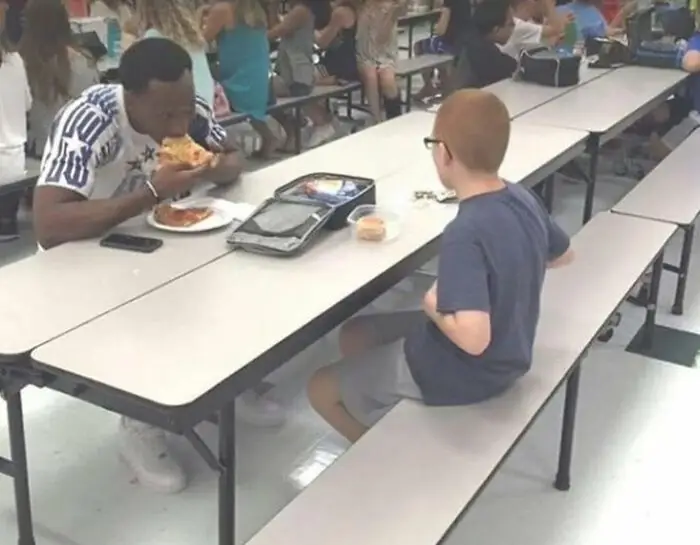
A simple act of kindness by Florida State football player Travis Rudolph touched countless hearts when he noticed a young boy sitting alone during a team visit to a middle school.
Without being asked, Rudolph chose to sit beside the boy, share lunch with him, and spend time talking with him.
The boy's mother later revealed that her son is autistic and often struggles to make friends, saying the gesture meant the world to him and inspired her to write a heartfelt thank-you letter.
A photograph of the moment quickly spread, becoming a powerful reminder that even a few minutes of compassion and inclusion can leave a lasting impact on someone's life.
Report
33points
#42
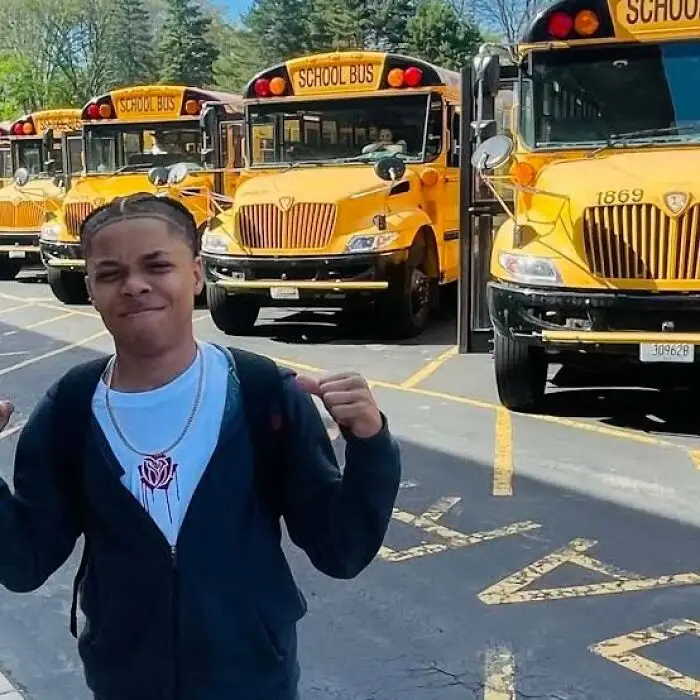
On April 24, 2024, 14 year old Acie Holland III was riding home from Glen Hills Middle School in Glendale, Wisconsin, when he noticed something wasn't right. The school bus had passed his usual stop, and the driver suddenly slumped over the steering wheel after losing consciousness.
As the bus drifted into oncoming traffic, Acie didn't freeze.
He ran to the front, grabbed the steering wheel, pulled the driver's foot off the accelerator, pressed the brakes, and guided the bus safely to the curb. Then he told another student to call 911 before running to get his grandmother, a nurse, who helped until emergency crews arrived.
There were 14 other students on board that afternoon. Every one of them made it home safely because a teenager made a life changing decision in a matter of seconds.
Later, Acie said the experience made him feel proud, more confident, and braver. His school recognized him for his courage, but the people who were on that bus will always remember him for something much bigger.
On an ordinary ride home from school, a 14 year old quietly became the reason fifteen families got to see their children again that day.
Report
33points
#43
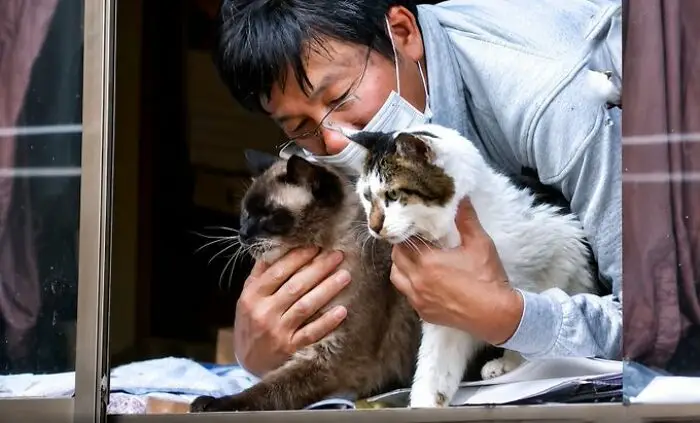
A Japanese man named Sakae Kato has dedicated his life caring for the animals that were abandoned after the Fukushima Daiichi nuclear disaster.
The 57-year-old spends around $7,000 a month taking care of the animals, and he has been doing this for the last ten years.
When asked about why he stayed behind in the contaminated zone, he said, “I want to make sure I am here to take care of the last one. After that I want to die, whether that be a day or hour later.”
Report
32points
#44

Their dog hasn't eaten well since they brought their baby home - dog kept taking food into the living room and leaving it there. Someone sugg- ested the dog might be worried the baby isn't visibly eating, so is "feeding" the baby. They tried giving the baby a bowl of food at the same time.
It worked!
It worked!
Report
32points
#45
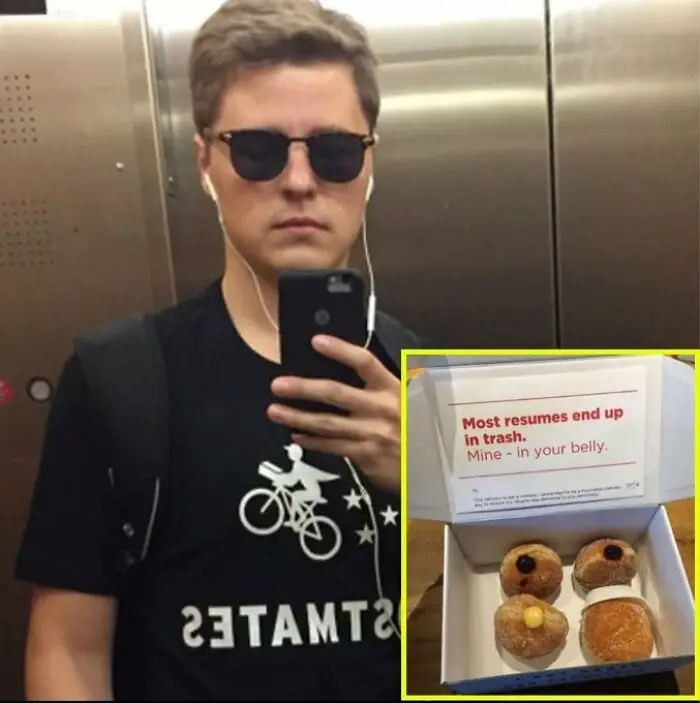
In 2016, 25-year-old Lukas Yla moved from Lithuania to San Francisco looking for a job in marketing.
He knew his résumé would be competing with hundreds of others, so instead of simply emailing it, he bought boxes of donuts.
Inside each box, he placed his résumé with a message.
“Most resumes end up in trash. Mine — in your belly.”
Then he dressed like a Postmates delivery driver and personally walked into offices around the San Francisco Bay Area, delivering the boxes directly to people involved in hiring.
He delivered them to 40 companies.
The unusual approach worked. Those 40 deliveries reportedly led to 10 job interviews, and even caught the attention of Postmates itself after the company learned what he had done.
The donuts didn't prove he was qualified for a marketing job. They simply gave him the chance to be noticed.
And for someone trying to work in marketing, turning his own job search into a campaign was already a pretty convincing introduction.
Report
27points
#46
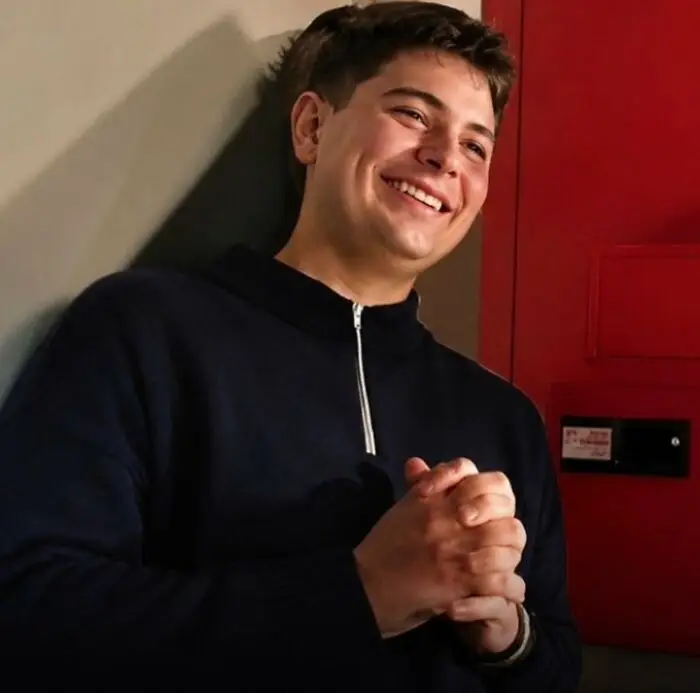
Just after midnight on May 2, 2024, a young man named Chris made a call to 911 in East Boston.
There was no fire. No accident. No crime.
It was his 25th birthday, and he simply wanted someone to wish him a happy birthday.
Boston Police Officers Israel Bracho and Franklin Ortiz had just begun their midnight shift when they were sent to check on him. At first, they weren't sure what to expect. But once they realized Chris was serious, they decided they couldn't show up empty handed.
On the way, they stopped and bought a banana nut muffin and a pack of colorful birthday candles.
Around 12:40 a.m., the officers arrived at Chris's home.
Chris answered the door and confirmed that he had just turned 25. Then he invited them inside.
The officers placed the candles into the muffin and lit them. Standing together in his home in the middle of the night, two police officers sang Happy Birthday while Chris smiled and blew out the candles.
It wasn't a big party. There was no elaborate cake or room full of guests.
Just a muffin, a few candles and two officers who decided a strange 911 call deserved a little kindness.
Chris thanked them, and police later said he told them they had made his day.
Officer Bracho explained why they did it simply. Everyone deserves to feel special on their birthday.
What began as an unusual call to 911 ended with Chris no longer celebrating his 25th birthday by himself.
Report
27points
#47

For years, John Unger would carry his aging dog into the cold waters of Lake Superior and simply hold him there.
The dog's name was Schoep.
John had adopted the shepherd mix when he was young, and they had spent nearly two decades together. By 2012, Schoep was about 19 years old. Age had caught up with him. Arthritis made his joints ache, and some days even resting comfortably was difficult.
But John had discovered something about the water.
When he supported Schoep in the lake, the buoyancy took pressure off his aching body. Schoep, who wasn't particularly fond of swimming, didn't have to swim at all. He could simply float in John's arms.
And sometimes, he became so comfortable that he fell asleep against his shoulder.
In July 2012, John feared their time together might be running out. He asked his photographer friend Hannah Stonehouse Hudson to take some photographs of them.
On July 31, she met John and Schoep at Lake Superior.
As John stood in the water holding him, Schoep closed his eyes and drifted to sleep. Hannah quietly captured the moment.
She shared the photograph on her photography Facebook page the following day.
Within days, millions of people had seen it.
Then strangers began asking how they could help.
People contributed toward Schoep's veterinary care, and an anonymous donor offered to pay for laser treatments for his arthritis. The support eventually grew beyond what Schoep himself needed, with more than 25,000 USD reported to have been raised. John later used the unexpected generosity to help other families struggling with veterinary expenses through Schoep's Legacy Foundation.
Most importantly, John got something he hadn't been sure he would have when that photograph was taken.
More time.
Schoep reached approximately 20 years old before dying in July 2013, almost a year after the photograph that introduced him to millions of people.
John had originally asked Hannah for a photograph because he thought he might soon have to say goodbye.
Instead, she captured the quiet routine that showed exactly what nearly two decades together had come to mean.
Report
27points
#48
In September 2024, a United Airlines flight traveling from San Francisco to Houston was forced to make an emergency diversion to Albuquerque, New Mexico, after a passenger experienced a medical emergency onboard.
After the passenger received medical attention, the flight was unable to continue immediately because the crew eventually reached their federally mandated duty-time limits.
As a result, approximately 150 passengers were left waiting at the airport for nearly seven hours while a replacement crew was arranged.
Although passengers were provided with food vouchers, many airport restaurants had already closed for the night.
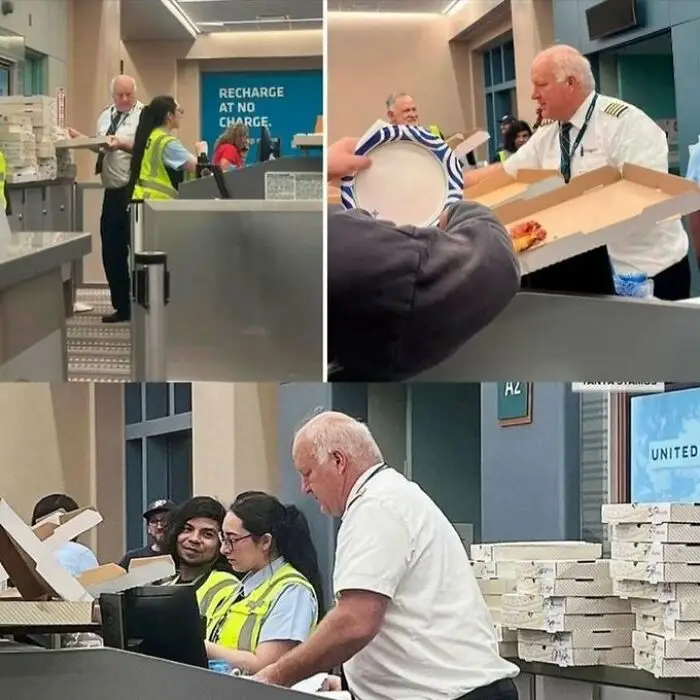
Seeing the situation, the flight's pilot took matters into his own hands and ordered around 30 pizzas for everyone at the gate.
Passengers later said the pilot personally helped hand out the pizzas and made sure every passenger was served before taking any food for himself.
Photos of the moment quickly spread online, with many praising the captain for his kindness and leadership during a frustrating delay.
United Airlines later acknowledged the incident and commended the pilot for going above and beyond to care for his passengers.
Report
27points
#49
In May 2025, students at Yilong No. 1 Middle School in Sichuan, China, were preparing for one of the last photographs they would take together before graduation.
But one person was missing.
Their 15-year-old classmate Ren Junjie had been away from school while battling non-Hodgkin lymphoma. By then, his condition had become so serious that he was bedridden in hospital, dependent on oxygen and too weak to return to school.
Ren still wanted one thing.
A graduation photo with his classmates.
So his classmates decided he wouldn't have to come to them.
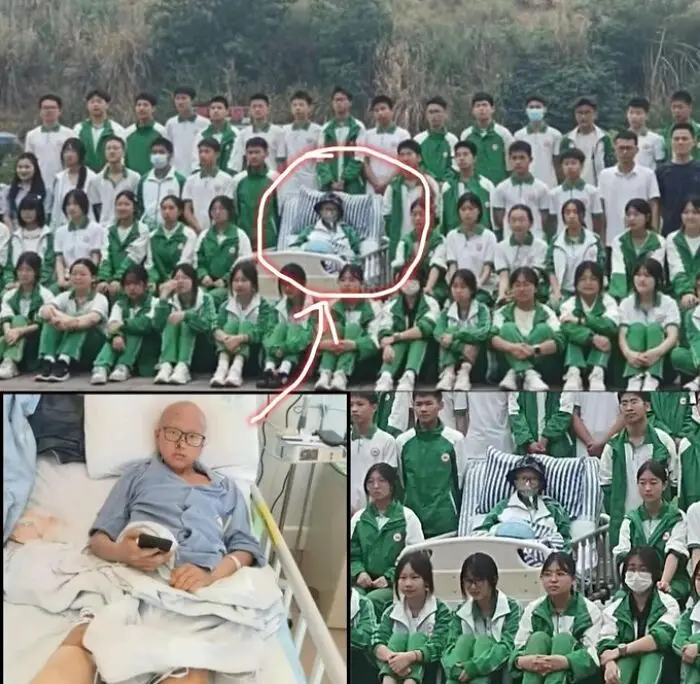
On May 17, more than 60 students put on their green-and-white school uniforms and walked more than two kilometres from their school to the hospital. They even carried the benches they needed for the photograph.
Participation was voluntary.
Not one student from Ren's class stayed behind.
At the hospital, Ren was dressed in his school uniform while remaining in bed. Six of his classmates helped wheel him outside, where everyone had arranged themselves for the photograph.
They left one space open in the middle.
That was Ren's place.
His hospital bed was positioned among them, and despite being extremely weak and wearing an oxygen mask, Ren tried to lift his head and smile for the camera.
His classmates also brought handwritten letters and a basketball covered with their signatures, leaving him messages of encouragement and telling him they hoped he would return to their class one day.
They couldn't have known how little time remained.
At around 4 a.m. the following morning, May 18, Ren's condition deteriorated.
He died from his illness, roughly 12 hours after taking the photograph.
The graduation picture his classmates had walked more than two kilometres to give him became the last photograph they would ever take together.
Ren never made it back to his classroom.
But when his class gathered for one final photo, they made sure his place among them wasn't empty.
Report
27points
#50

When Józef Peruga first sat for Poland's high school graduation exams, he was already 85 years old.
Most of the students around him were preparing to begin their adult lives. Józef had already lived one.
A former bus driver from Kalisz, he wasn't chasing a promotion, a university place, or a bigger paycheck. He simply wanted to achieve something he had never had the chance to finish.
His first attempt ended in disappointment. He passed the oral exams but fell short in the written Polish and mathematics papers. Many people would have accepted the result and moved on.
Instead, he came back the following year at 86.
He studied again, retook the exams, and narrowly missed passing once more. At first, he thought that would be the end of the journey. But the dream never really left him.
So, at 87 years old, Józef returned for another attempt.
He still didn't get the result he hoped for, but he refused to let age decide when he should stop learning. His determination earned admiration across Poland, with many people seeing him as proof that the desire to grow does not disappear with the passing years.
For Józef Peruga, the exam was never just about a certificate. It was about finishing a chapter of his own life that had remained open for decades.
Report
26points
#51
Lenny Robinson had already built the kind of life most people would have been satisfied with.
He started a cleaning business while still in high school in Maryland. It eventually grew to employ hundreds of people, and after selling the company, Lenny had enough money to live comfortably.
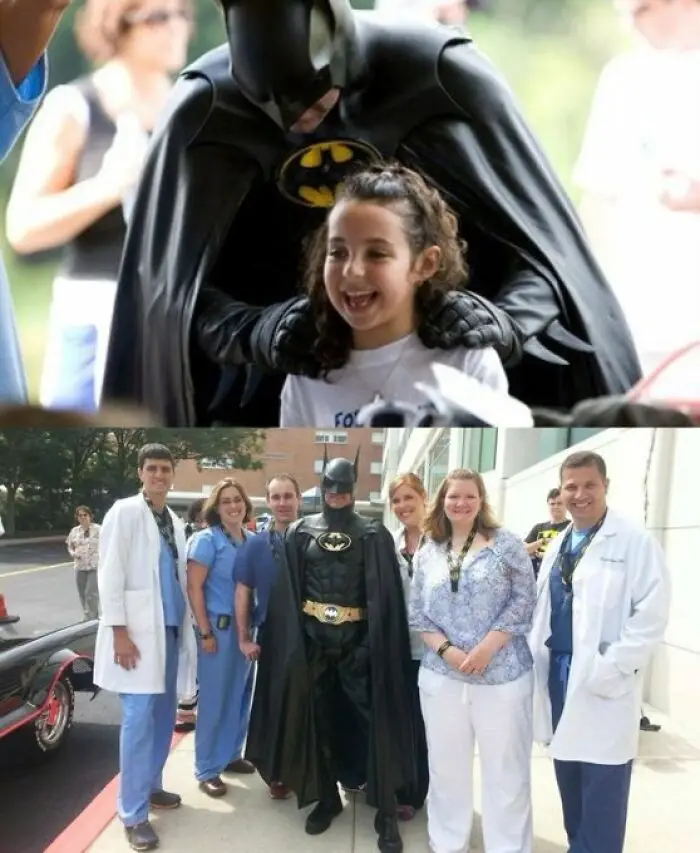
Instead, he spent a remarkable amount of it becoming Batman.
It had started years earlier when one of his sons became fascinated with the superhero. Lenny began dressing up as Batman, but over time he noticed something bigger. When sick children saw him walk into a hospital room, even for a few minutes, their attention shifted away from treatments, needles and everything else they were going through.
So he kept showing up.
Lenny bought a professional Batman suit that cost around 5,000 USD and weighed roughly 35 pounds, about 16 kilograms. He drove expensive Batman themed cars, including a Lamborghini, and regularly visited hospitals around Baltimore and Washington, D.C.
But the cars and costume were never really the point.
He brought toys, books, shirts and other gifts for children undergoing treatment, spending more than 25,000 USD of his own money each year on the effort. He also worked closely with the children's charity Hope for Henry.
For years, much of this happened without the wider public knowing who was underneath the mask.
Then, in March 2012, police in Maryland noticed something unusual traveling along Route 29.
A Lamborghini with a Batman symbol where its license plate should have been.
They pulled it over.
When the officer approached the car, Batman was sitting behind the wheel.
It was Lenny.
His real license plates were inside the vehicle, and he explained that he was on his way to Georgetown University Hospital to visit children. Police allowed him to continue, but not before taking a few photographs with him.
Dashcam footage of the encounter soon brought national attention to the man people began calling the "Route 29 Batman."
Lenny continued visiting hospitals.
When children called him a superhero, he often turned it back on them.
"You are the real superheroes."
He liked Batman partly because Batman didn't have supernatural powers. To Lenny, that meant becoming a hero wasn't something reserved for fictional characters.
"We all can be Batman," he once said.
On August 16, 2015, Lenny was driving his custom Batmobile along Interstate 70 in Maryland when it developed engine trouble. He stopped to inspect it and was struck after another vehicle hit the Batmobile.
Lenny Robinson died at the scene.
He was 51.
At his funeral, among the people mourning him was a four year old boy named Reilly Brown. He arrived wearing Batman sunglasses Lenny had given him.
When someone asked what Batman had done that made him happiest, Reilly didn't mention the expensive car, the costume or the presents.
He remembered that Batman used to tickle him.
For Lenny Robinson, all the money spent building a real life Batman mattered because, for a few minutes inside a hospital room, a child could forget why they were there.
Report
23points
#52

In 2013, Anaïs Bordier was a 25-year-old fashion student living in London when a friend sent her a YouTube video.
There was a woman in it who looked almost exactly like her.
Her name was Samantha Futerman, an actress living in Los Angeles.
Anaïs started looking into her and found something even stranger. Samantha had been born in South Korea and adopted as a baby, just like her.
Then she found Samantha's birthday.
November 19, 1987.
It was Anaïs's birthday too.
Anaïs had grown up with her adoptive family in France. Samantha had been raised by her adoptive family in New Jersey. Neither had been told she had a twin sister.
On February 21, 2013, Anaïs reached out to Samantha online.
They began talking through messages and video calls, comparing their faces, childhood photographs and the details they knew about their births. Eventually, they met in person and took a DNA test.
The result confirmed it.
Anaïs Bordier and Samantha Futerman were identical twins.
They had been born on the same day in South Korea, separated as babies and adopted by families on different continents. For roughly 25 years, each had lived without knowing the other existed.
Their extraordinary reunion was later documented in the 2015 film Twinsters.
Two sisters separated at the beginning of their lives found each other again because, decades later, a friend happened to recognize one sister's face on a YouTube screen.
Report
22points
#53

Lucy Humphrey had spent more than 15 years battling lupus when a simple day at the beach changed everything. Her Dobermans kept running to a stranger named Katie James, who later turned out to be the perfect kidney donor, giving Lucy a second chance at life and a lifelong friend.
Report
22points
#54
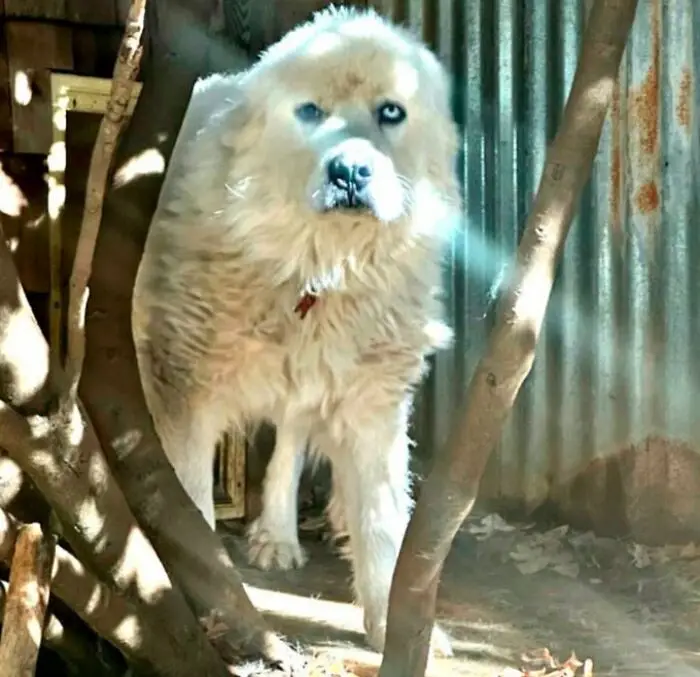
At just 20 months old, Casper, a Great Pyrenees livestock guardian dog, fought off a pack of 11 coyotes to protect his flock in Georgia. He disappeared for two days with devastating injuries, but survived, recovered, and later became an award-winning farm dog.
Report
22points
#55

A man gave a stranded mother his last 40 United States dollars for fuel, and three years later she unexpectedly became the caregiver who looked after his terminally ill mother in her final days
Report
22points
#56
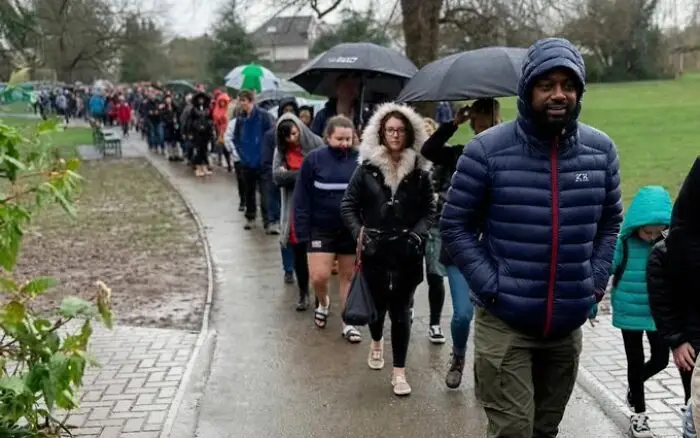
Almost 5,000 people waited for hours in the rain at a swabbing event in Worcester, to get tested to see if they were a match to help save the life of a five-year-old boy fighting a rare cancer, after his parents asked for help
Report
22points
#57
Ashley Hilliard had planned nothing more than a princess day with her two little girls.
On July 11, 2026, she took 6-year-old Paisleigh and 4-year-old Blakeleigh to Great Lakes Crossing Outlets in Auburn Hills, Michigan. They were eating lunch at HopCat when weaponfire suddenly sent people running through the mall.
Ashley tried to reach her daughters, but in the chaos she fell and was trampled. For a terrifying moment, she couldn't get to both of them.
Then she heard a stranger's voice.
"It's okay, I have her."
A woman Ashley had never met picked up Paisleigh and began getting her to safety. As Ashley struggled forward with Blakeleigh, another stranger, a man, stepped in and picked up the younger girl.
Neither of them knew this family. They simply saw a mother and two children who needed help and acted.
Ashley later learned the woman had done even more than she realized. As people rushed around them, she had huddled over the girls, using her own body to protect them from being trampled.
The attack lead to a 20-year-old man passing away and a 19-year-old woman beingwounded.
Afterward, Ashley couldn't stop thinking about the two strangers who had helped protect her daughters. She began searching for them and eventually found both.
She and the woman spoke on the phone for more than an hour before arranging to meet in person.
This time, there was no panic or running.
They met for ice cream.
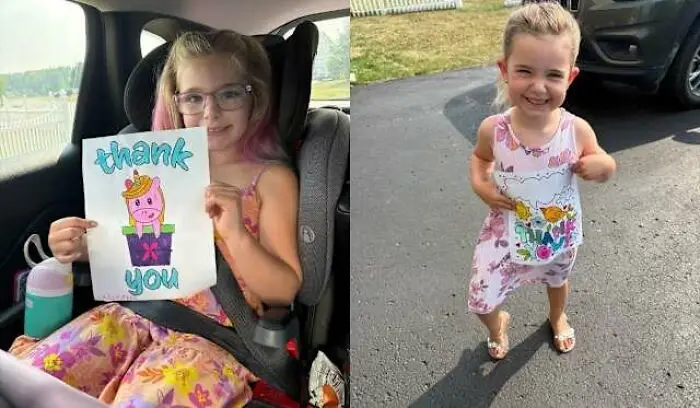
Paisleigh and Blakeleigh arrived carrying flowers, balloons and coloring pages they had made themselves. On them were two simple words.
"Thank you."
The two people who helped the family have chosen to remain anonymous.
Ashley may never be able to repay what they did that afternoon, but her daughters now know the strangers who carried them to safety when their mother couldn't reach them.
And their princess day ended with two unexpected heroes becoming part of a family story they will never forget.
Report
21points
#58
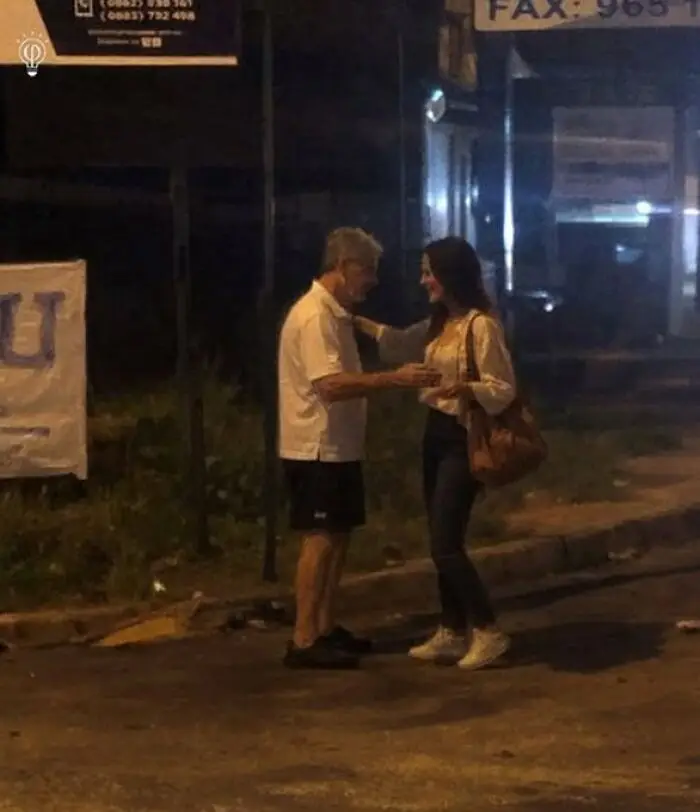
In Ñemby, Paraguay, 72-year-old Félix Cárdenas had a routine that his daughter Belén could never quite talk him out of.
Every night after work, Belén would arrive by bus at around 8:30 or 9 p.m. The stop was several blocks from their home, and the walk could be dark and deserted.
So Félix went to meet her.
He would leave the house, walk to the bus stop and wait there until his daughter arrived. Then the two of them would make the journey home together.
Belén was already 22 years old, and she had told her father that he didn't need to keep coming for her. But asking him to stay home only made him worry more.
Eventually, she stopped trying to convince him.
In February 2022, Belén photographed her father standing at the stop waiting for her. She shared the picture online and explained that no matter whether she arrived at 8:30 or 9, he was always there.
By then, Félix had reportedly been doing it for about three years.
Belén later explained that her father had always been protective of her and her siblings. At one point, he would even meet her closer to her workplace. As she grew older, the bus stop became their compromise. She could have her independence, and he could still know she wasn't walking those final blocks alone.
For Félix, being 72 didn't mean he had finished looking after his daughter.
It just meant the walk to meet her took a little more effort.
anon
Report21points
#59
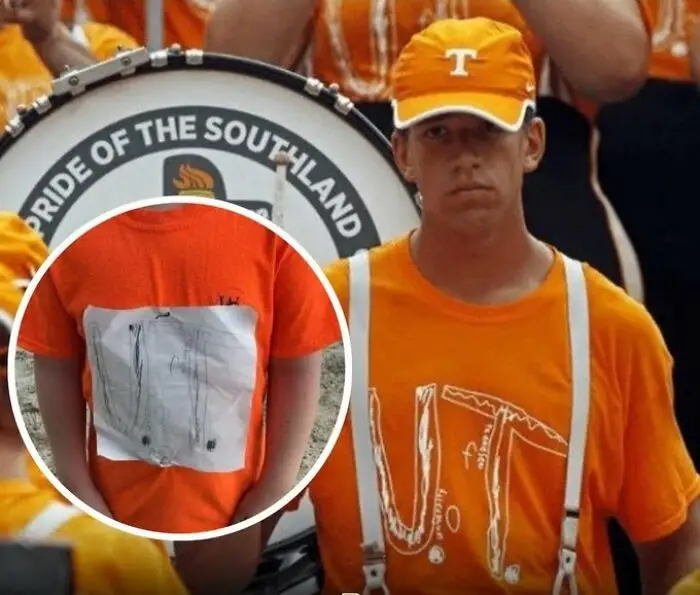
shirt to school because he didn’t own official UT gear.
Some classmates laughed at him, but the story reached the university and turned into something beautiful.
UT took his hand-drawn design, made it an official shirt, and fans bought tens of thousands of them.
The Pride of the Southland Band even wore the shirt during a football game.
The proceeds went toward an anti-bullying cause, and the university later offered the boy a four-year scholarship, if he chooses to attend and meets admission requirements.
What started as a child being mocked for a simple homemade shirt became a reminder that kindness can turn embarrassment into honor.
Report
20points
#60
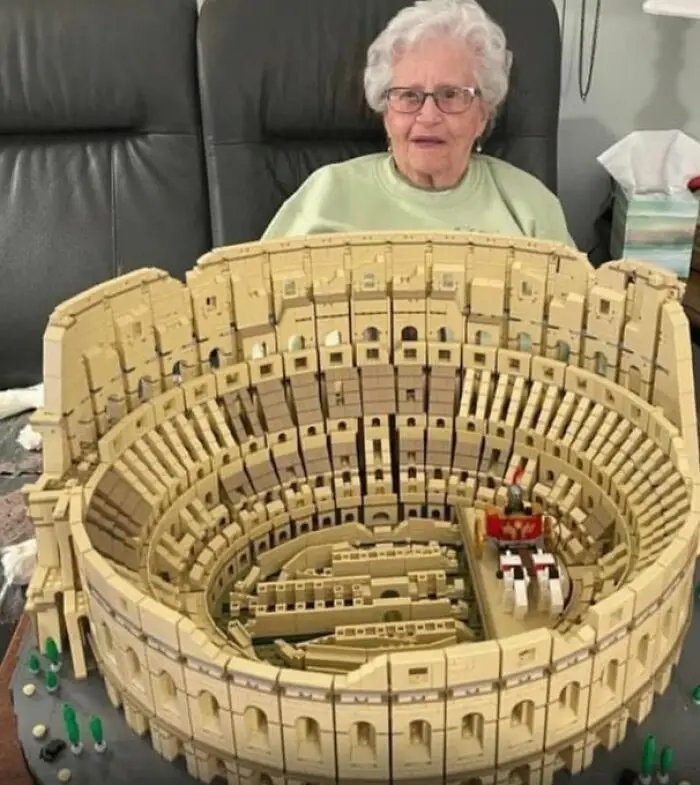
Mary didn't grow up with LEGO.
She discovered the hobby much later in life, long after most people would have assumed it was too late to start something new. What began as simple curiosity slowly turned into a weekly ritual. Even at 97 years old, she still spends around four to six hours building, one brick at a time, patiently bringing enormous LEGO creations to life.
Her collection includes some of the most demanding sets LEGO has ever produced. The LEGO Titanic alone contains 9,090 pieces and stretches more than 135 centimeters long. She has also completed the LEGO Colosseum, another masterpiece made from over 9,000 pieces, along with several other highly detailed display models.
Photographer Steven Farrel has documented her journey, often capturing her building in her cozy living room with her dog resting nearby. Those photos introduced millions of people to the woman now affectionately known as "LEGO Grandma."
There is no rush in the way she builds. No race to finish. Just steady hands, quiet focus, and the satisfaction of watching thousands of tiny pieces slowly become something extraordinary.
At an age when many people believe their best years of learning are behind them, Mary continues to prove that curiosity never grows old. Every completed model is a reminder that it's never too late to begin something new, and that passion doesn't measure time by birthdays.
Report
18points