






#1
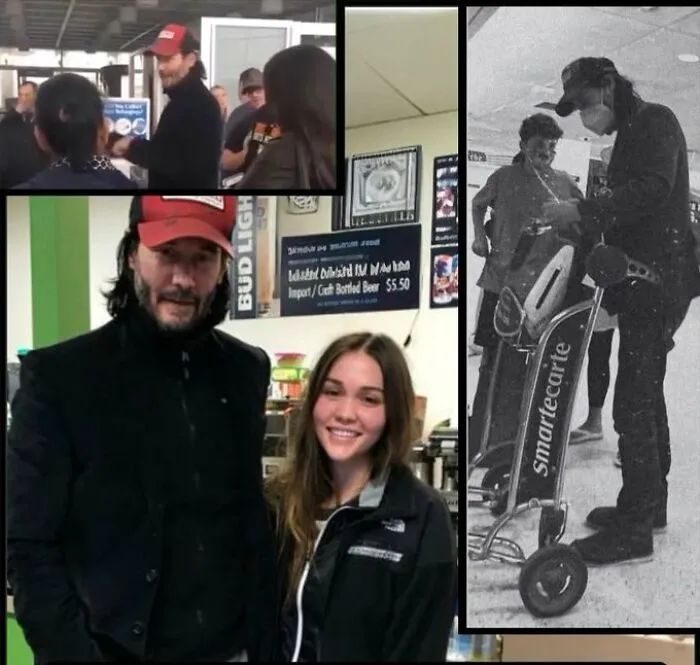
Then something went wrong.
A mechanical problem forced the plane to make an emergency landing in Bakersfield, leaving the passengers stranded more than 100 miles from their destination.
Keanu could have quietly arranged a private car and disappeared.
Instead, he stayed with everyone else.
As passengers tried to figure out how to reach Los Angeles, Keanu joined the discussions, helped with the travel plans and climbed into a shared van with the stranded group.
Then the road trip began.
For the next two hours, one of Hollywood's biggest stars sat among ordinary passengers, reading strange facts about Bakersfield from his phone and playing local country music for everyone.
At one point, he even played music connected to Bakersfield legend Buck Owens.
Passengers filmed the journey as Keanu laughed, talked and turned an exhausting travel disaster into an unexpectedly memorable road trip.
And as people were dropped off, Keanu stayed until it was his turn to leave, saying goodbye to his fellow passengers.
No red carpet.
No private escape.
Just Keanu Reeves, a broken flight and a van full of strangers making their way home together.
#2
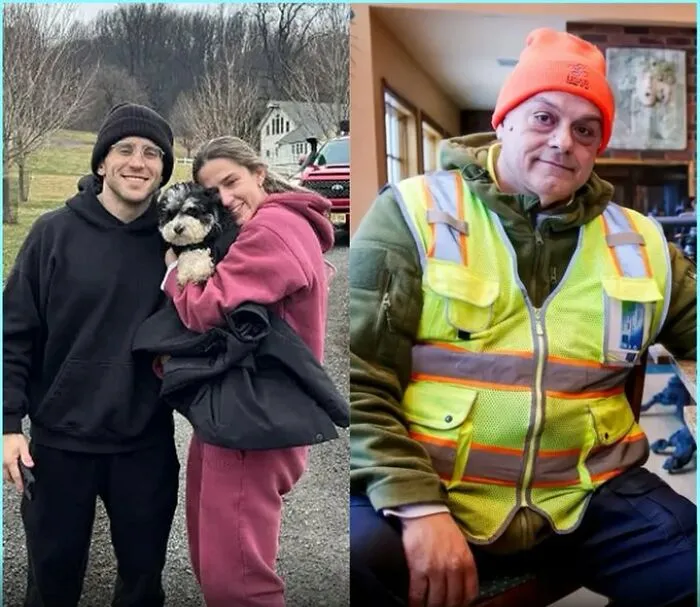
The restaurant owner founded the U.S.A.R. Drone Team, a nonprofit that uses drones equipped with thermal cameras to search for missing animals. At night, those cameras can pick up body heat in woods, fields, marshes and other places that are difficult to search on foot.
By January 2026, Parziale and his team had helped recover 122 animals across New Jersey, including dogs, cats and even a cow.
Some searches have been remarkably quick.
When five-month-old puppy Shade disappeared in Cherry Hill and spent a freezing night outside, Parziale's thermal drone found him after about 41 minutes of searching. Another missing dog, Logan, was located in just six minutes.
The team operates with volunteers and an 18-drone fleet, responding to families when a pet disappears and time can make a huge difference.
For Parziale, a small glowing shape on a thermal screen can mean something much bigger on the ground.
A family getting their pet back.
#3
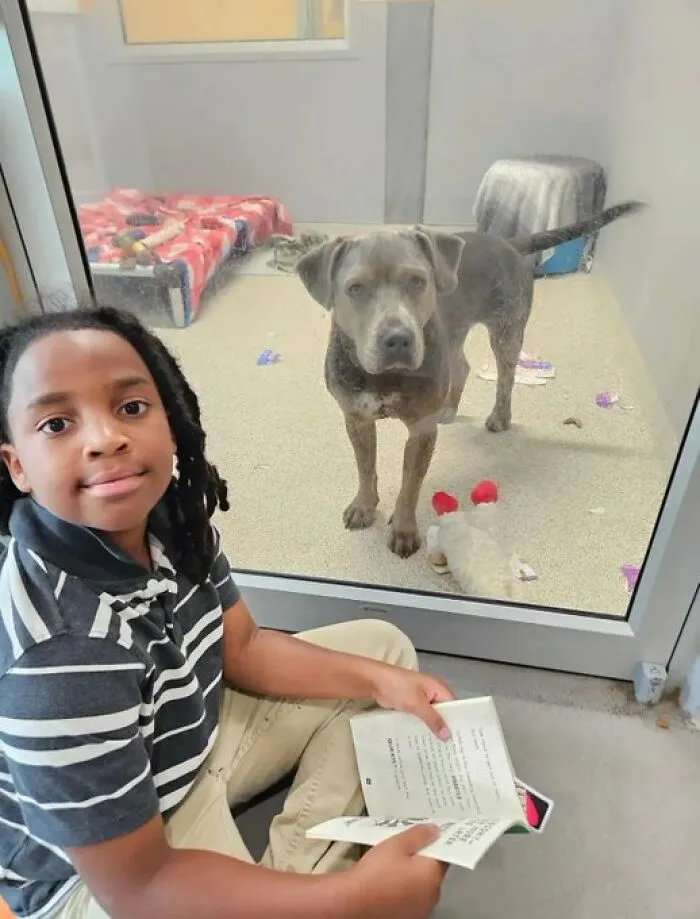
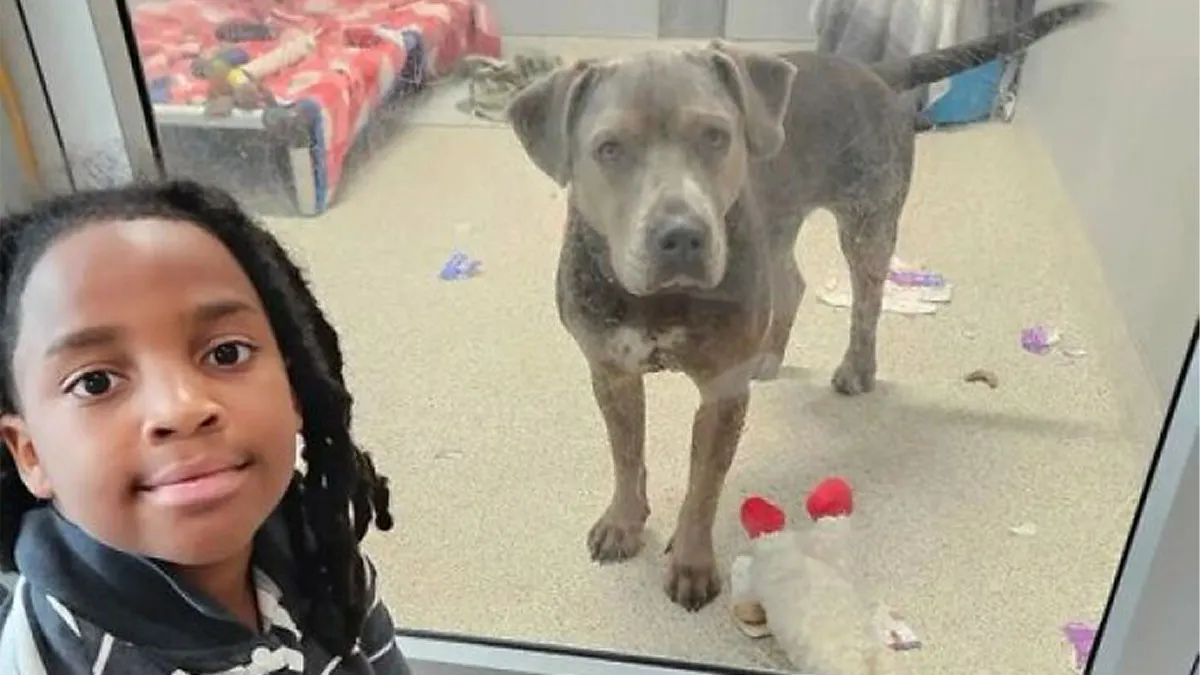
He wasn't there to adopt a pet.
He came carrying books.
Nehemiah joined the shelter's Pawsitive Reading program in 2024, sitting near dogs and other animals waiting for homes and simply reading aloud to them. His grandmother regularly accompanied him on the visits.
The first dog he remembers reading to was Auggie. Nehemiah became so attached that he cried when it was time to leave.
But he kept coming back.
Over the next two years, those visits slowly added up. Thirty minutes here. Another reading session there. One book after another.
Among the dogs he regularly spent time with was Hopper, who had been waiting at the shelter for nearly 400 days. Nehemiah would sit with him and read.
Eventually, Hopper found a home.
Then, in June 2026, Nehemiah reached a milestone nobody his age had reached in the program before.
At 11 years old, he officially logged 100 volunteer hours reading to shelter animals, becoming the first child in the history of Jacksonville Humane Society's Pawsitive Reading program to do it.
He received a certificate and the program's special gold paw-print recognition.
Nehemiah is already thinking about what comes next.
110 hours. Then 150.
Maybe even 200.
For a boy who first walked into the shelter with a book at 9 years old, reaching 100 hours wasn't where he decided to stop.
The news feeds us nonstop chaos, and turning off the TV rarely shuts it out. Headlines follow us through group chats, social feeds, and casual conversations. To stay grounded in this hyper-connected world, we first have to understand why our brains crave the chaos we claim to hate.
Human biology hardwires us to seek out information. Uncertainty triggers anxiety, so our minds frantically hunt for updates to feel in control. Add a splash of natural curiosity, and tuning into current events feels more like a basic survival instinct.
#4

Instead of walking past, Jamie stopped and asked four simple words:
"Are you okay?"
The teenager stayed with the man for around 45 minutes, talking to him, listening, and convincing him to step away from the edge. Although the man begged him not to, Jamie called an ambulance to make sure he received the help he needed.
Before they parted ways, they exchanged phone numbers.
A few months later, Jamie received an unexpected phone call. The man shared that his wife was expecting a baby boy and told Jamie they had decided to name their son Jamie in honor of the teenager whose kindness had given him a second chance at life.
It was a powerful reminder that sometimes the smallest act of compassion can change a life forever. A simple question, asked at the right moment, can become the reason someone chooses to keep living.
#5

#6
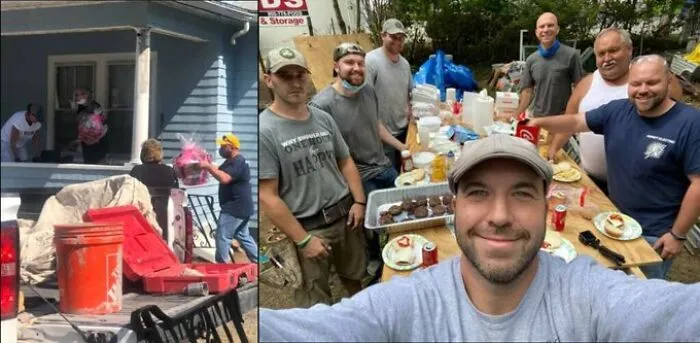
But once inside, he realized the light was the least of her problems.
Gloria lived alone in a badly deteriorating house. There were serious electrical and plumbing issues, damaged ceilings, broken windows and problems with running water. Raccoons had even been getting inside. She simply couldn't afford the repairs her home desperately needed.
John completed the electrical job, went home... and couldn't stop thinking about her.
So he came back.
He began repairing Gloria's house without charging her, then reached out to friends and people in the community for help. What happened next was extraordinary.
Electricians, plumbers, carpenters and complete strangers showed up. Others donated materials, food and supplies. Together, they repaired the plumbing and electrical systems, fixed walls and ceilings, replaced windows and worked on the roof, porch and backyard.
The group became known as “Gloria's Gladiators.”
It all started with one broken light and one electrician who decided that walking away wasn't an option.
Tragedy and tension draw us in for the same reason blockbusters pack theaters. Nobody buys a ticket to watch a static security camera; we pay for high-stakes drama and explosions.
Research shows that bad news triggers a quick dopamine spike in the brain, creating a loop that keeps us refreshing our feeds for the next big jolt.
“It does seem to be a feature of our brains where we’re wired to look out for things that may be a threat to us. These things will catch our attention. They’ll be things that concern us. A part of what we know is that when we are exposed to negative things in the news it creates an emotional response for us,” says Dr. Adam S. Anderson, a clinical psychologist with Mayo Clinic.
#7
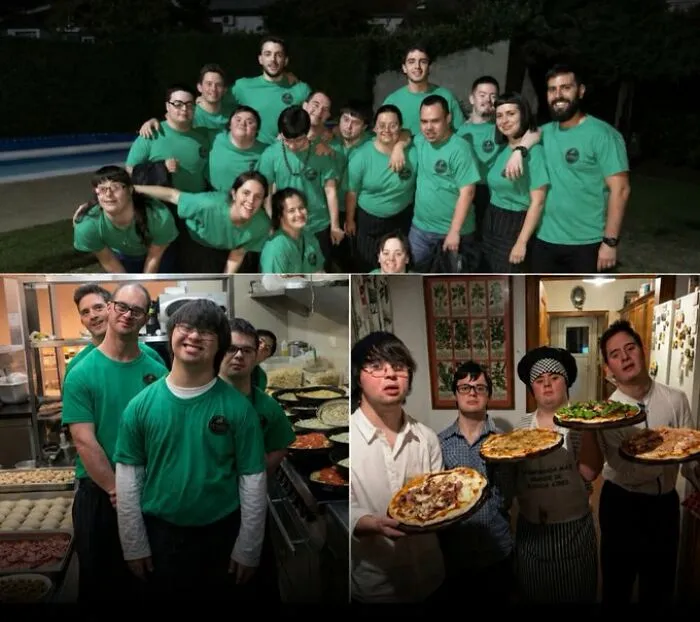
Mateo Kawaguchi, Leandro López Padrós, Franco Noseda and Mauricio Roldán had faced limited opportunities in the traditional job market. Instead of waiting for someone to give them a chance, they began building one of their own.
Together with support from their families and coordinators, they launched Los Perejiles, a mobile pizza catering business.
Their first event was small, serving around 50 people. They prepared the dough themselves and travelled to birthdays, weddings and company events with their equipment, making fresh pizzas for guests on site.
People kept calling.
Within only a few months, Los Perejiles had catered dozens of events around Buenos Aires. More young people with Down syndrome joined the team, turning what began with four friends into a growing source of paid work, training and independence.
Mateo took it even further.
In 2017, he travelled to Parma, Italy, to compete at the World Pizza Championship, becoming the first person with Down syndrome to participate in the competition.
He didn't go there just to make an appearance.
Mateo finished fourth in his category, only eight points away from the podium.
A year earlier, he had been part of a group trying to find their place in the working world.
Now he was standing among some of the world's best pizza makers, while the little catering business back home was opening the same door for others.
#8
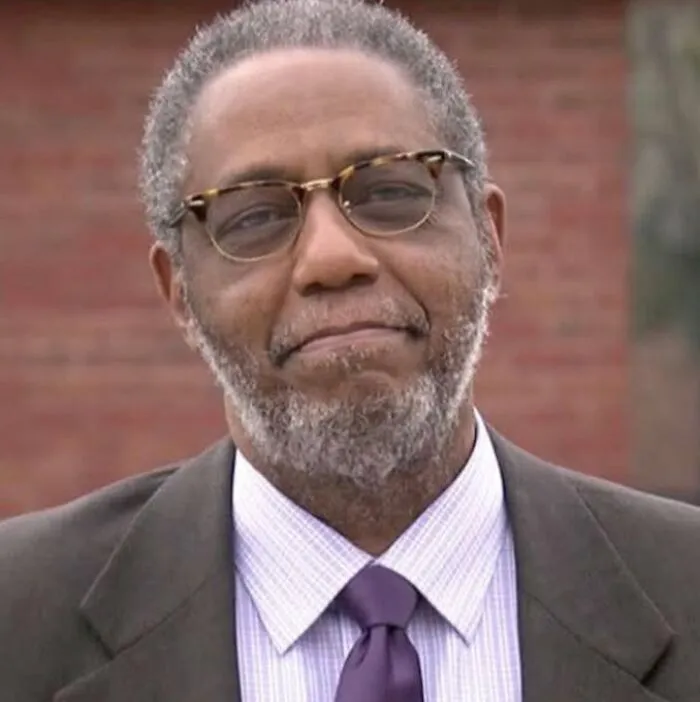
He saw things most principals never expect to see. Students sleeping under a bridge. A former student living in a car with her daughter. Families struggling to keep food on the table and pay basic bills.
Darby was already helping whenever he could, but he wanted to do more without constantly asking teachers and staff to contribute.
So he quietly got a second job.
After finishing his work as principal, Darby would arrive at a local Walmart around 10 p.m. and spend the night stocking shelves. Some shifts lasted until 7 the next morning.
Then he went back to being a principal.
He worked roughly three nights a week and directed the money he earned toward helping students and their families with groceries, clothing, bills and other necessities.
Darby didn't plan on anyone knowing.
That lasted one shift.
A student spotted him working at Walmart and recognized his principal stocking shelves in the middle of the night. Eventually, the reason he was there became public.
When the community learned what Darby had been doing, people began contributing too. More than 50,000 USD was raised within days, and Walmart later donated another 50,000 USD to North Charleston High School.
Darby had started with nothing more complicated than an extra paycheck and a few sleepless nights.
By the time everyone else joined him, one principal's night job had turned into nearly 100,000 USD in support for the students he had been trying to help quietly.
#9
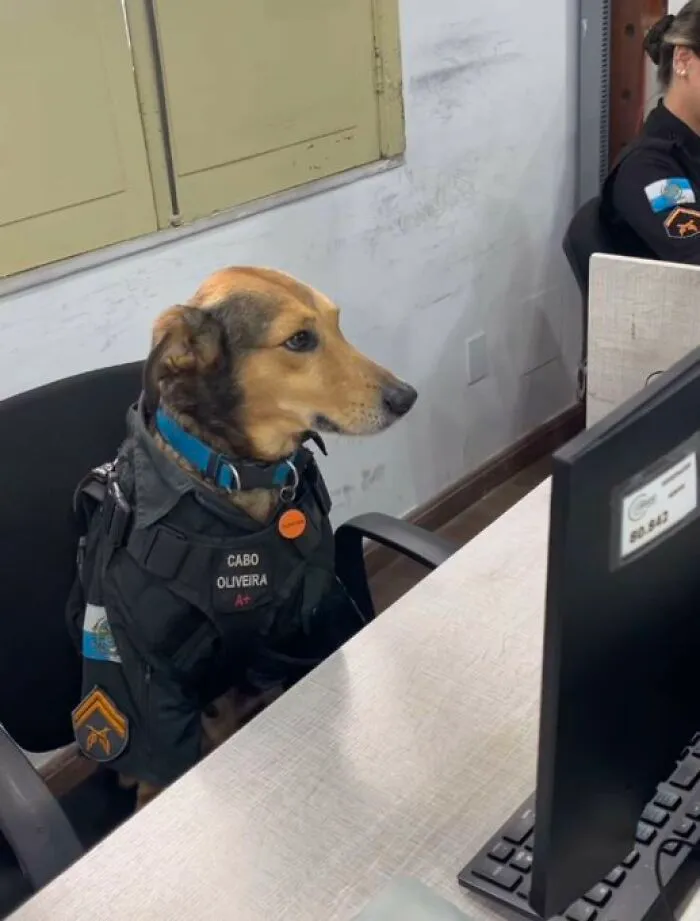
At first, officers simply fed him and offered him a safe place to rest, but the friendly dog continued returning until he became part of the station's daily life.
The officers eventually adopted him and gave him the name Corporal Oliveira.
He received his own custom police-style uniform and became the beloved mascot of the 17th Battalion of the Military Police.
While he was not an officially trained police K9, he was given an honorary role and quickly won the hearts of both officers and the local community.
Corporal Oliveira often accompanied police officers, took part in community outreach programs, and visited schools, helping strengthen the bond between the police and the public.
In a 2013 study published in Proceedings of the National Academy of Sciences (PNAS), Dr. E. Alison Holman and her team analyzed people’s reactions to news coverage of the Boston Marathon explosions.
The findings were alarming: people who consumed six or more hours of daily news coverage suffered higher levels of acute stress than many of those who were actually at the scene or had loved ones directly involved.
#10
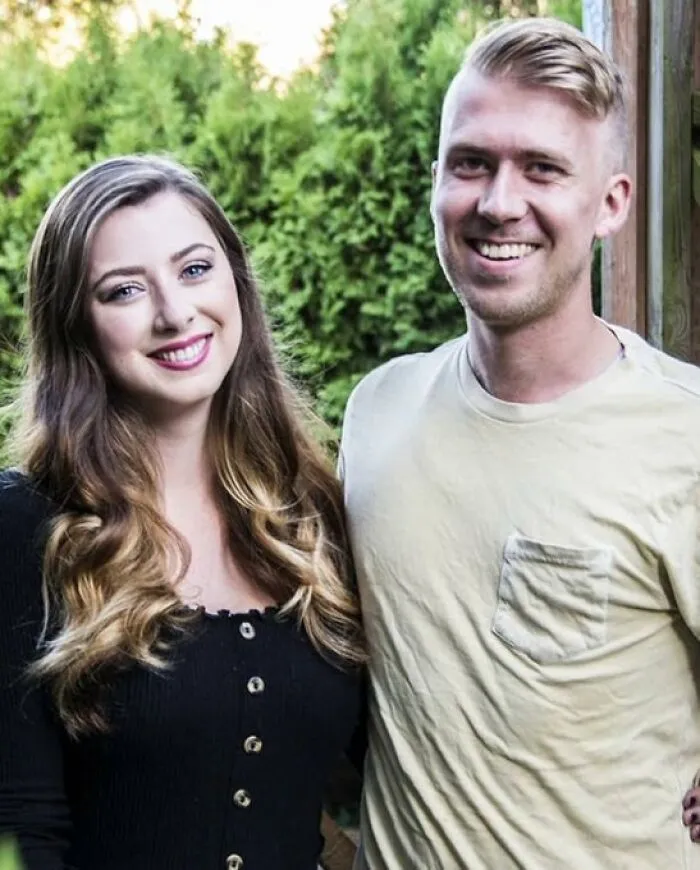
When she woke up, she believed she was 17 years old.
She remembered her childhood. She remembered her family. But every memory of meeting Brayden, falling in love with him, and marrying him had disappeared. The man standing beside her was a complete stranger.
Recovery was slow. She had to relearn how to read, write, and speak clearly while living with someone she couldn't remember loving. Brayden never tried to convince her to become the person she had been. He introduced himself again. He left her notes, took her on dates, answered her questions, and gave her the time to build something new.
Over the next two years, Laura fell in love with him again. Not because the old memories returned, but because they created new ones together.
Although they were still legally married, Brayden proposed once more, and they celebrated with a second wedding. This time, Laura was there to remember every moment.
#11

For nearly 24 minutes, he spoke openly about rejection, loneliness and how years of being turned down had affected the way he saw himself. At one point, David had even considered plastic surgery because he believed his appearance might keep him from ever finding love.
The video stayed online, slowly reaching millions of people.
Years later, a woman from Argentina named Juli found it in her YouTube recommendations.
She left a simple comment telling David that she thought he was cute.
David replied.
That comment became a conversation. The conversation continued across countries, and eventually Juli flew to Sweden to meet him.
David later admitted he was terrified waiting for her at the airport. Part of him wondered whether she would feel differently when she finally saw him standing in front of her.
Instead, Juli ran toward him, hugged him and kissed him.
They married in 2023.
#12
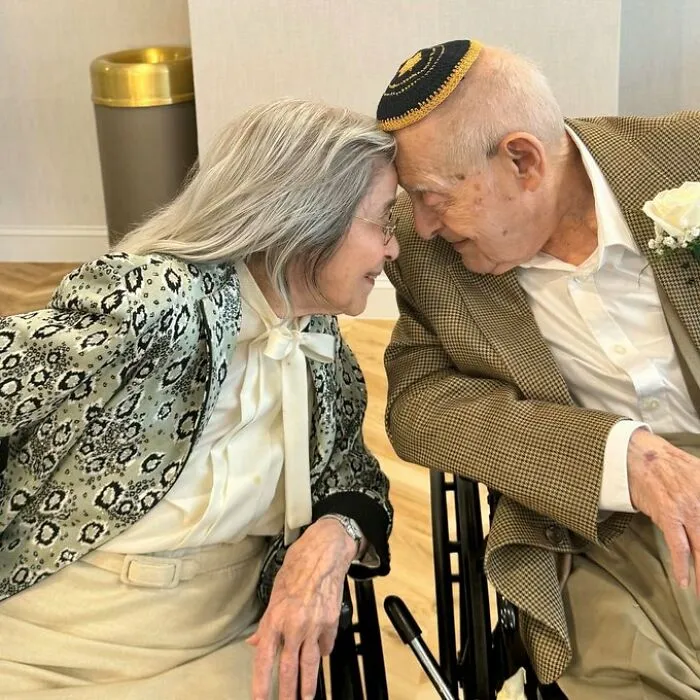
Then, much later in life, they found each other.
The two were living at the same senior community in Philadelphia when they met at a costume party on their floor. They began dating and stayed together for the next nine years.
There was an unusual coincidence in their story too. Decades earlier, both had attended the University of Pennsylvania around the same time, but their paths never crossed. Bernie became an engineer and Marjorie a teacher. It took most of a lifetime before they finally met.
Both had previously been married for more than 60 years. And when Bernie eventually decided he wanted to marry Marjorie, he didn't want it to be merely ceremonial. He wanted a real, legal wedding.
On May 19, 2024, surrounded by family and friends in Philadelphia, they married.
Bernie was 100.
Marjorie was 102.
Their combined age on their wedding day was 202 years and 271 days, earning them the Guinness World Records title for the oldest couple to marry by aggregate age.
Two people who could have crossed paths at university decades earlier finally found each other near the end of their lives, spent nine years together, and at 100 and 102 still decided there was time for one more beginning.
Most of us hop online or turn on the TV just to stay informed, but we end up walking away feeling completely drained.
A 2025 Pew Research study backed this up, revealing that roughly four in ten Americans frequently feel angry or sad after checking the news. On top of that, about a quarter of people say the daily headlines leave them feeling scared or downright confused.
Sadly, the positive vibes are almost nowhere to be found. Only a tiny fraction (14%) of folks report feeling hopeful, happy, or empowered by the stories they consume.
#13
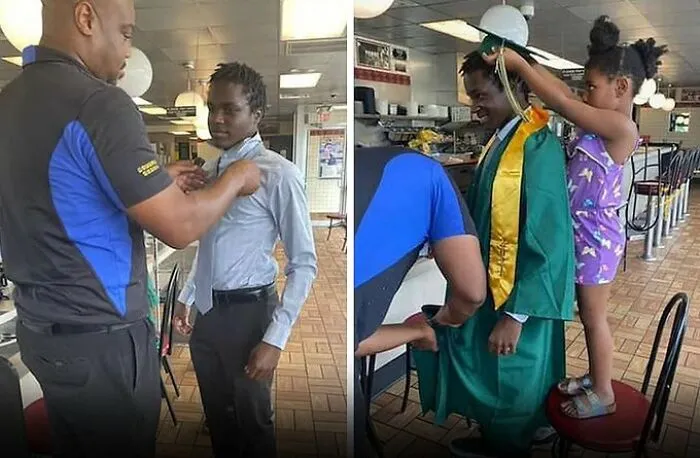
Instead, 18 year old Timothy Harrison clocked in for his shift at a Waffle House in Center Point, Alabama, on May 27, 2021.
Not because he wanted to miss graduation.
He believed he had no way to get there.
He had missed the rehearsal where students received their cap, gown and tickets because he was working. His mother couldn't get time off from work. He had no ride to the ceremony at the Birmingham CrossPlex. So he quietly accepted that graduation wasn't going to happen and showed up to work instead.
His manager, Cedric Hampton, immediately knew something was wrong.
When Timothy explained the situation, the restaurant became more than a workplace.
One coworker drove to Timothy's school to collect his graduation cap and gown. Another rushed to Target to buy him dress clothes. Four employees each pitched in 40 United States dollars. Customers who heard the story added money too.
Back at the restaurant, Cedric helped button Timothy's new shirt.
A little girl stood on a chair to place his graduation cap on his head.
Another coworker drove him nearly 20 miles to the ceremony, arriving just in time for him to walk across the stage with the Woodlawn High School Class of 2021.
The story didn't end there.
After it spread across the country, Lawson State Community College offered Timothy free tuition and books, giving him the chance to continue his education.
What began as a shift at a Waffle House became the day a group of ordinary people refused to let a young man's future slip away. They didn't just help him attend graduation.
They made sure he never forgot that he was worth showing up for.
#14

A Sears advertisement invited children to call Santa Claus, but the phone number printed in the ad accidentally connected callers to the Continental Air Defense Command operations center in Colorado Springs instead.
The first child who called asked if Santa was there. Instead of dismissing the call, Colonel Harry Shoup — the officer on duty that night — decided to play along.
He instructed his staff to check radar systems and give children updates on Santa’s “current location” as he traveled across the world delivering presents.
What began as an accidental mix-up soon became an annual tradition. After NORAD replaced CONAD in 1958, the program evolved into the famous NORAD Santa Tracker, which now uses satellites, radar, aircraft, and volunteers to “track” Santa every Christmas Eve for families around the globe.
#15
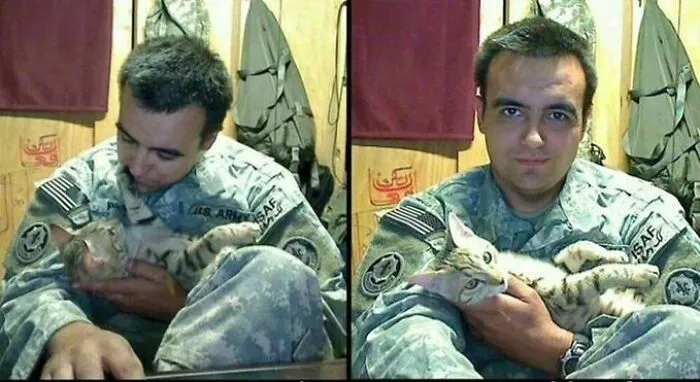
Feeling overwhelmed and believing he had nothing left to live for, he was on the verge of taking his own life.
Then a tiny stray kitten appeared.
The kitten meowed, rubbed against him, and refused to leave his side. Marino later said the unexpected encounter broke through his despair and gave him something to care about.
He named the kitten Scout, took it home, and credited it with giving him the reason to keep living.
That single moment became the first step in his recovery. Years later, Marino has continued to share his story to raise awareness about PTSD, mental health, and the life-changing impact that compassion, hope, and even the smallest acts of connection can have.
To make matters worse, the habit feeds itself: the more closely you track the headlines, the harder those heavy emotions hit you. Staying constantly plugged in comes with a pretty heavy price tag for our peace of mind.
While media companies push drama, we as readers actively demand it. The age-old industry rule “if it bleeds, it leads” endures because our brains fall for it every time.
Research shows negative headlines get over 60% more clicks than positive ones, proving our curiosity fuels the outrage cycle.
Algorithms and newsrooms simply react to this habit. Social media platforms and news outlets profit off our attention — the more eyes they hold, the more ad dollars they collect. Because shocking and upsetting stories grab us fastest, media platforms intentionally push high-drama content to keep us scrolling.
Ultimately, news outlets supply the outrage, but our clicks give them the green light.
#16
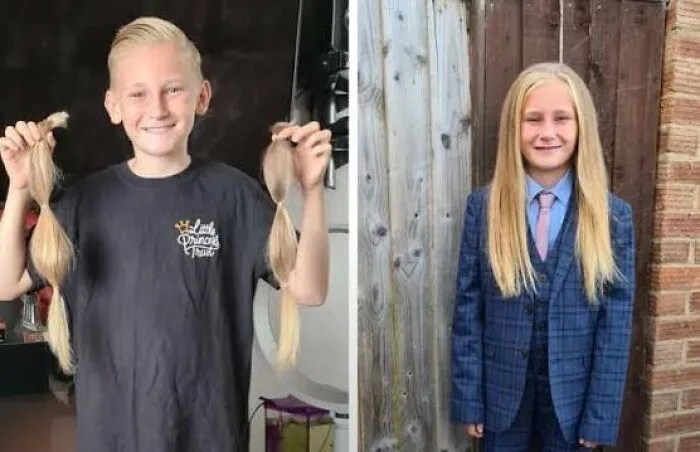
Some of that attention wasn't kind.
The boy from Gloucester, England, loved rugby and played for Brockworth Badgers, but as his hair grew longer, other children began teasing him about it. At one point, the comments became difficult enough that Jacob considered cutting it all off.
But there was a reason he had been growing it.
Three of Jacob's grandparents had experienced cancer, and he wanted to do something in their memory. His plan was to grow his hair long enough to donate it to The Little Princess Trust, which provides real hair wigs free of charge to children and young people who have lost their hair.
While Jacob was struggling with the teasing, professional rugby player Guy Thompson heard about what he was doing.
Thompson knew something about long hair himself. He had grown and donated his own hair to the same charity.
So he wrote Jacob a personal letter.
He reminded the 11 year old that having long hair didn't make him any less of a rugby player or a person. Instead, he told Jacob that what he was doing showed independence, strength, generosity and kindness.
For a young rugby player hearing those words from a professional meant a lot.
Jacob kept going.
In July 2021, he finally sat down for the haircut he had spent so long working toward. Eighteen inches of his hair, roughly 46 centimetres, were cut and donated to The Little Princess Trust.
And the hair wasn't his only contribution.
Jacob had also been raising money during the process. By the time the charity shared his story, he had raised £1,230 to support its work.
The hair that had once made him a target for teasing had become exactly what Jacob intended it to be from the beginning.
A gift for another child who needed it.
#17

There seemed to be more plastic bags around him than fish.
He began asking a simple question. Why couldn't we just clean it up?
That question became a high school science project. Slat started studying ocean currents and plastic pollution, eventually developing an idea that worked with the movement of the ocean instead of sending ships around trying to chase the waste.
After high school, he enrolled in aerospace engineering at Delft University of Technology in the Netherlands. But the ocean project kept pulling him back.
In 2012, he presented his idea at TEDxDelft. Months later, he left university to work on it full time, starting with just 300 euros of his own savings.
He was 18 when he founded The Ocean Cleanup in 2013.
What followed wasn't an instant success. There were prototypes, failures, broken systems, redesigns and years of testing.
The organization eventually expanded beyond collecting plastic already floating at sea. It also developed systems to intercept waste in polluted rivers before it could reach the ocean.
By March 2026, The Ocean Cleanup said its operations had removed more than 50 million kilograms of trash from aquatic ecosystems around the world.
That's roughly 110 million pounds.
The question Slat asked while diving as a teenager eventually became an organization of around 200 people, working toward a goal that once sounded almost impossible to many experts.
Remove 90 percent of floating ocean plastic by 2040.
#18
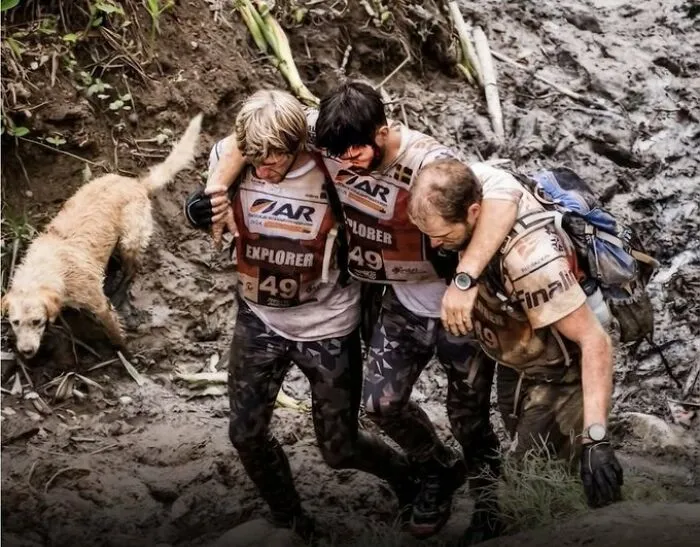
At the same time, positive news can do far more than just give us a quick mental break — it can actually inspire real-world action and rewire how our brains handle stress.
Research published by Professor Denise Baden at the University of Southampton found that positive, solution-focused stories directly encourage people to take constructive steps in their own lives, such as adopting eco-friendly habits.
The study revealed a stark contrast in human behavior: the more anxious or pessimistic a story made participants feel, the less motivated they were to take action.
#19
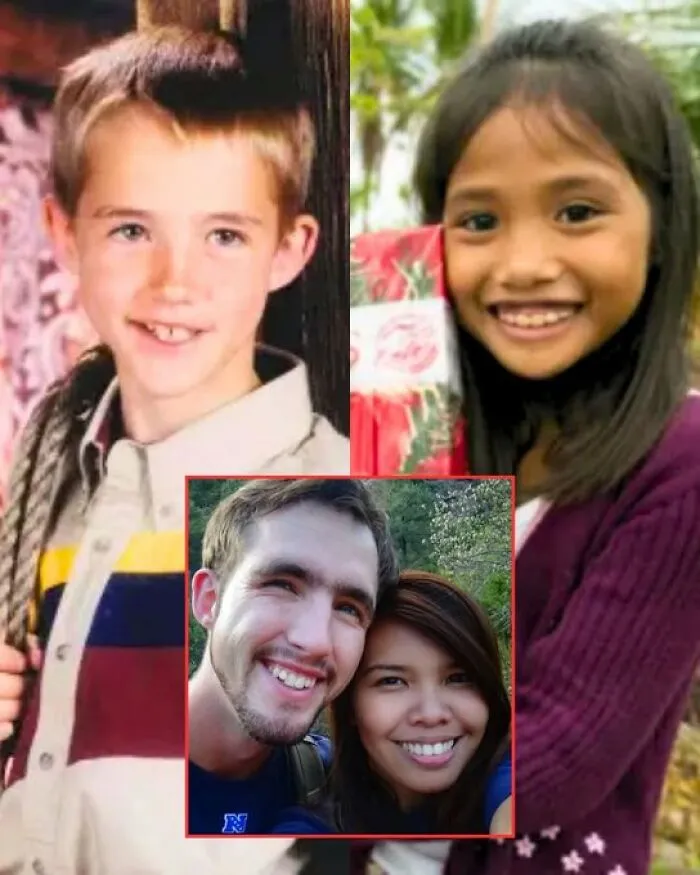
Nearly 7,000 miles away in the Philippines, 8-year-old Joana Marchan received it.
She kept Tyrel's photograph.
Eleven years passed.
In 2011, Joana remembered the boy in the picture and searched his name on Facebook. She found him. Tyrel barely remembered sending the box at first, but when Joana described the cowboy photograph, everything clicked.
Messages became long conversations. Friendship became something more.
Tyrel eventually flew to the Philippines to meet her. He returned home, worked extra hours to save money, then made another trip back. This time, he asked Joana's father for permission to marry her, speaking to him in Tagalog.
Joana moved to Idaho in September 2014.
On October 5, 2014, they married on Tyrel's parents' cattle ranch, almost exactly 14 years after one small shoebox had traveled across the world and quietly connected two children who had no idea they would meet again.
At their wedding, they asked guests to pack more Operation Christmas Child shoeboxes.
The gift Tyrel sent at seven years old had eventually brought its recipient back into his life as his wife.
#20
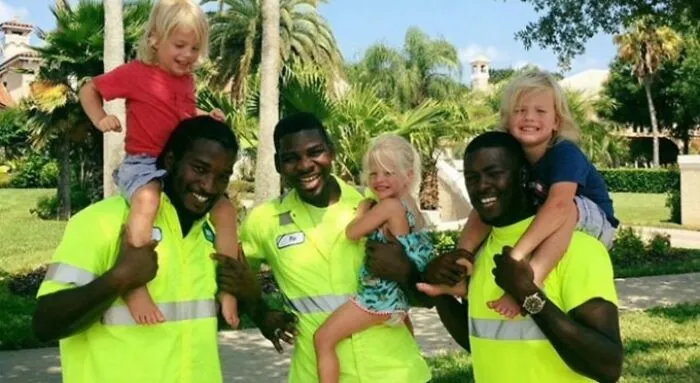
Every Tuesday and Friday, the children would rush outside to greet the crew, excitedly waving, sharing hugs, giving high-fives, and sometimes bringing them snacks.
What started as a simple garbage collection route became a special bond built on kindness, consistency, and genuine human connection.
The sanitation workers became familiar faces the children looked forward to seeing each week, while the kids brightened the crew's day with their enthusiasm and affection.
Their heartwarming friendship is a reminder that some of life's most meaningful relationships can grow from the simplest everyday moments, proving that kindness has the power to turn routine encounters into lasting memories.
Building a better world starts with noticing the good that is already taking shape around us. Our communities run on quiet, unseen acts of cooperation, where even the smallest positive story can spark a massive chain reaction.
Reading about progress is a great start, but creating it is even better. You can add to the momentum today with simple, intentional choices — buy a stranger a coffee, check in on a neighbor, or choose patience the next time you find yourself stuck in a slow line.