






#1

#2
#3

Sounds sad but instead she always gave me fruits and nuts . Well I didn't understand it then, but I guess she just wanted her kid to be healthy and I do appreciate it deeply as it improved my gut and kept my physique in check✅
The appreciation moment is not random, though. A landmark OnePoll survey found that the penny tends to drop around age 22, right as independence kicks in and adulthood starts presenting its invoices. That is when the bizarre rules and seemingly harsh calls your parents made begin to rearrange themselves into something that looks a lot like foresight.
And if you have children of your own? The shift goes from logical appreciation to full emotional crisis. Understanding why your mother looked permanently exhausted is a completely different experience when you are the one awake at 3 am with a baby attached to you and no instruction manual in sight.
#4

#5
where *only* kids who are potty trained get to go, just to play all day! where theres all kinds of wonderful toys and a big park attached to it and if i was good, then *someday* even i would get to go there.
but, parents arent allowed to come cuz its for kids only...so she told me i had to be ready to not see her for the *whole* day if i wanted to go to this super cool play place.....and she could only bring me if i was *reeeaally* good and worked hard to leave the diapers behind
yall i worked so hard to get out of diapers so i could go to this fabulous fantastical place of toys and fun. when i could finally go i thought it was the best thing ever. i was so excited and i made so many friends and it was awesome. i was really confused about why some of the other new kids were so upset about going to the kids-only-super-fun-club-of-fun. they would cry when they were dropped off but i would cry sometimes when i had to leave
guys.....it was just daycare. i thought *daycare* was a super exclusive theme park for kids. i thought i was hot stuff for being accepted into their cool club. its one of the coolest things my mom managed to do tbh. so many kids were completely devastated and i never had to go through that feeling of abandonment that i saw so many of my (eventual) friends go through when they first started daycare.
#6

One seemingly bizarre hack that experts love to suggest is to try to avoid answering your kid's questions directly. It shouldn't be because you are lazy, but you should use it as a deliberate strategy. If they ask: "Why is the sky blue?" hit them back with: "What's your theory?"
The Kid Counselor notes that this habit forces a child's mind to actively seek solutions rather than passively receive them. The child who has to construct a theory learns to trust their own thinking. The child who is just handed answers learns to wait for them. Both approaches will get you through childhood. Only one of them gets you through much else.
#7

#8

#9

Connected to this is the two-options strategy, which behavioral researchers at The Behavioural Hub describe as one of the more elegant hacks in the parenting toolkit. Pick two outcomes you are completely fine with, offer them both, and let the child choose. Don't make it about whether the task happens, but which item or when.
Keep it to two options so nobody gets overwhelmed. What feels like freedom to the child is actually a very tightly managed situation, and by the time they figure that out, they have already done their homework and eaten their vegetables. Genius is often just misdirection with good intentions.
#10

#11
I thought they were just really cool parents until much later when they told me and my sister that if they did that, they knew where we were and that we were safe.
Well played parents. Well played indeed.
#12
Few cultural moments quite capture this moment of reflection and role reversal quite like Freaky Friday. In both the 1976 original and the 2003 Lindsay Lohan remake, this whole dynamic is depicted more accurately than most parenting books manage to. So maybe a little rewatch is in order, strictly in the name of research, of course.
A teenager and her mother swap bodies and spend a deeply uncomfortable stretch of time learning that the other person's life is harder than it looked from the outside. The mother discovers the social gauntlet of high school. The daughter discovers that running an actual life takes too much effort.
#13
We kept track of the price of each item going into the cart. We didn't wheedle and cry in the store for candy because the math didn't work. She taught us unit pricing and we'd figure out which package was the better deal. She pushed the cart through the store with two quiet children doing the mental work.
#14

#15
I used to climb up furniture, so from that moment onwards I started going "oop-la" as I was making my way up the sofa for instance. They'd hear it and instantly run to make sure I wasn't going to hurt myself.
He basically installed an alarm.
One parenting call that divides comment sections every single time is the no-sleepover rule. To a child, this is social exile. To a significant body of research, it is a defensible position. Registered child psychologist Tammy, from the Institute of Child Psychology, notes that 70% of peer-to-peer mistreatment happens between children, and that sleepovers introduce a set of variables that are hard for any parent to fully account for.
You must think about older kids in the house, unsupervised screen time, unknown household rules, and even potentially accessible firearms. The family seemed perfectly nice at school pickup, but how much does anyone actually know about someone else's home at midnight?
#16
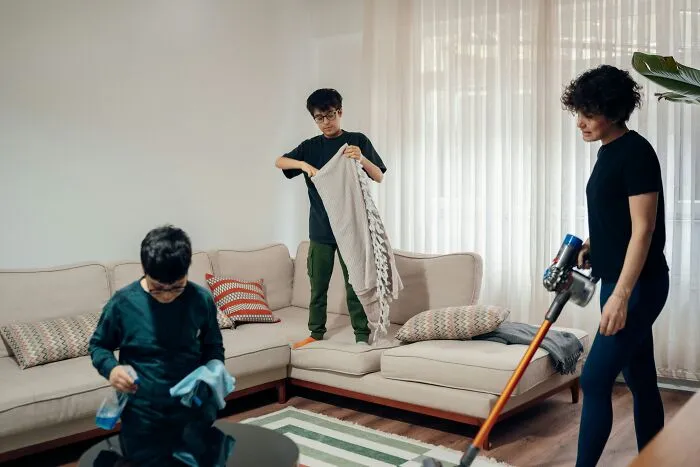
Providing the choice actually reduced the natural teenage habit of rebelling.
I used the same thing with my kids who, I discovered after a stupidly long time, had being doing back to me!
Can you pick me up or pay for an Uber?!?
#17
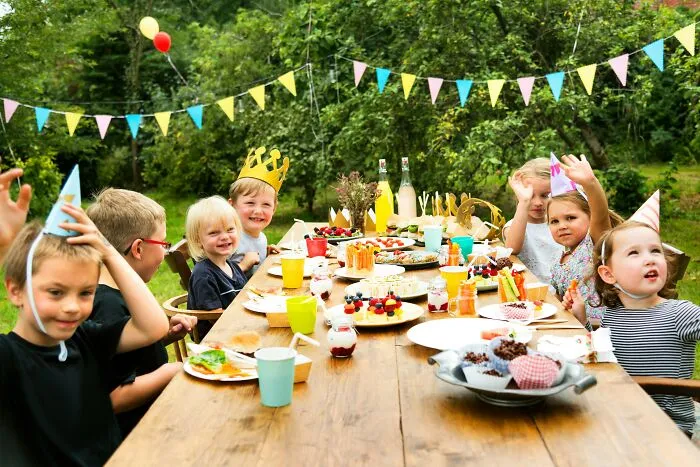
They never pushed me beyond my limits, but didn't let me coast either. Thanks to them, I have an ivy league PhD and an excellent job. I also like to think I'm a relatively normal and well-adjusted person whose only mental health issues have been briefly postpartum. I'm forever grateful to them.
#18
1. I almost never got yelled at. Instead, when I acted up or was otherwise an idiot, we had to discuss it. At length. It was excruciating. I was certain that getting yelled at and punished was better.
2. My mom only said she was disappointed with me once. That was nearly 50 years ago and I remember it vividly. She was absolutely in the right to be disappointed in me and I worked very hard to never make her disappointed in me again.
RIP mom and dad. Thank you for all you taught me.
None of this is a reason to spiral into permanent suspicion of every parent at the school gate. But it does explain why the parents who said no to every sleepover without ever fully explaining why were, in many cases, running a fairly rational risk assessment. The frustrating part is that the full explanation would not have helped much anyway, because children live almost entirely in the present moment.
Researchers explain that without a fully developed prefrontal cortex, they cannot connect current circumstances to future consequences. This is also why a child bouncing off the walls at 9 pm will tell you with total conviction that they are not tired. They are not lying, but they genuinely cannot feel what is about to happen to them in twenty minutes or how they will feel in the morning.
#19
I did terribly that first semester. I partied too much in the dorms, I enjoyed independence too much, I cut class all the time, and I absolutely bombed.
And my parents were footing the bill 100%.
I came home after that first semester, and gave them the bad news.
You know what they did???
> "We know you aren't proud of this, and we know you're sorry, and we know you can do better. We still believe in you, we still know you'll succeed. Try again next semester, all we ask is that you do your best. We love you".
No punishment. No yelling. No "you'll pay us back for this". Just love, support, encouragement, and forgiveness.
And you better believe I took that to heart. And I never messed up like that again. I got my degree with a GPA of 3.25, went to grad school (paid for that myself), and enjoyed a rewarding, high earning 35 year career in software.
And my folks were never prouder.
#20
They did similar with music, but to a lesser degree. Mom played violin casually and dad played trumpet in a low-key local orchestra, and occasionally in the pit orchestra for musicals. We all had piano lessons and the option to pick up a second instrument. We listened to all kinds of music on the radio: orchestral, big band, swing, oldies, classic rock, and country (plus the occasional baseball game) and went to orchestra and choir concerts. My favorite were the Messiah productions at Christmas.
These things -- especially the music lessons -- make it sound like we were well off, but we really weren't. We scraped by and got a boost from government assistance at times. But we sacrificed in some areas (very rarely had name-brand anything from cereal to shoes). Mom and dad just prioritized things like reading, music, education, and travel over new cars or the latest fashions. .