




In history class, we learn the broad strokes of the past. Big wars, fallen civilizations, and darkest periods of history are all part of the textbooks we read and learn from. However, there are many stories that history books often fail to include. And it’s not because they’re trying to hide something: there are just so many moments and personal stories that get lost in the intricate web of time, memory, and record-keeping.
The Facebook page “People of the Past: History, Science and Forgotten Stories” shares the lesser-known stories that might’ve fallen through the cracks but are still noteworthy. For example, did you know that windshield wipers were actually invented by a 27-year-old New Yorker, Mary Anderson? And have you ever heard about the story of a bear in the Polish army during WWII? You’ll find these and many more interesting historical moments below, so don’t dally and satisfy your curiosity for captivating history, and start scrolling!
#21
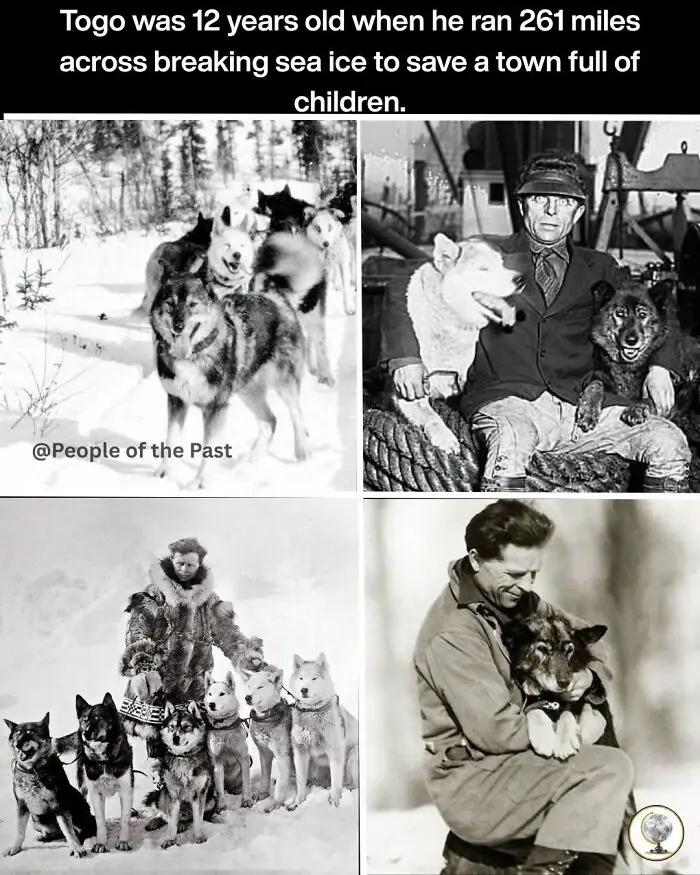
Leonhard Seppala was reading the newspaper when he found out a statue of his second-string dog had been unveiled in Central Park.
The dog was Balto. The musher who got the credit was Gunnar Kaasen. And Seppala, the Norwegian who had done the hardest, longest, most dangerous leg of the 1925 serum run, was sitting in Alaska with the dog who'd actually pulled it off curled up by the fire.
That dog was Togo. He was 12 years old during the run.
In January 1925, diphtheria broke out in Nome. The only serum was 674 miles away in Nenana, and a single plane attempt had already failed in the cold. So the territory organized a relay of dog teams to move the serum across Alaska in temperatures that dropped to 50 below.
Seppala drew the longest and most brutal stretch. He left Nome heading east to meet the serum, then turned around and ran it back west. To save time, he took his team straight across the frozen surface of Norton Sound, a shortcut over sea ice that could break apart under a team without warning.
Togo led through whiteout blizzards and shifting ice. At one point the floe they were on cracked off and drifted out to sea before Togo pulled them back onto solid ice. Seppala covered roughly 261 miles, more than any other musher in the relay, in conditions that k****d dogs on other teams.
He handed the serum off exhausted. The final 55 miles fell to Gunnar Kaasen and a scratch team led by Balto, a freight dog Seppala had left behind because he didn't think much of him.
Kaasen rolled into Nome at 5:30 in the morning. The reporters were waiting. Balto became the face of the run, got a Hollywood short film, and was immortalized in bronze in Central Park later that year.
Seppala was polite about it in public and bitter about it in private. He took Togo on a tour of the lower 48, where crowds turned out to see the real lead dog. Togo was given a gold medal by the explorer Roald Amundsen.
Then Seppala brought him home and kept him by the fire.
Togo lived to 16. Seppala had him put down himself, because he couldn't stand for anyone else to do it. He had the body preserved, and Togo's mounted skin is still on display at a museum in Wasilla, Alaska.
The statue in Central Park is still there too. The plaque reads Balto.
Report
20points
#22
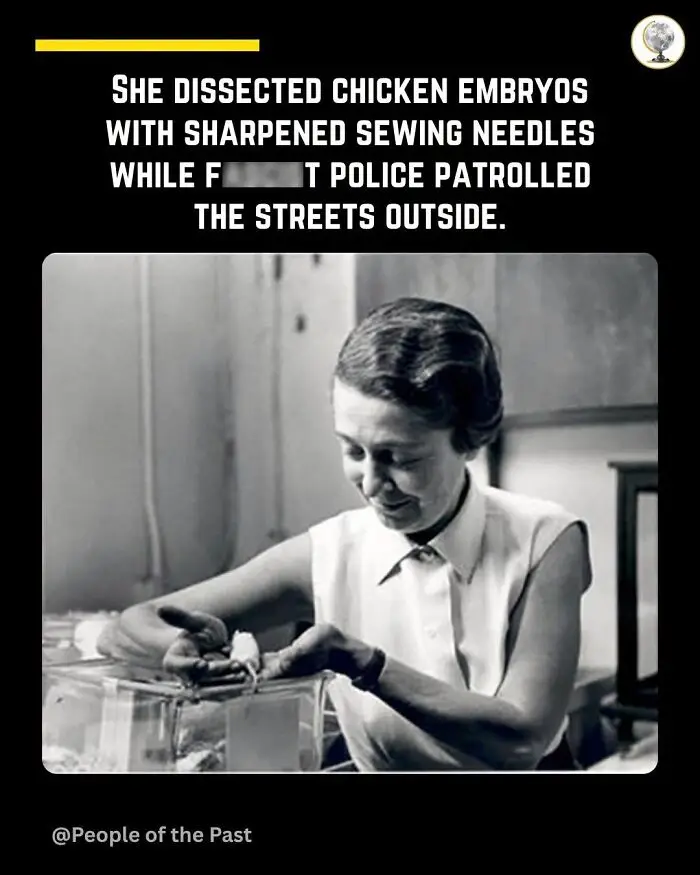
In 1938, Mussolini signed the Italian Racial Laws and Rita Levi-Montalcini lost everything.
She was a Jewish medical graduate from Turin, trained as a neurologist, barred from her university post and forbidden to practice medicine on non-Jewish patients. The lab she'd worked in was closed to her. The career she'd built was gone.
So she built a new lab in her bedroom.
Her brother Gino, an architect, helped her set it up. She used a microscope salvaged from her old workplace, sewing needles sharpened on a whetstone for scalpels, and watchmaker's forceps. Fertilized chicken eggs came from local farmers, who thought she wanted them for her family to eat. She wanted the embryos.
The work she chose was nerve cell development. She'd read a paper by the German embryologist Viktor Hamburger, who had removed limb buds from chick embryos and watched the corresponding nerve cells die. Levi-Montalcini repeated his experiments on her dresser, using a technique called silver staining to see the nerves under her microscope.
She came to a different conclusion than Hamburger. The nerve cells weren't failing to form. They were forming and then dying, starved of some signal coming from the tissue they were meant to connect to.
Then Allied bombs started falling on Turin.
The family fled to a farmhouse in the Piedmont countryside in 1942. She rebuilt her bedroom lab in a corner of the cottage and kept working. When the Germans occupied northern Italy in 1943, the family ran again, this time to Florence, living under false names. She kept notes throughout.
After the war, Viktor Hamburger read her published papers and invited her to Washington University in St. Louis for a semester. She stayed 30 years.
In the 1950s, working with biochemist Stanley Cohen, she identified the signal she'd first suspected in her bedroom in Turin. They called it nerve growth factor. It was the first of a whole family of molecules that govern how cells grow, survive, and die, foundational to modern understanding of cancer, Alzheimer's, and developmental biology.
In 1986, she and Cohen shared the Nobel Prize in Physiology or Medicine.
She lived to 103. When asked late in life what had kept her going through the racial laws, the bombs, and the hiding, she said her body had aged but her mind had not. She kept a small office in Rome and went in most days until the end.
The sewing needles are in a museum now.
Report
20points
#23
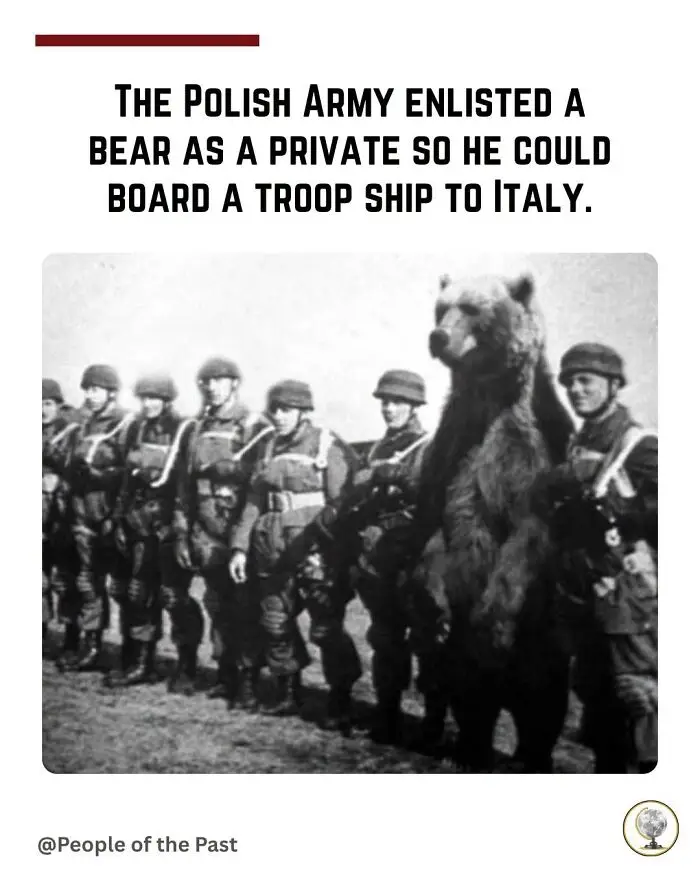
In 1942, a group of Polish soldiers in Iran bought a bear cub from a boy on the roadside for a few cans of food and a Swiss army knife.
They named him Wojtek, which means "happy warrior."
The soldiers belonged to the 22nd Artillery Supply Company of the Polish II Corps, a unit pulled together from men who'd survived Soviet labor camps and were now making their way west to fight alongside the British. The cub was tiny, underfed, and had to be bottle-fed condensed milk through a vodka bottle with a rag stuffed in the neck.
He grew up in the camp. He wrestled with the soldiers, slept beside them, and learned to drink beer from a bottle held in his paws. He smoked cigarettes too, though usually he ate them. He'd salute when greeted and march on his hind legs alongside the men.
By 1943, Wojtek weighed over 400 pounds and stood six feet tall.
The problem came when the unit was ordered to Italy. The British transport ship out of Egypt would not allow pets or mascots on board. So the Polish command did the only thing that solved it. They enlisted him.
Wojtek was given the rank of private, assigned a serial number, and listed on the company roster. His paybook recorded his rations. He boarded the ship as a soldier of the Polish Army.
In May 1944, the unit reached Monte Cassino.
The battle there was one of the worst of the Italian campaign. The Allies had been trying to break the German line for months, and the Polish II Corps was thrown into the final a*****t on the monastery hill. The 22nd Company was hauling artillery shells up steep ground under heavy fire, crate after crate, day after day.
Wojtek watched the men work. Then he started carrying the crates himself.
Soldiers who were there reported that he picked up boxes of 100-pound shells and walked them to the guns, never dropping one. The company adopted a new emblem after the battle: a bear carrying an artillery shell. It was painted on their vehicles for the rest of the war.
After Germany surrendered, the unit was demobilized in Scotland. Wojtek went with them. He lived out his last years at Edinburgh Zoo, where former Polish soldiers visited him often. He recognized their voices and would stand up against the enclosure wall when they spoke to him in Polish.
He died in 1963, aged 21.
His enlistment papers are still in the Polish military archive.
Report
18points
#24
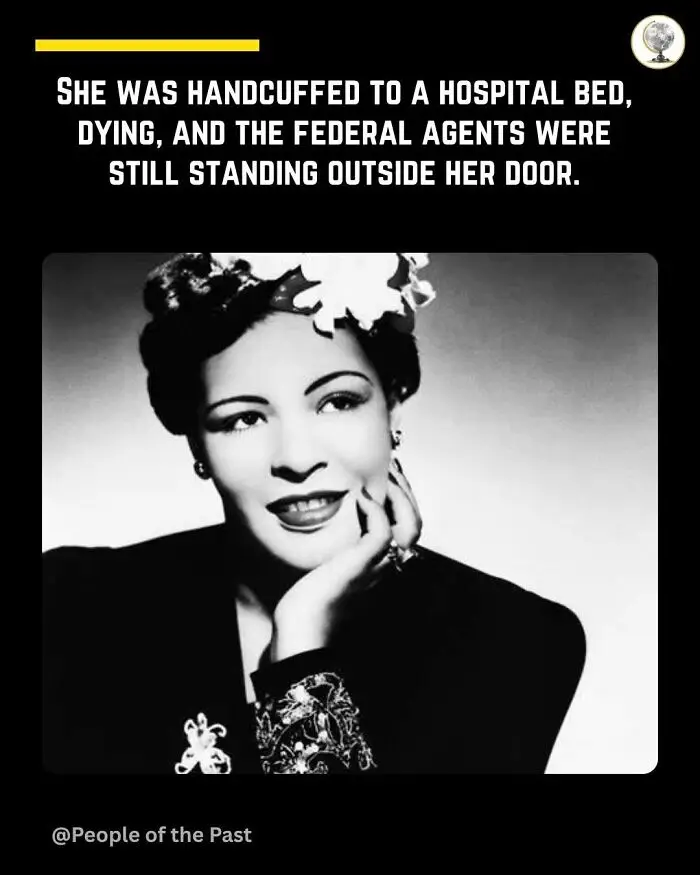
By 1959, Billie Holiday was dying in a New York hospital bed, and there were federal narcotics agents stationed outside her door.
She was 44 years old. Her liver was failing. She had been handcuffed to the bed frame, her fingerprints taken, her room searched, her flowers and radio and chocolates confiscated. The methadone that had been helping her was cut off.
The man who put them there had been hunting her for two decades.
Harry Anslinger ran the Federal Bureau of Narcotics, and he had built his career on a particular kind of cruelty. He believed jazz was a threat to America. He believed Black performers were corrupting white audiences. And he believed Billie Holiday, more than anyone else, had to be silenced.
The song that set him off was Strange Fruit.
She had been performing it since 1939. Written by a Jewish schoolteacher from the Bronx, it was a plain description of a lynching. Black bodies hanging from poplar trees. Blood on the leaves and blood at the root. Holiday closed every set with it. The lights went down. The waiters stopped serving. She sang it once, walked off, and did not return for an encore.
Anslinger ordered her to stop. She refused.
So he sent agents to her shows. He pressured club owners. He had one of his men, Jimmy Fletcher, follow her for months. Fletcher later said he felt sick about what he had been asked to do. He had come to like her. He said she was the kind of woman who could make you cry.
In 1947, Anslinger's agents arrested her on narcotics charges. She served a year and a day at a federal prison in West Virginia. When she came out, her cabaret card was revoked, which meant she could no longer perform in any New York venue that served alcohol. The city that had made her took her stages away.
She kept singing Strange Fruit anywhere she could.
By the spring of 1959, she was skeletal, weighing under a hundred pounds, and admitted to Metropolitan Hospital with cirrhosis and heart failure. Anslinger's men came for her there. They claimed they had found h****n in her room. They cuffed her to the bed.
Friends fought to get the cuffs removed. A nurse smuggled in a small amount of money she had earned from an interview, taped to her leg.
She died on July 17, 1959, with seventy cents in the bank and a federal agent still posted at her door.
The song outlived all of them.
Report
18points
#25
In 1783, Thomas Peters stood on a dock in New York with his wife, his children, and a piece of paper that said he was free.
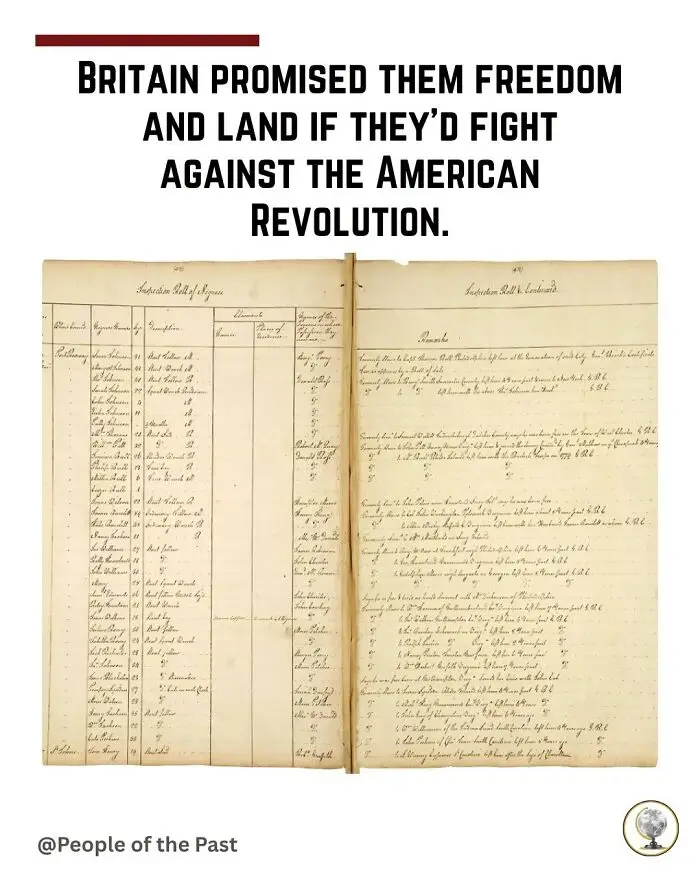
He'd been born in West Africa, sold into slavery in Louisiana, and shipped to North Carolina. When the British offered freedom to any enslaved person who would fight against the American rebels, he ran. He served in the Black Pioneers, a Loyalist regiment that built fortifications and carried supplies through the war.
When the British evacuated New York, around 3,000 Black Loyalists went with them. Their names were entered in a ledger called the Book of Negroes. Peters and his family were among them.
They were promised land in Nova Scotia.
What they got was scattered plots of rocky ground, often the worst available, often delayed for years. White Loyalists were settled first. Black Loyalists were pushed to places like Birchtown and Brindley Town, where they cleared forest for wages that rarely came and watched their neighbors get the farmland they'd been promised. Some were re-enslaved by Loyalists who claimed them as property. Riots broke out in Shelburne in 1784 when white settlers attacked Black families for taking work at lower wages.
Peters spent years petitioning local officials. Nothing moved.
So in 1790 he sailed to London. He carried a list of grievances signed by hundreds of Black Loyalists in Nova Scotia and New Brunswick and walked it into the offices of the Sierra Leone Company and the British government. He met with William Wilberforce and Granville Sharp. He told them the Crown's promises had been broken.
The answer was Sierra Leone. The Company offered passage to West Africa and land in a new settlement at Freetown for any Black Loyalist who wanted to go. Peters sailed back to Nova Scotia and recruited.
In January 1792, fifteen ships left Halifax carrying 1,196 people. Peters was on board. After 35 years, he was returning to the continent he'd been stolen from.
They landed in Freetown in March. The rainy season came. Malaria came with it. Peters quarreled with the white Company officials over land allocation and governance, the same fight he'd been having for nine years. He didn't get to finish it.
He died of fever on June 25, 1792, weeks after stepping ashore.
The settlement survived. Their descendants, the Sierra Leone Creoles, are still there. In Nova Scotia, the graves of the Black Loyalists who stayed behind are mostly unmarked. The Book of Negroes sits in archives in London and Washington, 3,000 names long.
Thomas Peters crossed the Atlantic three times chasing a promise written on a piece of paper.
Report
16points
#26
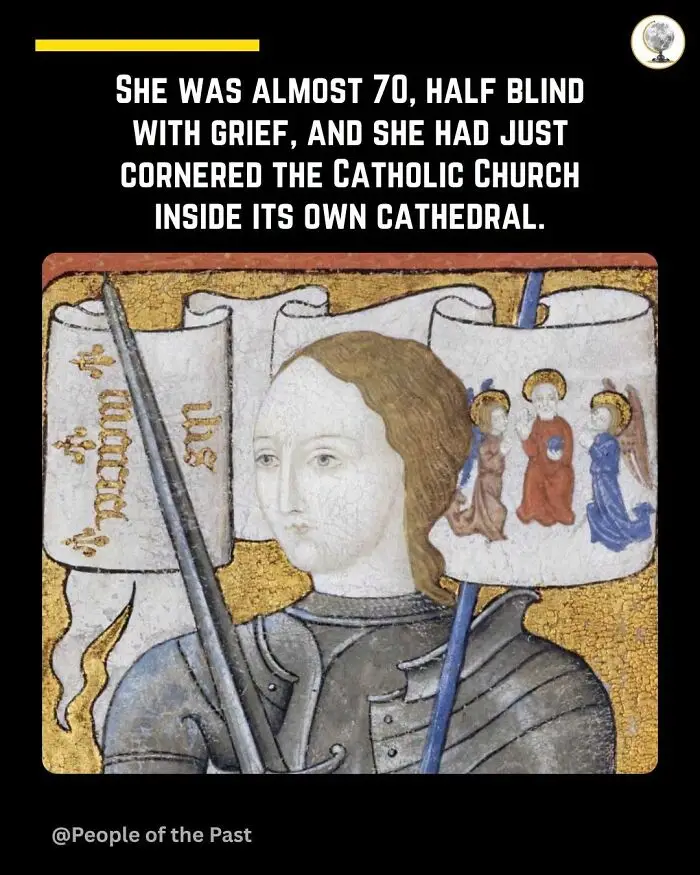
Isabelle Romée was nearly 70 years old when she walked into Notre Dame de Paris in November 1455.
She was a peasant woman from Domrémy. Her knees were bad. She had buried a daughter 24 years earlier, burned alive at Rouen as a heretic by an English-backed church court. Now she stood inside the most important cathedral in France, facing papal commissioners, and she was about to make them listen.
Her daughter was Joan of Arc.
Isabelle had spent more than two decades pushing for this hearing. She wrote letters. She petitioned. She traveled when traveling was hard on a body her age. Pope Callixtus III finally agreed to reopen the case, and the commissioners convened at Notre Dame to hear from the family first.
The clerks recorded her words.
She spoke of a daughter "born of lawful marriage," raised in the faith, taught to fear God. She said Joan had frequented the sacraments and lived honestly. Then she turned on the men who had k****d her. The judges at Rouen, she said, had condemned her daughter "fraudulently, deceitfully and wickedly," without any rights of defense, against all reason.
She asked the church to restore Joan's name.
Witnesses said she wept as she spoke. So did some of the men listening. She was supported on either side by her surviving sons, Jean and Pierre, who had ridden with their sister to Orléans and watched her crowned in glory before watching her burn.
The trial that followed lasted months. More than 100 witnesses testified, including villagers from Domrémy who had known Joan as a child, soldiers who had fought beside her, and clergy who had examined her. On July 7, 1456, the verdict came down. The 1431 trial was declared null. Joan was formally rehabilitated. Her conviction was annulled and her name cleared.
Isabelle did not live many more years. She died in Orléans, where the city had granted her a pension and a home after her daughter's death.
She never saw Joan canonized. That came in 1920, almost five centuries later.
But the saint exists in the church's official memory because a grieving mother in her 70s stood inside Notre Dame and refused to leave until they admitted what they had done.
Report
16points
#27

The walking stick was the first thing they found.
It was lying on the bank of the River Ouse on March 28, 1941, near the village of Rodmell in Sussex. Virginia Woolf had left the house that morning, walked across the water meadows, and put it down before she stepped into the river. Her coat pockets were heavy with stones.
She was 59. She'd just finished writing 'Between the Acts' and could not bear to revise it. The voices had come back. She had survived breakdowns before, in 1895 after her mother died, in 1904 after her father, again in 1913 when she swallowed a bottle of veronal and nearly died. Each time she had climbed out. This time she didn't believe she could.
She left two letters for her husband Leonard. One of them is among the clearest accounts of depression ever written by someone inside it.
'Dearest,' she wrote, 'I feel certain I am going mad again. I feel we can't go through another of those terrible times. And I shan't recover this time. I begin to hear voices, and I can't concentrate. So I am doing what seems the best thing to do.'
She thanked him. She told him no two people could have been happier. She told him she owed all the happiness of her life to him. 'I can't go on spoiling your life any longer,' she wrote. 'I don't think two people could have been happier than we have been.'
Then she walked out of the house.
Her body was not found for three weeks. A group of teenagers spotted it in the river on April 18. Leonard identified her by the wedding ring on her finger and the engraved watch in her pocket.
He had her cremated at Brighton. He brought the ashes back to Monk's House, the cottage where they'd lived and worked together for two decades, and buried them under one of the two great elms in the garden. They had called the trees Leonard and Virginia.
The elm came down in a storm years later. Leonard placed a stone bust of her there instead, with a line from 'The Waves' carved into the base.
'Against you I will fling myself, unvanquished and unyielding, O Death.'
He lived another 28 years. He never moved out of the house.
Report
16points
#28
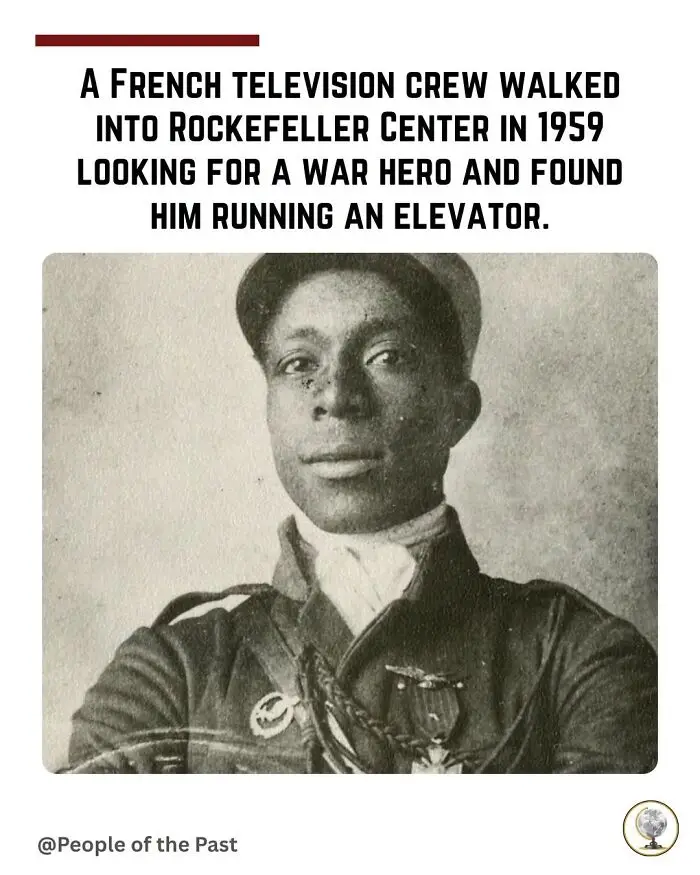
In 1959, a French television crew walked into Rockefeller Center looking for a man they had been told was a national hero of France.
They found him running an elevator.
Eugene Bullard was 64 years old by then, in a uniform with brass buttons, ferrying executives between floors. None of them knew the man pressing the buttons had flown combat missions over the Western Front 40 years earlier.
He was born in Columbus, Georgia in 1895, the son of a former s***e. As a boy he watched a white mob try to l***h his father. He ran away at 11, worked his way through the South with traveling Romani families, and stowed away on a German freighter bound for Scotland. He never lived in America again as a free man, not really.
By 1914 he was in Paris, boxing for money. When the war came he joined the French Foreign Legion. He fought at Artois, at Champagne, at Verdun, where shrapnel tore into his thigh badly enough to end his life as an infantryman.
So he learned to fly.
The French air service took him in 1917. He flew with Escadrille N.93 and Escadrille SPA.85, ran around 20 combat sorties, and became the first Black combat pilot in history. He kept a pet monkey named Jimmy in the cockpit. France gave him the Croix de Guerre.
When the United States entered the war, the American air service was recruiting experienced pilots from the French ranks. Bullard applied. Every white American flyer who applied was accepted. He was not.
He stayed in Paris. He ran a nightclub called Le Grand Duc in Montmartre, where Josephine Baker sang and Langston Hughes washed dishes. He spied on German officers for French intelligence in the late 1930s, using his fluent German and the fact that no one suspected the Black bar owner of listening.
When the Nazis came in 1940, he fought again, was wounded again, and escaped through Spain to New York with almost nothing.
America had not changed. In 1949 he was beaten bloody by white police and a mob at the Peekskill riots in New York after attending a Paul Robeson concert. Photographs of the attack survive. No one was charged.
He took the job at Rockefeller Center because he needed the money.
In 1959, French President Charles de Gaulle visited New York and asked to meet him. The press finally noticed. Bullard was made a Knight of the Legion of Honor, the highest decoration France can give.
He died of stomach cancer in a Harlem apartment in 1961. He was buried in the French War Veterans' section of Flushing Cemetery in Queens, in the uniform of the Free French Forces.
The elevator he had operated kept running without him.
Report
16points
#29
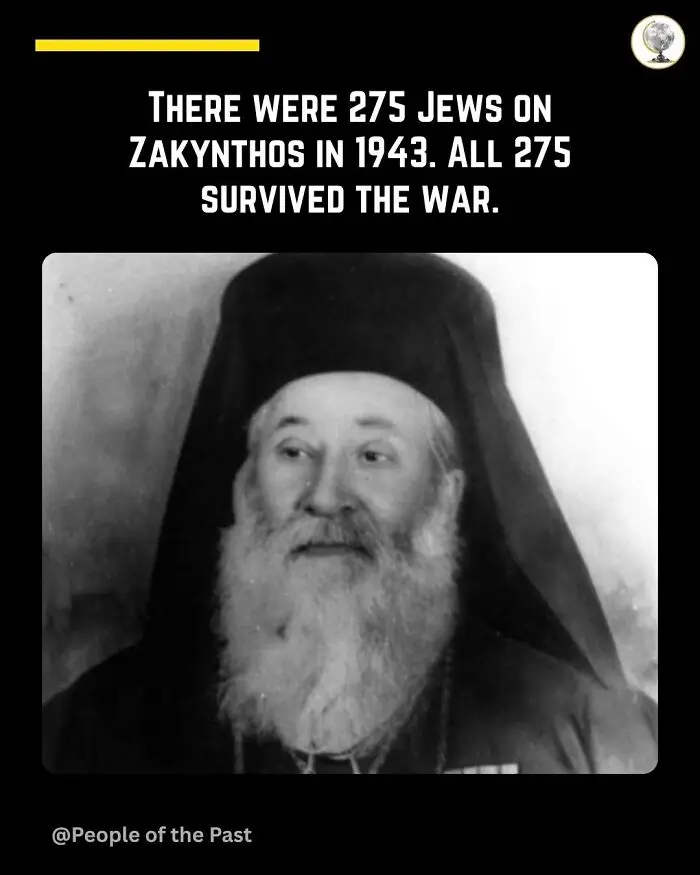
In the autumn of 1943, the German commander on Zakynthos handed Bishop Chrysostomos and Mayor Loukas Karrer an order. Produce a list of every Jew on the island. He wanted it within hours.
There were 275 Jewish residents on Zakynthos. Families who'd lived in the Ionian Sea community for generations, with Greek neighbors, Greek names, Greek kitchens.
The bishop and the mayor went away to think.
What they did next has been told in slightly different versions over the years, but the core of it holds. They warned the Jewish community to leave their homes and scatter. Christian families in the villages took them in, hid them in cellars, in attics, in farmhouses up in the hills. Others fled to the mountains and waited.
Then the bishop and the mayor sat down and wrote their list.
It had two names on it. Bishop Chrysostomos. Mayor Karrer.
Chrysostomos is said to have written a letter to the German authorities along with it, taking personal responsibility for the island's Jews and asking that he be deported in their place. Whether the letter survived in its exact form is debated by historians. What isn't debated is what happened next.
The deportation never came. The Germans on Zakynthos didn't round up the island's Jewish population. Some accounts credit intervention from Berlin, others point to the chaos of a collapsing occupation, others to the simple fact that the Jews were no longer where the Germans could find them.
In September 1944, the Germans pulled out. Every one of the 275 Jews of Zakynthos came down from the hills and out of the cellars. Every one of them had survived.
In 1953, an earthquake leveled most of the island. Among the first aid shipments to arrive was one from the State of Israel, sent in memory of what the people of Zakynthos had done.
In 1978, Yad Vashem recognized Chrysostomos and Karrer as Righteous Among the Nations.
The list with two names on it has never been found. It may have been destroyed, or it may never have existed in the exact form the story remembers. What's certain is the outcome. On an island of 275 Jews, the bishop and the mayor were asked to give them up, and not one was taken.
Report
16points
#30
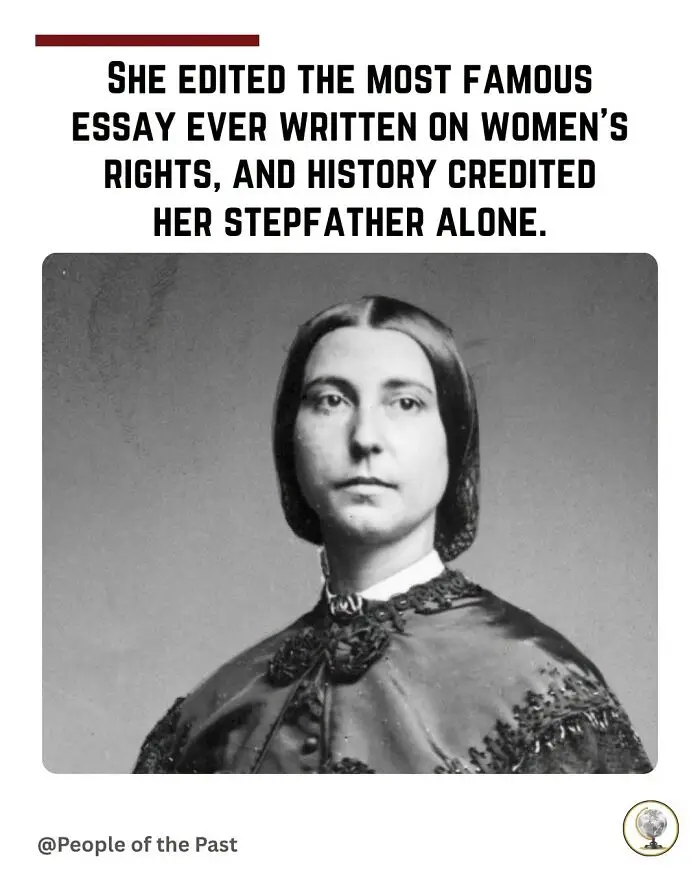
John Stuart Mill is remembered as the great liberal voice for women's rights. The woman who edited his manuscripts, ran his campaigns, and kept his career alive was his stepdaughter, Helen Taylor.
She was 27 when her mother Harriet died in 1858. Mill was wrecked by the loss, and Helen stepped into the gap. For the next 15 years she worked beside him as researcher, editor, secretary, and political strategist.
She shaped The Subjection of Women, the 1869 essay that became the foundational liberal text on female equality. She helped draft his speeches when he sat as MP for Westminster. She handled correspondence with suffragists, organized his 1865 campaign, and managed the household that made his writing possible.
Mill said so himself. He credited her openly in letters and in print, calling her contribution to his later work indispensable. The public preferred to ignore that part.
When Mill died in 1873, Helen did not retreat into a quiet widowhood as his literary executor. She edited and published his Autobiography and Three Essays on Religion. Then she went into politics on her own.
She sat on the London School Board from 1876, fighting for free school meals, an end to corporal punishment, and decent pay for teachers. She campaigned for Irish land reform, for the rights of agricultural laborers, and for women's suffrage at every level she could reach.
In 1885, she tried to stand for Parliament in North Camberwell.
Women could not vote. Women could not sit as MPs. Helen knew this. She offered herself anyway, arguing there was no law that explicitly barred a woman from being nominated. The returning officer refused her nomination papers. She had made the point regardless.
That was 33 years before the Representation of the People Act gave some women the vote, and 33 years before Constance Markievicz became the first woman elected to the Commons.
Helen spent her final years in Torquay, living with her niece Mary. She died in 1907, a year before the suffragette movement reached its loudest pitch. Her name slid out of the histories that kept Mill's.
The great liberal thinker on women's equality had a co-author. She lived long enough to run for the Parliament that would not have her, and quiet enough afterward that most people forgot she had tried.
Report
15points
#31
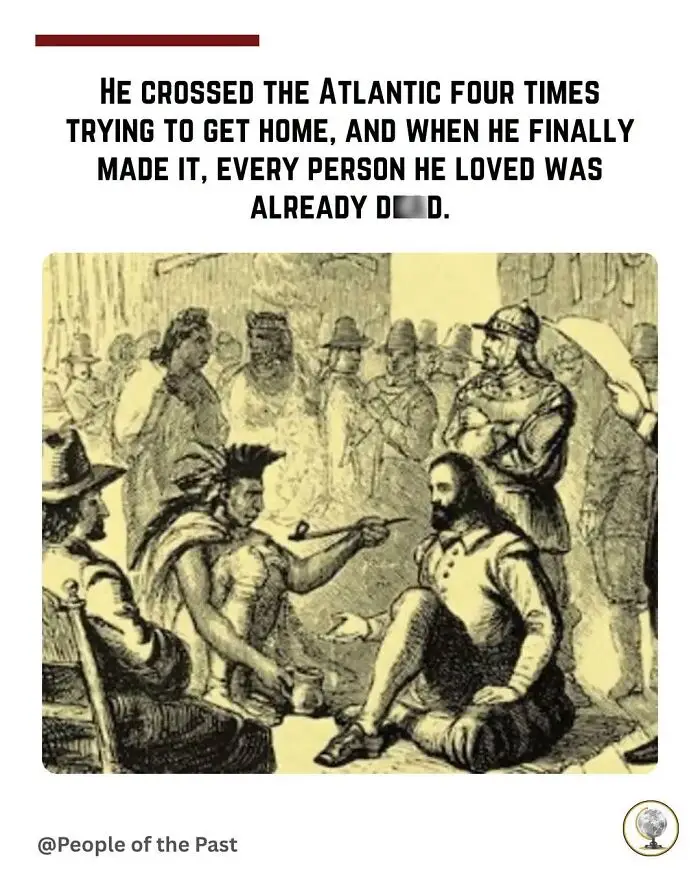
He walked into the clearing expecting smoke, voices, children, the smell of cooking fires. He found silence.
Tisquantum had been gone for four years. He came back to Patuxet in 1619 and walked through longhouses that held bones instead of people.
His story had started in 1614, when an English captain named Thomas Hunt lured him and around two dozen other Wampanoag men onto a ship under the pretense of trade. Hunt sailed them across the Atlantic and sold them in Málaga, Spain. Tisquantum was bought, by some accounts, by Spanish friars who took him in and eventually let him go.
He made his way to London. He learned English. He lived for a time with a shipbuilder named John Slany. He crossed the Atlantic again to Newfoundland, then back to England, then back across once more in 1619 with an expedition heading for New England.
Four crossings. Years of trying to get home.
What he didn't know, what no one had told him, was that a plague had swept the coast between 1616 and 1619. Historians still debate what it was. Leptospirosis, smallpox, viral hepatitis. Whatever it was, it k****d up to 90 percent of the Native population in the region. Whole villages emptied out. Patuxet was one of them.
He was the last of his people.
In the spring of 1621, a small group of English settlers were starving on the same ground where his village had stood. They called the place Plymouth. Tisquantum, whom they called Squanto, walked into their settlement speaking their language. He showed them how to plant corn using fish as fertilizer. He showed them which plants to eat and where to fish. He negotiated between them and the Wampanoag sachem Massasoit.
He did all of it as a man with no village to return to at night.
The Thanksgiving story flattens him into a helpful guide. The truth is heavier. He translated between two worlds because he no longer belonged fully to either one. His own world had been buried while he was in Spain learning a foreign tongue.
In November 1622, he fell ill with a fever during a trip to Cape Cod with William Bradford. He bled from the nose, which the Wampanoag took as a sign of death. He asked Bradford to pray for him, so that he might go to the Englishmen's God in heaven.
He died within a few days. Bradford wrote that it was a great loss.
He was buried somewhere on the Cape. The grave has never been found.
Report
14points
#32
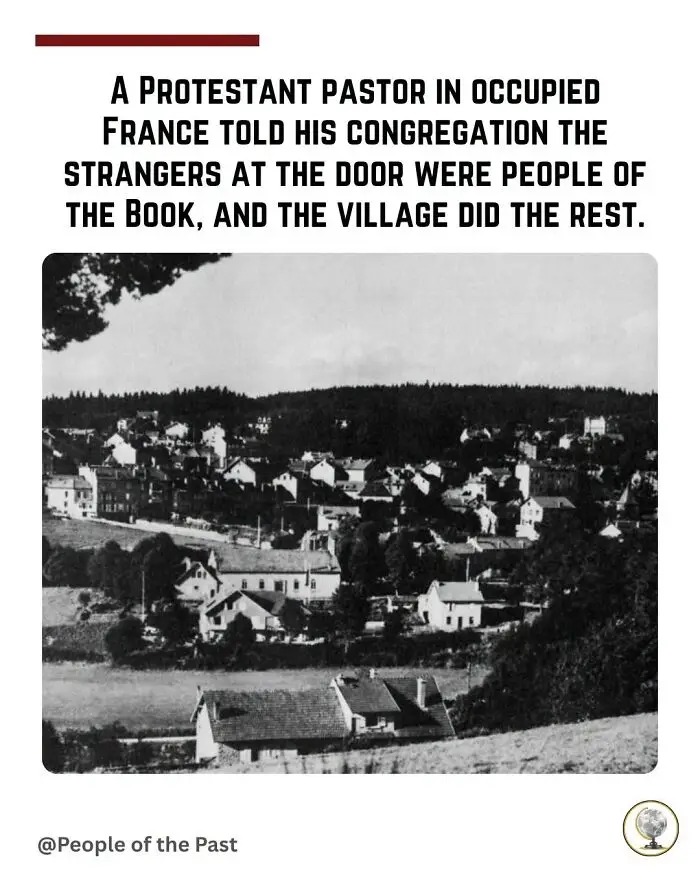
The pastor stood in his pulpit and told his congregation that the strangers knocking on their doors were people of the Book. That was all the instruction Le Chambon needed.
Le Chambon-sur-Lignon sat high in the mountains of south-central France, a Protestant village in a Catholic country. Its people were Huguenots, descendants of a religious minority that had been hunted, burned, and driven into the hills for centuries. They knew what persecution looked like from the inside.
When the Nazis occupied France and the Vichy regime began rounding up Jews, Andre Trocme and his wife Magda did not hold a meeting or take a vote. They opened their parsonage. Then the rest of the village followed.
Farmers took in children whose parents had been deported. Schoolteachers added fake names to class rolls. The Hotel May ran as a boarding house for Jewish students. Forged papers came out of a back room run by a young schoolteacher named Edouard Theis. False ration cards moved through a network of pastors and farmers across the plateau.
When Vichy police came looking, the village had already moved. Children were hidden in barns and root cellars. The local police chief, Leopold Praly, sometimes tipped families off before the raids. When officials demanded the names of Jews being sheltered, Trocme refused. He told them the people were under his care and they would not be handed over.
He was arrested in 1943 and held in an internment camp. He was released after a few weeks, partly because his captors could not break him and partly because the network kept running without him. His cousin Daniel Trocme, who ran one of the children's homes, was less fortunate. He was arrested with his students and died at Majdanek.
By the time the war ended, the village and the farms around it had hidden roughly 3,500 Jews. Some estimates run higher. No one in Le Chambon kept a list, which was the point.
When Trocme was asked after the war how the village had done it, he gave a flat answer. They were following the Gospel. There was nothing remarkable about it.
In 1990, the village itself was recognized by Yad Vashem as Righteous Among the Nations. It remains one of the only entire communities ever given that honor.
The people of Le Chambon never called themselves heroes. They called themselves Christians, and Huguenots, and neighbors. They opened their doors and they kept their mouths shut.
Report
14points
#33
In the spring of 1989, a student in Beijing held up a sheet of paper with nothing written on it.
The square was full of slogans. Banners demanded democracy. Hunger strikers lay on the stones of Tiananmen. Among all that noise, a few protesters chose silence on paper. Nothing to read. Nothing to quote. Nothing the censors could point to as a crime.
The blank page said what the state had already made unsayable.
On the night of June 3rd and into the morning of June 4th, the People's Liberation Army moved into central Beijing with tanks and live ammunition. The death toll has never been officially confirmed. Estimates range from several hundred to several thousand. The Chinese government has spent more than three decades scrubbing the events of that night from textbooks, search engines, and public memory. Even the date itself, written as 6/4, became a flagged term online.
The blank page went with it. Filed away. Forgotten by most of the world.
Then, in November 2022, it came back.
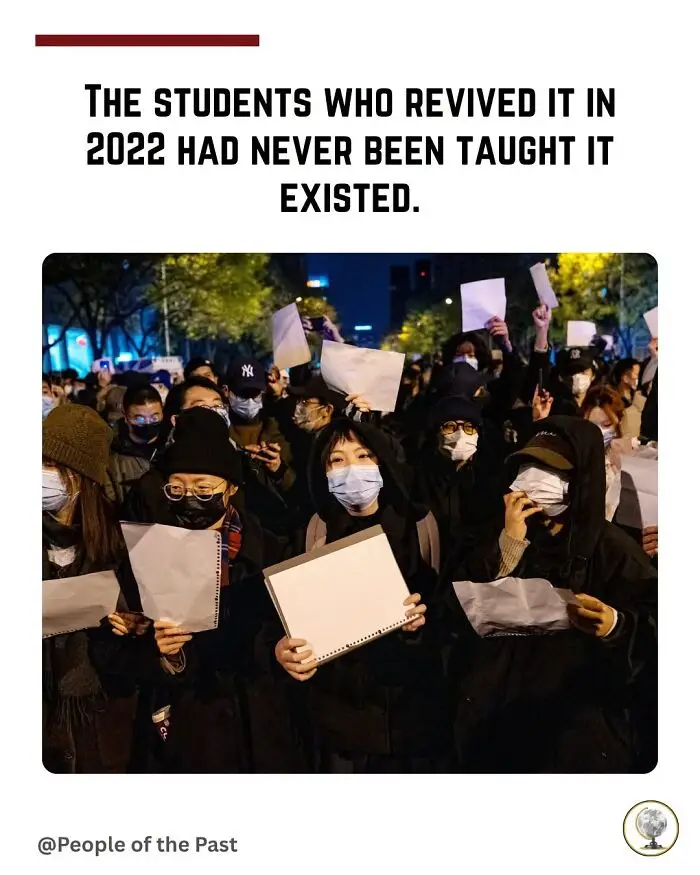
A fire in an apartment block in Urumqi k****d at least 10 people during one of the strictest COVID lockdowns in the country. Residents said barriers and sealed doors had slowed the escape. Within days, protests broke out in Shanghai, Beijing, Nanjing, Wuhan, and on university campuses from Chengdu to Hong Kong. Students gathered in courtyards and on street corners holding up sheets of blank A4 paper.
No slogans. No names. No demands written down.
The police could arrest them, but they could not say what the paper said. To name the message was to admit the message existed. The silence did the work.
It became known as the White Paper Movement, or the A4 Revolution. Within a few weeks, the government announced the end of its zero COVID policy. Officials never linked the decision to the protests. They did not have to.
The students who held those pages in 2022 were born long after 1989. Most had never been taught what happened in Tiananmen Square. They had reached for the same symbol anyway, across 33 years of enforced forgetting, and held it up to the same kind of night.
A blank page. Still the loudest thing in the room.
Report
14points
#34
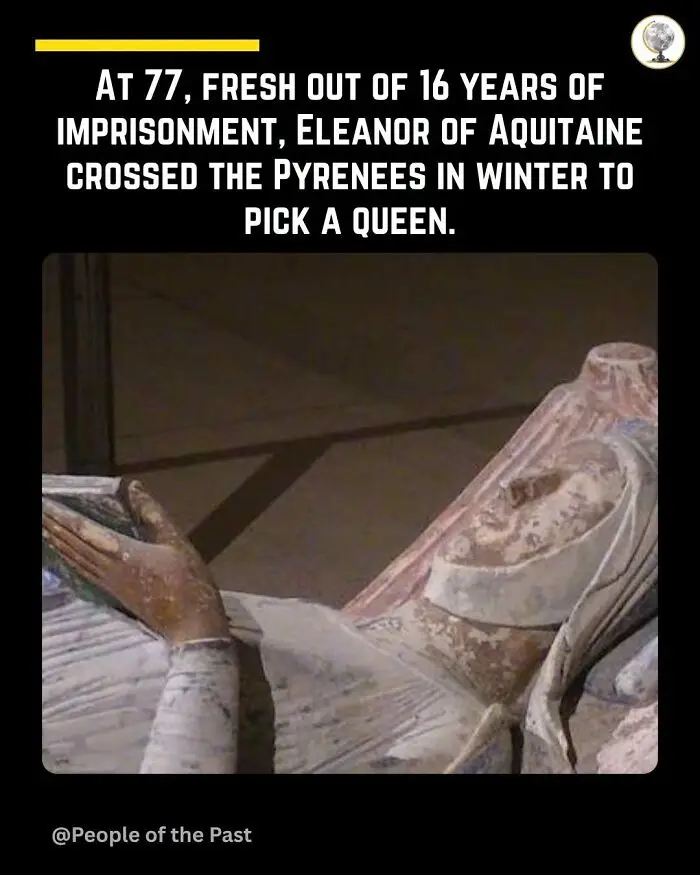
She was 77 years old, just out of prison, and about to cross the Pyrenees in winter.
Eleanor of Aquitaine had spent 16 years locked away by her husband, Henry II of England, for backing her sons in rebellion. By 1200, she had outlived him, outlived her son Richard the Lionheart, and watched her youngest, John, take the English throne. Most women her age, if they survived that long, were quietly preparing to die.
Eleanor saddled up instead.
The Treaty of Le Goulet had just been signed between John and Philip II of France. To seal the peace, Philip's heir, the future Louis VIII, would marry one of Eleanor's Castilian granddaughters. The girls lived at the court of her daughter, Queen Leonor of Castile, on the other side of the mountains. Someone had to go and fetch the bride.
Eleanor went herself.
She rode south through Aquitaine in the dead of winter, over passes thick with snow, and was briefly captured by a lord named Hugh de Lusignan along the way. She negotiated her own release and kept moving. By early 1200 she was in Castile, looking at her two granddaughters: Urraca, the elder, and Blanca, the younger.
Protocol said Urraca. Eleanor disagreed.
The chroniclers say she judged the name Urraca too foreign for French ears, and that Blanca had the temperament for the role. Whatever her real reasoning, she chose the younger girl. Blanca became Blanche, the future queen of France.
Then Eleanor turned around and rode back over the mountains with the 12 year old in tow. They reached Bordeaux by Easter. Eleanor, exhausted, handed Blanche off to the Archbishop and went no further. The marriage took place that May in Normandy.
Eleanor retired to the abbey at Fontevraud and died there in 1204.
The granddaughter she chose grew up to rule France as regent for her son, Louis IX, the king later canonized as Saint Louis. Blanche held the kingdom together through his minority and again while he was on c*****e. The line Eleanor picked out in a Castilian court at the age of 77 shaped the next century of French history.
She made one last journey, and she got it right.
Report
13points
#35
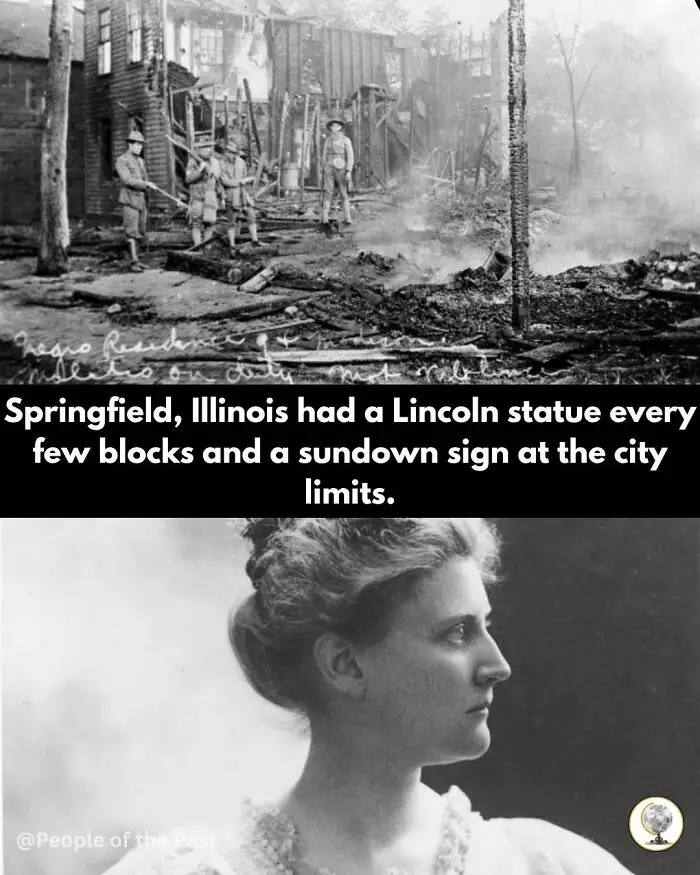
In August 1908, a man named William Donnegan was dragged from his home in Springfield, Illinois, and hanged from a tree two blocks from Abraham Lincoln's tomb.
He was 84 years old. He had cobbled shoes for Lincoln himself. His wife was white, and that was reason enough for the mob.
Springfield in 1908 was a city of contradictions. A Lincoln statue stood every few blocks. A sundown sign stood at the city limits warning Black residents to be out by dark. The capital of the Land of Lincoln ran on the same rules as any town in Mississippi.
The riot began over two Black men held in the city jail, one accused of m****r, one of a*****t. When the sheriff moved them out of town for their safety, the white crowd that had gathered to l***h them turned on the Black neighborhoods instead. They burned homes. They destroyed businesses. They k****d Scott Burton, a barber who tried to defend his shop, and strung him up too.
It took 3,700 state militia to stop it. By then, much of the Black district was ash.
In New York, a journalist named William English Walling read the reports and traveled to Springfield with his wife to see it for himself. What he found became an article called "Race War in the North," published in The Independent that September. He wrote that the spirit of the Southern lyncher had moved north, and that unless white Americans were willing to treat Black Americans as equals, Lincoln's work would be undone.
The article landed on the breakfast table of Mary White Ovington, a white settlement worker in Brooklyn who had spent years studying Black life in New York. She wrote to Walling. So did Henry Moskowitz, a social worker on the Lower East Side. The three of them met in Walling's apartment in early January 1909.
They decided the country needed a new organization. Something national. Something that would fight lynching, s*********n, and disenfranchisement in court and in print.
They issued a call on February 12, 1909, the 100th anniversary of Lincoln's birth. Sixty signatures came back, including W.E.B. Du Bois, Ida B. Wells, Jane Addams, and Lincoln's own grand-nephew.
The National Association for the Advancement of Colored People was born from a riot in Lincoln's hometown.
Donnegan's tree stood for years afterward. The sundown sign came down eventually. The organization founded in response to what happened under both of them is still here.
Report
13points
#36

In the summer of 1978, a Soviet geologist flying low over the Siberian taiga spotted something that shouldn't have been there.
A clearing. Furrows in the dirt. A garden, 150 miles from the nearest settlement, in a part of Khakassia where no human being was supposed to live.
The pilot circled. The geologists landed six miles away and hiked through the forest until they reached a blackened hut sunk into the hillside.
An old man came out. His clothes were patched sackcloth. His feet were bare. He hadn't seen another human being outside his family in over 40 years.
His name was Karp Lykov. He was an Old Believer, a member of a Russian Orthodox sect persecuted since the 1600s. In 1936, after a Communist patrol shot his brother on the edge of their village, Karp grabbed his wife Akulina, their 9 year old son and 2 year old daughter, and walked into the forest. They kept walking until the forest swallowed them.
Two more children were born in the taiga. Dmitry and Agafia had never seen a road, a stranger, or a building larger than their hut. They spoke a slow, lilting Russian their parents had taught them from memory and from a single battered Bible.
The family ate what they could grow and what Dmitry could run down on foot. He could chase game for days through the snow in bark shoes. They had no salt. No matches. They struck fire from flint. They wore clothes patched from hemp they grew themselves.
In 1961, snow fell in June and k****d everything in the garden. The family ate their leather shoes and the bark off the trees. Akulina refused her share. She gave her food to the children and starved to death so they could live.
A single grain of rye sprouted in the pea patch that year. They guarded it day and night against birds and mice. From that one grain, they slowly rebuilt their seed stock.
The geologists brought them salt and bread. Karp called salt true t*****e to have lived without. They were told about the war, the moon landing, satellites passing over their hut at night. Karp listened politely. The children stared.
Within three years of contact, three of the four Lykov children were dead. Two from kidney failure, one from pneumonia, their immune systems unprepared for a world full of strangers.
Karp died in his sleep in 1988. The geologists offered to take Agafia to her relatives. She refused.
She is still there.
Report
13points
#37
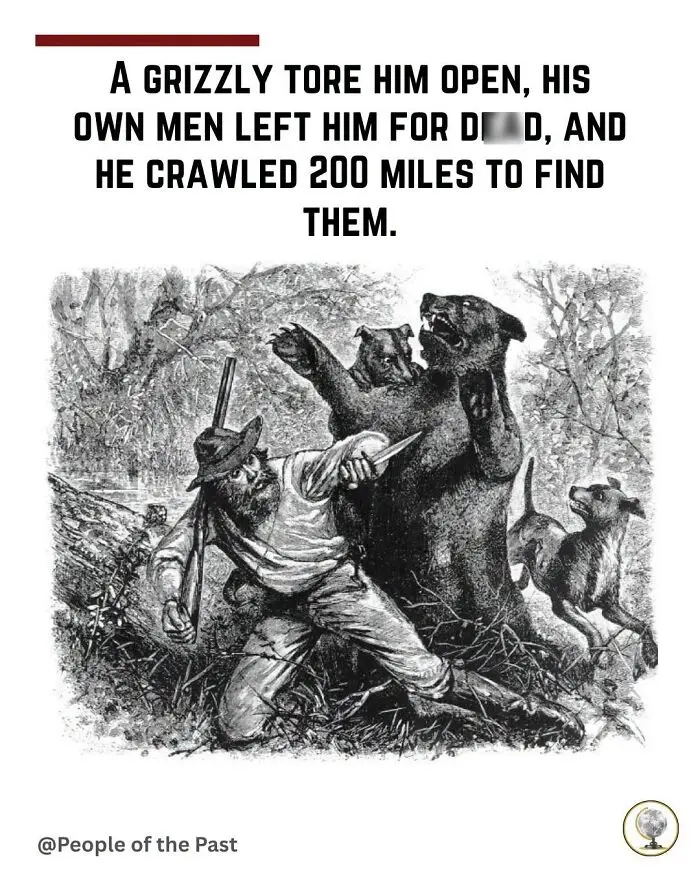
In August 1823, Hugh Glass was scouting ahead of a fur trapping party along the Grand River in present day South Dakota when he stumbled between a grizzly sow and her cubs.
She was on him before he could raise his rifle.
The bear opened his scalp, tore through his back, broke his leg, and punctured his throat. His companions shot her off him, but by the time she lay dead across his body, Glass was a wreck of torn muscle and exposed bone. Nobody expected him to survive the night.
The expedition's leader, Andrew Henry, needed to keep moving. Arikara war parties were close. He offered a bounty to any two men who would stay behind, bury Glass when he died, and catch up after.
John Fitzgerald volunteered. So did a young Jim Bridger, still in his teens.
They waited. Glass kept breathing. After a few days, Fitzgerald spooked at signs of Arikara nearby and told Bridger they had to leave. They took his rifle, his knife, his flint, and his powder horn. They scraped a shallow grave, laid him in it, and rode off.
Glass woke up alone, unarmed, on the edge of a hole meant to hold his body.
He set his own broken leg. He let maggots eat the rotting flesh on his back to keep gangrene from k*****g him. He drank from creeks and chewed wild berries and raw bison left behind by wolves. When he couldn't walk, he crawled.
The distance to Fort Kiowa was roughly 200 miles.
It took him about 6 weeks. He floated part of the way down the Cheyenne River on a makeshift raft. He was helped at one point by friendly Lakota who stitched the wound on his back. By the time he reached the fort, the men inside didn't recognize the figure dragging itself through the gate.
He rested only as long as he had to. Then he went looking for Fitzgerald and Bridger.
He found Bridger first, at a post on the Bighorn. The boy was 19 and terrified. Glass looked at him, saw the age and the fear, and let him live.
Fitzgerald took longer to track down. By the time Glass caught up with him, Fitzgerald had enlisted in the US Army, and k*****g a soldier would have meant the noose. Glass took back his stolen rifle and walked away.
He spent another decade in the fur trade. In the winter of 1833, on the frozen Yellowstone, he was finally k****d by an Arikara raiding party.
The grave that had been dug for him ten years earlier was 600 miles east, and empty.
Report
12points
#38
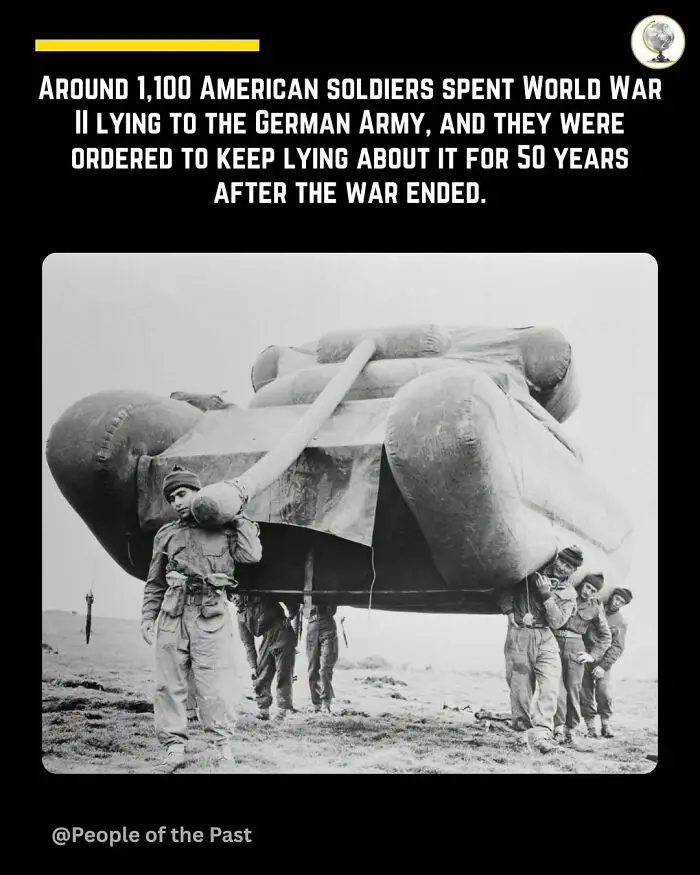
The tanks rolling toward the front line were made of rubber.
Four men could lift one. A stiff wind could knock it over. From a German reconnaissance plane at altitude, it looked exactly like a Sherman.
This was the 23rd Headquarters Special Troops, the unit history would come to call the Ghost Army. Around 1,100 American soldiers, many of them recruited from art schools, advertising agencies, and design studios in New York and Philadelphia. Bill Blass was one of them. So was the painter Ellsworth Kelly. So was the photographer Art Kane.
Their job was to lie to the German Army, and to be believed.
They staged more than 20 deceptions across Europe between 1944 and 1945. Inflatable tanks, jeeps, and artillery pieces arranged in convincing formations. Sound trucks loaded with massive speakers that could broadcast the noise of an armored division moving at night, audible from 15 miles away. Fake radio traffic mimicking real units, complete with the personal quirks of specific operators. Shoulder patches swapped, insignia repainted, soldiers sent into French cafes to drop misleading gossip where German spies might hear it.
They impersonated entire divisions. They drew German fire away from real American positions. At the Rhine in March 1945, they helped convince the Germans that the Ninth Army would cross at one point while it actually crossed at another. The deception likely saved thousands of lives.
Three of them were k****d. Dozens were wounded. The unit operated within range of German artillery for most of the war, holding ground they had no real ability to defend if the bluff failed.
When the war ended, they were ordered not to speak about any of it. The files stayed classified until 1996. By then, most of the men had spent 50 years carrying a story they could not tell, watching other units get the parades and the histories and the documentaries.
In March 2024, the surviving veterans were awarded the Congressional Gold Medal. Seven were still alive. The youngest was 99.
They sat in the Capitol in wheelchairs, in uniforms that no longer fit the way they once had, while the country finally said out loud what they had done.
One of them, Bernard Bluestein, was 100 years old. He had spent the war painting fake insignia onto trucks. He lived long enough to hear his name read into the record.
Report
12points
#39
The cellar at Mila 18 was dark, hot, and crowded with the dying.
By early May 1943, the bunker beneath a ruined apartment block had become the command post of the Jewish Combat Organization. The fighters were starving. Their pistols were nearly out of ammunition. Above them, German soldiers were burning the Warsaw Ghetto block by block, flushing out anyone still breathing.
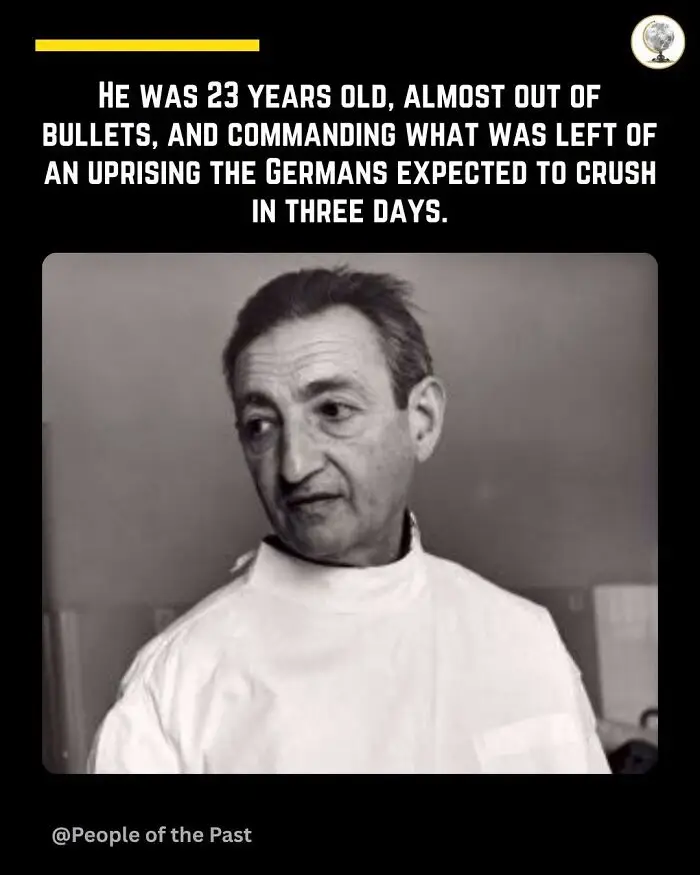
Marek Edelman was 23 years old. He was one of the last commanders left alive.
The uprising had started on April 19, when SS troops entered the ghetto to deport the remaining 50,000 Jews to Treblinka. They expected three days of work. They got 28. A few hundred young fighters with smuggled pistols, homemade grenades, and a handful of rifles held off a force armed with tanks, flamethrowers, and artillery.
They knew they couldn't win. That wasn't the point. The point was to choose how they died.
On May 8, the Germans found Mila 18. They pumped gas into the bunker. Mordechai Anielewicz, the 24-year-old commander, died there with most of his staff. Some shot themselves. Some suffocated.
Edelman wasn't in the bunker that night. Two days later, on May 10, he led a group of survivors into the sewers beneath the ghetto. They crawled through human waste in pitch darkness for hours, listening for German patrols above the manhole covers. When they finally surfaced on the A***n side of Warsaw, a truck was waiting. Some of the fighters didn't make it out in time and were left behind. Edelman never stopped thinking about them.
He fought again in the 1944 Warsaw Uprising. He survived that too.
After the war, Edelman stayed in Poland when most of the surviving Jewish community left. He trained as a cardiologist in Lodz and became one of the country's leading heart surgeons, specializing in the cases nobody else would take. The patients deemed too sick. The ones already written off.
He once said he treated every patient like he was still pulling people out of the rubble. You went in for the ones who looked gone. You didn't stop just because the odds were bad.
He spoke about the uprising rarely, and when he did, he refused to make it heroic. He called the fighters ordinary people who had run out of other options. He kept a small photograph of Anielewicz in his apartment.
Marek Edelman died in Warsaw in 2009, at the age of 90. He had outlived the ghetto by 66 years.
At his funeral, mourners laid yellow daffodils on the coffin. Every April 19, he had walked to the monument where the ghetto once stood and placed the same flowers at its base.
Report
11points
#40
In December 1944, a young intelligence officer named Hiroo Onoda was sent to Lubang Island in the Philippines with a single order. Gather intelligence, conduct guerrilla warfare, and do not surrender under any circumstances.
He obeyed for 29 years.
Onoda was 22 when he arrived. By February 1945, American and Filipino forces had taken the island and most of the Japanese garrison was dead or captured. Onoda slipped into the jungle with three other soldiers: Corporal Shoichi Shimada, Private Kinshichi Kozuka, and Private Yuichi Akatsu.
They lived on bananas, coconuts, and stolen rice. They wore uniforms stitched back together from scraps. They raided villages for food and shot at farmers they believed were enemy scouts. By their own later count, they k****d around 30 islanders over the years.
The war ended in August 1945. Onoda did not believe it.
Leaflets dropped into the jungle announcing Japan's surrender were dismissed as Allied propaganda. Newspapers left in clearings were studied for inconsistencies and judged to be fakes. Even letters from their own families, dropped by search parties in the 1950s, were read as clever forgeries designed to draw them out.
Akatsu walked out and surrendered in 1950. Shimada was shot dead by a search party in 1954. Kozuka was k****d by Filipino police in 1972, almost 27 years after the war he was still fighting had ended.
That left Onoda alone in the jungle.
In February 1974, a Japanese university dropout named Norio Suzuki traveled to Lubang with a stated goal of finding Onoda, a panda, and the Abominable Snowman, in that order. He found Onoda in four days. They talked. They took photographs together. But Onoda would not come out without orders from a superior officer.
So the Japanese government found one.
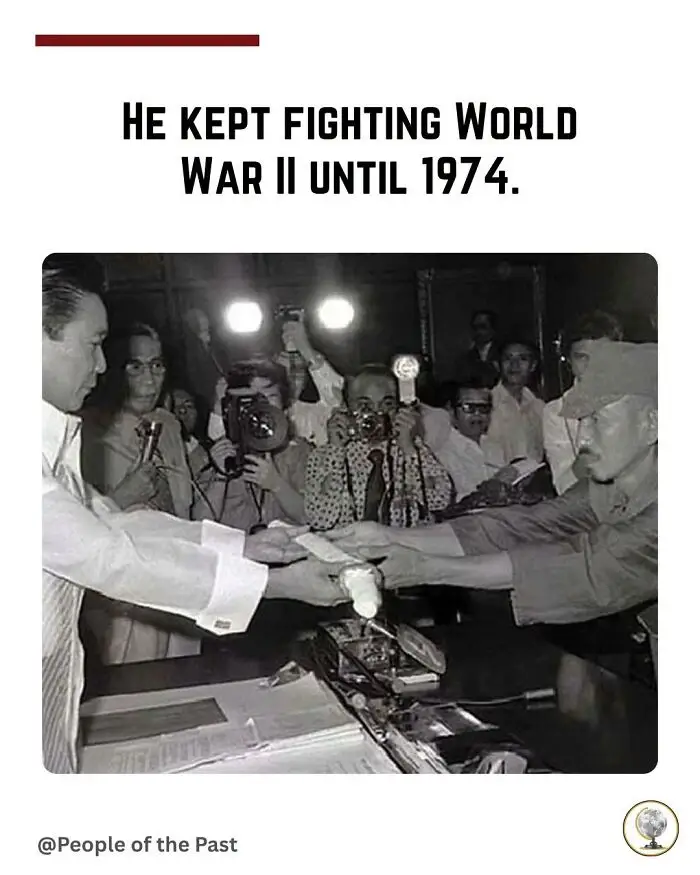
Major Yoshimi Taniguchi, Onoda's former commanding officer, was by then working in a bookshop. He was flown to Lubang, put on his old uniform, and on March 9, 1974, stood in a clearing and formally relieved Onoda of his duties.
Onoda handed over his rifle, 500 rounds of ammunition, several hand grenades, and the samurai sword his brother had given him in 1944. He was 52 years old. He saluted.
The war he had been fighting had ended before most of his countrymen were born.
Report
11points
