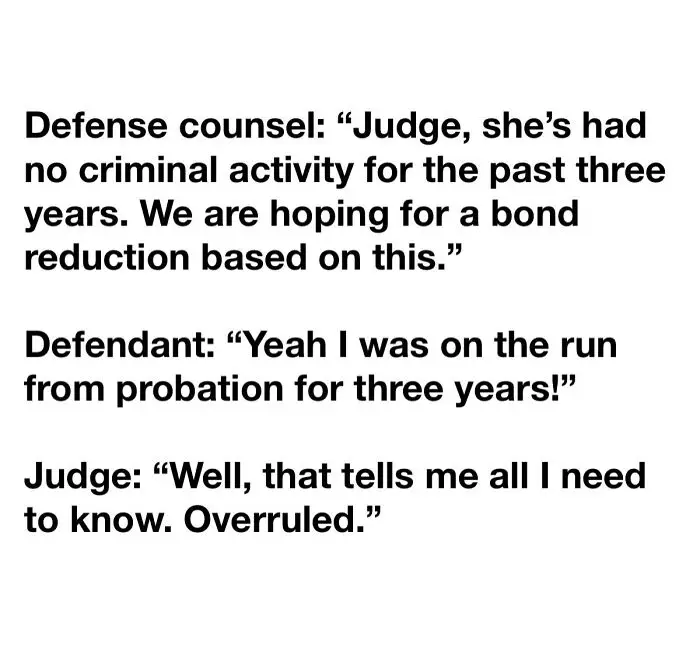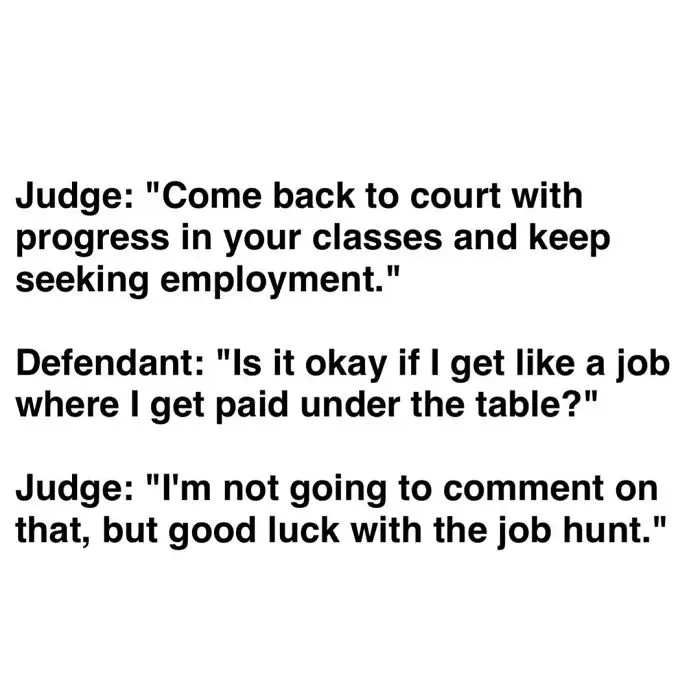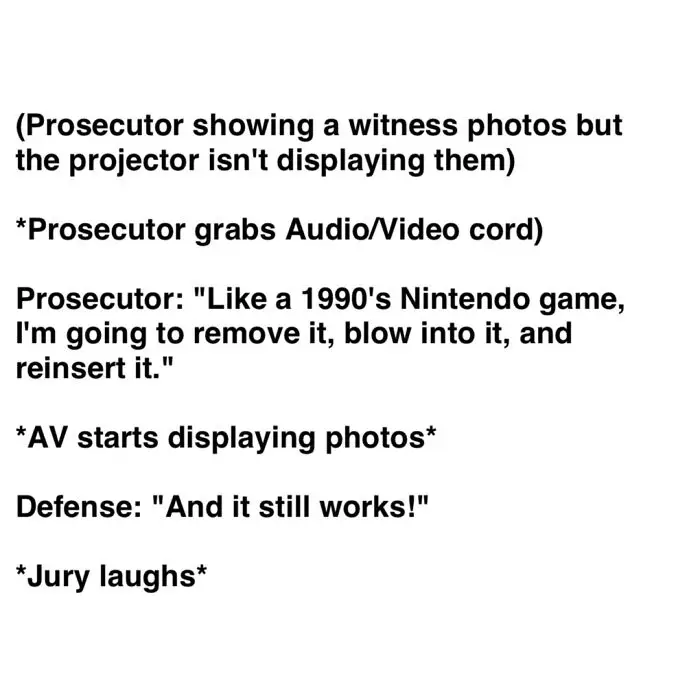


Plenty of courtroom comedy is accidental, too. A retired trial lawyer writing in Plaintiff Magazine says most of the funny moments come from badly worded questions and unpredictable answers. One of his examples is a juror who was asked whether anything would keep him from serving. He admitted his workplace could get by without him, he just did not want them to find out.
The same article mentions a New York judge who faced a removal recommendation after sending 46 people into custody when nobody would own up to a ringing cellphone. The author also cautions lawyers that a big laugh can look like mockery, so a polite smile is the safe move, which only makes the struggle more relatable.
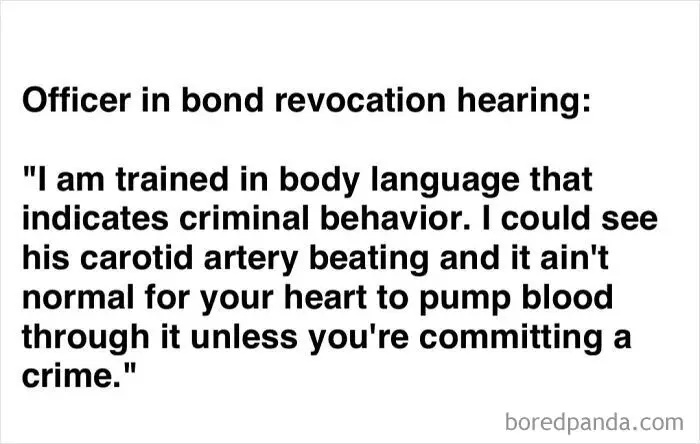
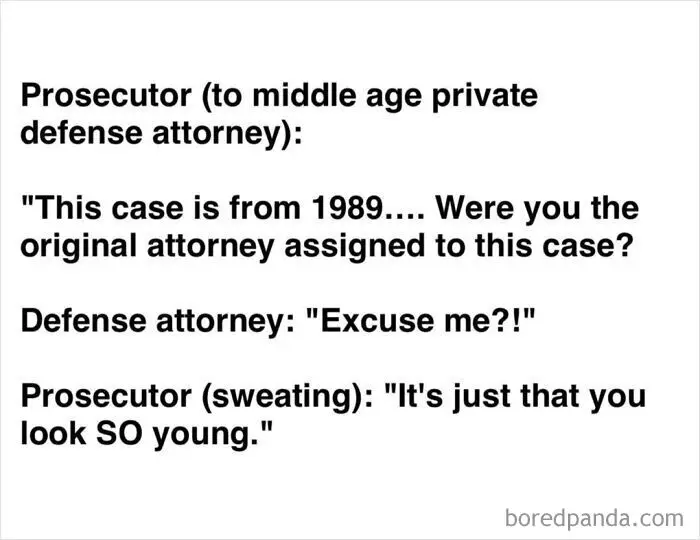
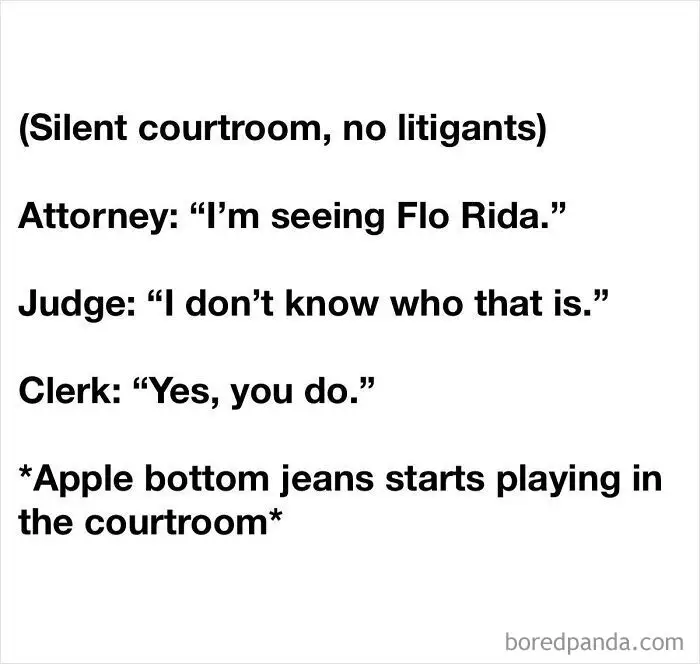
Then there are the judges, who hold the one job where a joke carries real weight. A study covered by the ABA Journal looked at more than 9,000 laughs across 6,864 Supreme Court arguments from 1955 to 2017. The researchers found that the justices' humor is often sharp rather than gentle, and that it most often lands on lawyers who are losing or new to the job. The Plaintiff Magazine piece adds a ruling in which the Utah Supreme Court observed that judges are rarely as funny as they think they are, and that laughter at their jokes can come from the power dynamic more than the punchline.
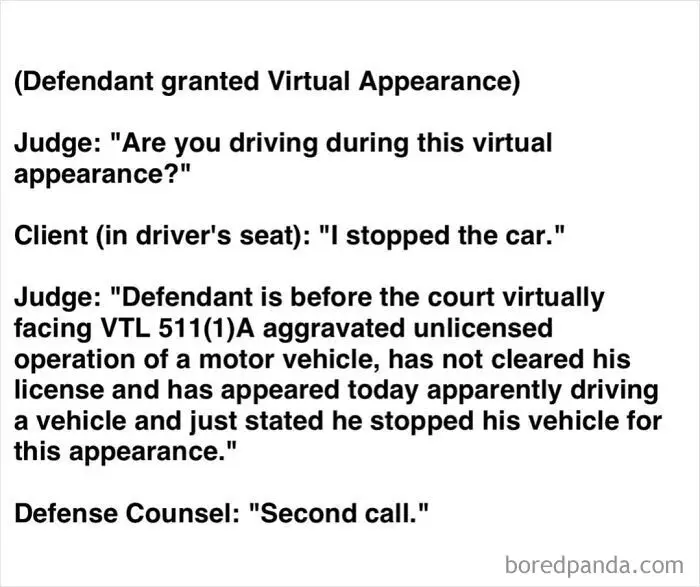
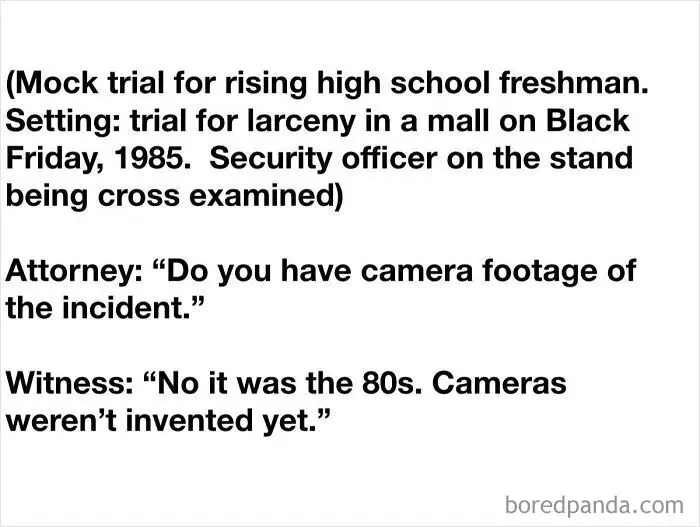
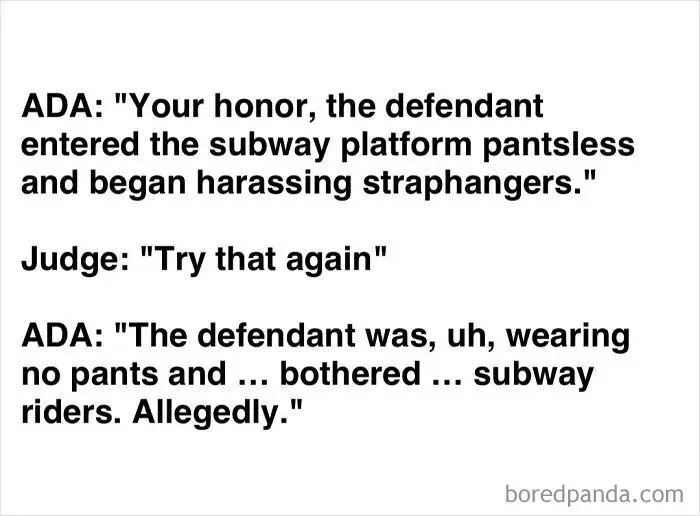
Hollywood trims all of this down so a case wraps up in two or three hours, as Inman wryly points out. Real courtrooms take their time, with long pauses, strict rules and a room full of people trying very hard not to react. Give that setup a nervous witness, a judge with perfect timing and a lawyer who asks one question too many, and you get the kind of lines people repeat for years. No writers room required.
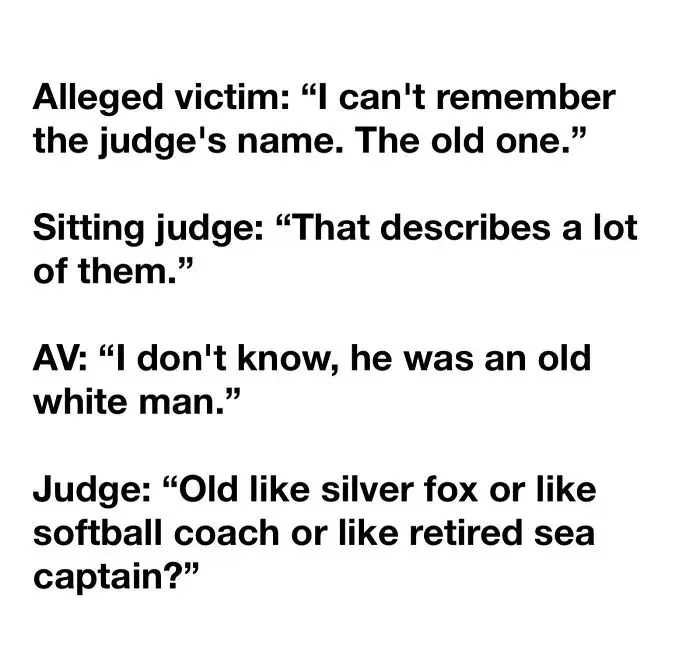
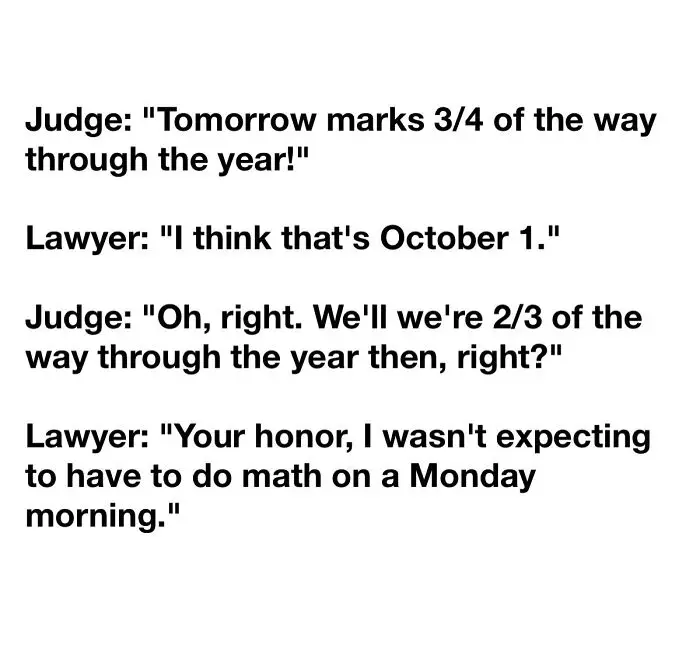
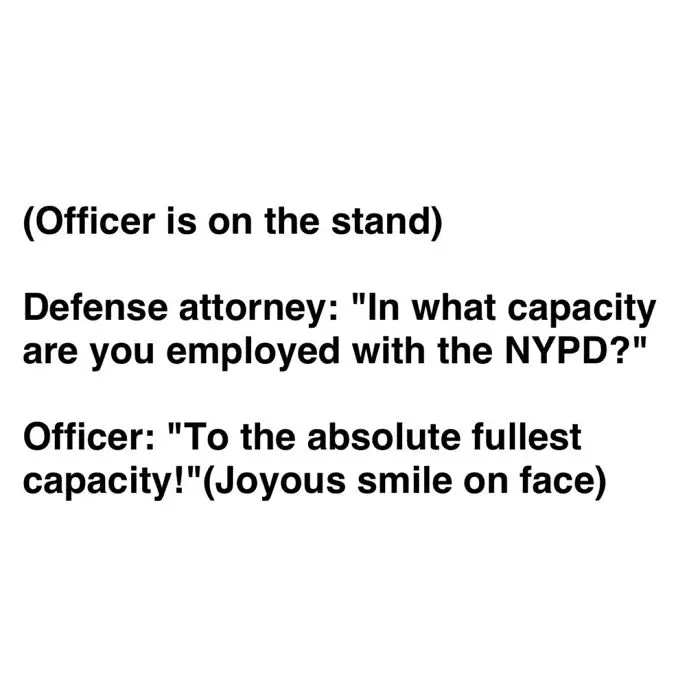
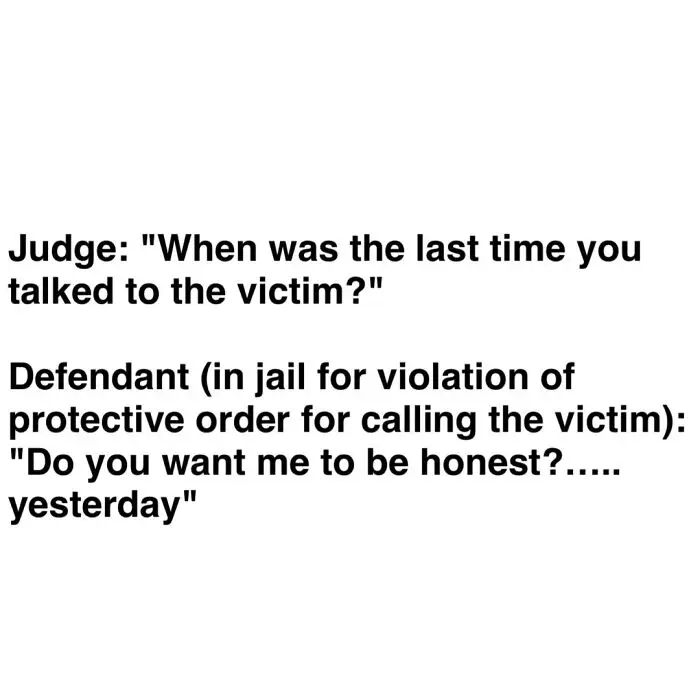
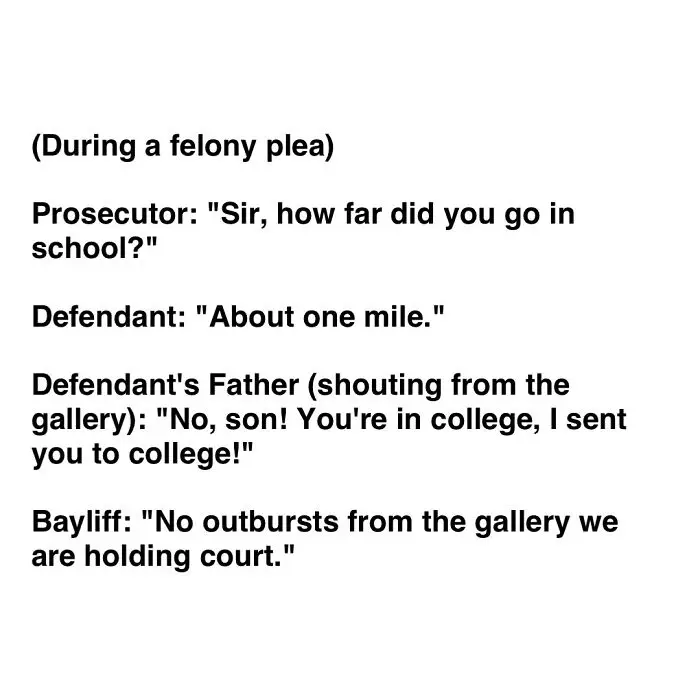
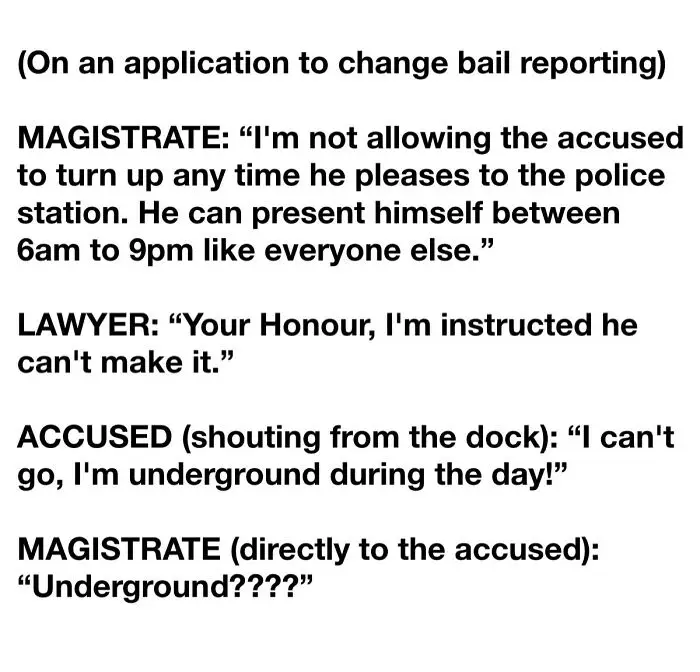
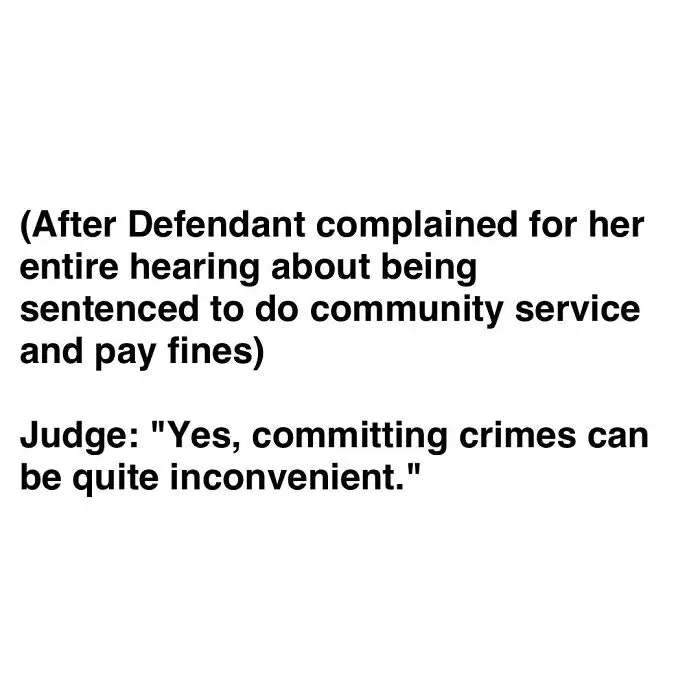
#38 Overheard Fayette County District Court, Lexington, KY By Anonymous