




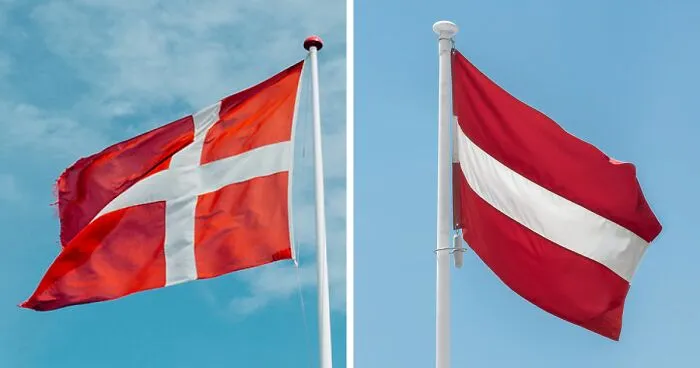


From grueling battles on the battlefield to finally being represented in the United Nations — the oldest flags in the world have survived it all. We aren’t talking here about the red flags in people. A flag can represent a nation without saying a single word. They tell years of history through visual aspects. However, not every flag has survived the test of time. When it comes to the label of the oldest flag, design and meaning to the nation play an important role in survivability.
The design of the flag is the first thing that catches the eye. The catchier the flag — the longer it will stay as a flag. The oldest flag in the world, Denmark’s, practically pioneered the use of the Nordic cross in 1219. This design, simple yet unique in a way, was later adopted by other Nordic countries, like Sweden and Finland. Denmark has stuck to this flag since 1625 when it was officially adopted. However, the design has changed due to the flag's meaning. The perfect example of it would be the Stars and Stripes of the United States. Adopted in 1777, this national flag was changed slightly over the years. As the nation grew, the flag got filled with more stars. Yet, the main design and meaning of it stayed the same.
Want to find out more about the oldest country flag, a.k.a Denmark’s Nordic cross, or see who survived the test of time? We’ve got you covered. We have compiled some of the oldest national flags used today in the list below. Some of them are more eye-catching than others, so be sure to upvote the ones you liked. Since the flags are rich in history, share your knowledge in the comments below.
#21 Liechtenstein (First Used 1764)

Liechtenstein used its blue and red flag color design from 1764 and officially adopted it in 1982. However, by local customs, they had to use a yellow and red color scheme visible on their coat of arms. In 1937, when the government found out that Haiti had a similar flag, a crown was added in the corner.
Report
#22 Turkey (First Used 1793)

Since Turkey inherited a majority of the Ottoman Empire's lands, they also took up their flag for their own. With a moon and a star on the red background, the design is slick and catchy enough to stand out among others. Used for the first time in 1793, after the collapse of the empire, Turkey officially standardized the flag in 1936.
unknown
Report#23 San Marino (First Used 1797)
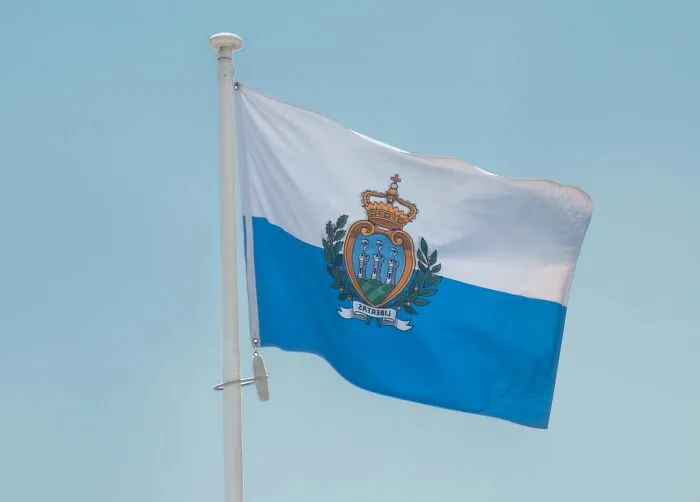
The French seem to have inspired multiple flags, San Marino’s included. Originally, San Marino used its standard of gold, white, and "alessandrino" for representation. However, in 1797, when the wave of the French Revolution reached the republic, the supreme council commissioned a white and light blue cockade to be made.
unknown
Report#24 Argentina (First Used 1812)
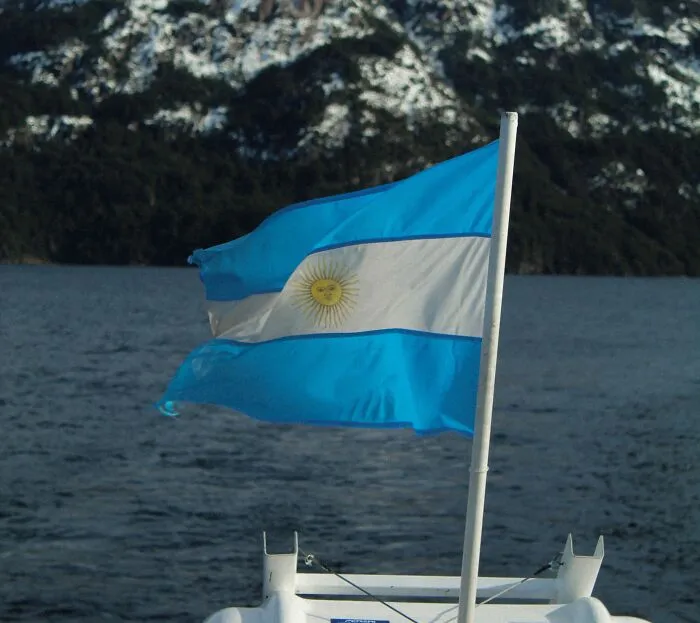
The Argentine Republic's national flag is a triband, consisting of a trio of equally wide horizontal bars in light blue and white. Manuel Belgrano designed the flag in keeping with the design of the national cockade of Argentina. On February 27, 1812, it was first raised at Rosario as the wars of independence raged on.
unknown
Report#25 Mexico (First Used 1821)
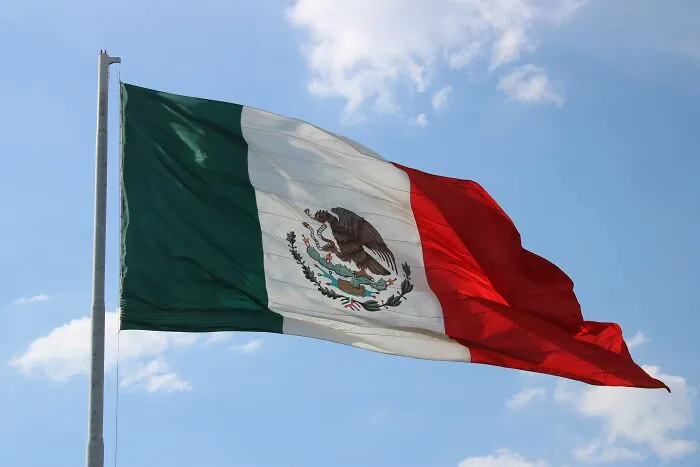
The Mexican national army's colors are red, white, and green which take the center of the flag. The Mexican coat of arms serves as the country's primary emblem. It symbolizes the story of the eagle that told the Aztecs where to build their metropolis of Tenochtitlan while perched on a cactus and consuming a snake.
unknown
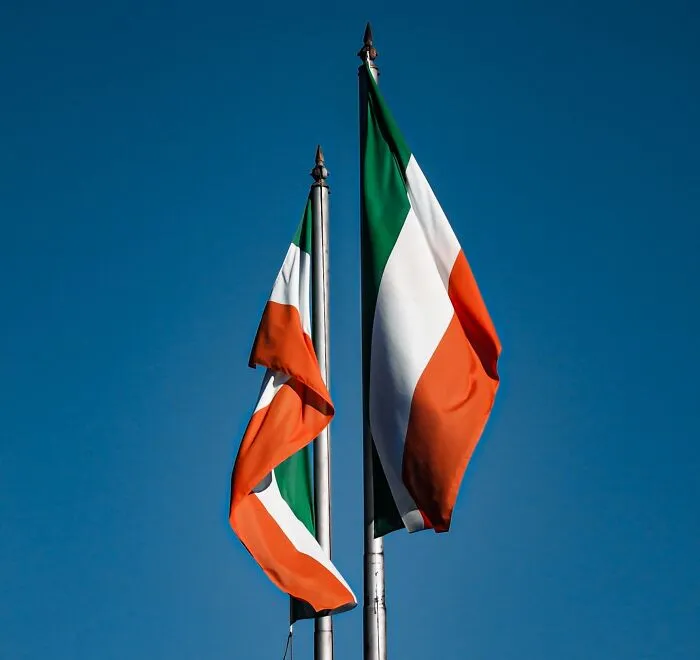
Report#26 Ireland (First Used 1848)
unknown
Report#27 Slovakia (First Used 1848)

unknown
Report#28 Royal Standard Of Norway (First Used 1318)
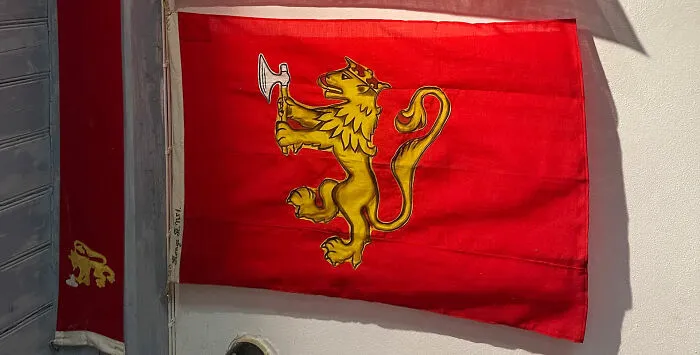
This flag originated with the Duchess Ingebjørg in 1318, as she used it as a seal, and people used it on castles and ships. In the 17th and 18th centuries, the Royal Standard got pushed away as the Danish flag became more official. When the Norwegian King, Haakon VII, came to Kristiana (Oslo) bearing this flag, it was made into an official one representing the king.
Report
#29 Haiti (First Used 1806)
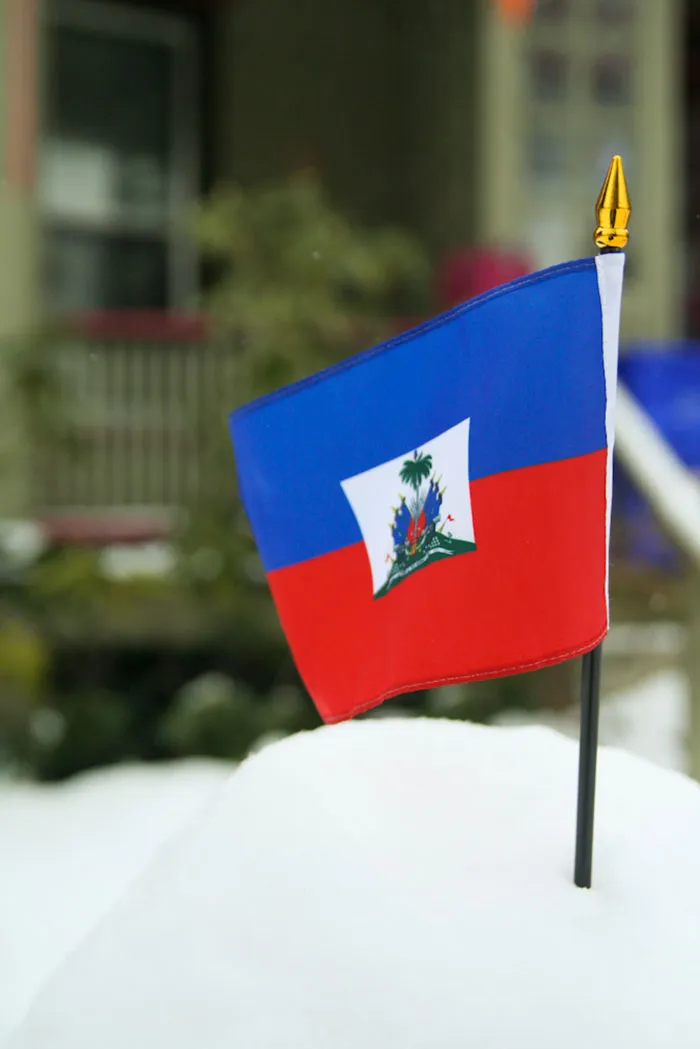
The Haiti flag looks very much like the Lichtenstein one. A white rectangular panel displaying the Haitian coat of arms was placed on the bicolor flag, which has two horizontal stripes in the colors blue and red. First used in 1806, the flag was officially adopted in 1859 and re-adopted in 1986, when the regime of Duvalier collapsed.
Report
#30 Columbia (First Used 1810)
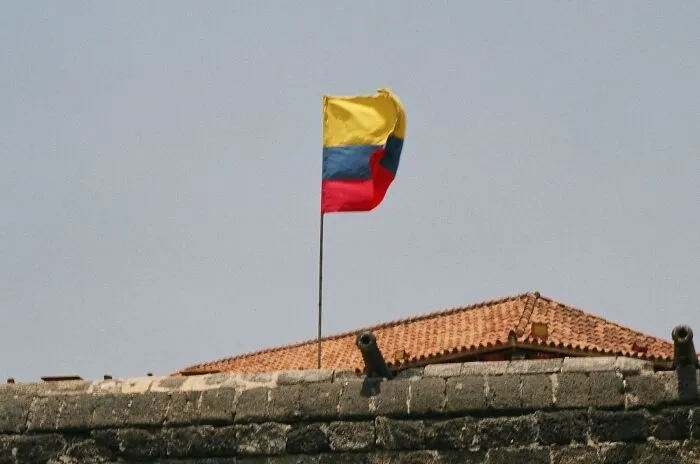
Columbia's flag was first formed in the mind of Francisco de Miranda, a revolutionary. The Colombian flag represents the country's independence from Spain, which it attained on July 20, 1810. The yellow stripe occupies half of the area on the flag, while the blue and red each occupy one-fourth of it.
unknown
Report#31 Ecuador (First Used 1810)
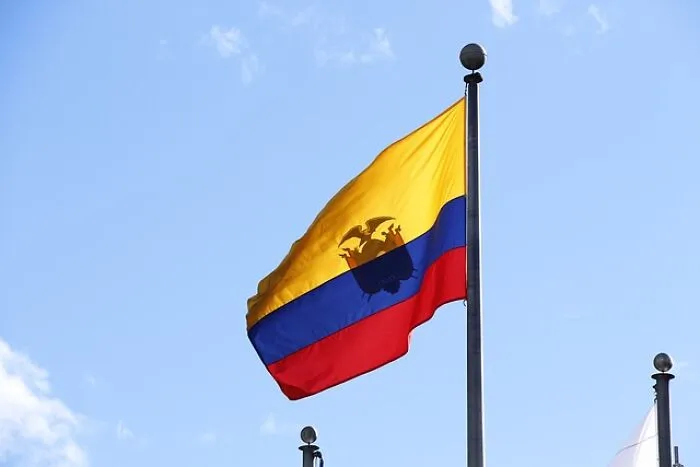
Having multiple flags in your flag — now that is meta. Ecuador follows the same color scheme as the Colombian flag, having a yellow stripe occupying a large portion, with red and blue taking up one-fourth of the bottom each. However, the only difference is that Ecuador also has a coat of arms in the middle of the flag.
Report
#32 Venezuela (First Used 1810)
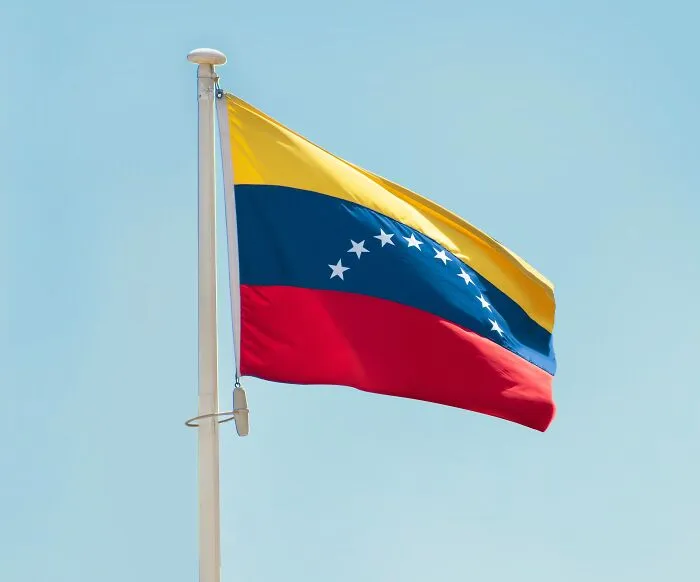
Venezuela seems to have followed the same design that Columbia and Ecuador followed — that of Francisco de Miranda. When Miranda tried to liberate Venezuela in 1806, he envisioned a flag composed of gold, blue, and red colors. They stand out from Columbia and Ecuador by including stars in the design.
unknown
Report#33 Chile (First Used 1817)
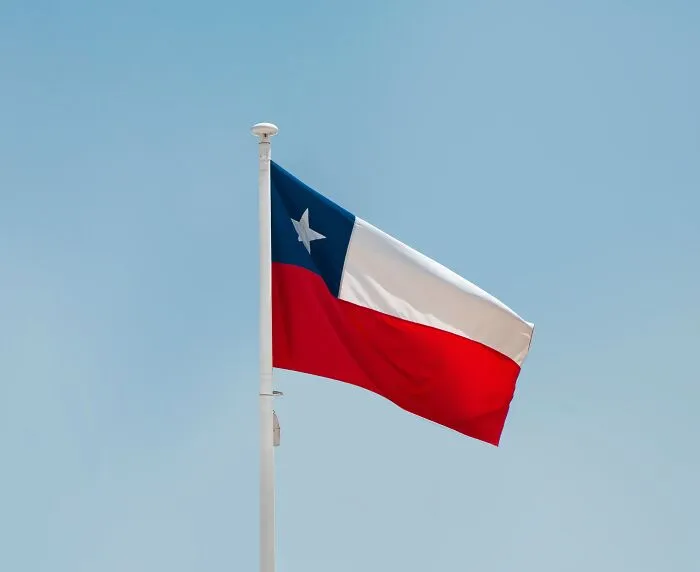
The Lone Star of the old Spanish Empire officially used and adopted its flag on the same day in 1817. Chile's flag consists of three colors, blue, white, and red, and a symbol referring to several things. Some believe it symbolizes Venus, a planet that represents honor among Mapuches people, while others believe it hints at the independence of Chile.
unknown
Report#34 Belgium (First Used 1831)

Belgium decided to use the colors present in the coat of arms of the Duchy of Brabant — black, yellow, and red. Belgium used the vertical design that was popularized by the French revolutionaries. The National Congress incorporated the tricolor into the Constitution on January 23, 1831, but did not specify the direction or arrangement of the color bands.
unknown
Report#35 Serbia (First Used 1835)

The Serbian flag has three colors — red, blue, and white — and a coat of arms on the left side. However, the coat of arms part is quite a new addition. In 1835, the flag didn’t include the coat of arms. The Serbian flag we know today was adopted in 2004, and modifications got applied in 2010.
Report
#36 Croatia (First Used 1848)
unknown
Report#37 Peru (First Used 1822)

Did you know that a flamingo played a part in the creation of the Peruvian national flag? Many believe that the red color on the flag represents the blood spilled during the wars of independence and white represents peace. However, these colors are also linked with a red and white flamingo that General San Martín dreamt of.
unknown
Report#38 El Salvador (First Used 1822)
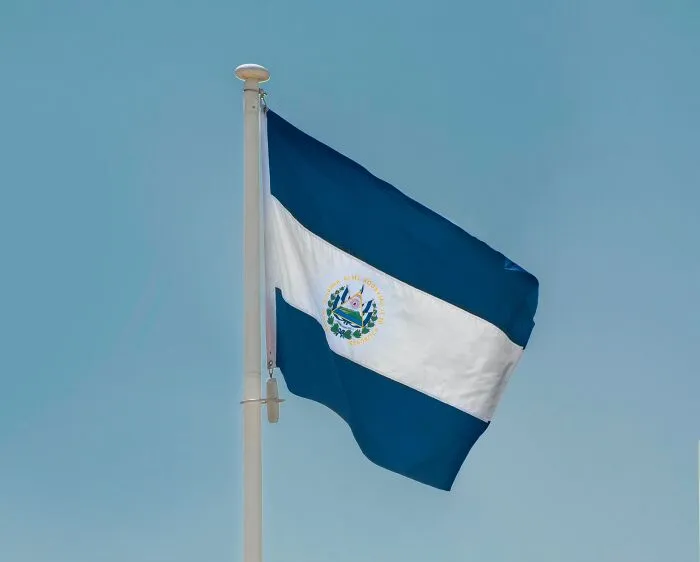
The flag of El Salvador is composed of three stripes, two cobalt blues from the top and bottom, and a white one in the middle. Also, the coat of arms got added in the middle. Due to the rainbow motif on its coat of arms, El Salvador is one of the few countries whose flag now uses the color purple. It was first used in 1822.
unknown
Report#39 Honduras (First Used 1823)
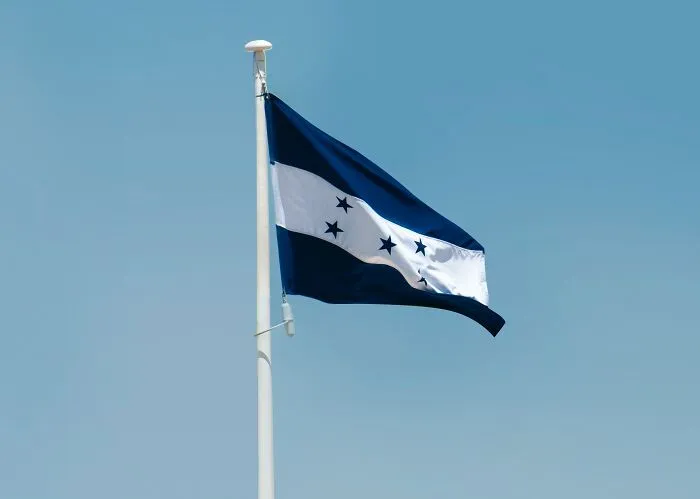
The Honduran flag consists of two turquoise and one white stripe, with a quincunx of five turquoise stars in the middle of the middle stripe. The former Federal Republic of Central America's five member countries are represented by the five stars. However, in 1823, the stars were not present.
unknown
Report#40 Nicaragua (First Used 1823)
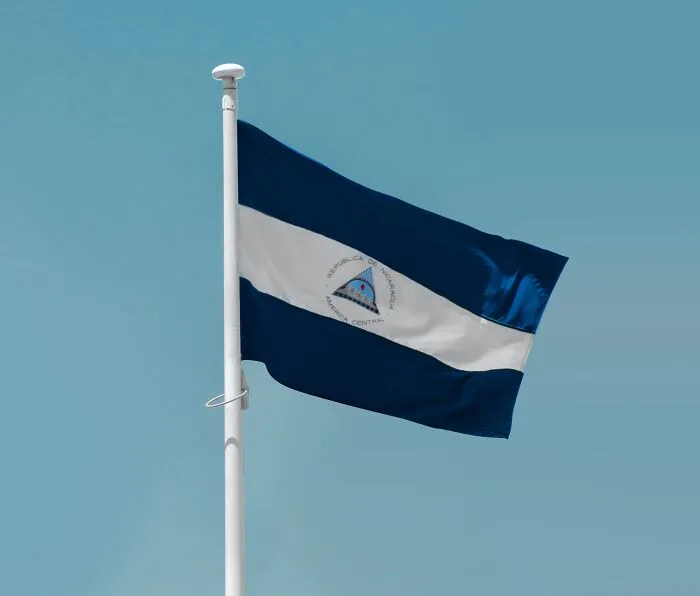
Before its independence, the flag was used to represent the province of Nicaragua. The two Azure bands visible in Nicaragua's current flag and coat of arms were borrowed from the United Provinces of Central America. When it was introduced in 1823, the flag used lighter shades of blue.
unknown
Report