





Underwater photography opens up a dimension of Mother Earth we don't normally see. Blackwater diving and shallow reef paddling would be incredibly hard to explain if it wasn't for the vivid images people brought from beneath the surface. Celebrating the beauty of waters from all over the world, the 7th Annual Ocean Art Underwater Photo Contest has just announced its winners, and the pictures speak for themselves.
"The purpose of the [competition] is to find and promote the world's best underwater photographers and their work," Underwater Photography Guide's Managing Editor Nirupam Nigam told Bored Panda. "We'd also like to bring public awareness to the beauty of marine life and the necessity of its conservation. Ocean Art is about discovering and putting a spotlight on new/innovative photographic techniques, amazing animal behaviors, and the beauty of the world's oceans."
The judges evaluated thousands of entries from 70 countries before deciding which of them deserved to receive the over $80,000 in sponsor prizes across 16 different categories. "The 2018 competition was our most competitive year to date with a record number of entries. Images from this year's competition show just how far underwater photographic technology and innovation from underwater photographers have come. As this innovation continues, we have seen a shift in preferred subjects for underwater photographers. It would seem that more photographers are now confident in shooting large pelagic subjects such as sharks, rays, humpback whales, and crocodiles. Although these are impressive subjects by themselves, we looked for the very best photos regardless of the subject. This year we saw an increase in entrants from Asia."
Scroll down to check out the best images from the competition and read the stories behind them!
More info: uwphotographyguide.com
#41 Honorable Mention, Macro Ocean, "Juvenile Batfish" By Dennis Corpuz
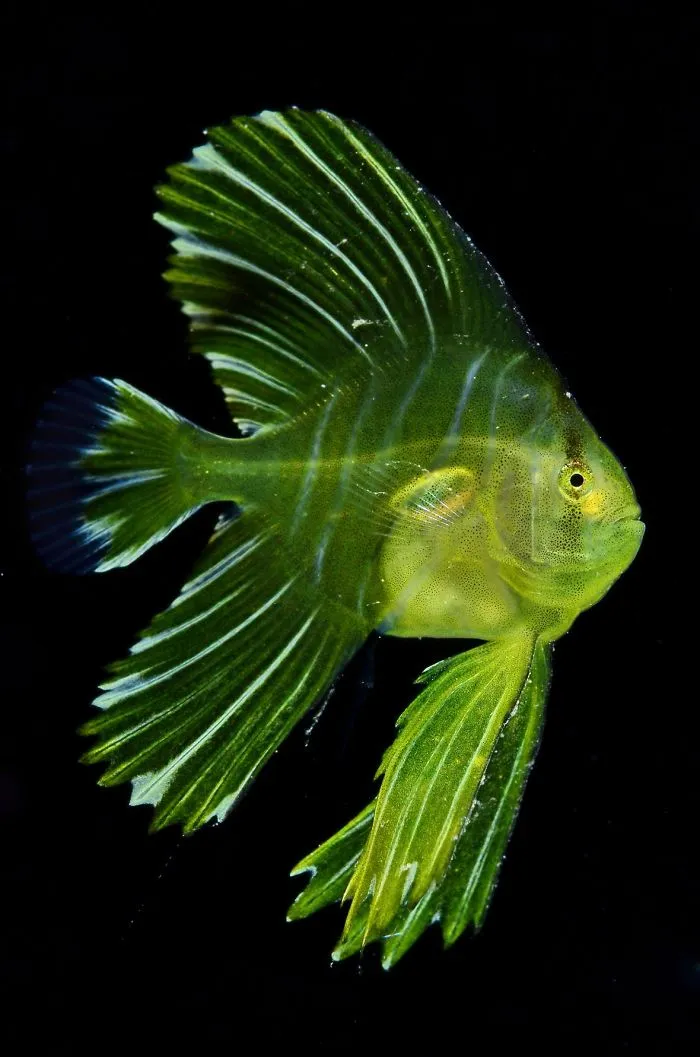
I was on a blackwater drift in Anilao at 15 meters depth in an approximately 200 meter deep water column in Janao bay when I photographed this animal.
Report
31points
#42 7th Place, Marine Life Behavior, "Hawaiian Lei" By Mei Hing Sin
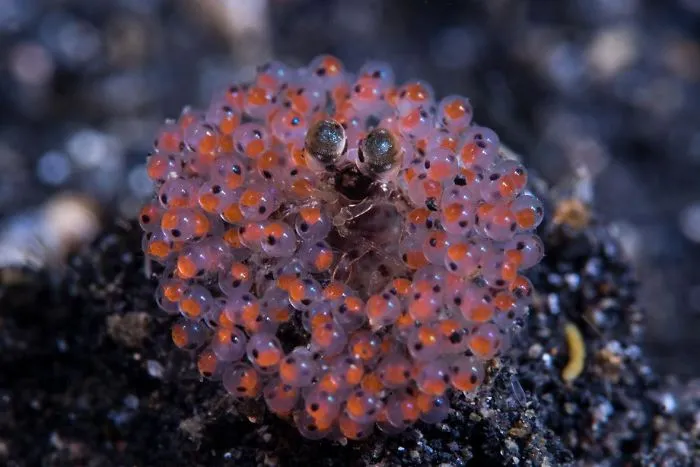
After I finished a safety stop on a sandy bottom 5 meters underwater, I spotted a tiny red spot. I discovered they were red eggs with a tiny mantis shrimp. I immediately put on my close up diopter and spotted that the mantis shrimp was putting its head through the eggs. I had never seen this amazing moment before. I don't know whether the eggs belong to it or not. I tried asking people and have not had a solid answer till now.
Report
31points
#43 3rd Place, Compact Macro, "Yellow Gobies In A Bottle" By Matteo Pighi
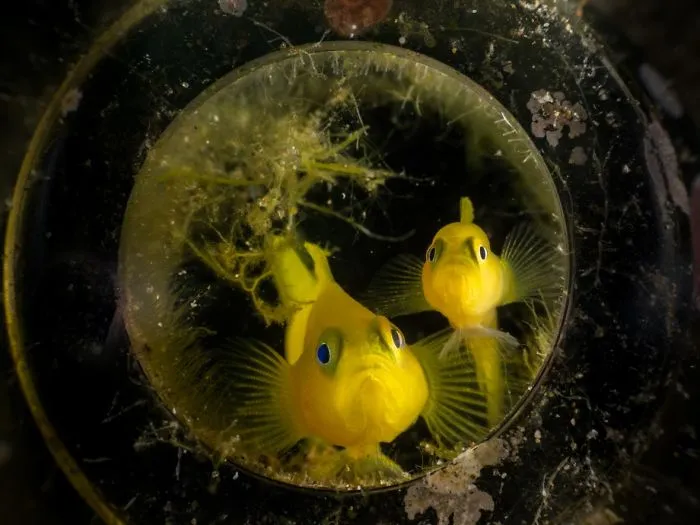
My wife and I took this picture at the end of our last dive in Anilao. We were on a sandy bottom about 12 meters deep where shelters for the creatures that live there are very few. This little family of yellow pygmy gobies had found an ideal home in an empty beer bottle.
Report
31points
#44 3rd Place, Compact Wide Angle, "Budego" By Alessandro Raho
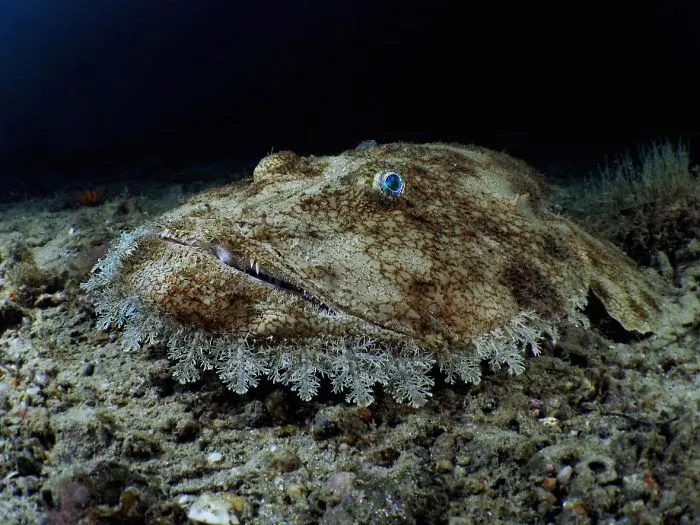
Budego (Lophius budegassa), it is very rare to meet him because he usually lives deep and for me it was a real thrill to find it. I have only met him once in Noli. That day I was diving on a seabed of sand and pebbles at a depth of 20 meters and the visibility was rather poor. Not having found any interesting subject I gone down depth another 10 meters and I found myself in front of this splendid specimen
Report
30points
#45 3rd Place, Portrait Category,"Open Eyes" By Doris Vierkötter
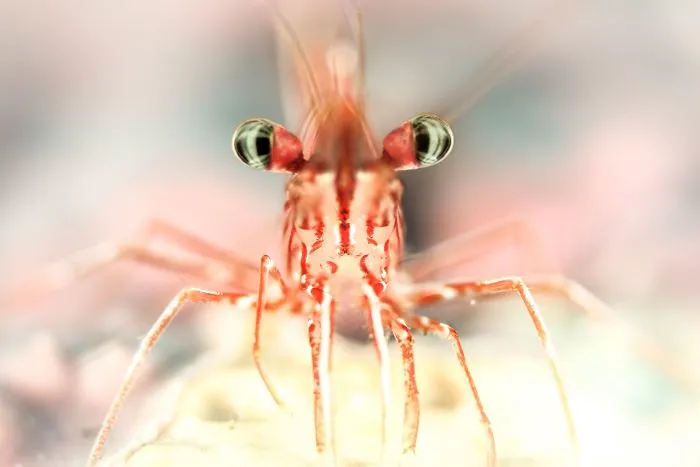
This Dancing shrimp (Rhynchocinetes uritai) can be found almost everywhere in Indonesia. So I found a special place at pair Ilmuh where one was dancing on an almost white sponge. I wanted to capture the wonderful green eyes, and it was very hard to get the right position and shapes of the eyes.
Report
29points
#46 5th Place, Portrait Category, "Face To Face" By Mirko Zanni
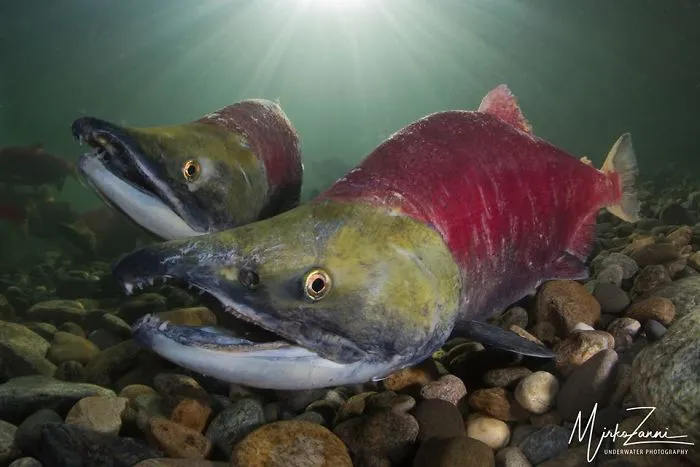
Adams River has one of the largest sockeye salmon runs in North America. Every fourth year is a “dominant” salmon run with millions of fish to be seen from late September through to the end of October.
Report
29points
#47 Honorable Mention, Wide Angle Category, "Hanging In Leru" By Steve Kopp
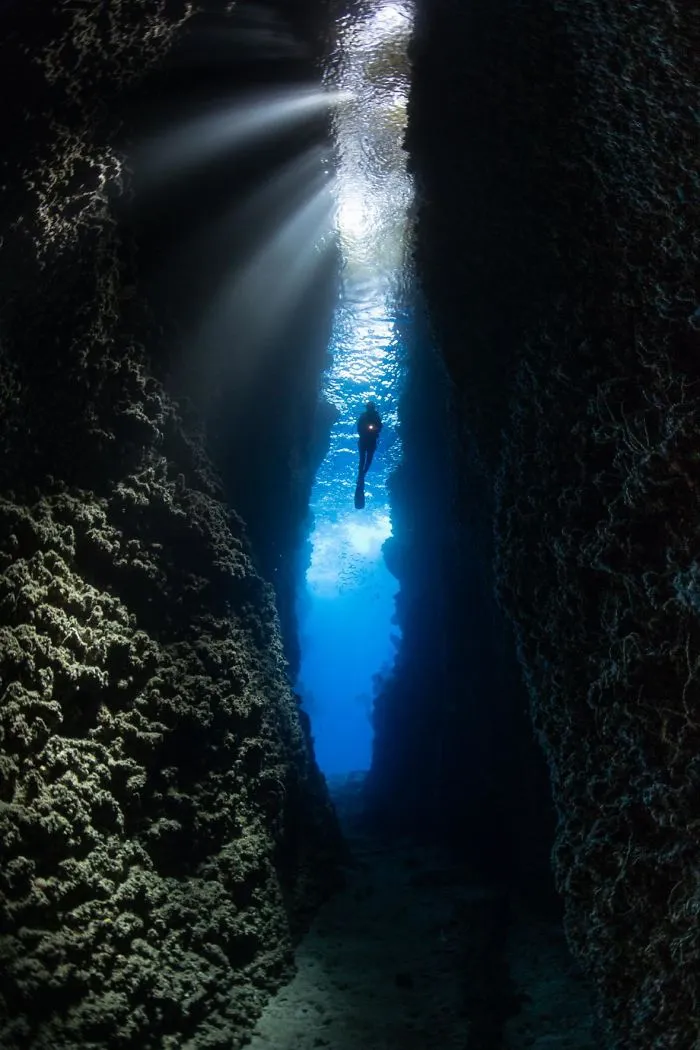
When researching a trip to the Solomon Islands, Leru Cut was a site that stuck in my photography imagination, wondering what it really looked like and how best to shoot it. The narrow opening above creates shafts of light in the cut for a short time each day. We stopped there early in the trip but it was too cloudy for sun rays. On return to port near the end of the trip we revisited the site with clear skies, and the magic happened.
As the breeze blows the trees, the shafts of light flicker in from above and the light dances around the walls, while bright sun and clear water make for a sapphire blue Suva Sea background, providing silhouette of Pato, from MV Bilikiki, as well as a school of fish and gorgonians in the entrance. Shooting an upward angle made the sun ray effect more prominent and accentuates the narrow cut.
Report
28points
#48 Honorable Mention, Marine Life Behavior, "Living In A Jelly" By Doris Vierkötter
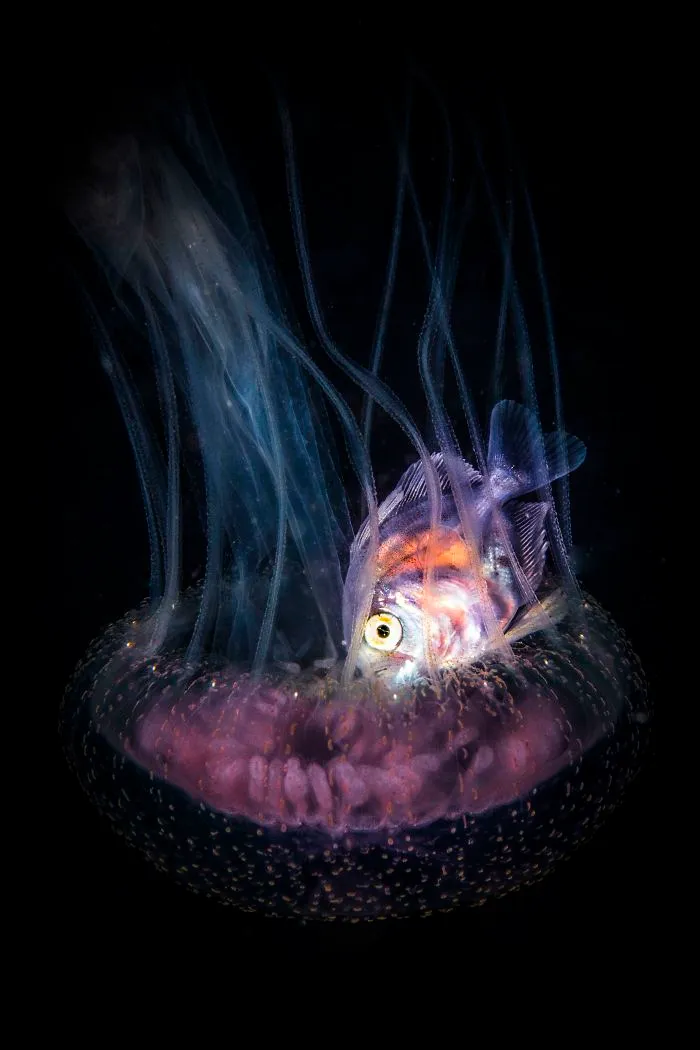
During a very interesting Blackwater dive this jelly fish showed up suddenly out of the dark. My buddy lighted it up from below so we had to wait for the right position of the fish inside which was moving very quickly in the jelly fish.
Report
26points
#49 Honorable Mention, Cold Water, "Spider Crab Attack" By Henley Spiers
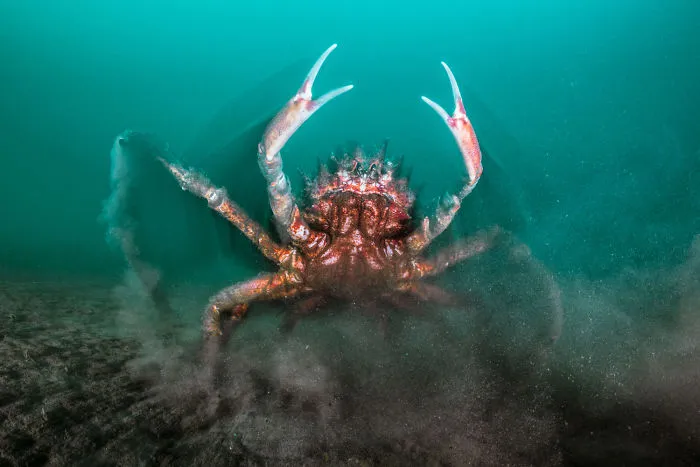
Swimming out over the sand at my favourite local dive site, I was given quite a fright as I passed close by a spider crab and it leapt out at me! I retreated but, intrigued and seeing the potential to capture both this behaviour and the motion of the ocean, I dialled in a slow shutter speed, rear-flash sync and approached the same individual. He repeated the behaviour as I got close, standing up on his hind legs, leaping up into the water column, and slashing with his large claws! Spider crabs aggregated in large numbers in the bay over the summer and I believe this feisty individual was displaying a combination of territorial and defensive behaviour. Image captured, I left him in peace, ready to surprise the next passing diver!
Report
24points
#50 1st Place, Portrait Category, "Chimaera" By Claudio Zori
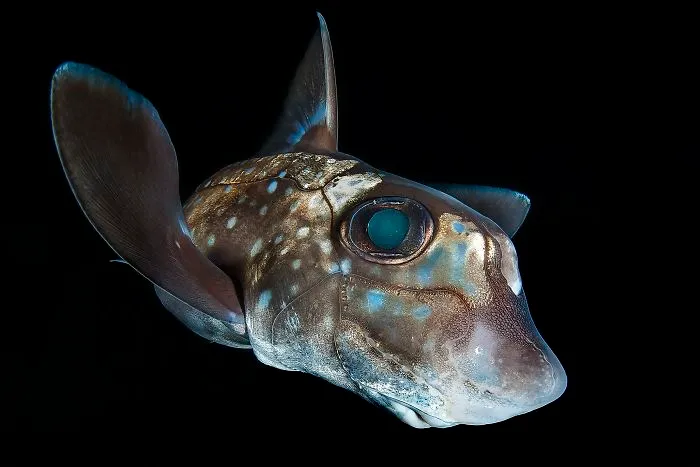
The spotted rat fish, a resident of the northeastern part of the Pacific Ocean, usually lives between 50 and 400 meters and prefers temperatures no higher than 9 degrees. However, it tends to approach in shallow water during the spring and fall. While swimming, it can perform rotations and twists as if it were flying. The photo was taken in a night dive in front of God's Pocket dive resort.
Report
21points