





Underwater photography opens up a dimension of Mother Earth we don't normally see. Blackwater diving and shallow reef paddling would be incredibly hard to explain if it wasn't for the vivid images people brought from beneath the surface. Celebrating the beauty of waters from all over the world, the 7th Annual Ocean Art Underwater Photo Contest has just announced its winners, and the pictures speak for themselves.
"The purpose of the [competition] is to find and promote the world's best underwater photographers and their work," Underwater Photography Guide's Managing Editor Nirupam Nigam told Bored Panda. "We'd also like to bring public awareness to the beauty of marine life and the necessity of its conservation. Ocean Art is about discovering and putting a spotlight on new/innovative photographic techniques, amazing animal behaviors, and the beauty of the world's oceans."
The judges evaluated thousands of entries from 70 countries before deciding which of them deserved to receive the over $80,000 in sponsor prizes across 16 different categories. "The 2018 competition was our most competitive year to date with a record number of entries. Images from this year's competition show just how far underwater photographic technology and innovation from underwater photographers have come. As this innovation continues, we have seen a shift in preferred subjects for underwater photographers. It would seem that more photographers are now confident in shooting large pelagic subjects such as sharks, rays, humpback whales, and crocodiles. Although these are impressive subjects by themselves, we looked for the very best photos regardless of the subject. This year we saw an increase in entrants from Asia."
Scroll down to check out the best images from the competition and read the stories behind them!
More info: uwphotographyguide.com
#21 1st Place, Nudibranch, "Inside The Eggs" By Flavio Vailati
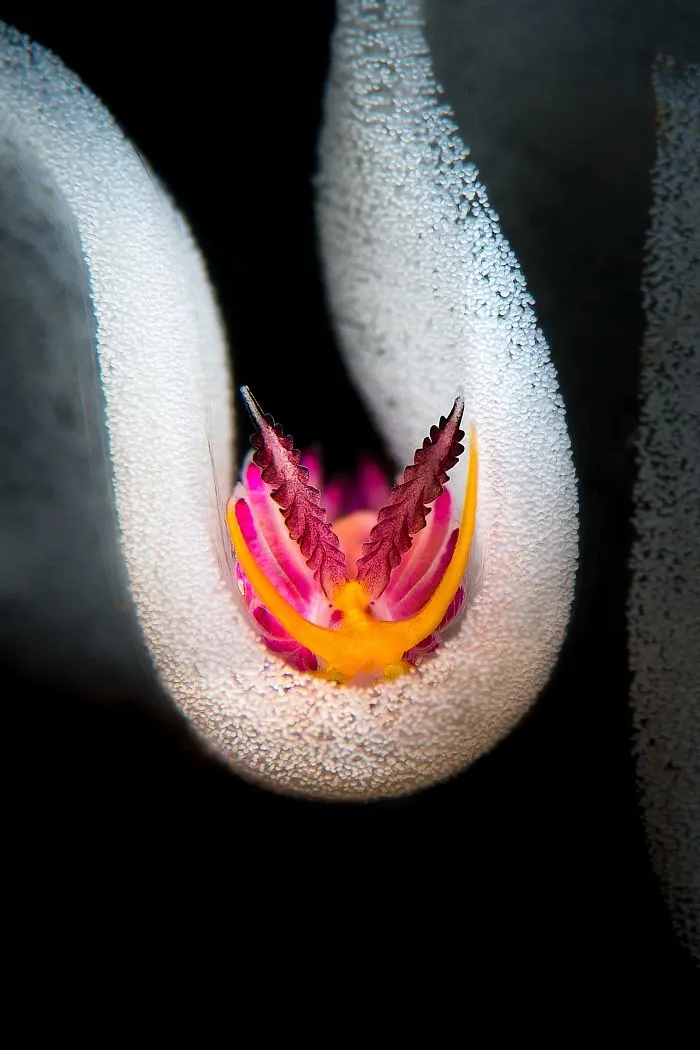
During a dive in Anilao, Philippines I found this nudibranch and I waited for the best time to make this shot.
Report
61points
#22 2nd Place, Cold Water, "Burst" By Tyler Schiffman
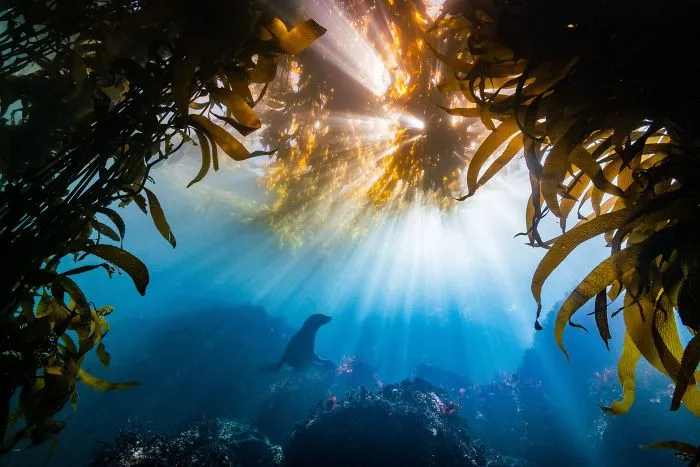
: I was diving the break wall in Monterey bay and this week in particular had over 40 foot vis for 3 days straight. I had been shooting kelp bursts all day as the light was exploding amongst the canopy above. I had framed this shot waiting for a sea lion to swim by. After 5 minutes, one swam up and paused for a few seconds, I took 3 photos and as rare as it was the moment left in a blink of an eye.
Report
54points
#23 1st Place, Novice Dslr, "Special Encounter" By Alvin Cheung
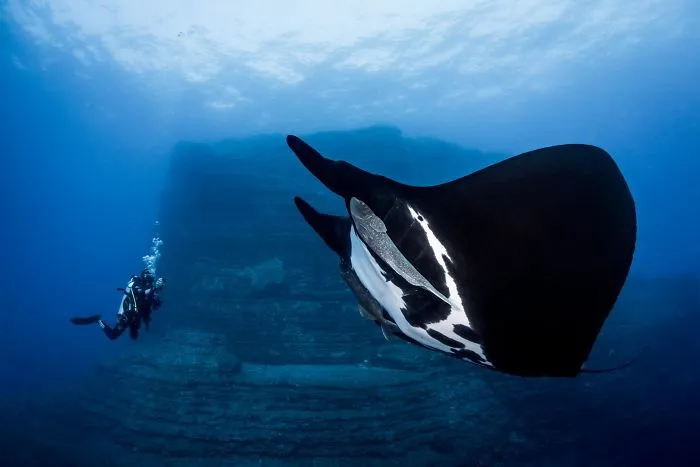
Background first!’ was an important tip given by prominent underwater photographer Mark Strickland during an underwater photo workshop organised by Bluewater Travel in a trip to Socorro in 2017. I was new to underwater photography.
So during a dive in the famous El Boiler when this giant oceanic manta ray suddenly showed up from the blue, I realised that the chance of getting a decent shot of it was slim due to the distance and the presence of too many divers around it. I remembered 'Background first!'.
I then quickly looked around and found that another diver, Marissa, was a few meters away from me and behind her was the landmark pinnacle of El Boiler. Visibility was crystal. I thought Marissa, together with the structure of the pinnacle, might be able to create an interesting background showing both the location of the dive site and the scale of the giant manta. I swam away from the group towards the direction of Marissa, hoping the manta would follow. With luck, the manta left the group later and approached Marissa for an investigation. Hence this photo.
I must thank Mark and Marissa, because without them this photo would not be successful.
Report
50points
#24 4th Place, Macro Ocean, "Dance Of Love" By Jinggong Zhang
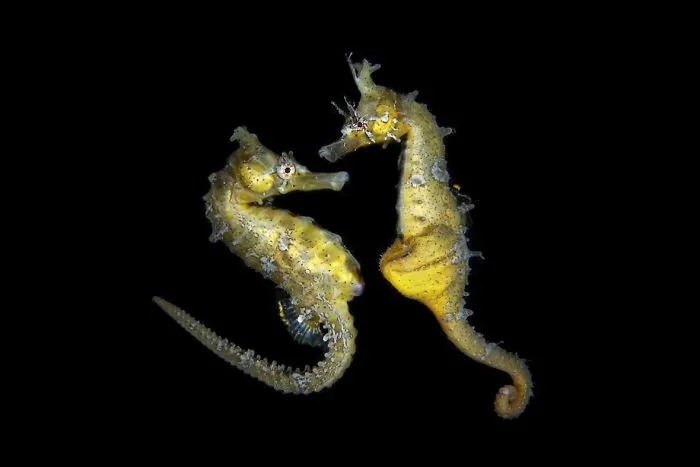
Sea horses usually have a long dance of courtship before mating. They will move in sync and swim around each other. After a few seconds, the female puts the eggs into the males’ pouch through ovipositor to complete the fertilization. Unlike most species, the birth of the sea horses are done by males. This mating photo was taken in Minamatashi, Kumamotoken in Japan. This species sea horses was officially recognized in 2017. To hide from natural enemies, sea horses usually swim out of hiding seaweed and mate at sunrise in the morning. After mating, they hide into the depths of seaweed immediately.
Report
45points
#25 2nd Place, Nudibranch, "Polycera Quadrilineata Posing" By Fredrik Ehrenström
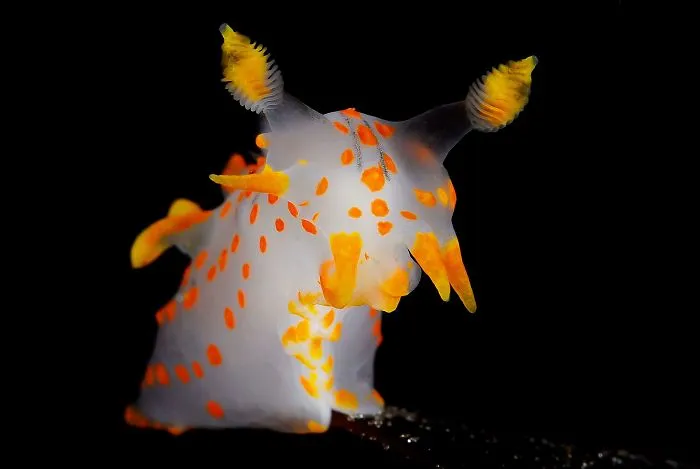
This image was taken in the early spring 2012 at 10 m depth in the algal belt surrounding the old ferry dock of Bremsnes in Norway. Spring time is nudibranch time along the coasts of Scandinavia. The one-year-old adults spawn and large amounts of fully grown adults (3-4 cm) can be seen on the leaves of Oar Weed (Laminaria digitata), together with their curtainlike eggmasses. Some individuals raise their bodies in search for something, maybe another nudibranch for mating? This behavior has been utilized to get an image with a clean composition.
Report
45points
#26 4th Place, Wide-Angle Category, "West Coast Flowers" By Geo Cloete
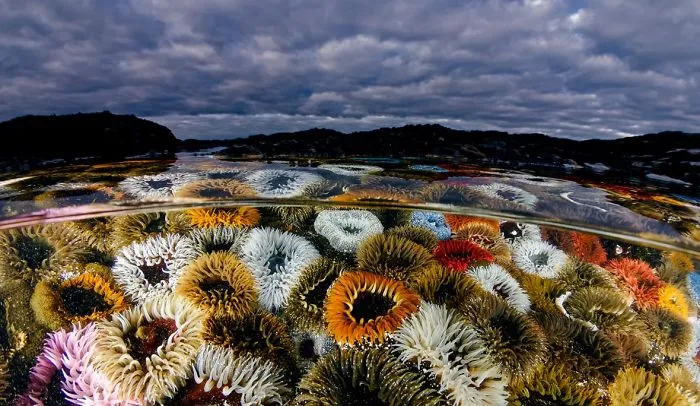
Each year during the early spring, the normally barren looking West Coast landscape of South Africa undergoes a magnificent transformation as millions of wildflowers bloom and decorates the landscape in a kaleidoscope of colours as far as the eye can see.
When I stumbled upon this scene of sandy anemones (Aulactinia reynaudi) whilst exploring the West Coast coastline, it immediately reminded me of the yearly flower season of the region. Only in this instance nature treats us to this beautiful display year round and a wonderful reason to appreciate and give recognition to the wonders of our coastline much more.
In order to capture as wide a field of view as possible, I relied on my trusty fisheye lens and applied a lens correction function.
Report
43points
#27 2nd Place, Mirrorless Macro, "Bubble Life" By Owen Yen
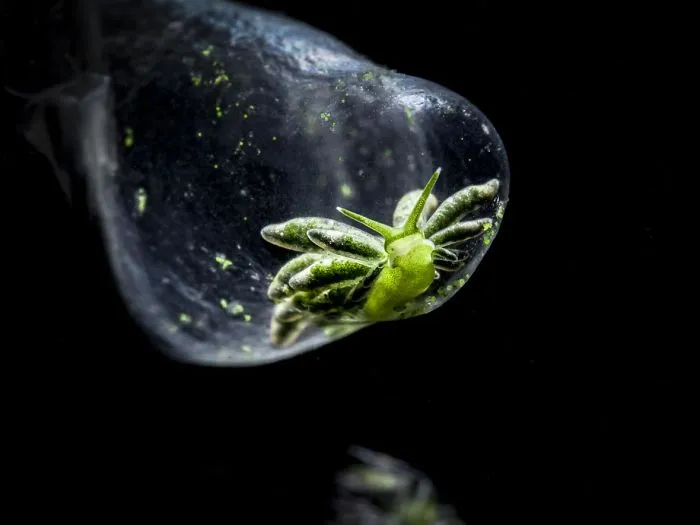
When I saw this green nudi in Boergeseniaforbesii(Siphonocladales), I felt that it looks like the HULK but more cute. It ate the chlorophyll and stay in Boergeseniaforbesii to make its own BUBBLE LIFE.
Report
43points
#28 1st Place, Mirrorless Wide Angle, "Spotted Dolphin" By Eugene Kitsios
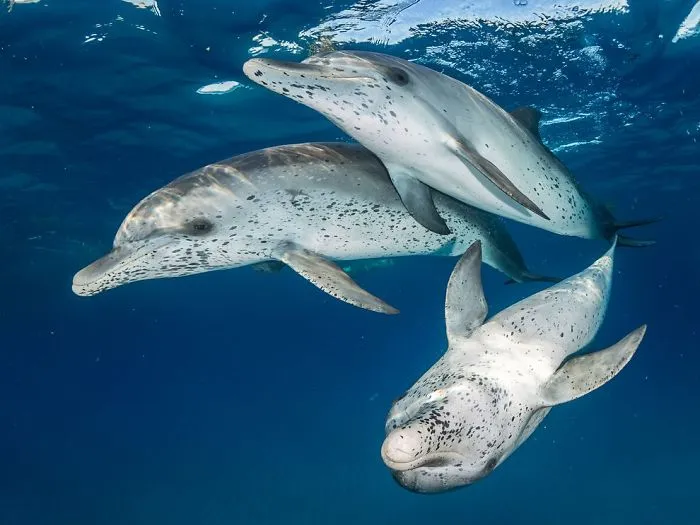
Before you enter the water with a pod of dolphins, you never know what the interaction will be like. Sometimes you may have a great encounter, where the dolphins will curiously swim around you or show you some kind of playful behaviour. Other times they may leave you without interest. The best way to interact with them is to let them decide. Times where you are accepted by the pod are truly a magical experience. These intelligent creatures display so much interesting behaviour and in this case they playfully and curiously swimmed by me.
Report
43points
#29 2nd Place, Marine Life Behavior , "The Fight" By Anders Nyberg
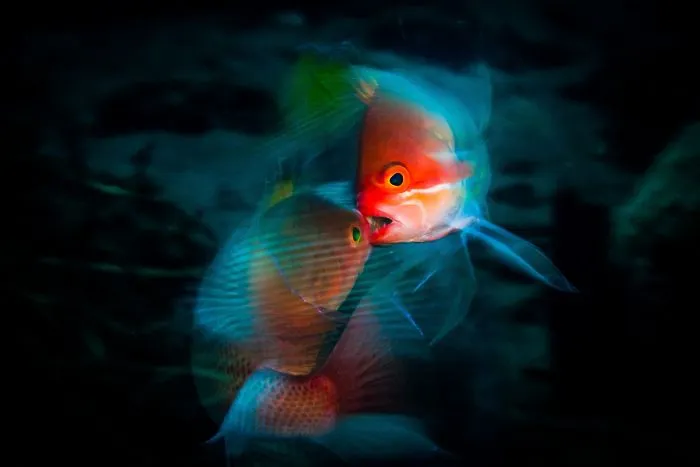
Me and my dive guide were looking for some Ghost Pipefish and other small critters, so I had prepared my Nikon D500 with a 105 mm macro lens. Swimming around and looking for small stuff, suddenly we saw these two two beautiful male Anthias fighting and spinning around. I was aware of my camera gear would be quite wrong for this to Anthias but I had to try to take some pictures. The hardest part was that I needed to be a bit far from the Anthias because my macro lens, so there was a lack of light from my strobes. Despite that I managed to catch these two anthias fighting by using a long exposure so it has given the image an ethereal glow and energy. Neither me nor the dive guide had seen anything like it and it was a fantastic experience. For post-processing I used white balance, contrast, shadows, clarity, sharpening and dehaze
Report
42points
#30 3rd Place, Nudibranch, "Frosted Pearl" By Bettina Balnis
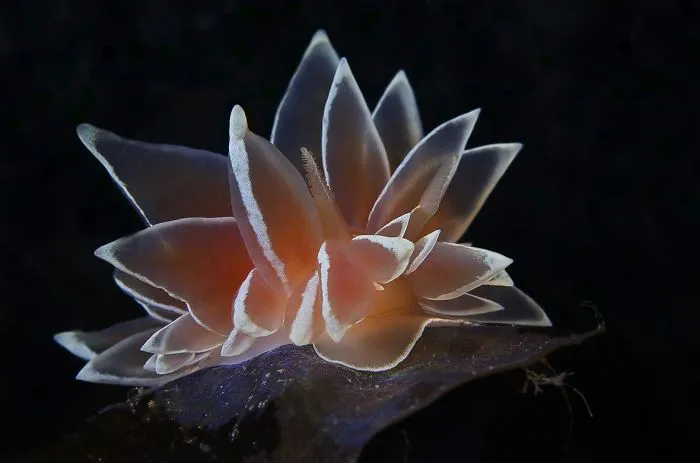
Beside giant jellyfishes, octopuses, and seastars - all subjects too big for my macro lense - I suddenly saw this beautiful creature crawling on a kelp leave. Fantastic. I watched it until the end of the dive. Never saw such a beautiful nudibranch again
Report
42points
#31 1st Place, Compact Wide Angle, "Dancing Jellyfish" By Melody Chuang
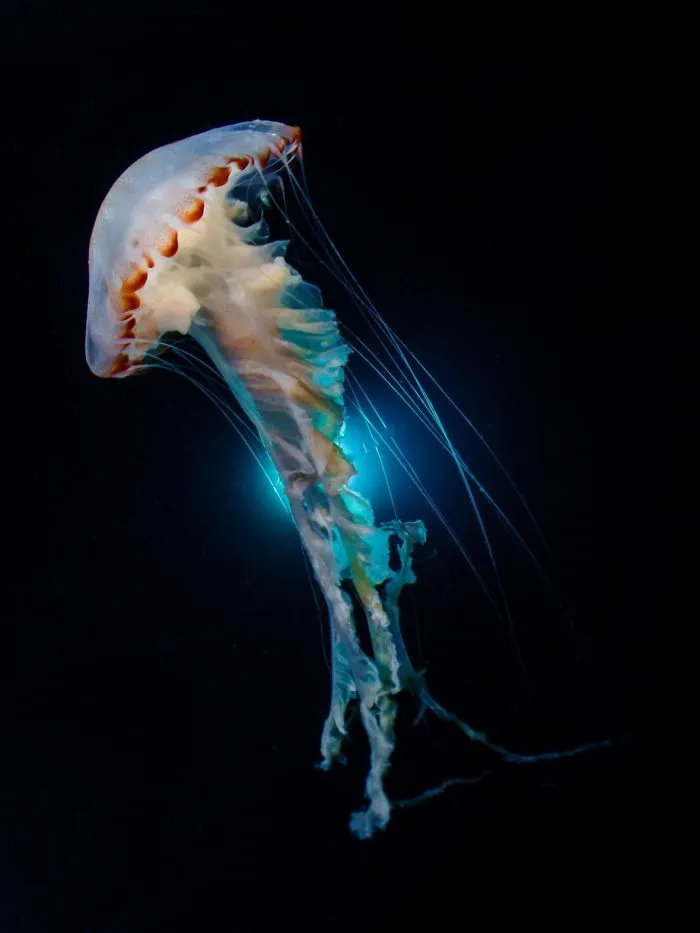
This is my first time to meet jellyfish in Taiwan NorthEast Coast for shore dive! When I did night dive in 2018 summer time, I saw this beautiful jellyfish dancing in the dark! I followed her for a while and took many shots when she transformed into different shape. Suddenly, my diving buddy who is also my husband, Stan Chen, was so creative and used his torch to make the backlight for this unique jellyfish. In order to make good shots, we followed her over 1 mile and against the current. When we finished the dive, it’s already sunrise time at 5:30 am but we made it! We got the beautiful pose for the dancing jellyfish with an unique spotlight!
Report
40points
#32 3rd Place, Mirrorless Wide Angle, "No No!" By Pier Mane
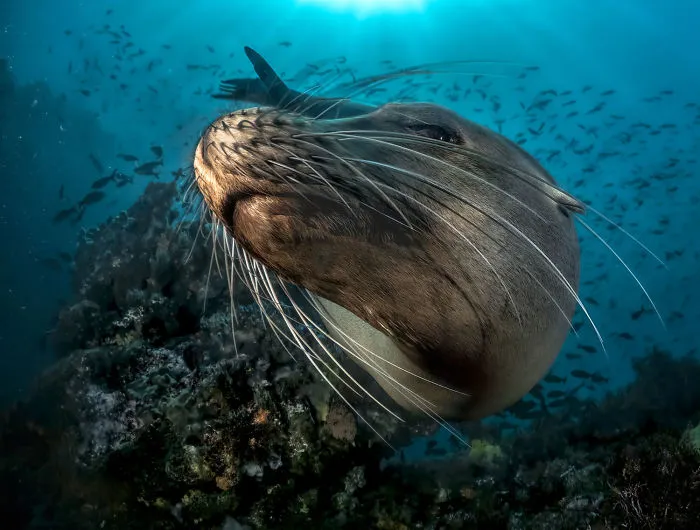
While diving in Galapagos looking for Mola Mola, we encounter playful Sealions (Zalophus wollebaeki). This particular one used to shake his head side-to-side, like he was saying no for a photograph. But he remained in the same spot for minutes at the time prior to moving away for a few minutes and then returning. What caught my eye was his beautiful whiskers. The dark water, limited natural light, and fast movement of the sea lion was a challenge.
Report
40points
#33 1st Place, Underwater Art, "Disco Nudi" By Bruno Van Saen
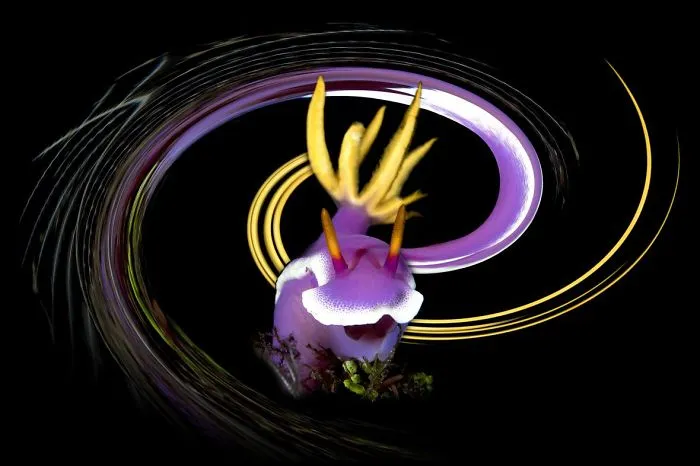
I was trying to create an image right out of the camera using special own-made backgrounds. But at the end, it was the photoshop filter ‘swirl’ which helped me a lot to end up with this creative image.
Report
38points
#34 3rd Place, Macro Ocean, "Speedy Cuttlefish" By Fabio Iardino
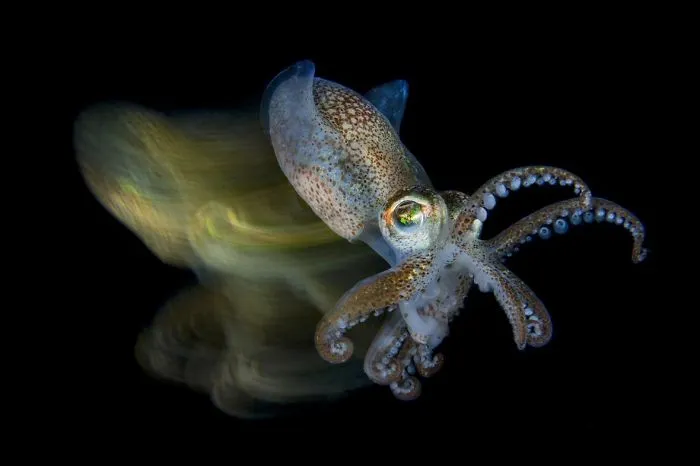
During a night dive, I met this cuttlefish. Intrigued by his way of moving, I tried a technique of slow sync flash to get a shot with an effect of movement.
Report
37points
#35 1st Place, Mirrorless Behavior, "My Babies" By Fabrice Dudenhofer
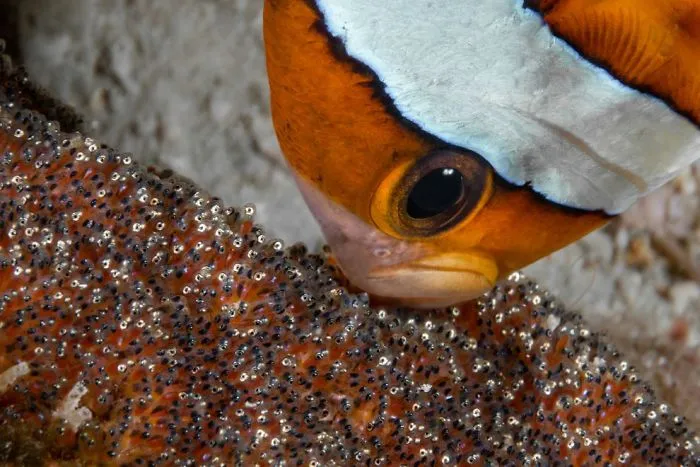
I have been fortunate enough to have a Japanese guide who showed me a couple of clownfishes with their baby eggs. I never had the chance to shoot this type of interaction before so it was a big challenge for me. The adults swam endlessly around the eggs in order to oxygen them. Because of their endless movements it was difficult to get the perfect moment. To achieve the perfect shot I needed patience and a big part of luck. The guide and I stayed more than half an hour and I took more than 50 photos. I really wanted to show how some parent fishes cared for their babies.
Report
36points
#36 6th Place, Marine Life Behavior, "Cleaning" By Liang Fu
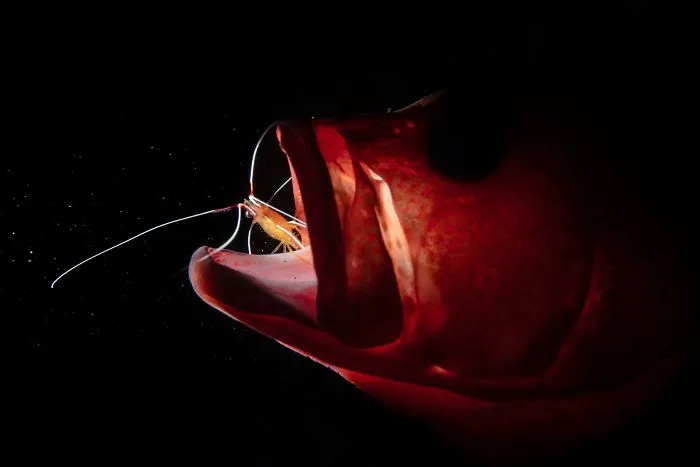
A white-banded cleaner shrimp hopped into the mouth of a grouper to have some leftover food. While at the same time, the grouper has its mouth cleaned by the shrimp. This cleaning behavior ensures both species mutually benefit from this symbiotic relationship. I am fascinated by this behaviorbetween the grouper and the shrimp. To capture this moment, I tried to use a snoot with side-back lighting to create a strong shadow of the body of the grouper while at the same time lighting up the mouth. Lucky enough when a shrimp jumped just on the edge of the mouth, I got the photo that I was hoping for.
Report
35points
#37 4th Place, Compact Wide Angle, "Who's The Boss?" By Andreas Schmid
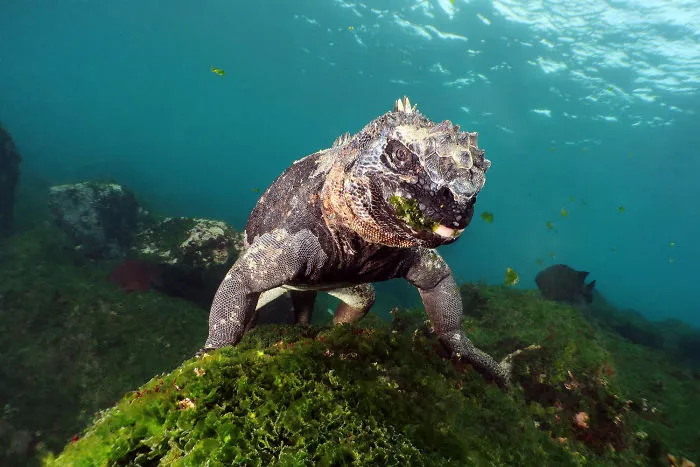
Marine Iguanas can only be found on the Galápagos Islands and are the only iguana species worldwide that feeds in the ocean. I tried to understand how these very rare and special animals behave and react to the presence of divers in the water by observing them over the course of 3 dives until I figured out how to approach them while they were feeding without disturbing them to get some close focus wide angle shots. The very surgy conditions in the shallow area these animals feed in made it quite challenging to handle the camera and position the strobes but luckily I found this particular iguana which was not bothered at all and allowed me to get off a series of shots.
Report
34points

#39 3rd Place, Compact Behavior, "La Siesta" By Jin Woo Lee
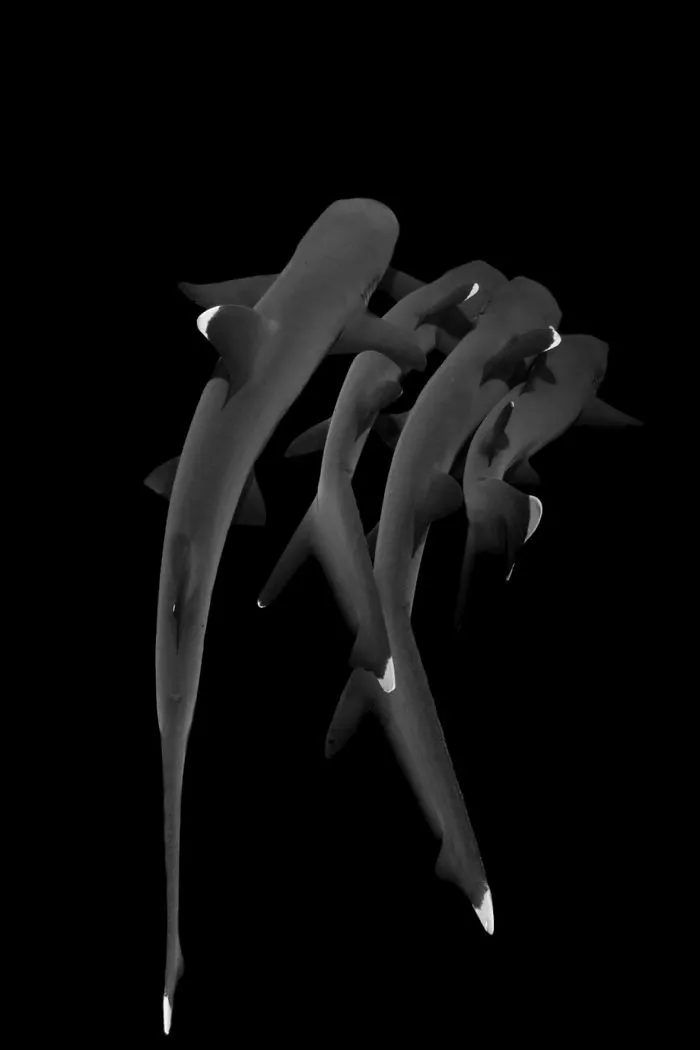
I was lucky enough to travel Mexico's finest shark diving site, the Revillagigedo Archipelago for my Christmas break. While I was on the Pacific, weather and visibility were perfect for diving. The sun was bright and water was crystal clear and calm. The Captain of the liveaboard said that I and other divers were fortunate enough to visit and stay at the Roca Partida. The diving was outstanding. It was my first time seeing pelagics and whale sharks. Among those incredible encounters, I could observe white tip reef sharks laying together at the balcony of a cliff. It was a great oppurtunity to take fascinating photos; however, it was not as easy as I had thought. Getting closer to them was a huge problem. To get closer to sharks, I had to control my breath to not make any bubbles first. That wasn’t really a problem, but strong vertical current pushed my body to bottom, which made all the sharks freak out. The flash woke them up as well. I tried and tried, then finally I shot a perfect composition of sharks laying on the balcony. Four white tip reef sharks were lined up as they were family.
Report
32points
#40 4th Place, Nudibranch, "Janolus Cristatus" By Giacomo Giovannini
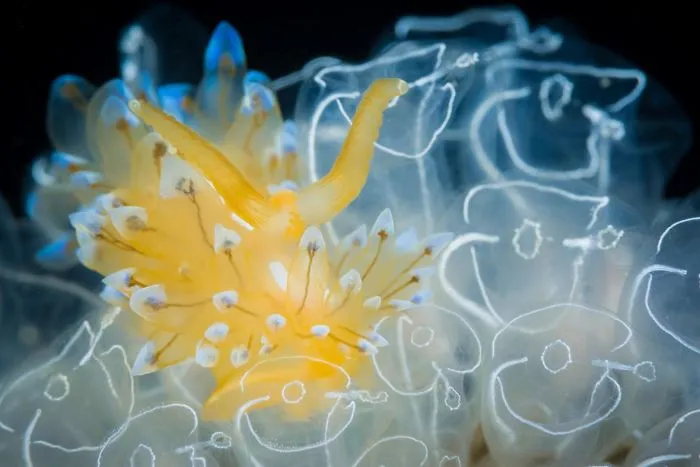
I'm very attached to this image because it's taken in a forgotten and mistreated location, that I think is the best muck/macro dive site in Italy... (without diving farther than 600km from my house). There you can see unthinkable things, like nudibranchs over clavelina or sabella spallanzanii or even over crabs or sea horses!
Report
32points