
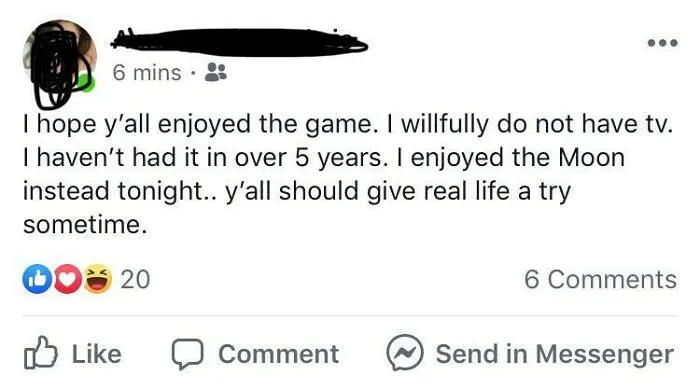
#21 Stop Having Fun At That Party With Your Friends And Family, And Check Out The Moon
And the why can matter just as much. Writing for Forbes, Amy Morin argues that “the difference between being authentic and oversharing stems from your intentions.” Sharing a difficult experience to help someone else, for example, isn't necessarily the same as sharing it to gain sympathy—a practice sometimes referred to as “sadfishing.” She also argues that authentic relationships are built over time, whereas oversharing can sometimes be an attempt to create intimacy before that trust exists.



And social media has made those distinctions a little harder to navigate. We can share intensely personal things with an audience that may include people we barely know, or people we never intended to address in the first place. As media researcher Aparajita Bhandari, cited by Love, puts it, “Those boundaries of personal versus public are shifted in these new spaces that we’re in.”


All of this is to say that oversharing isn’t simply about saying too much. Rather, it’s about saying something that feels too personal, too soon, or to an audience that really didn’t ask for it. In other words, it’s more often about the mismatch between what someone chooses to share and what their audience expects, wants, or is prepared to receive. And while that line can be subjective, sometimes the disconnect is pretty glaring.
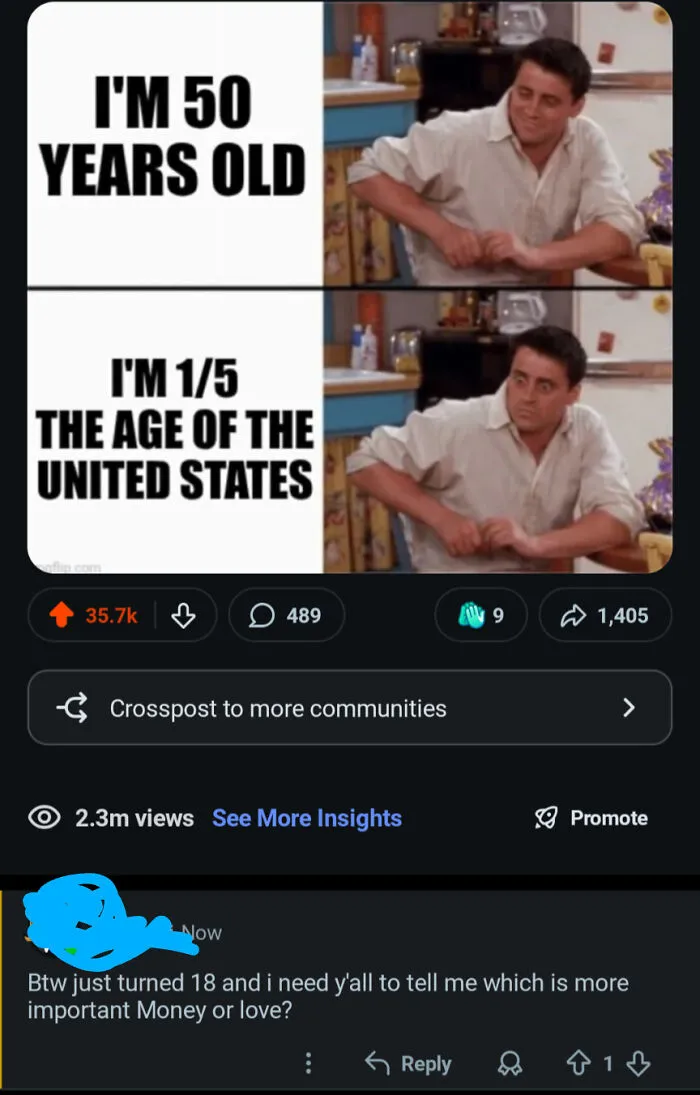
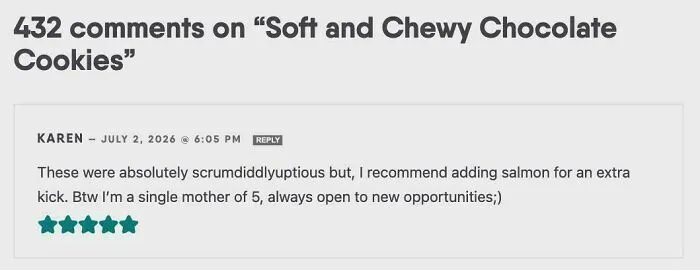
Which, conveniently, brings us to these posts. And perhaps we need say no more.



#35 Sir, It’s Creepy Cute Pottery Of A Blueberry With A Face. Why Do I Even Go On Fb Anymore?