



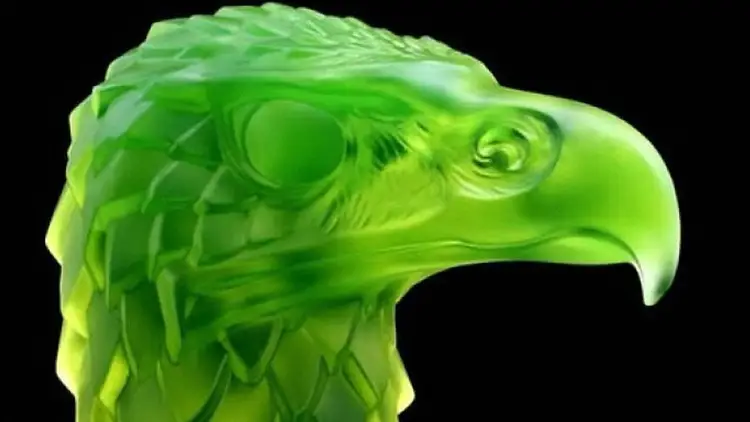

If someone asked you about your favorite subject in school, chances are you’d name math, English, science, or something practical. History, on the other hand, rarely makes the list. Yet once you look past memorized dates and dusty textbooks, human history reveals itself to be far more fascinating than we were ever taught.
That’s why today we’re diving into the “Museum of Artifacts” page, where people share rare, intriguing objects from the past. Each item tells a story, offering a glimpse into lives once lived and worlds long gone. These artifacts are strange, beautiful, and endlessly captivating. So, Pandas, keep scrolling to uncover pieces of history that still amaze today.
Click here & follow us for more lists, facts, and stories.
#62 A Roman Soldier’s Frying Pan With Folding Handle, Dated 3rd Century AD

This practical Roman military frying pan, complete with a folding handle, likely belonged to a soldier of the Legio II Augusta, stationed at Isca (modern Caerleon, Wales).
Designed for portability and durability, the pan was part of a legionary’s personal kit, used to prepare simple meals while on campaign or in barracks. Its clever folding handle made it easy to pack—showing how Roman military life balanced efficiency with everyday necessity.
What’s striking is how familiar the design feels. The form and function are not far removed from cookware found in modern military mess kits, underscoring a timeless truth: soldiers across history share the same basic needs, regardless of era.
Designed for portability and durability, the pan was part of a legionary’s personal kit, used to prepare simple meals while on campaign or in barracks. Its clever folding handle made it easy to pack—showing how Roman military life balanced efficiency with everyday necessity. What’s striking is how familiar the design feels. The form and function are not far removed from cookware found in modern military mess kits, underscoring a timeless truth: soldiers across history share the same basic needs, regardless of era.
Report
0points
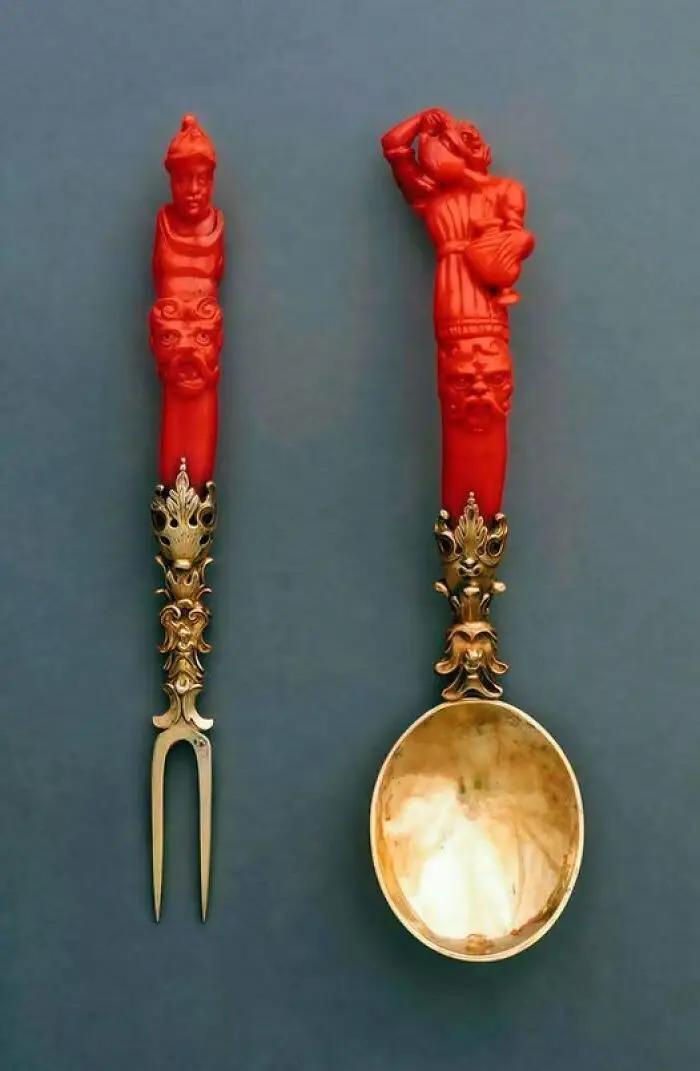
#63 German Fork And Spoon Set, Dates To Around 1600-1630. Made Of Red Coral, Silver And Gilt Metals
Report
0points
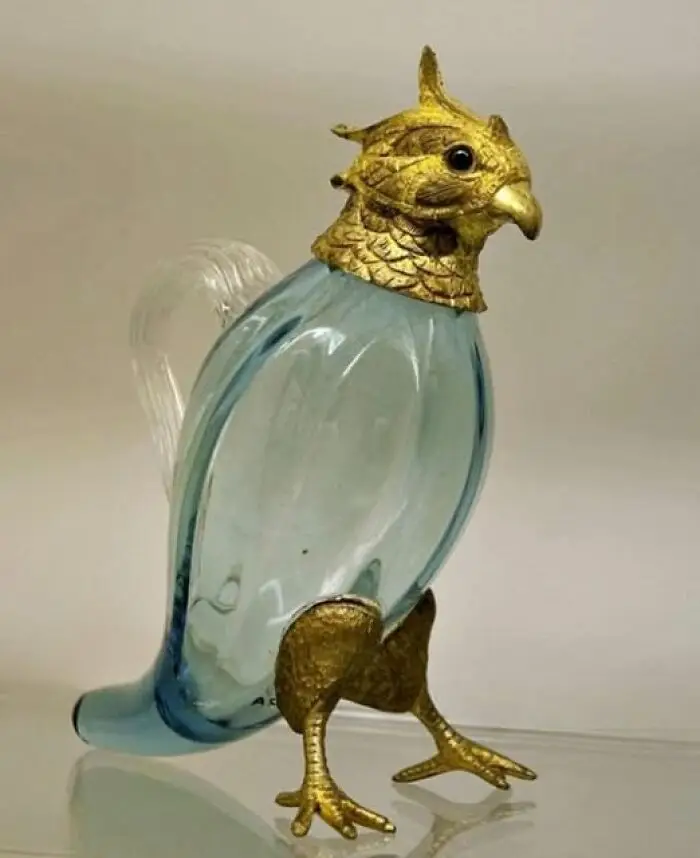
#64 Bird-Shaped Perfume Bottle With Stopper. Probably England. Date: C. AD 1880–1890. Medium: Pale Blue Blown Glass With Gilded Metal Mounts
Report
0points
#65 The Piercing Eyes Of The Antikythera Ephebe, Found In The 1900s Off The Coast Of Antikythera, Greece
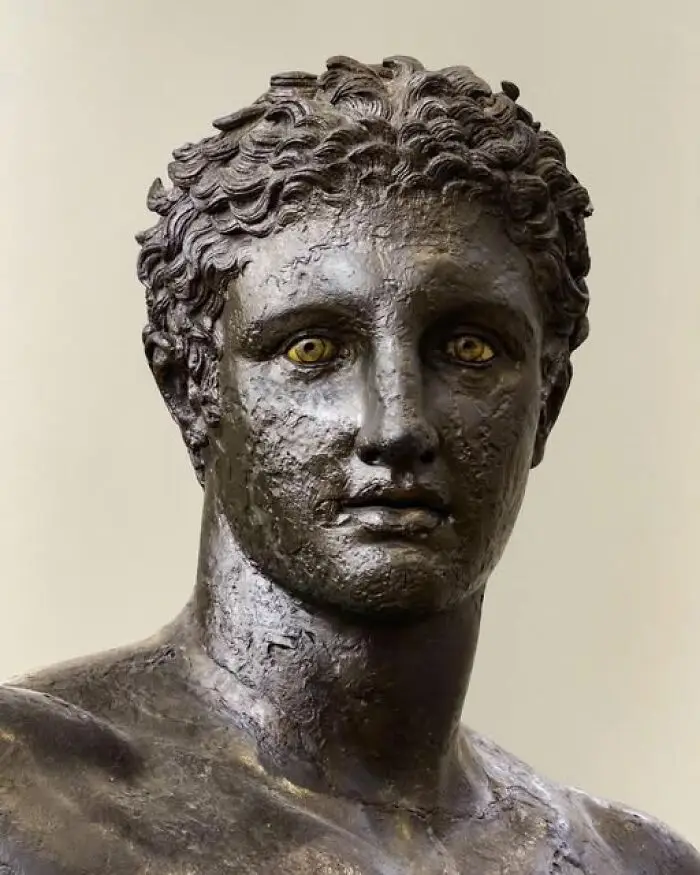
The Antikythera Ephebe, created in the fourth century BC, is a Greek bronze statue that was discovered in the Antikythera shipwreck in the 1900s. It is believed to depict a young athlete or mythological figure, being one of the few surviving original Greek bronze statues (as most others were melted down in antiquity). It was found alongside the Antikythera mechanism, an artefact regarded as the first analog computer.
Report
0points
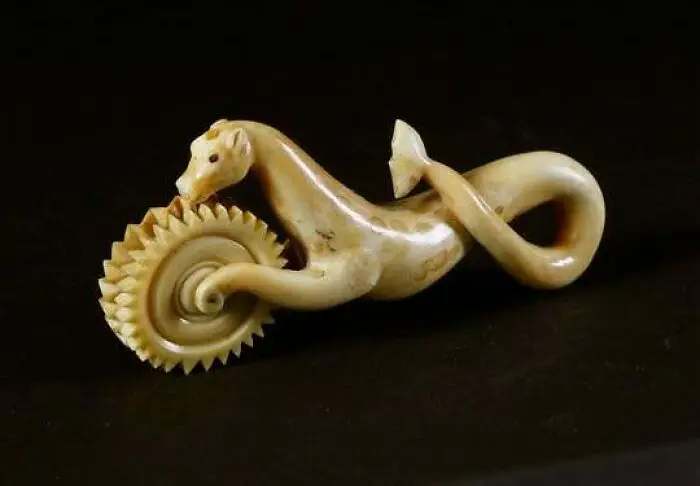
#66 Whaler Made Scrimshawed Whale Ivory Sea Horse Pie Crimper, Circa 1850
Report
0points
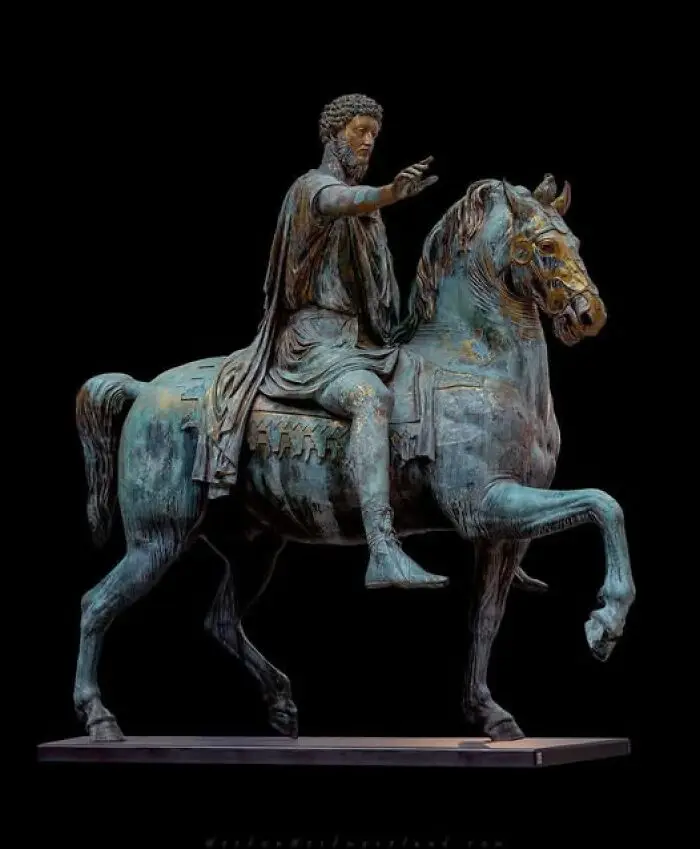
#67 Equestrian Statue Of Marcus Aurelius, Rome, 176 Ad. One Of The Greatest Surviving Works Of Roman Imperial Art, It Is The Only Large Bronze Imperial Equestrian Statue To Survive, Largely Because M. A. Was Confused With Christian Emperor Constantine And Escaped Being Melted Down
Report
0points
#68 Toy From Ancient Greece, C.450 BCE: This Doll Was Crafted In The Form Of A Woman With A Rolling Pin, And It Has Articulated Joints That Allow The Rolling Pin To Be Pushed Back And Forth

Report
0points
#69 Sanxingdui Head With Gold Foil Mask: They Were A Civilization In China Contemporary, But Culturally (And Probably Linguistically) Different From Shang, The Bronze Age Chinese
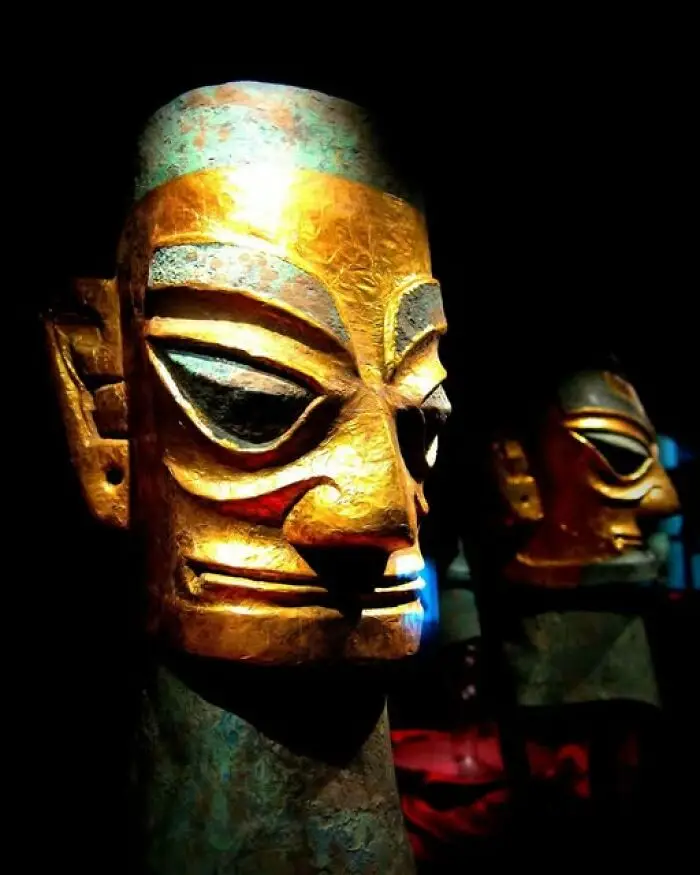
They're known for their very distinctive and "un-Chinese" art style.
Report
0points
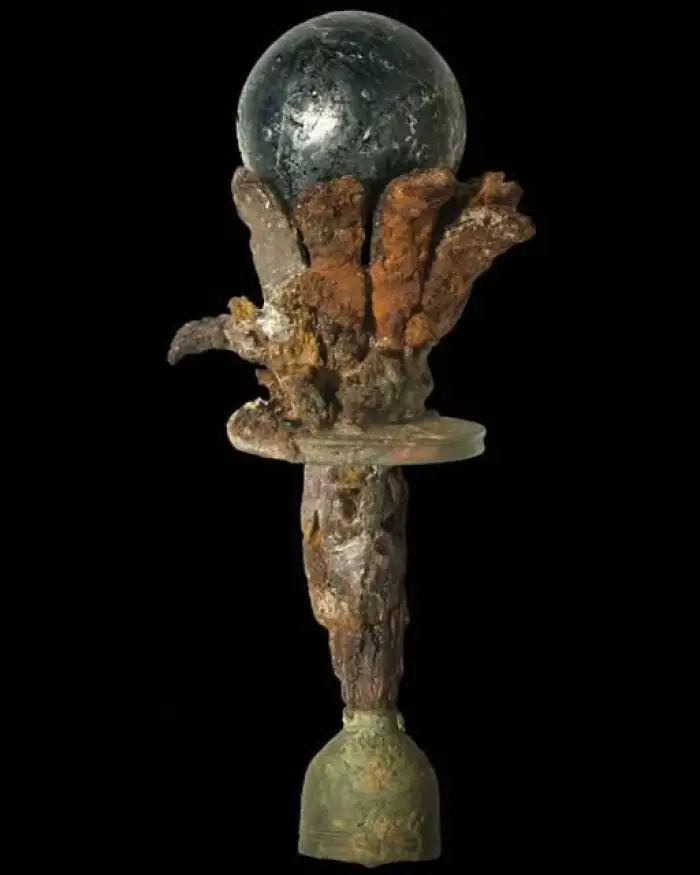
#70 The Imperial Sceptre Of The Roman Emperor Maxentius (306 - 312 Ce) - The Only Surviving Example Known
Report
0points
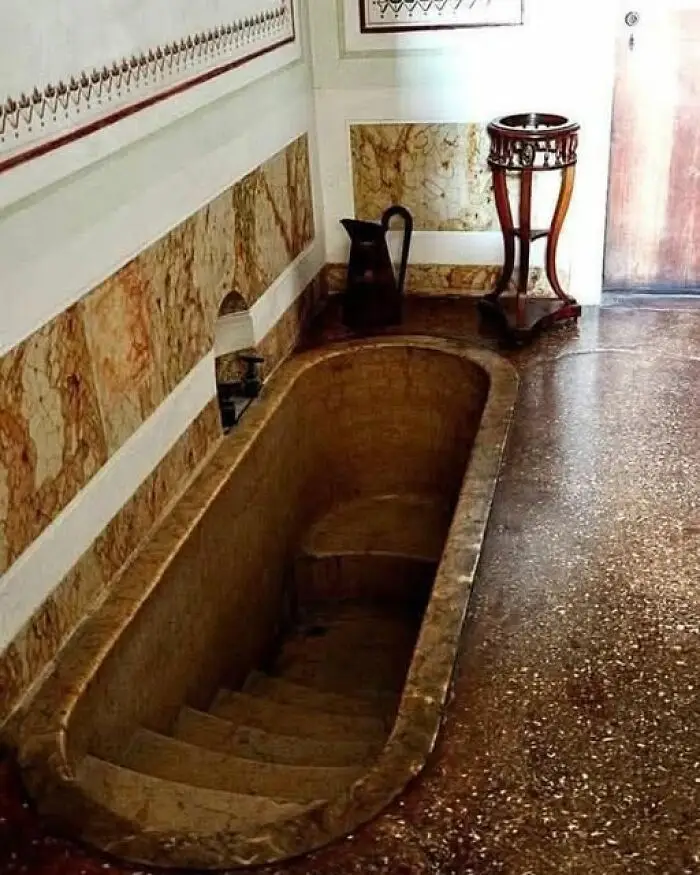
#72 Napoleon's Private Bathroom, Featuring A Unique Recessed Bathtub, Located Within His Apartment At The Villa Pisani In Stra, Northern Italy
Report
0points
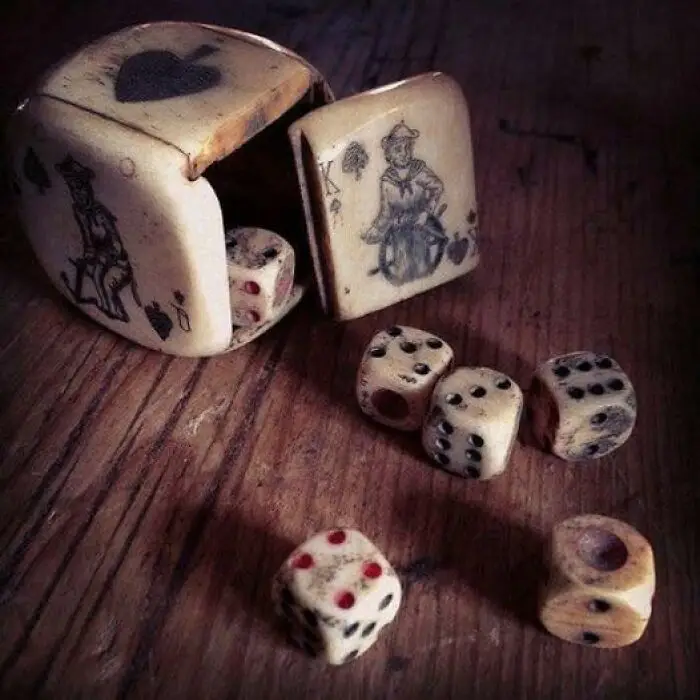
#73 English Carved Bone Scrimshaw Sailors Dice Holder And Dice. Circa 1880
Report
0points
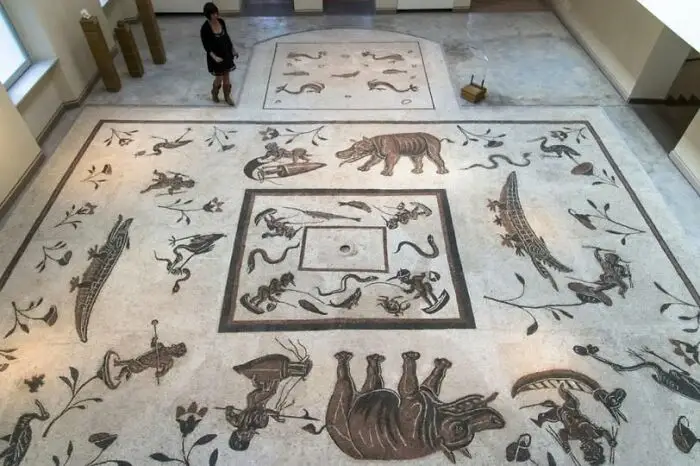
#74 A Large Roman Mosaic From The Thermal Baths Of Urvinum Hortense, Now Housed At The Museo Città Di Cannara In Italy. 1st-2nd Century CE
Report
0points
#75 A 45 Meters Long Paracas Geoglyph Of An Oculate Being, Found In The Desert Of Jumana, In Peru, In 1982. 500 BCE

Report
0points
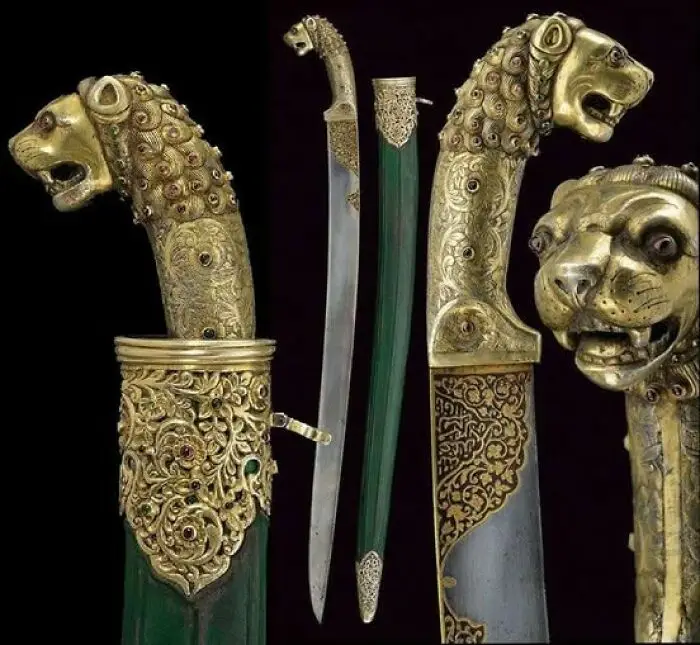
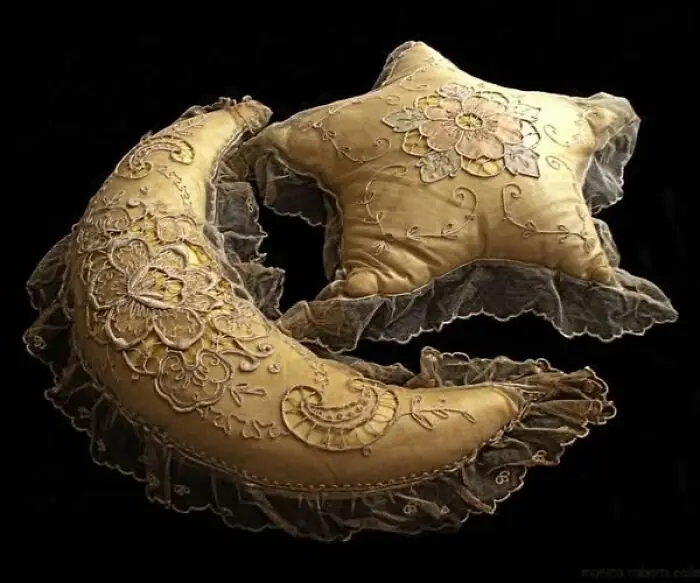
#77 Antique French Moon And Star Tambour Lace Boudoir Pillows From The Monica Roberts Collection, Circa 1910
Report
0points
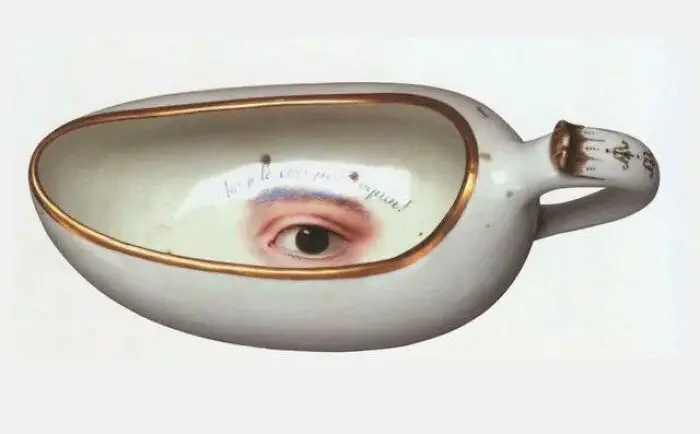
#78 An 18th Century Ladies Travel Urinal For Under Skirt Emergencies. The Inscription Says: "Ha Je Te Vois Petit Coquin." (Ha! I See You, Little Rascal)
Report
0points
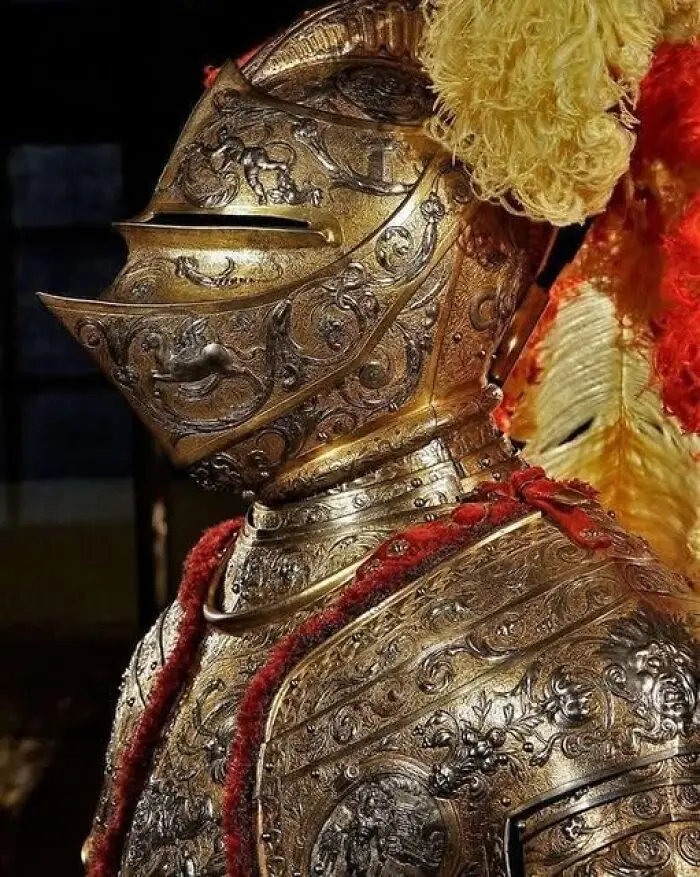
#79 Ceremonial Armor For The Rider And Horse Of King Eric XIV Of Sweden. Antwerp, 1563-1565
Report
0points
#80 A 16th-Century Italian Fireplace Mantle, Paired With A Chimney Clad In 17th-Century Tiles, Set Inside The Paris Apartment Of Renowned Antique Dealer Pierre Passebon
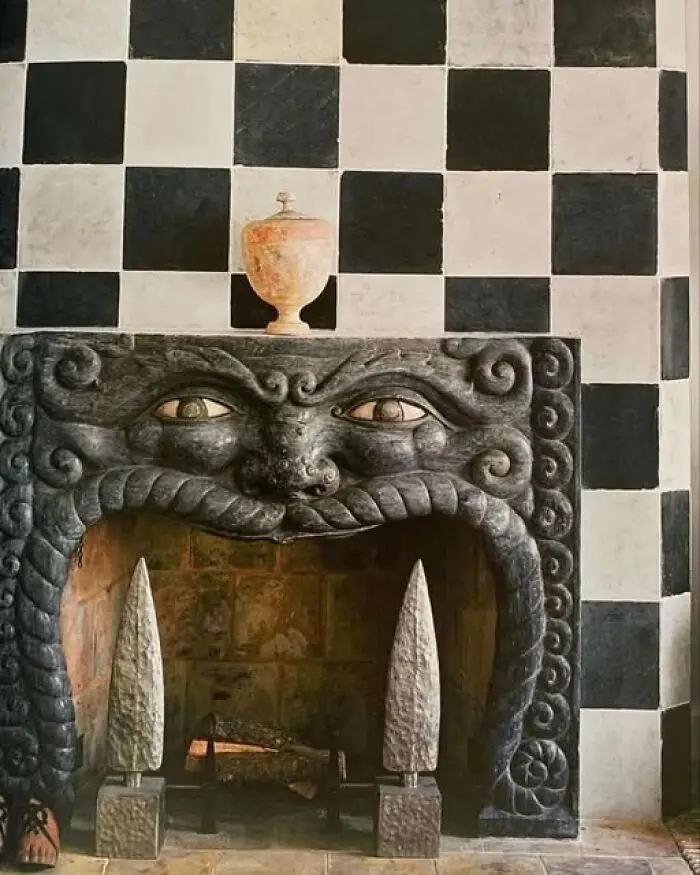
The interior was conceived by his life partner and in-house decorator, Jacques Grange. A striking dialogue between centuries: sculptural stone, watchful eyes, and bold geometry meeting timeless craftsmanship. Not just a fireplace — a theatrical architectural statement where history becomes part of everyday life.
Report
0points