



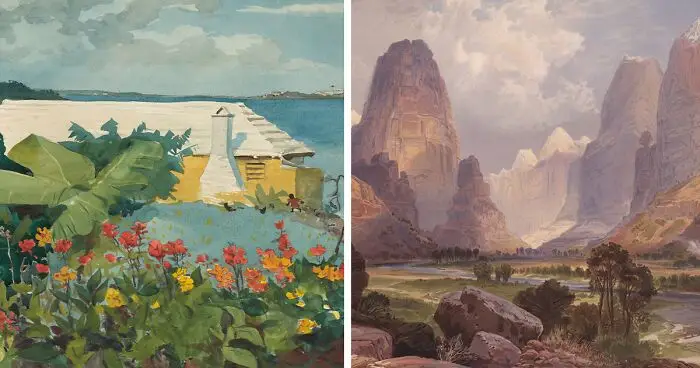

After covering famous still-life paintings, it was almost natural for us to write about the medium often utilized in the still-life genre. With watercolors, one may create nearly any genre of art, from vivid abstracts and crisp photorealist portraits to anatomical sketches and urban landscapes. Hence, it is no wonder some of the most famous artists utilized the watercolor technique in numerous, now considered some of the most famous paintings in art history.
Among the many exquisite watercolor paintings by famous artists are works that date back to the Renaissance. Watercolors were first employed by painters like Albrecht Dürer for new uses such as sketches, impromptu drawings, and making replicas.
In Britain, as "landscape" was finally accepted as an appropriate subject to paint, watercolor paintings were commonly employed to document journeys and adventures. Still, it wasn’t until the 19th century that watercolors finally began to climb the status ladder, and some of the most famous watercolor paintings started to materialize. Not by themselves, of course, but at the hands of some of the greatest artistic geniuses.
Below, we’ve compiled a list of the most famous watercolor paintings of all time. If a painting caught your attention, make sure to give it an upvote! Also, if you have anything to add about a particular painting or perhaps a famous watercolor painter behind it, leave a comment, as we are also stunned to learn more about the history of art and watercolor!
#41 Vista De La Orotava Y Del Pico Teide By Elizabeth Murray
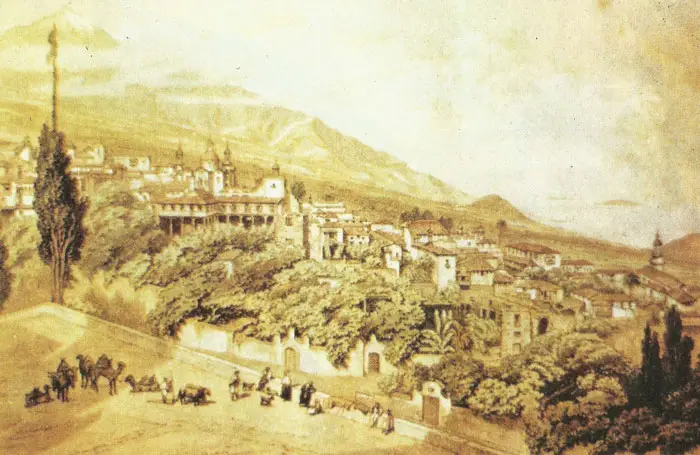
Artist: Elizabeth Murray | Year (completed): 1851 | Period: Neo-Expressionism
The scenery of the valley of La Orotava and Teide, the peak that can be seen in the backdrop, is depicted in this painting in question. Although a group of Canarians wearing traditional attire can be seen in the foreground together with grazing animals and cargo, the landscape is primarily made up of the valley. The painting mainly uses red, green, and brown hues.
Report
0points
#42 The Green Pitcher By Paul Cézanne
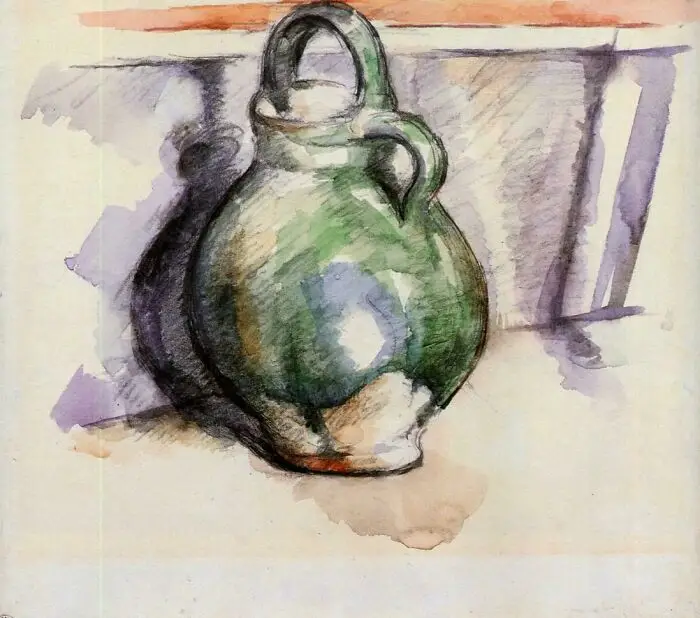
Artist: Paul Cézanne | Year (completed): 1887 | Period: Post-Impressionism
European art underwent a permanent revolution thanks to Paul Cézanne. He changed how we perceive the world as well as how we document it. Not just his paintings but also his works on paper, mainly the watercolors, provide evidence for this. Watercolor gradually took Cézanne’s place as the dominant medium in the 1880s. With it, he pursued themes such as landscapes, bathing scenes, portraits, and still lifes in addition to his paintings. He didn’t start creating watercolors as standalone works of art until near the end of his life, when his reputation among collectors, dealers, and other painters grew.
Report
0points
#43 Pifferari Playing To The Virgin Scene In Rom By Elizabeth Murray
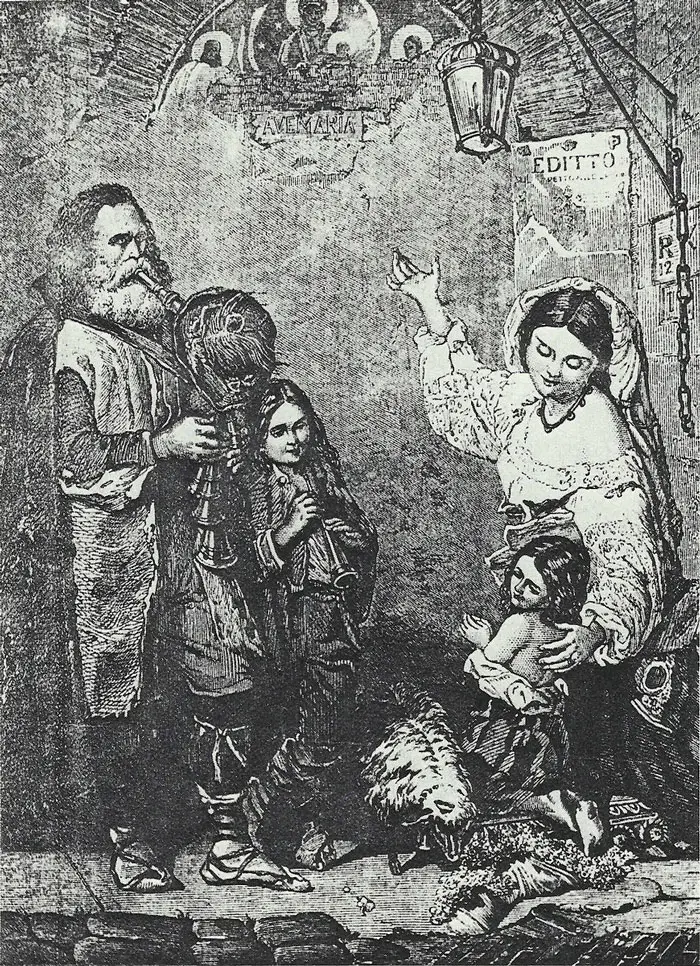
Artist: Elizabeth Murray | Year (completed): 1859 | Period: Neo-Expressionism
This painting shows two fife players — an adult and a child — and a mother and her son. The musicians are pifferari, Campania peasants who perform during Christmas in front of images of Mary. Given the appearance of the pifferari and the usage of "Rome" in the work's title, it is clear that Murray depicted an Italian scene.
Report
0points
#44 Encampment Near Mount Coke, South Africa By Rhoda Holmes Nicholls
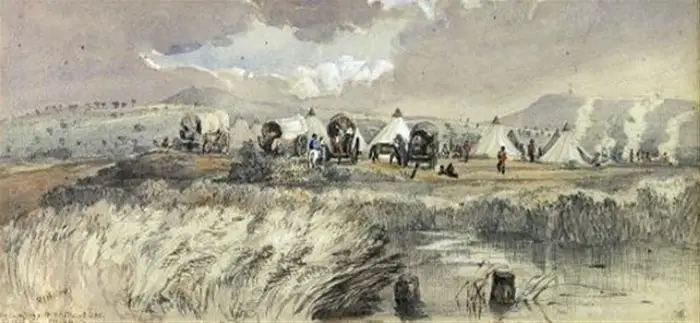
Artist: Rhoda Holmes Nicholls | Year (completed): 1884
Born in Coventry, England, Rhoda Holmes Nicholls was an English-American watercolor and oil painter. Her work was admired and viewed at the time by the queens of both England and Italy, where she studied art. Nicholls captured the Port Elizabeth region's landscape, fauna, and architecture in a collection of works while living in South Africa, where she spent a year residing on an ostrich farm owned by her brothers. Hence, South Africa's vistas were a common subject of her many watercolors.
Report
0points
