




After covering famous still-life paintings, it was almost natural for us to write about the medium often utilized in the still-life genre. With watercolors, one may create nearly any genre of art, from vivid abstracts and crisp photorealist portraits to anatomical sketches and urban landscapes. Hence, it is no wonder some of the most famous artists utilized the watercolor technique in numerous, now considered some of the most famous paintings in art history.
Among the many exquisite watercolor paintings by famous artists are works that date back to the Renaissance. Watercolors were first employed by painters like Albrecht Dürer for new uses such as sketches, impromptu drawings, and making replicas.
In Britain, as "landscape" was finally accepted as an appropriate subject to paint, watercolor paintings were commonly employed to document journeys and adventures. Still, it wasn’t until the 19th century that watercolors finally began to climb the status ladder, and some of the most famous watercolor paintings started to materialize. Not by themselves, of course, but at the hands of some of the greatest artistic geniuses.
Below, we’ve compiled a list of the most famous watercolor paintings of all time. If a painting caught your attention, make sure to give it an upvote! Also, if you have anything to add about a particular painting or perhaps a famous watercolor painter behind it, leave a comment, as we are also stunned to learn more about the history of art and watercolor!
#21 The Green Hill By Winslow Homer
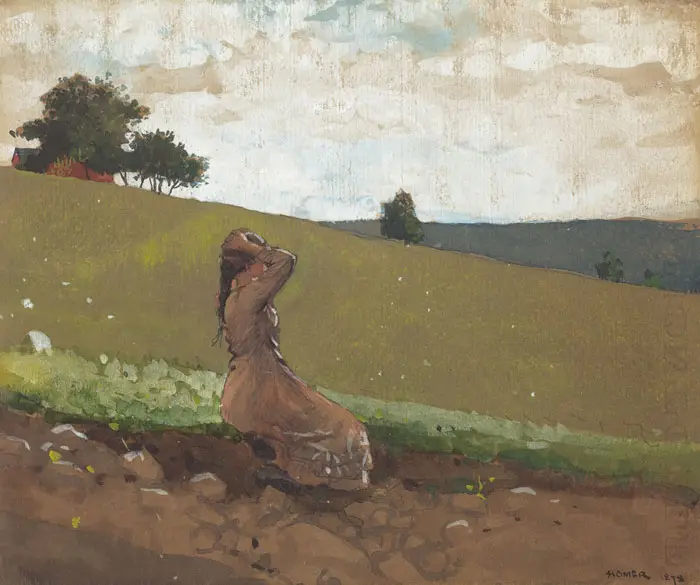
Artist: Winslow Homer | Year (completed): 1878 | Movement: Realism, American Realism
One of the most well-known painters of American outdoor settings is Winslow Homer. After returning from the war, where he created the illustrations for Harper's Weekly, he traveled to Europe and then spent the summer of 1873 in Gloucester, Massachusetts. He started working in watercolor there, which would later become his main medium. From depictions of wilderness guides to rural African American life in the years following the Civil War to images of children playing, Homer's outdoor genre pieces portrayed a diverse vision of America. After relocating to a remote area in coastal Maine, the eternal conflict between man and nature came to dominate his works.
Report
0points
#22 Flower Pots By Paul Cézanne
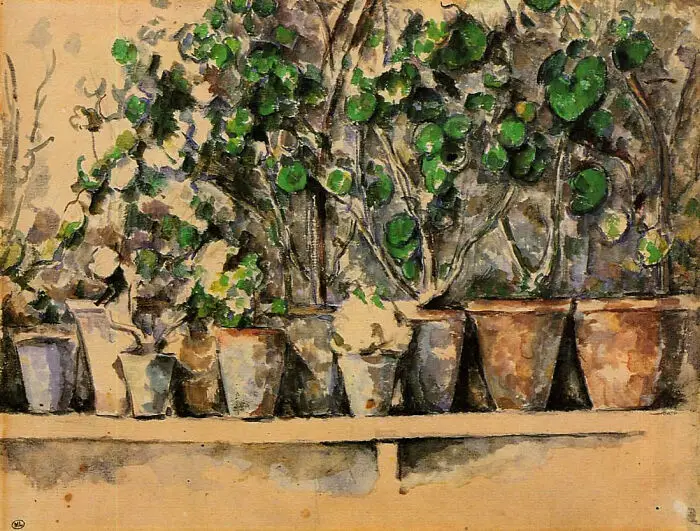
Artist: Paul Cézanne | Year (completed): 1887 | Period: Post-Impressionism
Flowering plants and freshly cut bouquets, which were prone to wilting under his prolonged gaze, were rarely painted by Cézanne. Only three of his still lifes and a small set of exquisite watercolors created over a 20-year period featured potted plants.
Report
0points
#23 The Blue Rigi, Sunrise By J. M. W. Turner
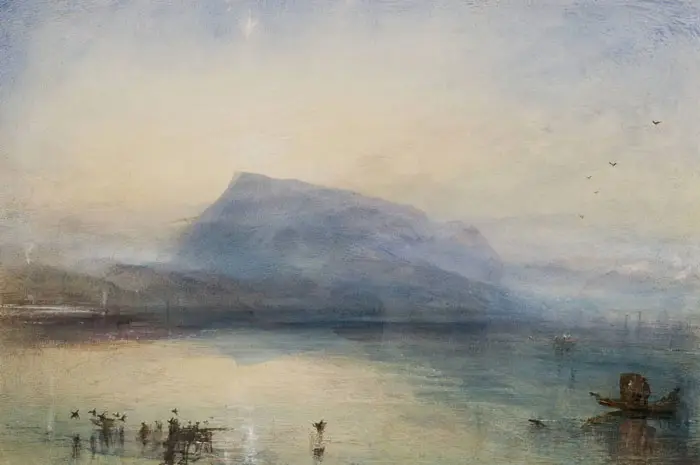
Artist: Joseph Mallord William Turner | Year (completed): 1842 | Period: Romanticism
After visiting the Rigi, a mountain in the Central Swiss Alps, J. M. W. Turner produced three watercolors of it. These watercolors, widely regarded as some of his best, show the ephemeral effects of light and meteorological conditions in the Rigi. As stated by writer John Ruskin, "Turner had never made any drawings [watercolors] like these before, and never made any like them again ... He is not showing his hand in these, but his heart."
Report
0points
#24 Roma By Rhoda Holmes Nicholls
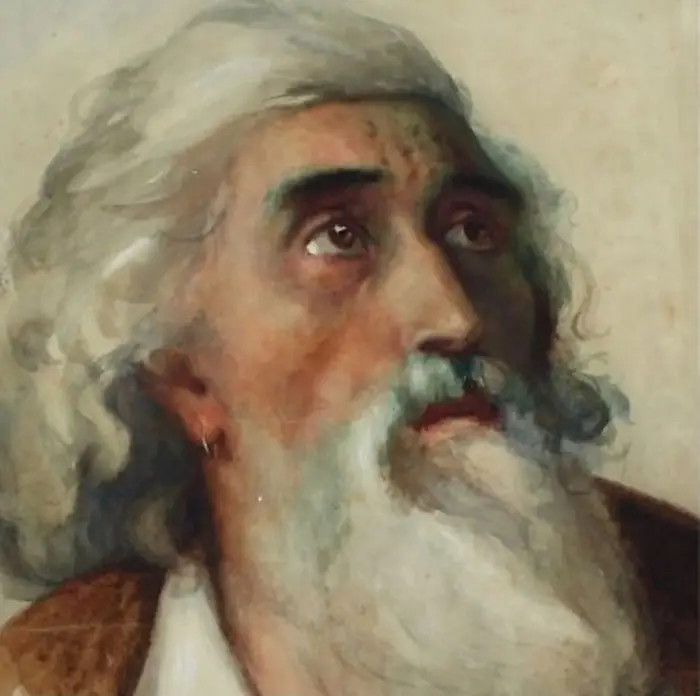
Artist: Rhoda Holmes Nicholls | Year (completed): 1880
Nicholls completed Roma (a study of a peasant man) in 1880. The painting shows a superb impressionist study of a peasant man. The image, which is believed to be one of the artist's earlier creations from when she was studying in Rome, has an almost angelic feel to it. The man’s grey hair, thick locks swept from his head, upward gaze through hazel brown eyes, ruddy complexion complementing his olive skin, and a long, thick white beard and mustache give the picture an almost angelic feel. He has earrings, so it's likely that the man is a Romany Gypsy.
Report
0points
#25 Tillington Church By John Constable
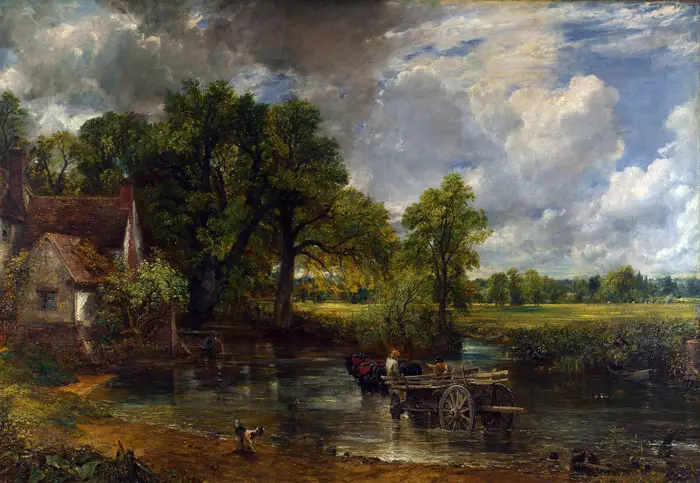
Artist: John Constable | Year (completed): 1834 | Period: Romanticism
John Constable's oil paintings are undoubtedly his best-known works. However, he started concentrating on watercolors in 1829, and his paintings' subjects were similar to those of his earlier oil sketches. Constable's expressive and lifelike method of capturing changes in the sky works well with watercolors. The artist could portray moody, emotional settings by using thicker brushes and more dense paints. Painted in the latter stages of Constable's life, this colorful watercolor depicts All Hallows Church in Tillington, West Sussex, recognizable by its characteristic domed spire.
Report
0points
#26 I Saw The Figure 5 In Gold By Charles Demuth
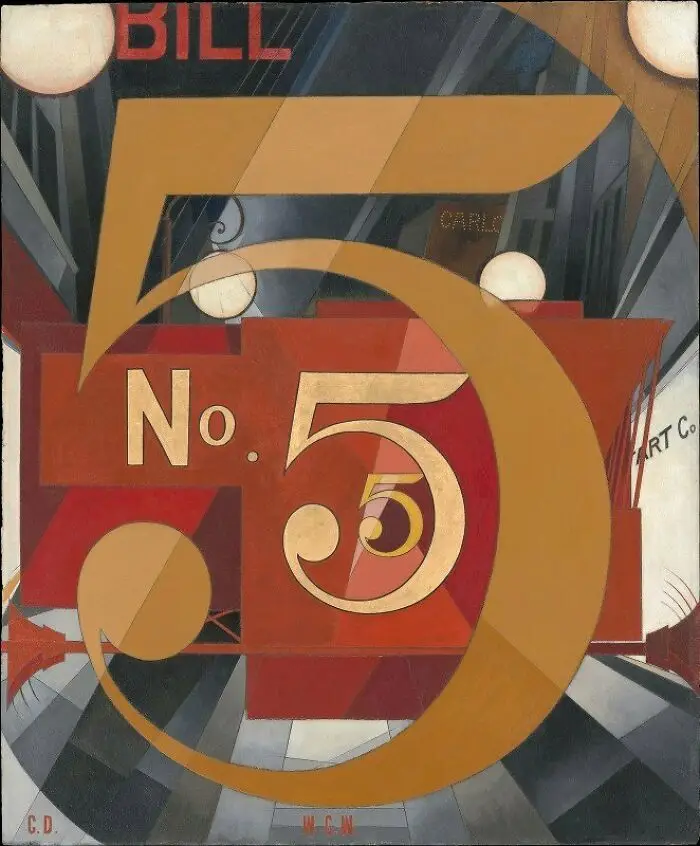
Artist: Charles Demuth | Year (completed): 1928 | Periods: Modernism, American modernism
Between 1924 and 1929, Demuth produced eight symbolic portraits as a tribute to contemporary American artists, writers, and performers. Despite not being a physical likeness, Demuth used imagery from his buddy William Carlos Williams' poem "The Great Figure," which alludes to the sounds and sights of a fire engine going down the street, to create this painting of him. The crossing lines, repeated "5," round forms of the numbers, lights, street lighting, and blasting sirens of the red fire engine give the picture a vivid, metropolitan vitality.
Report
0points
#27 Two Boys Watching Schooners By Winslow Homer
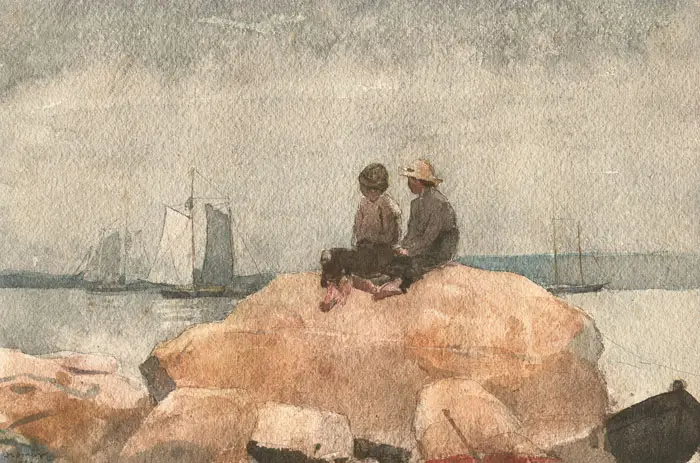
Artist: Winslow Homer | Year (completed): 1880 | Movement: Realism, American Realism
Two Boys Watching Schooners, created in 1880 during Homer's second visit to Gloucester, Massachusetts, depicts two boys perched atop a sizable rock from where they could observe the arrivals and departures of the fishing boats. The artist in this piece contrasted the warm tones of the figures and shore with the chilly blue tones of the port, sky, and schooners. In such a way, Homer stressed the psychological isolation of those waiting on land in anticipation of the safe return of those who relied on the sea to make a living.
Report
0points
#28 The Angels Hovering Over The Body Of Christ In The Sepulchre By William Blake
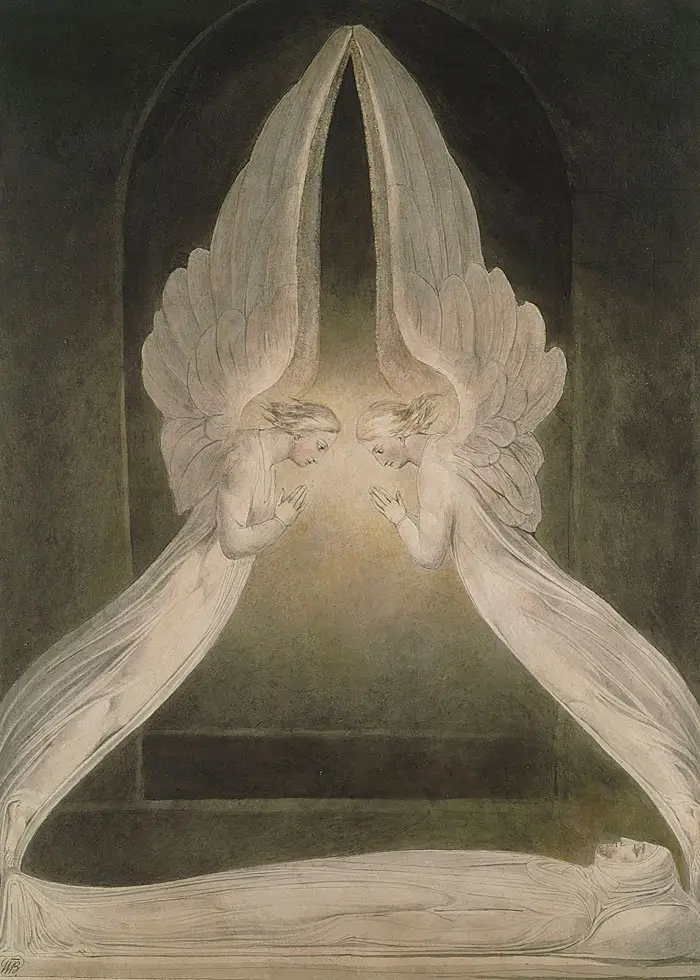
Artist: William Blake | Year (completed): 1805 | Period: Romanticism
This watercolor shows the body of Jesus Christ, which was laid to rest in a cave (also known as his tomb or sepulchre) after he was crucified. Blake looked for a description in the Old Testament's Book of Exodus to inspire his picture. When the prophet Moses is by himself on Mount Sinai, God commands him to advise the Israelites to construct a "mercy seat" surrounded by gold cherubim (angels). This graphic interpretation of the biblical text is unusual and striking. The unusual lighting and colors employed here evoke a feeling of the scene's mystique.
0points
#29 The Fighting Temeraire By J. M. W. Turner
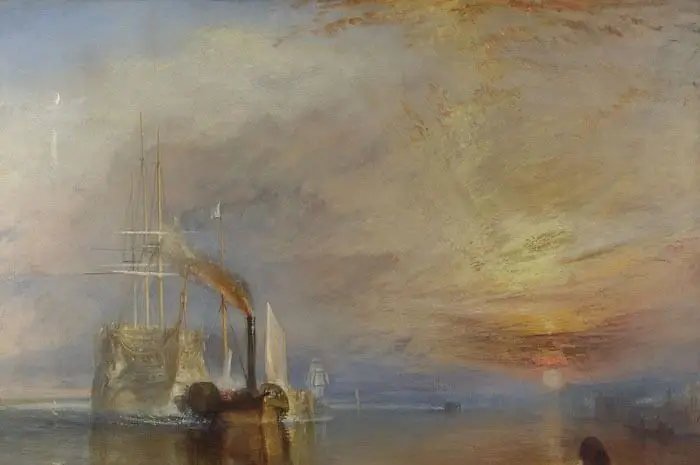
Artist: Joseph Mallord William Turner | Year (completed): 1839 | Period: Romanticism
For many Britons, Temeraire served as both a reminder of Britain's lengthy history of military prowess and a tangible link to the veterans of the Napoleonic Wars. In this watercolor, Turner honors Temeraire's valiant past while also illustrating a technical advancement that has already started to impact modern life. Positioned close to the canvas' left side, the boat is painted in white, grey, and brown tones, giving it a ghostly appearance. A tiny black tugboat, whose steam engine is apparently capable of handling its larger counterpart, pulls the mighty ship forward. In this watercolor, Turner illustrated how rapidly tradition and history were supplanted by the newfound steam engines of the Industrial Revolution.
Report
0points
#30 Sorting The Mail By Reginald Marsh
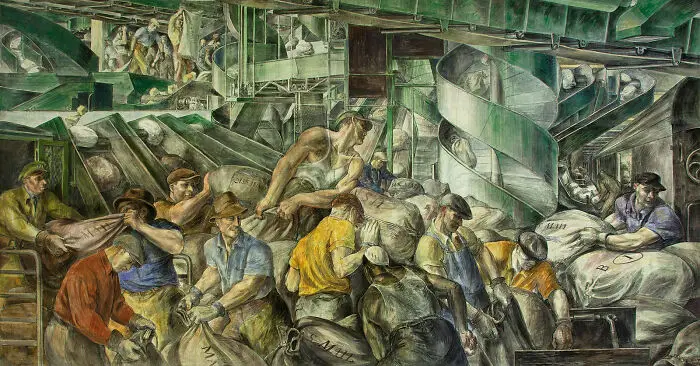
Artist: Reginald Marsh | Year (completed): 1936
New York City was thriving in the 1930s. Skyscrapers and the expansion of the subway system all rose throughout the previous ten years. The city served as a significant hub for both domestic and international shipping. Both its central post office and maritime port were among the busiest in the country. This thriving postal hub inspired Reginald Marsh’s murals, his first endeavor utilizing the fresco technique. In the mural's lower section, we can observe men with muscular physiques that exude heroism and power lifting and dragging big mailbags. The mechanism that transports the mail is depicted in the upper part of the fresco, which is painted in white, black, and green hues. Marsh's complex composition and particular approach successfully convey both the importance of workers and the mechanization of systems.
Report
0points
#31 Leaves In A Green Pot By Paul Cézanne
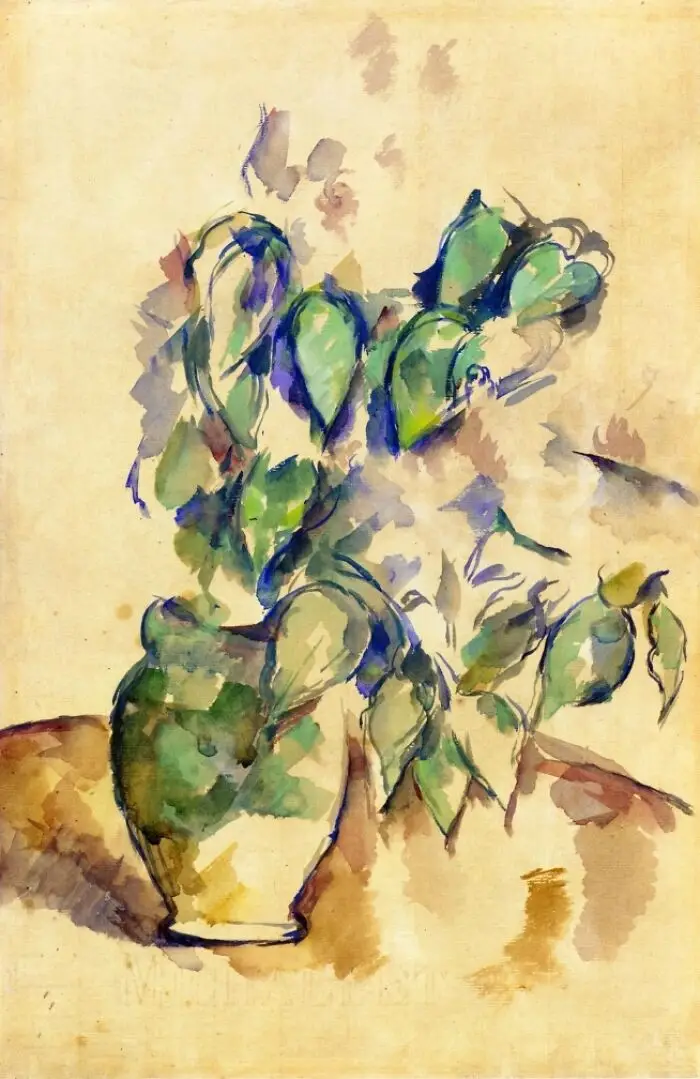
Artist: Paul Cézanne | Year (completed): 1902 | Period: Post-Impressionism
Cezanne eventually reduced his color palette to green, blue, and a few warm earth tones and began using the sparse and delicate watercolor technique as an exercise in economy. What started as a practice turned into a joy, and several of the paintings on show were obviously created for their own sake. However, they still have the signs of their ancestry. The white paper dominates, and the eye jumps from one complex of color to another, forgetting that there is nothing but whiteness in between.
Report
0points
#32 Beach With People Walking And Boats By Vincent Van Gogh
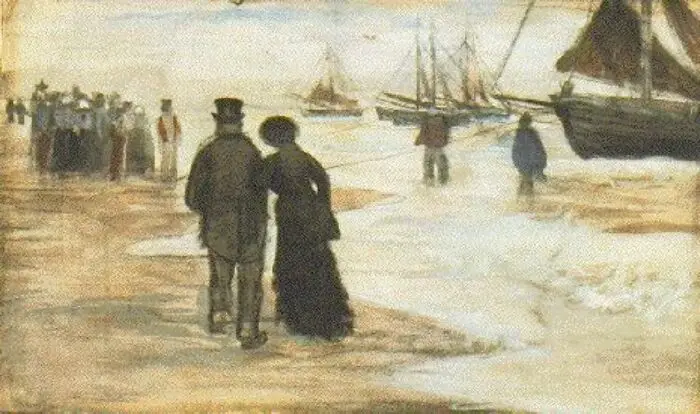
Artist: Vincent Van Gogh | Year (completed): 1882 | Period: Post-Impressionism
Yellows, oranges, and greys are prevalent in this watercolor Vincent Van Gogh painted in 1882. Around that time, Van Gogh received a commission offer to paint 20 scenes of The Hague; however, the now-classic works he completed by the end of May were rejected. Cornelis Marinus — the owner of a renowned gallery of contemporary art in Amsterdam — made a second commission offer, this time detailing the topic in great detail, but was again dissatisfied with the outcome.
Report
0points
#33 Stonehenge By John Constable
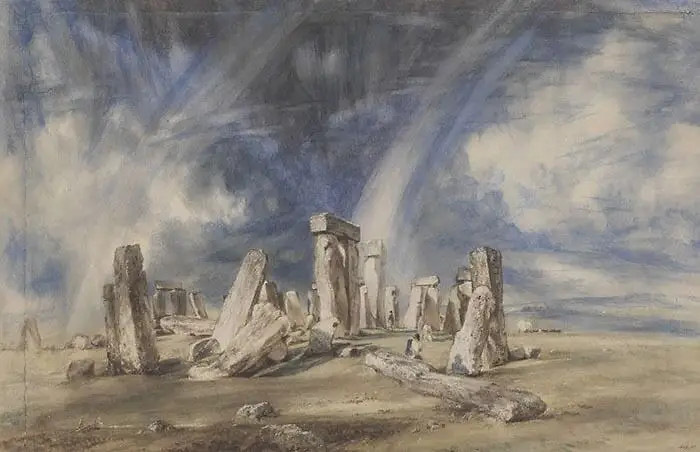
Artist: John Constable | Year (completed): 1835 | Period: Romanticism
The idea of a landscape was revolutionized by the English traditional landscape painter John Constable. Even today, beginners in the watercolors field continue to find inspiration in Constable's many well-known works.
0points
#34 Self-Portrait By Paul Cézanne
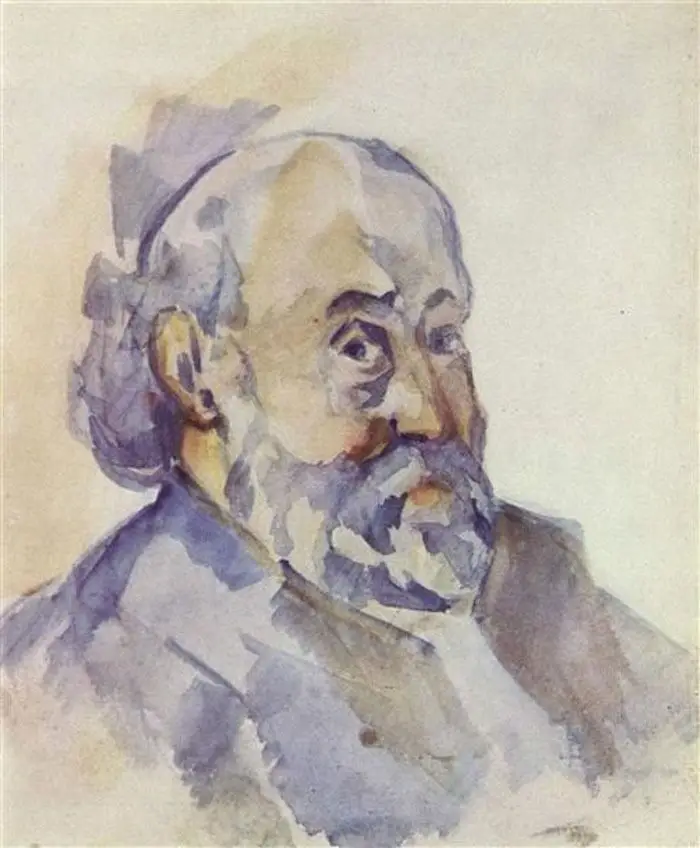
Artist: Paul Cézanne | Year (completed): 1895 | Period: Post-Impressionism
One of the most significant artists of the 19th century was undoubtedly Paul Cezanne. As the movement began, he eagerly joined Pisaro, Renoir, and Monet in producing outstanding Impressionist landscape and portrait paintings. During the remainder of the 1870s, Cezanne stuck to the Impressionist style. Still, Cezanne's work was never truly Impressionist; it was always something else.
Report
0points
#35 Still Life With Green Melon By Paul Cézanne
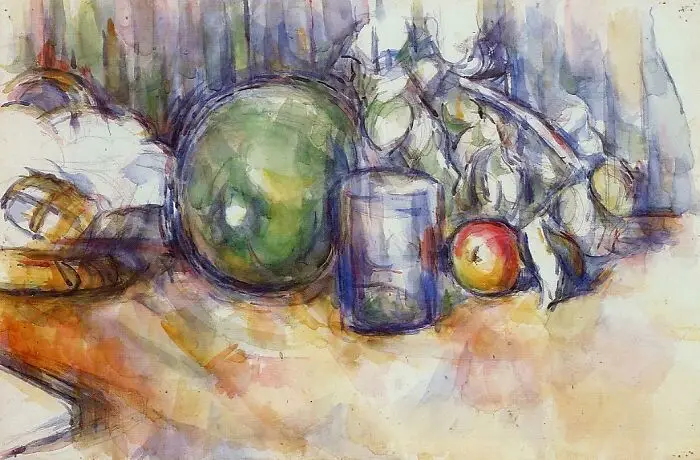
Artist: Paul Cézanne | Year (completed): 1906 | Period: Post-Impressionism
This piece is arguably one of the most realized watercolor still lifes Cézanne created during his later years. He made over twenty of these. The artist draws attention to his abilities in both production and observation with fluid strokes of dynamic colors. While not so obvious, what seems like thumbtack marks in the corners serve as a reminder of how this brilliant watercolor was created.
Report
0points
#36 Church Pew With Worshippers By Vincent Van Gogh
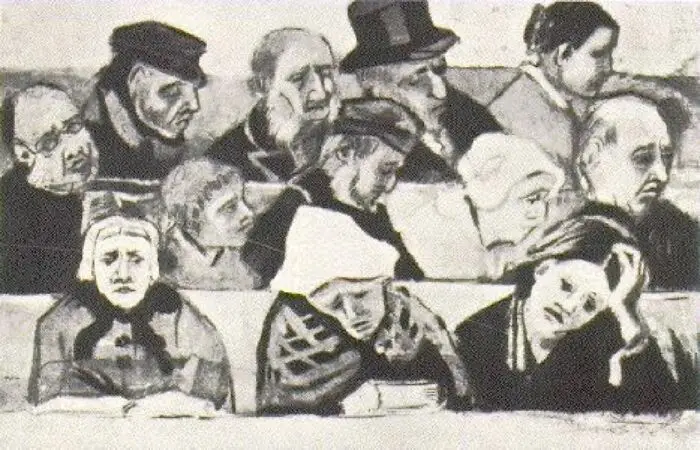
Artist: Vincent Van Gogh | Year (completed): 1882 | Period: Post-Impressionism
Vincent van Gogh painted a watercolor titled Church Pew with Worshippers between September and October 1882. In a letter to his brother Theo, Van Gogh mentions the artwork and includes a sketch. Each person in this picture, seated in a church pew, displays a distinct look. This watercolor reminds us that Van Gogh always had a strong connection to regular people.
Report
0points
#37 Alfred Diston By Elizabeth Murray
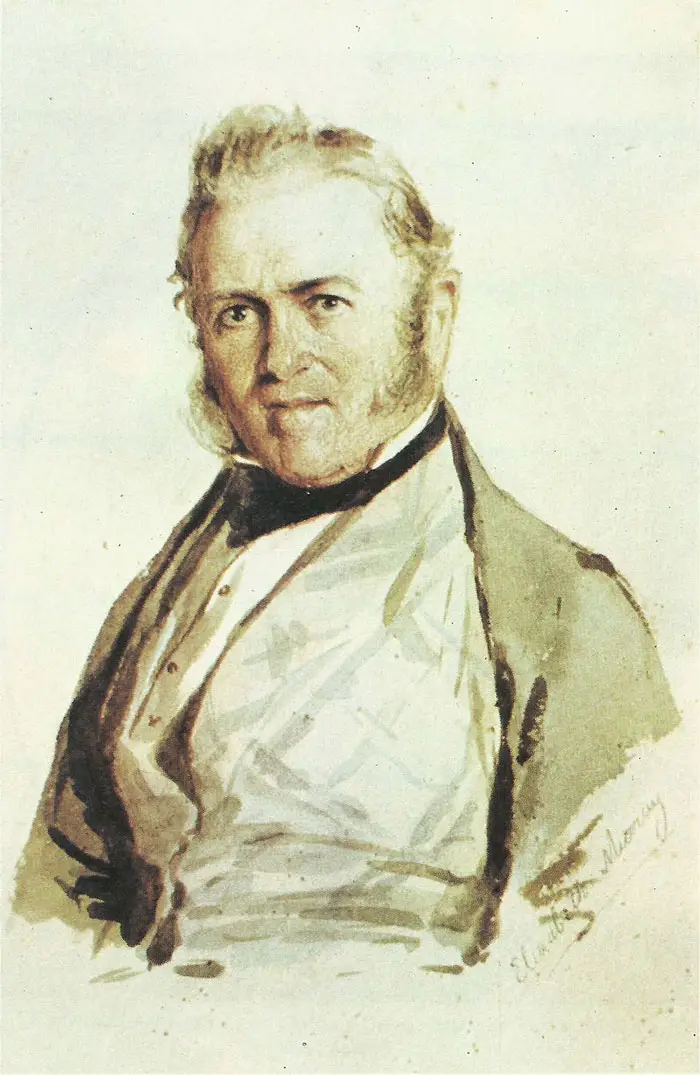
Artist: Elizabeth Murray | Year (completed): 1858 | Period: Neo-Expressionism
Alfred Diston, a friend of Murray, is depicted by her in a very lifelike manner, and his expression perfectly captures his personality. Alfred Diston was a well-educated young man with a strong grasp of several languages. He had a lovely personality and was good at making friends. He is positioned with his face to the viewer, and his body is slightly turned to the left. Murray primarily used chestnut and delicate hues like blue and yellow in the painting.
Report
0points
#38 Portrait Of Peasant Woman By Elizabeth Murray
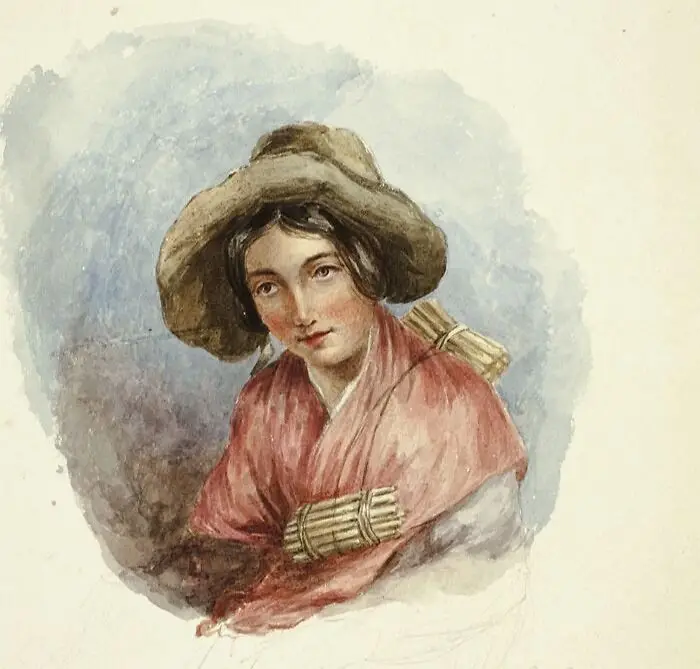
Artist: Elizabeth Murray | Year (completed): 1840 | Period: Neo-Expressionism
Particularly regarding gender, Murray drew portraits in the same manner. In some of her pieces, Murray creates similarities between up to eight distinct characters; in this way, she varies from her father, who employed more subjects in his paintings. Still, her paintings include hues and tones resembling her father's.
Report
0points
#39 A Mill Near Colchester By John Constable
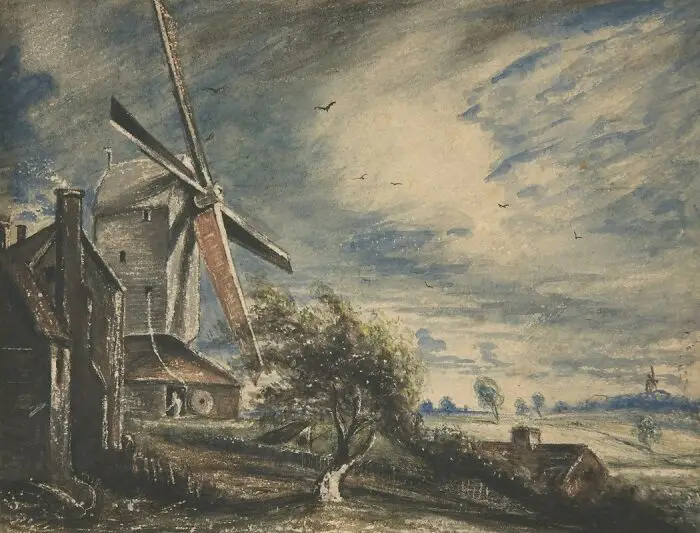
Artist: John Constable | Year (completed): 1833 | Period: Romanticism
John Constable is known for producing powerful depictions of rural England. He was a committed "naturalist" who stuck to familiar landscapes, refused to idealize, and frequently employed experimental methods. Apparently, this 1830s drawing was created impulsively and intensely. Titled A Mill Near Colchester, this watercolor is dominated by a hilltop mill with its sails reefed for high winds. The scudding clouds and the twirling leaves on the foreground tree hint at the force of the wind.
Report
0points
#40 Portrait Of Paul-César Helleu By John Singer Sargent
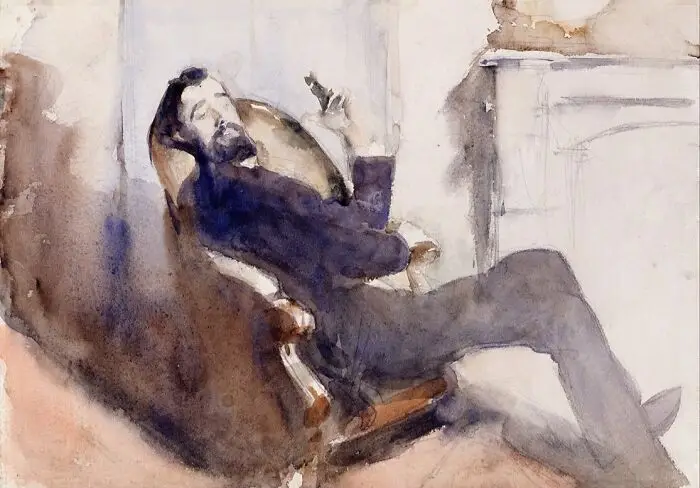
Artist: John Singer Sargent | Year (completed): 1885 | Period: Impressionism
Paul César Helleu, a French painter and printmaker who lived from 1859 to 1927, was Sargent's close friend and someone he met in Paris sometime about 1876. Helleu, a former pupil of academic painter Jean-Léon Gérôme, made his name in the 1890s by painting portraits of fashionable beauties. The current drawing, which started with a pencil sketch and finished with large watercolor brushstrokes, demonstrates the immediacy typical of Sargent's portrait style.
Report
0points
