

Bored Panda
69 Mindblowing Facts That Are As Unusual As They Are Interesting

69 Mindblowing Facts That Are As Unusual As They Are Interesting

61
5
Some people really think they're all that... But do they have blue blood, three hearts and nine brains? Can they edit their own RNA and change color or skin texture in a fraction of a second? We think not. However, do you know who can? An octopus. They have a central brain plus a mini-brain in each of their eight arms, and unlike humans, roughly two-thirds of their neurons are located in their arms rather than their head. Why are we telling you this? Because it's just a tiny taste of what's to come...
Bored Panda recently stumbled upon an Instagram account called MRU.INK. It's filled with fascinating and unusual facts like the ones above. The page is dedicated to seeking out the truth, and it digs deep to do so. From history to archaeology and everything in between, there's no shortage of knowledge around here.
We've put together an awesome list of the account's best posts, made up of pictures and the stories behind them. Expect to encounter a 75-pound giant pearl, the oldest printed book on earth, and a sword thrust into solid rock.

#1

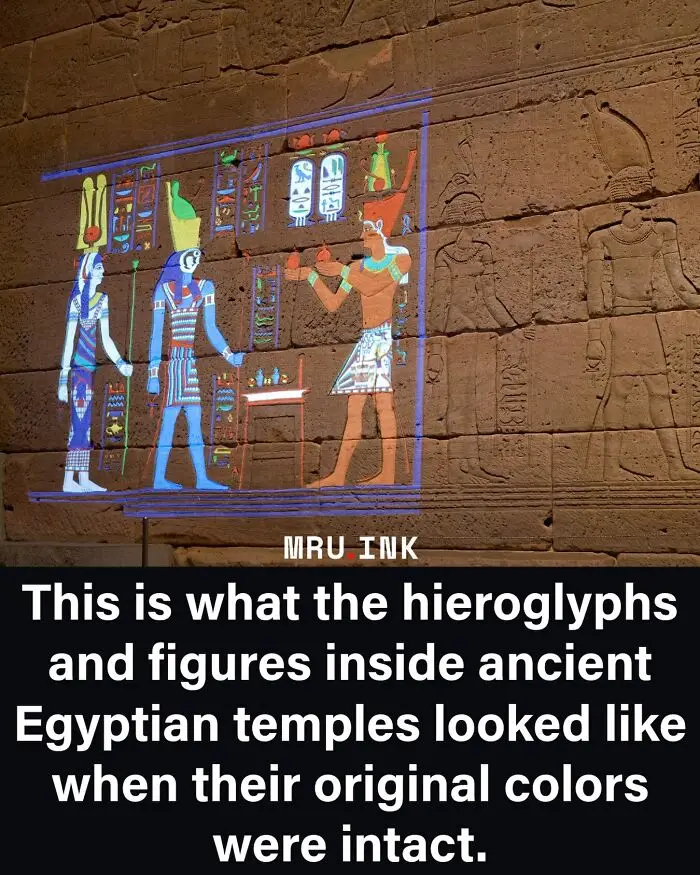
Colorful projection on ancient Egyptian hieroglyphs illustrating fascinating photos and facts
Originally, ancient Egyptian temple reliefs—like those on the Temple of Dendur (c. 15 BCE)—were painted in vibrant polychrome hues that faded over centuries of erosion. To demonstrate their true appearance, the Metropolitan Museum of Art launched “Color the Temple,” using light projections to overlay restored historical pigments—showing Roman Emperor Augustus presenting offerings to Isis and Horus. This technique reveals how brilliantly colorful these sacred stone carvings truly were.
Report
44points

Imagine having more than $100 million under your bed and not having the foggiest clue... Many people might want to kick themselves, especially if the loot remained there for ten whole years, and then you just gave it away, none the wiser.

That's exactly what happened to one many from  a man from Palawan Island in the Philippines. It was an ordinary day of fishing for him when his boat’s anchor caught on something so heavy that he had to swim down to dislodge it.

Possibly expecting to see a rock, the fisherman instead encountered a giant clam. Inside it: an enormous pearl measuring 1ft wide and 2.2ft long, and weighing in at a hefty 75lb.

#2
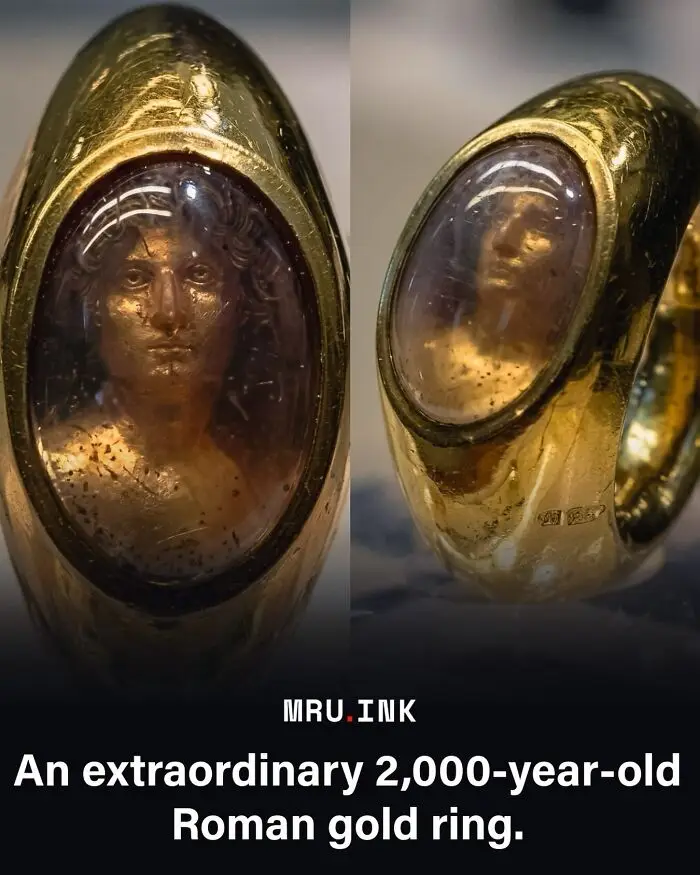
Close-up of an ancient 2000-year-old Roman gold ring with a portrait gem, presenting fascinating photos and facts.
Discovered in the tomb of Aebutia Quarta near Rome, this extraordinary 2,000-year-old Roman gold ring features a transparent rock crystal intricately engraved with the portrait of her son, Titus Carvilius Gemello. Its rare reverse-carved intaglio creates a mesmerizing 3D, holographic-like illusion, showcasing the remarkable artistry and craftsmanship of ancient Roman jewelers.
Report
41points

#3

A Japanese Daisugi cedar tree grown using traditional pruning techniques, highlighting fascinating world facts.
Developed in Kyoto’s Kitayama region, Daisugi relies specifically on the non-mutated Kitayama cedar (Cryptomeria japonica). Foresters heavily prune base branches, forcing vertical shoots straight up like a giant bonsai.

This method produced perfectly straight, knot-free logs called taruki, essential for traditional tea-room alcoves. The harvested wood is 140% as dense and twice as strong as standard cedar, allowing a single tree to yield harvestable lumber every 20 years for centuries.
Report
40points

The man had no idea that what he was holding could potentially change his life forever, but he took it home anyway. And placed it under his bed as a good luck charm.

“He said every time he goes out for fishing he will touch the pearl,” a relative told the Guardian back in 2016.

When it was time to move, the fisherman gave the pearl to his aunt since it was too heavy to lug around. Aileen Cynthia Maggay-Amurao happened to work in local government as a tourism officer, and asked her nephew if she could give the pearl to the mayor to be used as a new tourist attraction for the city.

#4

Split view of black fungus and a worker at Chernobyl, demonstrating strange photos and facts
In the ruins of Chernobyl, scientists have discovered a black fungus called Cladosporium sphaerospermum feeding on gamma radiation and slowly growing toward the reactor core. This mysterious organism, thriving in the abandoned wasteland, is not just surviving but actively absorbing nuclear radiation, as if healing the scar left by one of the world’s worst disasters.
Report
39points

#5

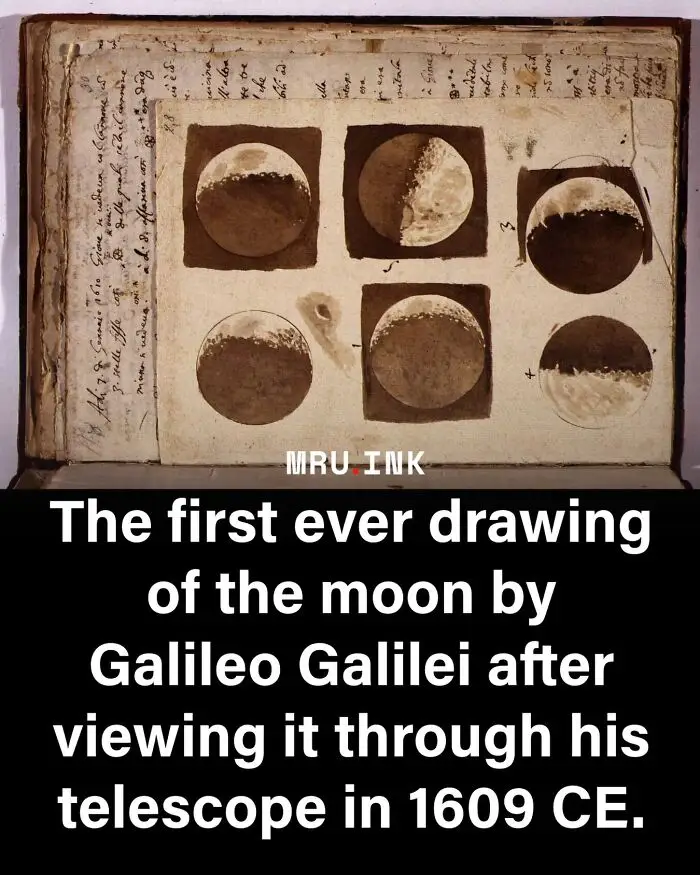
Galileo Galilei's historical 1609 astronomical drawings of the moon, highlighting fascinating photos and facts.
In the autumn of 1609, Galileo Galilei turned one of the first telescopes toward the Moon and forever changed our understanding of the night sky.

What he saw was revolutionary.

Rather than a perfectly smooth celestial sphere—as many believed at the time—Galileo observed mountains, valleys, and craters, carefully capturing them in a series of remarkably detailed drawings. By studying the patterns of light and shadow along the Moon’s terminator (the boundary between day and night), he concluded that the lunar surface was rugged and uneven.

These observations were published in Sidereus Nuncius (The Starry Messenger) in 1610 and became some of the most influential scientific illustrations in history. They challenged centuries of accepted belief and helped lay the foundation for modern astronomy.

Although the English astronomer Thomas Harriot made the first known telescopic drawings of the Moon a few months earlier in July 1609, Galileo’s observations were the first to correctly interpret the Moon’s topography and communicate its scientific significance to the world.

Sometimes, a simple sketch can change humanity’s view of the universe forever.
Report
38points

#6

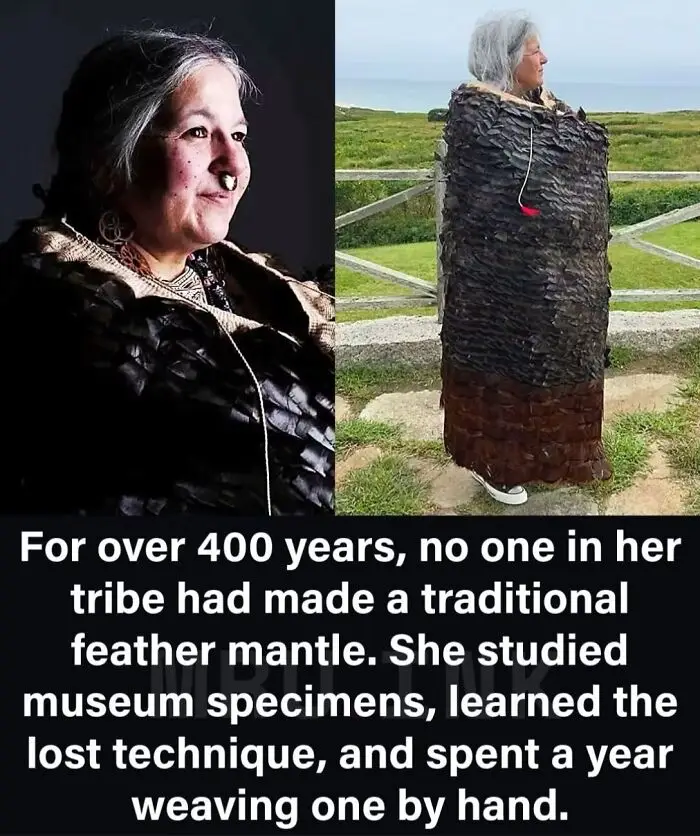
Indigenous woman wearing a handmade traditional feather mantle, showing strange photos and facts of world history.
Julia Marden wearing her full-length turkey feather mantle at the Aquinnah Cultural Center in Massachusetts, 2024. Marden gained national recognition with the public unveiling of a spectacular turkey feather mantle—measuring four feet tall, six feet wide, and tailored to her body—at the Aquinnah Wampanoag Powwow in 2023.

With the production of two rows per day, each requiring approximately two hours, the project was completed over the span of a year from start to finish. Her work constitutes the first—and most historically accurate—close-twine feather mantle created in Aquinnah Wampanoag territory in the past 400 years.
Report
38points

#7

Mogao Caves temple and ancient scrolls from the Library Cave, representing fascinating photos and facts.
In 1900, a Daoist priest named Yuanlu discovered a hidden chamber at the Mogao Caves in China. Known as the “Library Cave,” it contained more than 15,000 paper books and shorter texts, around 1,100 bundles of scrolls, Buddhist art, and other priceless historical objects. In 1907, British-Hungarian archaeologist Aurel Stein visited the site and acquired thousands of manuscripts and printed documents from the cave. Among the treasures was the Diamond Sutra, printed in 868 CE and recognised as the world’s earliest known dated, complete printed book. The chamber had probably been sealed around the beginning of the 11th century.
Report
36points

#8

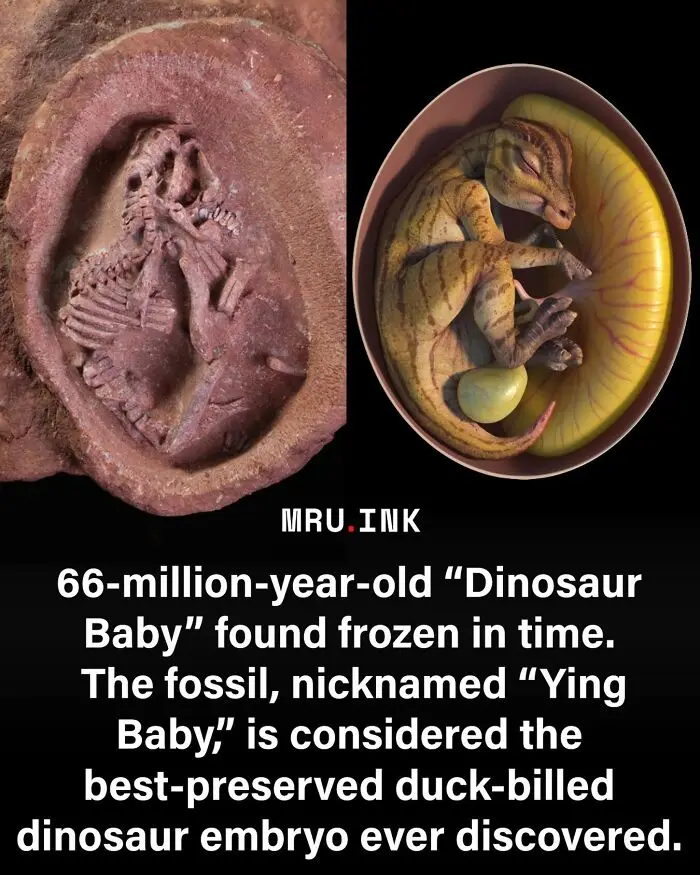
Fossilized dinosaur egg embryo next to a digital reconstruction showing fascinating photos of strange world history.
A tiny life frozen in deep time! Discovered in China’s Ganzhou Basin, the “Ying Baby” is one of the most complete duck-billed dinosaur (hadrosaur) embryos ever scientifically recorded. Dating to roughly 66–72 million years ago, the embryo was preserved inside an egg measuring about 9 cm across, with the embryo occupying around 40% of its volume. Scientists identified it from the distinctive shapes of its skull, vertebrae, and limb bones. Even more fascinating, its relatively small egg provides clues about how hadrosaurs developed before hatching. Preserved for millions of years, this fossil offers a rare glimpse into dinosaur life before birth.
Report
36points

#9

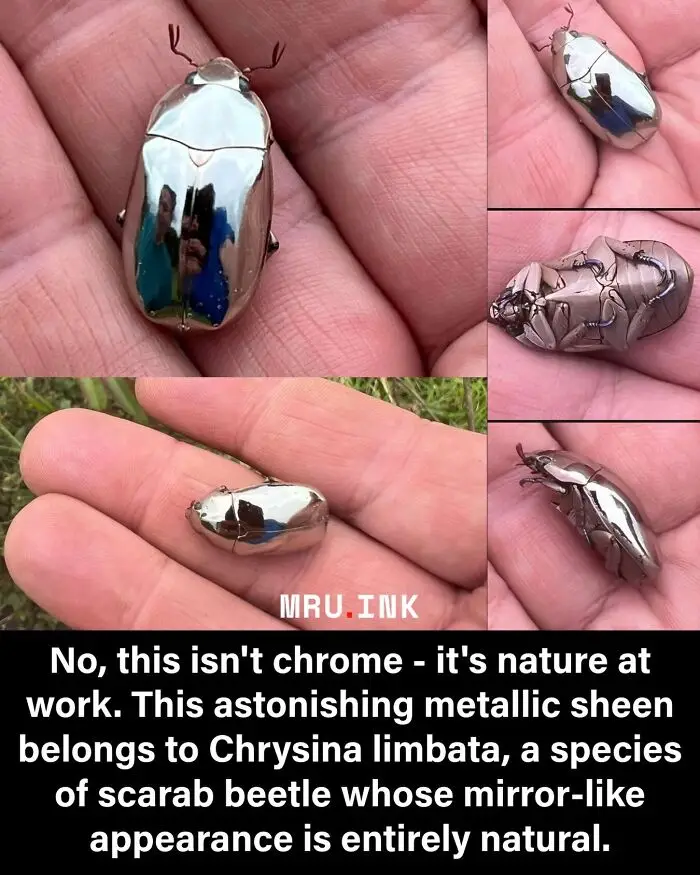
A shiny metallic silver scarab beetle in a hand showing fascinating photos of the strange world of nature.
That mirror-polished shell isn’t paint, plating, or actual metal, it’s living tissue engineered by evolution to bend light the same way a stack of soap bubbles does. This is Chrysina limbata, commonly called the silver scarab, a jewel beetle native to Costa Rica’s rainforests, not a June beetle, which belongs to an entirely different, dull brown genus called Phyllophaga.

The science behind that chrome-like shine is genuinely elegant. Researchers at the University of Costa Rica found that the beetle’s exoskeleton, made of the same chitin found in cockroaches and crayfish shells, is built from roughly 70 microscopically thin layers stacked with slightly different refractive indices. Each layer reflects a small slice of incoming light, and those slices stack and reinforce each other until they combine into a bright, mirror-like glare, the exact same physical principle, called structural coloration, that makes butterfly wings and peacock feathers shimmer without a drop of actual pigment involved.

The purpose behind that shine isn’t showing off, it’s camouflage. Physicist William Vargas, who led the original 2011 study, explained that reflecting light from every direction lets the beetle blend into a rainforest canopy full of wet, glossy leaves, essentially disappearing into the glare rather than standing out from it.

The discovery has since moved well beyond entomology, researchers are now studying these layered chitin structures as inspiration for building better fiber-optic mirrors and light-based technology, borrowing a trick a rainforest beetle figured out long before humans did.

Does it change how you see the beetle, knowing that shine exists to hide it rather than show it off?
Report
36points

#10

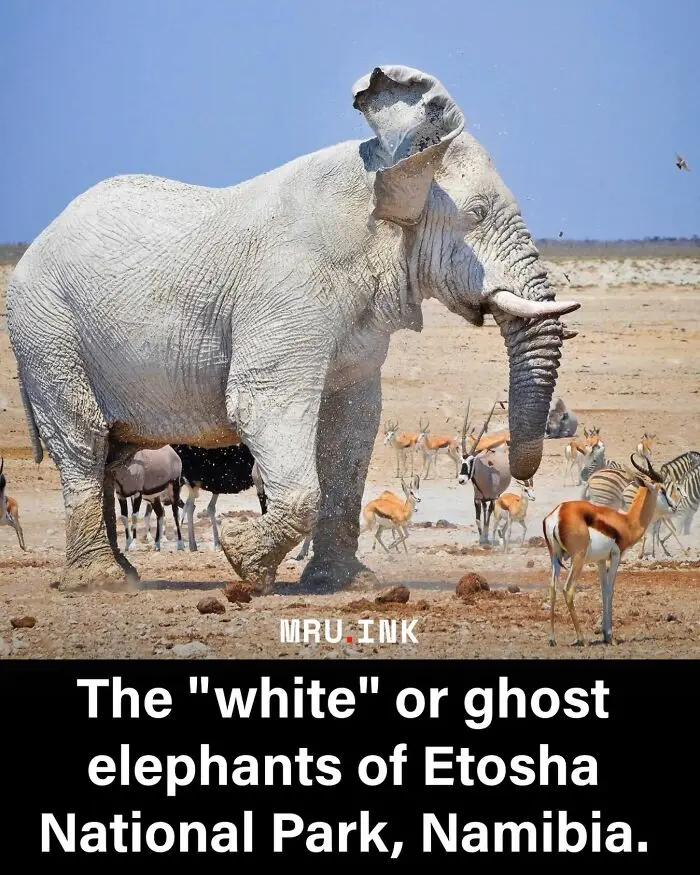
A large white elephant standing in a field demonstrating how strange the world can be.
Because of white clay and calcite sand of their surroundings, the elephants of Etosha are known for their ghostly appearance, which they maintain with regular mud baths. Elephants use the cooling effects of the mud to escape the high temperatures of the park which usually hover in the region of 40° C during the daytime. When the water evaporates, their skin remains covered in a film of white soil, giving them this otherworldly air.
Report
35points

#11

The preserved Vasa 17th-century warship, showcasing how strange the world can be.
The Vasa sank largely due to top-heavy design modifications demanded by King Gustav II Adolf, who insisted on adding a second enclosed gun deck mid-construction. When raised in 1961, archaeologists discovered fully preserved provisions, complete uniforms, and thousands of ornate wooden sculptures meant to glorify Sweden’s military power. Crucially, researchers used its remarkably preserved hull data to reverse-engineer 17th-century naval architecture secrets that had been lost for centuries.
Report
35points

#12

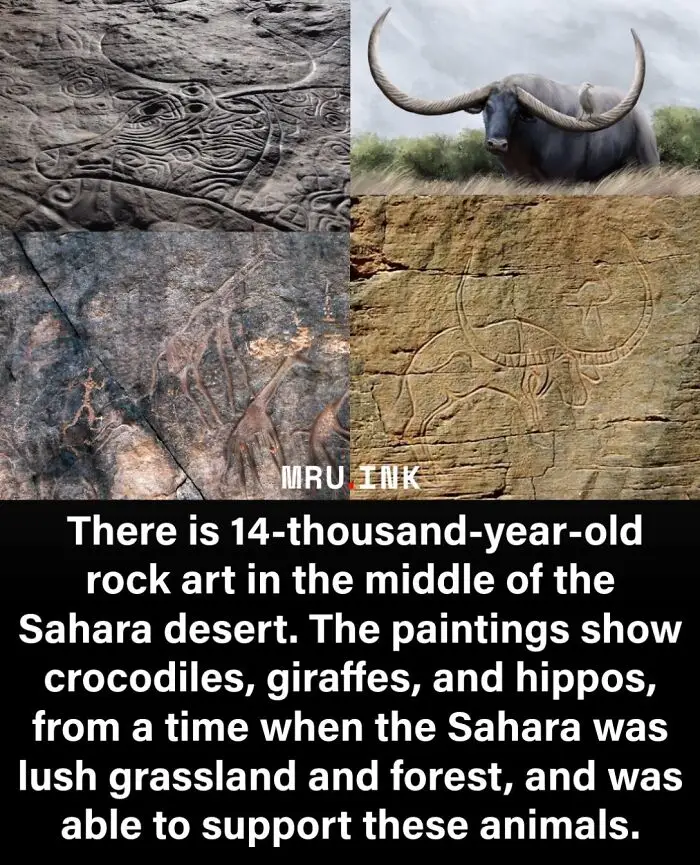
Ancient Sahara rock art depicting animals, showing strange facts about earth's changing climate and history.
Imagine the Sahara with rivers, wetlands, and herds of giant wildlife. Thousands of years ago, that was reality. Across sites such as Tassili n’Ajjer in southeastern Algeria, prehistoric artists engraved and painted animals including giraffes, hippos, elephants, rhinos, and crocodiles—species that could no longer survive there today. These images preserve a remarkable record of the African Humid Period, when stronger monsoon rains transformed the desert into greener landscapes of grassland, lakes, and waterways. Some Saharan rock art dates back around 12,000 years, although exact ages vary by site and artwork. The stones became an unexpected archive of a vanished ecosystem.
Report
32points

#13

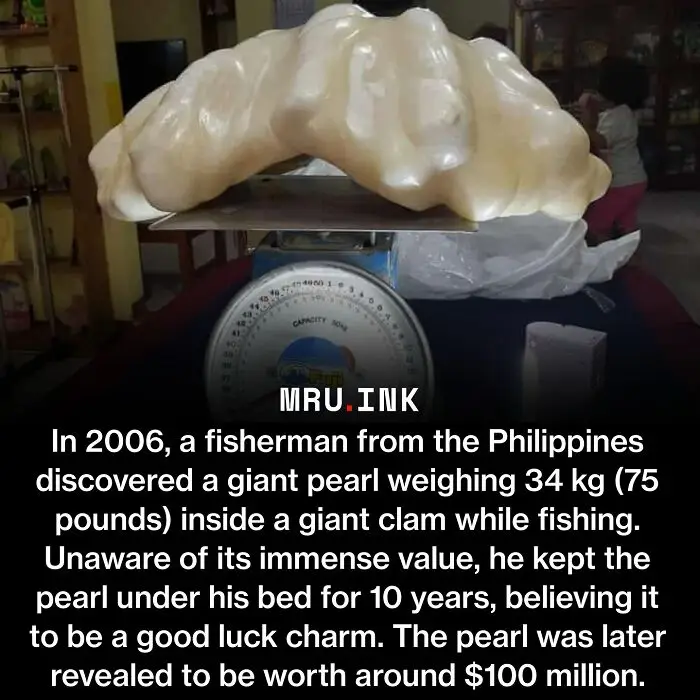
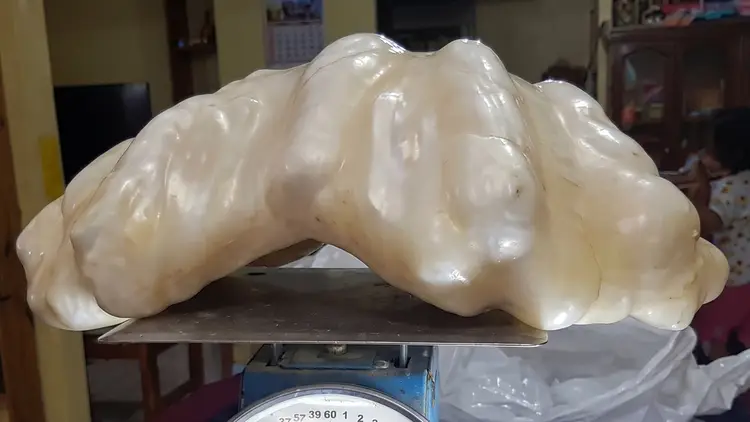
A giant pearl from the Philippines on a scale, showcasing strange photos and facts about the world
In 2006, a fisherman from the Philippines discovered a giant pearl weighing 34 kg (75 pounds) inside a giant clam while fishing. Unaware of its immense value, he kept the pearl under his bed for 10 years, believing it to be a good luck charm. The pearl was later revealed to be worth around $100 million.
Report
32points

#14

Side-by-side photo of Cheddar Man reconstruction and descendant, showcasing fascinating photos and facts.
Discovered in Somerset’s Gough’s Cave in 1903, “Cheddar Man” is Britain’s oldest complete skeleton at 9,100 years old. DNA testing revealed a surprising physical appearance—dark skin, dark curly hair, and blue eyes.

In 1997, geneticists analyzing mitochondrial DNA discovered a direct maternal descendant living in the exact same town: history schoolteacher Adrian Targett. Their unbroken family link spans 300 generations, showing remarkable local genetic continuity over 9,000 years.
Report
31points

#15

17th-century emerald spectacles from India, an example of strange photos and facts from history.
Crafted during India’s Mughal Empire between 1620 and 1660 CE, likely under Emperor Shah Jahan, the Astaneh-e Ferdaws (“Gate of Paradise”) spectacles are a masterpiece of ancient gem-cutting. Their drop-shaped green lenses were painstakingly sliced from a single Colombian emerald weighing over 300 carats and framed with brilliant diamonds.

Beyond luxury, green held deep spiritual meaning in Mughal culture, representing salvation, healing, and protection against evil. Shah Jahan was even said to use emeralds to soothe his grieving eyes after his wife’s passing. These magnificent spectacles were auctioned at Sotheby’s in October 2021 alongside their diamond-lensed twin, the Halqeh-e Nur.
Report
29points

#16

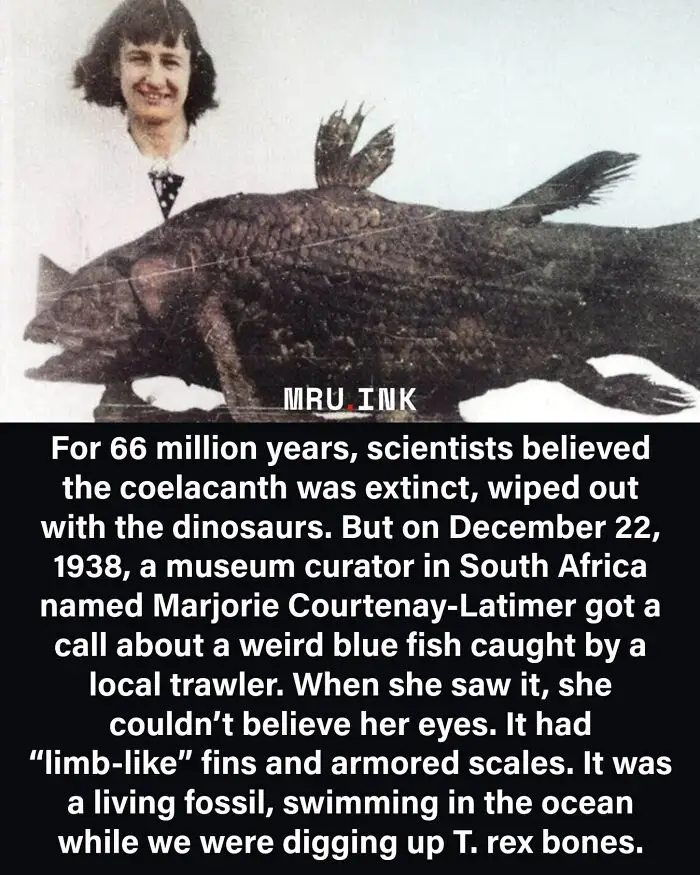
Historical photo of Marjorie Courtenay-Latimer with a coelacanth fish, showcasing fascinating photos and facts.
For decades, scientists believed the coelacanth had disappeared from Earth around 66 million years ago, at the end of the Cretaceous Period. Then, on December 22, 1938, an extraordinary discovery changed our understanding of life’s history.

South African museum curator Marjorie Courtenay-Latimer was contacted about a strange blue fish caught by a local fishing vessel near the Chalumna River. When she examined it, she noticed its unusual fleshy, lobed fins, thick scales, and distinctive anatomy. The fish was later identified as a coelacanth, a group known previously only from fossils.

Its lobed fins were particularly remarkable. Unlike the thin, ray-supported fins of most modern fish, coelacanth fins contain internal bones and muscles arranged in a pattern that resembles the early structure of vertebrate limbs. This made the animal especially important for understanding how ancient fish were related to the evolutionary transition toward four-limbed vertebrates.

The discovery was scientifically astonishing: a lineage thought to have vanished millions of years ago was still alive in the deep ocean.

Today, coelacanths are not considered literally “unchanged living fossils.” They have continued evolving over millions of years. Yet their survival provides scientists with a rare glimpse into an ancient branch of vertebrate evolution—and a remarkable reminder that extinction in the fossil record does not always mean extinction in reality.
Report
28points

#17

Limestone rock formations known as Spain's Great Wall of China, illustrating how strange the world can be.
The Great Wall of China in Spain is the nickname of the Wall of Finestres, a natural rock formation in Spain. The Wall of Finestres is also known as Roques de la Vila.
Report
27points

#18

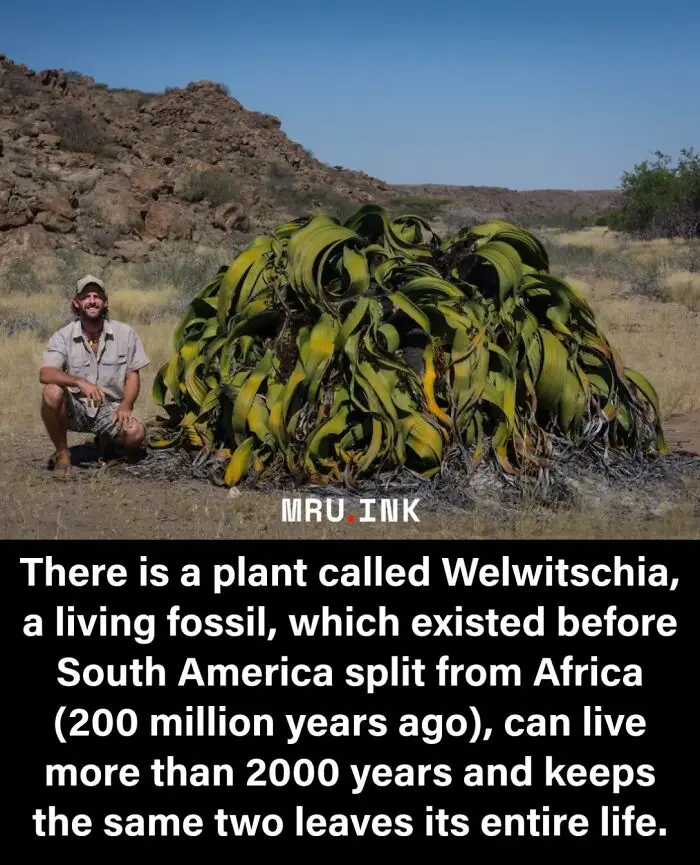
A man sitting next to an ancient Welwitschia plant, highlighting strange photos and facts from around the world
This plant can spend 2,000 years growing just TWO leaves. Meet Welwitschia, one of the strangest plants on Earth. Native to the Namib Desert, it survives in an environment so dry that most plants could never endure it. Its two strap-like leaves grow continuously from their bases throughout its lifetime, becoming battered and shredded by desert winds while the plant itself keeps going. Some individuals are estimated to be more than 2,000 years old. Even more remarkable, Welwitschia belongs to an ancient lineage with fossil relatives dating back over 100 million years. It is essentially a living time capsule from Earth’s distant botanical past.
Report
26points

#19

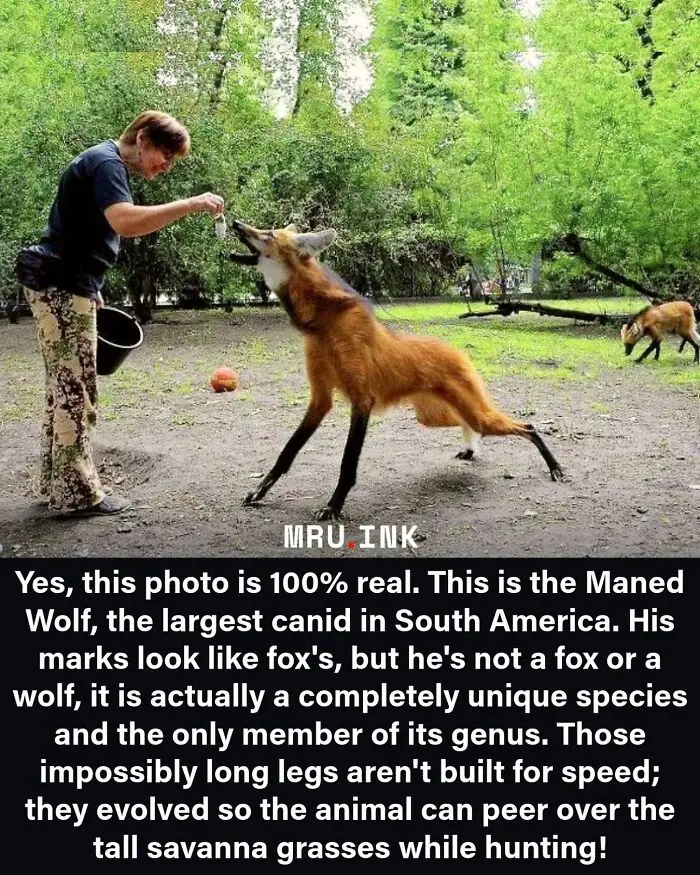
Person feeding a long-legged maned wolf showing how strange the world can be.
The maned wolf (Chrysocyon brachyurus) is the largest canid in South America and the sole species in its genus. Though its reddish coat and distinct markings resemble a giant fox, this solitary creature is neither a fox nor a wolf. Thriving in the vast grasslands of South America, it possesses extraordinarily long legs evolved to help it see over tall vegetation. Highly omnivorous, this unique animal hunts small prey but relies heavily on wild plants, particularly the native wolf apple.
Report
26points

#20

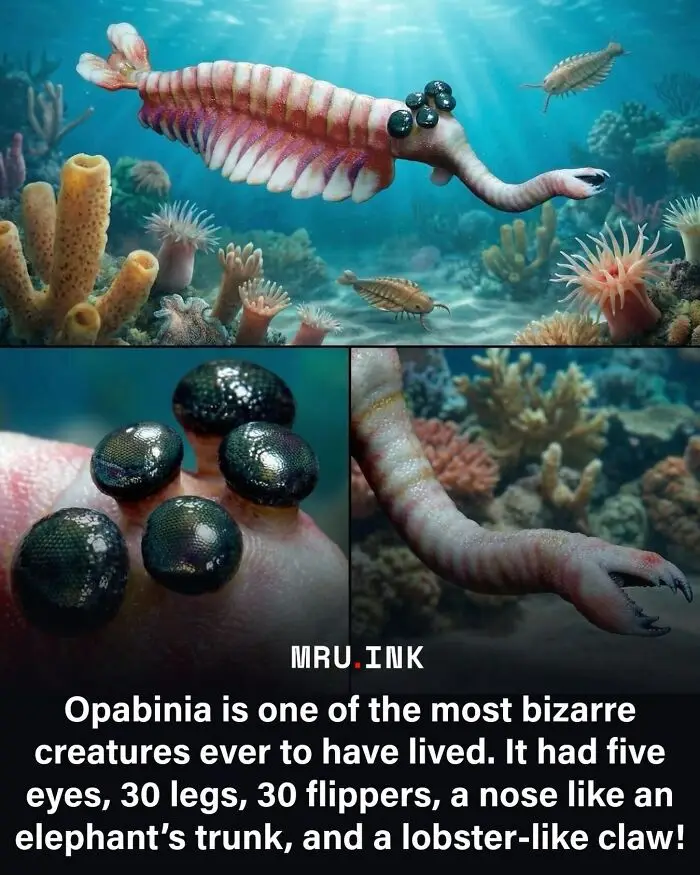
Digital illustration of Opabinia prehistoric sea creature highlighting fascinating photos and facts.
Imagine exploring the seafloor 508 million years ago and encountering one of the strangest creatures ever to evolve, as though it had been designed by a science fiction writer. Meet Opabinia—one of the strangest animals ever to inhabit our planet.

This bizarre marine creature possessed five eyes, fifteen pairs of swimming flaps, and a long flexible proboscis resembling an elephant’s trunk, ending in a claw-like grasping appendage. As if that weren’t strange enough, its mouth was located beneath its head and faced backward!

Opabinia lived during the Cambrian Period, a time when life on Earth was undergoing an evolutionary explosion and experimenting with extraordinary body designs. Measuring only about 4 to 7 centimeters (1.5 to 3 inches) long, it likely used its trunk-like appendage to pick up small prey from the seafloor and bring it to its mouth.

When scientists first reconstructed Opabinia from fossils discovered in Canada’s Burgess Shale, many researchers reportedly laughed in disbelief. The creature seemed so bizarre that some initially wondered whether the fossils had been assembled incorrectly. Yet Opabinia was real—a remarkable reminder that evolution’s early experiments produced forms far stranger than anyone had imagined.

Even today, Opabinia remains one of the most iconic and mysterious animals from the Cambrian seas, proving that reality can be far stranger than fiction.
Report
26points
61
5