

#1
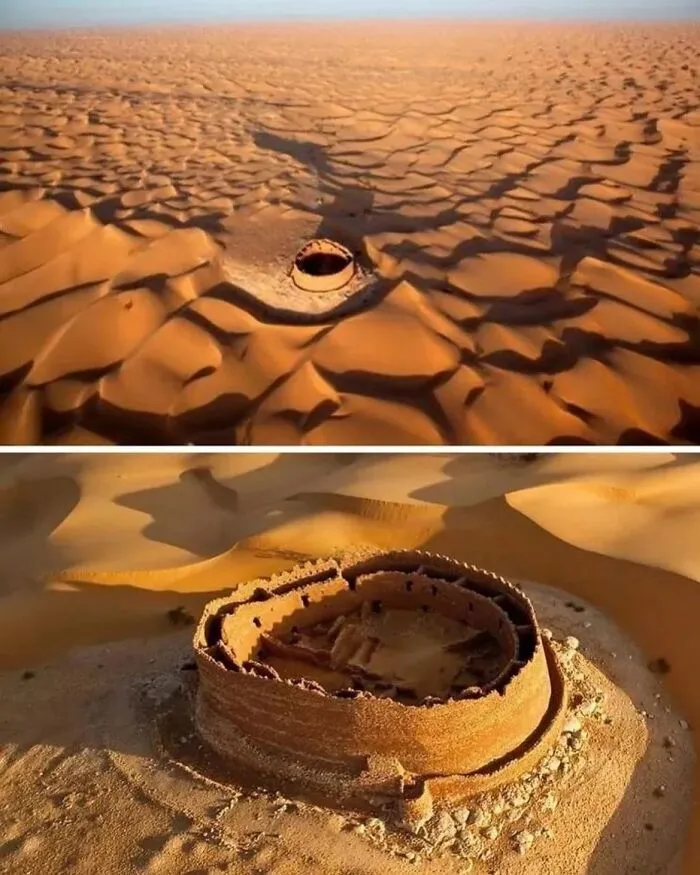
It is unknown when and by whom it was built, what was its exact purpose. No mention of it has been preserved even in the writings of the indigenous peoples of the region.
#2
Repeating a piece of information over and over again does not necessarily mean that it is true. It does, however, increase the odds of the public thinking that it’s true. Objective truth and subjective interpretations are two different things, however.
That being said, reaching that objective truth is by no means easy. ‘Perfect’ objectivity is, broadly speaking, out of reach. And yet, it is still something worth aiming for.
According to ‘History Skills,’ in history, it is “rare that we are completely sure that sources are 100% reliable.” So, it’s better to talk about degrees of reliability.
#4
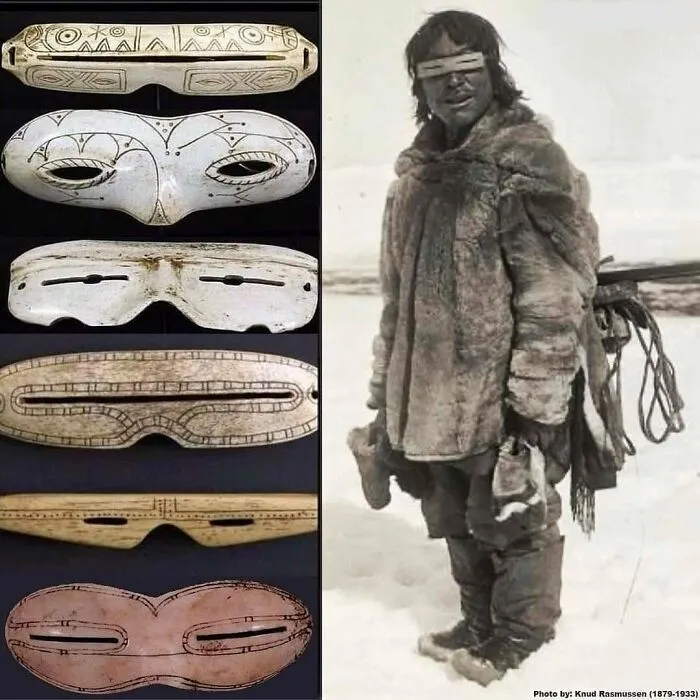
Glasses are traditionally made of wood (especially spruce), bone, walrus tusk, reindeer horn, and sometimes coastal vegetation.
#5
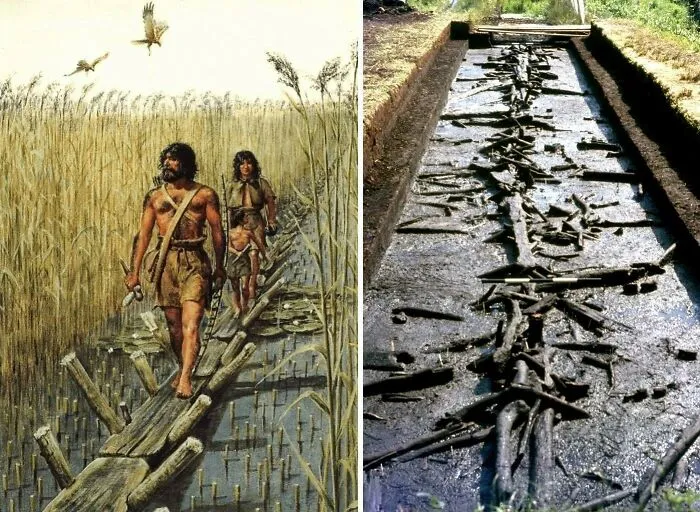
Discovered in 1970, it was part of a network of wooden "roads" that covered the swampy area thousands of years ago.
#6
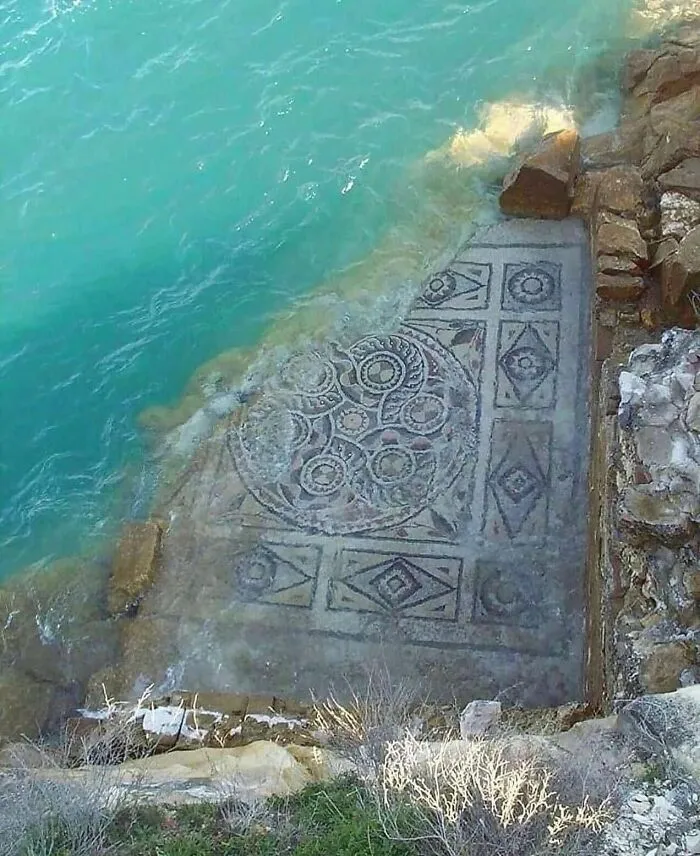
As ‘History Skills’ explains, sources are more likely to be unreliable when the creator was not present at the time of the event, does not have a sufficiently educated perspective on the topic, and has not been fact-checked by an educated audience.
Opinions and interpretations should not be perceived as cold, hard facts. You have to think about what agendas and biases the creator of the source might have, and what they might seek to gain from their target audience thinking or feeling a certain way.
#7
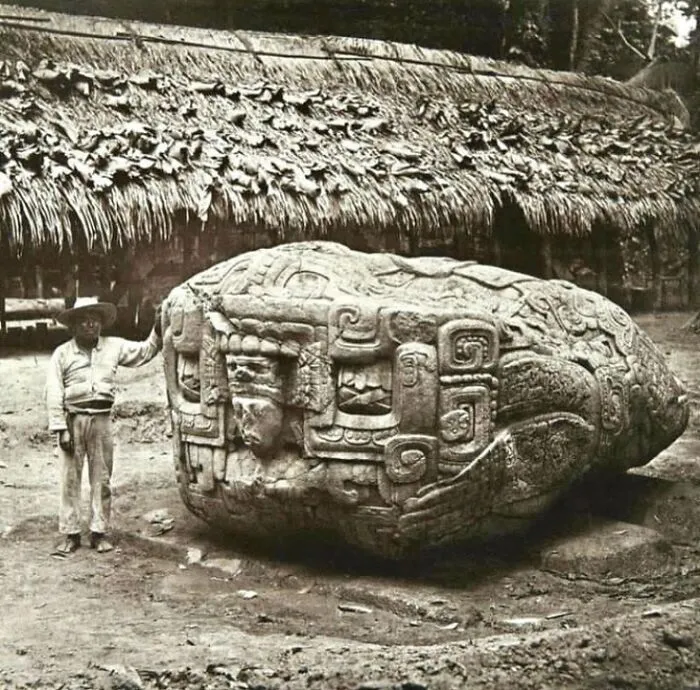
By Alfred P. Maudslay
#8
Meanwhile, Margot Note Consulting LLC suggests that you ask yourself the following questions when gauging how (un)reliable a historical primary source may be:
- Was the source created at the same time as the event it describes?
- Who made the record, when, and why?
- Who furnished the information?
- Would the informant have benefited from giving incorrect or incomplete answers?
- Is the information in the record (names, dates, places, event, relationships, etc.) logical?
- Does the information make sense in the broader context?
- What other evidence supports the info in the source?
- What reliable evidence contradicts the source?
- Is the source an original or a copy?
- How has the passage of time affected the source document's readability?
#10

#11
#12
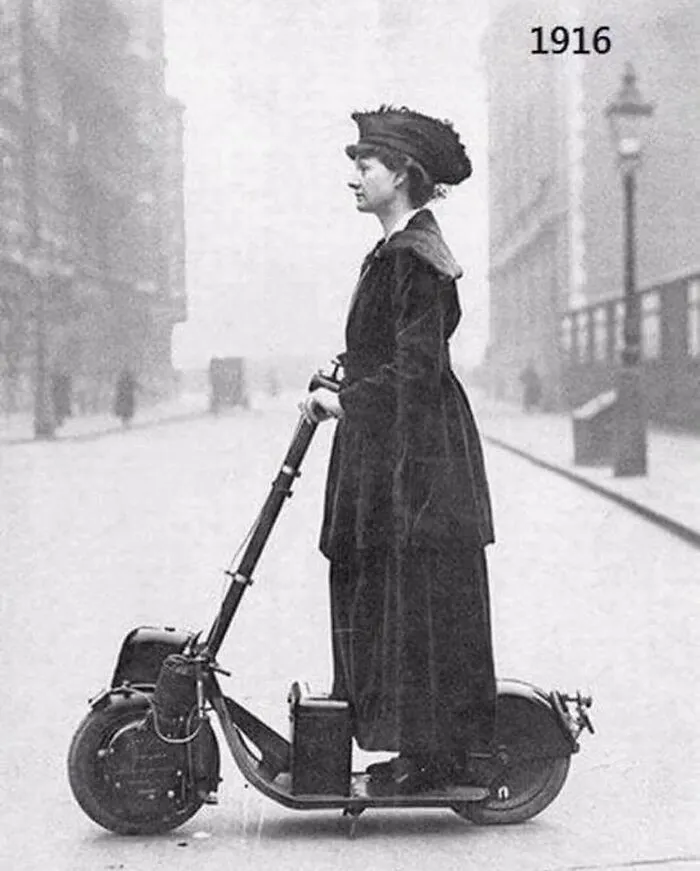
The technology had drawbacks at that time. Although someone experimented with electricity, most scooters ran on gas, and they had a noisy engine. To start the engine, you had to push the scooter and jump on it. They were heavy and expensive – from $100 to $400.
Besides, there was nowhere to ride them. "A hundred years ago there was a struggle over who owns the streets. Many tried to make sure that they were primarily intended for cars. There was a rather pleasant period a little over 100 years ago when it seemed that the streets could be for everyone, but people who wanted only cars to drive on them increased the speed limits to such an extent that if you were not in the car, you would be afraid to move around," explains historian Peter Norton.
What’s your perspective? What’s something new that you learned about the past today? What are some mysteries that live rent-free in your head?
What historical periods interest you the most, and why? Has this changed since your school days? What do you personally do to broaden your mind and keep learning new things, no matter how many adult responsibilities you have these days?
What do you think are the main issues that affect modern society, and what do you think might realistically happen in the near future?
Share your thoughts in the comments under the images or at the bottom of this post.
#13
#14
#15
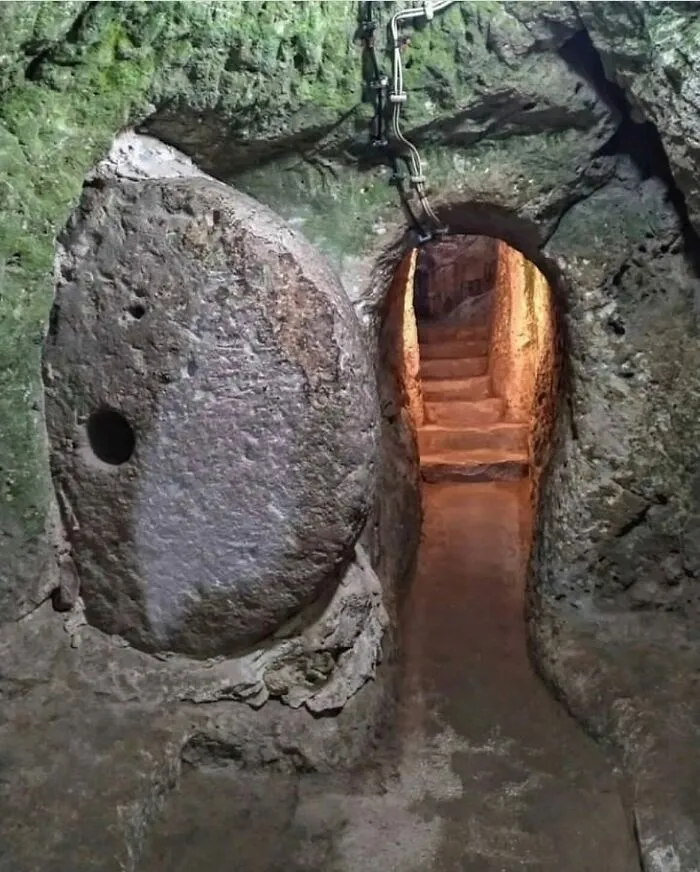
It is believed that the underground city was built as a shelter, which should not be visible from above, for the Christian community to escape from the pressure of the Roman Empire and the Arabs.
It is large enough to shelter up to 20,000 people along with their livestock and food supplies. This underground city contains many complex structures such as ventilation, a church, a stable and a cellar. It is carved from a malleable rock of volcanic ash called tuff.
#16
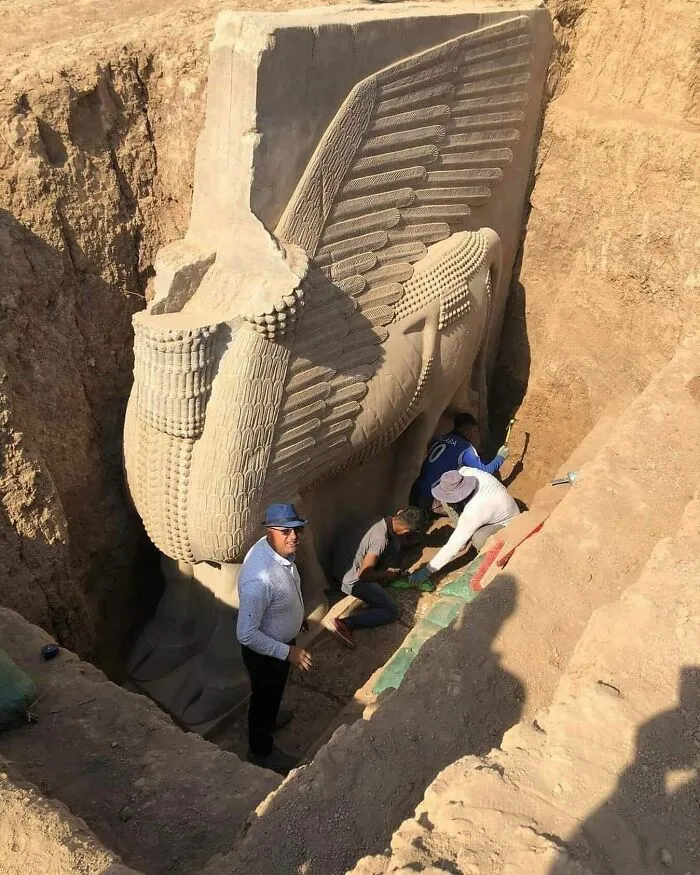
The motif of a winged animal with a human head is characteristic of the ancient art of the entire Middle East; for the first time it is found in finds from Ebla at the beginning of the III millennium BC.
In the New Assyrian era, shedu became ubiquitous throughout Assyria: the figures of the "man-god" guarded all significant state structures and entrances to cities.
#17

#18
#19
#20