



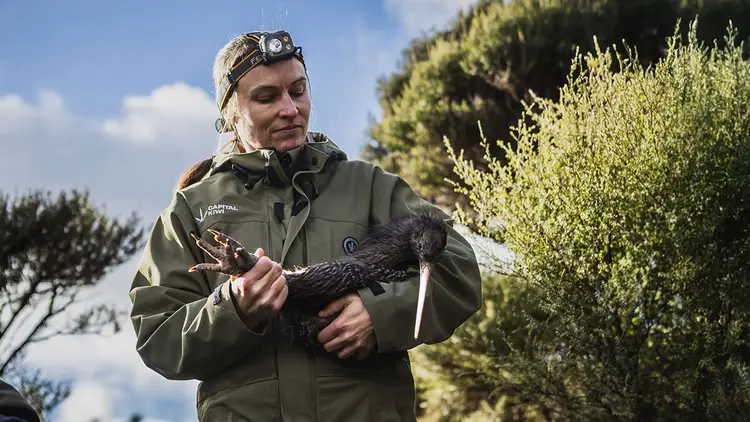

For around 150 years, the hills surrounding Wellington, New Zealand, were missing one very special sound: the call of a wild kiwi. These unusual birds, among the country’s most recognizable national symbols, disappeared from the area generations ago. But now, thanks to an ambitious conservation effort, they’re finally making a comeback.
Behind this success is the Capital Kiwi Project, founded by conservationist Paul Ward. Through years of predator control and cooperation with local communities, the project has helped bring kiwi back to the wild landscapes surrounding New Zealand’s capital, where the birds are once again living and breeding freely.
Scroll down to check out how the project moved along and read more about how it got to the point of reinstating a beloved native species.
Before kiwi could return to Wellington's hills, the Capital Kiwi Project had to tackle one of the biggest threats to their survival: introduced predators
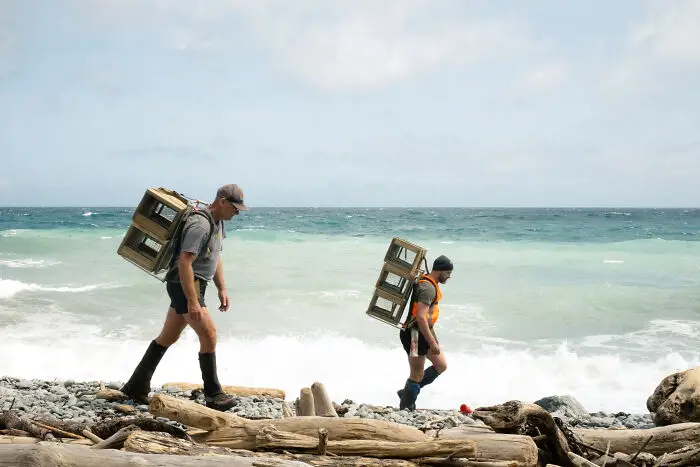
Trap deployment, Pipinui Point, 2019
Photo by Josiah Watson
Kiwi are unlike most other birds. They’re flightless, mostly nocturnal, and covered in hair-like feathers. They also have long, sensitive beaks with nostrils near the tips, allowing them to sniff out insects, worms, and other food beneath the ground. Found naturally only in New Zealand, these curious-looking birds are also deeply connected to the country’s cultural identity.
Beginning in 2019, the team established a predator-control network that would eventually grow to approximately 5,300 traps
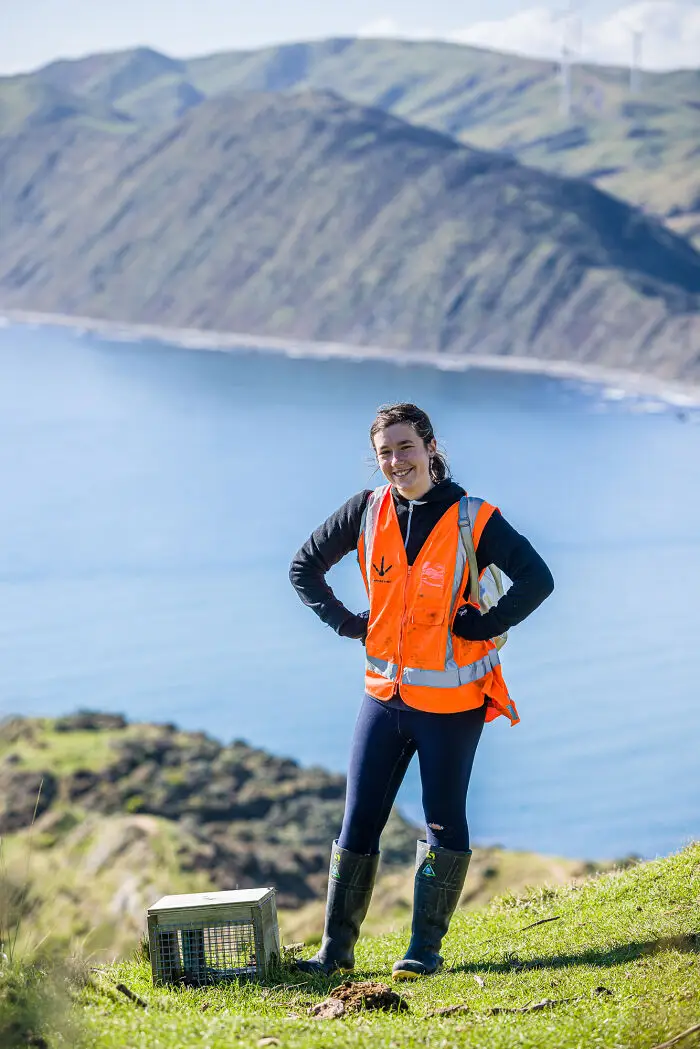
Abby Wutzler, CK trapper, above Mākara Beach
Photo by Rob Suisted
These traps now cover 24,000 hectares of land, an area larger than New Zealand's Abel Tasman National Park
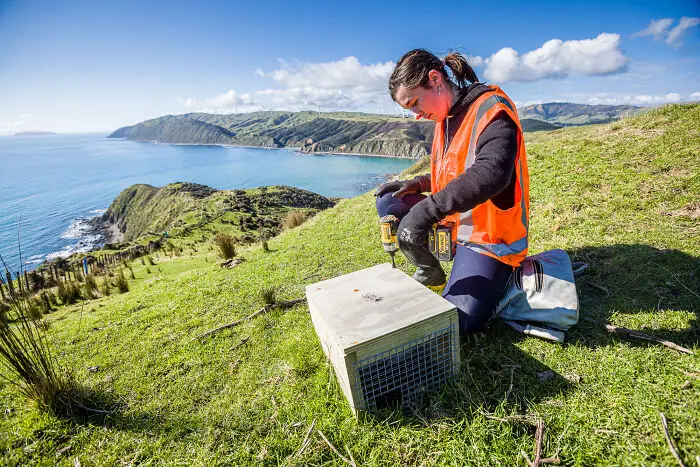
Abby Wutzler, CK trapper, above Mākara Beach
Photo by Rob Suisted
Unfortunately, their unique evolutionary history has also made them especially vulnerable. Evolving in relative isolation, without the land-dwelling mammalian predators found elsewhere, kiwi were poorly equipped to deal with animals such as stoats and ferrets introduced by humans. Combined with habitat loss, these predators contributed to a dramatic decline in kiwi populations nationwide.
After years of preparation, the first 11 kiwi were welcomed back to Wellington in November 2022, ending around 150 years of local extinction
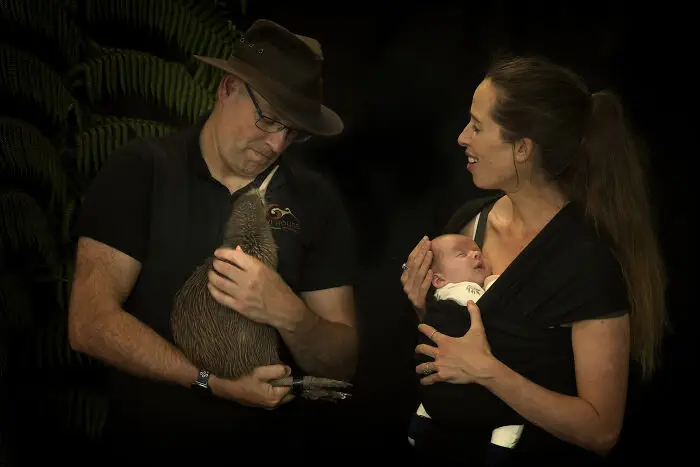
Welcoming the first birds, Mākara School, 2022
Photo by Sara Tansy
One of the biggest milestones came in 2023, when the first locally hatched kiwi chicks were discovered, proving that the birds were successfully breeding in the wild
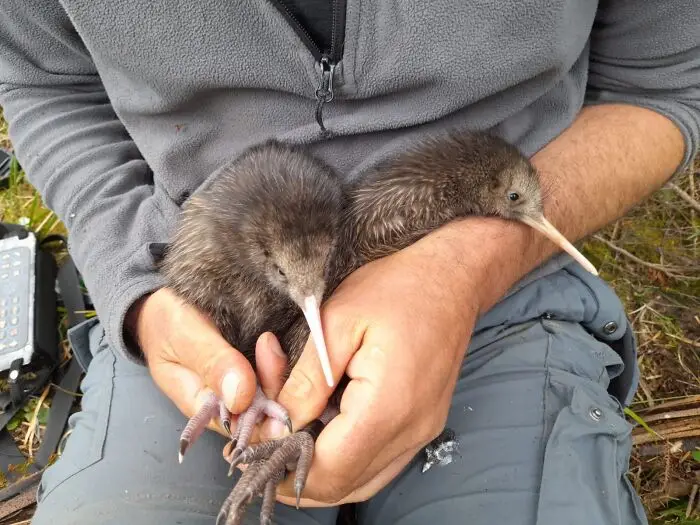
First chicks, Terawhiti Station, December 2023 – Dr. Christine Stockum
For decades, conservationists have protected vulnerable native species by moving them to predator-free islands or keeping them within fenced sanctuaries. While these efforts have saved countless animals, such protected areas have limited space, and growing populations can eventually face problems ranging from competition for resources to reduced genetic diversity. “The lifeboats have run out of space,” Ward explained in information shared with us.
More releases followed throughout the project, gradually helping establish a growing population of kiwi across the region
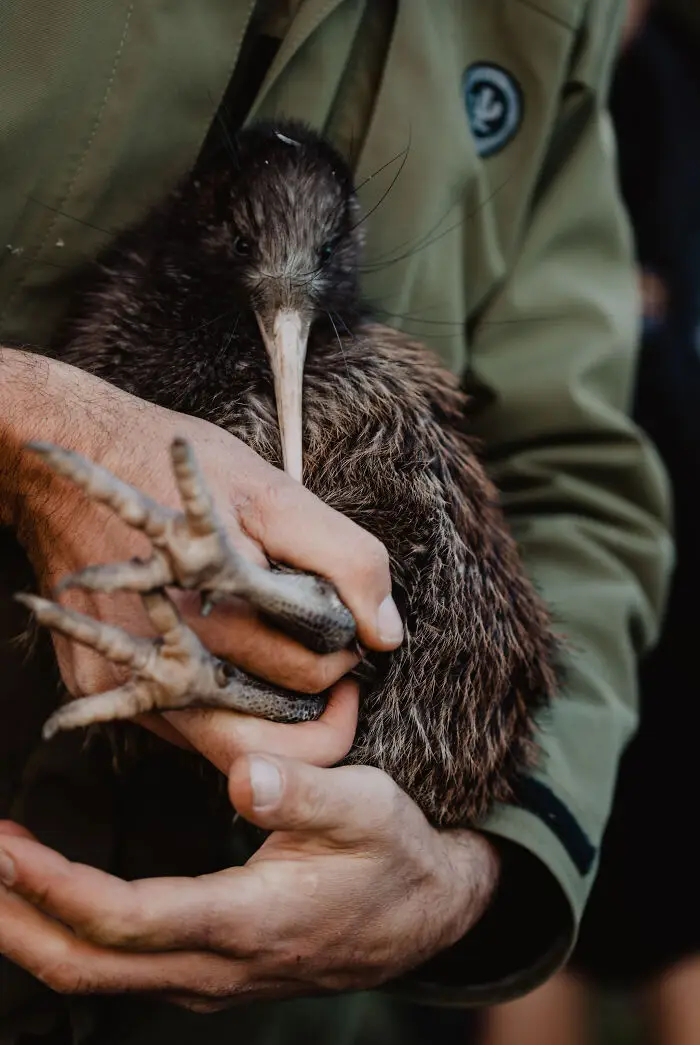
Kiwi release, 2023
Photo by Sara Tansy
Among the project's special residents is Anahera, one of its founding birds and a matriarch of Wellington's growing kiwi population
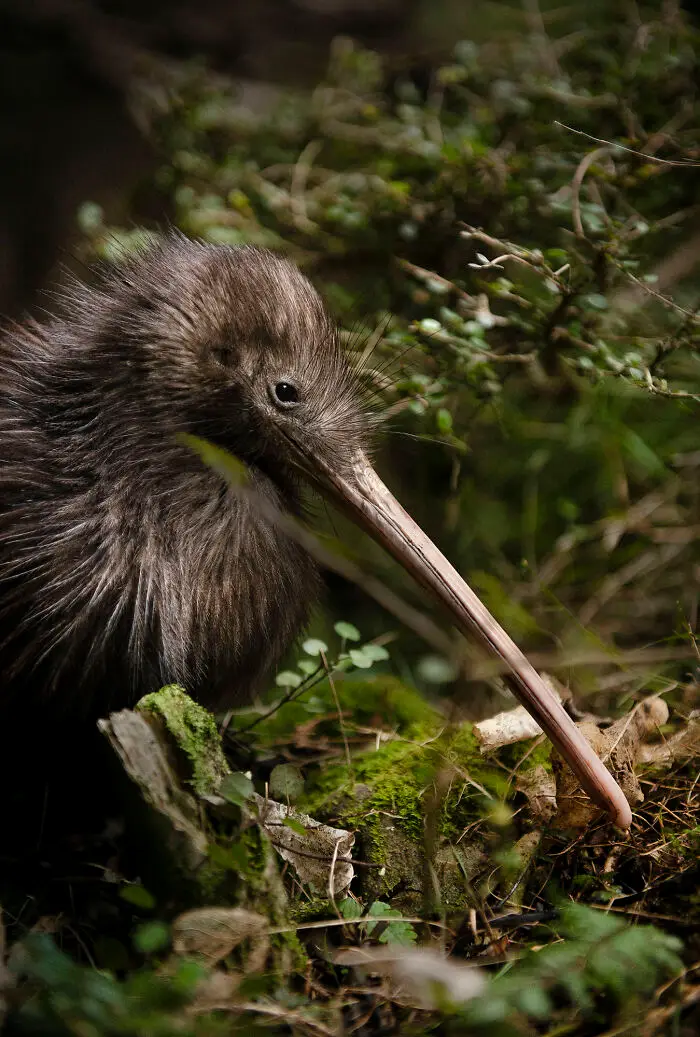
Project matriarch Anahera
Photo by Neil Hutton
The Capital Kiwi Project set out to show there was another way: restoring a large population of wild kiwi to their former habitat without separating them from the people living nearby. However, before releasing any birds, the team needed to make the surrounding landscape safe enough for them to survive. This meant establishing an enormous predator-control network of approximately 5,300 traps spread across 24,000 hectares (about 59,300 acres).
The first birds received a warm welcome at Mākara School, marking the beginning of a new chapter for Wellington's native wildlife
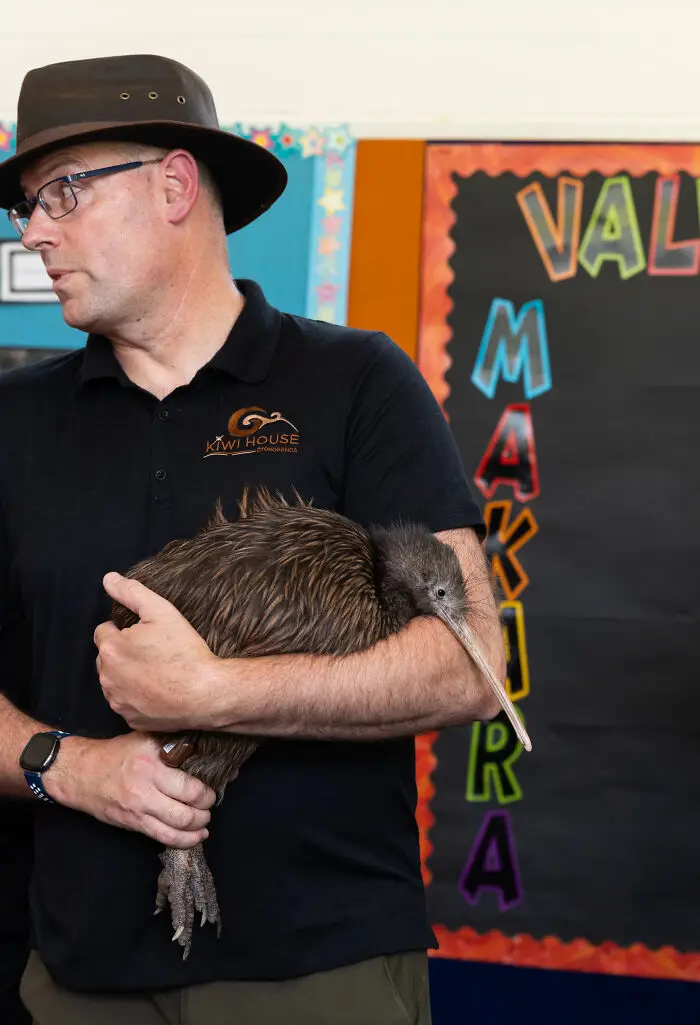
Project matriarch Anahera, welcomed at Mākara School, 2022
Photo by Sara Tansy
Unlike many other kiwi conservation programs, Capital Kiwi allows the birds to live freely in an unfenced landscape shared with local communities
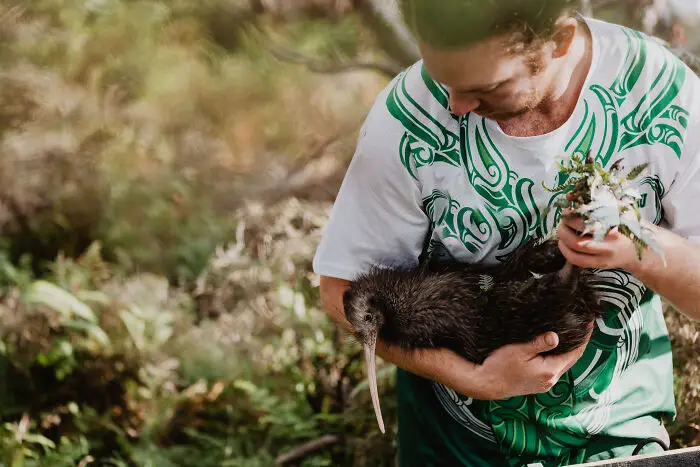
Rāwiri Walsh releases a kiwi, Terawhiti Station, 2023
Photo by Sara Tansy
Much of this territory is privately owned, including farms, forestry operations, infrastructure sites, and areas bordering residential neighborhoods. Making the project work therefore required more than conservation expertise. It depended on close cooperation with landowners, local communities, and iwi (Māori tribes), who share a deep cultural connection with the kiwi.
The project has worked closely with iwi (Māori tribes), recognizing the kiwi as a manu taonga (treasured bird) with deep cultural significance
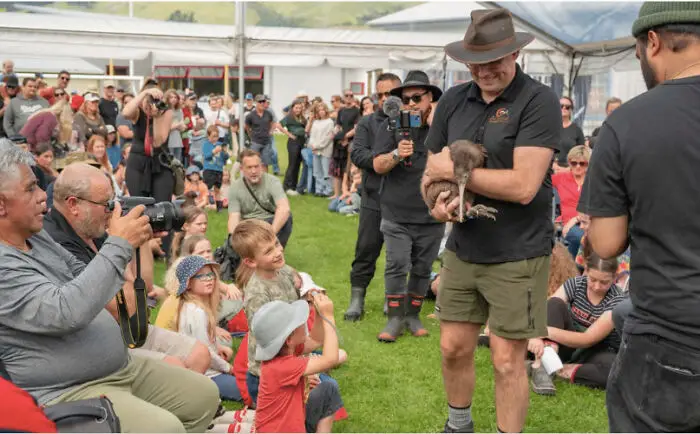
Pōwhiri (welcome) for first birds, Mākara School
Photo by Dave Allen
By April 2026, the Capital Kiwi Project had reached another remarkable milestone, with 250 kiwi successfully released into Wellington's hills
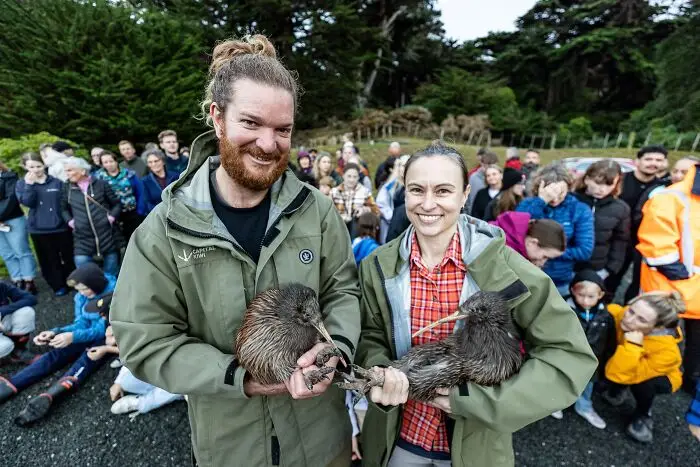
Community release, Ōpau Urupā, April 2026 Photo by David Unwin
After years of preparation, the first kiwi were released into Wellington’s hills in November 2022. More releases followed, and by April 2026, the project had reached the remarkable milestone of 250 birds reintroduced to the area. But perhaps the most encouraging development came after the releases. The birds began breeding successfully in the wild, with the project’s monitoring recording a chick survival rate of over 90%, far exceeding the 30% benchmark required to demonstrate the population’s viability.
The return of these beloved birds has become a source of pride for local communities, with people of all ages participating in release events
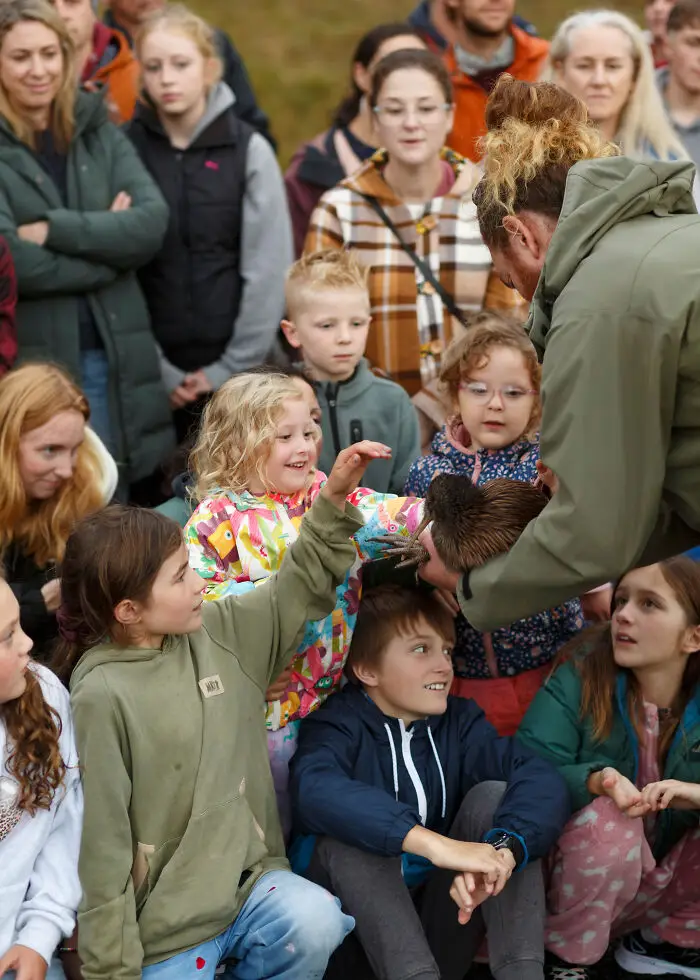
Community release, Ōpau Urupā, April 2026 Photo by Sara Tansy
Wellington's mayor, Andrew Little, also joined iwi (Māori tribes) representatives and community members to celebrate the birds' return in April 2026
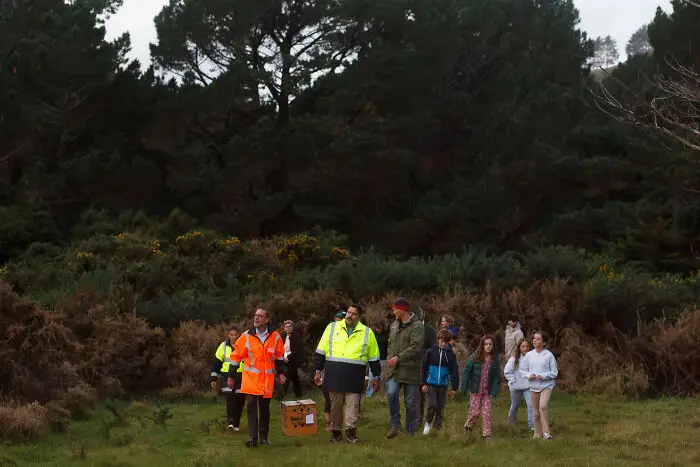
Wellington Mayor Andrew Little helps release kiwi alongside iwi and community, Mākara, April 2026
Photo by Sara Tansy
With these locally hatched chicks included, the wild kiwi population around Wellington is now estimated to exceed 300 birds. For Ward, the achievement goes well beyond the numbers. He explained that the return of kiwi represents both a technical and a social success, particularly because the birds are not confined to protected enclosures. As he put it, “the kiwi are not behind zoo glass or a sanctuary fence or exiled on an island – they are thriving alongside the people who take their name from the animal, in the places where they work, live and play.”
The project's success depends heavily on cooperation with local families and landowners, as much of the protected territory consists of privately owned land
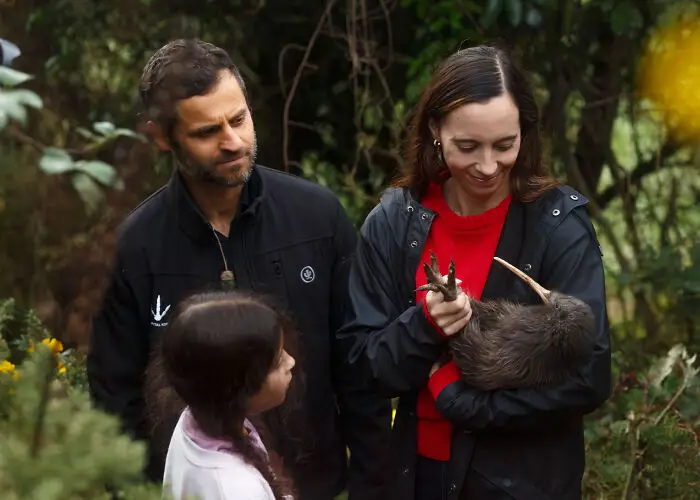
Capital Kiwi trustee Joe Buchanan and whānau (family), kiwi release, Ōpau Urupā, April 2026
Photo by Sara Tansy
Kiwi are remarkable birds in many ways, including the fact that females lay exceptionally large eggs relative to their body size
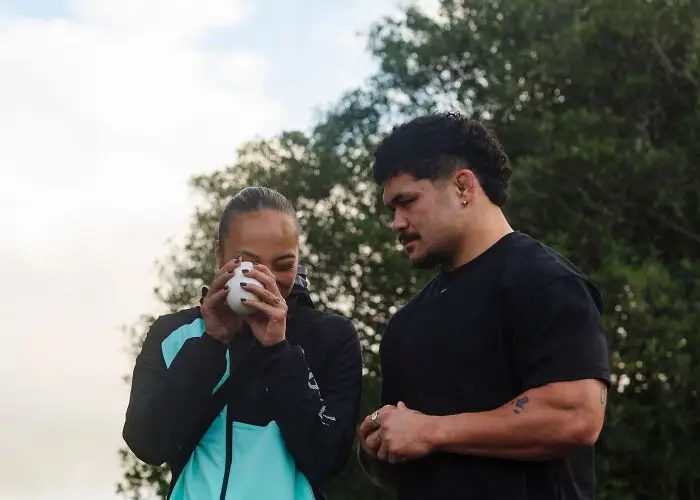
All Black rugby team captain, Du'Plessis Kirifi, and Silver Fern Mila Reuelu-Buchanan examine a kiwi egg at a release, April 2026
Photo by Sara Tansy
The benefits have extended beyond kiwi, too. The predator-control network has helped support other native species, including kororā (little penguins), kākā (native parrots), kārearea (New Zealand falcons), kererū (native pigeons), and tūī (native honeyeaters). Alongside the efforts of Zealandia Ecosanctuary and Predator Free Wellington, the project is helping transform the capital into a place where native wildlife is becoming increasingly abundant. For those involved, seeing these birds return after such a long absence has been emotional. In a reflection published by E-Tangata, Ward described encountering a kiwi as being “like meeting ET and a long-lost relative at once.”
By September 2026, the wild kiwi population around Wellington was estimated to have surpassed 300 birds, including chicks born in the wild
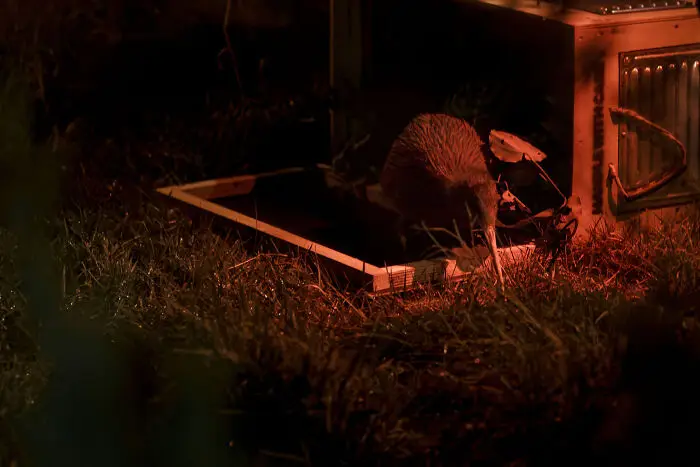
Kiwi release, Mākara, April 2026
Photo by Sara Tansy
Specially trained conservation dogs help the team locate kiwi in the wild, allowing researchers to monitor the population and assess its health
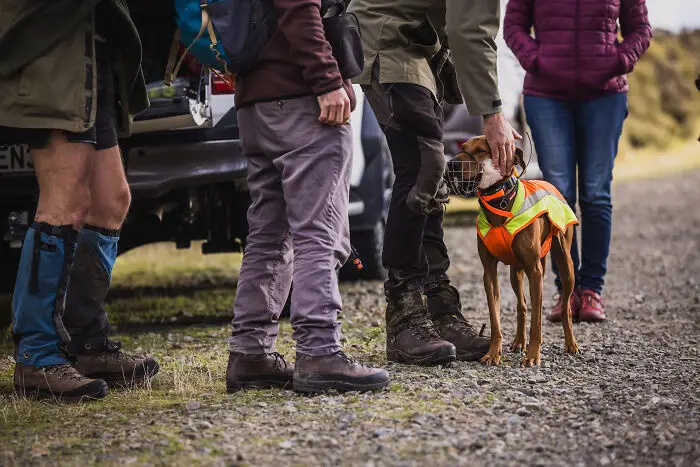
Kiwi conservation dog (Ash), Terawhiti Station, May 2026
Photo by Caleb Smith
Although the results have been extraordinary, the work is far from finished. Maintaining predator control, protecting the birds from dangers such as dogs and traffic, and continuing to work with local communities will remain essential to securing their future.
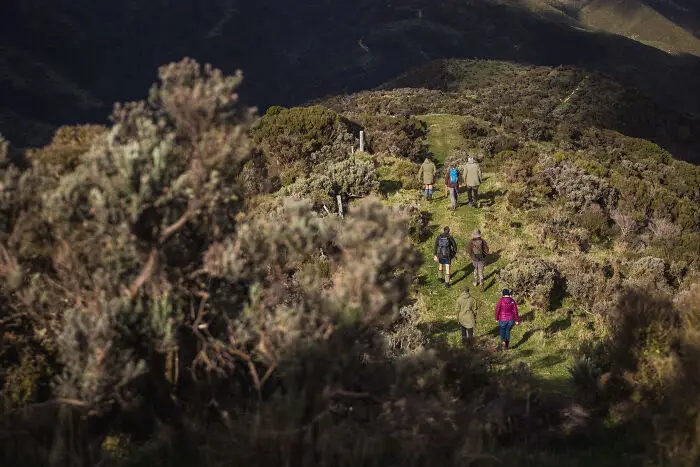
Tracking the birds across Wellington's rugged terrain is no easy task, especially since kiwi are mostly nocturnal and often remain hidden during the day
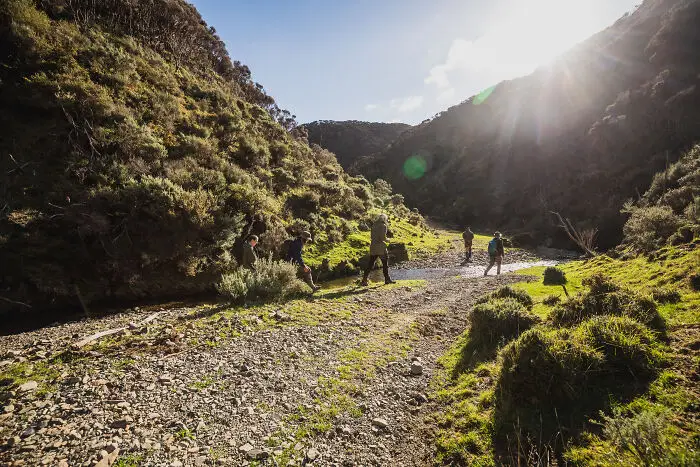
Kiwi tracking, Terawhiti Station, 2026 Photo by Caleb Smith
Radio transmitters have played an important role in helping conservationists monitor the movements and survival of the reintroduced bird
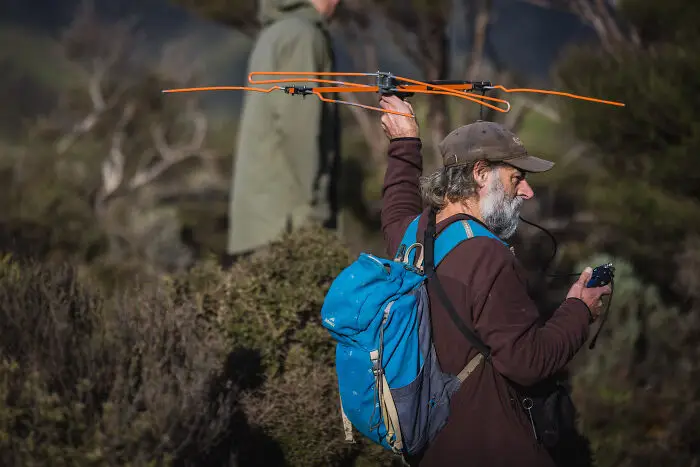
Kiwi tracking, Terawhiti Station, May 2026 Photo by Caleb Smith
Still, the project’s success offers an encouraging example of what conservation can achieve. At a time when wildlife populations are declining in many parts of the world, Wellington is demonstrating that it’s possible to bring threatened species back into landscapes shared with people.
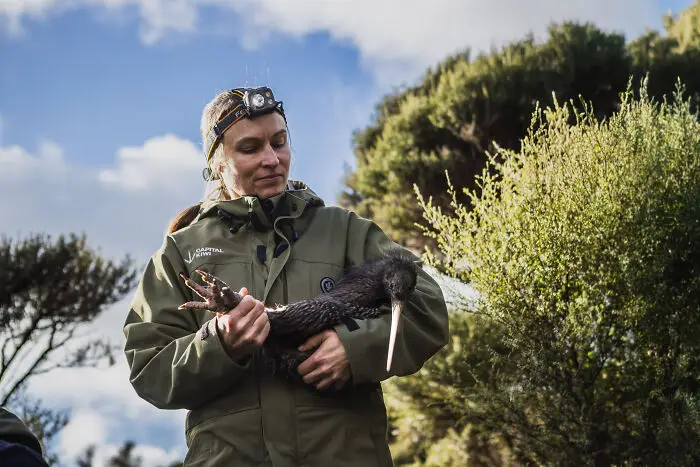
In May 2026, the team began removing transmitters from the last monitored kiwi, marking another important stage in the project's development
Removal of transmitters from last monitored birds, Terawhiti Station, May 2026
Photo by Caleb Smith
The project's monitoring has recorded extraordinary results, with more than 90% of monitored wild-hatched chicks surviving to reach a safer weight
Removal of monitoring transmitter from last adult (Kōpū), Terawhiti Station, May 2026
Photo by Caleb Smith
And after 150 years of absence, the sound of kiwi calling from the hills around New Zealand’s capital is perhaps the most satisfying reminder of just how much has changed.
This far exceeds the 30% chick survival benchmark used to assess whether the reintroduced population can successfully establish itself
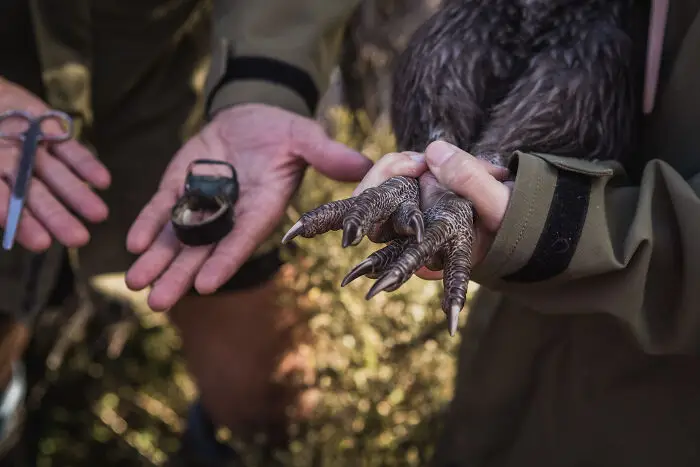
Removal of monitoring transmitter from last adult (Kōpū), Terawhiti Station, May 2026
Photo by Caleb Smith
With the project's success metrics exceeded, Wellington's kiwi are demonstrating that threatened wildlife can recover outside fenced sanctuaries
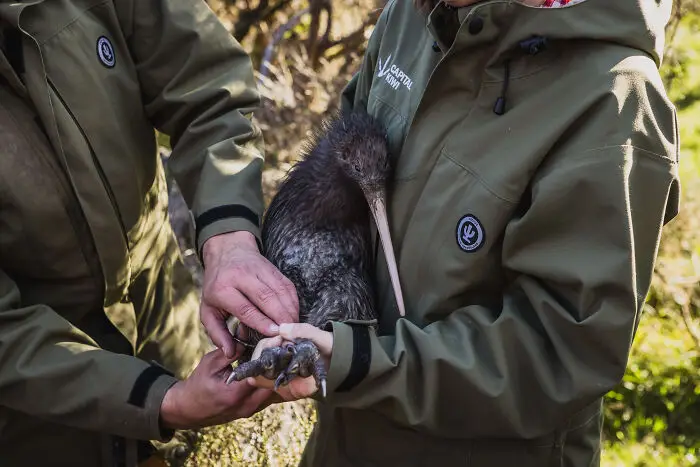
Removal of monitoring transmitter from last adult (Kōpū), Terawhiti Station, May 2026
Photo by Caleb Smith
The predator-control network is also benefiting other native birds, including little penguins, kākā (native parrots), and kārearea (New Zealand falcons)
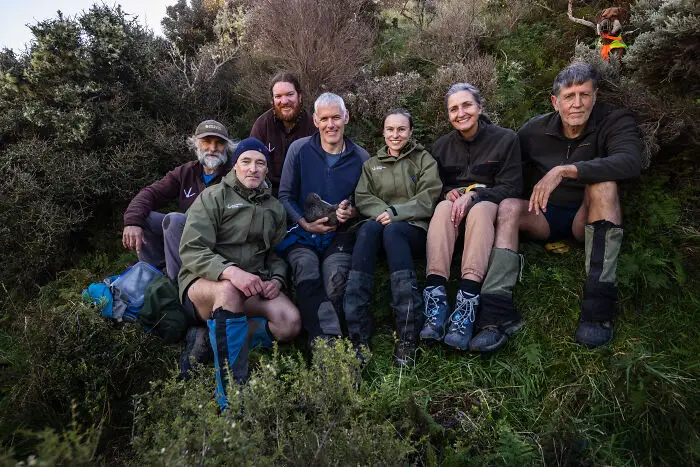
Removal of transmitter from last monitored chick, Terawhiti Station, May 2026
Photo by Caleb Smith
As kiwi return to areas shared with people, protecting them from traffic and roaming dogs will remain essential to ensuring their long-term survival
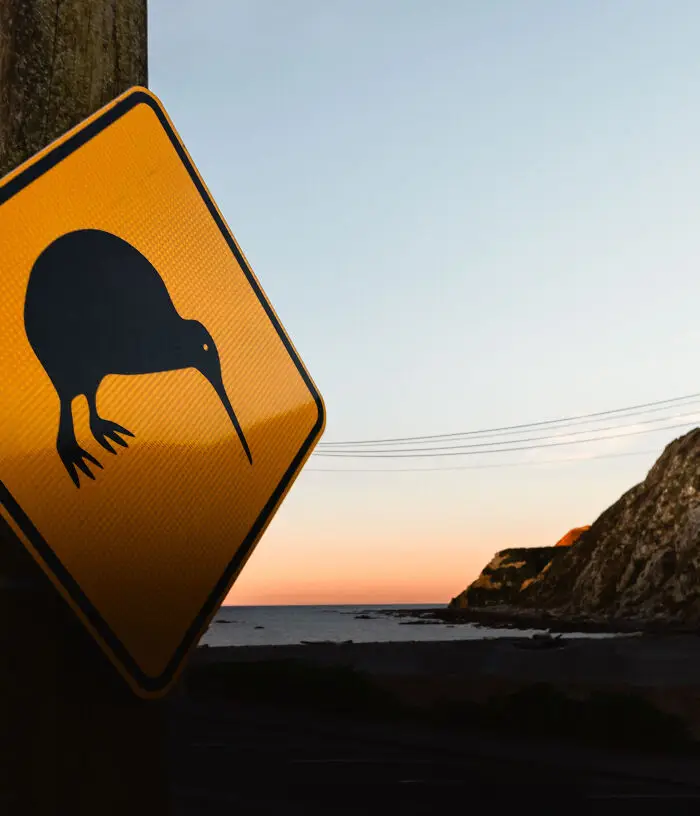
Kiwi awareness road sign, Mākara Beach Photo by Sara Tansy

