



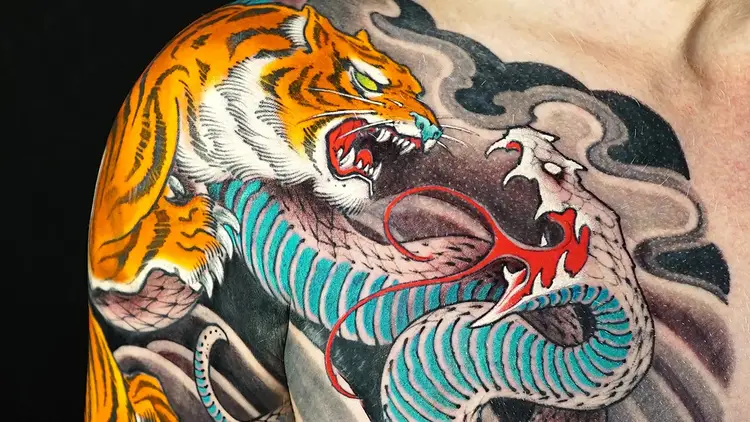


In Japan, a traditional tattoo is called irezumi, which simply means “inserted ink.” An older word, horimono, translates as “carved thing.” Neither has anything to do with decoration, and that’s no accident. In Japanese tattooing, almost nothing is there just to look pretty: every tiger, flower and wave is chosen for what it means.
The full-body style took off in the 1820s, when the artist Utagawa Kuniyoshi released a series of woodblock prints showing tattooed heroes from the Chinese novel Water Margin. The prints were a hit in Edo, the city now called Tokyo, and soon people across the city wanted the same designs on their own skin.
At Sacred Gold Tattoo, next to Coal Drops Yard in London’s King’s Cross, several of our artists work in the Japanese tradition, from full back pieces to a single chrysanthemum on a forearm. We picked some of our favorite pieces from the studio and looked into what each symbol actually stands for. Scroll down to discover the stories behind them, and let us know in the comments which design you’d choose for yourself.
#21 The Emperor's Flower
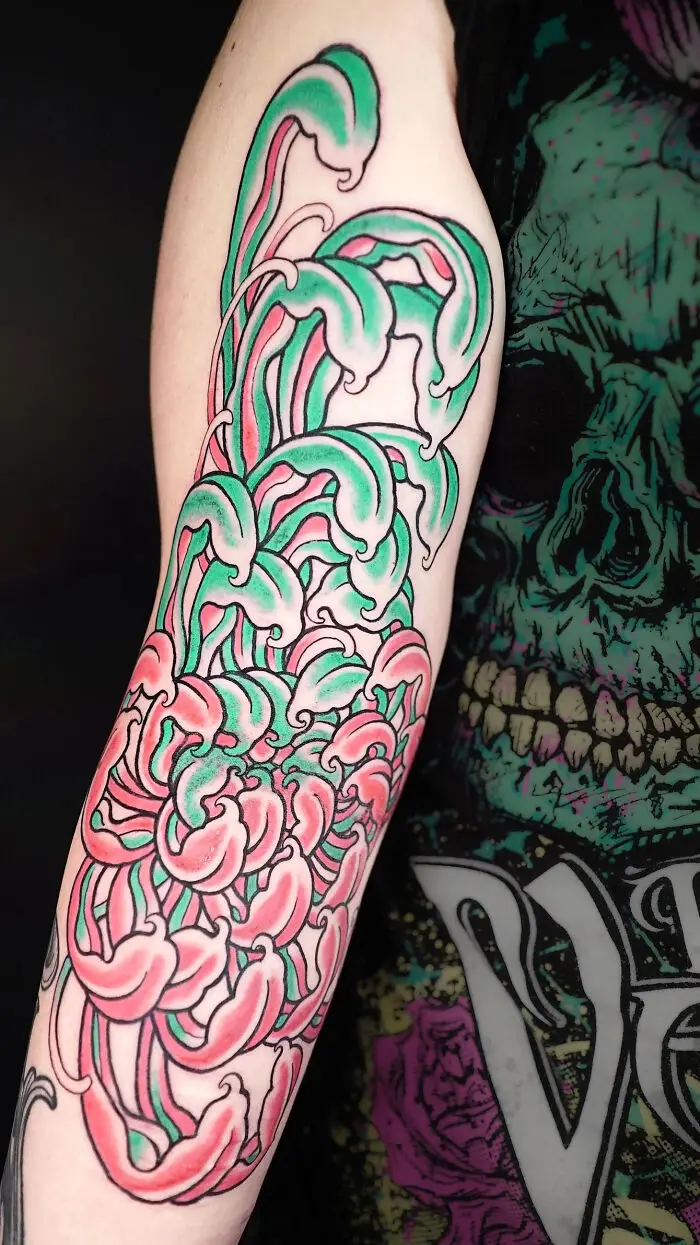
In Japan, the chrysanthemum stands for power and prestige. A 16-petal version is the seal of the imperial family, the Emperor’s seat is known as the Chrysanthemum Throne, and the country’s highest honor is the Supreme Order of the Chrysanthemum. In much of Europe, the same bloom sends a very different message: in France and Italy, chrysanthemums are funeral flowers, traditionally placed on graves on All Saints’ Day.
Work by Matt at Sacred Gold Tattoo, London, UK
Report
2points
#22 The Dragon That Eats Its Own Tail
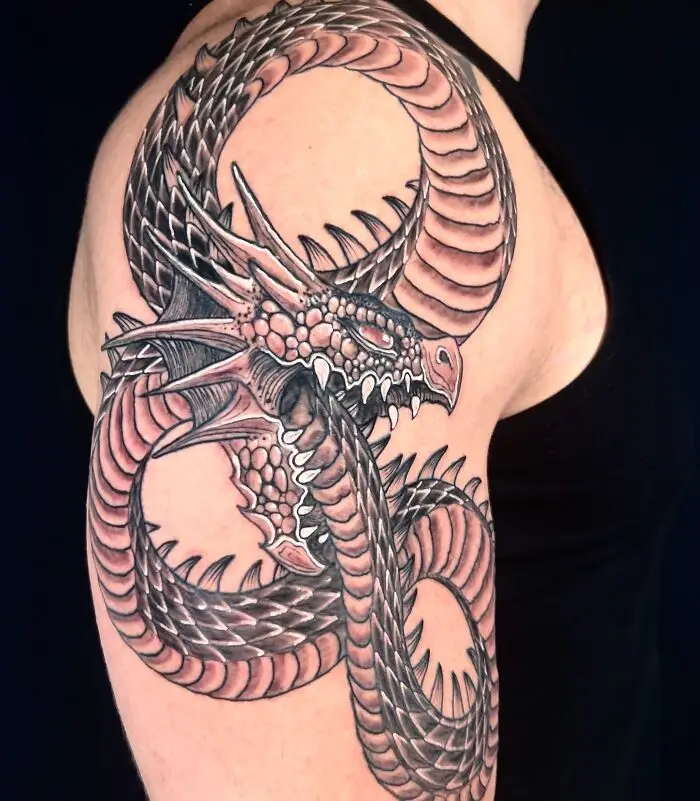
This dragon puts a spin on the ouroboros, the image of a serpent swallowing its own tail. Its name comes from the Greek for “tail-devourer,” but the symbol is much older than the word. One of the earliest known examples appears on a gilded shrine from Tutankhamun’s tomb. Thousands of years later, it even made its way into science: chemist August Kekulé said a daydream of this very image helped him work out the ring structure of the benzene molecule.
Work by Fernando at Sacred Gold Tattoo, London, UK
Report
2points
#23 The Giant Skeleton
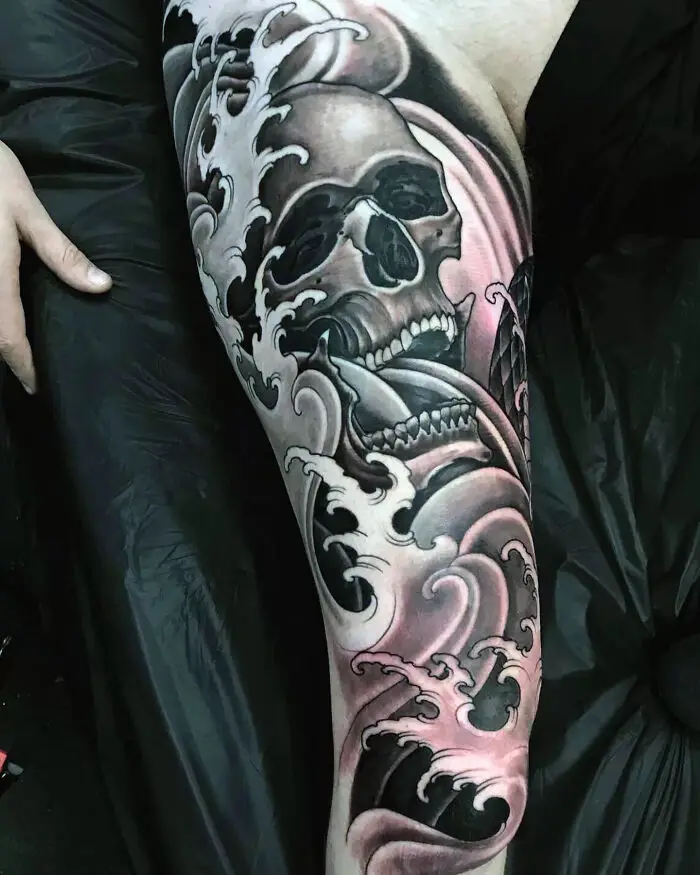
One of the most famous images in Japanese art is the giant skeleton in Utagawa Kuniyoshi’s 1840s print “Takiyasha the Witch and the Skeleton Spectre.” Summoned by the sorceress Takiyasha, it leans out of a ruined palace, towering over the warriors below. Unusually for its time, the creature is drawn with near-medical accuracy, suggesting Kuniyoshi had studied Western anatomy books, which reached Japan mainly through Dutch traders.
Work by João Bosco at Sacred Gold Tattoo, London, UK
Report
2points
#24 The Earliest Blossoms In 1,200 Years
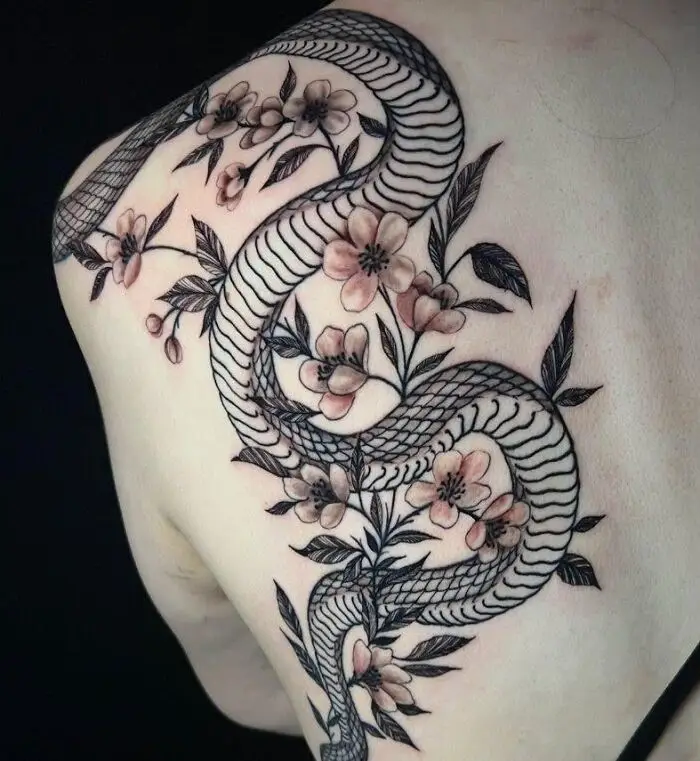
Kyoto has kept records of its cherry blossom season since the 9th century, one of the longest records of its kind in the world. In 2021, the city’s trees reached full bloom on March 26, the earliest date in more than 1,200 years. The blossoms have traveled well beyond Japan, too: the famous cherry trees in Washington, D.C., were a gift from the city of Tokyo in 1912.
Work by Fernando at Sacred Gold Tattoo, London, UK
Report
0points
#25 The Snake That Brings Money
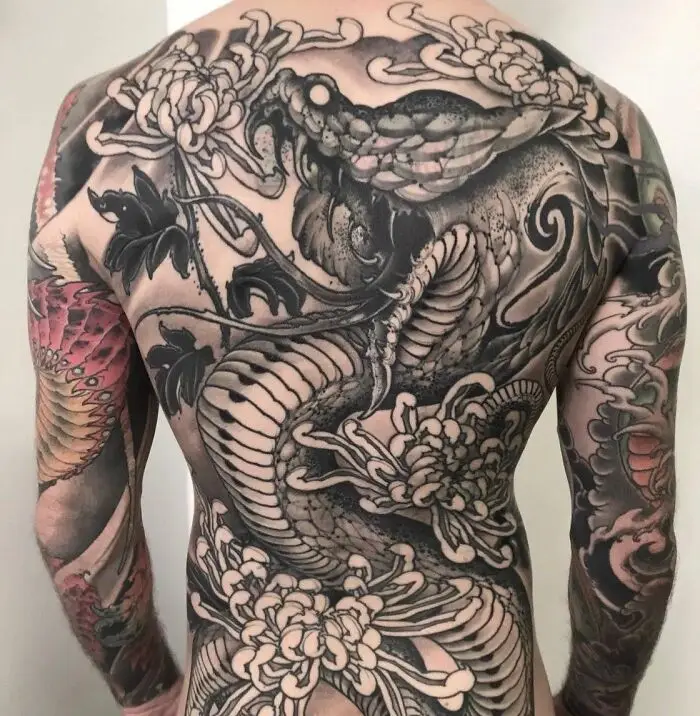
In Japan, dreaming of a snake is said to mean money is on its way. The belief is linked to Benzaiten, the goddess of water, music and wealth, whose messengers are traditionally snakes, especially white ones. The real animal is just as impressive as its reputation: the two halves of a snake’s lower jaw aren’t fused but joined by a stretchy ligament, which is how it can swallow prey wider than its own head.
Work by João Bosco at Sacred Gold Tattoo, London, UK
Report
0points
#26 The Tiger Japan Had Never Seen
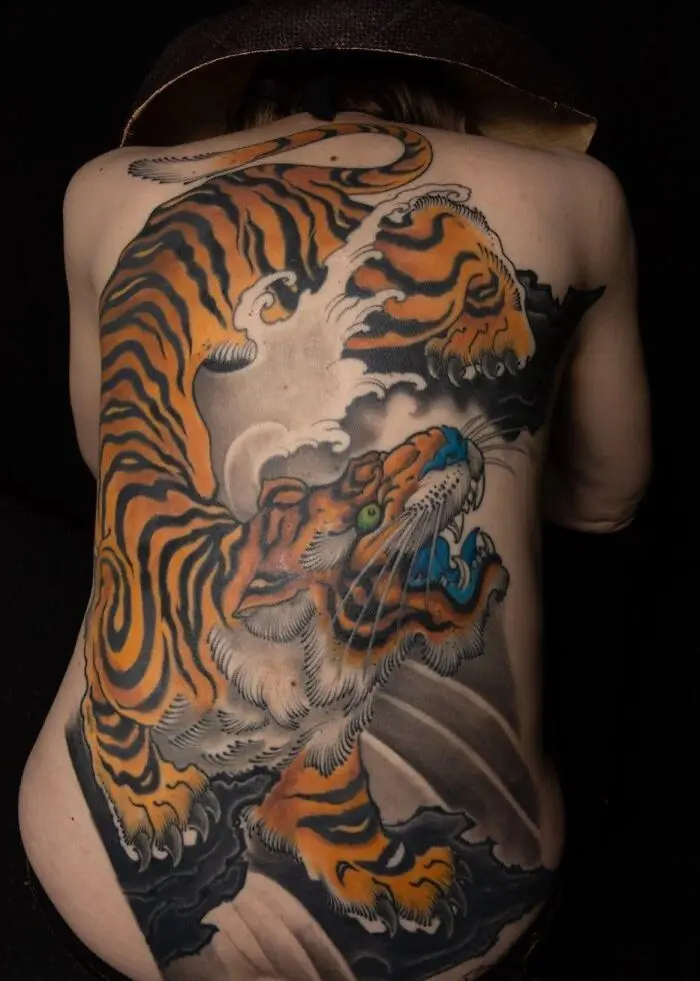
Japan had no wild tigers, so Edo-period painters worked from imported pelts and Chinese paintings. After cholera first reached Japan in 1822, people came to associate the fast-spreading, ferocious disease with the tiger, and the character for “tiger” was even used to write its Japanese name.
Work by João Bosco at Sacred Gold Tattoo, London, UK
Report
0points
