


The world is full of little details, surprising connections, and interesting pieces of information that somehow rarely make it into everyday conversation. And so, it can be satisfying to learn a fact you never knew you needed to know, and the next thing, you just want to immediately tell someone else about it.
That’s exactly what makes pages dedicated to interesting facts so easy to get lost in. The Instagram page interestingasfacts, which has around 1.4 million followers, has built an audience around sharing the kind of bite-sized information that makes people pause mid-scroll. From surprising discoveries and unusual details to facts about history, science, animals, and everyday life, its posts offer plenty of reasons to keep scrolling.
Here are some of the most fascinating examples, so prepare to leave this list knowing a little more than you did before.
#41
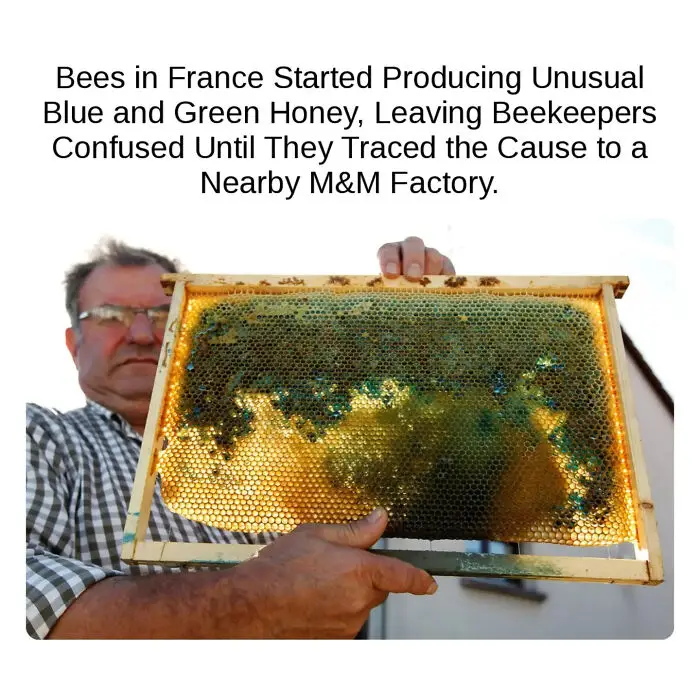
In 2012, beekeepers in northeastern France were shocked to discover that their bees were producing honey in unusual shades of blue and green instead of the familiar golden color. The strange discovery puzzled local honey producers, who initially struggled to understand why their hives were suddenly yielding such unusually colored honey.
After investigating the mystery, they traced the unusual colors to a nearby biogas plant that processed waste from an M&M’s candy factory. Bees had apparently found their way to sugary residue from the candy production process and were collecting it as an alternative food source to flower nectar.
The blue and green colors came from the artificial food dyes used in the colorful candy shells. As the bees collected the sugary material and brought it back to their hives, the pigments affected the appearance of the honey. The incident demonstrated how bees can sometimes exploit unexpected food sources when they are available nearby.
The discovery raised concerns among beekeepers because honey contaminated by industrial food waste could be difficult to sell as a natural product. In response, the facilities involved took steps to prevent bees from accessing the sugary waste. The unusual honey became a memorable example of how human activities can unexpectedly influence wildlife and the products that nature provides.
Report
17points


#45

This bizarre but true story involves identical triplets who were separated at birth by a prestigious adoption agency in New York. Years later, fate brought two of the brothers together when they happened to meet in college. Their striking physical resemblance led to the discovery that they were identical triplets who had been raised in different families without knowing about one another.
As the story unfolded, it became clear that they were not the only identical twins or triplets separated through the agency. Several children had been placed in different households as part of a secret research project led by psychiatrist Peter Neubauer.
Neubauer wanted to investigate how different family backgrounds and social environments influenced the personality development of genetically identical siblings. By studying children raised apart, he hoped to understand the roles that genetics and upbringing played in shaping human behavior. However, the children and their families were not fully informed about the true purpose of the separations, raising serious ethical concerns.
The study was never published in the form Neubauer had originally intended, and it faced widespread criticism over its methods and lack of informed consent. Records related to the research were deposited at Yale University, with access restrictions extending until 2065. The case remains a disturbing example of how scientific curiosity can come at a devastating human cost when ethical responsibilities are ignored.
Report
14points
#46
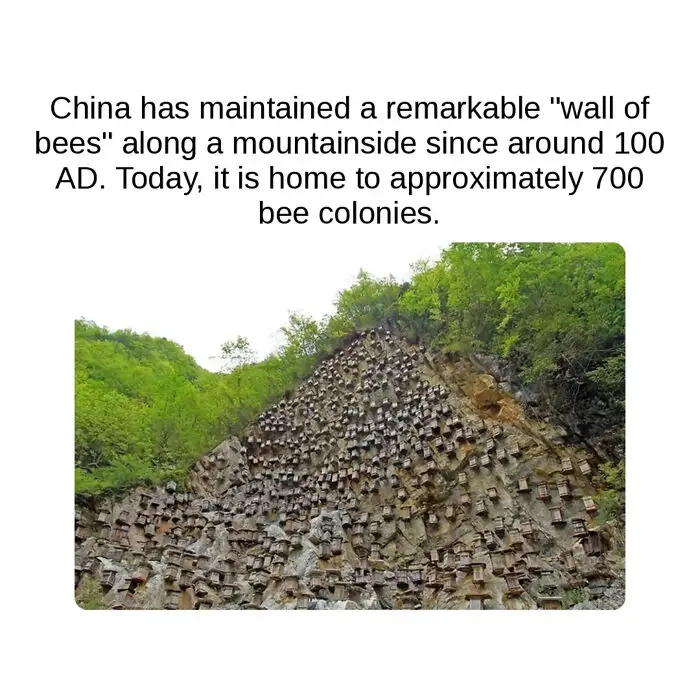
High in the mountains of China's Shennongjia Nature Reserve, hundreds of wooden beehives cling to an almost vertical cliff face. Known as the "Wall of Hives," this extraordinary arrangement is designed to protect native honey bees while creating one of the most unusual beekeeping sites in the world.
China has a long history of beekeeping, but native bee populations face growing threats from habitat loss, disease, and competition from introduced species. One of the most important native species is the Chinese honey bee, Apis cerana cerana, which plays a vital role in pollinating wild plants and crops. However, claims that more than 80 percent of China's native bees have disappeared, or that European honey bees alone caused the decline, should be treated with caution.
Maintaining the cliffside hives requires remarkable skill and courage. Beekeepers climb using lower hives as footholds, while the highest boxes may require ropes to reach. The steep location also helps keep the colonies and their honey out of reach of bears and other hungry animals.
The surrounding Shennongjia region is renowned for its rich biodiversity, with a wide variety of plant species growing across different elevations and climate zones. The unusual hives have also attracted visitors fascinated by this remarkable combination of traditional beekeeping, human ingenuity, and wildlife conservation.
Report
14points

#49
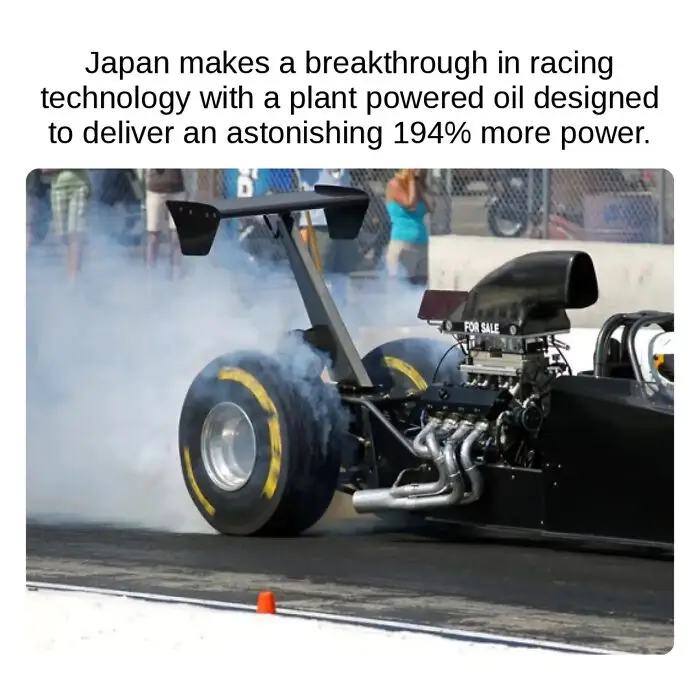
Japanese company Idemitsu Kosan has developed an innovative engine oil made from more than 80 percent plant based materials, including rapeseed and sunflower oils. The goal is to combine sustainability with the high performance required by modern engines.
In performance tests, the oil reportedly demonstrated 194 percent greater strength, 50 percent lower friction, 169 percent better engine protection, and 124 percent improved piston cleanliness compared with conventional mineral oil. These figures highlight its potential to improve engine efficiency and durability.
The oil has also been tested under demanding motorsport conditions, including a five hour endurance race with Mazda Spirit Racing. Its performance in this challenging environment demonstrated its potential for applications where engines must withstand prolonged stress and high temperatures.
Beyond performance, the oil reportedly reduces lifecycle carbon emissions by 82 percent compared with conventional alternatives. If these benefits translate into wider commercial use, this innovation could help make motorsports and everyday driving more environmentally sustainable without sacrificing performance.
Report
13points