






Typically, when we have questions, we google them and hope for the best. If the question is a tad more complicated, we might reach out to someone we know who is an expert. Unfortunately, the amount of actual experts the average person knows is probably too few to cover all the questions they may end up having.
So we’ve gathered some of the most interesting questions from an internet community dedicated to helping people get answers. So settle in as you read through, upvote your favorites and be sure to share your own examples in the comments down below.
#1 Why Was Salt Once So Valuable Even Though It Seems So Easy To Make From Seawater, And What Factors Made It Scarce?

In theory, anyone near the coast could just evaporate seawater and get salt, so why did it become something people traded like gold? Maybe it was not about basic access but scale, labor, or control. Inland demand makes sense, but even coastal societies treated salt seriously. Was it about preservation, state monopolies, or something cultural?
What actually made salt feel scarce in practice? And am I missing or getting any of the assumptions wrong here?
Defiant-Junket4906: "It seems so easy"
Keyword there is seems. You have to have a lot of land, a lot of seawater, and a lot of time to wait for it to evaporate, or you use up a bunch of wood to boil it. And at the end you're left with a low yield of impure salt.
Apparently, it was just easier to mine.
What actually made salt feel scarce in practice? And am I missing or getting any of the assumptions wrong here?
Defiant-Junket4906: "It seems so easy"
Keyword there is seems. You have to have a lot of land, a lot of seawater, and a lot of time to wait for it to evaporate, or you use up a bunch of wood to boil it. And at the end you're left with a low yield of impure salt.
Apparently, it was just easier to mine.
Report
8points
#2 Why Do The Same Americans Who Hate Their Taxes Helping The Poor Have No Problem With Their Taxes Subsidizing Big Corps With Billions?
Especially when these same tax payers don’t have tax write offs like they have that allows them to pay little or no taxes into the fund we all have to pay into.
Skarth: Most of them don't know how the government or politics work, so they put all their trust into the person who says they will help them the most.
Skarth: Most of them don't know how the government or politics work, so they put all their trust into the person who says they will help them the most.
Report
7points
#3 Why Are Most Stores Open Mainly During Standard Daytime Work Hours, When Many Adults Work Those Same Hours?

Many places like banks, government offices, and certain service businesses are primarily open during standard weekday daytime hours. At the same time, a large share of working-age adults also work during those same hours.
This creates a situation where accessing these services often requires taking time off work or rearranging schedules.
How did this alignment develop? Is it driven by historical work patterns, staffing costs, demand concentration, or something else?
Angel_OfSolitude: Well it was less of a problem when women weren't expected to join the work force. They would go out and do most of the errands while the husband was at work. Tight hours aren't an issue when half the adults are free during those hours.
Maxmikeboy: Because they also would like to work regular hours.
This creates a situation where accessing these services often requires taking time off work or rearranging schedules.
How did this alignment develop? Is it driven by historical work patterns, staffing costs, demand concentration, or something else?
Angel_OfSolitude: Well it was less of a problem when women weren't expected to join the work force. They would go out and do most of the errands while the husband was at work. Tight hours aren't an issue when half the adults are free during those hours.
Maxmikeboy: Because they also would like to work regular hours.
7points
#4 Why Is Gen Z So Averse To Any And All Age Gaps?

On various social media platforms, when the age of a couple comes up, there is usually someone saying "eww" in response. They can both be in their 30's or higher, and someone, usually from Gen Z will always chime in "But she was in high school when he was in college! That's a power disparity!"
Where did this come from? My parents were 6 years apart and no one batted an eye in the 90's. My mom and stepdad were 12 apart and stayed together until her end of life for 20 years, in what was a very healthy marriage. But now, if you weren't in someone's peer group while they were in high school, that apparently doesn't pass Gen Z's vibe check?
anonymous: I once had a Gen Z coworker tell me that me and my boyfriends height different was creepy and problematic. Hes only a foot taller than me and regardless we are both in our 30s.
I honestly think its just a massive overcorrection from years of watching 70s-2000s shows of older men creeping on young girls and it being seen as normal if not aspirational. I mean it wasn't that long ago that 17 year olds were marrying men in their late 20s. People are just acknowledging how weird it was back then and calling out that behavior now. But theres no nuance to it.
Its in the same vein as people being so desperate to not appropriate another culture that they dont attend or participate in events like cultural exchange fairs or something.
Wise_Comparison_9651: Idk why anyone hasn’t said it yet but it’s because the online generation is full of people who were actually groomed online
Where did this come from? My parents were 6 years apart and no one batted an eye in the 90's. My mom and stepdad were 12 apart and stayed together until her end of life for 20 years, in what was a very healthy marriage. But now, if you weren't in someone's peer group while they were in high school, that apparently doesn't pass Gen Z's vibe check?
anonymous: I once had a Gen Z coworker tell me that me and my boyfriends height different was creepy and problematic. Hes only a foot taller than me and regardless we are both in our 30s.
I honestly think its just a massive overcorrection from years of watching 70s-2000s shows of older men creeping on young girls and it being seen as normal if not aspirational. I mean it wasn't that long ago that 17 year olds were marrying men in their late 20s. People are just acknowledging how weird it was back then and calling out that behavior now. But theres no nuance to it.
Its in the same vein as people being so desperate to not appropriate another culture that they dont attend or participate in events like cultural exchange fairs or something.
Wise_Comparison_9651: Idk why anyone hasn’t said it yet but it’s because the online generation is full of people who were actually groomed online
Report
6points
#5 Why Are Saturn’s Rings Hundreds Of Thousands Of Miles Wide But Only Tens Of Meters Thick?

I was looking at pictures of Saturn and realized something I had never really thought about before.
The rings are enormous, stretching hundreds of thousands of miles across, but they are incredibly thin compared with their size. It almost feels like a giant cosmic disk that somehow stays as a thin layer instead of spreading into a thick cloud around the planet.
I assume gravity, orbital motion, and collisions have something to do with it, but I’m curious how all those pieces end up forming such a thin disk. What factors shape Saturn’s rings this way?
Defiant-Junket4906: What helped me picture it is that the rings aren't really a giant solid disk. They're billions of individual particles, and each one is basically in orbit around Saturn.
Saturn's gravity keeps the particles bound, while collisions tend to reduce their random motion, especially motion perpendicular to the ring plane. That makes the system settle into something more like a very thin swarm than a thick cloud.
The crazy part is that something 175,000 miles across can still have a typical thickness of only around 10 meters.
The rings are enormous, stretching hundreds of thousands of miles across, but they are incredibly thin compared with their size. It almost feels like a giant cosmic disk that somehow stays as a thin layer instead of spreading into a thick cloud around the planet.
I assume gravity, orbital motion, and collisions have something to do with it, but I’m curious how all those pieces end up forming such a thin disk. What factors shape Saturn’s rings this way?
Defiant-Junket4906: What helped me picture it is that the rings aren't really a giant solid disk. They're billions of individual particles, and each one is basically in orbit around Saturn.
Saturn's gravity keeps the particles bound, while collisions tend to reduce their random motion, especially motion perpendicular to the ring plane. That makes the system settle into something more like a very thin swarm than a thick cloud.
The crazy part is that something 175,000 miles across can still have a typical thickness of only around 10 meters.
Report
6points
#6 Why Do Billionaires And Extremely Rich People Go To Such Lengths To Avoid Paying Taxes, Even Though They’d Still Be Insanely Wealthy If They Just Paid Them?
It seems like no matter what, their lives wouldn’t change much, yet so much energy and resources go into dodging taxes. Why not just pay and move on?
Head-Gift2144: Because some people can never have enough money. For them, the more you have the more you want.
Take Elon Musk: Worth nearly $500B and is fighting tooth and nail to get to a trillion. There is nothing he can‘t buy now that he could for $1T but that doesn’t matter at all. It’s infinitely more important to him than doing social good or even just enjoying himself.
Head-Gift2144: Because some people can never have enough money. For them, the more you have the more you want.
Take Elon Musk: Worth nearly $500B and is fighting tooth and nail to get to a trillion. There is nothing he can‘t buy now that he could for $1T but that doesn’t matter at all. It’s infinitely more important to him than doing social good or even just enjoying himself.
Report
5points
#7 Why Do Americans Seem To Have A Different Concept Of Turn-Taking In Conversation?
I’m Asian, and I met my American friends after coming to the U.S. They’re genuinely funny, warm, and great to be around. I enjoy spending time with them. That said, I’ve noticed an interesting pattern in our conversations. They often share their own stories, and even when I politely offer a thought or an idea, the conversation tends to drift back to their experiences, sometimes around very ordinary, everyday moments.
For example, when we’re eating together, I might ask what they think of the food or how they usually cook a certain dish. They’ll talk for several minutes about their own habits, preferences, or a related personal story. I usually wait for a pause or a question like “What about you?” so I can share my own experience or opinion, but that moment often never comes. The conversation just fades out or moves on.
This made me wonder if conversations in the U.S. follow a different rhythm. I’m genuinely curious whether this is a cultural difference in conversational norms, something people learn subconsciously, or just individual communication styles. How do Americans usually think about turn-taking in conversations?
Texan_Greyback: In my family and the area I grew up in, we talk in stories. We don't want to pry, so we don't ask much. You tell your own stories if you want. There are pauses between stories where you can talk.
michiplace: Formal turn taking tends to be for more ritualized conversations with relative strangers: professional networking, an interview, a first date, an Uber ride, a customer service phone call.
For a conversation between acquaintances, the turn taking is much softer and more implicit -- every statement is an invitation to jump in and participate, and if you don't then they'll assume you dont want to, and offer another statement, until you do jump in. They're not going to pressure you or put you on the spot with an explicit ask or a "long" awkward pause.
And those windows for you to respond may be much shorter than you're waiting for: if you're not starting to talk basically at the end of their sentence, you've missed the windows. (Facial expressions and hand gestures do a lot of work, as people often start "talking" visually - indicate with hands or face that they're going to jump in - before they start talking verbally.)
...at least, these are the working assumptions that have allowed me to do all right personally and professionally as a socially an anxious introvert on the autism spectrum!
For example, when we’re eating together, I might ask what they think of the food or how they usually cook a certain dish. They’ll talk for several minutes about their own habits, preferences, or a related personal story. I usually wait for a pause or a question like “What about you?” so I can share my own experience or opinion, but that moment often never comes. The conversation just fades out or moves on.
This made me wonder if conversations in the U.S. follow a different rhythm. I’m genuinely curious whether this is a cultural difference in conversational norms, something people learn subconsciously, or just individual communication styles. How do Americans usually think about turn-taking in conversations?
Texan_Greyback: In my family and the area I grew up in, we talk in stories. We don't want to pry, so we don't ask much. You tell your own stories if you want. There are pauses between stories where you can talk.
michiplace: Formal turn taking tends to be for more ritualized conversations with relative strangers: professional networking, an interview, a first date, an Uber ride, a customer service phone call.
For a conversation between acquaintances, the turn taking is much softer and more implicit -- every statement is an invitation to jump in and participate, and if you don't then they'll assume you dont want to, and offer another statement, until you do jump in. They're not going to pressure you or put you on the spot with an explicit ask or a "long" awkward pause.
And those windows for you to respond may be much shorter than you're waiting for: if you're not starting to talk basically at the end of their sentence, you've missed the windows. (Facial expressions and hand gestures do a lot of work, as people often start "talking" visually - indicate with hands or face that they're going to jump in - before they start talking verbally.)
...at least, these are the working assumptions that have allowed me to do all right personally and professionally as a socially an anxious introvert on the autism spectrum!
Report
5points
#8 Why Is American Higher Education Considered The World’s Gold Standard, While American High Schools Get Such A Bad Reputation?
It seems strange that colleges and universities in the US are praised globally for quality and innovation, but the K–12 system is often criticized for mediocrity or inefficiency. What causes such a stark difference in perception?
My-Cooch-Jiggles: Funding. Top American universities have billion dollar endowments. K-12 systems are generally funded by local property taxes and if you're in a shitty neighborhood they don't get much funding at all. You also have more motivated students in colleges. The students want to be there. Plenty of high school students want nothing to do with school. Keep in mind too, America just has a shitload of colleges. They're not all good. There are plenty of crappy ones where if you just show up you'll get straight As. The Ivy League is more of an exception than the rule.
My-Cooch-Jiggles: Funding. Top American universities have billion dollar endowments. K-12 systems are generally funded by local property taxes and if you're in a shitty neighborhood they don't get much funding at all. You also have more motivated students in colleges. The students want to be there. Plenty of high school students want nothing to do with school. Keep in mind too, America just has a shitload of colleges. They're not all good. There are plenty of crappy ones where if you just show up you'll get straight As. The Ivy League is more of an exception than the rule.
Report
5points
#9 Why Is There So Much Negative Rhetoric About Poor People, Especially Around Welfare, In The Us?
Every time welfare or poverty comes up in the U.S., people seem quick to blame the poor — calling them lazy, freeloaders, or abusers of the system.
But most people on welfare aren’t gaming the system. They’re working poor, raising kids, or struggling to survive in a society where wages don’t cover rent, food, or healthcare.
So why is the conversation so negative? Is it culture, politics, economics, or just a way to avoid questioning the system itself?
I’m curious what others think: why is it so easy to blame the poor instead of looking at the bigger picture?
ATLDeepCreeker: If you sell the idea that being poor is just because you dont work hard enough, then as a politician, you dont have to offer any solutions to their problems.
But most people on welfare aren’t gaming the system. They’re working poor, raising kids, or struggling to survive in a society where wages don’t cover rent, food, or healthcare.
So why is the conversation so negative? Is it culture, politics, economics, or just a way to avoid questioning the system itself?
I’m curious what others think: why is it so easy to blame the poor instead of looking at the bigger picture?
ATLDeepCreeker: If you sell the idea that being poor is just because you dont work hard enough, then as a politician, you dont have to offer any solutions to their problems.
Report
5points
#10 Why Do Many Americans Seem To Have A “I’m Not Paying For Your School, Healthcare, Or Welfare” Mindset?
I’ve noticed that many Americans are resistant to the idea of funding public services, such as education, healthcare, or social welfare, especially through taxation. It’s like there’s this strong cultural belief that everyone should fully fend for themselves, and helping others is somehow optional or even unfair.
I’m curious about why this mindset is so common. Is it rooted in history, politics, economics, or something else in American culture? Why does personal responsibility seem to outweigh collective support in so many people’s views?
Buzz_Buzz1978: Toxic “pull yourself up by your bootstraps” individualism.
This sounds like ie schools: “I don’t have a kid in public school, why should my money go to the public schools?”
(For context for those not from the US, our public schools are the taxpayer funded district schools whereas private schools are, as the name implies, privately funded and/or owned. There’s a fair amount of nuance when you start including charter schools and parochial schools, but in terms of broad-stroke generalization, it’s kind of the opposite of how the schools are labeled in, for example the UK.)
Edited to add: Wow. There’s a whole lot of you who don’t understand what “broad-stroke generalization” means. Also a whole lot more of you who just proved my point about toxic individualism.
I’m curious about why this mindset is so common. Is it rooted in history, politics, economics, or something else in American culture? Why does personal responsibility seem to outweigh collective support in so many people’s views?
Buzz_Buzz1978: Toxic “pull yourself up by your bootstraps” individualism.
This sounds like ie schools: “I don’t have a kid in public school, why should my money go to the public schools?”
(For context for those not from the US, our public schools are the taxpayer funded district schools whereas private schools are, as the name implies, privately funded and/or owned. There’s a fair amount of nuance when you start including charter schools and parochial schools, but in terms of broad-stroke generalization, it’s kind of the opposite of how the schools are labeled in, for example the UK.)
Edited to add: Wow. There’s a whole lot of you who don’t understand what “broad-stroke generalization” means. Also a whole lot more of you who just proved my point about toxic individualism.
Report
4points
#11 Why Did Iceland Remain Largely Treeless After More Than 1,100 Years Of Settlement While Nearby Scandinavia Stayed Forested?
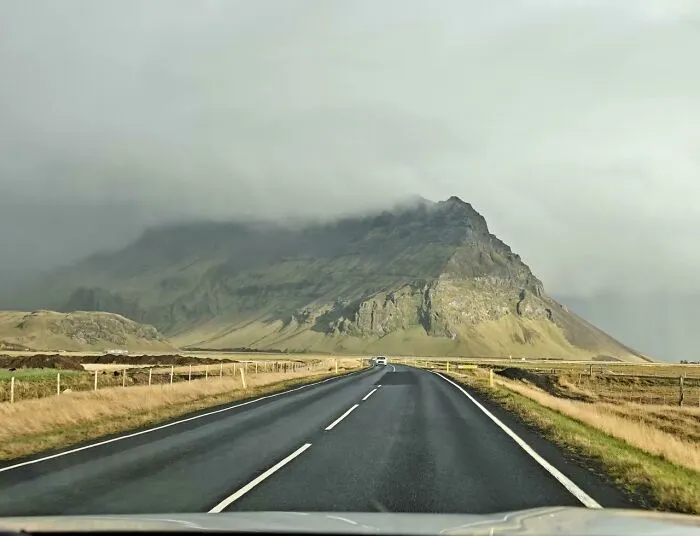
Iceland had substantially more native birch woodland when Norse settlers arrived in the 9th century. Over the following centuries, woodland was cleared for fuel, timber, and grazing, while soil erosion removed vegetation and degraded large areas stretches of the highlands are sometimes described as Europe's largest desert.
Trees still grow in Iceland today, and where grazing is excluded, birch can regenerate naturally, especially near existing woodland. Yet large parts of the island remain open landscape centuries after the original woodland was reduced.
Norway and Sweden also experienced extensive clearing and grazing, yet many areas there remained forested or were later reforested.
Why did Iceland's woodland loss become so difficult to reverse?
talkstomuch: same thing in scotland. my guess - it's just hard to re-forest some areas where soil got weathered down to nothing.
1000s of years of vegetation, that gradually created and deposited layers of soil, protected by roots. - once all is gone - wind and water took the soil away.
BelinCan: But also:sheep! They will just keep grazing anything that grows. And in Iceland, they have the right to roam, so if you want a forest to grow, you have to fence it off completely.
Trees still grow in Iceland today, and where grazing is excluded, birch can regenerate naturally, especially near existing woodland. Yet large parts of the island remain open landscape centuries after the original woodland was reduced.
Norway and Sweden also experienced extensive clearing and grazing, yet many areas there remained forested or were later reforested.
Why did Iceland's woodland loss become so difficult to reverse?
talkstomuch: same thing in scotland. my guess - it's just hard to re-forest some areas where soil got weathered down to nothing.
1000s of years of vegetation, that gradually created and deposited layers of soil, protected by roots. - once all is gone - wind and water took the soil away.
BelinCan: But also:sheep! They will just keep grazing anything that grows. And in Iceland, they have the right to roam, so if you want a forest to grow, you have to fence it off completely.
Report
4points
#12 Why Do Norwegian Babies Nap Outdoors Even In Winter?

In Norway, babies sleeping outside in a stroller is a pretty normal sight, including during the colder months. Coming from places where babies usually nap indoors, I find the difference interesting. It seems like a small everyday habit, but it must have developed around some combination of local conditions and ideas about childcare.
How did outdoor naps become such a normal part of infant care in Norway?
Mentalfloss1: Swedish babies do this too and I suspect they do it in Denmark and Finland. I have spent a month in Sweden in the early spring and a month in the middle of winter and saw this. People leave their babies in strollers outside of stores. Why? It’s healthy and it’s safe. The babies will grow up and live in their region’s climate and it’s best to have them adapt to it.
How did outdoor naps become such a normal part of infant care in Norway?
Mentalfloss1: Swedish babies do this too and I suspect they do it in Denmark and Finland. I have spent a month in Sweden in the early spring and a month in the middle of winter and saw this. People leave their babies in strollers outside of stores. Why? It’s healthy and it’s safe. The babies will grow up and live in their region’s climate and it’s best to have them adapt to it.
Report
4points
#13 Why Do Many Americans See Moving Out At 18 As A Sign Of Maturity Rather Than Just A Financial Choice?
In many cultures, living with your parents into your 20s is totally normal, even expected.
But in the U.S., people often treat moving out at 18 as a sign of being a “real adult.”
I’ve always wondered — why is independence so strongly tied to leaving home, even when the economic reality doesn’t make it practical anymore?
Is it cultural pride, social pressure, or something deeper about how Americans define adulthood?
No-Yak6109: Living alone forces you to prepare your own food, pay your own bills, do your own laundry, clean and maintain your own living space, and generally manage your own life. The presumption is that living with parents means they- especially mommy- will continue to take care of them like a child.
But in the U.S., people often treat moving out at 18 as a sign of being a “real adult.”
I’ve always wondered — why is independence so strongly tied to leaving home, even when the economic reality doesn’t make it practical anymore?
Is it cultural pride, social pressure, or something deeper about how Americans define adulthood?
No-Yak6109: Living alone forces you to prepare your own food, pay your own bills, do your own laundry, clean and maintain your own living space, and generally manage your own life. The presumption is that living with parents means they- especially mommy- will continue to take care of them like a child.
Report
4points
#14 Why Does “Genderless” Fashion Never Include Skirts?
I went to a store that called itself genderless fashion.
Everything looked the same—loose shirts, wide pants, muted colors.
But there wasn’t a single skirt.
Why does “genderless” always look like simplified menswear?
Why are straight lines and stiff fabrics called neutral, while softness or flow are still seen as feminine?
If genderless fashion means no gender, why does it still lean masculine?
Why can’t a skirt be genderless too?
Swirled__: Because masculine is still the default in western society. Any deviation from that is considered gendered. It's why few people care if women dress like men anymore (only those who think there should only be two genders and strict gender roles). But so many get upset if a man dresses in non masculine clothes.
Everything looked the same—loose shirts, wide pants, muted colors.
But there wasn’t a single skirt.
Why does “genderless” always look like simplified menswear?
Why are straight lines and stiff fabrics called neutral, while softness or flow are still seen as feminine?
If genderless fashion means no gender, why does it still lean masculine?
Why can’t a skirt be genderless too?
Swirled__: Because masculine is still the default in western society. Any deviation from that is considered gendered. It's why few people care if women dress like men anymore (only those who think there should only be two genders and strict gender roles). But so many get upset if a man dresses in non masculine clothes.
Report
4points
#15 Why Did Atlanta Overtake Savannah When Savannah Had A Century Head Start And The Better Location For Ocean Trade?
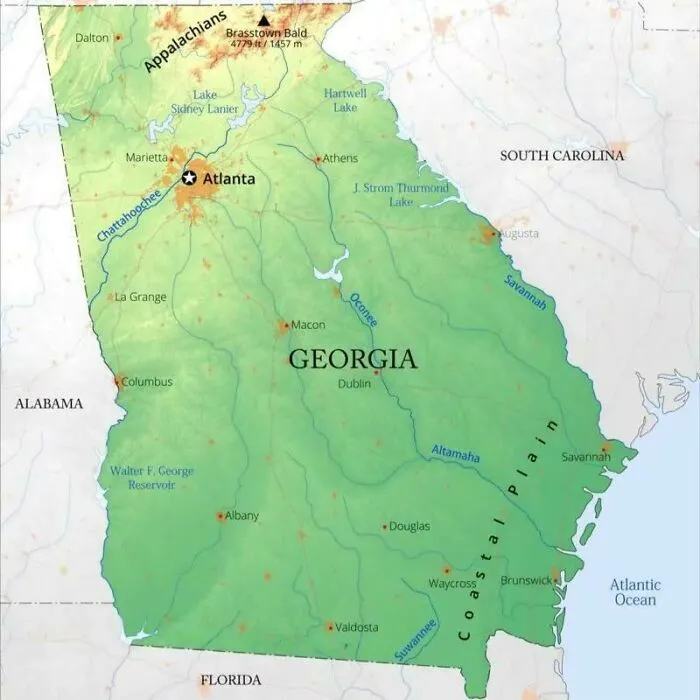
I was looking at Georgia on a map and got stuck on Atlanta. Savannah was founded in 1733 and already had a major Atlantic port and established trade long before Atlanta existed. Atlanta started in the 1840s as a railroad junction far inland, with no navigable river or ocean nearby.
Yet Atlanta eventually became the much larger regional city, while Savannah remained a much smaller port city.
What made the gap between these two cities grow so dramatically?
whatisakafka: Railroads
EDIT: To be more specific, Atlanta was well situated to build railroads avoiding the mountains
moosetherobot: Actually there was a lot of disease in Savannah in the 1700s and 1800s that Atlanta didn't have. Savannah was afflicted by several waves of yellow fever, and its more well-to-do citizens would actually escape Savannah during the summer and go to Altlanta or elsewhere where the air was a bit cooler, a bit less muggy, and they had better chances of staying alive. The poor stayed to work and take their chances.
Yet Atlanta eventually became the much larger regional city, while Savannah remained a much smaller port city.
What made the gap between these two cities grow so dramatically?
whatisakafka: Railroads
EDIT: To be more specific, Atlanta was well situated to build railroads avoiding the mountains
moosetherobot: Actually there was a lot of disease in Savannah in the 1700s and 1800s that Atlanta didn't have. Savannah was afflicted by several waves of yellow fever, and its more well-to-do citizens would actually escape Savannah during the summer and go to Altlanta or elsewhere where the air was a bit cooler, a bit less muggy, and they had better chances of staying alive. The poor stayed to work and take their chances.
Report
3points
#16 Why Did Musk’s “Doge” Agency Shut Down So Quietly?
I’m just trying to understand this. Musk’s Department of Government Efficiency launched with huge promises, and now it’s suddenly shut down eight months early, with almost no explanation besides “it doesn’t exist anymore.”
Looking around online, people seem to be saying completely different things:
some say DOGE didn’t deliver anything meaningful, so it was easier to shut it down quietly
others think it actually created more confusion than efficiency
a few people keep pointing out how much data DOGE collected in a short time, which makes the sudden shutdown feel strange
and some think the whole project was more political branding than actual reform
All of this makes me wonder:
If DOGE was supposed to make government more efficient, why end it early with almost no explanation?
What really happened behind the scenes?
Just trying to understand.
Legionatus: DOGE was part of a media strategy built by idiots on bluster and empty words. It was a terrible answer to a real problem that required thought and care. It didn't get it. It was delivered by people good at one thing, who pretend to be good at everything, and try to make up the difference with sassy quips.
Like every solution spawned as part of a blustery, theatrical charade, it failed. Serving no media-relations or practical purpose, it was quietly forgotten.
Looking around online, people seem to be saying completely different things:
some say DOGE didn’t deliver anything meaningful, so it was easier to shut it down quietly
others think it actually created more confusion than efficiency
a few people keep pointing out how much data DOGE collected in a short time, which makes the sudden shutdown feel strange
and some think the whole project was more political branding than actual reform
All of this makes me wonder:
If DOGE was supposed to make government more efficient, why end it early with almost no explanation?
What really happened behind the scenes?
Just trying to understand.
Legionatus: DOGE was part of a media strategy built by idiots on bluster and empty words. It was a terrible answer to a real problem that required thought and care. It didn't get it. It was delivered by people good at one thing, who pretend to be good at everything, and try to make up the difference with sassy quips.
Like every solution spawned as part of a blustery, theatrical charade, it failed. Serving no media-relations or practical purpose, it was quietly forgotten.
Report
3points
#17 Why Do So Many Conservative Men Seem To Prefer Dating Liberal Women?
My coworker is a conservative guy, but when he dates, he often hides his political beliefs. He told me that saying he is conservative makes women instantly lose interest, so he just avoids the topic until later.
It made me wonder why so many conservative men seem drawn to liberal women in the first place. Is it because they find liberal women more open-minded, expressive, or emotionally engaging? Or is it more about the curiosity or challenge of connecting with someone who thinks differently?
Why do some of them feel the need to hide their beliefs instead of finding someone who shares them?
What do you think this says about dating culture and political identity today?
Desert-Eagle-Morris: Current data indicates women are far more likely to be liberal than conservative. It's not so much he prefers liberal women, there's likely little choice.
It made me wonder why so many conservative men seem drawn to liberal women in the first place. Is it because they find liberal women more open-minded, expressive, or emotionally engaging? Or is it more about the curiosity or challenge of connecting with someone who thinks differently?
Why do some of them feel the need to hide their beliefs instead of finding someone who shares them?
What do you think this says about dating culture and political identity today?
Desert-Eagle-Morris: Current data indicates women are far more likely to be liberal than conservative. It's not so much he prefers liberal women, there's likely little choice.
Report
3points
#18 Why Do People Often Feel That American Friendliness Is Fake While Similar Warmth In Other Cultures Feels Genuine?

Is American friendliness different from how other cultures show warmth?
I’ve noticed this with some friends from the US. They are genuinely kind, but at first it felt a bit overwhelming, especially the big laughs when taking photos and the extra enthusiasm when we didn’t know each other well.
Europeans often describe American friendliness as fake or scripted. Smiling a lot, chatting with strangers, asking "How are you?" without expecting an honest answer are typical examples. But other cultures like Brazil are even louder and warmer, yet people call that fun and genuine.
So why does this difference exist? Is it the style of politeness, cultural communication norms, or just the expectations of outsiders? Why does one type of warmth feel authentic while another can seem superficial?
Any-Concentrate-1922: I honestly think people just hate Americans.
I’ve noticed this with some friends from the US. They are genuinely kind, but at first it felt a bit overwhelming, especially the big laughs when taking photos and the extra enthusiasm when we didn’t know each other well.
Europeans often describe American friendliness as fake or scripted. Smiling a lot, chatting with strangers, asking "How are you?" without expecting an honest answer are typical examples. But other cultures like Brazil are even louder and warmer, yet people call that fun and genuine.
So why does this difference exist? Is it the style of politeness, cultural communication norms, or just the expectations of outsiders? Why does one type of warmth feel authentic while another can seem superficial?
Any-Concentrate-1922: I honestly think people just hate Americans.
3points
#19 Why Is Minimum Wage The Only Thing Not Tied To Inflation?
Every year, prices rise — food, rent, insurance, even the cost of coffee.
Everything adjusts for inflation except people’s paychecks.
It’s strange that the system can automatically protect profits but not workers.
If inflation affects everyone, why does the burden fall only on those earning the least?
Maybe it’s not just economics — maybe it’s about who the system is built to serve.
Divinedragn4: Because the only actual minimum wage jobs people dont believe should be livable. Personally if you work 40 plus, you shouldnt be struggling no matter where you work. And retail is a skill, putting up with people and not being fired because you kept your mouth shut. Thats a skill.
ProfessionalOven2311: Capitalism. It's pretty much based on what makes companies the most money. Companies are quick to raise prices, with inflation being one excuse. But if they still have people willing to work the jobs at the current rate, they often don't have a reason to raise it.
And in cases they do raise wages, it makes more sense on Corporate America's end to do it case-by-case rather than raise the minimum for everyone. In a similar vein, if a school gets a larger budget they usually just give teachers a bonus one year rather than raising their pay, because they can't guarantee they will be getting that same budget the next year. (at least in the area I live)
Everything adjusts for inflation except people’s paychecks.
It’s strange that the system can automatically protect profits but not workers.
If inflation affects everyone, why does the burden fall only on those earning the least?
Maybe it’s not just economics — maybe it’s about who the system is built to serve.
Divinedragn4: Because the only actual minimum wage jobs people dont believe should be livable. Personally if you work 40 plus, you shouldnt be struggling no matter where you work. And retail is a skill, putting up with people and not being fired because you kept your mouth shut. Thats a skill.
ProfessionalOven2311: Capitalism. It's pretty much based on what makes companies the most money. Companies are quick to raise prices, with inflation being one excuse. But if they still have people willing to work the jobs at the current rate, they often don't have a reason to raise it.
And in cases they do raise wages, it makes more sense on Corporate America's end to do it case-by-case rather than raise the minimum for everyone. In a similar vein, if a school gets a larger budget they usually just give teachers a bonus one year rather than raising their pay, because they can't guarantee they will be getting that same budget the next year. (at least in the area I live)
Report
3points
#20 Why Do We Call Norse And Greek Stories "Mythology" While Christianity And Islam Are "Religions" And Who Decided Which Is Which?
I was reading about Iceland's religious demographics just randomly late, and apparently Ásatrú (Norse paganism) is literally a legally recognized religion there. Like, registered with the government. They can perform marriages, collect taxes, and the whole bureaucratic shebang. There are actual temples in Reykjavik where people genuinely believe Thor and Odin are real entities in 2026, not just Marvel characters or history book illustrations.
I still instinctively file this under "mythology." Not religion. Mythology.
It's this weird mental glitch, right? Because if someone tells me they worship Zeus or sacrifice to Odin, my brain immediately goes "oh, cool historical reenactment" or "edgy counterculture thing." But if someone says they worship Jesus, I don't ask if they're doing a Roman cosplay. I just accept it as religion. Even though the setup is identical, the gods, prayers, temples, afterlife beliefs, and moral codes. The only difference seems to be that one team "won" history and the other didn't.
What actually is the line here?
LeopardSea5252: Mythology is inactive religions mostly.
I still instinctively file this under "mythology." Not religion. Mythology.
It's this weird mental glitch, right? Because if someone tells me they worship Zeus or sacrifice to Odin, my brain immediately goes "oh, cool historical reenactment" or "edgy counterculture thing." But if someone says they worship Jesus, I don't ask if they're doing a Roman cosplay. I just accept it as religion. Even though the setup is identical, the gods, prayers, temples, afterlife beliefs, and moral codes. The only difference seems to be that one team "won" history and the other didn't.
What actually is the line here?
LeopardSea5252: Mythology is inactive religions mostly.
Report
3points


