






The past can teach us a lot about the present, and might even give us an idea about what to expect from the future.
So in order to better understand our roots, we invite you to take a look at the Facebook page 'History Uncovered.'
It's on a mission to show everyone "the captivating narratives that define our world" and is sharing rarely seen old pictures to do so.
It's on a mission to show everyone "the captivating narratives that define our world" and is sharing rarely seen old pictures to do so.
The images come from many different areas, including architecture and construction as well as family life and pop culture. Happy learning!
More info: Facebook
#21 Charles Joughin, The Chief Baker Aboard The Titanic, Emerged As An Improbable Survivor Of The Tragic Sinking Of The Ship
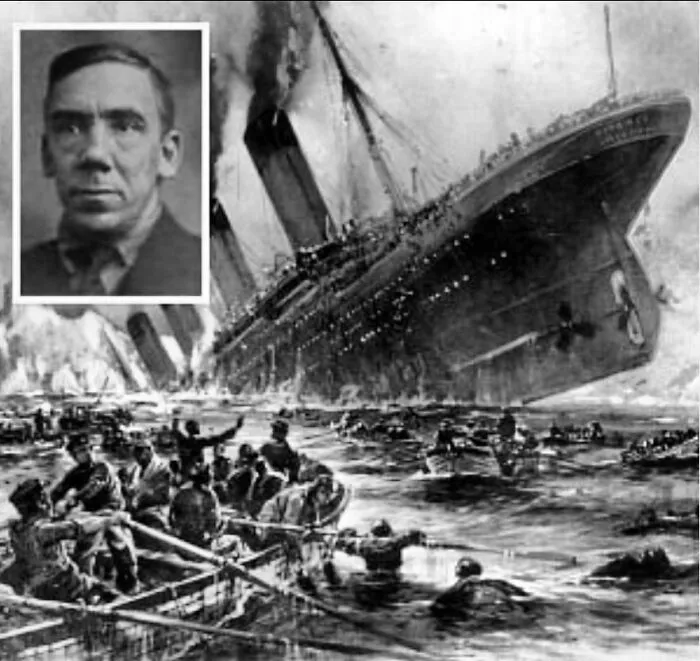
During the British Titanic inquiry, he faced questioning by Mr. Cotter, a part of the investigative effort to determine the circumstances of the ship's demise. Here is an excerpt from his interrogation:
Mr. Cotter: "What did you do with the children when you put them into the boat?"
Joughin: "Handed them into the boat or dropped them in."
Joughin: "Handed them into the boat or dropped them in."
Mr. Cotter: "Threw them in?"
Joughin: "Threw them in."
Joughin: "Threw them in."
Mr. Cotter: "And what did you do with the mother?"
Joughin: "We wanted to throw her in, and I think she preferred to try and step in."
Joughin: "We wanted to throw her in, and I think she preferred to try and step in."
Mr. Cotter: "What happened?"
Joughin: "She missed her footing."
Joughin: "She missed her footing."
Mr. Cotter: "You said that you never went into your boat. Why did you not go, seeing that you were in charge?"
Joughin: "I would have set a bad example if I had jumped into the boat. None of the men felt inclined to get into the boat."
Joughin: "I would have set a bad example if I had jumped into the boat. None of the men felt inclined to get into the boat."
Mr. Cotter: "When you found your boat had gone you said you went down below. What did you do when you went down below?"
Joughin: "I went to my room for a drink."
Joughin: "I went to my room for a drink."
Mr. Cotter: "Drink of what?"
Joughin: "Spirits."
Joughin: "Spirits."
The Commissioner: "Does it very much matter what it was?"
Mr. Cotter: "Yes, my Lord, this is very important because I am going to prove, or rather my suggestion is, that he then saved his life. I think his getting a drink had a lot to do with saving his life."
Despite his responsibilities in assisting women and children into lifeboats, Joughin repeatedly returned to his cabin for alcoholic drinks. As the final lifeboats left, he remained composed and rode the sinking Titanic down to the icy waters.
In general, a person under the influence of alcohol is more susceptible to freezing to death due to vasodilation, the widening of blood vessels, which causes blood to move away from vital organs toward the skin's surface, increasing the risk of hypothermia. However, the frigid temperature of the North Atlantic Sea that night, approximately -2 degrees Celsius (26.4 degrees Fahrenheit), was cold enough to constrict Joughin's blood vessels, offsetting the effects of the alcohol. Joughin reported feeling relatively calm in the water and experienced no pain.
Joughin spent two hours in the water before managing to climb onto an overturned lifeboat. He was later rescued by a passing lifeboat. This incredible tale of survival underscores the extraordinary circumstances and individual choices that played a role in the Titanic disaster.
Report
179points
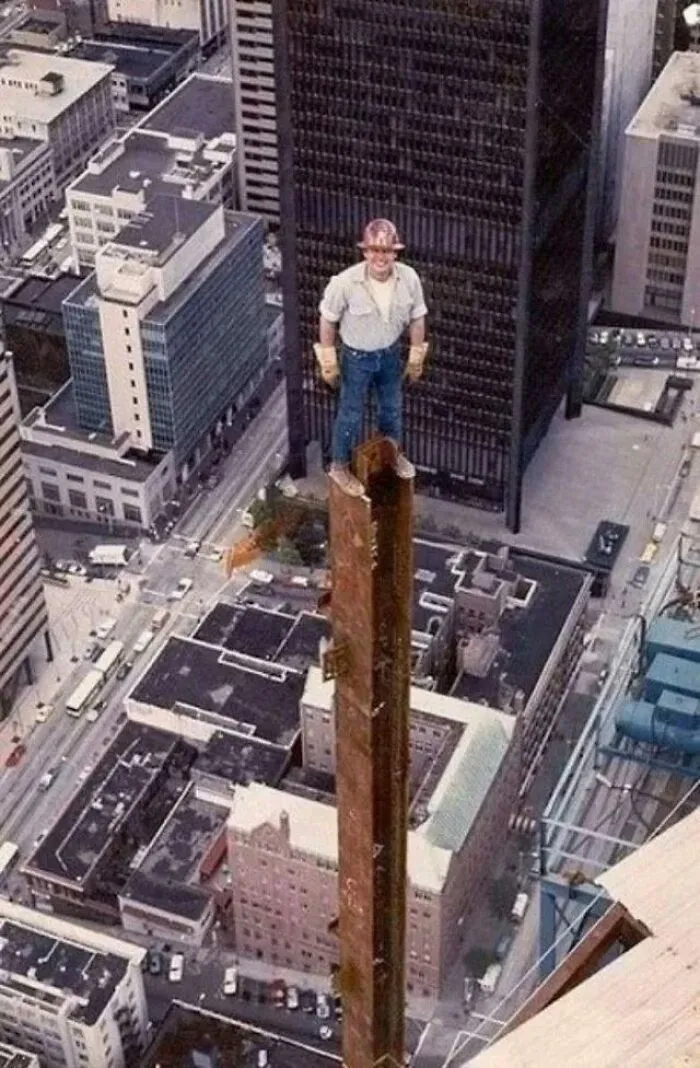
#22 Photo Of An Ironworker During Construction Of The Columbia Tower, Seattle, 1984
Report
177points
#23 I Am So Tired Of Waiting, Aren’t You, For The World To Become Good And Beautiful And Kind?
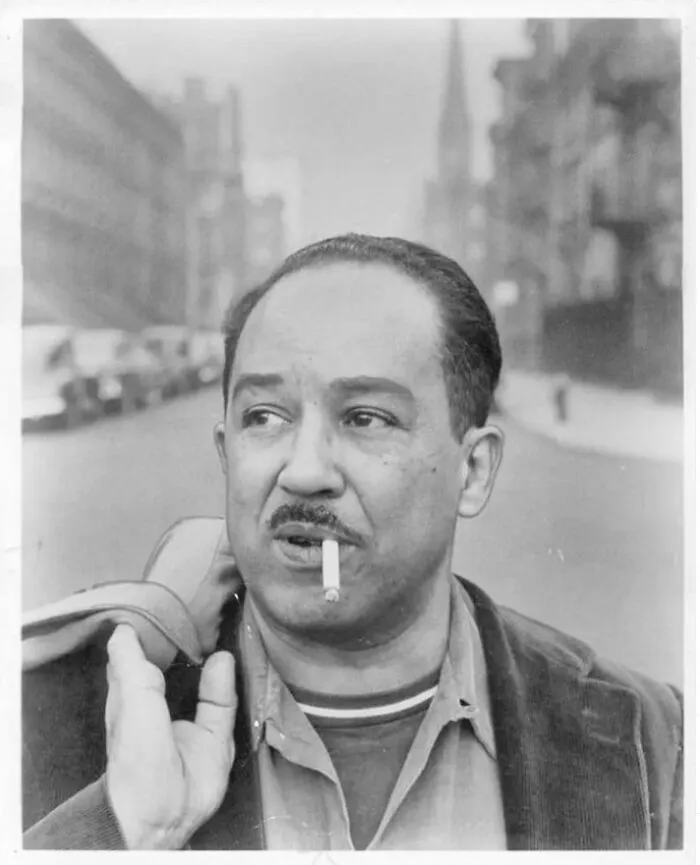
Let us take a knife
And cut the world in two –
And see what worms are eating
At the rind.
And cut the world in two –
And see what worms are eating
At the rind.
-Langston Hughes
Report
160points
#24 This Photograph Was Taken In 1947 At The Astor Theatre, Situated At 1537 Broadway, On The Corner Of West 45th Street In Times Square, New York City
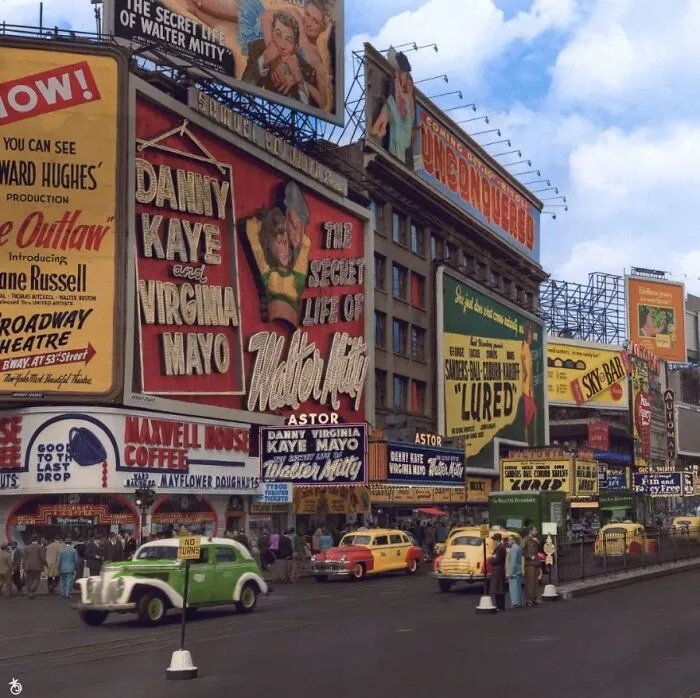
Regrettably, the theater was later demolished in 1982 to clear the space for the construction of the Marriott Marquis Hotel.
Report
159points
#25 Emmeline Pankhurst Arrested Outside Buckingham Palace, 1914
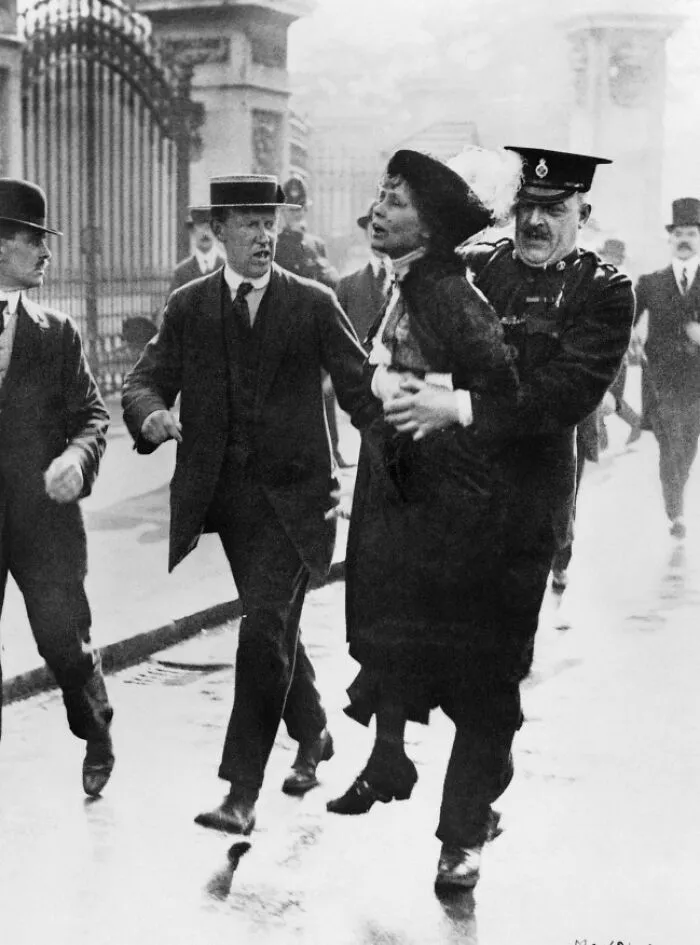
Suffragette leader Emmeline Pankhurst being carried away from Buckingham Palace in London, England after being arrested while trying to present a petition to King George V of the United Kingdom, 21st May 1914.
154points
#26 In 1968, Võ Thi Thang, A Vietnamese Revolutionary, Flashed A Smile At The Camera Despite Having Just Received A 20-Year Hard Labor Sentence From The South Vietnamese Government
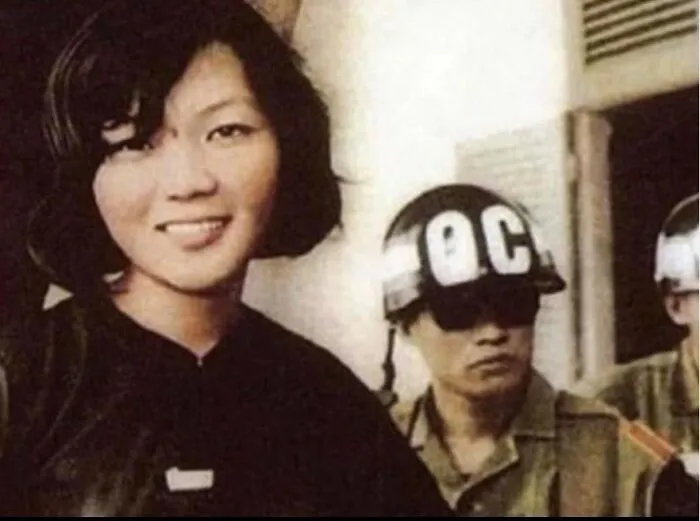
Võ Thi Thang had been given the mission to assassinate a suspected spy in Saigon, but her attempt failed, leading to her arrest. During her sentencing, she defiantly remarked to the judge, "20 years? Your government won't last that long."
Remarkably, her prediction proved accurate. She spent six years in prison before her release under the Paris Peace Accords in 1974. Just a year later, the capital of South Vietnam, Saigon, fell, marking the conclusion of the Vietnam War.
During your college course on the Vietnam War, one surprising insight you gained was that Ho Chi Minh held great admiration and respect for the American founding fathers. To the extent that in 1945, he delivered a speech that commenced with words reminiscent of the American Declaration of Independence: "All men are created equal. They are endowed by their Creator with certain inalienable rights, among them are Life, Liberty, and the pursuit of Happiness."
Despite his admiration, Ho Chi Minh's attempts to seek support from the United States, conveyed through letters and telegrams, went unanswered. He eventually recognized that the U.S. was aligning with the French Imperialists, leading him to seek assistance from other sources to achieve the liberation of his nation through any means necessary.
Report
149points
#27 The Great Blizzard Of 1888 Stands As One Of The Most Severe Blizzards Ever Recorded In American History
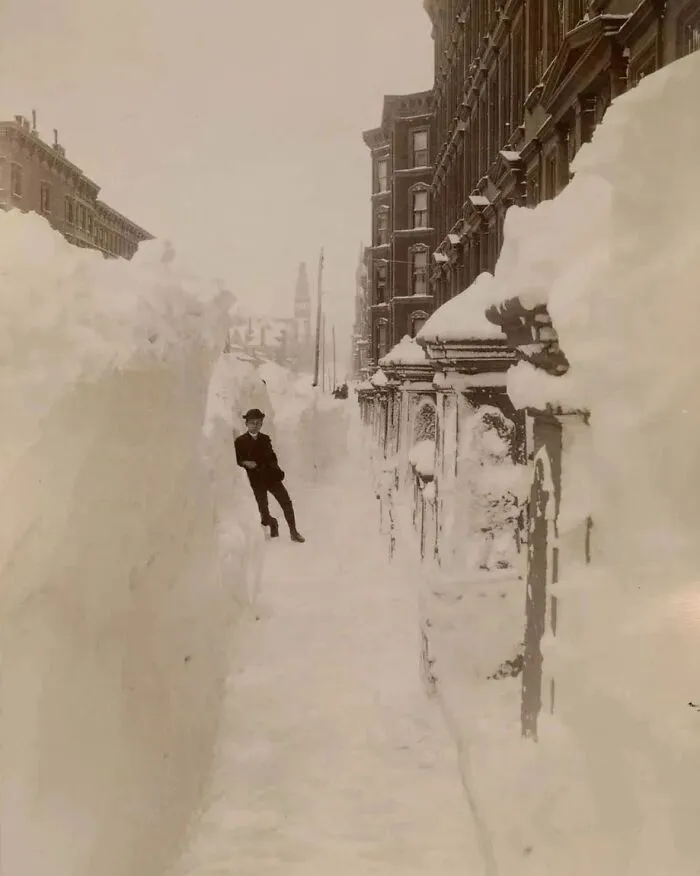
This tempest rendered the East Coast immobile, depositing snow ranging from 10 to 58 inches (25 to 147 cm) across various regions of New Jersey, New York, Massachusetts, Rhode Island, and Connecticut. The included photograph captures an unidentified young man positioned within a cleared space on Madison Avenue and 40th Street in New York City.
The storm's impact was far-reaching: railways ceased operations, and individuals were confined to their residences for up to a week. Telegraph and railway lines suffered disruptions, prompting the decision to relocate these essential infrastructures underground.
Report
144points
#28 This Photograph, Captured In 1974, Showcases The Initial Discovery Of An Extensive Collection Of Terracotta Warriors In Xi'an, China
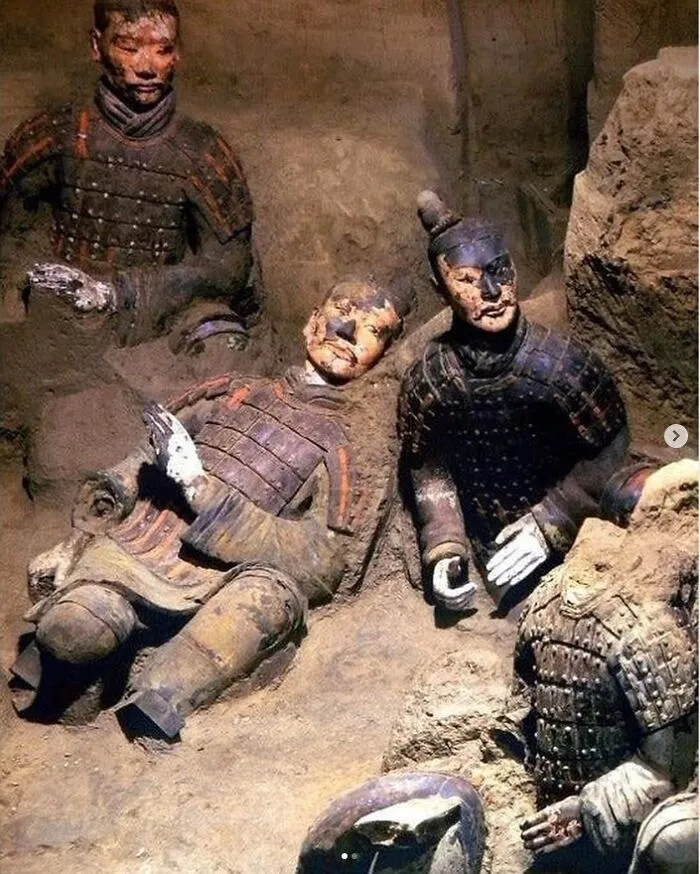
What makes this image remarkable is that it unveils the vivid original colors that were meticulously painted onto these life-sized clay warriors over 2,000 years ago by skilled artisans. Regrettably, when exposed to air and sunlight during the excavation, these ancient colors began to rapidly deteriorate and disappeared within minutes.
These Terracotta warriors were strategically placed to serve as guardians of the tomb belonging to the first emperor of unified China. As of today, the tomb remains unopened.
According to accounts from ancient historians, the tomb is believed to encompass an entire subterranean kingdom and palace, complete with ceilings adorned with pearls to simulate the night sky. The tomb is also said to house exceedingly rare artifacts and booby traps set with crossbows to deter any potential intruders. To safeguard the tomb's secrecy, the laborers who constructed it were supposedly buried with the emperor.
Sima Qian, a historian from the Han dynasty, mentioned that within the tomb, "mercury was used to fashion the hundred rivers, the Yellow river and the Yangtze river, and the seas in such a way that they flowed." Modern tests have indicated extraordinarily high levels of mercury in the surrounding soil.
Interestingly, historical records suggest that the emperor's demise was attributed to the ingestion of mercury pills, which were believed at the time to possess qualities of an elixir of immortality.
Furthermore, in the adjoining image when you swipe left, you can observe a close-up of a Terracotta soldier's distinctive hairstyle, adding to the intrigue of these ancient relics.
Report
139points
#29 In 1939, Albert Einstein Was Captured In A Photo At Nassau Point, New York, Sporting Sandals
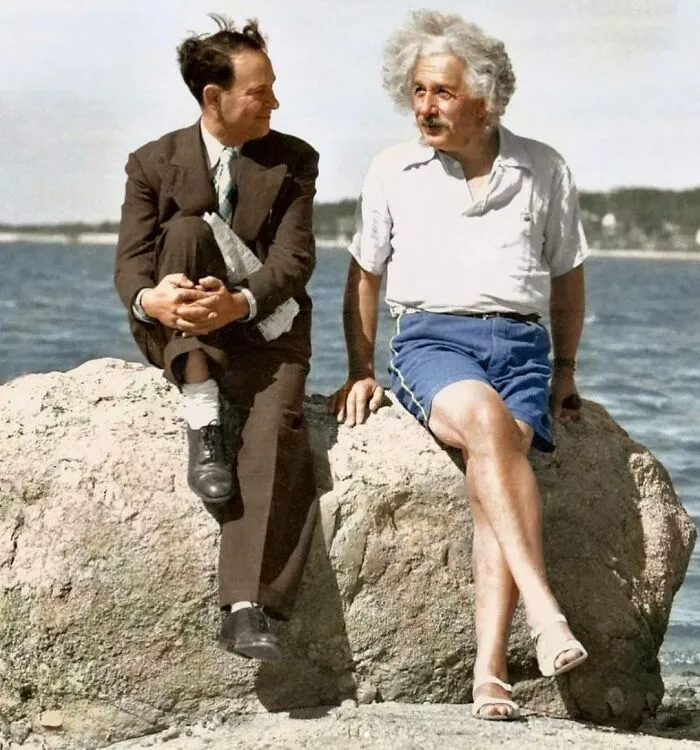
Seated beside him was his friend and local store proprietor, David Rothman. An amusing incident preceded this snapshot, stemming from Einstein's heavily accented request for a pair of "sundahls," which Rothman misunderstood as "sundial." After some initial confusion in the store, Einstein eventually acquired the white sandals he was wearing for $1.35. He took the situation in good humor, attributing it to his "atrocious accent." Despite the mix-up, the two men maintained a strong friendship.
Report
137points
#30 Celebrating Halloween In 1886: A Man Adorns Himself As The Billiards King While His Two Sons Attire As The 8 Ball And Cue Ball
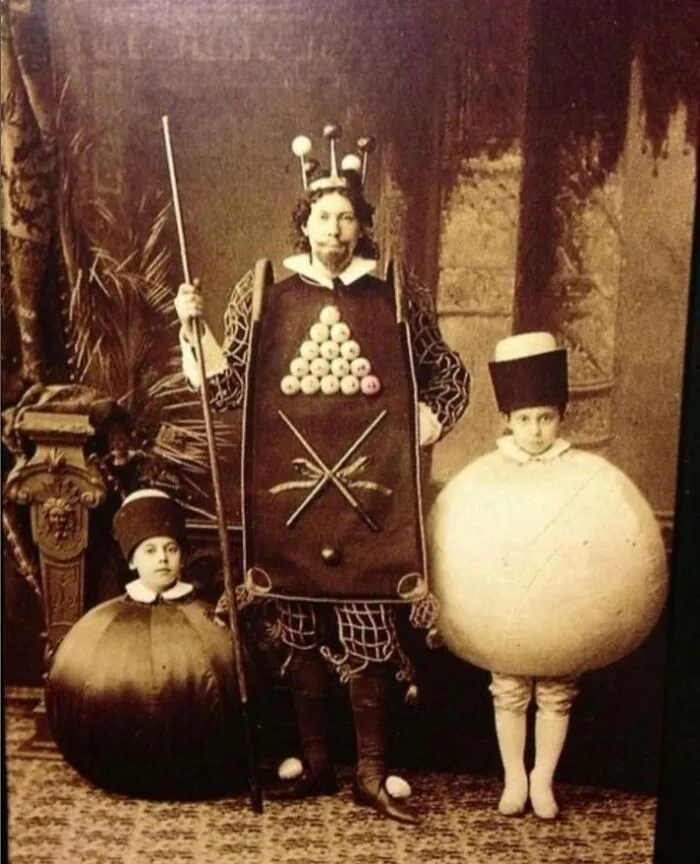
During the 19th century, individuals would pool their wagers for horse races within dedicated spaces known as poolrooms. These venues were equipped with billiard tables to entertain patrons in the intervals between races. Consequently, the expression "shooting pool" took on the meaning of playing billiards.
Additionally, the term "pool" in the context of gambling has its origins in the French word for chicken, "poule." This connection can be traced back to a medieval French gambling game involving throwing objects at a chicken, with the player who hit it successfully being declared the winner.
Report
137points
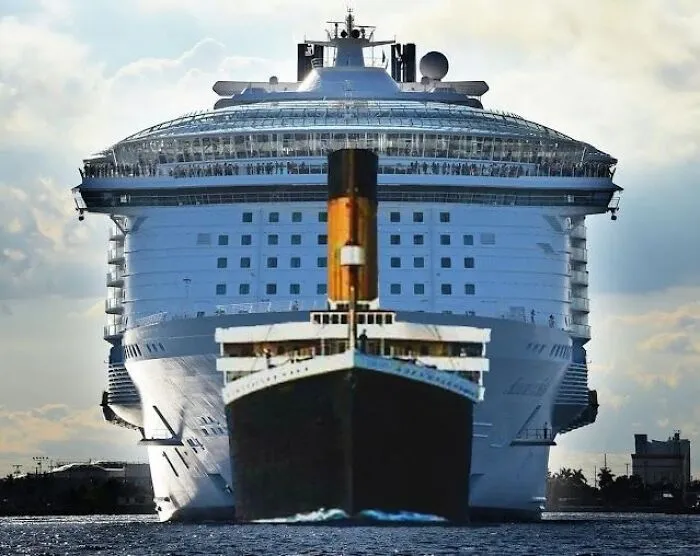
#31 A Comparison Of Size Between The Titanic And A Contemporary Cruise Ship
Report
130points
#32 The First Photograph Ever Taken, 1826
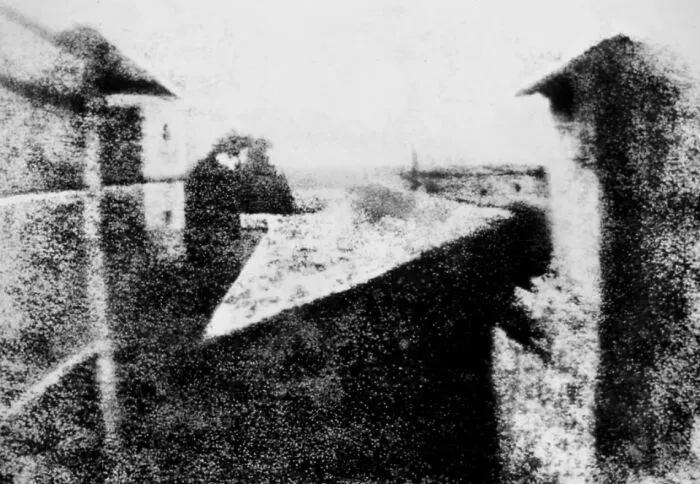
The oldest surviving photograph to exist. It was taken by pioneer photographer, Joseph Nicéphore Niépce. The scene depicts a view from a window in Nicéphore Niépce’s estate known as Le Gras in Saint-Loup-de-Varennes, Bourgogne, France in 1826 or 1827.
127points
#33 In 1900, The Attire Worn By Dutch Men Was Greatly Influenced By The Prevailing Weather Conditions In The Netherlands
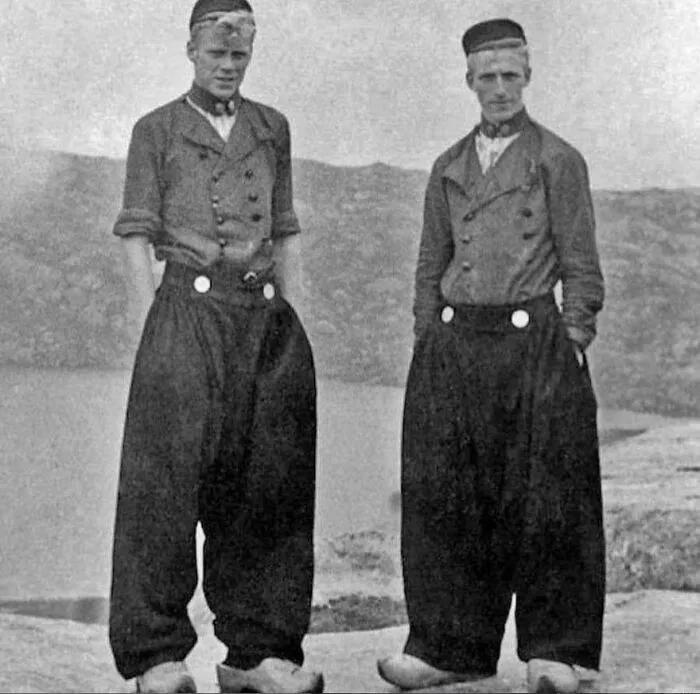
The typical outfit for men included trousers made of wool, featuring silver buttons on square flaps at the front (resembling Mickey Mouse's attire), along with wooden clogs, a shirt, jacket, and a hat. The design and dimensions of the hat would vary depending on the particular region.
Report
122points
#34 Grotto In An Iceberg, 1911
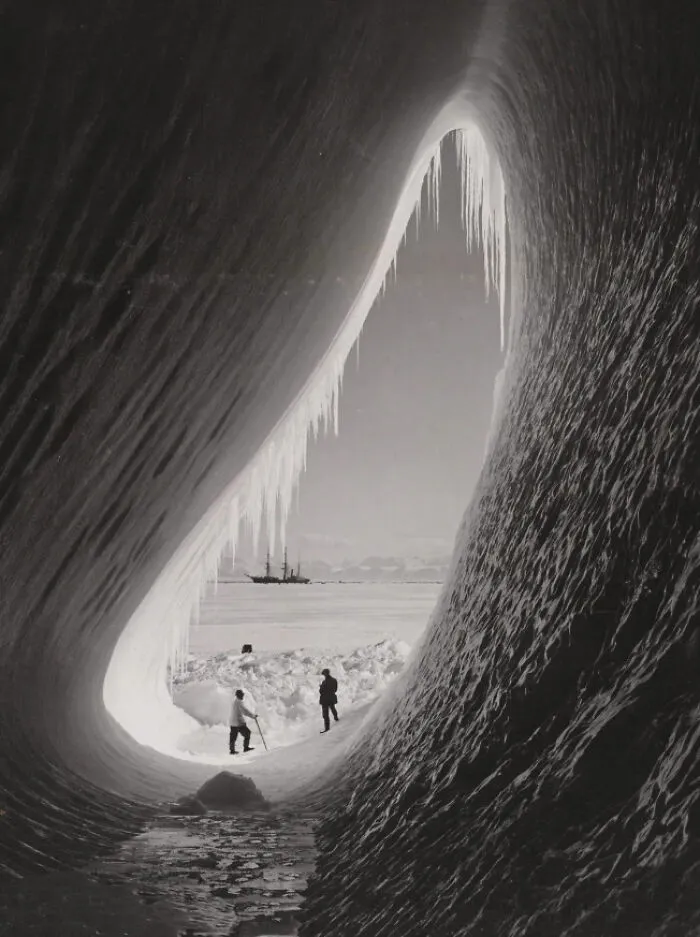
Geologist Thomas Griffith Taylor and Meteorologist Charles Wright photographed on the 5 January 1911 at the entrance of a grotto in the side of an iceberg with the Terra Nova ship in the background. This was a part of the British Antarctic Expedition led by Captain Robert Falcon Scott which lasted from 1910-1913.
117points
#35 Bruce Lee's Workout Routine From The 1960s Reflects His Dedication To Physical Fitness And Martial Arts Training
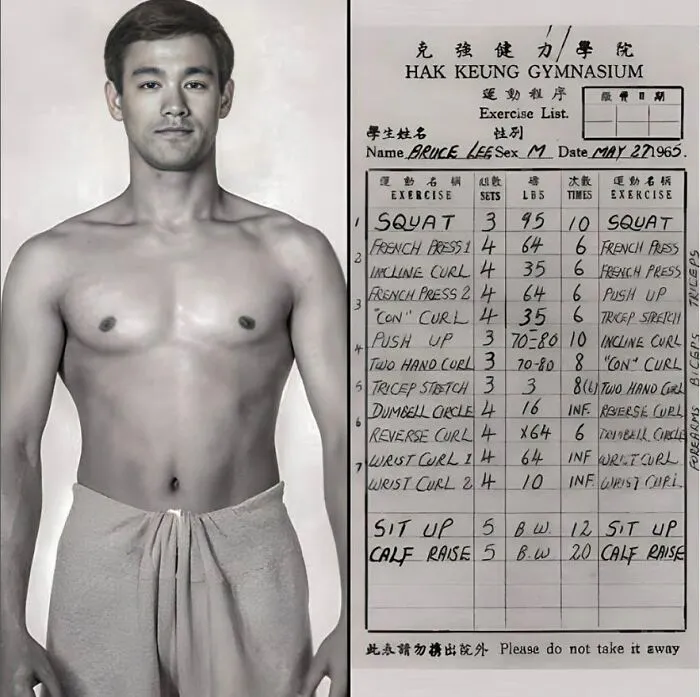
Squat: 3 sets of 10 reps with 95 pounds
French Press (a triceps exercise): 4 sets of 6 reps with 64 pounds
Incline Curls (likely an incline dumbbell curl for biceps): 4 sets of 6 reps with 35 pounds
French Press (again, for triceps): 4 sets of 6 reps with 64 pounds
Concentration Curl: 3 sets of 10 reps with 70-80 pounds
Two-Handed Curl: 3 sets of 8 reps with 70-80 pounds
Tricep Stretch: 3 sets of 8 reps
Dumbbell Curl: 4 sets until failure with 18 pounds
Reverse Curl: 4 sets of 6 reps with 64 pounds
Wrist Curl: 4 sets until failure with 64 pounds
Wrist Curl: 4 sets until failure with 10 pounds
This workout routine demonstrates the comprehensive approach that Bruce Lee took to strengthen and condition his body for martial arts. It includes exercises for both biceps and triceps, along with exercises targeting the wrist muscles, which are crucial for martial arts techniques.
French Press (a triceps exercise): 4 sets of 6 reps with 64 pounds
Incline Curls (likely an incline dumbbell curl for biceps): 4 sets of 6 reps with 35 pounds
French Press (again, for triceps): 4 sets of 6 reps with 64 pounds
Concentration Curl: 3 sets of 10 reps with 70-80 pounds
Two-Handed Curl: 3 sets of 8 reps with 70-80 pounds
Tricep Stretch: 3 sets of 8 reps
Dumbbell Curl: 4 sets until failure with 18 pounds
Reverse Curl: 4 sets of 6 reps with 64 pounds
Wrist Curl: 4 sets until failure with 64 pounds
Wrist Curl: 4 sets until failure with 10 pounds
This workout routine demonstrates the comprehensive approach that Bruce Lee took to strengthen and condition his body for martial arts. It includes exercises for both biceps and triceps, along with exercises targeting the wrist muscles, which are crucial for martial arts techniques.
Additionally, you shared a famous quote from Bruce Lee, which reflects his philosophy and approach to learning and growth. It underscores the importance of an open and receptive mindset, free from preconceived notions and biases, which was a fundamental part of his martial arts and life philosophy.
Report
115points
#36 The Sweetheart Toaster From The 1920s Represents An Interesting Piece Of Kitchen Technology From That Era
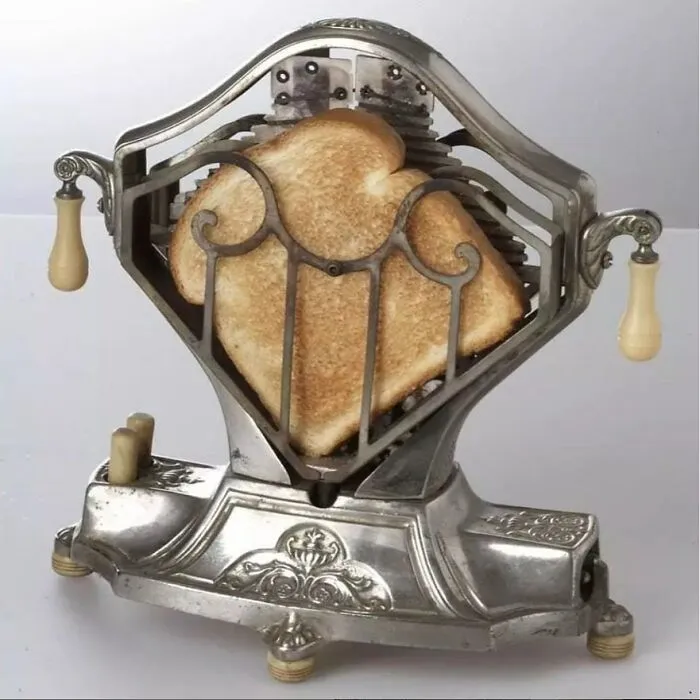
In the 1920s, electric toasters were in their heyday, coinciding with the introduction of pre-sliced bread, which revolutionized the world of bread consumption. By the end of that decade, the sales of electric toasters had surged from 400,000 to 1.2 million units.
The original electric toasters of that time typically featured a heating element and a stationary wire frame to hold the slices of bread in place. While their design exuded elegance, many of these early toasters were mounted on porcelain bases, and they posed a safety risk as they could become very hot during operation.
What sets the Sweetheart toaster apart is its innovation: users didn't need to manually flip the bread to toast the other side. This toaster had a unique mechanism that allowed for this convenience. By pressing two buttons located at the base of the toaster, users could control each side of the toaster. Depressing the buttons would swing the baskets on each side of the toaster out at a 90-degree angle, enabling users to place in the bread or remove the toast without handling it directly. Releasing the buttons allowed the baskets to swing back into place against the unit. Subsequent pushes of the buttons rotated the bread slices in the opposite direction to ensure both sides were evenly toasted.
The Sweetheart toaster's design and functionality were a significant step forward in the evolution of electric toasters during the 1920s, making it a noteworthy relic from that era.
Report
106points
#37 In Kyoto, There Are Five Temples With Ceilings Bearing Human Blood Stains
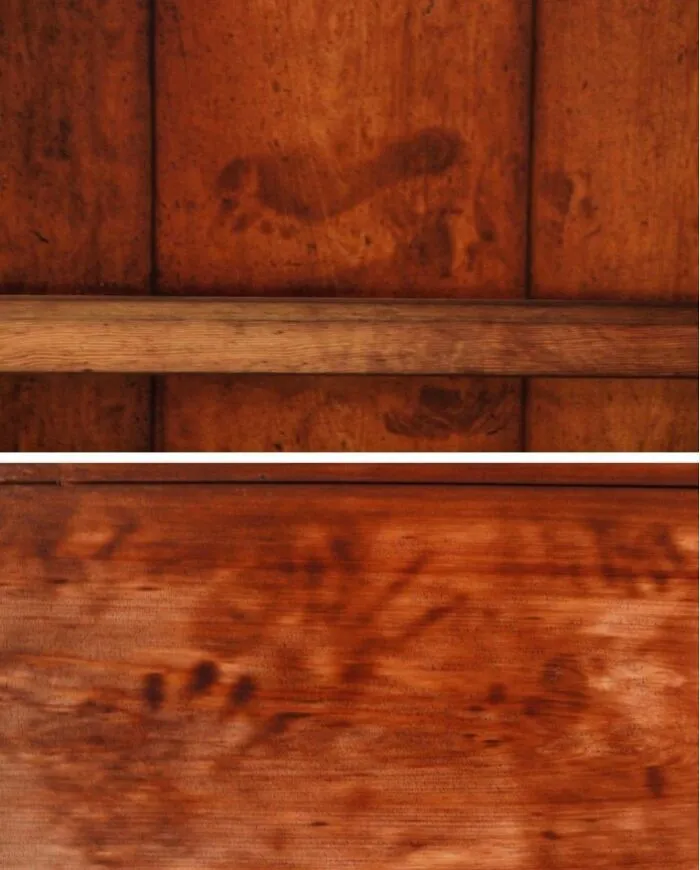
These ceilings were constructed using the floorboards from Fushimi Castle, where Torii Mototada and his 1,800 men bravely faced a siege by 40,000 warriors led by Toyotomi Hideyori in the year 1600. Mototada and his men valiantly defended the castle for 11 days until most of them perished in battle. Mototada chose to perform seppuku, an honorable form of suicide, rather than be captured alive.
Mototada's conviction was rooted in the code of the warrior, as he believed it was against their principles to endure shame and avoid death, even in less significant circumstances. He resolved to make a stand within the castle and meet a swift death, rather than seeking an escape, as true loyalty and the essence of being a warrior lay in standing firm against the entire nation's forces and dying with honor.
During my visit to Kyoto a few years ago, I discovered that the city was once a potential target for the atomic bomb, not Nagasaki or Hiroshima. Secretary of War Henry Stimson decided to remove Kyoto from the list, fearing that the wanton destruction of the city's cultural heritage might create lasting bitterness among the Japanese people, making post-war reconciliation with the United States more challenging than with the Russians. Stimson's concern was that destroying Japan's cultural heart could make the Japanese population more susceptible to adopting communism, a major fear of American foreign policymakers at the time.
It's intriguing to contemplate the consequences if Kyoto had been bombed. Fushimi Castle and the five temples would likely have been lost to history, leaving only the stories of the events in 1600. The course of Japan's history might have taken a different path. Would Japan have aligned with Russia? Would it be the Japan we recognize today?
The fragility of history and the near misses in its preservation often lead me to ponder various "what if" scenarios, and these reflections can keep me awake at night.
Report
106points
#38 Rosa Parks Being Indicted, 1956
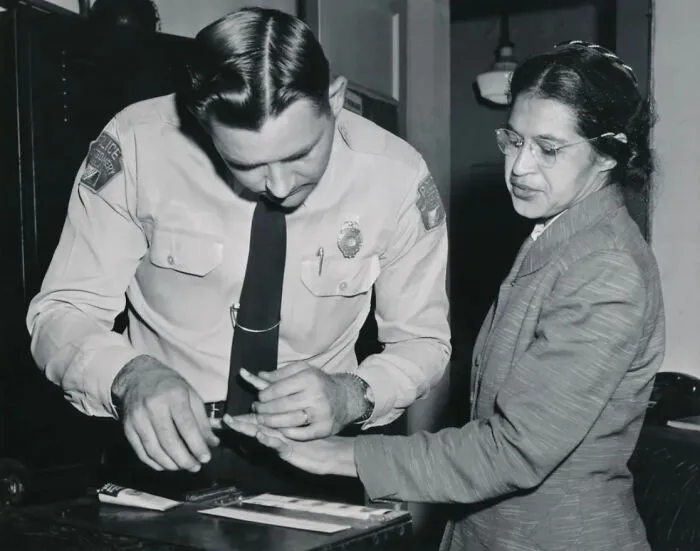
Rosa Parks being fingerprinted by Lieutenant D. H. Lackey as one of the people indicted as leaders of the Montgomery bus boycott on February 22, 1956. She was one of 73 people rounded up by deputies that day after a grand jury charged 113 African Americans for organizing the boycott
106points
#39 The Valley Of The Shadow Of Death, 1855
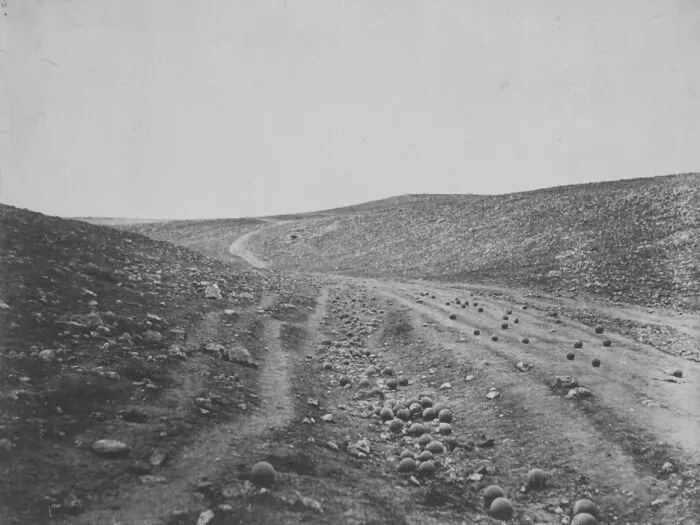
The famous photograph “The valley of the shadow of death” taken on 23rd April 1855 by Roger Fenton during the Crimean War. This war was the first that was documented with photographs
105points
#40 The Solvay Conference On Quantum Mechanics, 1927
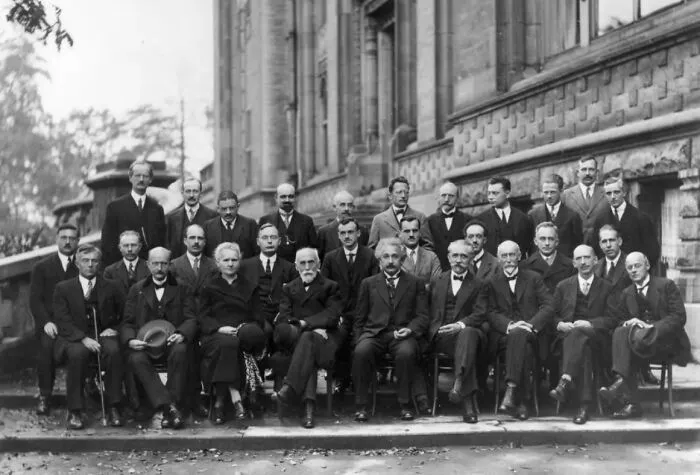
he 1927 Solvay Conference on Quantum Mechanics at the Institut International de Physique Solvay in Brussels, Belgium. This image features many of the greatest scientists in modern history. Some of those that you may recognize are: Albert Einstein, Marie Curie, Max Planck, Niels Bohr, and Auguste Piccard
101points
