








The world is constantly changing and progressing, but there’s still always more to learn about the past. So if you’re tired of worrying about what’s to come in the future, you can take the next ten minutes to look back on history.
We took a trip to How History Looks on Instagram and compiled a list of their most intriguing posts below. From fun facts about the past to stories that you definitely didn’t hear about in school, we hope that this article will teach you something new. Enjoy scrolling through these posts, and be sure to upvote the ones that inspire you to dive deeper into your historical studies!
#21
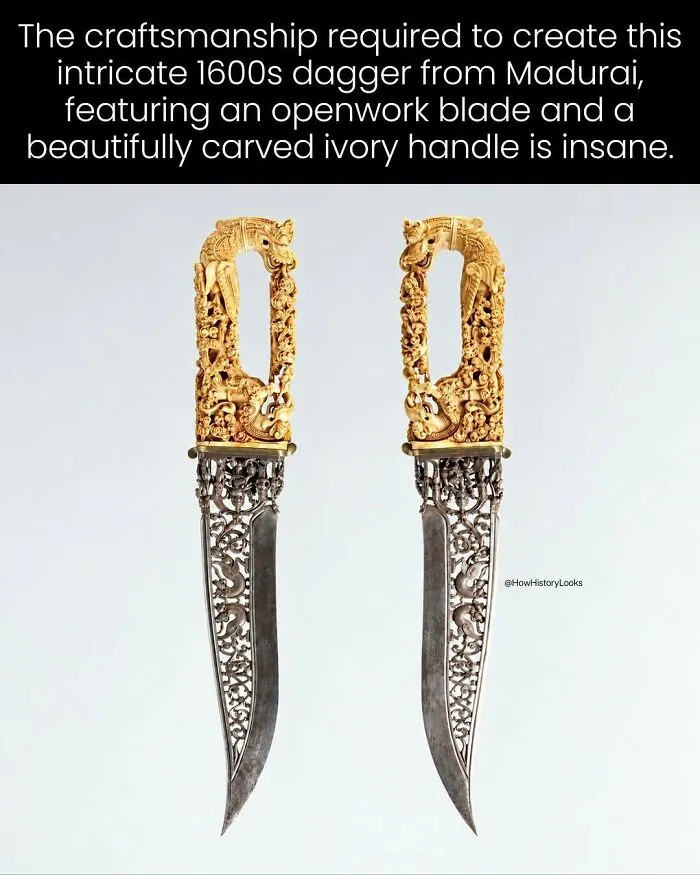
This extraordinary 17th century dagger from Madurai was created for Thirumalai Nayak, ruler of Madurai, as a ceremonial offering to a Hindu temple. Its carved ivory handle is covered with tiny elephants, floral details and a yali, a mythical guardian creature from South Indian tradition. 🗡🇮🇳
The openwork steel blade was made more as a symbol of royal power and devotion than as a battlefield weapon. It features intricate tracery, mythical birds and an image of Shiva wielding a trident, showing the remarkable level of craftsmanship achieved by artisa
Report
35points
#22
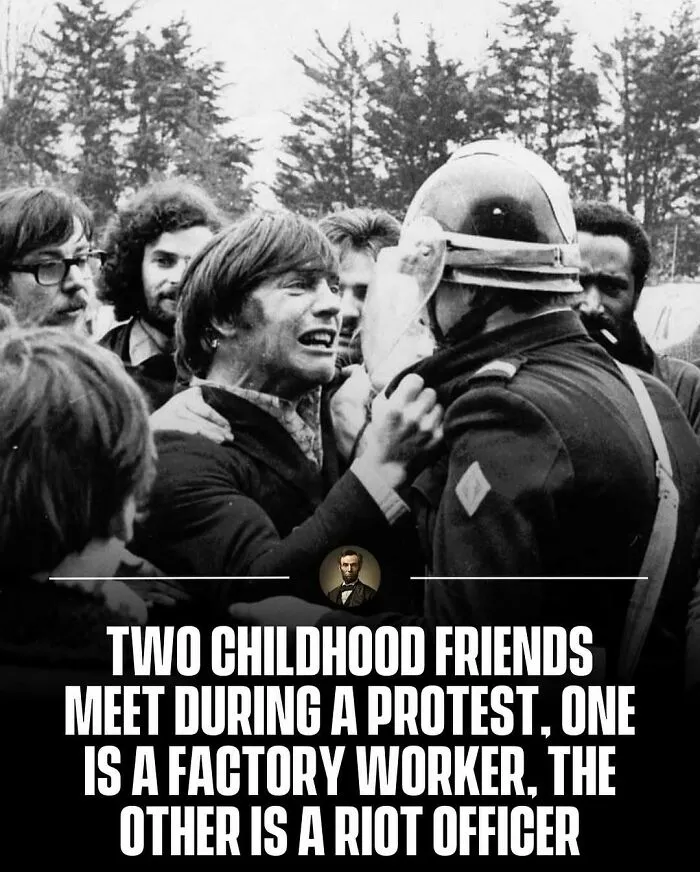
Guy Burmieux and Jean-Yvon Antignac were childhood friends but they chose different paths in life. On April 6, 1972 in Brittany, France, Guy was part of a protest to get better working conditions. Jean-Yvon and other riot officers were called in to quell the protestors.
Guy remembers the moment:
“I was part of the core of rebellious workers…We spent the night there, drinking coffee upon coffee. In the morning, the atmosphere was electric. After the police officers, the anti-riot police, it was the officers of the [Compagnies Républicaines de Sécurité 13] which emerged suddenly. There I found Jean-Yvon!”
The photographer, Jacques Gourmelen, captured the moment when the two met face-to-face.
Gourmelen, described what he saw:
“I took the photo on instinct. Guy had recognized his old friend and classmate. I saw Guy going toward his old friend and grab him by the collar. Guy yelled with rage and told him, ‘Go ahead and hit me while you’re at it!’ The other one didn’t move a muscle.”
Guy remembers the moment:
“I was part of the core of rebellious workers…We spent the night there, drinking coffee upon coffee. In the morning, the atmosphere was electric. After the police officers, the anti-riot police, it was the officers of the [Compagnies Républicaines de Sécurité 13] which emerged suddenly. There I found Jean-Yvon!”
The photographer, Jacques Gourmelen, captured the moment when the two met face-to-face.
Gourmelen, described what he saw:
“I took the photo on instinct. Guy had recognized his old friend and classmate. I saw Guy going toward his old friend and grab him by the collar. Guy yelled with rage and told him, ‘Go ahead and hit me while you’re at it!’ The other one didn’t move a muscle.”
Report
34points
#23
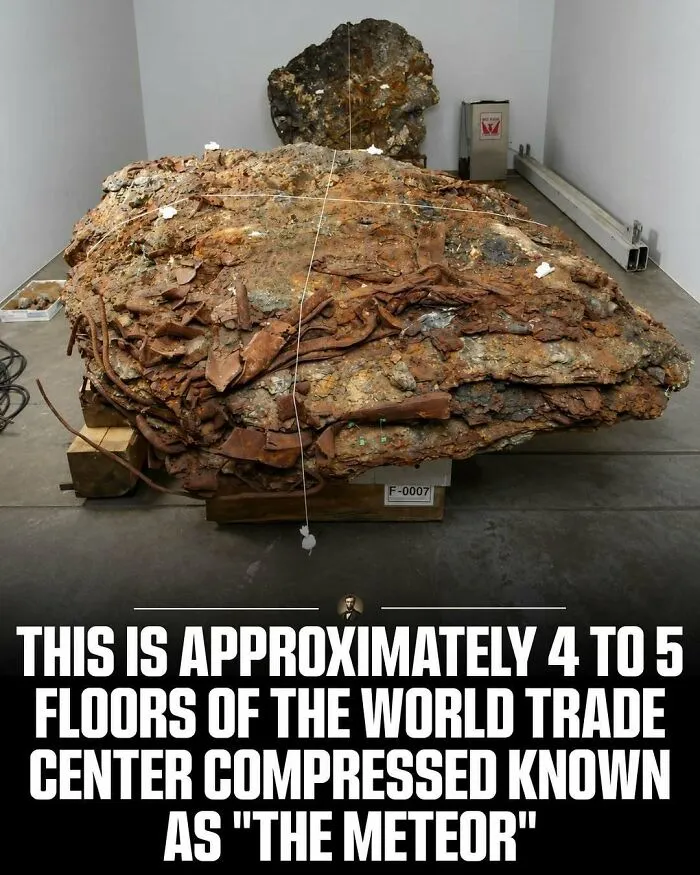
Known as “The Meteor,” this enormous mass was recovered from the ruins of the World Trade Center after the September 11, 2001 terrorist attacks. It is made up of building materials and everyday objects that were crushed and fused together as the towers collapsed. 🏙
The claim that it represents roughly four to five floors does not mean several complete floors survived intact. Instead, the immense force of the collapse compressed concrete, steel, reinforcing bars, office contents and other debris into one extremely dense formation.
Parts of the debris pile remained intensely hot for weeks after the attacks. Combined with the pressure created by hundreds of thousands of tons of wreckage, those conditions helped transform familiar building materials into something that looked unlike the remains of an ordinary structural collapse.
Its rounded, rocklike appearance reminded recovery workers of something that had fallen from space, leading to the nickname “The Meteor.” Up close, however, twisted metal and fragments of other materials can still be seen embedded throughout the mass.
Rather than preserving a single office or specific section of the building, it contains fragments from many different spaces and objects that were violently compressed together during the destruction of the towers.
Investigators and museum conservators often refer to formations like this as “composites” because they contain several materials, including steel, concrete, glass and office objects, fused into one mass. 🧱
Report
31points
#24
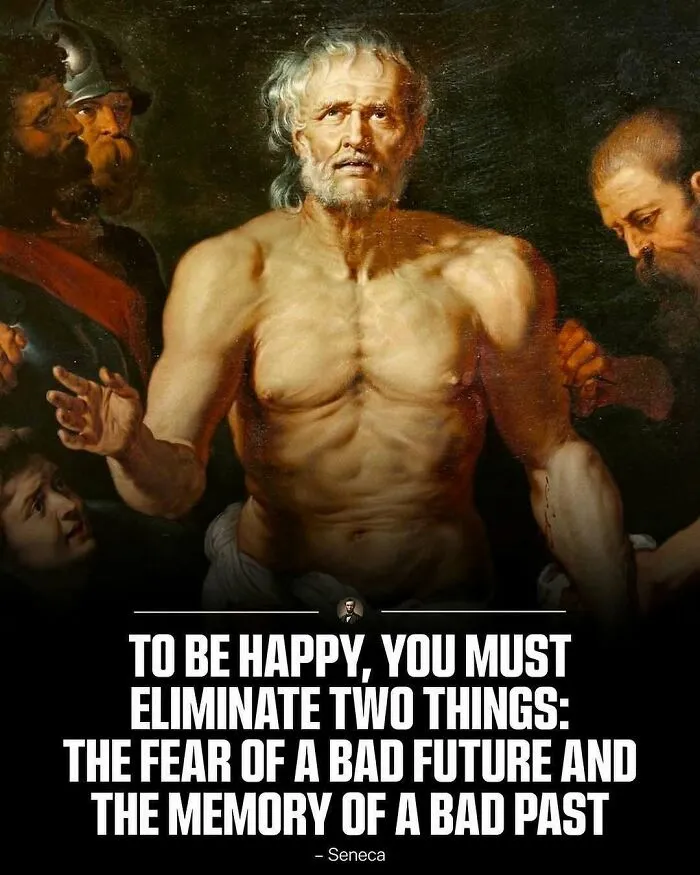
Seneca, the Roman Stoic philosopher who lived from 4 BC to 65 AD and advised Emperor Nero, believed much of human suffering is created by our own minds.
In his Letters to Lucilius, he famously wrote that we “suffer more often in imagination than in reality.” In other words, people tend to feel more pain from fearing future problems than from the problems themselves. According to Seneca, worrying about what might happen shows a misunderstanding of nature and fate. The Stoic view teaches that events outside our control should be met with calm and clear thinking. What truly matters is not the event itself, but the attitude we choose in response. 🧠
Seneca also warned about becoming stuck in the past. In works such as On the Shortness of Life, he argued that many people waste their lives dwelling on past mistakes or constantly stressing about what may come next. The past cannot be changed, so reliving it through regret or bitterness only steals time from the present. For the Stoics, real happiness comes from focusing on the present moment, building good character, and training the mind to remain steady. 🌿
That said, Seneca was not suggesting that people should forget their memories or stop preparing for the future. His point was that being emotionally chained to past pain or future fear destroys inner peace. His philosophy encourages living with reason, accepting the reality of mortality, and understanding that time is our most precious resource. ⏳
Freedom from regret and fear does not mean apathy. Instead, it means gaining control over your thoughts and choosing how you respond to life.
Report
31points
#25
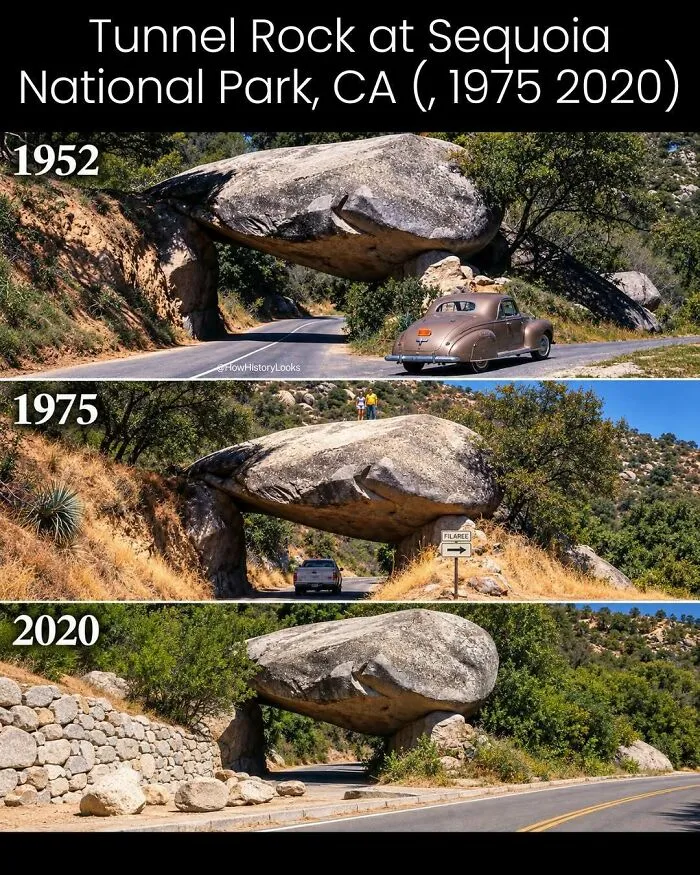
Tunnel Rock is a massive granite formation in Sequoia National Park, California, located along Generals Highway near the park’s southern entrance. In the 1930s, the Civilian Conservation Corps built the original roadway beneath the rock, allowing vehicles to pass directly underneath it for decades. 🚗🪨
By the mid 1990s, larger modern vehicles made the narrow passage less practical and the highway was eventually rerouted around it. Today, cars no longer drive beneath Tunnel Rock, but visitors can still walk along the preserved old roadway, take photos underneath the formation, and carefully climb onto the top for a closer look.
Report
30points
#26

Canada, California, and the Greater Tokyo Area all have populations of roughly 40 million people, yet the amount of land they occupy is dramatically different. Canada covers nearly 10 million square kilometres, California spans more than 420,000 square kilometres, while the Greater Tokyo Area fits into only around 13,500 square kilometres. 🌍
If the land were divided equally among every resident, each person in Canada would have roughly 243,000 square metres, compared with around 10,900 square metres in California and just 330 square metres in Greater Tokyo. Tokyo is the largest metropolitan area in the world and has more people than entire countries including Australia, Poland, Morocco, Saudi Arabia, Uzbekistan, and Peru. 🏙️
Report
30points
#28
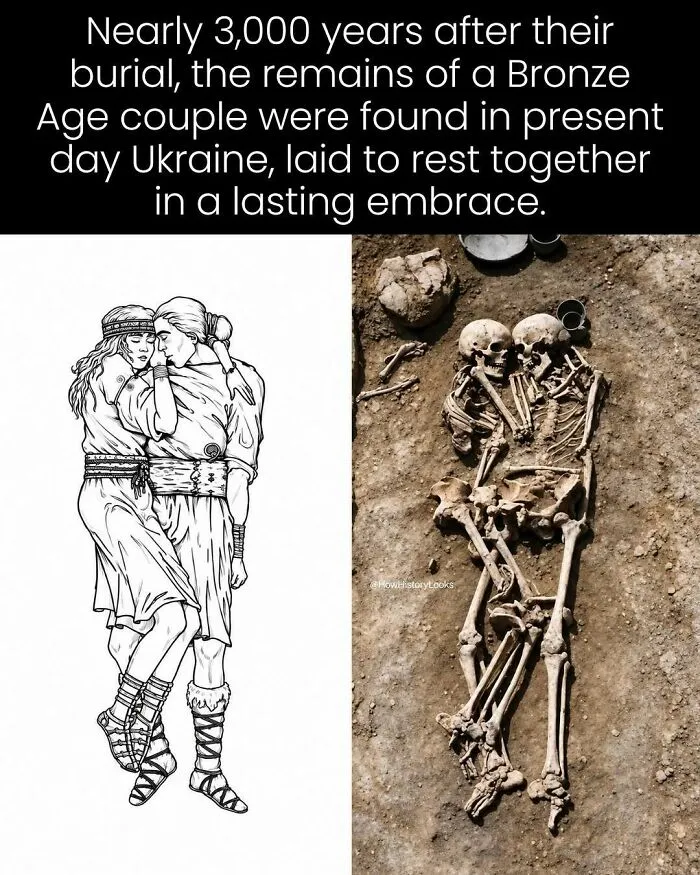
Dating back to roughly 1200 to 1000 BC, this remarkable grave belonged to the Vysotska culture. A man and woman were deliberately buried facing one another, with their arms placed around each other, alongside pottery and bronze ornaments. 🏺🕊
The cemetery contained more than 100 burials, but this was the only grave where two people were found in such an intimate position. Archaeologists believe the arrangement was intentional, although its exact meaning is still unknown. Some think it may have represented a special burial custom or an unusually close bond between the pair. ❤️🩹
Report
29points
#29
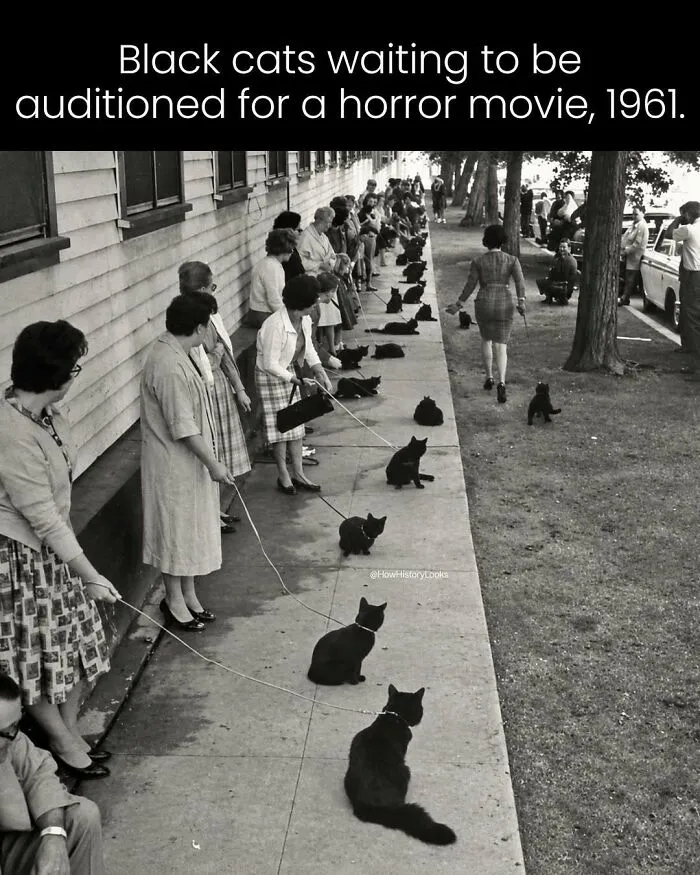
In 1961, dozens of black cats and their owners gathered in Hollywood for an unusual casting call, hoping their pets would land a role in a horror production. The sight of so many nearly identical cats lined up along the pavement made for one of the era’s most memorable behind the scenes photographs. 🐈⬛🎬
Black cats had long been associated with superstition, mystery and horror, making them perfect for the genre. What began as a simple movie audition ended up producing an image that still feels strangely cinematic more than 60 years later.
Report
29points
#30

This candid photograph captures Joe Biden and Jill Biden during a pivotal chapter of their lives in 1977, the year they married after meeting on a blind date in 1975. At the time, Joe Biden was a young U.S. senator from Delaware, while Jill was building her career as an educator. Their relationship helped Biden rebuild his personal life after the tragic loss of his first wife, Neilia, and infant daughter Naomi in 1972. The couple married on June 17, 1977, beginning a partnership that would span nearly five decades.
The image offers a rare glimpse into the Bidens’ private world before the national spotlight of the vice presidency and presidency. Dressed casually and standing together in an elegant, wood paneled room, they appear at the start of a journey that would eventually take them to the White House. Historical sources identify this photograph as an early image of Joe and Jill Biden dating from around 1975 to 1977, making it one of the earliest known photographs of the couple together.
Report
29points
#31
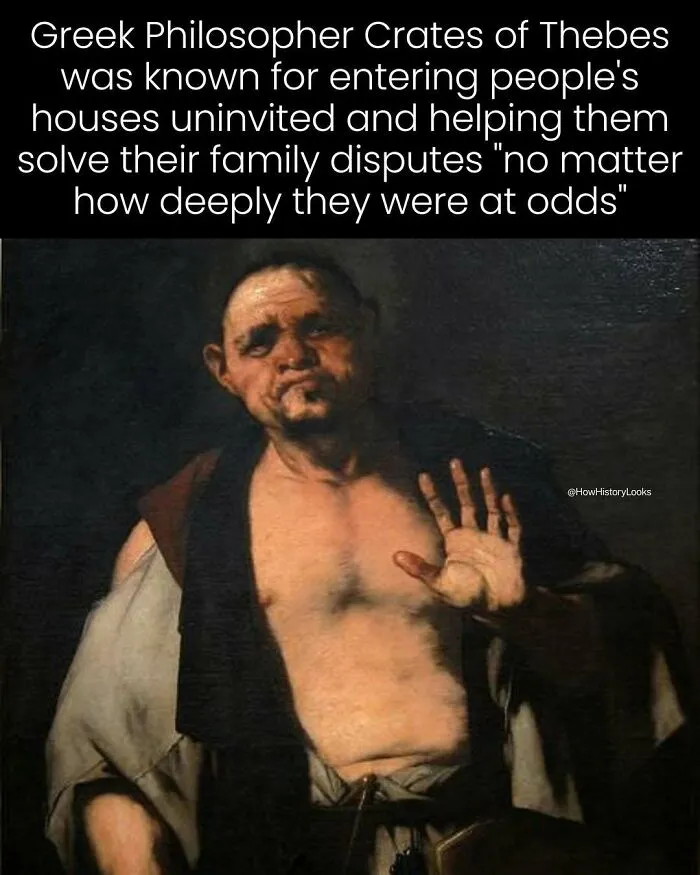
Crates of Thebes was one of the most unusual and well liked philosophers of ancient Athens. Born into a wealthy family around 365 BC, he eventually gave away his fortune and chose the extreme simplicity of Cynic philosophy instead. He became a follower of Diogenes of Sinope, living with almost nothing while openly rejecting wealth, status and many of the social expectations of Greek society. 🏛
Crates also became famous for something far stranger. Ancient accounts say he earned the nickname “Door Opener” because he would casually walk into people’s homes, often without being invited, and start offering advice. Rather than throwing him out, Athenians reportedly welcomed him, and later traditions describe him helping families settle arguments and personal disputes before moving on to another house.
His personality seems to have played a big part in this. Unlike the famously confrontational Diogenes, Crates was remembered as cheerful and humorous, using his own simple lifestyle as an example rather than constantly attacking those around him. He showed that Cynicism could be practiced with warmth as well as defiance.
Crates also became the teacher of Zeno of Citium, who later founded Stoicism. That means this eccentric philosopher, known for wandering into strangers’ homes and giving unsolicited advice, became an important link between Cynicism and one of the most influential schools of philosophy in Western history. 📚
Report
28points
#32
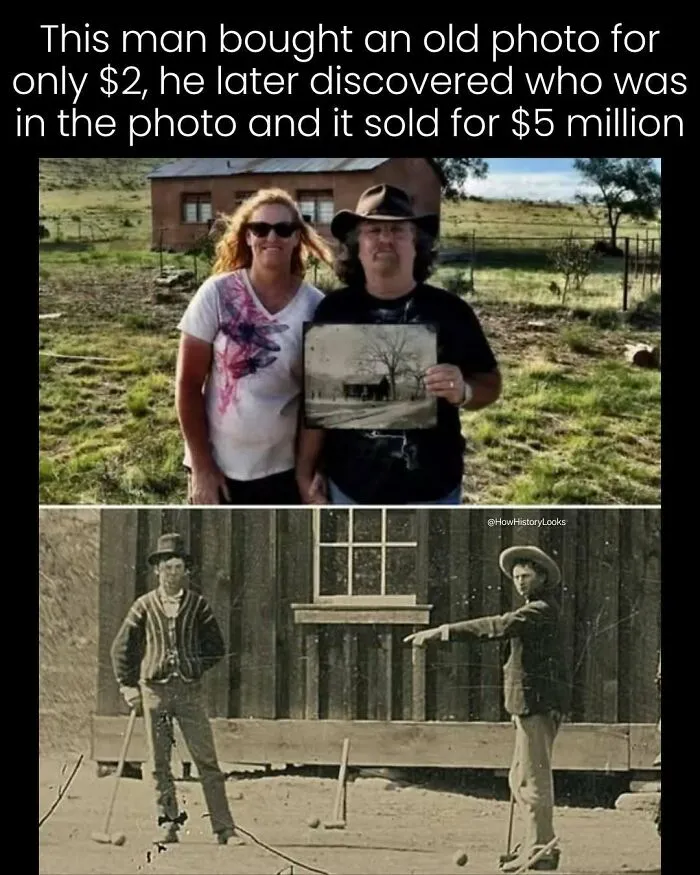
In 2010, collector Randy Guijarro bought an old tintype photograph for just $2 from a California memorabilia shop. After years of research, the image was authenticated by Kagin’s as showing outlaw Billy the Kid with members of the Regulators playing croquet in New Mexico in 1878. 📸
The discovery made the photograph incredibly valuable, with it later insured and valued at around $5 million. It became only the second known authenticated image said to show Billy the Kid, turning an ordinary junk shop purchase into a remarkable piece of Wild West history. 🤯
Report
28points
#33
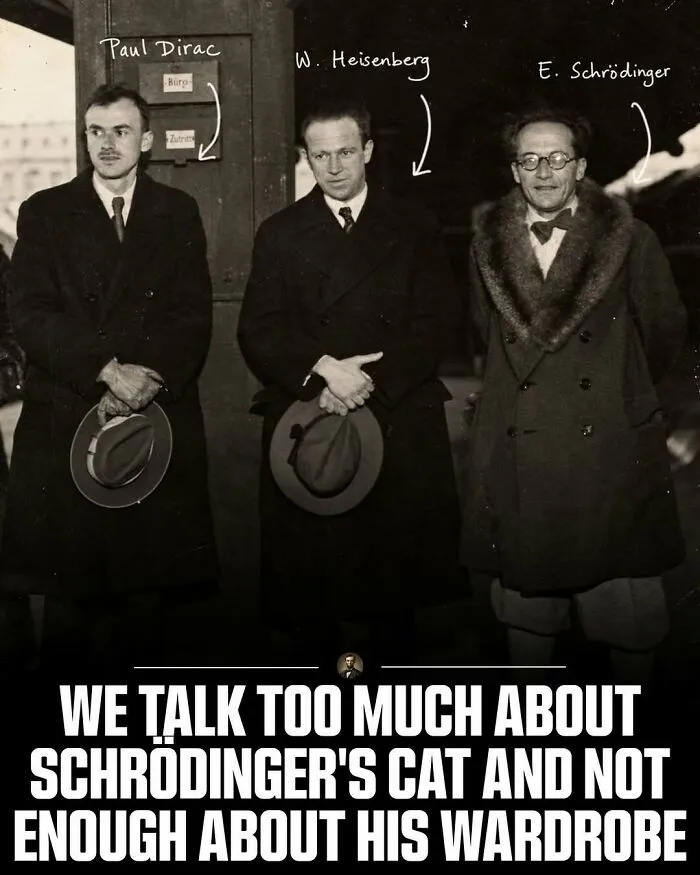
Erwin Schrödinger stood out in the physics world not only for his groundbreaking work on quantum mechanics, but also for his distinctive personal style. While contemporaries such as Paul Dirac and Werner Heisenberg often wore traditional dark coats and formal neckwear, Schrödinger regularly appeared in round spectacles, patterned bow ties, fur lined coats, and knickerbockers with knee socks. 🎩
His unconventional wardrobe matched his reputation as a deeply individual and nonconformist figure. Even surrounded by some of the greatest physicists of his generation, Schrödinger managed to look completely unlike anyone else in the room. 🧠✨
Report
27points
#34
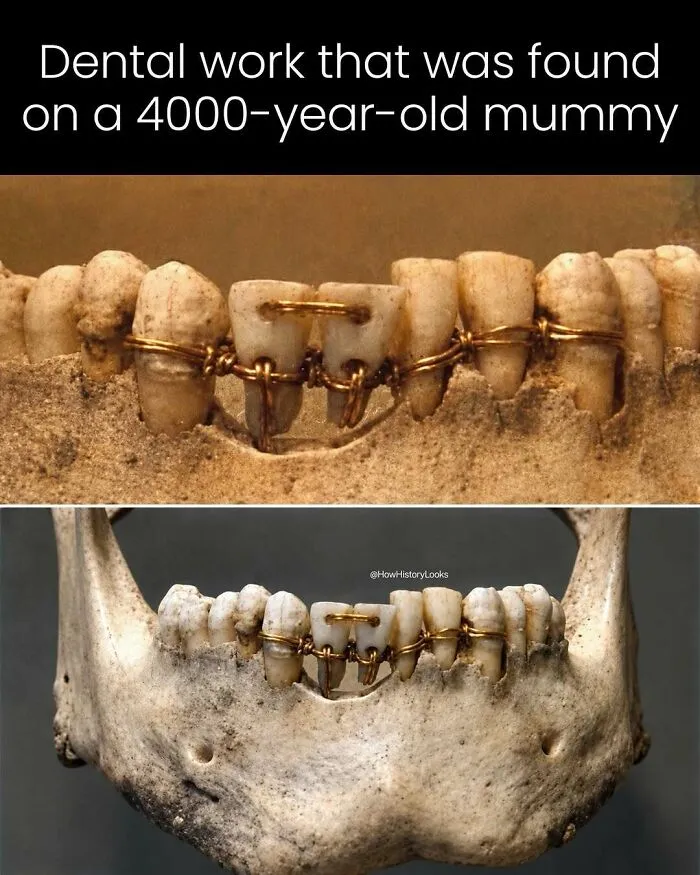
This remarkable dental work shows that people were attempting to repair damaged teeth thousands of years ago. Found on an ancient mummy, the wired teeth are often seen as evidence that early civilizations were already experimenting with ways to replace or stabilize teeth long before modern dentistry existed. 🦷🏺
It is a fascinating reminder that tooth pain, tooth loss, and dental problems are not just modern issues. Even 4,000 years ago, people were looking for practical ways to deal with them, leaving behind evidence of surprisingly advanced care for the time.
Report
27points
#35
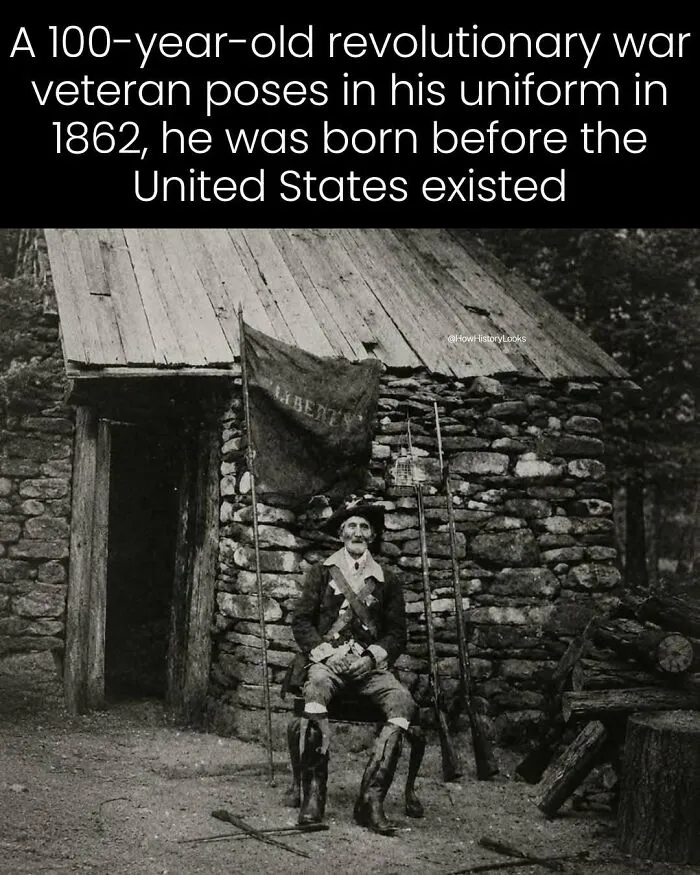
Nicholas G. Veeder was born in New York on December 25, 1761, almost 15 years before the Declaration of Independence. At just 16 years old, he joined the 2nd Albany County Militia in late 1777 and went on to serve throughout the Revolutionary War. 🇺🇸🪖
His service included scouting near Ballston and Galway, guarding Fort Paris, pursuing Joseph Brant’s forces after the destruction of Canajoharie, responding to the 1780 attack on Ballston and taking part in operations connected to Johnstown in 1781. Later in life, Veeder lived in Scotia, New York, in a home known as the “Old Fort,” which he filled with Revolutionary War weapons and artifacts like a small personal museum. He lived to the age of 100, passing away on April 7, 1862.
Report
27points
#37
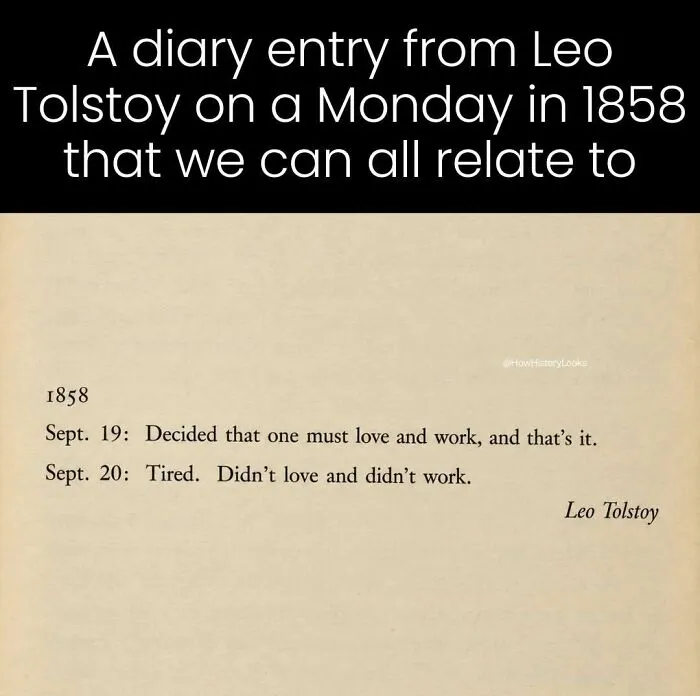
At 30 years old, Leo Tolstoy was still years away from writing War and Peace and Anna Karenina when he made these diary entries in September 1858. By that point, he had already served in the Caucasus and the Crimean War, published several early works, and developed a habit of closely recording his behaviour, ambitions and failures. His journals often included strict rules for himself about work, discipline, gambling, drinking, relationships and morality. 📖
That is what makes these two entries feel so typical of Tolstoy. On September 19, he reduced life to one simple idea: “one must love and work.” Just a day later, he admitted he had managed neither. His diaries repeatedly reveal this cycle of setting demanding standards for himself, then becoming frustrated when he failed to live up to them. Long before his later religious and philosophical writings, Tolstoy was already deeply preoccupied with one question: how should a person live? 🤔
Report
24points
#38

Long before modern tabletop games made the 20 sided die famous, people in the ancient world were already using remarkably similar objects. This Roman era example is an icosahedron carved from rock crystal, with each of its 20 faces marked with a Latin letter and corresponding Roman numeral. Similar polyhedral dice have survived from the Hellenistic and Roman periods, including examples discovered in ancient Egypt. 🎲🏛️
Exactly what these unusual dice were used for remains uncertain. Archaeologists have suggested they may have been connected to games or divination, where a roll could correspond to an answer in an oracle text. Ancient texts describe systems in which randomly generated numbers were used to select predetermined questions or prophecies, making these objects potentially closer to fortune telling tools than ordinary gaming dice.
Report
23points
#39
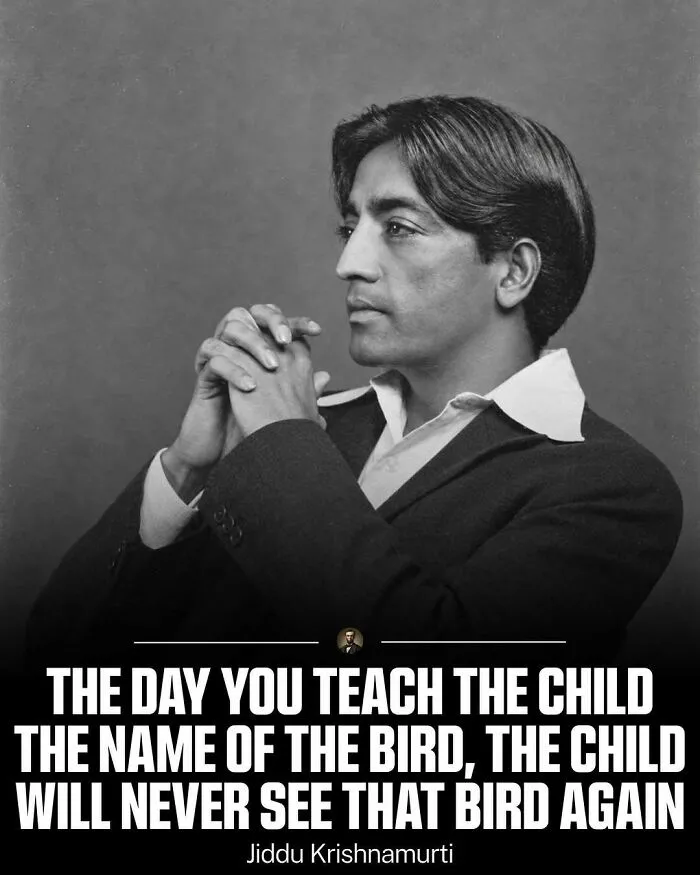
The idea is that once we give something a label, we can stop seeing it as it truly is and start seeing the concept we have attached to it instead. A child might look at a bird with complete curiosity, but once they are told, “that is a sparrow,” it can quickly become something familiar and ordinary. 🐦✨
Thinkers like Jiddu Krishnamurti argued that labels are useful, but they can also limit how deeply we experience the world. True awareness means looking beyond names and categories and noticing each moment as if you were seeing it for the first time. 👀
Report
23points
#40
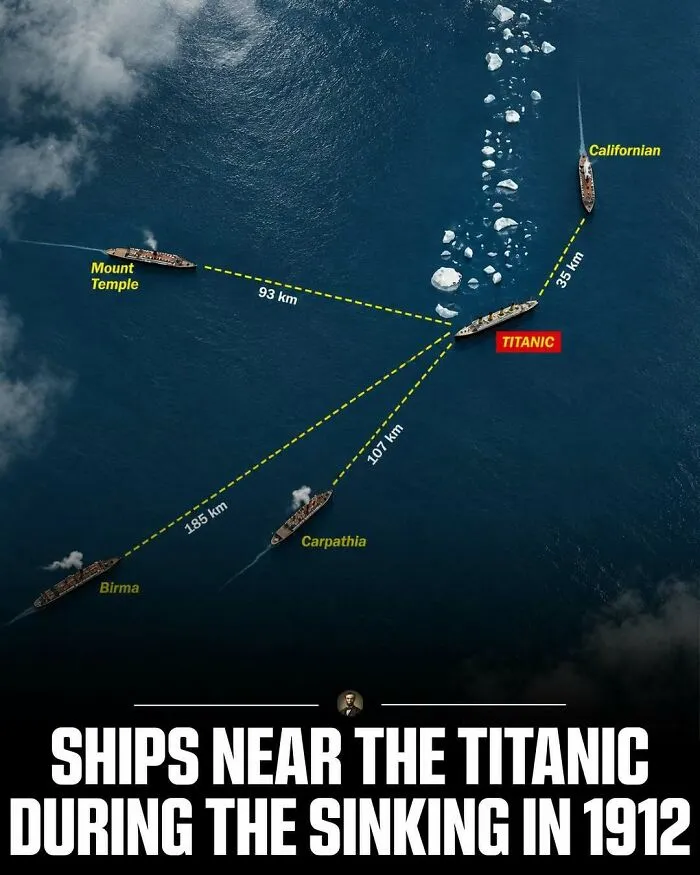
When the Titanic struck an iceberg and began sinking on April 15, 1912, several ships were scattered across the North Atlantic at very different distances. The Californian was reportedly the closest, while the Carpathia was over 100 km away and raced through the night to reach the survivors. 🚢❄️
Carpathia arrived after the Titanic had disappeared beneath the surface and rescued more than 700 people from the lifeboats. The tragedy has since sparked decades of debate over whether a nearby ship could have reached Titanic sooner and changed the outcome.
Report
23points


