







The world is constantly changing and progressing, but there’s still always more to learn about the past. So if you’re tired of worrying about what’s to come in the future, you can take the next ten minutes to look back on history.
We took a trip to How History Looks on Instagram and compiled a list of their most intriguing posts below. From fun facts about the past to stories that you definitely didn’t hear about in school, we hope that this article will teach you something new. Enjoy scrolling through these posts, and be sure to upvote the ones that inspire you to dive deeper into your historical studies!
#1

On September 11, 2001, American Airlines flight attendant Betty Ong called the airline from hijacked Flight 11 and remained on the line for about 23 minutes. Speaking calmly, she reported that the cockpit was not responding, crew members had been injured and the aircraft appeared to be under attack. She also provided the seat locations of the suspected hijackers, information that later proved important to investigators. 📞✈️
Ong’s call was among the earliest detailed reports from inside a hijacked aircraft and helped American Airlines understand the scale of the emergency. Her information contributed to the wider response that morning, although the eventual decision to ground every civilian aircraft in the United States was made by the FAA based on information from multiple sources. 🇺🇸🕊️
Report
103points
#2
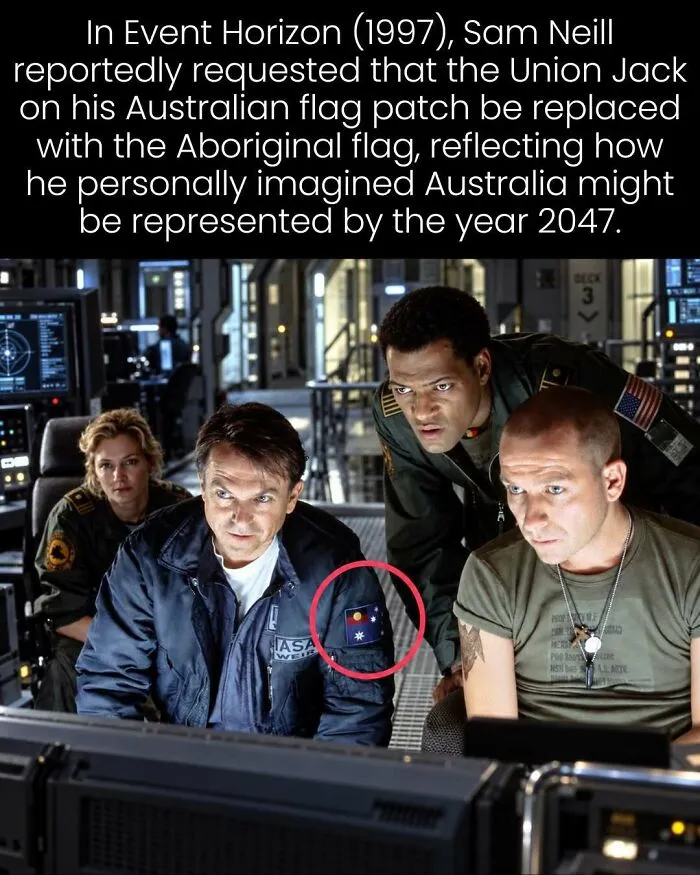
In Event Horizon, Sam Neill reportedly requested a small but meaningful change to the costume of his character, Dr. William Weir. The original Australian flag patch on his uniform featured the traditional Union Jack, but Neill asked for it to be replaced with the Aboriginal flag. He felt this better represented how Australia’s identity and culture might evolve by 2047, the year the film takes place. 🇦🇺🎬
The change is never explained in the movie, making it an easy detail to miss. The Aboriginal flag, designed by artist Harold Thomas in 1971, had already become an important symbol of Aboriginal identity by the time the film was made. Its appearance in the futuristic setting quietly imagined an Australia where Indigenous representation played a more prominent role in the country’s national identity.
Report
96points
#3
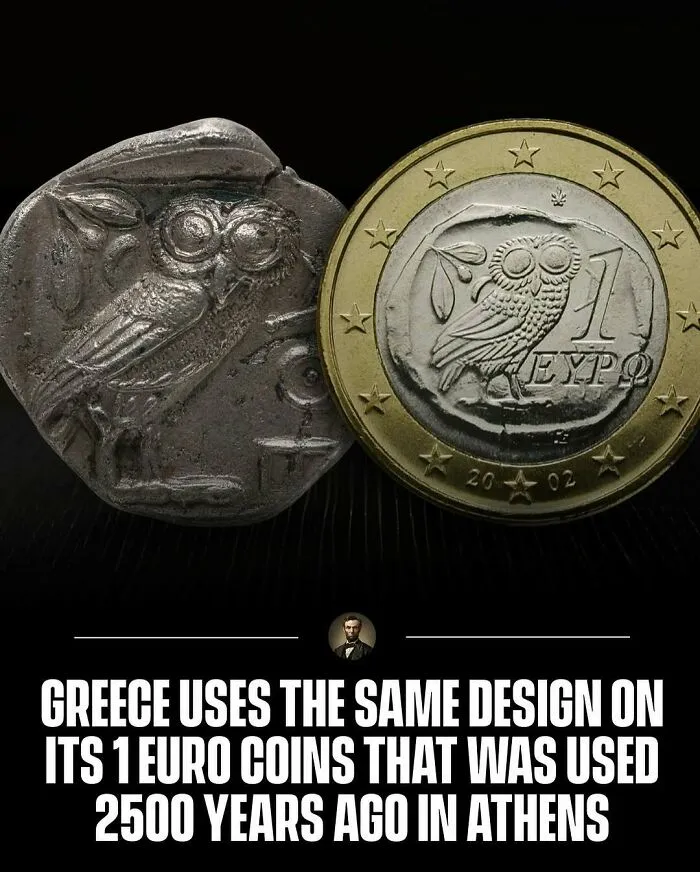
The image of the owl featured in this design was copied from an ancient Athenian 4-drachma coin (fifth century BC)
Report
95points
#5
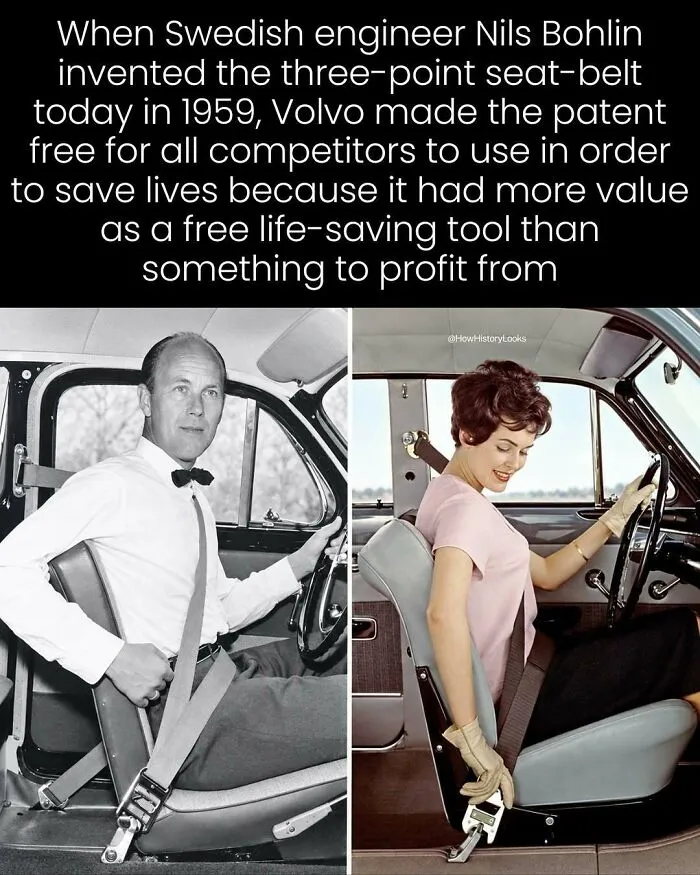
In 1959, Volvo engineer Nils Bohlin introduced the modern three point seat belt, a simple design that secured both the upper and lower body far more effectively than earlier restraints. Volvo became the first car manufacturer to fit the design as standard in its vehicles, including the PV544 and Amazon. 🚗🛡️
Rather than keeping the technology exclusive, Volvo made Bohlin’s patent available for other manufacturers to use free of charge, prioritising road safety over potential licensing profits. The basic design remains standard in cars around the world today and is estimated to have saved more than a million lives.
Report
77points
#6
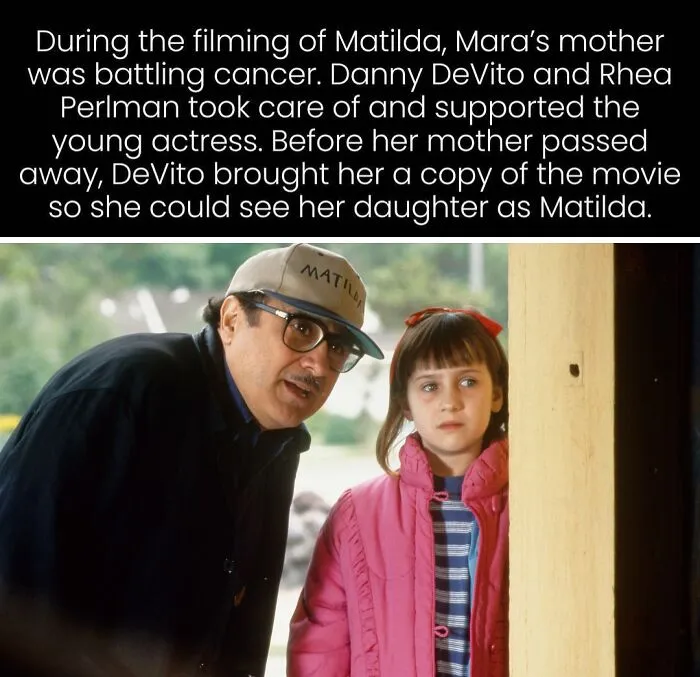
While filming Matilda, young actress Mara Wilson was dealing with an incredibly difficult time as her mother battled cancer. Danny DeVito and Rhea Perlman became a source of support for her, helping care for Mara and making sure she felt looked after during production. ❤️🎬
Before Mara’s mother passed away, DeVito reportedly arranged for her to see an early cut of the film so she could watch her daughter as Matilda. It added an especially emotional layer to a movie that would go on to become a childhood classic
Report
69points
#7

On September 11, 2001, blind computer salesman Michael Hingson was working on the 78th floor of the North Tower when the World Trade Center was attacked. His guide dog, Roselle, remained calm and helped lead him down dozens of floors through smoke, confusion and crowded stairwells. 🐕🦺🏢
After a long descent, Hingson and Roselle safely escaped the tower shortly before it collapsed. Their remarkable story became one of the most memorable accounts of 9/11, highlighting the incredible trust between a guide dog and its owner.
Report
69points

#9
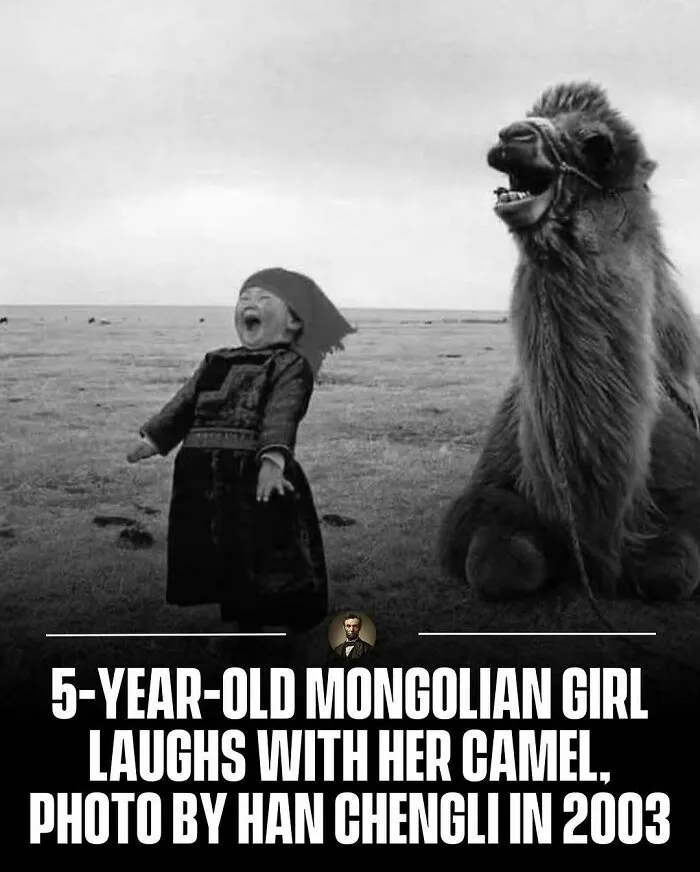
Inner Mongolian girl laughs with her camel by her side. The little girl’s name is Butedmaa and she was just 5 when this photo was taken by photographer Han Chengli in 2003.
Inner Mongolia is an autonomous region within China, distinct from the independent nation of Mongolia, which was historically referred to as Outer Mongolia.
Located in northern China along the border with modern-day Mongolia and Russia, Inner Mongolia is home to both Han Chinese and ethnic Mongols.
Report
65points
#10
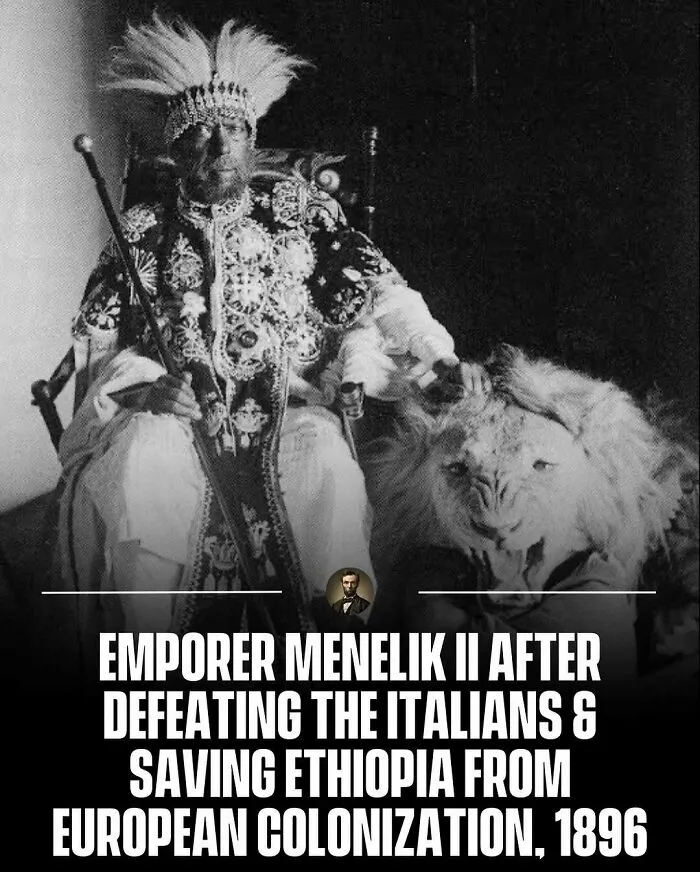
Emperor Menelik II of Ethiopia decisively defeated the Italian army at the Battle of Adwa on March 1, 1896, thwarting Italy’s attempt to colonize Ethiopia.
This victory, a major event in the First Italo-Ethiopian War, secured Ethiopia’s sovereignty and became a symbol of African resistance against European imperialism
Report
58points
#11
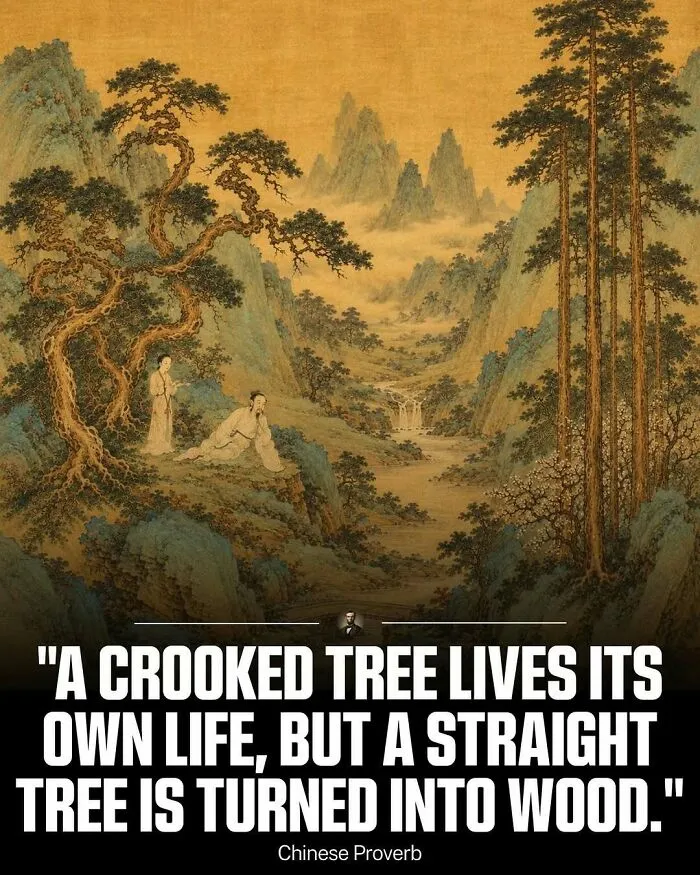
The idea behind this proverb is closely linked to the writings of Zhuangzi, one of the most influential Daoist thinkers of the 4th century BCE. In the Zhuangzi, there is a famous story about a huge, twisted tree that carpenters refuse to cut down because its wood is considered useless. Ironically, that very “uselessness” allows the tree to survive and live out its full natural life. 🌳
Zhuangzi used the story as a metaphor for human life. In Daoist thought, being useful according to society’s strict expectations can sometimes make people easier to exploit, control or exhaust. Those who are unconventional, overlooked or unwilling to fit narrow standards may instead preserve their freedom and live more naturally.
Report
55points
#12
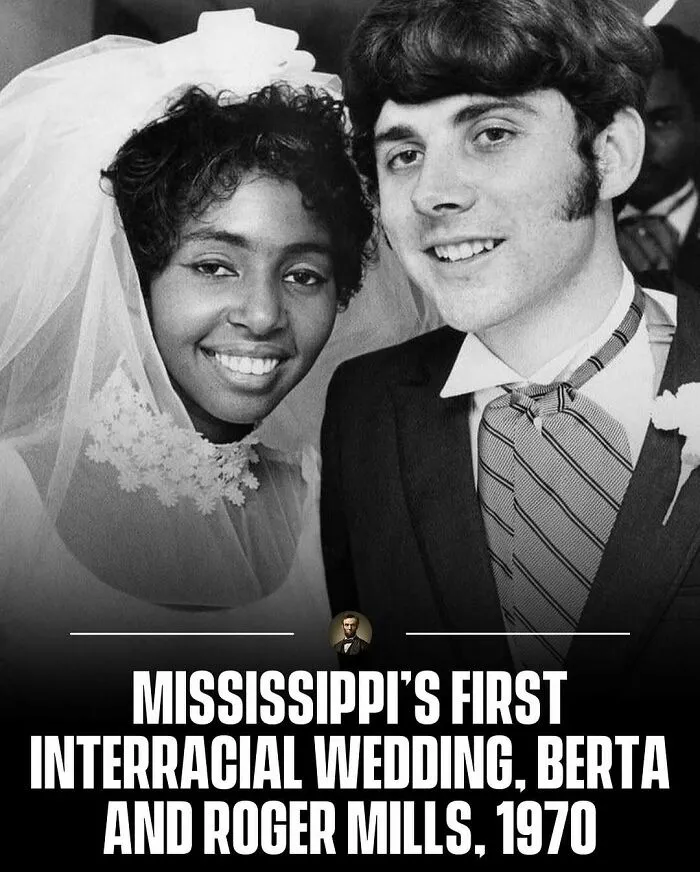
Newlyweds Roger and Berta Mills live quietly in a modest apartment, its location known only to a few close friends. They avoid grocery stores during busy hours. ‘We don’t want to advertise,’ Roger explains. Without a home phone, they use the law office where Roger works as a clerk for their mail. ‘We’re trying to stay under the radar to avoid as much hate mail and as many calls as possible,’ he says.
Despite the challenges, Roger, who is white, calls his 11-week marriage to Berta Linson, who is Black, ‘a very, very pleasant experience.’ ‘It’s been real smooth. I feel like I’m still on my honeymoon.’
The couple occasionally gathers with four other interracial couples living in the area, all of whom married in other states. ‘The white people I know in Jackson are attorneys and some wealthy folks,’ Roger says. ‘It would be a step down for them to visit us where we live.’ Still, he considers Mississippi ‘a pretty good state.’ ‘Things are moving forward. I kind of like Jackson and the state, but Berta is tired of the tension.’
Berta is looking forward to leaving for Washington next year when Roger plans to return to law school at George Washington University. Although the U.S. Supreme Court had already ruled that states could not ban interracial marriages, Mississippi still had laws on the books prohibiting them. Only after significant publicity and a federal court order were the Mills able to marry at Jackson’s Central United Church.
‘Berta hated every minute of it, and it caused her a lot of anguish,’ Roger recalls. The media attention followed them to Gatlinburg, Tennessee, where they honeymooned at the foot of the Smoky Mountains. ‘Everywhere we stopped, we saw newspapers covering our marriage,’ Roger said.
Report
48points
#13
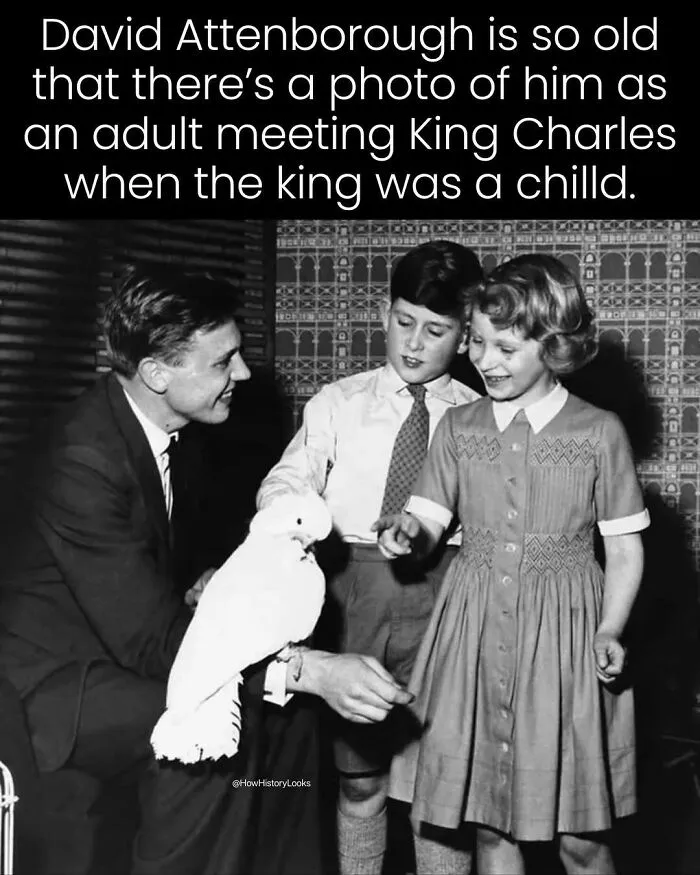
This completely real photo was taken in January 1958 and shows a 31 year old David Attenborough meeting a 10 year old Prince Charles during a visit to the BBC studios. Attenborough, who was already working as a producer, also welcomed seven year old Princess Anne and introduced the young royals to a cockatoo named Cocky. 📺🦜
The image often surprises people because of how strangely it compresses history. It captures Attenborough already established in broadcasting decades before Charles would eventually become King, making it one of those rare photos that completely changes your sense of time. 👑📸
Report
46points
#14
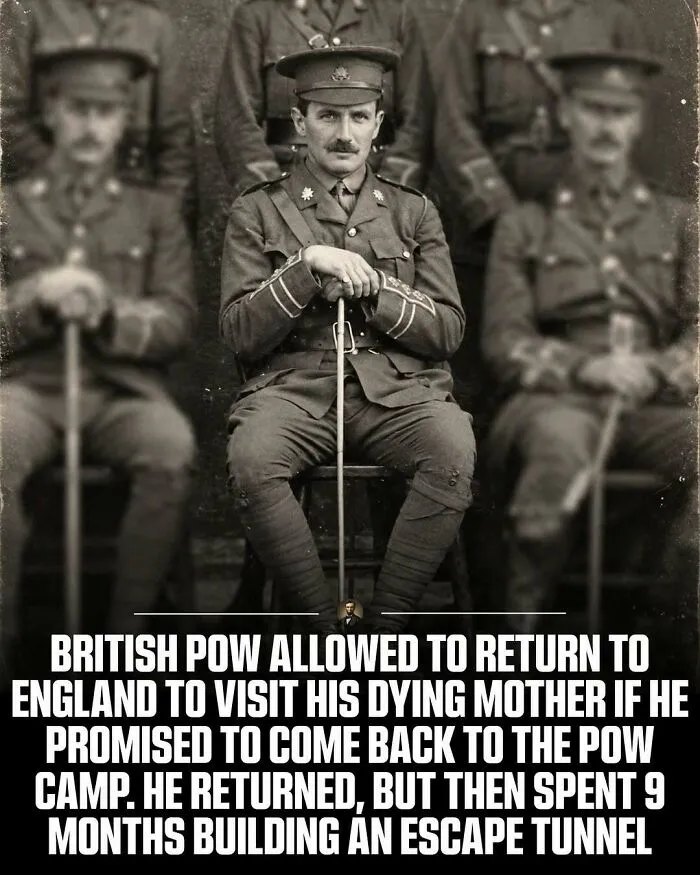
Captain Robert Campbell was a British Army officer captured by German forces during the opening weeks of World War I. After being seriously wounded near Mons in August 1914, he was treated in a military hospital before being held as a prisoner of war in Germany. 🎖️
Two years into captivity, Campbell discovered that his mother, Louise, was dying of cancer back home in England. Hoping to see her one final time, he wrote directly to Kaiser Wilhelm II and asked to be temporarily released on compassionate grounds.
Two years into captivity, Campbell discovered that his mother, Louise, was dying of cancer back home in England. Hoping to see her one final time, he wrote directly to Kaiser Wilhelm II and asked to be temporarily released on compassionate grounds.
Remarkably, the Kaiser agreed to let him leave for two weeks on one condition: Campbell had to give his word as a British officer that he would return. He travelled through the neutral Netherlands and arrived in England in November 1916, spending around a week with his mother before voluntarily returning to Germany. She died several months later.
What makes the story even more unusual is that Campbell still considered himself free to attempt an escape afterward. In his view, his promise had only required him to return from compassionate leave, not to remain a prisoner indefinitely.
Campbell and several other prisoners reportedly spent around nine months digging a tunnel beneath the camp. They eventually escaped and made their way toward the neutral Netherlands, but were recaptured close to the Dutch border.
He remained in captivity until the war ended in 1918. ⛓️
Added Fact: Campbell later served again during World War II, working as a chief observer with the Royal Observer Corps on the Isle of Wight.
Report
44points
#15
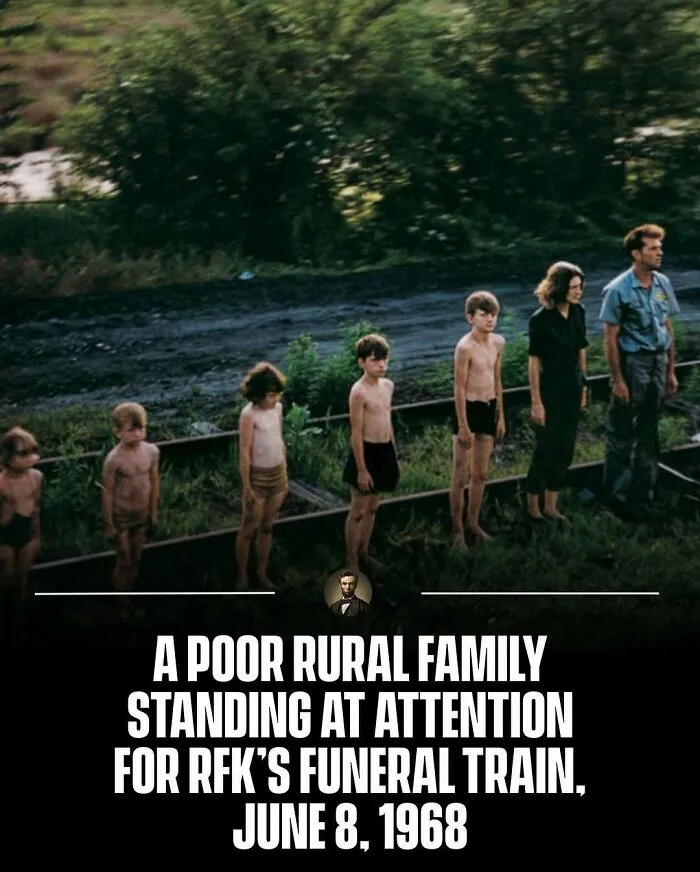
A poor rural family standing at attention for RFK’s funeral train (1968) 🇺🇸
On June 8, 1968, a 21-car funeral train carried Senator Robert F. Kennedy’s body from New York City to Washington, D.C., for burial at Arlington National Cemetery.
Millions of mourners lined the 225-mile route, paying respects. Photographer Paul Fusco captured iconic images of grieving Americans. The journey, meant to take four hours, lasted over eight due to the crowds.
Report
43points
#16
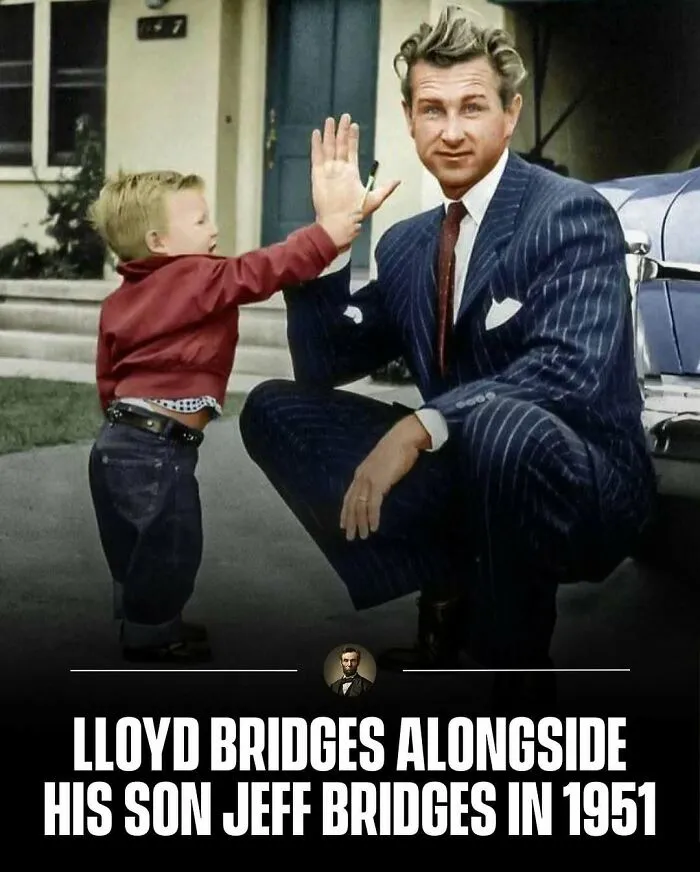
Lloyd Vernet Bridges Jr. was an American film, stage and television actor who starred in a number of television series and appeared in more than 150 feature films.
He was the father of four children, including the actors Beau Bridges and Jeff Bridges.
Report
42points
#18
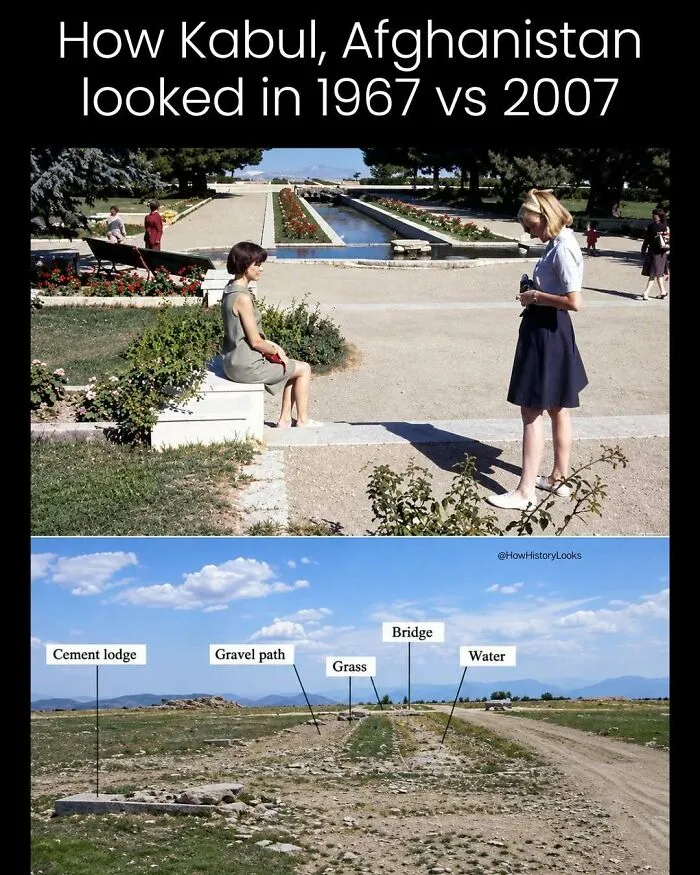
In 1967, Arizona State University professor Dr. Bill Podlich travelled to Afghanistan on a two year UNESCO assignment, where he taught at the Higher Teachers College in Kabul. He was joined by his wife, Margaret, and daughters, Peg and Jan, documenting everyday life across the country through hundreds of photographs. 📸🇦🇫
The top photo shows Jan on the left and Peg at Kabul’s Paghman Gardens, once a popular park filled with formal gardens, reflecting pools and tree lined walkways. The area was badly damaged during decades of conflict beginning in the late 1970s, although parts have since been restored. Podlich retired in 1981 and passed away in 2008 at the age of 92.
Report
41points
#19

In November 2016, a huge sinkhole suddenly opened in the middle of Fukuoka, Japan, after construction work on a nearby subway tunnel. The crater stretched around 30 metres across and reached roughly 15 metres deep, swallowing a large section of road. 🚧🇯🇵
Repair crews worked nonstop to fill the hole, restore damaged utilities and make the area safe again. Remarkably, the road reopened to traffic about a week later after extensive safety checks, becoming a widely shared example of Japan’s rapid infrastructure response. 🛠👏
Report
38points
#20
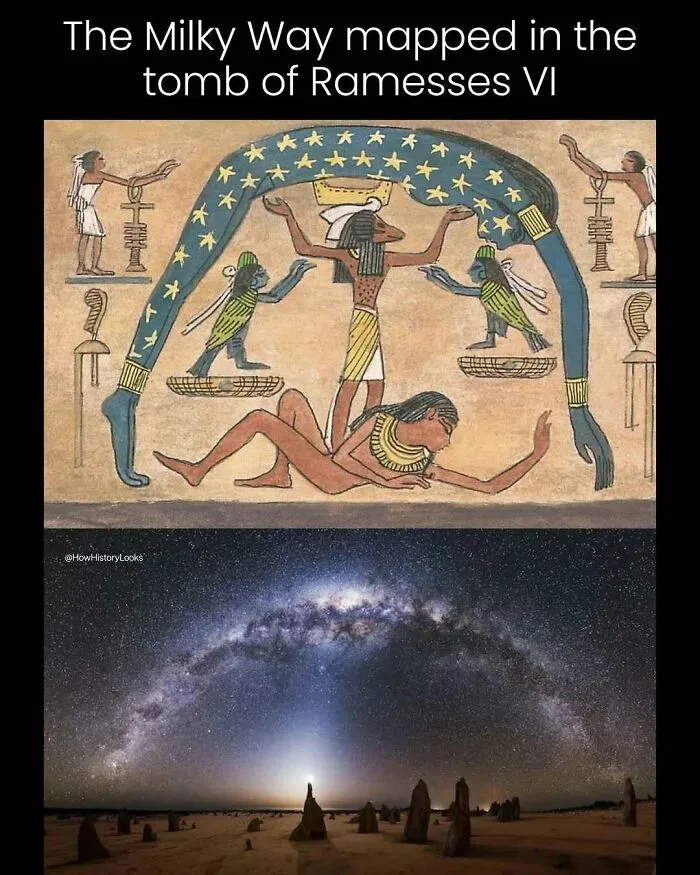
The astronomical ceiling inside the burial chamber of Ramesses VI depicts Nut, the ancient Egyptian goddess of the sky, stars and cosmos. Her long, star covered body represented the heavens and the path of the sun across the universe. 🌌✨
According to Egyptian belief, Nut swallowed the sun god Ra at sunset, carried him through the darkness during the night, and gave birth to him again at dawn. For the pharaoh, this image was more than decoration. It symbolized his own journey through the afterlife and his hope of being reborn eternally among the stars.
Report
36points


