






The world is full of interesting details and surprises that can change how we see things. Finding something you never knew existed always feels special, like an old photo, a strange invention, or a forgotten moment from history. These discoveries show us there is still so much to explore and learn.
Thanks to the internet, it’s easier than ever to come across amazing stories and photos from everywhere. From overlooked moments in history to incredible human achievements, there are so many things that don’t get much attention but can really stick with you once you find them.
From rare moments caught on camera to details that change how we see history, we bring you a collection of remarkable photos, surprising facts, and stories that seem unbelievable at first. Keep scrolling to check out some of the most fascinating discoveries.
#21
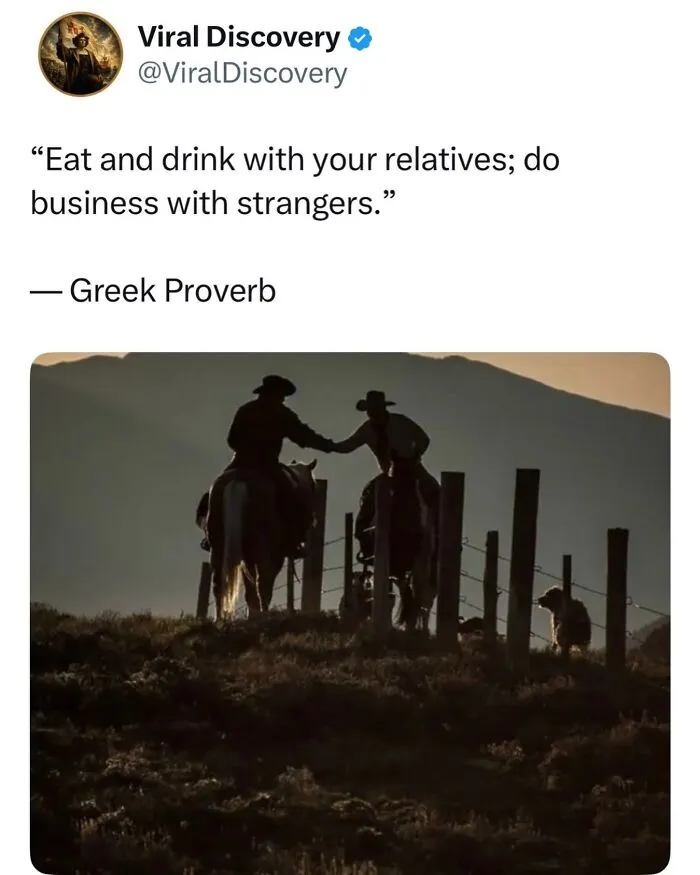
This classic Greek proverb highlights the importance of keeping personal relationships and financial dealings completely separate. It suggests that family settings should be reserved for warmth, bonding, and shared experiences, while commerce is best conducted with outside parties where objective rules apply.
When money and business mix with family, disagreements over debts or responsibilities can deeply fracture personal relationships. By dealing with strangers instead, you can establish clear boundaries and neutral accountability, protecting both your professional interests and your family peace.
When money and business mix with family, disagreements over debts or responsibilities can deeply fracture personal relationships. By dealing with strangers instead, you can establish clear boundaries and neutral accountability, protecting both your professional interests and your family peace.
Report
5points
#22
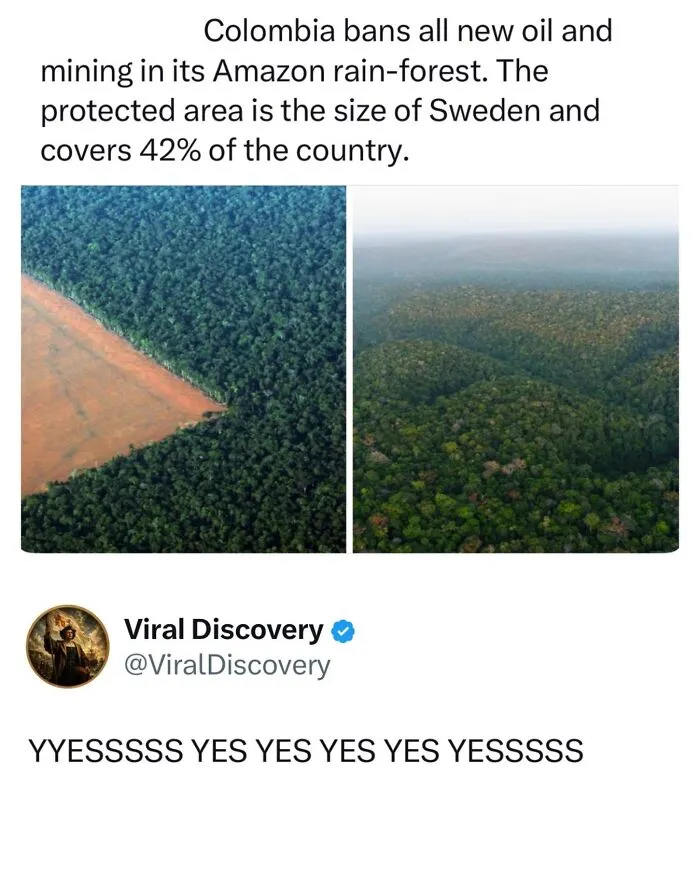
Colombia has passed a landmark environmental law banning all new oil extraction and mining operations across its entire Amazon rainforest territory — a protected area equivalent in size to the entire country of Sweden, covering 42% of Colombia’s total landmass. The move makes Colombia one of the most aggressive nations in the world in terms of formal legal protection for its rainforest and sets a precedent that environmental groups are hoping other Amazon nations will follow.
The significance cannot be overstated. The Amazon is frequently described as the lungs of the Earth — a carbon sink so vast that its destruction directly accelerates global warming at a scale that affects every country on the planet. While deforestation continues at devastating rates across the broader Amazon basin, Colombia’s decision to draw a legal line across nearly half its territory is the kind of policy shift that will be studied and referenced for decades.
The significance cannot be overstated. The Amazon is frequently described as the lungs of the Earth — a carbon sink so vast that its destruction directly accelerates global warming at a scale that affects every country on the planet. While deforestation continues at devastating rates across the broader Amazon basin, Colombia’s decision to draw a legal line across nearly half its territory is the kind of policy shift that will be studied and referenced for decades.
Report
5points
#23
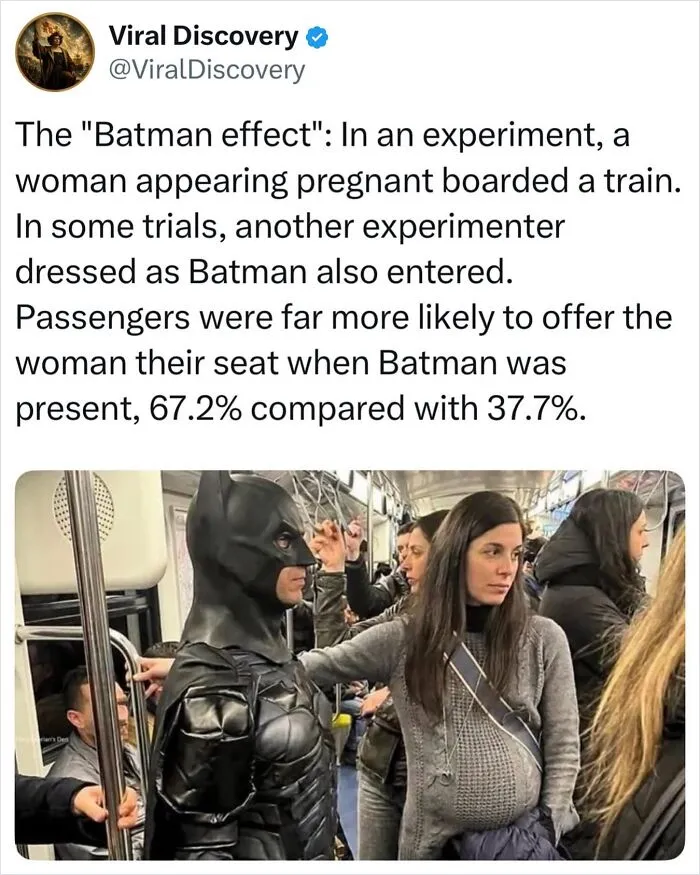
This Italian metro experiment is real, published in npj Mental Health Research.Researchers tested how disruptions alter public kindness using a fake pregnant passenger. In normal settings, commuters offered her a seat 37.7% of the time. When Batman entered another door, compliance surged to 67.2%. Psychologists believe the bizarre sighting jolted riders out of their mental autopilot.
Report
4points
#24
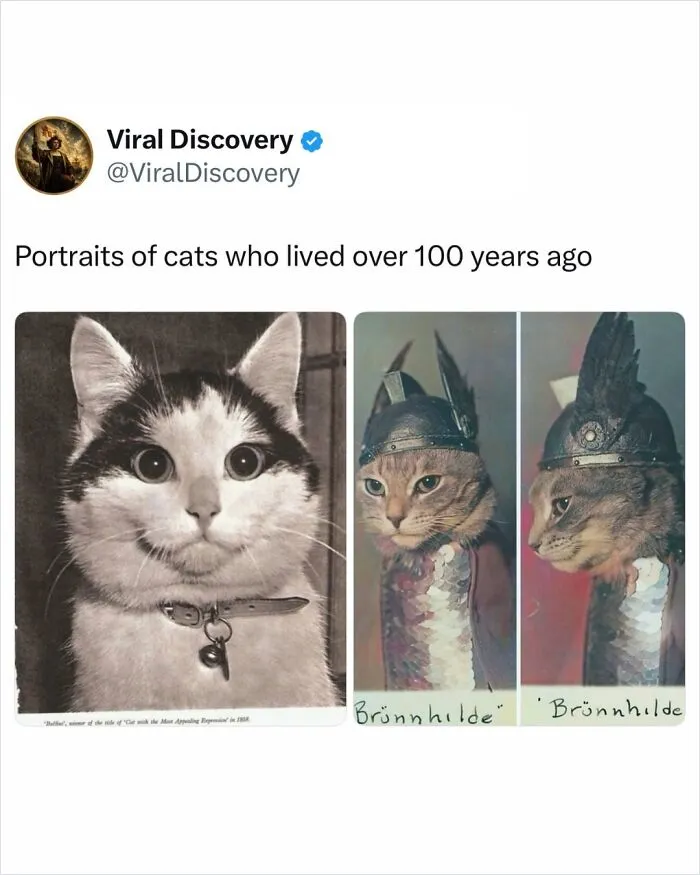
By the late nineteenth and early twentieth centuries, cats had become surprisingly frequent subjects of photography, appearing in everything from formal studio portraits to humorous staged scenes. Early photographers posed them with ribbons, costumes and miniature props much as they did human sitters, while advances in photographic technology gradually made candid pet photography easier. Several surviving examples have entered museum collections: the Science Museum Group preserves an early albumen cabinet card titled The Old Batchelor, showing a cat posed on a barrel beside a bottle and glass, while photographs from 1936 show a remarkably patient cat named Brünnhilde dressed as the Valkyrie from Wagner’s Ring cycle.
These portraits also document how long cats have occupied a familiar place within domestic life and popular culture. By the twentieth century they were appearing in newspapers, advertisements, competitions and elaborately staged novelty photographs, often given the same individual names and personalities that characterize pet culture today. Brünnhilde’s portraits, photographed by Adolph E. Weidhaas, are now preserved by the Library of Congress, nearly ninety years after they were made. Together with the older Victorian-era portraits that survive in photographic collections, they offer a small but unusually relatable record of everyday affection for animals across generations.
These portraits also document how long cats have occupied a familiar place within domestic life and popular culture. By the twentieth century they were appearing in newspapers, advertisements, competitions and elaborately staged novelty photographs, often given the same individual names and personalities that characterize pet culture today. Brünnhilde’s portraits, photographed by Adolph E. Weidhaas, are now preserved by the Library of Congress, nearly ninety years after they were made. Together with the older Victorian-era portraits that survive in photographic collections, they offer a small but unusually relatable record of everyday affection for animals across generations.
Report
4points
#25

After learning that three of their four children were gradually losing their vision, Quebec parents Edith Lemay and Sébastien Pelletier decided to give them something unforgettable: a year traveling the world.
Their children Mia, Colin and Laurent were diagnosed with retinitis pigmentosa, a rare inherited condition that progressively damages the retina. Their brother Léo does not have the condition. The family traveled through countries across Africa, Asia and beyond, filling the kids’ “visual memory” with wildlife, landscapes and new cultures while their eyesight was still strong.
Their journey later became the National Geographic documentary Blink, which follows the family as they focus on experiencing as much of the world as possible instead of letting the diagnosis define their lives.
Report
4points
#26

This viral sentiment is highly accurate and backed by international design recognition. While designating any currency as the absolute “most beautiful” involves personal taste, the Maldivian 1,000 rufiyaa polymer note is widely celebrated globally by collectors and design experts as a masterpiece. Issued as part of the [“Ran Dhihafaheh” (Golden Fifty) series] to commemorate 50 years of independence, the note officially achieved elite design status when it was named a top finalist and secured second place globally in the International Bank Note Society’s (IBNS) prestigious Banknote of the Year competition.
Titled [“The Beauty in Our Surrounding, “] the ocean-blue currency explicitly treats the country’s vibrant marine ecosystem as a work of art rather than a standard background element. The front features an intricate underprint patterned after whale shark skin alongside a swimming green sea turtle, while the reverse prominently showcases a majestic whale shark gliding through deep blue and gold waters. Because it is printed on a durable, waterproof polymer material, the note seamlessly incorporates transparent security windows and holographic features, prompting millions of travelers to routinely keep it as a prized vacation souvenir instead of spending it.
Titled [“The Beauty in Our Surrounding, “] the ocean-blue currency explicitly treats the country’s vibrant marine ecosystem as a work of art rather than a standard background element. The front features an intricate underprint patterned after whale shark skin alongside a swimming green sea turtle, while the reverse prominently showcases a majestic whale shark gliding through deep blue and gold waters. Because it is printed on a durable, waterproof polymer material, the note seamlessly incorporates transparent security windows and holographic features, prompting millions of travelers to routinely keep it as a prized vacation souvenir instead of spending it.
Report
4points
#27
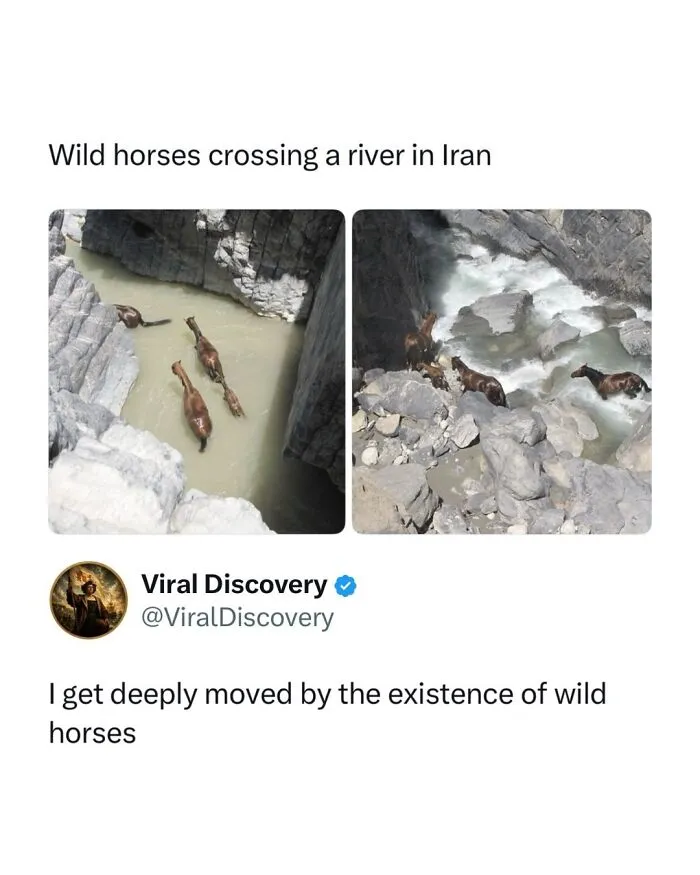
I forgot they can be wild…
These striking images of horses navigating a rocky river in Iran have circulated online for years and are credited to Iranian photographer Eydi Heydari. Versions of the photographs were already being shared online by at least 2022.
Free-roaming horses can still be found in parts of Iran, including mountainous and river regions. Similar herds have been documented around Taleghan, Damavand and northern Iran.
Eydi Heydari.
Report
4points
#28
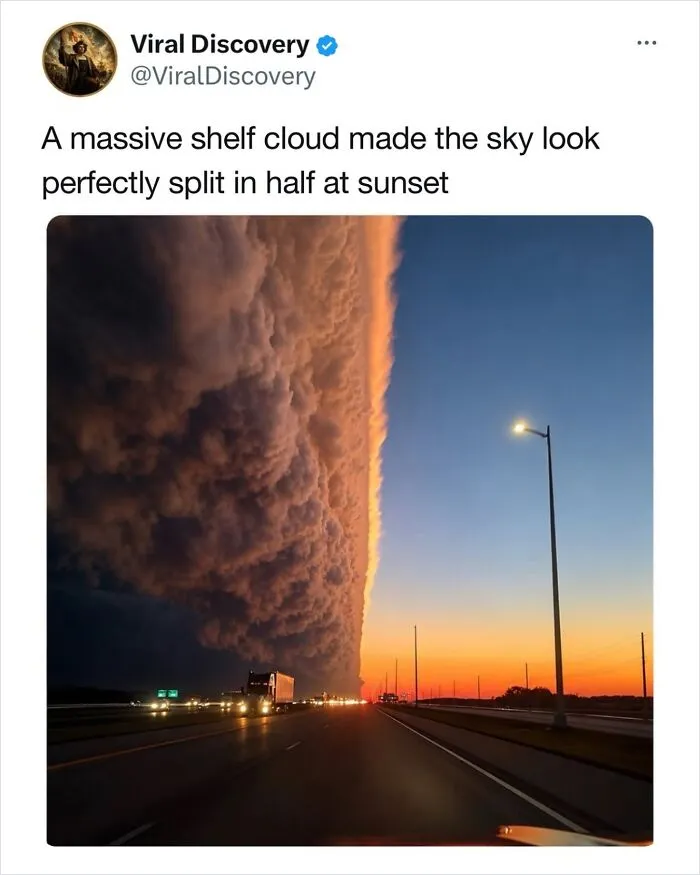
A massive shelf cloud rolled across the horizon at sunset, creating a surreal scene that made the sky look almost perfectly split in two.
Shelf clouds typically form along the leading edge of strong thunderstorms, where cooler storm air pushes underneath warmer air and creates the dramatic, low-hanging formation.
Gustavo Ramirez.
Shelf clouds typically form along the leading edge of strong thunderstorms, where cooler storm air pushes underneath warmer air and creates the dramatic, low-hanging formation.
Gustavo Ramirez.
Report
4points
#29

In 2022, Senator Bernie Sanders sat by himself on the U.S. Capitol steps after the Senate voted 99 to 1 against his amendment to slash Medicare prices in half.
Report
4points
#30

While some grips were professionally crafted by skilled artisans, many were homemade creations made possible by the introduction of a new material: Plexiglass. Soldiers would salvage pieces of clear acrylic from the shattered canopies and windows of downed Allied and enemy aircraft, including planes such as the B-17 and P-51 Mustang.
With basic tools, they carefully sanded and polished the plastic until it was clear and shaped to fit their Colt M1911A1 service pistols. The standard checkered walnut or plastic grips could then be replaced with transparent panels, allowing soldiers to slip photographs of their wives, girlfriends, parents, or other loved ones underneath.
These grips were more than just a unique modification. Amid the chaos of the Pacific and European theaters, carrying a physical reminder of the people waiting for them back home could provide a powerful boost to morale. The modification transformed a utilitarian weapon into something deeply personal, connecting the soldier to the people and life he was fighting to return to.
Report
4points
#31
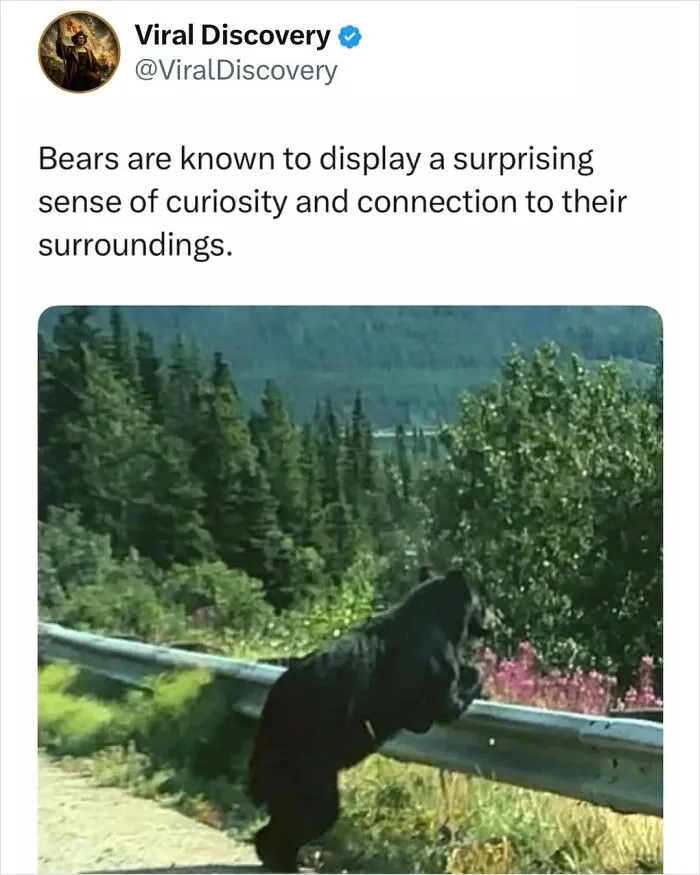
Bears display a surprising level of intelligence and emotional awareness in the way they interact with their environment. Naturalists have often described them sitting quietly for long stretches, seemingly watching sunsets or taking in mountain landscapes, behavior that suggests they may experience moments of reflection beyond simple survival.
Their curiosity leads them to investigate every part of their habitat, relying on exceptional problem solving abilities and an extraordinary sense of smell to make sense of the world around them. Whether choosing scenic places to rest or engaging in playful behavior, bears exhibit a thoughtful, sentient side that highlights a peaceful connection with nature and challenges the stereotype of them as nothing more than fierce predators.
Their curiosity leads them to investigate every part of their habitat, relying on exceptional problem solving abilities and an extraordinary sense of smell to make sense of the world around them. Whether choosing scenic places to rest or engaging in playful behavior, bears exhibit a thoughtful, sentient side that highlights a peaceful connection with nature and challenges the stereotype of them as nothing more than fierce predators.
Report
4points
#32
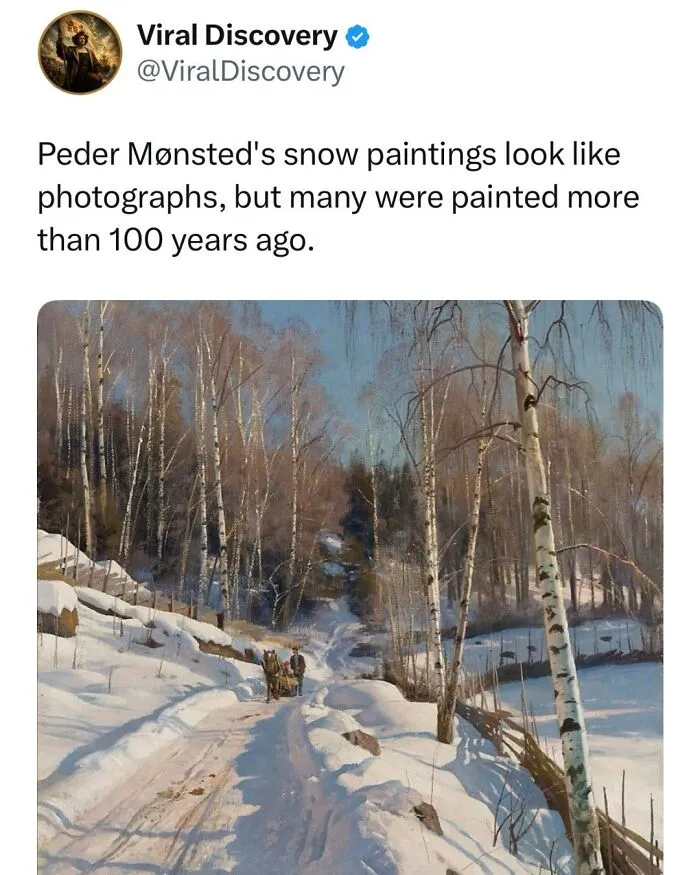
Peder Mønsted’s snow paintings can look remarkably like photographs, even though many were created more than a century ago.
The Danish painter became renowned for his winter landscapes, capturing intricate details such as sunlight glinting off snow, frozen paths, bare trees, and tiny figures making their way through the countryside. His scenes of winter around Lillehammer, Norway, became especially popular, with several displayed in Copenhagen during the 1910s and 1920s.
Yet Mønsted’s life was much more adventurous than his tranquil paintings might suggest. In 1882, he traveled to Capri, where he became ill before recovering and continuing through Switzerland to Paris. He later journeyed through Algeria, Egypt, and Spain. In 1892, King George I invited him to Greece, where Mønsted stayed with the royal family and painted their portraits.
Report
4points
#33
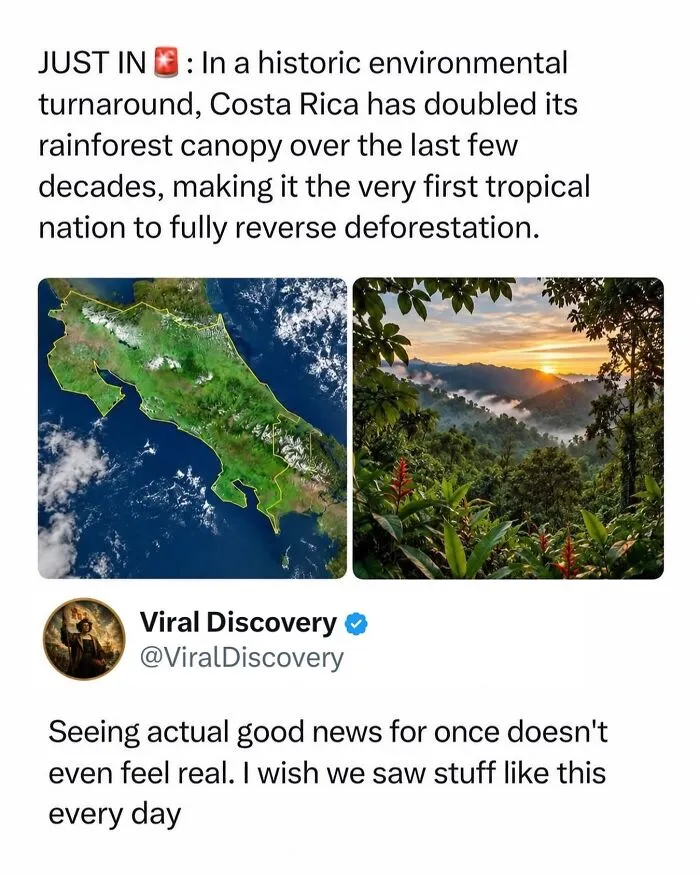
Costa Rica chose the reverse button
Costa Rica is one of the world’s most frequently cited examples of large-scale forest recovery. During much of the 20th century, the country lost enormous areas of forest as land was cleared for cattle ranching and agriculture. By the 1980s, forest cover had fallen dramatically from historical levels.
Then the trend changed.
Costa Rica expanded protected areas and introduced policies that gave landowners financial incentives to conserve and restore forests. Its Payment for Environmental Services program, launched in the 1990s, compensates participating landowners for environmental benefits associated with forests, including carbon storage, biodiversity protection and watershed conservation.
Today, forests cover more than half of Costa Rica’s territory, representing a major recovery from the country’s low point. Tourism also changed the economics of conservation. Rainforests, volcanoes and wildlife became valuable attractions, helping make intact ecosystems economically important rather than simply land waiting to be cleared.
Costa Rica is also extraordinarily biodiverse for its size, containing hundreds of thousands of documented species and ecosystems ranging from cloud forests to tropical beaches.
Turns out forests can make a comeback when protecting them becomes the plan.
Report
4points
#34

A Chinese train driver’s career has become a striking visual of how dramatically the country’s rail system changed in just a few decades.
The photos show Han Junjia 26 years apart, first alongside a coal-fired steam locomotive and later beside a Fuxing high-speed train capable of reaching around 350 km/h. During that span, he reportedly retrained across multiple generations of locomotives as China built the world’s largest high-speed rail network.
The photos show Han Junjia 26 years apart, first alongside a coal-fired steam locomotive and later beside a Fuxing high-speed train capable of reaching around 350 km/h. During that span, he reportedly retrained across multiple generations of locomotives as China built the world’s largest high-speed rail network.
Report
4points
#35

NYC Mayor Zohran Mamdani released over 170,000 pages of undisclosed 9/11 documents showing that city officials deliberately withheld toxic air quality data from the public while assuring residents the air around Ground Zero was safe to breathe.
Report
4points
#36
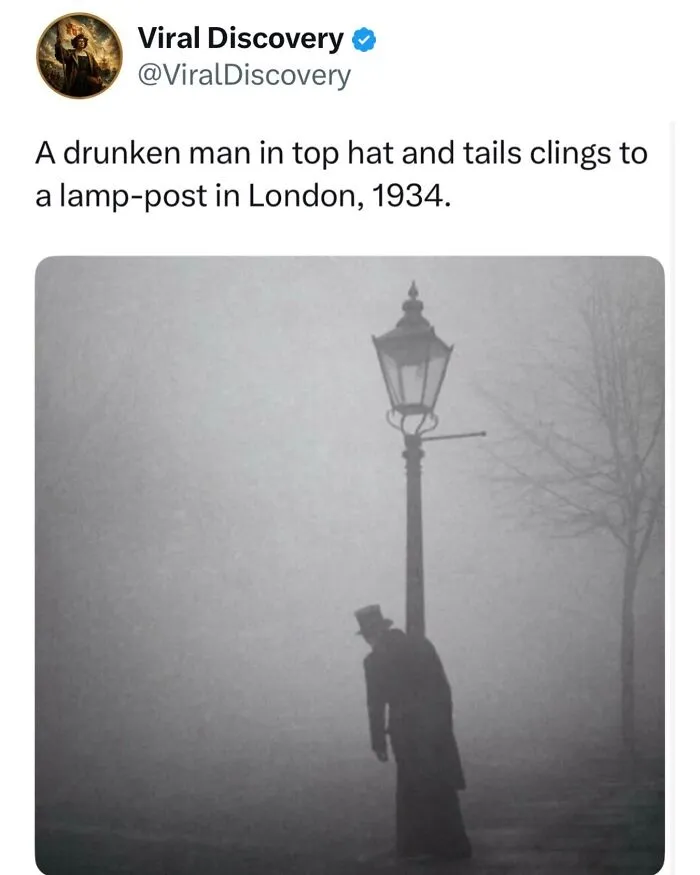
This 1934 black and white photograph by Bill Brandt captures a solitary man dressed in a top hat and formal evening wear leaning against a traditional street lamp. Set against a thick and obscuring London fog, the atmospheric image highlights the dramatic play of light and shadow characteristic of Brandt’s early documentary work.
The misty backdrop dissolves the urban environment into a haunting, surreal landscape that emphasizes the subject’s isolation. Through this striking composition, the photographer effectively captures both a specific social archetype of the era and the unique, moody essence of mid-century British city life.
The misty backdrop dissolves the urban environment into a haunting, surreal landscape that emphasizes the subject’s isolation. Through this striking composition, the photographer effectively captures both a specific social archetype of the era and the unique, moody essence of mid-century British city life.
Report
4points
#37

This isn’t a train station. It’s a storage yard in Lianyungang, Jiangsu, where rows of China’s high-speed trains are parked before heading out to serve passengers. The photo was taken in the early morning on June 30, 2026.
The scale is a glimpse of just how massive China’s high-speed rail system has become. When China adjusted its railway schedule on July 1, it added 106 passenger train services, bringing the nationwide schedule to 12,174 passenger trains.
The scale is a glimpse of just how massive China’s high-speed rail system has become. When China adjusted its railway schedule on July 1, it added 106 passenger train services, bringing the nationwide schedule to 12,174 passenger trains.
Report
3points
#38
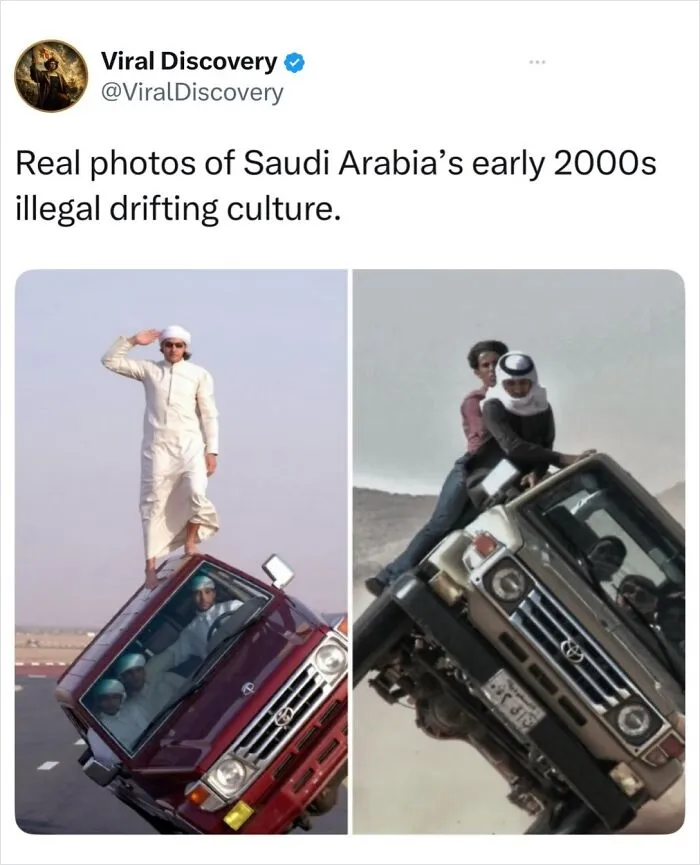
In the early 2000s, Saudi Arabia’s highways hosted a dangerous, illegal drifting subculture known as hajwalah. Drivers modified everyday sedans and SUVs to perform high-speed stunts like balancing vehicles on two wheels while passengers hung out of the windows. Harsh penalties and police crackdowns eventually suppressed the underground scene.
Report
3points
#39
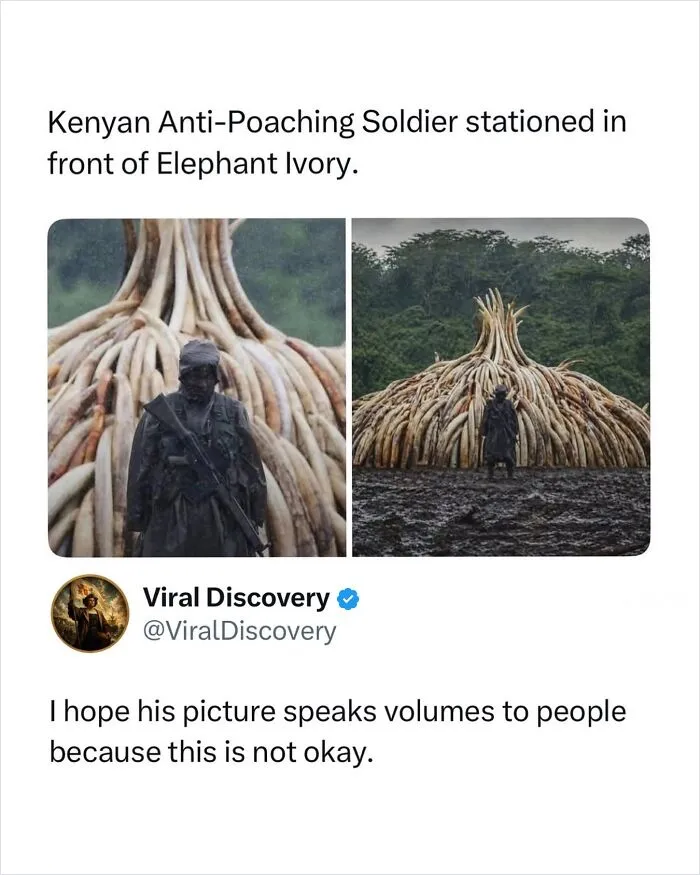
I thought we were over hunting for tusks?!!
“Tusk hunting” usually refers to the pursuit of elephants, walruses, or wild boars specifically for their tusks — prized for ivory, status symbols, weapons, or trade. In the 19th and early 20th centuries, ivory hunters traveled deep into African forests and savannas, facing dangerous wildlife, disease, and harsh terrain in search of massive elephant tusks that could weigh over 100 pounds each.
The hunt became one of the most controversial wildlife practices in history because the global ivory trade devastated elephant populations. Today, many countries ban ivory trading, and conservation groups work to protect elephants from poaching. Modern discussions about tusk hunting often center on wildlife conservation, ethics, and the balance between human traditions and endangered species protection.
Report
3points
#40
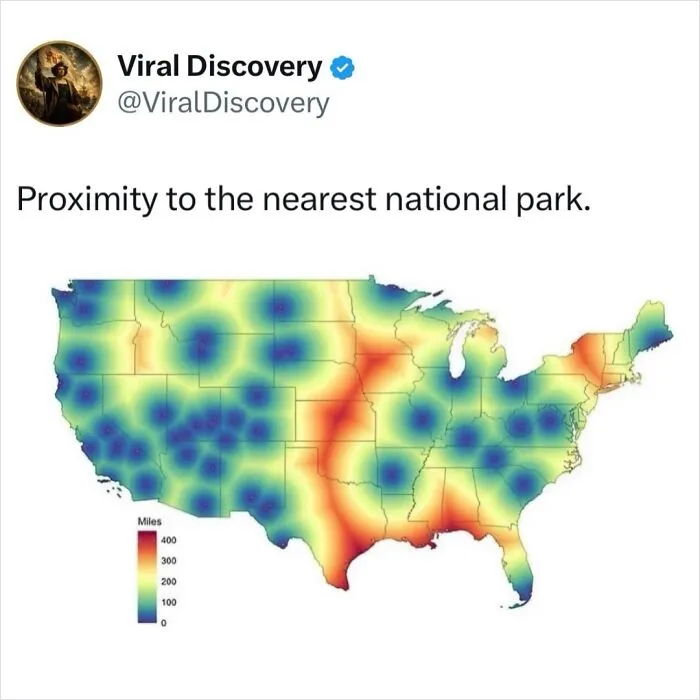
The United States has 63 designated national parks, but the broader National Park Service system includes more than 400 sites, ranging from national monuments and battlefields to historic parks, seashores, rivers, and recreation areas.
The map measures distance in miles, as shown in the key. Dark blue and purple indicate areas closest to a national park, while yellow, orange, and red represent greater distances. The biggest takeaway is how much easier national park access is in the western United States. The West contains dense clusters of some of the country’s most famous parks, including Yosemite, Yellowstone, Grand Canyon, Zion, Glacier, Olympic, and Rocky Mountain. California, Utah, Arizona, Washington, and parts of Colorado are particularly well covered.
By contrast, the orange and red areas highlight regions where residents may be hundreds of miles from the nearest designated national park. Much of the Great Plains, along with parts of Texas, Louisiana, Mississippi, Alabama, and the upper Northeast, have larger gaps in access. That does not mean these regions lack protected or scenic public lands. National forests, state parks, wildlife refuges, historic sites, and national monuments may still be nearby. They are simply farther from a site that falls specifically into the “national park” category.
Report
3points
