





#1
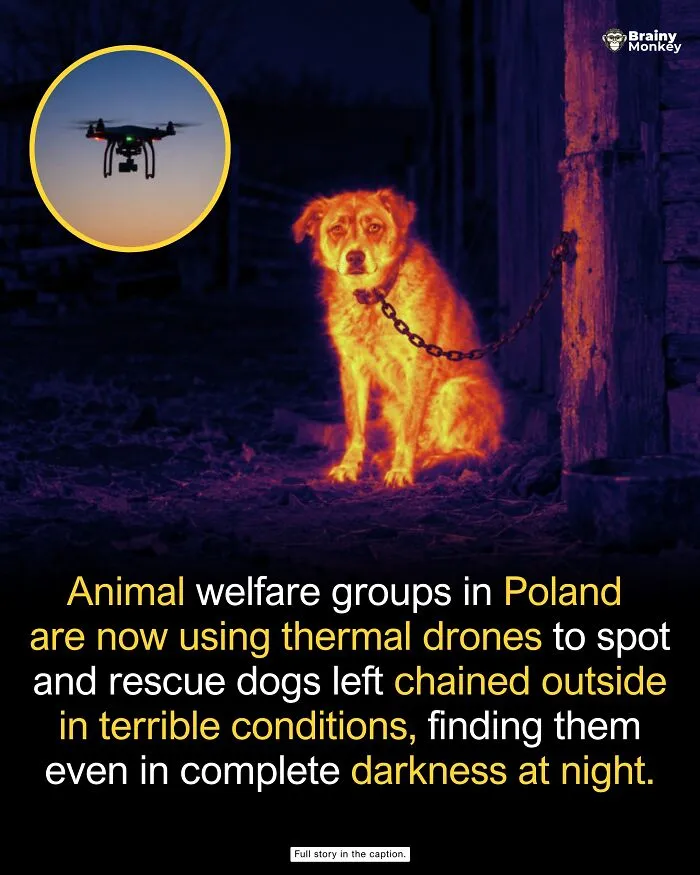
In Poland, animal welfare groups are using thermal imaging drones to locate dogs left outside in freezing and dangerous conditions, even in places rescuers cannot easily see from the ground.
The drones detect body heat, helping teams spot animals behind fences, sheds, and barns. Powerful zoom cameras can also help inspectors check chain lengths and visible injuries from a distance.
Each flight can record GPS coordinates and timestamps, giving authorities evidence that may be used in animal cruelty investigations.
A single drone can scan dozens of properties in minutes, helping rescuers cover far more ground than traditional inspections alone.
Even in complete darkness, neglected dogs are becoming harder to hide.
#2
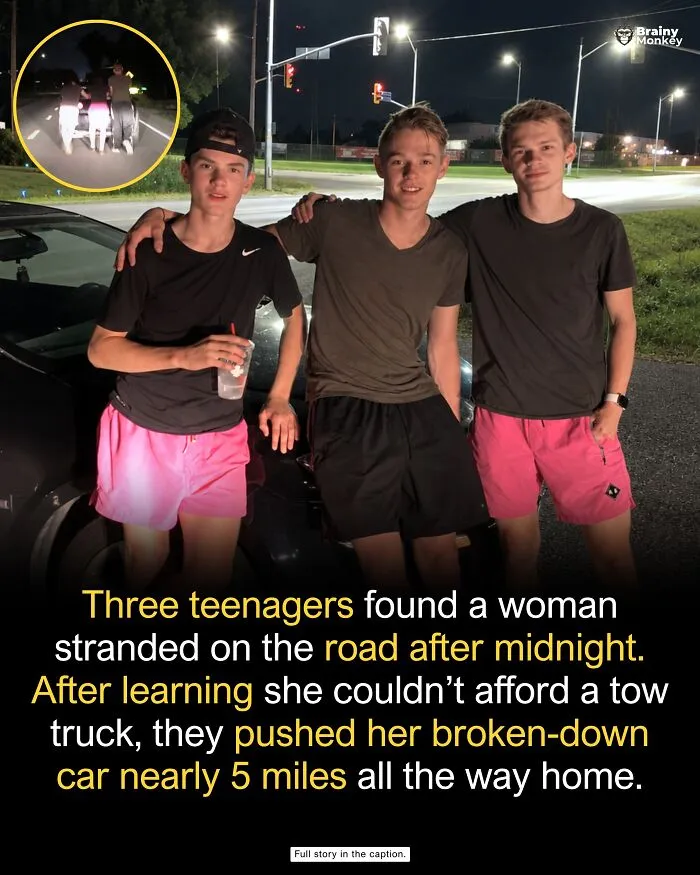
Around 1 a.m. in Ontario, Canada, 18-year-old Aeron McQuillin, 17-year-old Bailey Campbell, and 15-year-old Billy Tarbett spotted a woman stranded on the side of the road.
Her car had broken down, and she told them she couldn’t afford a tow truck. They could have kept driving. Instead, they decided to help.
With the woman steering, the three teenagers began pushing the car by hand, moving it nearly 7 kilometers down the road toward her home. The trip took more than 2 hours.
Another driver eventually stopped to help by following behind them with headlights and hazard lights on for safety.
Even with hills, exhaustion making things harder, the boys kept going.
Just after 4 a.m., they finally pushed the car into the woman’s driveway.
3 teenagers. Nearly 7 kilometers. More than 2 hours of pushing. One stranger they refused to leave behind.
Sometimes kindness looks like showing up when nobody expects you to.
#3
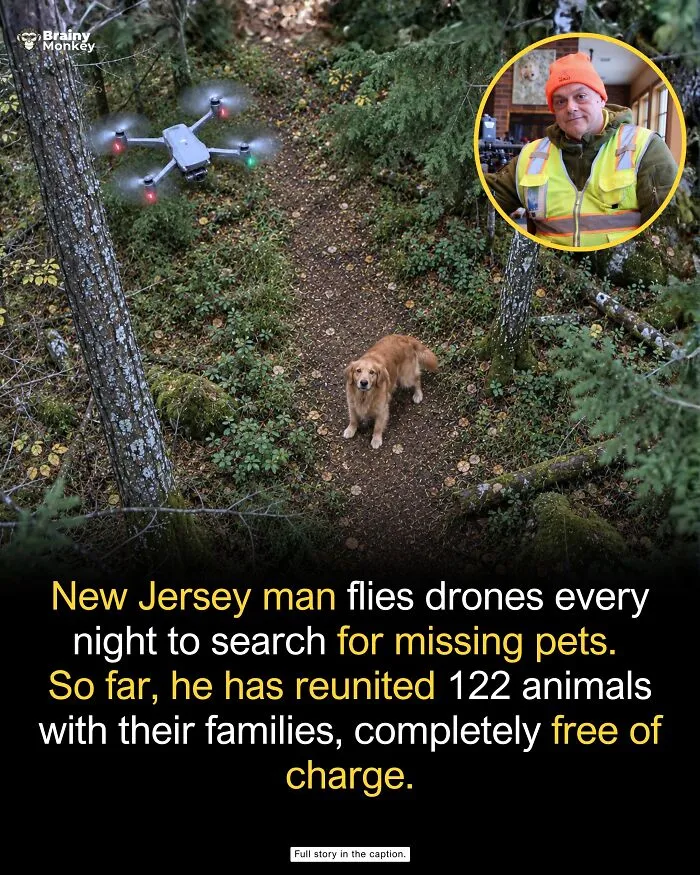
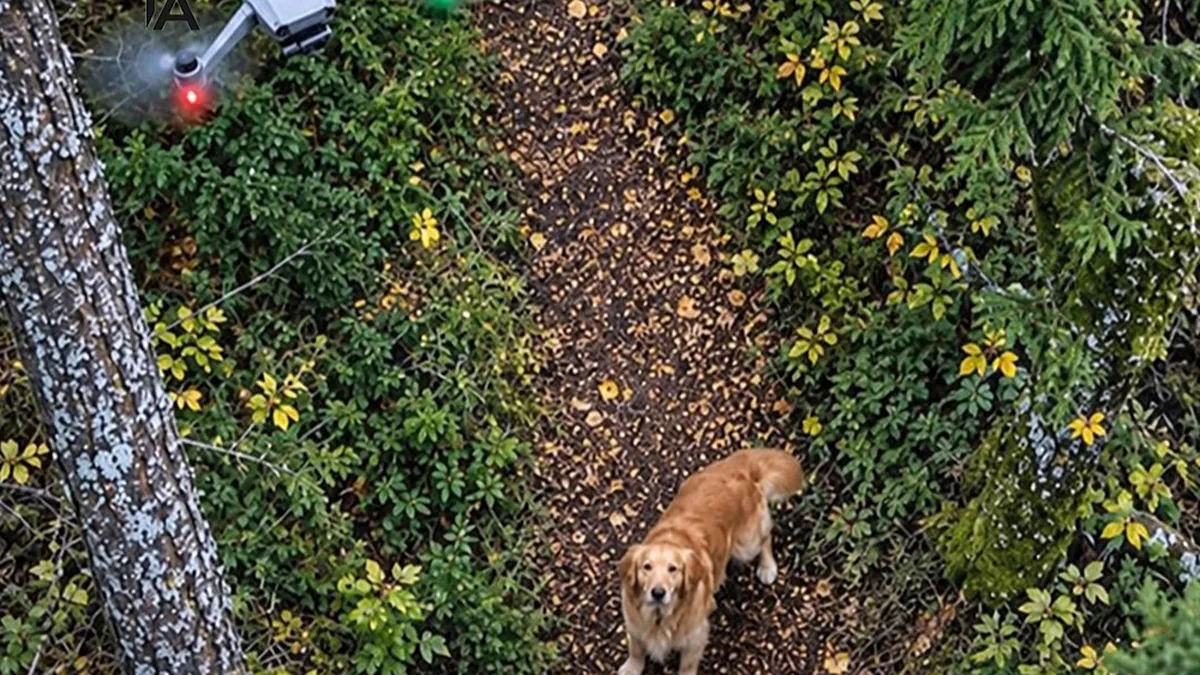
In Manasquan, New Jersey, 64-year-old Michael Parziale spends his evenings flying a fleet of 18 drones, many equipped with thermal cameras, searching woods, fields, and neighborhoods for missing animals.
In just two years, he has helped recover 122 pets, including dogs, cats, and even a cow.
One puppy named Shade had been missing for 27 hours. Parziale found him in just 41 minutes.
And he never charges the families.
His nonprofit, Unmanned Search and Rescue (U.S.A.R.) Drone Team, runs on donations so seniors and low-income pet owners can get help without worrying about the cost.
Parziale also trains military veterans to fly drones, giving them skills that can lead to work in surveying, agriculture, photography, and infrastructure inspection.
122 animals found. Countless families relieved. One man using technology to bring loved ones home.
Humans are kinder than the news suggests, and the research has been making this case for years. A study from the University of Sussex found that people consistently overestimate how motivated others are by self-interest and underestimate how often they act out of genuine generosity.
This bias is so consistent that psychologists have a name for it: the cynicism bias. We have been trained by a media ecosystem that runs on conflict to assume the worst about strangers, and strangers keep disproving it without making enough noise for anyone to notice. The Brainypedia feed exists to remind us that there is still some good to look out for in this world.
#4
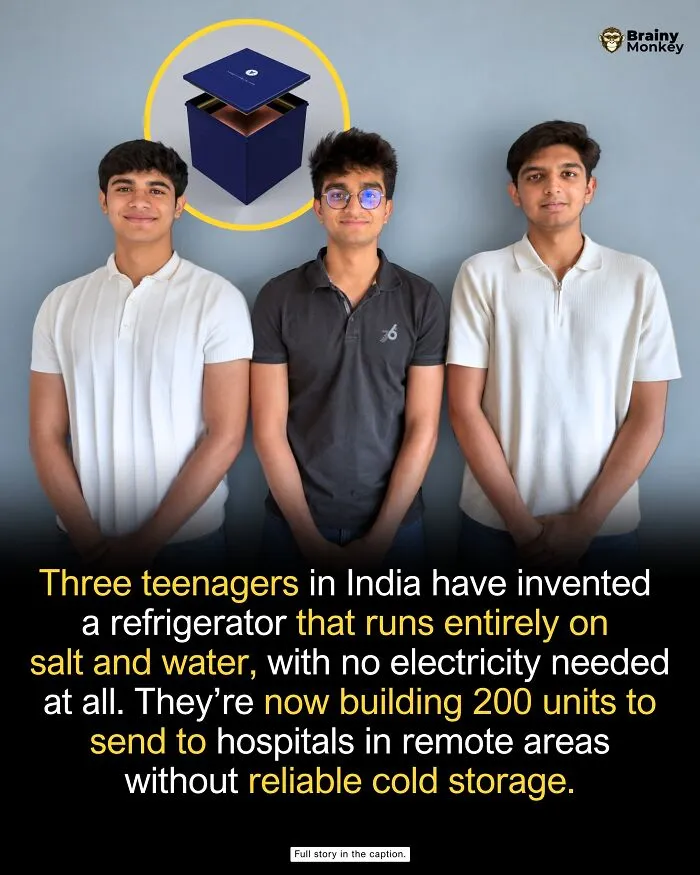
In 2025, 16- and 17-year-olds Dhruv Chaudhary, Mithran Ladhania, and Mridul Jain created Thermavault, a portable cooling system designed to keep medicines and vaccines cold in places where reliable electricity is hard to find.
The device can maintain temperatures of around 2–6 °C (35–43 °F) for 10–12 hours, making it suitable for storing temperature-sensitive medical supplies.
Even better, the salts used in the cooling process can be reused, helping keep operating costs low.
Their idea earned them the Earth Prize Asia 2025 and $12,500 in funding. Now, they plan to build 200 units and test them across 120 hospitals in India.
The inspiration came from a real problem. During COVID-19, many rural clinics struggled to keep vaccines cold because of unreliable power.
Their solution is simple, portable, and potentially life-changing.
Three teenagers. Salt, water, and one idea that could bring reliable cold storage to places that need it most.
#5
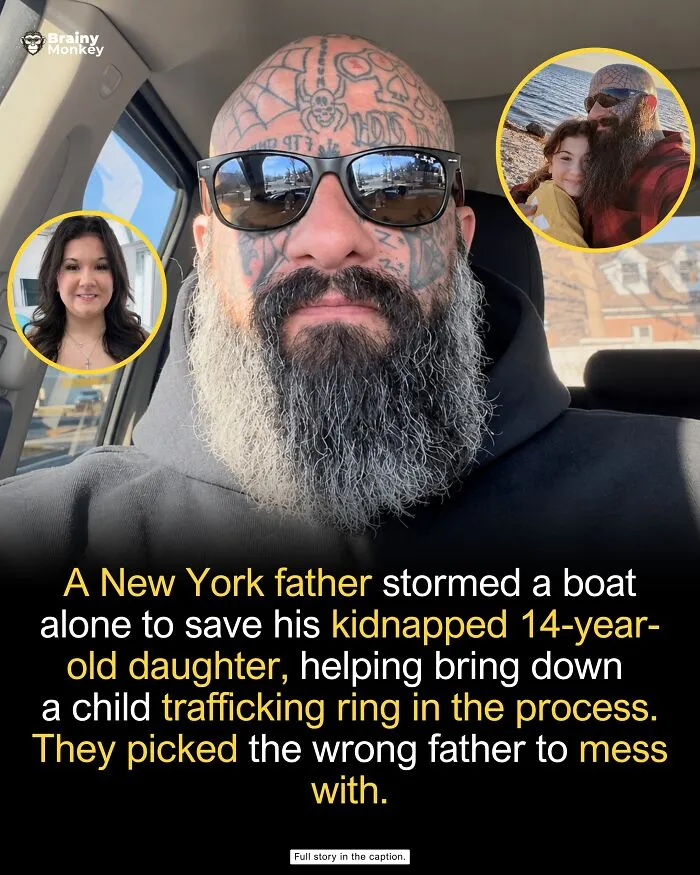
New York father Frank Gervasi spent 26 days searching for his missing 14-year-old daughter, Emmarae Gervasi, refusing to stop until he found her.
Then a tip led him to a 56-foot yacht in Islip, Long Island, New York.
Frank went there himself and found Emmarae before police arrived, finally bringing his daughter home after nearly 1 month of searching.
But the rescue was only the beginning. The case later expanded into a major investigation involving allegations of kidnapping, r**e, and child s*x trafficking.
Authorities ultimately arrested 13 people, while 11 suspects were named in an 83-count indictment connected to the case.
For Frank, it was never about being called a hero. He just wanted Emmarae back.
26 days. One determined father. And he never gave up until his daughter was home.
#6
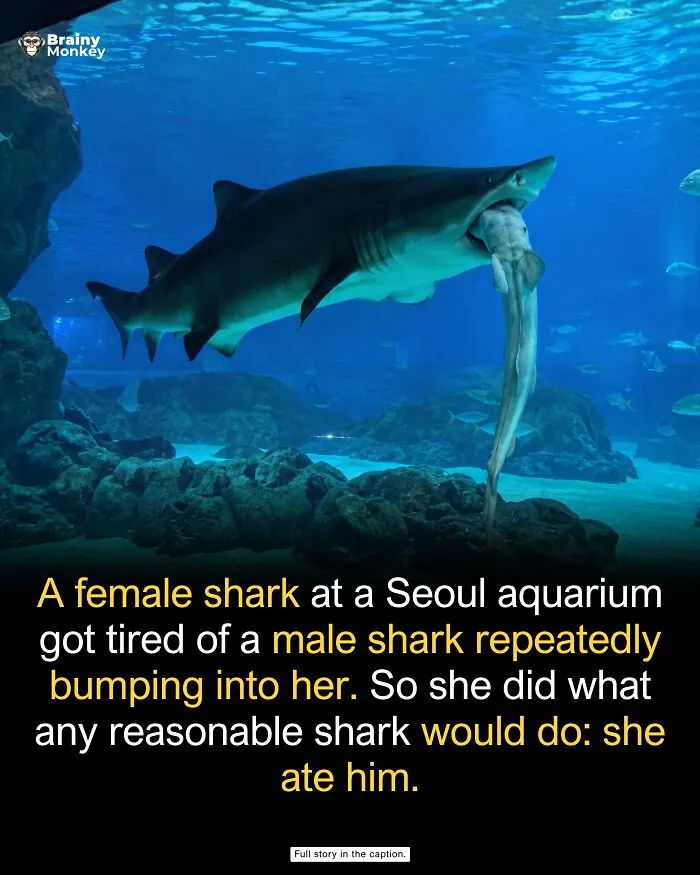
In January 2016, an 8-year-old female sand tiger shark at the COEX Aquarium in Seoul attacked a smaller 5-year-old male banded houndshark after repeated collisions inside their shared tank.
Then came the part visitors could hardly believe.
Over the next 21 hours, the female slowly swallowed the male almost completely, leaving only his tail sticking out of her mouth.
Aquarium staff described the incident as a territorial dispute, explaining that sharks can become aggressive when another animal repeatedly enters their space.
The size difference made it even more dramatic: the female was about 7.2 feet long, while the male was roughly 4 feet.
The internet, which is responsible for an impressive share of the world's problems, is also one of the most effective fundraising tools for medical crises ever. GoFundMe reports that a medical campaign is started on its platform every two minutes, and that cancer-related campaigns consistently receive the highest average donations of any category.
Strangers, people who will never meet the person in the photo, contribute almost a billion dollars every year to help cover treatments, travel costs, and living expenses for people they found through a shared post. The algorithm that spread the bad news is the same one spreading the fundraiser. It just does not get as much credit for the second part.
#7
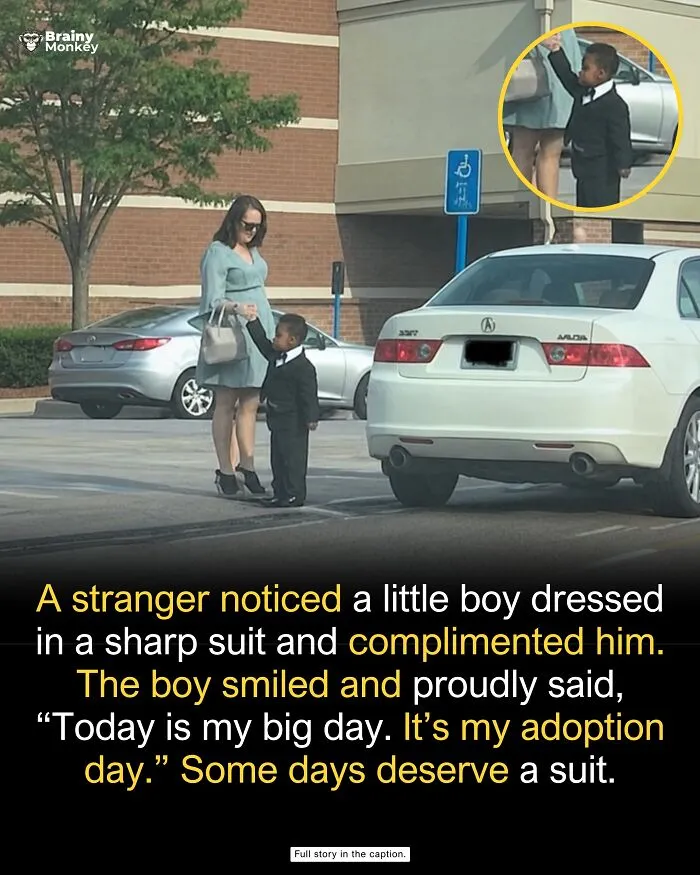
In 2022, a little boy was spotted in public dressed sharply in a suit. When a stranger complimented him, he smiled and proudly replied:
“Today is my big day. It’s my adoption day.”
The simple moment quickly spread online, with people celebrating the joy of a child finally beginning a new chapter with his forever family.
For many families, adoption day is more than paperwork. It is the day waiting ends and belonging begins.
One little boy. One sharp suit. One adoption day. One unforgettable reason to dress for the occasion.
Some days really do deserve a suit.
#8
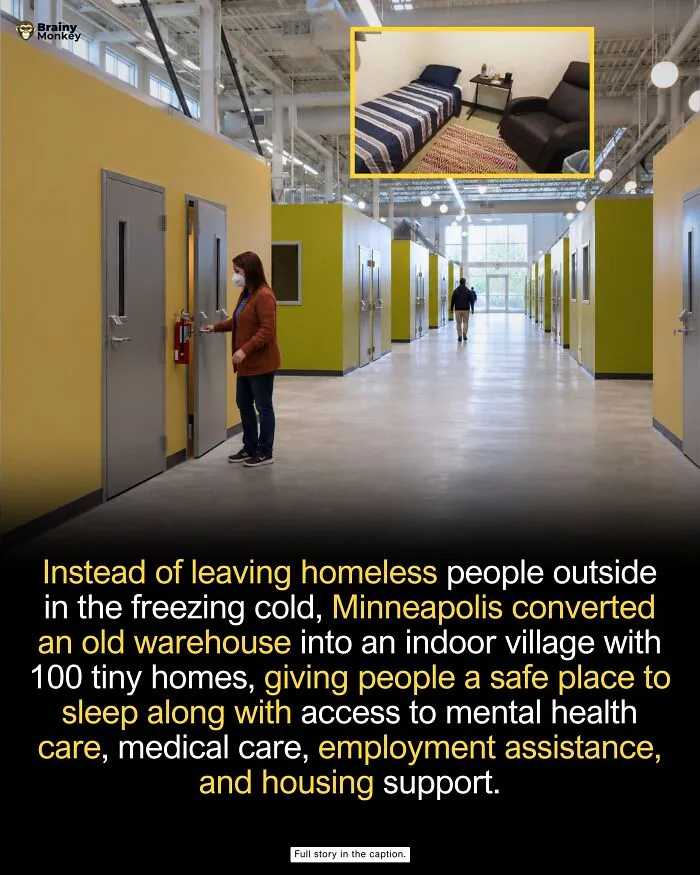
In Minneapolis, a former warehouse was transformed into Avivo Village, an indoor community created for people experiencing homelessness.
Instead of sleeping in a large shared room, each resident gets their own private tiny home and a safe place to stay while working toward permanent housing.
The village also offers on-site mental health care, medical services, substance-use treatment, employment support, housing assistance, and case management.
Staff and security are available 24/7, giving residents support around the clock.
Since opening in December 2020, Avivo Village has helped hundreds of people get off the streets.
By July 2026, 873 people had stayed there, and 339 residents had moved into permanent housing.
100 private tiny homes.
873 people served.
339 moved into permanent housing.
One warehouse turned into a second chance.
#9
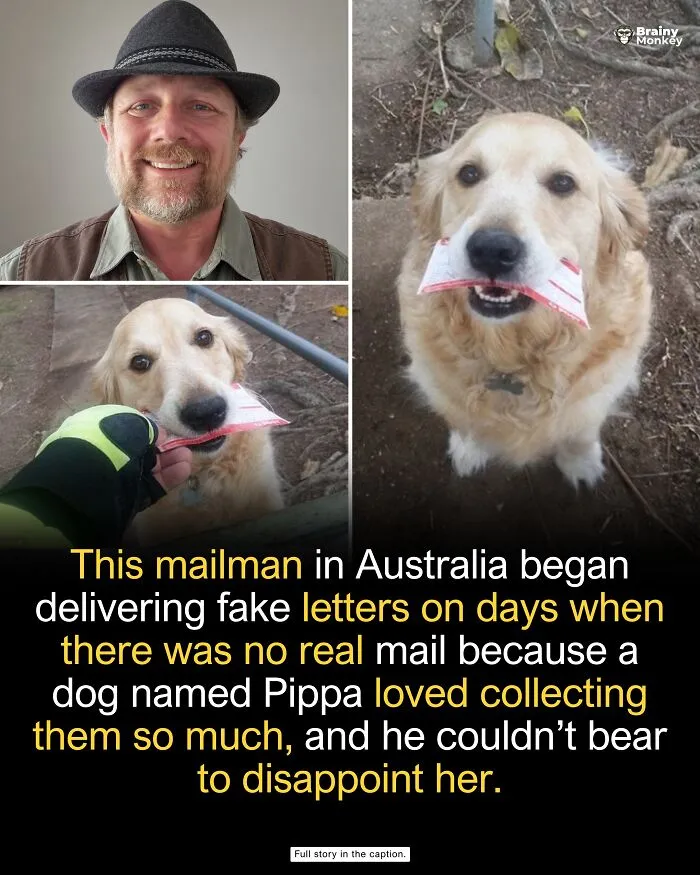
Back in 2016, Australian mail carrier Martin Studer had one very enthusiastic customer: a golden retriever named Pippa.
Every morning, Pippa would wait by the gate for Martin, gently take the family’s mail from his hand, and proudly carry it back inside like it was her official job.
But on days when there was no mail, Pippa would be left waiting with nothing to collect.
Martin couldn’t bear to disappoint her.
So he started carrying blank postal cards in his bag and writing “Mail for Pippa” on them.
Whenever there was no real post, he would hand Pippa one of the fake letters so she could still complete her daily mission.
1 mailman. 1 golden retriever. 0 real letters needed to make her day.
Sometimes the smallest act of kindness can mean everything to a dog.
Animals reclaiming urban spaces is one of the more spectacular ongoing stories of the last decade. During the COVID-19 lockdowns of 2020, wild animals moved into cities around the world with confidence, as if they had been waiting for exactly this opportunity.
We saw mountain goats take over a town in Wales, wild boars wander through Barcelona, a puma found roaming the streets of Santiago, Chile, and deer appear in Japanese city centers. The natural world did not collapse while humans stayed indoors. Instead, it exhaled, stretched out, and immediately started making plans for real estate. This kind of re-naturalization is the good news that we truly hope keeps coming our way.
#10
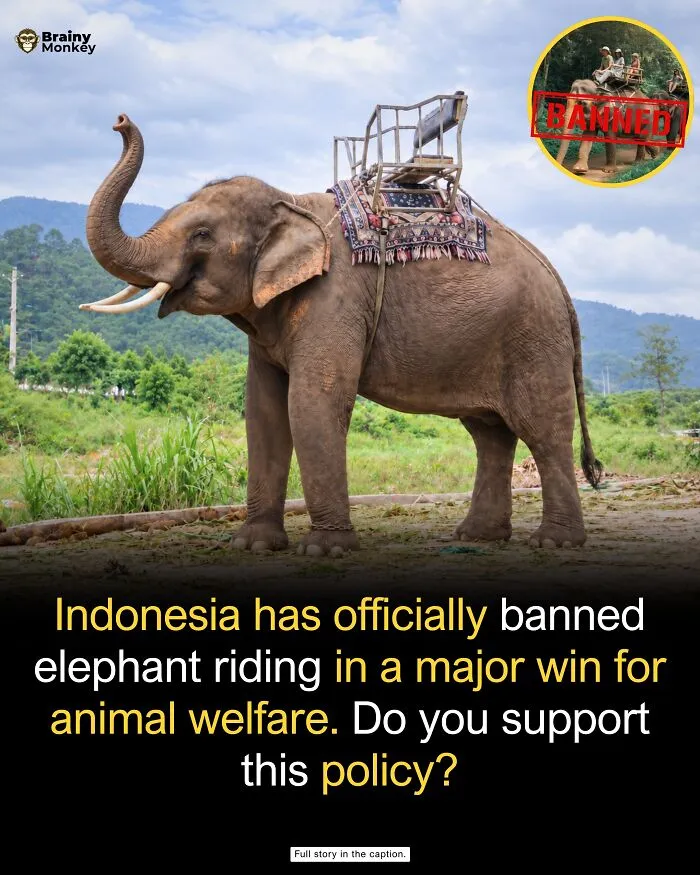
In a major move for animal welfare, Indonesia has banned elephant-riding activities at conservation institutions and wildlife tourism facilities nationwide, shifting the focus from rides to observation, education, and more ethical wildlife experiences.
The policy was introduced in late 2025 and began taking effect in 2026.
Officials said the goal is to protect the physical and psychological well-being of elephants and move away from using them as tourist entertainment.
Wildlife parks and conservation centers are now being required to end elephant-riding programs and replace them with more animal-friendly alternatives.
Several major facilities have already made the switch, allowing visitors to observe and learn about elephants without climbing onto their backs.
2025: policy introduced.
2026: implementation begins.
1 nationwide shift away from elephant rides.
For Indonesia’s elephants, tourism is starting to look a lot less like entertainment and a lot more like respect.
#11
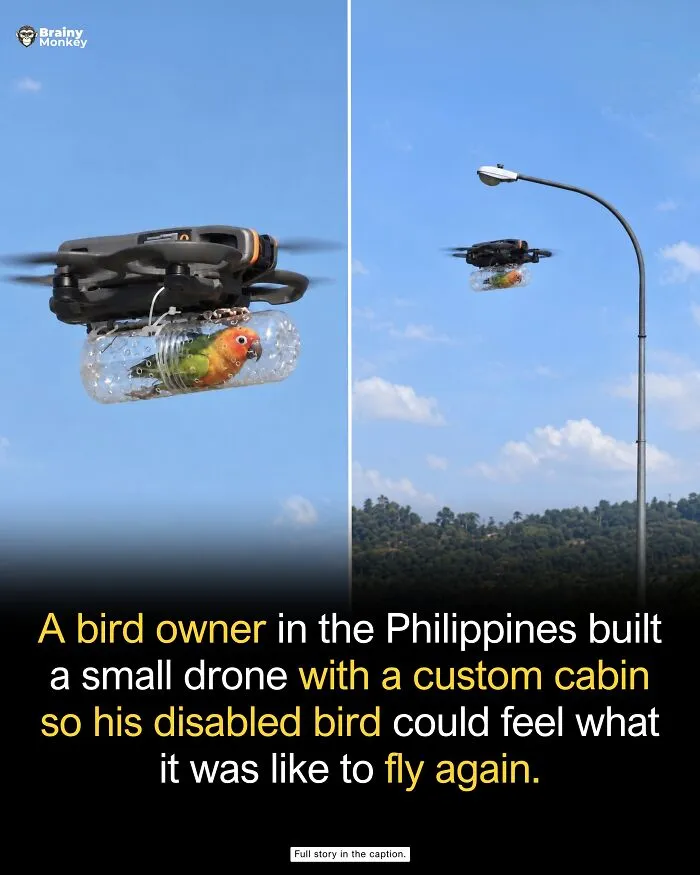
In Davao City, Philippines, bird owner Marc Joseph Colando built a custom transparent cabin beneath a drone so his injured lovebird, Nitya, could experience flying again.
Nitya had been badly hurt in a cat attack in 2025, leaving her unable to stand, walk, or land properly. She could still manage short, low flights, but nothing like before.
So Marc built her a lightweight, ventilated cabin and securely attached it beneath a DJI drone.
On April 13, 2026, Nitya took her first assisted flight.
Since then, she has spent 10 to 15 minutes in the air almost every day, soaring above fields and parks while chirping from her tiny cabin.
One bird. One drone. One owner who refused to let an injury take away her sky.
#12
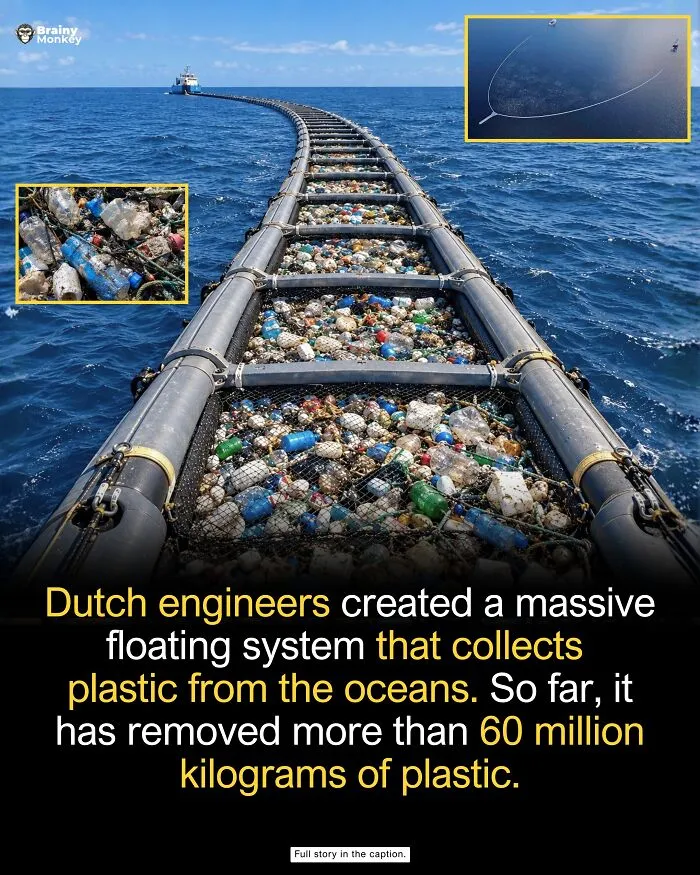
Founded in 2013 by Dutch inventor Boyan Slat, The Ocean Cleanup now deploys massive floating barriers across polluted waters, including the Great Pacific Garbage Patch, where ocean currents naturally concentrate plastic waste.
The project also uses solar-powered Interceptors in rivers to stop trash before it ever reaches the sea.
So far, the organization says it has removed more than 60 million kilograms of plastic from oceans and waterways worldwide.
What began as one young inventor’s ambitious idea has grown into a global operation involving more than 150 engineers and scientists, all working toward an even bigger goal: reducing floating ocean plastic by 90% by 2040.
60+ million kilograms removed. 150+ engineers and scientists. One mission: stop plastic before it takes over our oceans.
If you are looking for a feel-good fact, the recovery of the bald eagle is one of conservation's biggest success stories, and it happened within a single human lifetime. In 1963, there were an estimated 417 nesting pairs of bald eagles left in the contiguous United States. The population had been devastated by hunting, habitat destruction, and the widespread use of the pesticide DDT, which thinned the shells of their eggs.
After DDT was banned in 1972 and the species received federal protection, the population began recovering. Now, there were nearly 71,000 nesting pairs, and the bald eagle was removed from the endangered species list. The bird on the national seal came within a generation of disappearing entirely, and then did not.
#13

With millions of square feet of retail space sitting empty after the decline of big chains like Sears and Target, developers across Canada are reimagining these properties as housing solutions.
Why malls? They already have many of the things new neighborhoods need: roads, parking, transit access, utilities, and huge amounts of indoor space.
Projects in cities such as Calgary, Edmonton, and Ottawa are exploring or building new uses for underused mall properties, including senior housing and rental apartments.
With Canada facing a housing shortage while traditional malls struggle with vacancies, developers are looking at millions of square feet of retail space differently.
Less empty retail. More places to live. One old idea getting a completely new purpose.
#14
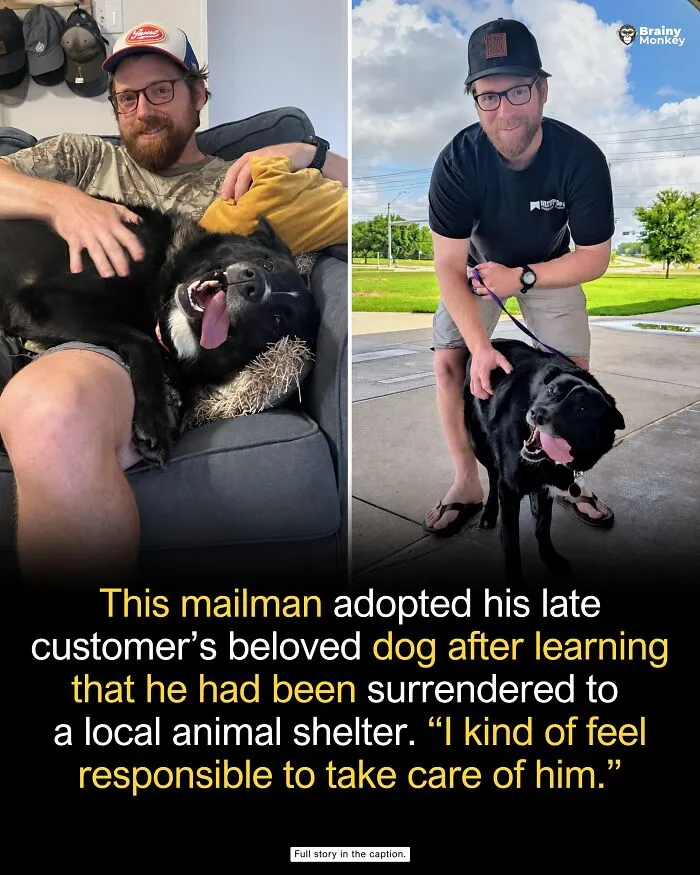
In Denton, Texas, mail carrier Ian Burke formed a bond with Floyd, the beloved dog of a Vietnam veteran who used a wheelchair.
When Floyd’s owner passed away in 2025, the 70-pound German shepherd and border collie mix was surrendered to the City of Denton Animal Shelter.
The moment Burke found out, he knew exactly what he had to do.
He arrived at the shelter at 9:50 a.m., ten minutes before it opened, determined to be first in line to adopt the dog he had known for three years.
“I kind of feel responsible to take care of him,” Burke said. “I think his former owner would be pleased to know his mailman is taking good care of his dog.”
Three years of friendship. One heartbreaking goodbye. One mailman who made sure Floyd never had to wonder where home was again.
#15
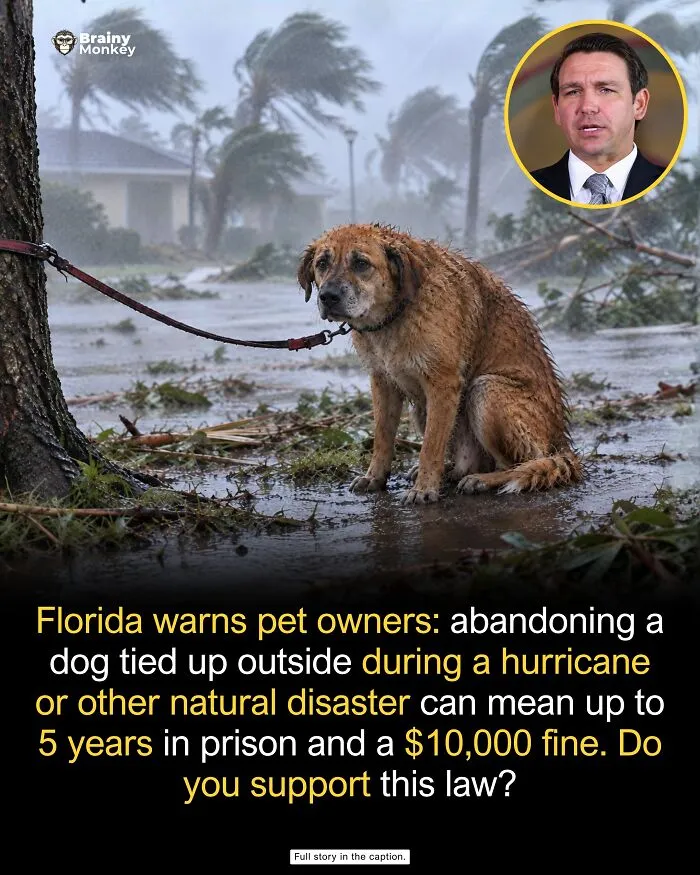
Florida’s Trooper’s Law makes it a third-degree felony to restrain a dog outside and abandon it during a declared natural disaster or evacuation.
The law was inspired by Trooper, a dog who was found tied to a fence as floodwaters rose ahead of Hurricane Milton. His rescue sparked widespread outrage and helped push Florida toward stronger protections for pets during emergencies.
State officials are also reminding residents that pet-friendly shelters are available during evacuations, so leaving an animal behind is not an acceptable option.
During a hurricane, pets have no way to save themselves. They depend entirely on the people responsible for them.
Up to 5 years in prison and a $10,000 fine for abandoning a dog during a disaster. Do you support this law?
Another one is that the reintroduction of wolves to Yellowstone National Park in 1995 produced one of the most extraordinary chain reactions in ecological history. The wolves reduced the deer population, which had been overgrazing riverbanks. With the deer moving less predictably, vegetation recovered along the rivers. Recovering vegetation stabilized the riverbanks, thereby changing the course and behavior of the rivers themselves.
The presence of 31 wolves eventually altered the physical geography of the park, in what scientists call a trophic cascade. The return of one species reorganized an entire ecosystem, which is the kind of thing that makes you feel that the planet knows what it is doing when humans get out of the way.
#16

That’s exactly what’s happening in parts of China, where several cities have started displaying renowned scientists on giant public screens, metro stations, shopping centers, and other high-visibility spaces usually dominated by commercial ads.
Among the faces being featured are rocket scientist Qian Xuesen, Nobel Prize winner Tu Youyou, and agricultural pioneer Yuan Longping, with displays highlighting their discoveries, achievements, and contributions to society.
The idea has attracted attention because it puts science, education, and innovation in the same spotlight usually reserved for entertainment and celebrity culture.
Supporters say the message to young people is simple: these are people worth looking up to too.
The trend began in parts of Shandong Province and has since appeared in places including Henan, Anhui, Inner Mongolia, and beyond.
Chinese cities are putting scientists on giant billboards so the next generation grows up seeing discovery and achievement as something worth celebrating. Would you support this where you live?
#17
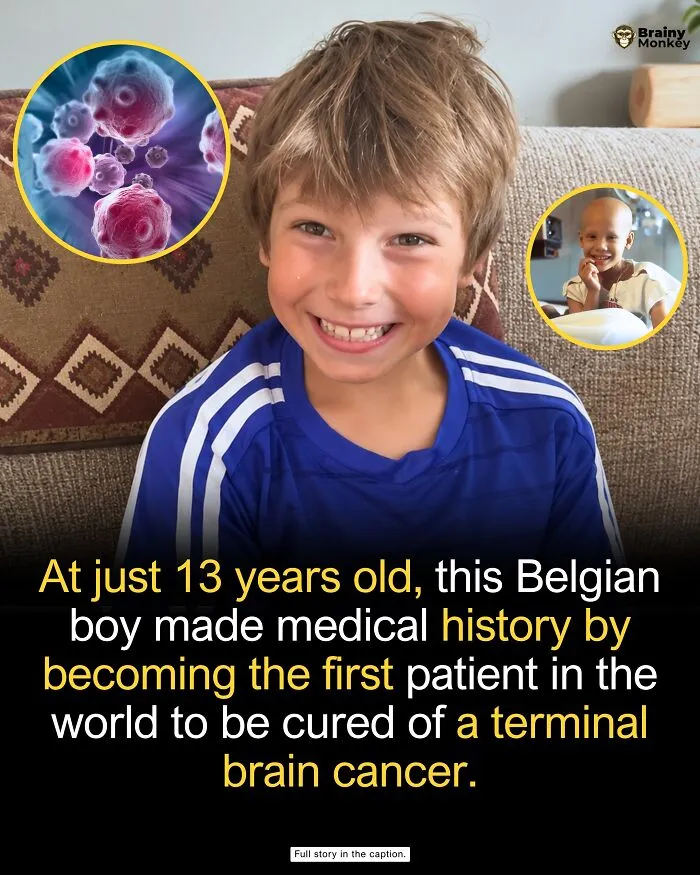
At age six, he was diagnosed with diffuse intrinsic pontine glioma (DIPG), one of the deadliest childhood brain tumors, with most patients surviving less than two years.
Lucas joined the BIOMEDE clinical trial in Paris and was treated with everolimus, a drug designed to block pathways involved in tumor growth.
Then something extraordinary happened.
Scan after scan showed the tumor shrinking, until eventually it disappeared completely.
By 2024, Lucas was reported as the first known patient in the world to achieve a complete, lasting response to DIPG, turning a diagnosis once considered almost universally fatal into a medical milestone.
A boy given almost no chance became the case that gave doctors a reason to believe the impossible might not stay impossible forever.
#18
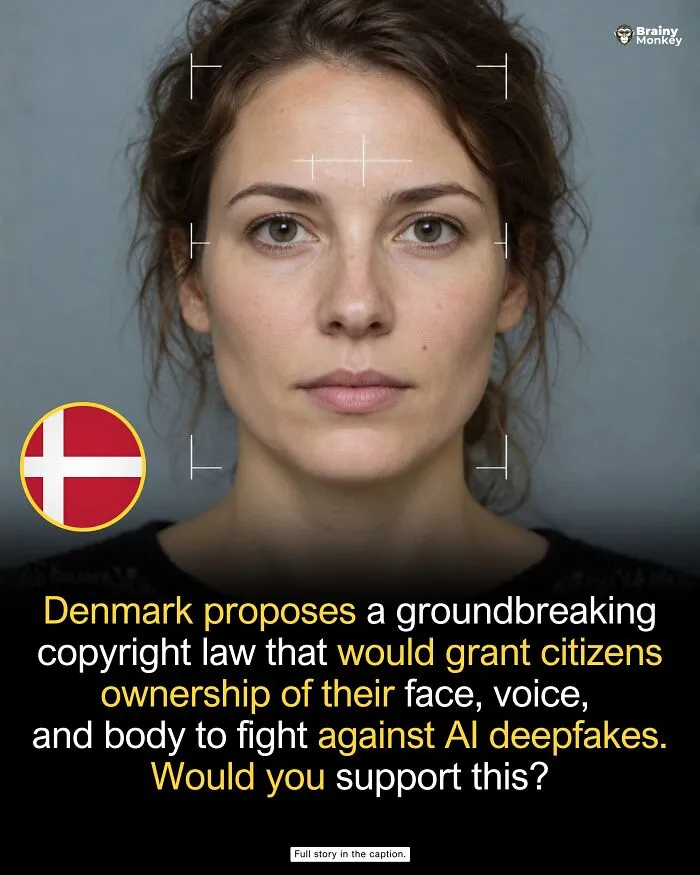
In June 2025, Denmark announced plans to strengthen its copyright law to protect people from realistic AI-generated deepfakes.
The proposal would give people stronger legal control over unauthorized digital copies of their face, voice, appearance, and movements.
If someone creates and publicly shares a realistic AI version of you without consent, you could demand that it be removed and potentially seek compensation.
The proposal has broad political support in Denmark and is aimed at protecting people from identity misuse as generative AI becomes more powerful.
It has not yet become law, but if approved, Denmark could introduce one of Europe’s strongest legal protections against deepfakes.
As AI gets better at copying people, Denmark is asking a simple question: Should your digital identity still belong to you?
Lost pets finding their way home is one category that is guaranteed to hydrate your eyes, and some of the distances involved are wildly difficult to explain. Dogs have been reunited with their owners after traveling hundreds of miles, navigating environments they had never encountered before, and locating people who had moved to new addresses.
The scientific consensus is that dogs use a combination of scent mapping, magnetic field sensitivity, and spatial memory to navigate, but researchers at the University of Virginia have also found evidence that dogs can detect the Earth's magnetic field and may use it as a compass. However they do it, they are all the goodest boys, and we JUST want more news about this kind of endurance.
#19
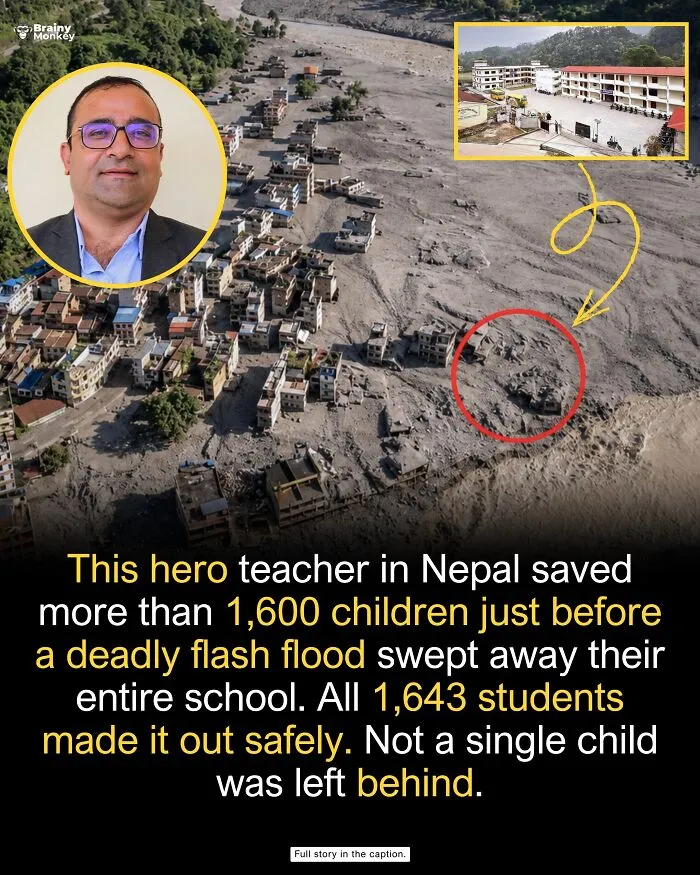
On August 26, 2026, Rajendra Dawadi, principal of Tribhuvan Trishuli Secondary School in Nepal, received an urgent warning that a catastrophic flash flood was rushing toward the Trishuli Valley.
He didn’t wait.
Dawadi rang the school bell, ordered classrooms evacuated, called school bus drivers to turn back, and led students uphill toward higher ground. Minutes later, floodwaters swept through the area and destroyed the school buildings.
All 1,643 students escaped. Not a single child was swept away from the school. Some students and staff were stranded on higher ground for days afterward, but they had escaped the immediate disaster.
Tragically, two school employees were later reported passed away after separately returning toward the flood zone. The wider disaster has devastated Nepal and Tibet, with hundreds of lives ended and thousands still missing.
#20
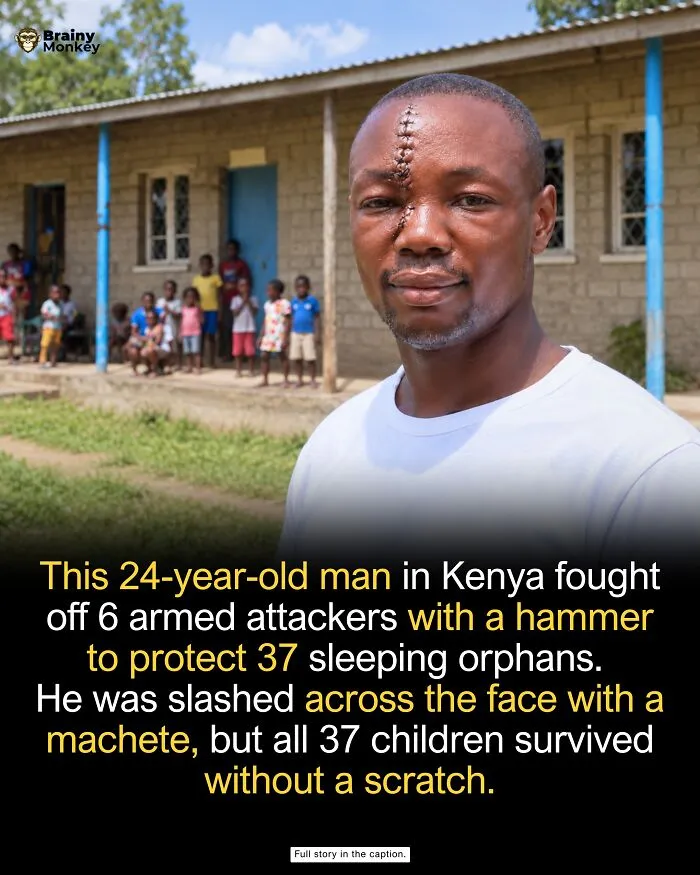
In January 2012, 24-year-old Anthony Omari was guarding the Faraja Children’s Home in Ngong, Kenya, when six intruders tried to break in while 37 orphans slept inside.
Omari grabbed a hammer and fought back.
During the struggle, he was slashed across the head and face, suffering deep wounds that required stitches. But he refused to retreat until the attackers finally fled.
Not one of the 37 children was harmed.
One man. One hammer. Six armed attackers. 37 children protected.
