





Nature is weird, if you haven't noticed. Waxwing birds get drunk on fermented fruit, there are sharks that lay eggs which look like corkscrews, and Brazil has a tree so huge it looks like a lush, green forest. Nothing about wildlife may surprise us anymore, but there are still heaps we can learn.
Bored Panda is bringing you a listicle that's meant to do exactly that. We came across the "Explaining The Wild" Instagram page that shares fascinating information about animals, plants, and geography alike – basically, all things nature. Their mission is for people to "learn about nature one post at a time." So, Pandas, scroll down and see what a glasswing butterfly looks like and the miracle of a park in Austria that sinks underwater every spring.
More info: Instagram
#41
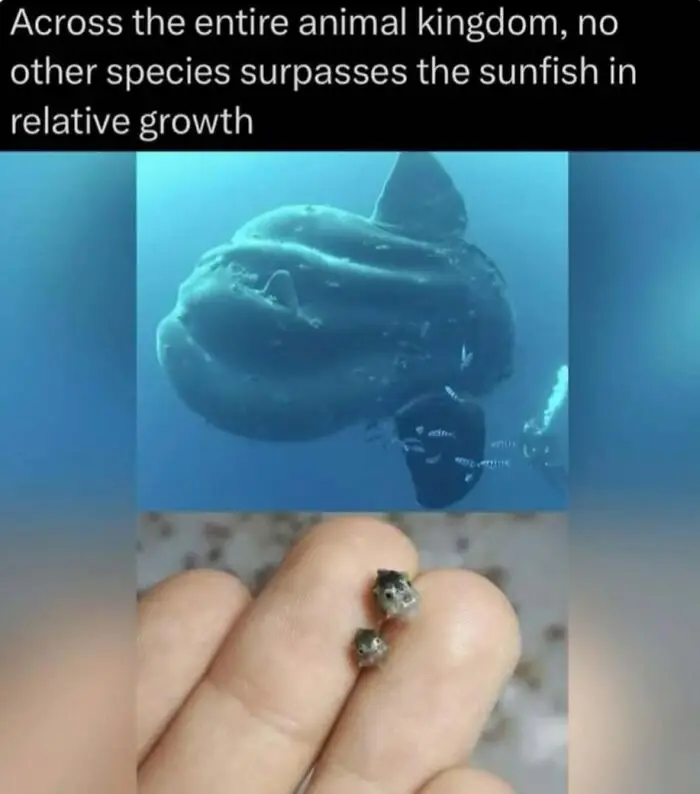
The Ocean Sunfish, or Mola mola, undergoes one of the most extreme growth spurts in the entire animal kingdom. When these giants hatch, they are no larger than a tiny grain of sand, measuring roughly two millimeters in length. To reach their adult size of over ten feet and five thousand pounds, they must increase their birth weight by an incredible sixty million times. If a human baby grew at this same relative rate, it would eventually weigh as much as six Titanic ships.
This rapid transformation is fueled by a specialized diet of jellyfish and small fish, allowing the Sunfish to become the heaviest bony fish on the planet. This staggering biological scaling defies almost everything we see in other vertebrates, as the tiny larvae must survive countless predators before reaching their massive, armored adult form. It is a brilliant example of nature’s ability to turn a microscopic speck into a literal ocean titan through sheer, persistent consumption.
Report
32points
#42

The highest point on Earth was once the bottom of the sea. Geologists have confirmed that the rock capping Mount Everest consists of marine limestone deposited in the ancient Tethys Ocean around 470 million years ago. Through the colossal forces of continental collision between the Indian and Eurasian plates, these seabed sediments were slowly thrust upward, eventually forming the towering Himalayas.
Today, climbers reaching the 8,848-metre summit stand on what was once an underwater world teeming with prehistoric marine life. It is one of nature’s most profound examples of how continents, oceans and mountains are constantly rewriting the story of our planet.
Report
31points
#43
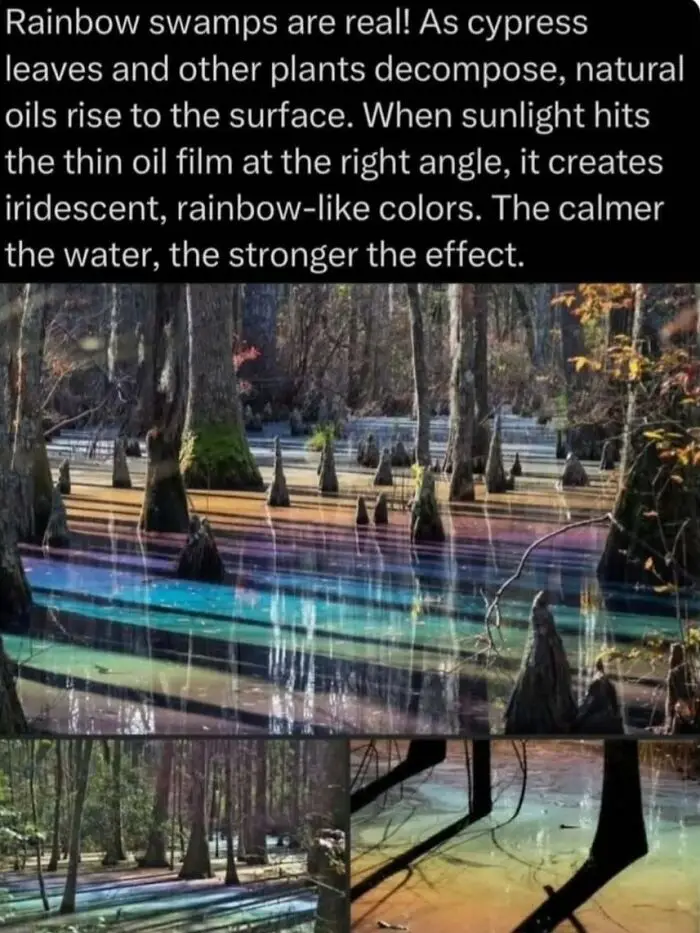
Believe it or not, rainbow swamps are a real, naturally occurring phenomenon! This ethereal display isn’t caused by pollution, but by the decomposition of cypress leaves and other organic matter on the forest floor. As these plants break down, they release natural oils that rise to the surface of the stagnant swamp water.
When sunlight hits this thin oil film at just the right angle, it creates an iridescent, rainbow-like effect across the water’s surface. The calmer and more undisturbed the water is, the more vibrant and solid the rainbow colors appear. It is a stunning example of how even the most stagnant environments can produce moments of incredible, fleeting beauty.
Report
30points
#44
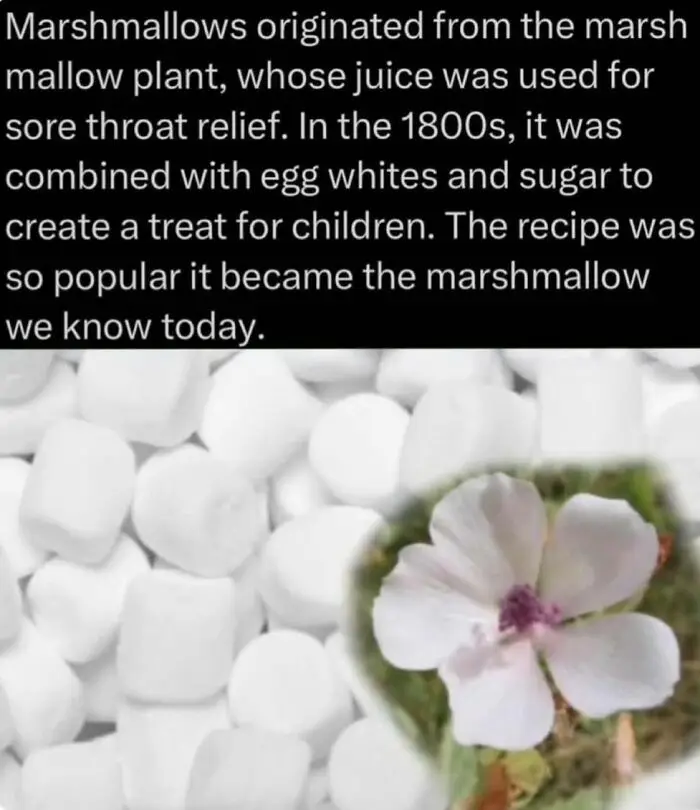
Before they were the fluffy, sugary treats we roast over campfires, marshmallows were actually a medicinal plant growing in the wild. The Althaea officinalis, or “marsh mallow,” is a real herb found in damp wetlands, and its roots contain a thick, gooey sap that was used for centuries to soothe sore throats and coughs.
Ancient Egyptians were the first to turn this plant into a confection, mixing the sap with honey and nuts to create a delicacy reserved strictly for royalty and the gods. It wasn’t until modern candy makers replaced the rare plant sap with gelatin that the marshmallow became the mass-produced snack we know today. While the ingredients have changed, the name remains a permanent nod to the humble riverside flower that started it all.
Report
30points
#45
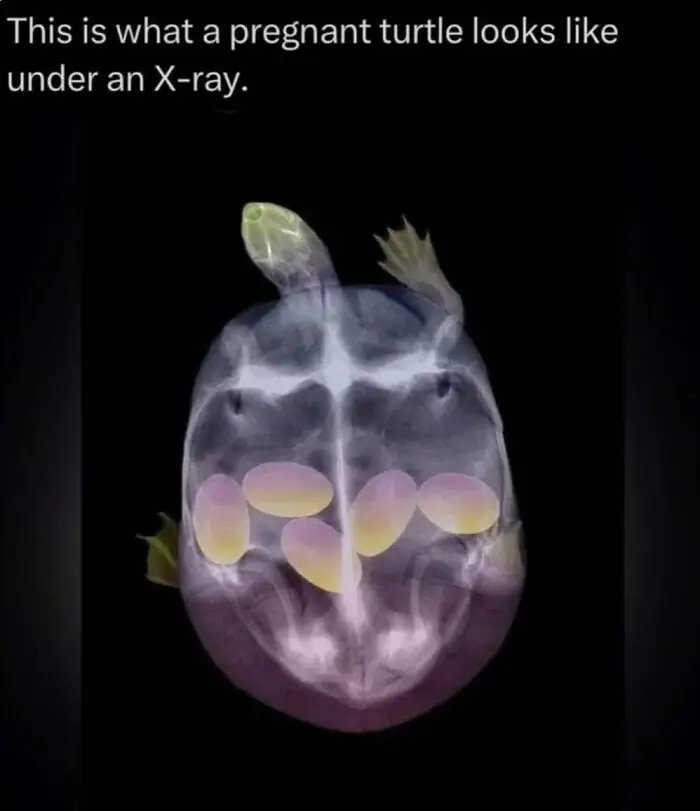
Seeing a turtle under an X-ray provides a rare, transparent look at the biological engineering required to carry life within a rigid shell. Unlike mammals, whose bodies can expand outward to accommodate growing offspring, a turtle’s skeletal structure is fixed. This means the internal organs must shift and compress to make room for the developing eggs, which appear as perfectly oval silhouettes nestled deep within the pelvic cavity.
This internal view highlights the incredible durability of the eggs themselves, which are protected by the mother’s armor-like carapace from external threats. Once the eggs are fully calcified and ready for the nest, the mother must navigate the land to find the perfect sandy spot for burial. It’s a delicate balance of physics and biology, ensuring that even within a literal fortress of bone, the next generation has exactly what it needs to develop before making their break for the ocean.
Report
29points
#46
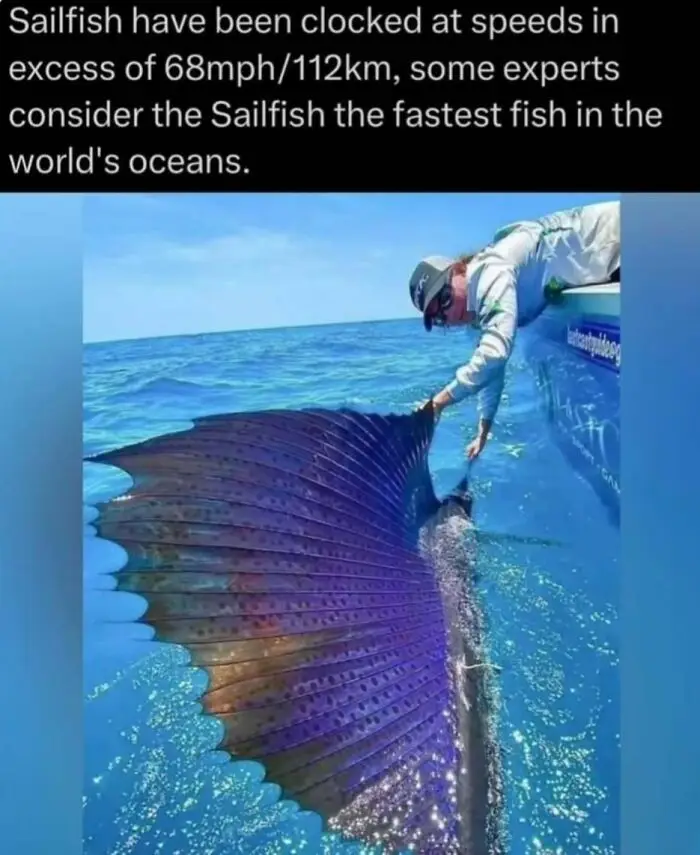
The Sailfish is widely considered the fastest sprinter in the ocean, reaching incredible speeds of over 110km/h. To put that into perspective, that is faster than most speed limits on our highways.
Their secret lies in their incredible streamlined body and a massive dorsal fin, or “sail,” which they can fold down to reduce drag while swimming at top speeds. When they hunt, they raise the sail to make sharp, precise turns, acting like a specialized rudder to outmaneuver their prey.
Report
29points
#47
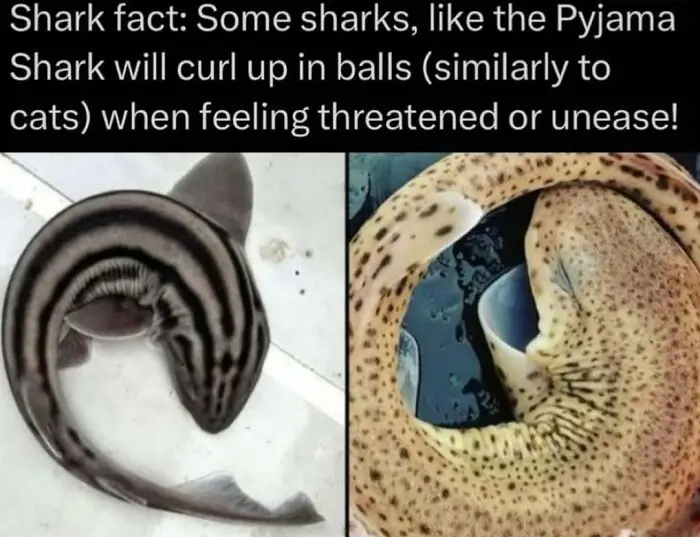
Most people associate sharks with aggressive, apex predator behavior, but the Pyjama Shark has a much more “feline” approach to self-defense. When this small, striped shark feels threatened or uneasy, it has the unusual habit of curling its body into a tight ball, much like a domestic cat. By wrapping its tail over its head, the shark protects its most vulnerable areas from potential predators in the rocky reefs of South Africa.
This behavior is a fascinating example of how smaller marine species evolve unique survival tactics to navigate dangerous environments. Known also as the striped catshark, its namesake “pyjama” stripes act as perfect camouflage among the shadows of kelp forests, but when that fails, it relies on this compact ball shape to appear less like a meal and more like an unappealing, armored object. Nature never ceases to find creative ways for the underdogs of the ocean to stay safe!
Report
29points
#48
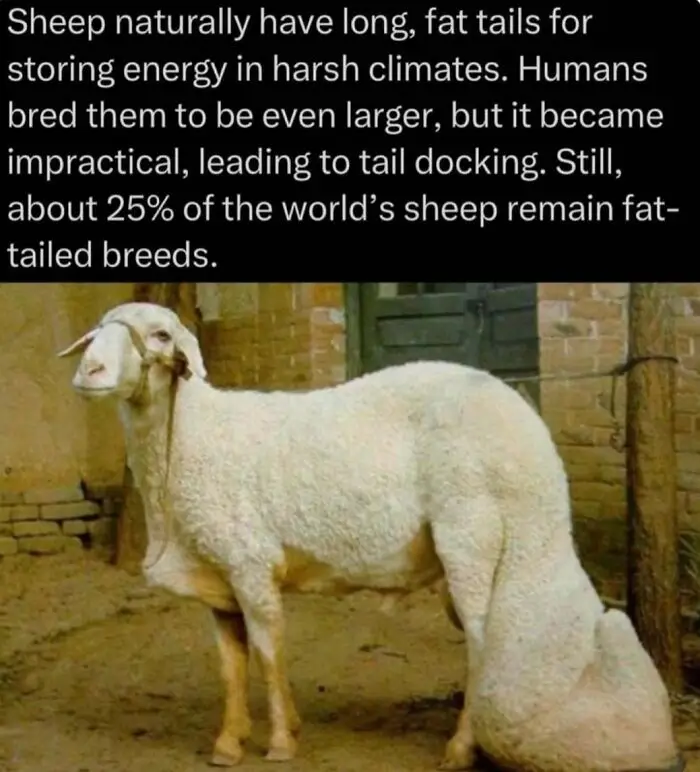
While many people associate fat storage in animals with camels or bears, sheep have their own unique evolutionary adaptation: the fat tail. Originally developed in wild sheep to store energy for survival in harsh, arid climates, these tails act as a concentrated reservoir of lipids that the animal can draw upon during food shortages. Today, fat-tailed breeds still make up about 25% of the world’s sheep population, primarily found in regions across Africa, the Middle East, and Asia where they remain a vital part of local agricultural economies.
Over centuries of domestication, humans selectively bred some of these sheep to have even larger, more exaggerated tails, sometimes reaching sizes so massive they became impractical for the animal to move. In some historical accounts, farmers even built small wooden carts to support the heavy tails and prevent them from dragging on the ground. Because of these practical challenges, many modern breeds underwent “tail docking” for hygiene and mobility, yet the fat-tailed sheep remains a powerful example of how both natural selection and human intervention can shape the physiology of a species to master extreme environments.
Report
28points
#49

Modern concrete often begins to crumble within decades, yet structures like the Roman Pantheon have remained standing for over two thousand years. For centuries, the secret behind this incredible durability was a mystery, but scientists have finally discovered that ancient Roman concrete possesses a unique “self-healing” property.
The secret lies in small, white mineral chunks called “lime clasts” found throughout the mixture. When a crack forms and water seeps into the concrete, it reacts with these lime clasts to create a calcium-rich solution. This solution recrystallizes as calcium carbonate, effectively “plugging” the crack and repairing the structure before it can spread. It is a brilliant example of ancient chemical engineering that allowed Roman docks and temples to survive centuries of exposure to the elements!
Report
27points
#50
These brutal-looking spiked collars are a vital piece of ancient “wearable tech” for livestock guardian dogs, designed specifically to protect them from predator attacks. Wolves and other large predators instinctively target the throat to deliver a lethal strike, but these metal spikes create a literal “no-go zone” around the dog’s most vulnerable arteries. This simple but effective engineering turns a guardian dog into a walking fortress, allowing it to survive high-stakes confrontations while defending the flock from harm.
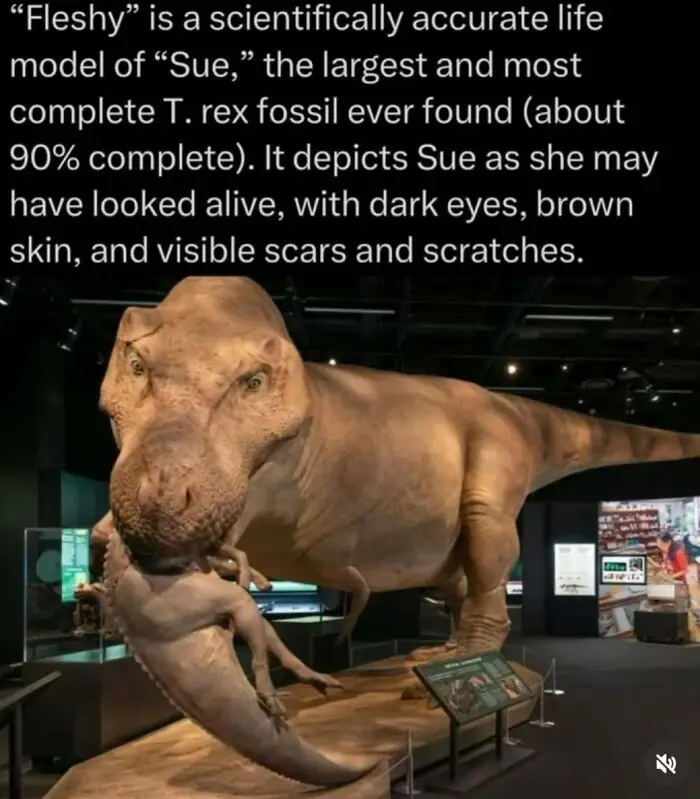
Shifting from modern protection to prehistoric wonders, scientists have created “Fleshy,” a scientifically accurate life model of Sue, the largest and most complete T. rex fossil ever found. This model depicts the apex predator as she may have actually looked alive, featuring dark eyes, brown skin, and visible scars that tell the story of a long, battle-worn life. Based on a fossil that is about 90% complete, this recreation moves past the bare skeletons we usually see, providing a grounded look at the sheer scale and biological reality of the most famous dinosaur in history
Report
26points
#51
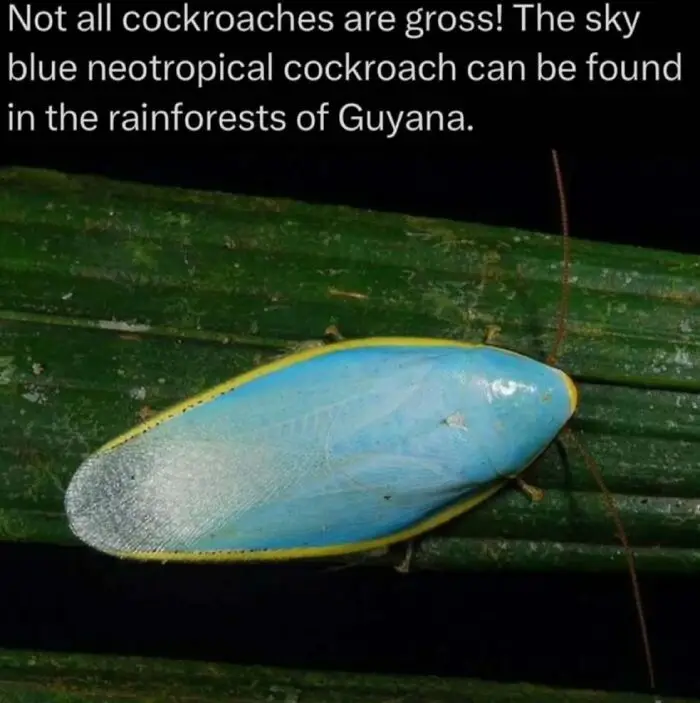
Most people have an instant “flight or fight” response when they see a cockroach, but the sky-blue Neotropical cockroach (a stunning variant of the Panchlora genus) is here to change your mind. While the common household pests we love to hate are usually oily brown and hide in dark corners, these vibrant insects live high in the forest canopies of Central and South America. They are famous among entomologists for their incredible “cyan” or sky-blue coloration, which is actually a rare biological twist—their bodies are naturally green to blend in with leaves, but a lack of yellow pigment can turn them this brilliant, ethereal blue.
Unlike their city-dwelling cousins, these “green banana roaches” are not pests at all. They are strictly outdoor creatures that spend their lives feeding on plant matter and fermenting fruit, playing a vital role as recyclers in the rainforest ecosystem. They are even attracted to light and are often kept as pets by insect enthusiasts because of their docile nature and beautiful, jewel-like appearance. It is a powerful reminder that out of the 4,500+ species of cockroaches on Earth, less than 1% are actually pests—the rest are just colorful, essential members of the natural world!
Report
26points
#52
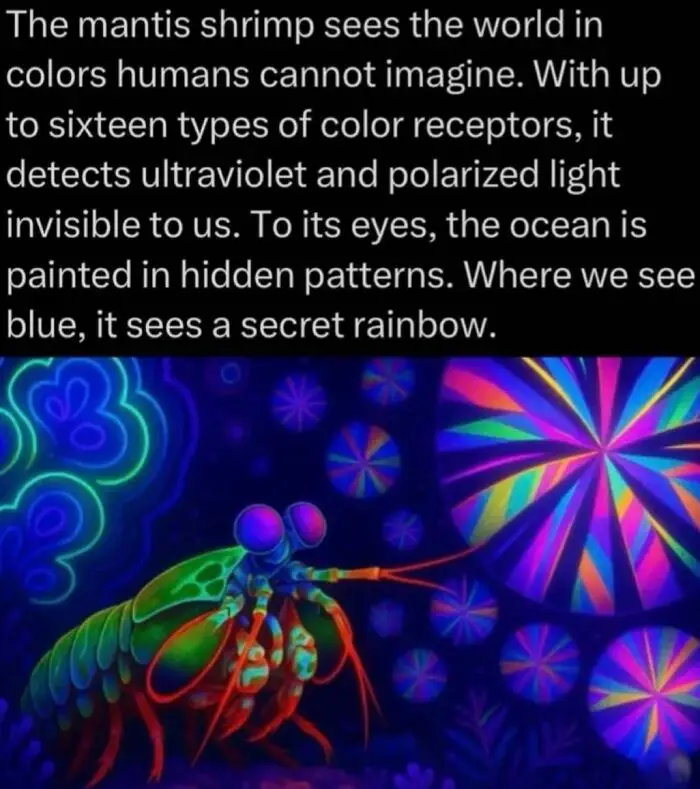
For years, we believed the mantis shrimp lived in a psychedelic world of unimaginable color. While humans have three types of color receptors, these incredible crustaceans have up to sixteen.Naturally, scientists assumed they saw a rainbow we could not even comprehend. But recent studies revealed a shocking plot twist. Their color vision is actually worse than ours! They struggle to tell similar shades apart.
So why all the extra receptors? It comes down to speed.Instead of sending signals to a complex brain to blend colors together like we do, their eyes act like a barcode scanner. Each receptor just fires for one specific wavelength. This skips brain processing entirely, letting them react and strike prey instantly.
Report
26points
#53

For decades, the official count was exactly seven thousand one hundred and seven, until advanced technology revealed we were missing quite a few.
Using high-resolution mapping radar that penetrates dense clouds, researchers recently discovered over five hundred previously unknown landmasses. This incredible scan of the earth brought the official count up to seven thousand six hundred and forty-one islands.
It is a beautiful reminder that our planet is constantly shifting, and even massive archipelagos still hold geographical secrets waiting to be uncovered by modern science.
It is a beautiful reminder that our planet is constantly shifting, and even massive archipelagos still hold geographical secrets waiting to be uncovered by modern science.
Report
26points
#54
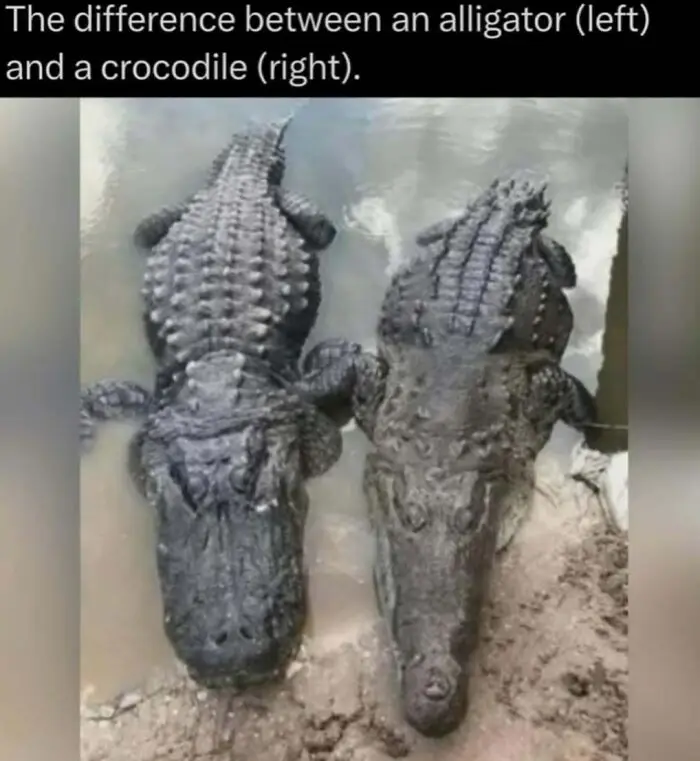
While they may look like prehistoric twins at a glance, the differences between an alligator and a crocodile come down to millions of years of distinct evolutionary engineering. The easiest way to tell them apart is by the shape of their snout; alligators possess a wide, U-shaped snout designed for crushing through the shells of turtles and snails, while crocodiles have a longer, pointed V-shaped snout built for a more generalist diet. Furthermore, when a crocodile closes its mouth, its large fourth lower tooth remains visible over the upper lip, giving it a toothy “grin” that alligators lack.
Their habitats also tell a story of biological adaptation to salt. Crocodiles have specialized lingual glands that allow them to excrete excess salt, making them perfectly suited for life in brackish or saltwater environments. Alligators lack these highly efficient glands, confining them mostly to freshwater lakes and swamps. This physiological difference means that while you might find a crocodile swimming in the ocean, an alligator is a homebody of the marsh, proving that even the most similar-looking apex predators are precisely tuned to the specific chemistry of their surroundings
Report
25points
#55
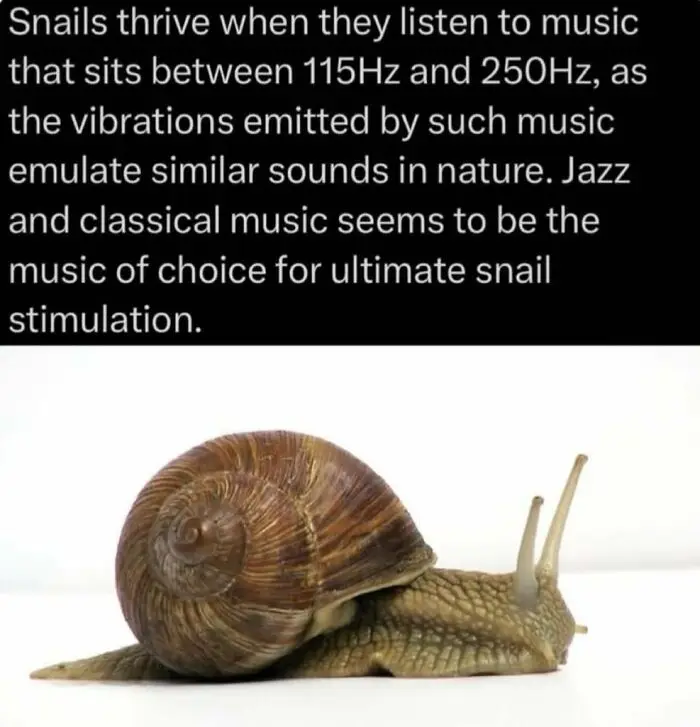
While snails don’t have ears to “hear” music the way we do, recent studies have shown they can actually thrive when exposed to specific sound vibrations. Researchers found that snails exposed to meditative music at a consistent frequency (around 260–280 Hz) showed a significant boost in their cognitive abilities and maze-solving speeds. Unlike humans who process melody, snails perceive these frequencies as cellular vibrations, which can calm their nervous systems and even improve their short-term memory.
Interestingly, not all music has a positive effect; while “calm” vibrations help them thrive, loud rock music with varying, aggressive frequencies can actually hinder their learning and cause stress. Some specialized snail farms in Italy have even started playing classical music by Mozart and Beethoven to keep their snails in a state of “tranquility and harmony,” which reportedly leads to healthier growth. It is a fascinating example of how even the simplest creatures on Earth are deeply influenced by the invisible physics of sound!
Report
23points
#56
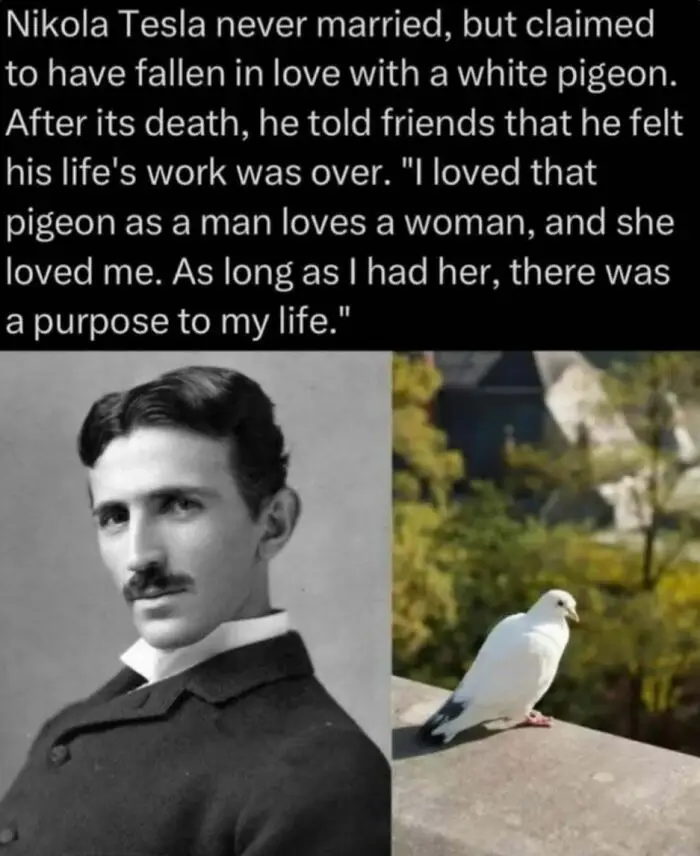
Nikola Tesla is celebrated as one of history’s greatest inventors, but his most profound personal connection wasn’t with a human, but with a white pigeon. Though he never married, Tesla claimed to have fallen deeply in love with a specific bird that visited him daily at his hotel window. He famously told friends that he loved that pigeon as a man loves a woman, stating that as long as he had her, there was a true purpose to his life.
The bond was so intense that Tesla believed the pigeon could communicate with him through light. When the bird eventually died, Tesla was devastated, confessing to his closest associates that he felt his life’s work was finally over. This unusual relationship offers a rare, poignant glimpse into the mind of a genius who found his greatest comfort and inspiration in the simple presence of a creature from the natural world
Report
20points
#57
In 2018, the world watched in heartbreak as a Southern Resident whale named Tahlequah (known to researchers as J35) began a “tour of grief” that lasted 17 days. After her newborn calf survived for only half an hour, she refused to let it sink, carrying the body on her rostrum for over 1,000 miles across the Salish Sea. This extraordinary display of mourning highlighted the deep emotional intelligence and strong social bonds within orca pods, capturing the attention of millions and sparking urgent conversations about the survival of her endangered community. Despite this tragic loss, nature found a way to move forward. Drone footage taken in 2020 revealed that Tahlequah had become pregnant again, a hopeful sign for a population struggling with food scarcity and environmental pressure. She eventually gave birth to a healthy male calf, Phoenix, signaling a resilient new chapter for one of the ocean’s most famous mothers. It is a powerful reminder that even in the face of profound loss, the drive for life and the continuation of the species remains an unstoppable force of nature.
Report
17points
#58

While most marine animals avoid the toxic pufferfish at all costs, dolphins have discovered a surprisingly rebellious way to interact with them. These highly intelligent mammals have been observed intentionally nipping at pufferfish to trigger a natural defense mechanism. When the pufferfish “puffs up” in distress, it releases a potent toxin called tetrodotoxin, which scientists believe the dolphins use in small doses for a playful, trance-like experience.
Rather than eating the fish, the dolphins carefully pass the inflated pufferfish around to their pod members, almost like a coordinated social game. This behavior suggests that dolphins engage in complex, recreational activities that go far beyond basic survival and hunting. It is a fascinating look at the intricate social lives and the high-level cognitive abilities of these aquatic masterminds!
Report
14points
#59
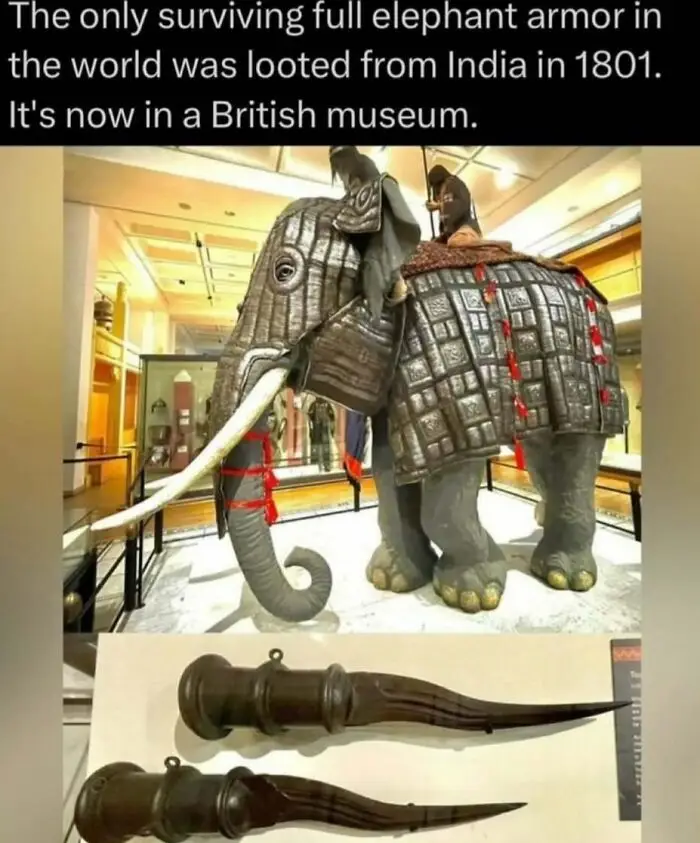
The 17th-century Mughal Empire created the most formidable “tanks” of the ancient world by outfitting war elephants in massive suits of mail and plate armor. This staggering engineering marvel, with the only near-complete surviving example now housed in the Royal Armouries, was brought from India in 1801. The suit is composed of 5,840 individual steel plates held together by thousands of chainmail links, weighing approximately 118kg today—though it likely topped 150kg when every panel was fully intact.
This armor wasn’t just for show; it was a high-tech defense system designed to protect the elephant’s vital organs while maintaining its mobility on the battlefield. The suit even included a “shaffron” to shield the trunk and head, often paired with massive, crescent-shaped tusk swords that turned the animal into a living siege engine. By combining biological power with advanced metallurgy, these armored giants became a psychological and physical force capable of breaking through infantry lines that traditional cavalry could never touch.
Report
14points
