





Nature is weird, if you haven't noticed. Waxwing birds get drunk on fermented fruit, there are sharks that lay eggs which look like corkscrews, and Brazil has a tree so huge it looks like a lush, green forest. Nothing about wildlife may surprise us anymore, but there are still heaps we can learn.
Bored Panda is bringing you a listicle that's meant to do exactly that. We came across the "Explaining The Wild" Instagram page that shares fascinating information about animals, plants, and geography alike – basically, all things nature. Their mission is for people to "learn about nature one post at a time." So, Pandas, scroll down and see what a glasswing butterfly looks like and the miracle of a park in Austria that sinks underwater every spring.
More info: Instagram
#21
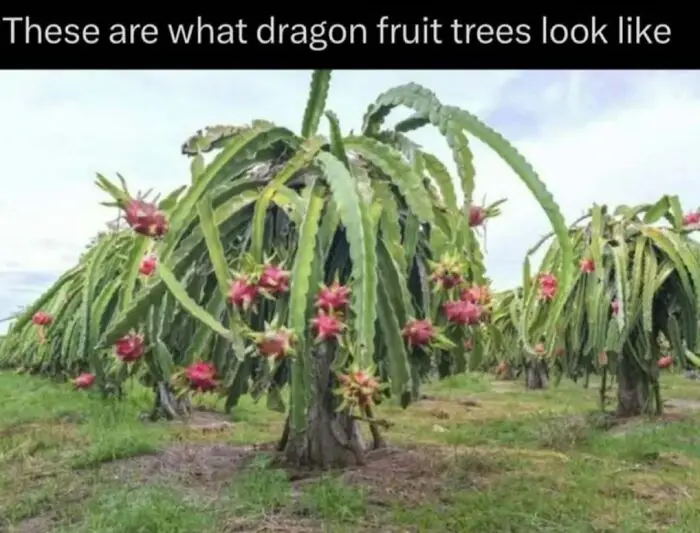
While dragon fruits are common in grocery stores, many people are surprised to learn that they don’t grow on traditional trees with woody trunks. These vibrant fruits actually come from a type of climbing cactus known as Hylocereus. In the wild, these cacti use aerial roots to cling to trees or rocks, but in cultivation, they are grown on sturdy T-shaped pillars that allow their long, succulent branches to spill over like a fountain.
Because they are members of the cactus family, these plants are incredibly resilient and thrive in tropical and subtropical environments. The plant produces large, fragrant flowers that bloom only at night—often called “moonflowers”—which must be pollinated by bats or moths to produce the fruit. Once the flowers fade, the scaly, neon-pink fruits begin to develop, creating a landscape that looks like it belongs in a sci-fi movie. Seeing a commercial farm in full bloom is a striking reminder of just how diverse and unusual the plant kingdom can be.
Report
53points
#22
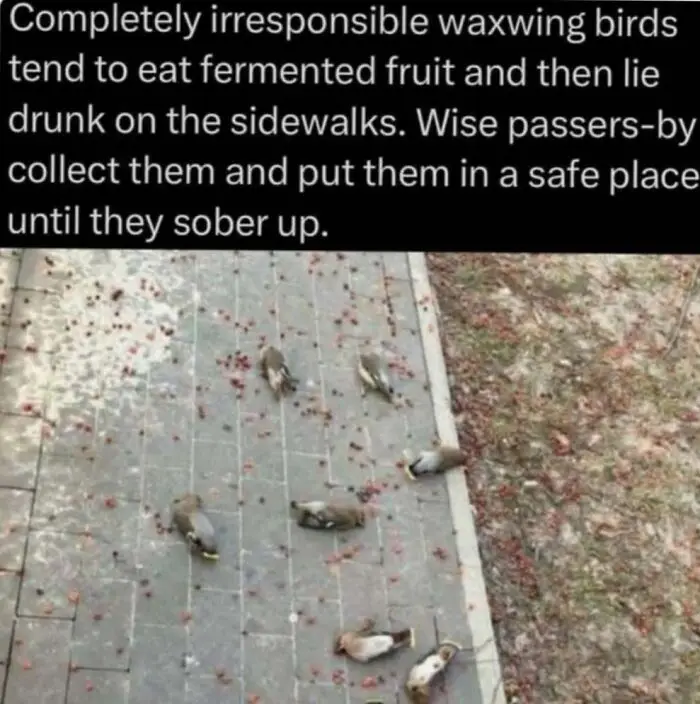
Nature has its own version of a wild weekend, and for the Bohemian Waxwing, it happens right on the sidewalk. These social birds have a specialized diet that relies heavily on berries, especially during the colder months. When the temperature fluctuates, the sugars in unpicked fruits like rowanberries begin to ferment, turning each berry into a tiny, potent dose of natural ethanol.
Because Waxwings are voracious eaters, they often consume these “boozy” berries in high quantities, leading to some very visible biological consequences. They lose their coordination and often end up lying on the ground, completely incapacitated until their livers can process the alcohol.
In many cities, kind residents have set up “sobering-up stations”—simple cardboard boxes in quiet areas—to protect the birds from predators and traffic while they sleep it off. It is a fascinating look at how diet and chemistry intersect in the wild, requiring a little bit of human tech and compassion to keep the population safe.
Report
52points
#23
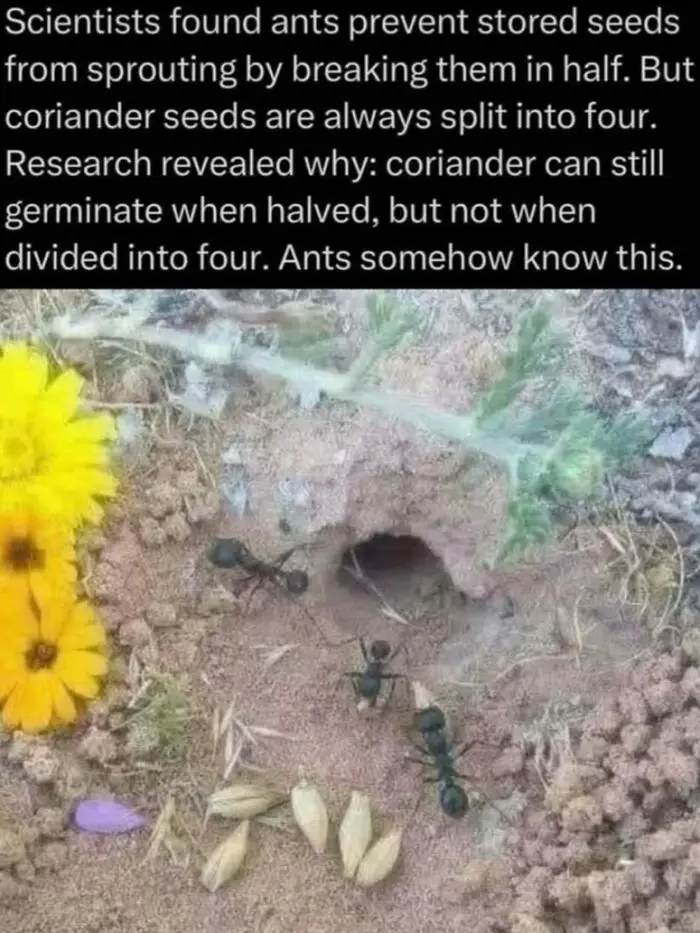
Ants are known for their incredible collective intelligence, but their understanding of botanical physics is truly next level. To ensure their food supply doesn’t literally grow out of their underground granaries, harvester ants systematically break stored seeds in half to prevent them from sprouting. However, scientists noticed a strange exception with coriander seeds: the ants always split them into exactly four pieces instead of two.
It turns out that coriander is uniquely resilient, and a seed split into just two halves can still successfully germinate and ruin the nest. The ants have somehow “learned” that a four-way split is the only way to completely neutralize the seed’s growth potential. This level of biological engineering shows that ants don’t just act on simple instinct; they possess a complex, passed-down knowledge of their environment that allows them to manage their resources with surgical precision.
Report
50points
#24
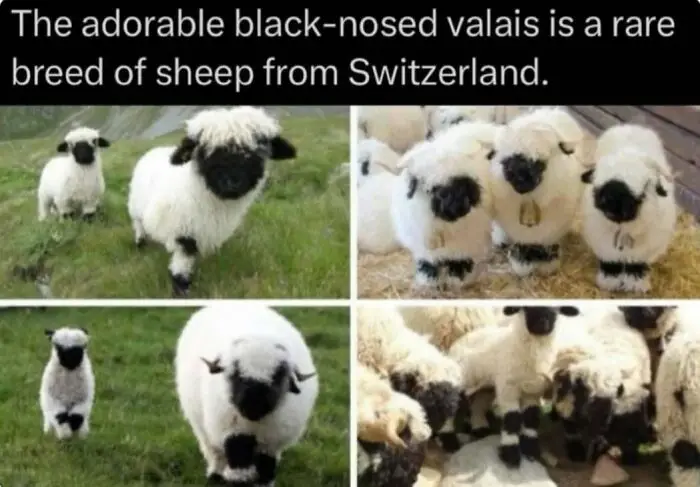
If you think this looks like a living stuffed animal, you aren’t alone. Meet the Valais Blacknose, a rare breed of sheep native to the freezing, rugged mountains of Switzerland.
They are universally dubbed the cutest sheep in the world. Their distinct jet-black faces, ears, and knees contrast beautifully with their ultra-fluffy white fleece.
They are universally dubbed the cutest sheep in the world. Their distinct jet-black faces, ears, and knees contrast beautifully with their ultra-fluffy white fleece.
But that adorable appearance hides incredible toughness. They were specifically bred centuries ago to survive harsh Alpine winters and easily graze on extremely steep, rocky slopes. Their thick, coarse wool provides the ultimate natural insulation against sub-zero temperatures.It is a beautiful example of how an animal can perfectly adapt to a brutal environment while maintaining a completely unique look.
Report
49points
#25
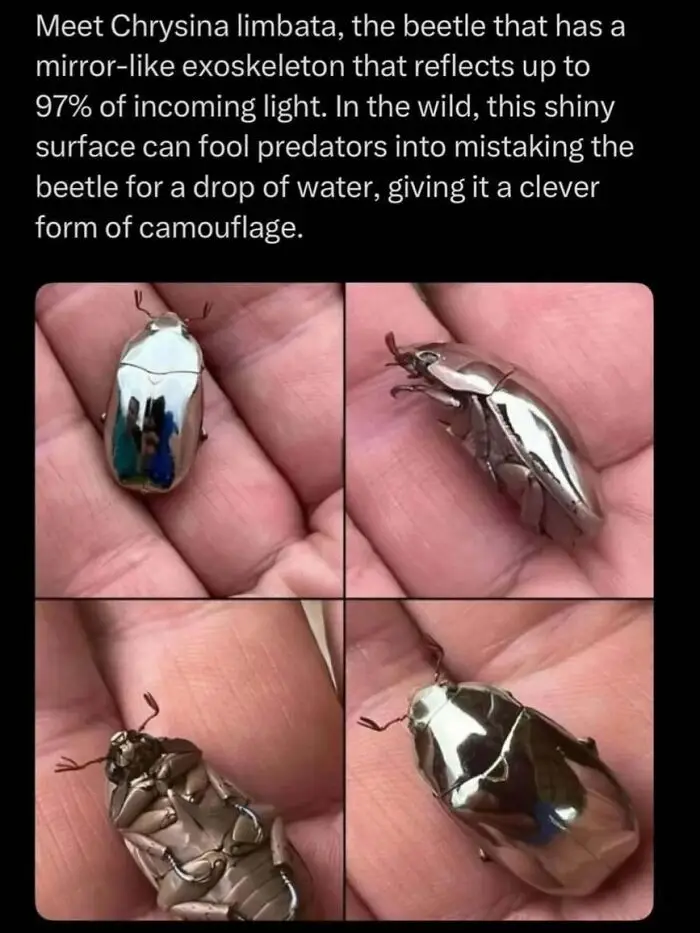
Deep in the rainforests of Central America lives Chrysina limbata, a beetle that looks more like a piece of polished jewelry than a living insect. This incredible creature possesses a solid silver, mirror-like exoskeleton that can reflect up to 97% of incoming light. While it looks flashy to us, this metallic shine is actually a brilliant survival strategy; in the humid wild, the beetle’s reflective surface mimics a glistening drop of water or a gap in the foliage, perfectly camouflaging it from hungry predators.
The science behind this “living mirror” is found in the microscopic layers of its shell. These layers are precisely structured to reflect light at different wavelengths, creating a metallic luster without using any actual metal. Because they are so rare and beautiful, these beetles have become highly sought after by collectors, making their preservation in the tropical cloud forests more important than ever. It is a stunning example of how nature uses complex physics to turn a simple insect into a master of optical illusion.
Report
48points
#26

A powerful and sobering remnant preserved from the events of September 11, 2001. Recovered from the rubble at Ground Zero, this fused mass of twisted steel beams, concrete slabs, wiring and other materials was formed when the upper floors of one of the towers pancaked downward, compressing roughly four to five storeys into a slab only a few feet thick under extreme pressure and heat. Weighing several tons and resembling a fallen boulder, it earned the informal nickname “The Meteor” among recovery workers.
Today it is displayed at the National September 11 Memorial & Museum, serving as a tangible illustration of the immense structural forces at work during the collapse and a lasting memorial to that day.
Report
46points
#27
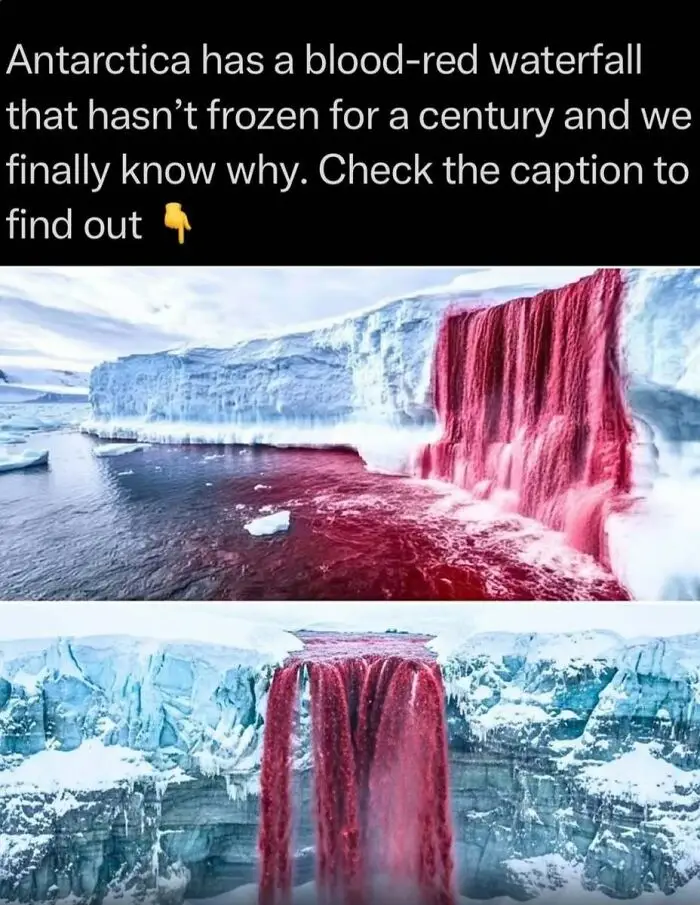
Antarctica is home to one of the most eerie sights on the planet: Blood Falls, a five-story waterfall that pours deep red liquid onto the white ice of the Taylor Glacier. For over a century, the cause of this crimson hue was a mystery, with early explorers assuming it was simply red algae. However, scientists have finally discovered that the color comes from a prehistoric, subglacial lake trapped under 1,300 feet of ice. This water is extremely rich in iron, and the moment it seeps through cracks in the glacier and touches the oxygen in the air, it “rusts” instantly, turning the water a vivid blood-red.
What’s even more mind-blowing is that this waterfall remains liquid at temperatures well below freezing. The secret lies in its chemistry; the water is three times saltier than the ocean, creating a natural brine that prevents it from turning to ice. As the water freezes internally, it actually releases heat, warming the surrounding subglacial lake and keeping the system flowing. This isolated, oxygen-free environment is even home to a unique community of “extremophile” bacteria that have survived for millions of years, proving that life can thrive in the most impossible conditions on Earth.
Report
44points
#28
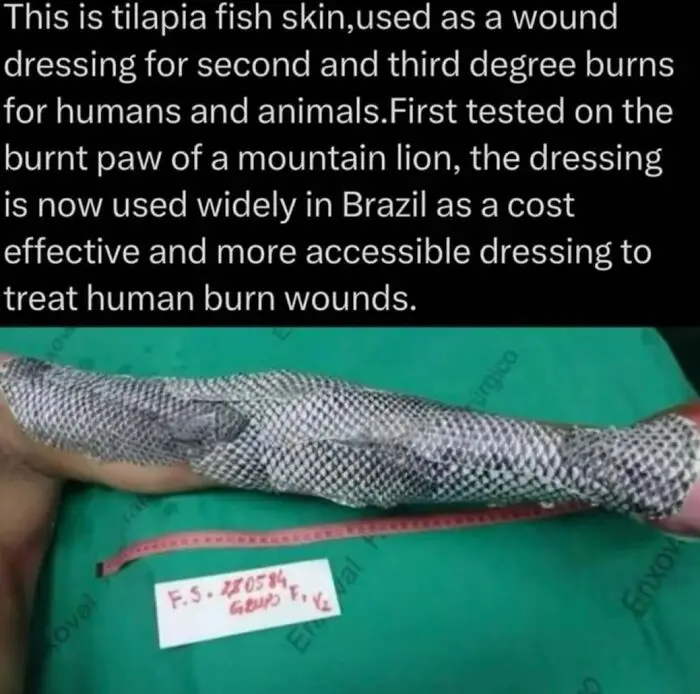
Nature often provides the most efficient solutions to human problems, and the use of tilapia fish skin as a biological bandage is a perfect example of medical biomimicry. Rich in type 1 collagen and high levels of moisture, processed tilapia skin acts as a protective barrier that speeds up the healing of second and third-degree burns. Unlike traditional synthetic bandages, it reduces the need for painful daily dressing changes, as it can stay on the wound for several days while transferring vital proteins that help regenerate human skin.
The practice gained global attention after being successfully used to treat the burnt paws of a mountain lion during California wildfires, and it is now widely utilized in Brazil as a cost-effective and accessible medical tool. The skin is sterilized and stripped of scales and odor before being applied, where it adheres to the wound and prevents infection better than many standard treatments. This intersection of marine biology and medicine proves that some of our most advanced healing technologies have been swimming in our oceans all along
Report
44points
#29

Since the dawn of domestication, the bond between humans and dogs has been one of the most powerful connections in the natural world. This vintage photograph from the 1920s captures a timeless moment of friendship, reminding us that while the world changes, the “kinship of spirit” between us and our canine companions remains constant.
This relationship is more than just sentimental; it is a biological partnership that has shaped both species over thousands of years. Dogs evolved from ancient wolves to understand human gestures and emotions, while humans developed unique social bonds that helped us thrive alongside our loyal protectors and friends. Whether as working partners or beloved “pals,” dogs continue to be an essential part of the human story.
Report
41points
#30
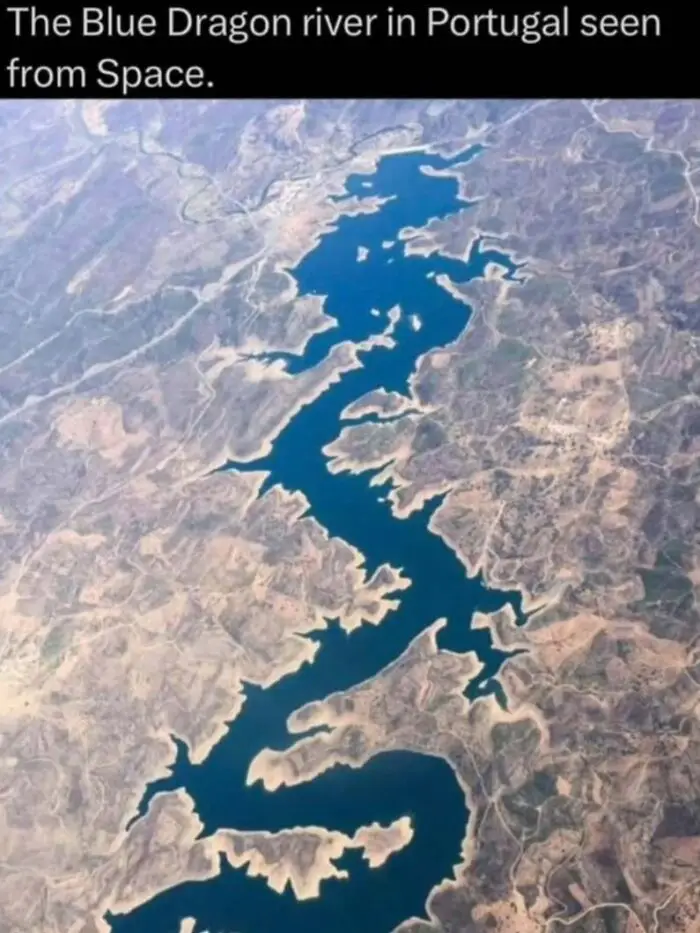
Hidden deep in the landscape of southern Portugal, the Odeleite River reveals a spectacular secret when viewed from above. Known globally as the “Blue Dragon River,” its winding path and jagged offshoots perfectly mimic the shape of a traditional Chinese dragon, complete with a long, twisting body and sharp, claw-like tributaries.
This breathtaking geographic formation is actually a reservoir created by the Odeleite Dam. While the view from the ground is that of a peaceful, expansive lake, the aerial perspective captures a surreal “mythical” silhouette that has made it one of the most photographed natural wonders in the region. It serves as a stunning reminder of how the Earth’s topography can create art on a scale that is only truly visible from the sky.
Report
41points
#31

Perched high on the windswept moors of Burnley, England, the Singing Ringing Tree is a sculpture that turns the fierce Lancashire gales into haunting music. Standing 3 meters tall, this eerie construction is made of galvanized steel pipes arranged in the shape of a tree bent by the wind.
What makes it truly magical is that it is a giant wind instrument. As the breeze rushes through the pipes of different lengths, it produces a low, discordant choral sound that spans several octaves. It doesn’t play a melody but rather “sings” with the landscape, creating a constantly changing, mournful hum that varies with the weather. It is a perfect fusion of art and nature, standing as a lonely, metallic sentinel that gives a voice to the invisible power of the wind
Report
41points
#32
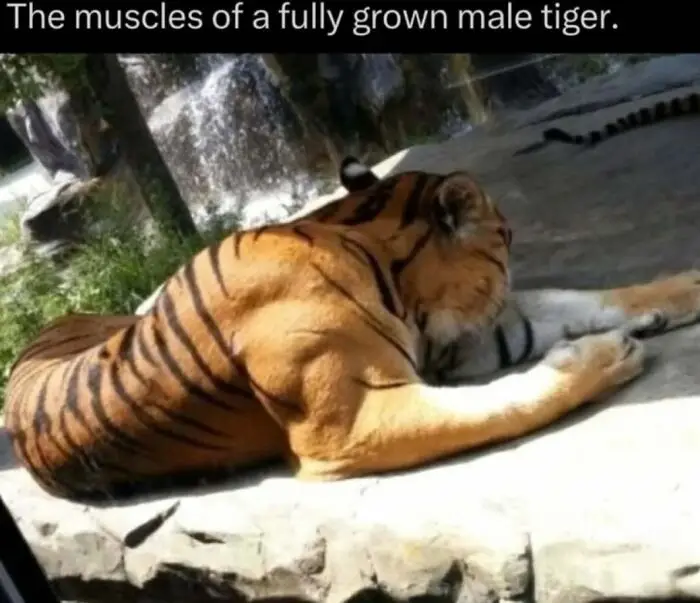
The tiger is widely recognised as one of the most powerful predators in the natural world. A fully grown male tiger exhibits remarkable muscular development, particularly in the shoulders, neck and forelimbs. This impressive physique provides the strength needed to ambush and subdue large prey, and to drag heavy prey through dense habitats. Some individuals can weigh up to 300 kilograms, solidifying their position among the largest and strongest cats alive today. A perfect example of nature’s mastery in creating formidable hunters.
Report
38points
#33
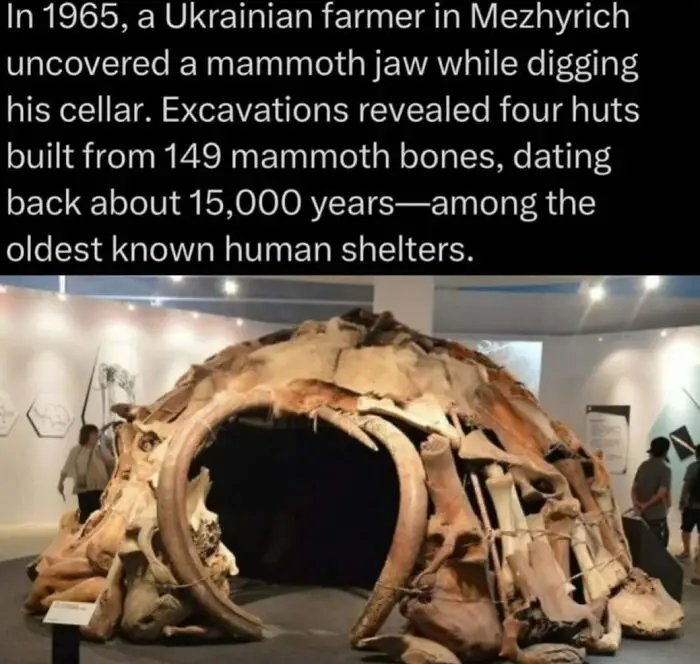
In 1965, a Ukrainian farmer in the village of Mezhyrich was digging a new cellar when he stumbled upon a prehistoric architectural marvel: a hut built entirely from mammoth bones. Dating back approximately 15,000 years, this structure was one of four found in the area, meticulously crafted using the mandibles, tusks, and skulls of nearly 100 mammoths. These Paleolithic dwellings represent some of the oldest examples of complex shelters, proving that early humans were capable of sophisticated structural engineering even in a landscape devoid of timber or stone.
The sheer organization of the Mezhyrich hut is what fascinates archaeologists; the bones weren’t just piled up, but were arranged in intentional, geometric patterns to provide maximum stability and insulation against the harsh Ice Age climate. Large mammoth skulls formed the foundation, while a framework of tusks supported a roof likely covered in animal hides. This discovery fundamentally changed our understanding of hunter-gatherer societies, showing that they were far more stationary and community-oriented than previously thought, building permanent “bone palaces” to master the freezing Eurasian steppes.
Report
36points
#34
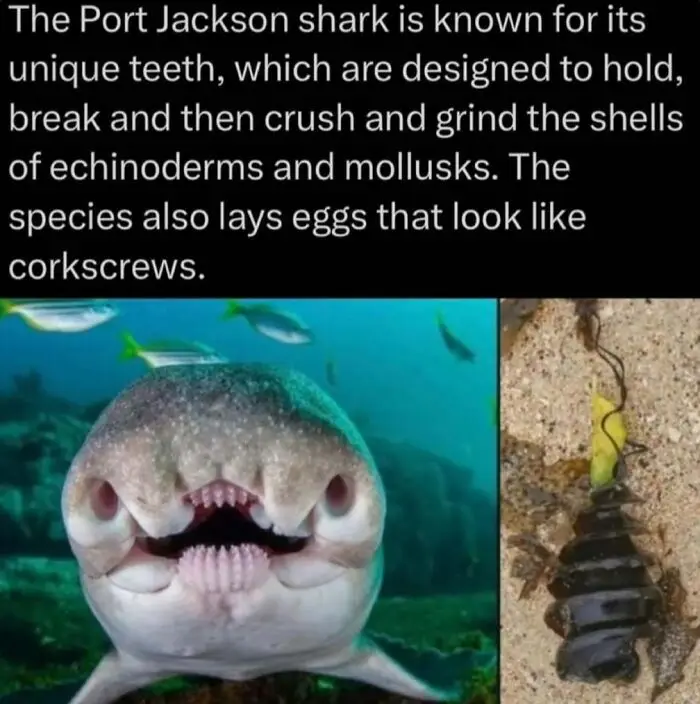
Most sharks are famous for rows of razor-sharp, triangular daggers designed for shearing through flesh, but the Port Jackson shark carries a much more specialized toolkit in its mouth. Named after the harbor in Sydney, Australia, where they are commonly found, these sharks have evolved a unique “dual-purpose” dental arrangement that looks nothing like a Great White’s.
In the front, they have small, pointed teeth used for grasping slippery prey like small fish or sea urchins. However, as you move toward the back of the jaw, the teeth transform into broad, flat, pavement-like plates. These “molars” are specifically engineered for crushing the hard shells of mollusks and crustaceans. This “heterodont” dentition—meaning having different types of teeth—allows the shark to grind through tough exoskeletons as easily as a nutcracker.
Because they feed on such abrasive prey, these grinding plates wear down over time, but the shark has a built-in replacement system. Much like a conveyor belt, new teeth are constantly forming at the back and moving forward to replace the old, worn-out ones. It is a brilliant piece of biological engineering that ensures these bottom-dwellers can keep their “crushing” reputation intact for their entire lives!
Report
36points
#35
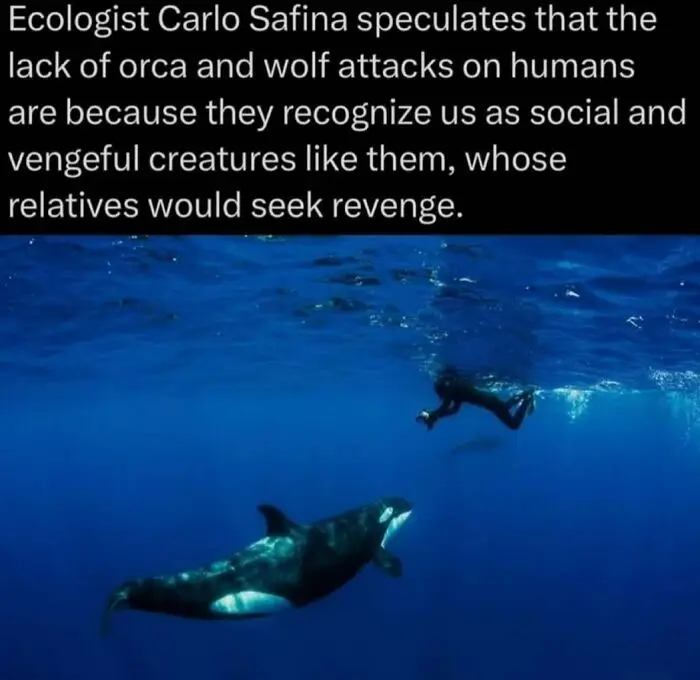
Orcas and wolves are among the most intelligent apex predators on the planet, yet they almost never attack humans in the wild. Ecologist Carlo Safina suggests this isn’t just luck, but a result of high-level social recognition. These animals live in complex family structures and possess a keen understanding of social bonds; they likely perceive humans as “fellow” social creatures who are equally capable of cooperation and, more importantly, vengeance. By recognizing us as a species that lives in tight-knit groups, they may instinctively realize that harming an individual would lead to retaliation from the rest of the pack or “pod.”
This theory of mutual respect is rooted in the idea of shared cognitive traits. Both orcas and wolves exhibit emotional depth and long-term memory, allowing them to pass down cultural knowledge to their offspring about which creatures are dangerous and which are best left alone. Instead of viewing us as prey, they may see us as an extension of their own social world—a predator that is too risky to cross. This fascinating intersection of animal behavior and psychology proves that in the wild, the strongest defense isn’t always physical power, but the reputation of the family you belong to.
Report
35points
#36
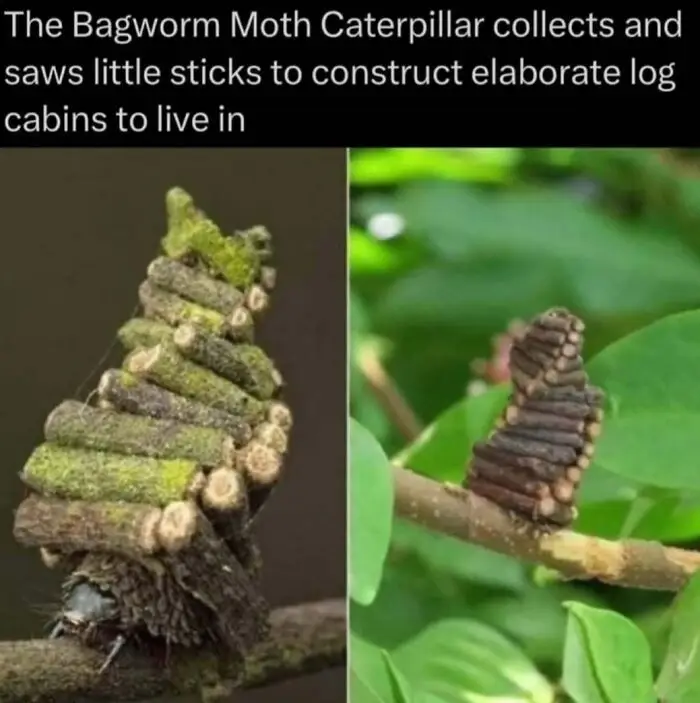
This isn’t just camouflage,it’s incredible architecture! The bagworm moth caterpillar (from the Psychidae family) spends its larval stage building a protective “bag” or case by weaving silk and attaching bits of twigs, leaves, or other plant debris in precise patterns.
It drags this portable home along as it feeds, expanding it as it grows, and eventually pupates inside for metamorphosis. Males emerge as winged moths to find mates, while females often stay wingless and remain in the bag.
Report
35points
#37
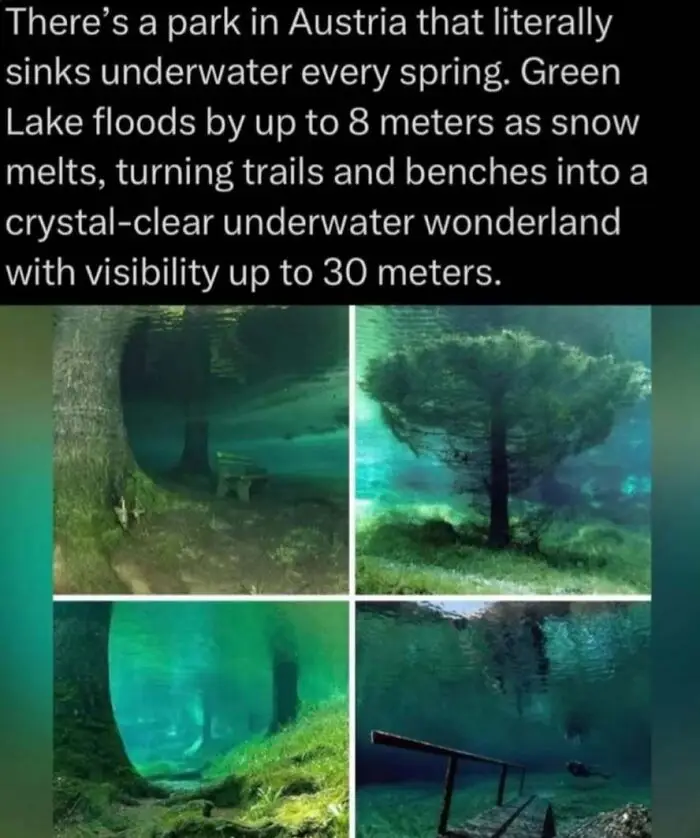
You might actually be thinking of the famous Grüner See (Green Lake) in Austria! For most of the year, it is a beautiful, scenic park with hiking trails, wooden benches, and lush green grass.
But when spring arrives, the magic happens. Warm weather melts the heavy snow from the surrounding mountains, completely flooding the basin. The park literally sinks beneath crystal-clear, emerald water, turning into a surreal underwater world.
But when spring arrives, the magic happens. Warm weather melts the heavy snow from the surrounding mountains, completely flooding the basin. The park literally sinks beneath crystal-clear, emerald water, turning into a surreal underwater world.
Scuba divers can actually swim past submerged trees, bridges, and park benches. It is one of the most stunning seasonal transformations on Earth, proving how drastically nature can shape a landscape in just a few weeks.
Report
34points
#38
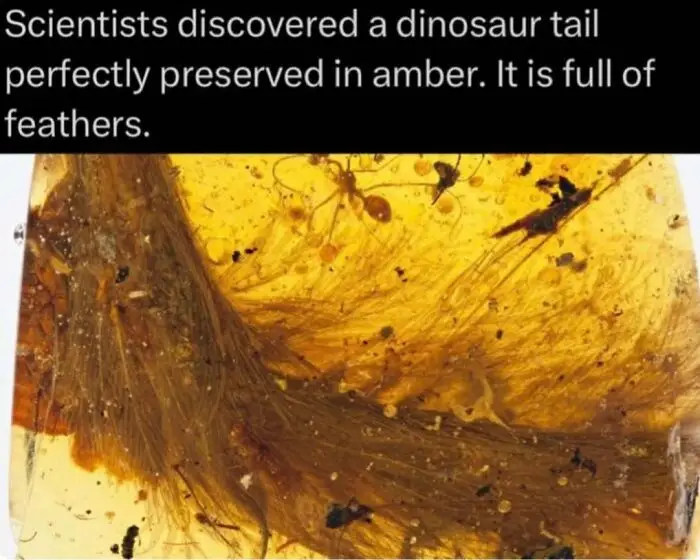
Our understanding of ancient life changed forever when scientists discovered a 99-million-year-old dinosaur tail perfectly preserved in amber. Unlike the scaly depictions we often see in old movies, this incredible find confirms that many dinosaurs were actually covered in delicate, bird-like feathers. The preservation is so detailed that researchers can even see the individual barbs and colors of the plumage, proving that feathers evolved for display or temperature regulation long before they were ever used for flight.
This feathered tail belonged to a small coelurosaur, a relative of the T-rex, and was found in a market in Myanmar. By peering through the golden resin, we can see bones, soft tissue, and even dried blood, offering a rare “3D” look at a creature that has been extinct for millions of years. It is a breathtaking biological time capsule that bridges the gap between the giants of the past and the birds we see in our backyards today!
Report
34points
#39
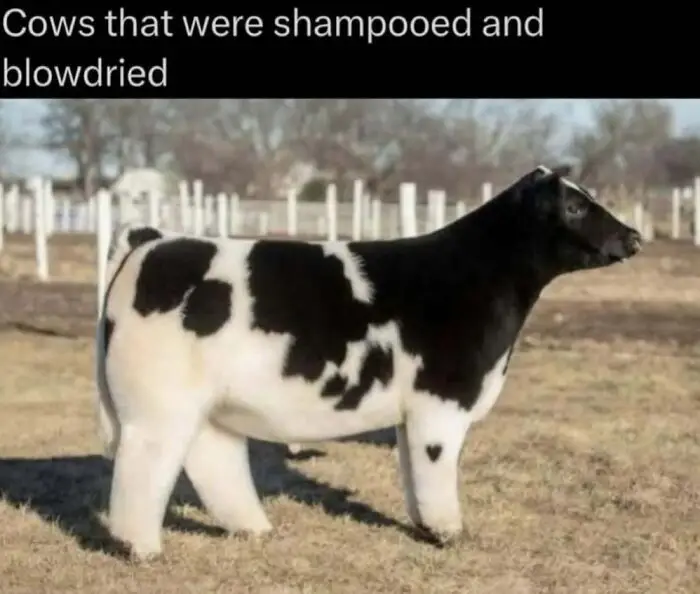
While we usually see them grazing in dusty fields, “fluffy cows” have become an internet sensation for looking more like giant teddy bears than farm animals. This incredible look isn’t a specific breed; it’s actually the result of intense professional grooming, often for livestock shows. These cows undergo a meticulous routine of being shampooed, conditioned, and then blow-dried with high-velocity dryers to make their coats stand out.
The process involves hours of “fluffing” the hair outward to give the animal a perfectly rounded, cloud-like silhouette. Beyond the aesthetic, this level of care highlights the surprisingly docile and patient nature of these gentle giants, as they stand calmly through hours of styling. It’s a fascinating crossover where the rugged world of agriculture meets the precision of high-end grooming, turning a standard bovine into a masterpiece of soft, voluminous fur.
Report
33points
#40
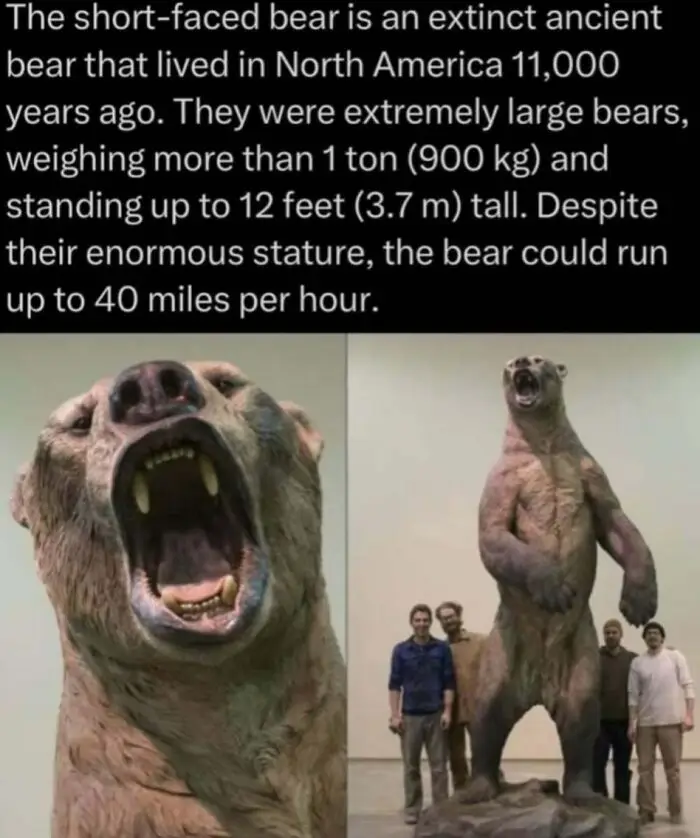
Standing over twelve feet tall on its hind legs, the Giant Short-Faced Bear (Arctodus simus) was one of the largest terrestrial mammalian carnivores to ever walk the Earth. Dominating the North American landscape during the Pleistocene epoch, this prehistoric titan was built differently than the bears we know today. Its name comes from its unusually deep, short muzzle, which combined with a massive skull, gave it a bite force capable of crushing bone. Unlike the lumbering gait of a grizzly, the Short-Faced Bear possessed long, slender limbs designed for high-speed pacing, allowing it to cover vast distances across the open steppes in search of carrion or prey. What makes this predator truly fascinating is its specialized biology as a “kleptoparasite.” While it was certainly capable of hunting, its sheer size and speed suggest it often used its intimidating presence to bully other predators, like Dire Wolves or Sabertooth Cats, away from their prey. Its nasal passages were remarkably large, providing a highly developed sense of smell that could detect a carcass from miles away. This massive engineer of the Ice Age eventually vanished around 11,000 years ago as the megafauna it relied on went extinct, leaving behind only fossilized footprints and bones that continue to dwarf modern apex predators.
Report
33points
