Bored Panda
88 Of The Most Moving Stories From "Humans Of New York"
CuriositiesSEP 9, 2024

88 Of The Most Moving Stories From "Humans Of New York"

85
9
There are eight billion people in the world, each with their own unique life story. New York City is home to over eight million people, but it's the most attractive urban center in the world for a reason.
There probably isn't any other city so diverse and multicultural and so unique in its inhabitants and history.
So, today, we're featuring the renowned project Humans of New York. It's a well-known photoblog by photographer Brandon Stanton, who presents intriguing snapshots of New Yorkers in photo and story form.

Highlights

  • Humans of New York shares deeply personal stories revealing resilience, loss, love, and hope in diverse, real-life experiences of ordinary people.
  • Many stories highlight overcoming trauma, like triumphing through bereavement, illness, and addiction with support, determination, and community.
  • The project amplifies unheard voices, raising awareness on social issues like mental health, poverty, disability, and cultural diversity.
You'd think the tales from Humans of New York were from a movie, a story made up by a brilliant screenwriter. But this is real life, Pandas. As real as it gets.

This post may include affiliate links.

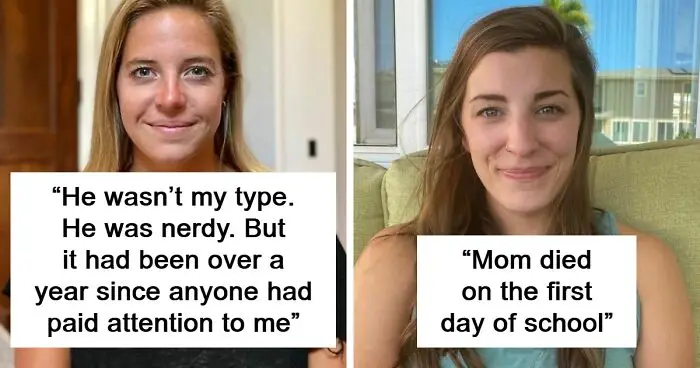
#21 Not Your Typical Love Story
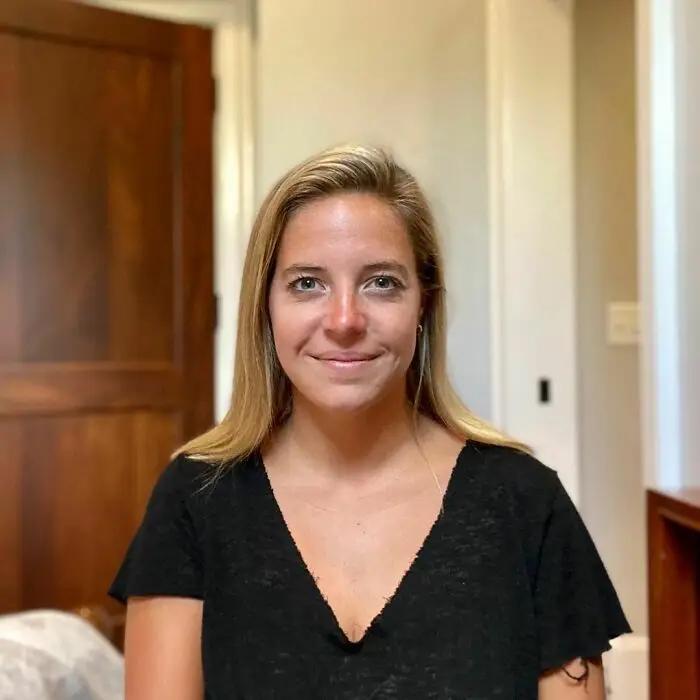
Young woman with blonde hair sitting indoors, smiling softly, representing moving stories from Humans of New York.
“He wasn’t my type. He was nerdy. He was wearing Converse. And he talked like a robot. But it had been over a year since anyone had paid attention to me. And I was enjoying our conversation. I never told him that I had a daughter. I just wanted to be ‘that girl at the brewery.’ For one afternoon, I didn’t want to be the young, single mother. And it was nice. It was nice to feel wanted again. When he asked if we could go out sometime, I didn’t even hesitate. But I started feeling nervous as soon as I got home. Because I started thinking about all the places a date could lead, and I knew I had to tell him. So I sent him a text. It said: ‘You should know I have a daughter. Things aren’t good with her father. I’m not asking you to fill that role, but if you want to cancel the date-- we can.’ There were twenty minutes of silence. And then he replied: ‘It is what it is.’ Just like a robot. Then he wrote: ‘If the date sucks, we never have to talk again.’ We made plans to meet at a famous brunch place. They didn’t even serve alcohol, which made everything twice as awkward. We agreed to take it slow. And to just have fun with things. He made it very clear that he wasn’t in a place where he wanted to be a dad. And that remained his official stance for about three months, until he met her. It’s been over two years now. So he’s been there her entire life. They’re obsessed with each other. She constantly wants to talk with him about everything. She wants me to call him when she farts. She wants to be a Wildcat fan because he went to Arizona. And when we find a shell on the beach, she’ll pick it up. But it’s always for him—not me. And he loves that little girl. But that’s not surprising. What’s surprising is that he loves me. Roo is easy to love. She’s so young. She doesn’t withdraw or want space. She doesn’t have scars. She’s never been abandoned. She accepts love without question, and she gives it without question. They love each other so much. So much that it makes me nervous. Sometimes I’ll ask him: ‘Do you just love me because you don’t want to lose her?’ And he’ll say: ‘No. I love her a ton, and I love you a ton.’ He always says it very calmly. Just like a robot.”
115points

Although Humans of New York is Stanton's main project, he's done similar ones in other cities and countries as well. In 2014, he went on a 50-day tour with the U.N., photographing and interviewing people from 10 countries in the Middle East region. In his blog, he includes stories from people from Pakistan, Iran, Iraq, Uganda, Jordan, The Democratic Republic of Congo, South Sudan, Kenya, Ukraine, India, Vietnam, Mexico, and Jerusalem.

#22 Love So Deep It Broke Me

Young woman with long hair sitting indoors, capturing one of the most moving stories from Humans of New York.
“He had five daughters. And whenever he came home from a work trip, we’d all line up to give him a kiss. But he always kissed my mom first, because she was his ‘first love.’ Then he went on to his ‘second love,’ and his ‘third love.’ On weekends we’d all pile into the car and take these long road trips. We’d drive for hours, and the whole way he’d be singing to my mother. It was a normal thing for us, because we were used to it. But that kind of affection wasn’t normal in our culture. We used to have these karaoke parties with our extended family, and everyone else would sing normal songs. But Papa would choose these old, romantic Bollywood songs. And he’d sing directly to Mama. She loved every second of it. She’d get dressed up for him. She’d put on her brightest red lipstick. And she’d do her hair just as he liked it—even after she got sick. The tumor was deep in her brain. After every surgery, more and more of her would slip away. When she couldn’t walk properly anymore, she grew embarrassed of her limp. So Papa held her hand wherever they went. He’d sit next to her bed, and stroke her cheek, and recite the Quran until his lips went dry. Some nights he’d fall asleep sitting up in his chair, but then he’d wake up, and begin praying again. In her final moments, when she was slipping away, he leaned close to her and whispered: ‘You won’t be alone. I’m coming with you.’ I heard him say it. And I got so angry. It seemed selfish to me—as if the rest of us weren’t worth living for. But all his children were grown. Most of us had our own families. And I guess he felt like there was nothing left for him. Every day he visited Mama’s grave, even though we told him not to. He applied for the plot next to her, and every few hours he’d ask if the cemetery had called. He was obsessed. When the paperwork finally arrived— I rolled my eyes. But he got very quiet. For the next two days he barely said a word. Then on the third morning, he walked in our front door and told me he wasn’t feeling well. I bent down to help him with his shoes, but he collapsed on the floor. There wasn’t time for him to suffer. Because by the time the ambulance arrived, he was already gone.”
108points

#23 She Was My Lifesaver, Every Time

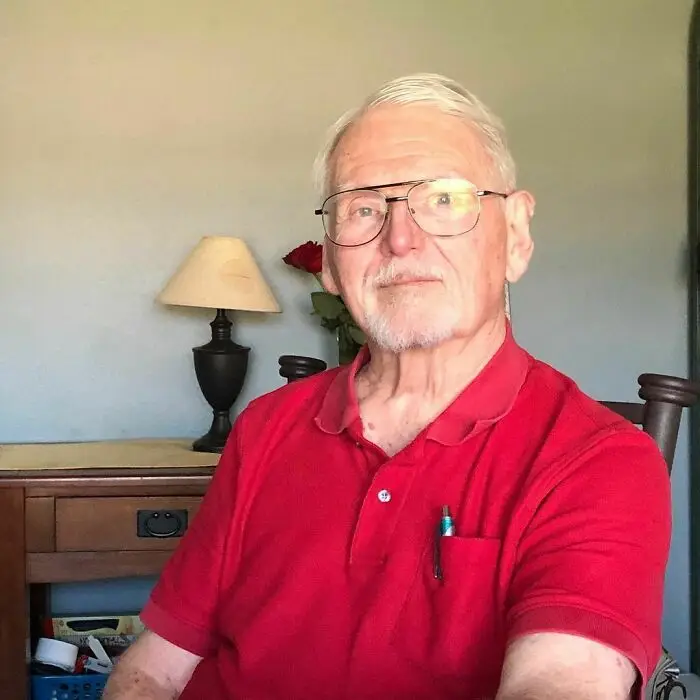
Elderly man in glasses and red shirt, sitting indoors reflecting in one of the most moving stories from Humans of New York.
“I was just a kid from a little cow town in Montana, but I was convinced I knew everything. So I got into a little tangle with my dad and ended up joining the Air Force. They stationed me out in Spokane, Washington. And not long after I arrived, me and a couple of buddies decided to take a day trip out to Liberty Lake. It was a real neat little lake. Fifteen feet deep and so clear that you could see straight to the bottom. We started playing a little football on the beach, but then we noticed three girls out on a floating dock. So we decided to swim out there. The water was really cold. And about halfway to the dock, I charley horsed in both my legs and started to sink. I thought for sure I was going to drown. When I woke up, I was laying on the dock, and one of those girls was staring down at me. Apparently she’d seen me go under, jumped in her brother’s boat, and pulled me out by the hair. That girl was named Dolores. She saved my life in August of 1952, and she saved me again and again for the next 64 years. We raised four children together. Not only was she my wife, but she was also my mentor. I was just a kid from Montana. She turned me into a good man. Her personality, her love-- I’m talking deep love-- for me and the children, changed me one inch at a time. And she never lost that heart for rescuing people. She worked with youth. She worked in street ministries. Whenever somebody was in a little bit of trouble, Dolores would jump right in. I know she sounds a bit like Wonder Woman—but she was. We were inseparable. People called us ‘joined at the hip.’ Two years ago she passed away. And I’ll tell you the only reason I’m still living—because I know, that one day, I’m going to wake up in heaven, and see Dolores looking down at me one more time.”
98points

#24 When the Universe Works in Mysterious Ways
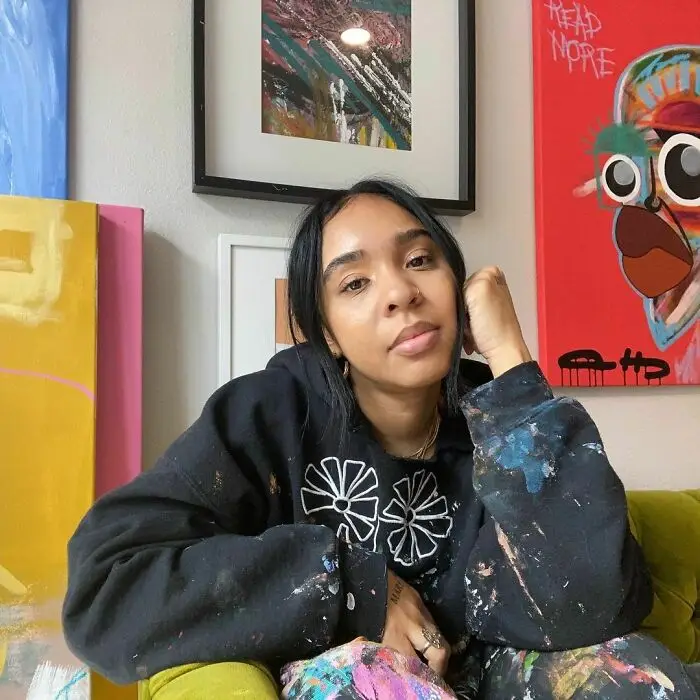
Young woman in paint-splattered clothing sitting in a colorful room, representing humans of New York stories.
“Leah was my absolute best friend. She was an only child too, so it was this next level sisterly bond. Her boyfriend Rasual became like a brother as well. He valued Leah’s friendships—so we became like a family. One night the two of them were driving home and lost control of their vehicle. Both of them passed away-- instantly. My grieving process was very hard. People were worried about me. The everyday, basic things became so difficult. I wasn’t cooking dinner for my kids. I wasn’t painting very much. Then one year after their death, I got invited to exhibit at an art show in Cleveland. It was on the anniversary of Leah’s funeral. I’m not even sure why I accepted the invitation. While I was getting ready in my hotel room, I remember saying a little prayer. I said: ‘Leah, I love you so much, but help me get through tonight without talking about you. Just one night.’ I arrived at the event and noticed that I’d be sharing my wall with another artist. His name was Bonic. He was deep in conversation with someone. The first thing I noticed was his voice. It was a very strong voice. And it was so familiar. I introduced myself, and told him: ‘This is going to sound crazy, but your voice sounds just like my friend who passed away.’ And he said: ‘Do you mean Rasual?’ It turns out that he’d known Leah and Rasual for years. He recognized me from their memorial service. That was over a year ago. Since then, Bonic and I have done so many collaborations. We’ve been all over the world together. He’s great with my kids. He’s my soul mate. Without question—he was the reason I was at that show. At the end of that night, I went back to my hotel room, and I wrote an entry in my journal. I wrote the date, and a single line: ‘Leah—did you send him to me?’
96points

Stanton has also done several series on specific populations. Invisible Wounds is a project about American veterans who served in Iraq and Afghanistan. The Pediatric Cancer series features stories about the patients, parents, family members, and professionals in the Memorial Sloan Kettering Cancer Center.

#25 \"When Losing Feels Like Winning\"
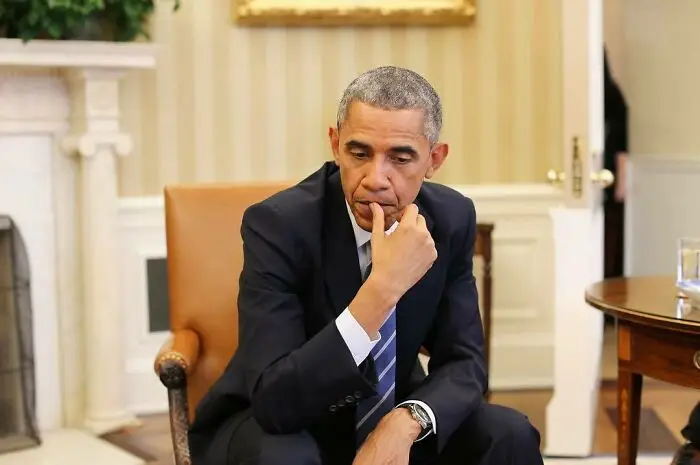
Man in a suit sitting thoughtfully in a chair, reflecting on moving stories from Humans of New York.
“I first ran for Congress in 1999, and I got beat. I just got whooped. I had been in the state legislature for a long time, I was in the minority party, I wasn’t getting a lot done, and I was away from my family and putting a lot of strain on Michelle. Then for me to run and lose that bad, I was thinking maybe this isn’t what I was cut out to do. I was forty years old, and I’d invested a lot of time and effort into something that didn’t seem to be working. But the thing that got me through that moment, and any other time that I’ve felt stuck, is to remind myself that it’s about the work. Because if you’re worrying about yourself—if you’re thinking: ‘Am I succeeding? Am I in the right position? Am I being appreciated?’ – then you’re going to end up feeling frustrated and stuck. But if you can keep it about the work, you’ll always have a path. There’s always something to be done.”
85points

#26 This one hit differently

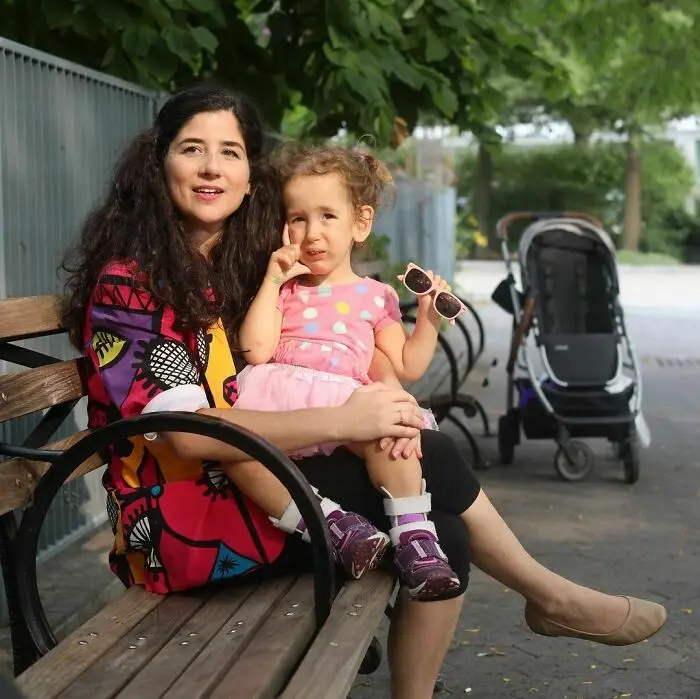
Woman and young girl sitting on a bench in a park, sharing a moment from moving stories of Humans Of New York.
“I knew right away something wasn’t right. When they plopped her on my chest, she was amazing, and alive—but she looked like a skinny pink frog. The only way to feed her was to drip milk in her mouth, 24/7. Those first weeks I was getting such little sleep that I began to have hallucinations: babies on the ceiling, babies on the wall. My husband’s job was to hunt down the diagnosis, while I kept her alive. The blood tests suggested two rare genetic conditions. He had a harder time with it than me. Optimism felt like denial to him, so he got lost in the research. But I tend to be a magical thinker. Maybe too much at times. I love Disney World. I worked on Sesame Street. I draw comics for a living, and make children’s books. I’ve even written a letter for after I die. It says: ‘Don’t be sad. We’re given this life and bad things happen, but we get to be with our families and look at trees.’ I’ve heard people ask: ‘Why bring a child into this world?’ With climate change, and all that. Would you choose to be born? My answer is yes. Even during the apocalypse I’d want to be alive. So I could have a few more minutes in the shelter, with my family, watching on TV as the fireballs fall from the sky. Maybe I’m weird like that. My husband is a little weird too. So it just makes sense that now we have this weird, magical kid. Dalia is 2.5 now. She wears her little helmet, and braces. We take little walks, and see the city, and look at trees. Her condition makes it hard to wake up in the morning, so we get to have thirty minutes of huggy time. And any time she smiles it’s the best thing that’s ever happened to me. It’s not easy. There’s a lot of doctor visits. Therapies every day. But I danced when I was young, so I’m used to repetitive movements. Everything in my life just makes it seem like I was meant for this child. And it’s impossible to predict what will happen. There’s such a wide spectrum with her condition. When we asked the therapist if she’d ever walk, we were told: ‘Miracles happen.’ But Dalia is walking now. So I’m optimistic. I think things will work out. I think she’ll live independently one day. Either that, or I get to live with my best friend forever.”
79points

#27 “Wait, Dad Actually Said That?”

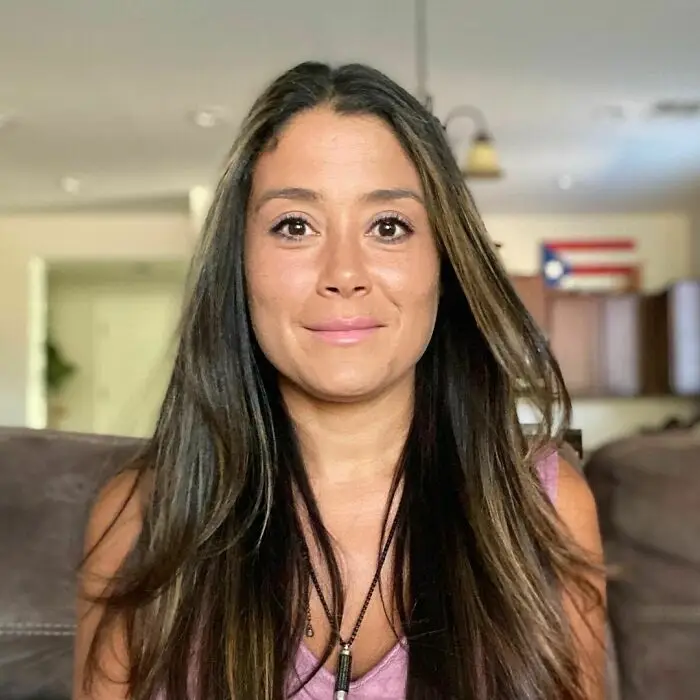
Woman with long dark hair sitting indoors, sharing one of the most moving stories from Humans of New York.
“I was five when he became a person in my world. I didn’t know exactly who he was. I just knew that there was someone around that was making my mother smile. I had to look way up to see him. I’d never met someone so strong. He’d tell me to hold onto his wrist, and he’d lift me into the sky with one hand. He worked at an auto shop, airbrushing designs onto the side of vans. I think he dreamed of being an artist. But he needed something more stable. So after he decided to marry my mom, he became a cop. He never lost touch with his creative side. He was always building things around the house—making things look fancier than we could afford. He built my first bike from scraps. He encouraged me to read. He encouraged me to write. He loved giving me little assignments. He’d give me a quarter every time I wrote a story. Fifty cents if it was a good one. Whenever I asked a question, he’d make me look it up in the encyclopedia. One day he built a little art studio at the back of our house. And he painted a single painting—a portrait of Sting that he copied from an album cover. But he got busy with work and never used the studio again. He was always saying: ‘when I retire.’ ‘I’ll go back to art, when I retire.’ ‘I’ll show in a gallery, when I retire.’ But that time never came. Dad was a cop for twenty years. He was one of the good ones. The kind of cop you see dancing on the street corner. Or skateboarding with kids. But in 1998 he was diagnosed with MS. First there was a little weakness. Then there was a cane. Then there was a wheelchair. It got to the point where he couldn’t even hold a paintbrush. We did his hospice at home. He seemed to have no regrets. He’d been a wonderful provider. He’d raised his daughters. He’d walked me down the aisle. During his final days, we were going through his possessions, one by one. He was telling me who to give them to. I pulled the Sting painting out of an old box, and asked: ‘What should I do with this?’ His response was immediate. ‘Give it to Sting,’ he said. All of us started laughing. But Dad grew very serious. His eyes narrowed. He looked right at me, and said: ‘Give it to Sting.’ So I guess that’s my final assignment.”
76points

The creator of Humans of New York has also done a series on people living in prison. For Inmate Stories, Stanton talked to and photographed the inmates from five different federal prisons in the U.S. He's also done projects on Syrian Americans and refugees in Greece, Hungary, Croatia, and Austria.

#28 \"When You’re Looking for Signs, Literally\"
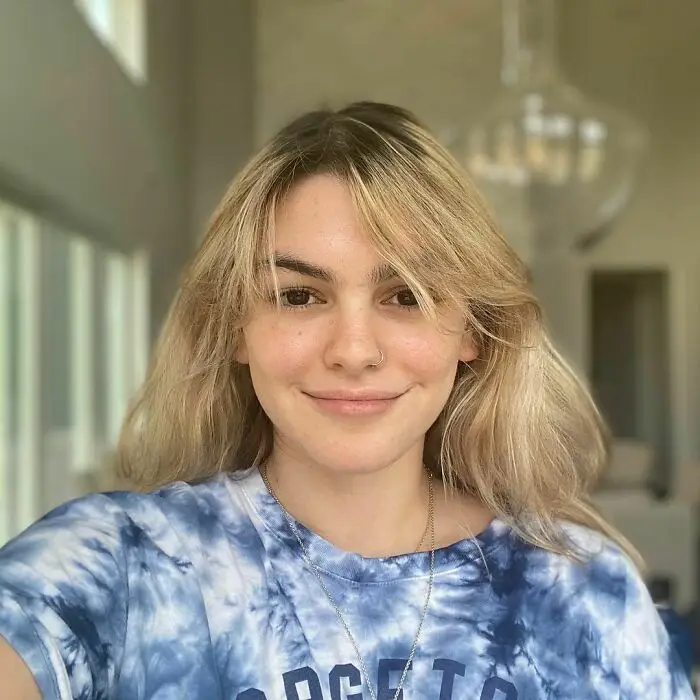
Young woman with blonde hair smiling indoors, representing moving stories from Humans of New York.
“After my grandmother passed away, Dad stepped out of the hospital for some fresh air. Then he said a prayer and asked my grandmother to send him a sign. When he opened his eyes, there was a dime at his feet. And after that day-- he began to look for dimes everywhere. I was six years old at the time, and he’d always get me to help him search. And whenever we found one, he’d say: ‘Bubby sent it to us!’ Then we’d add it to a little clay jar that I made. Sometime when I was in third grade, my parents sat me down and told me that Dad had cancer. I remember sitting in the guidance counselor’s office during recess. Apparently he’d already been sick for several years. It was a rare type of cancer. And it was aggressive. It would go away for two months at a time, but it would always come back. But even the people who knew him had no idea. He never let it stop him. He worked really hard. He woke up every morning at 4 AM to use the elliptical. Unfortunately his last few years lined up with my angsty teenage years. I pushed him away a lot. I wanted to hang out with my friends. But he kept trying. And things did get better between us. He was really silly and affectionate. He’d burst into my room while I was studying, singing at the top of his lungs, using a bottle of shampoo as a microphone. He’d always ask me to get coffee. Or breakfast. And I’d usually say ‘no.’ Because it’s hard when you have a terminally ill parent. You think about it all the time, but it’s the last thing you want to think about. And there’s this knowledge that the closer you become, the harder it’s going to be. He died when I was sixteen. It was November 30th. I remember walking around the parking lot at his funeral, staring at the ground. There wasn’t a dime anywhere. And it really pissed me off. I was looking at the sky. Shouting at the sky. But nothing. We found over 300 dimes when he was alive, but I couldn’t find any after he died. I searched everywhere for an entire month. Then one day I had a really bad day. So I decided to visit his grave for the first time since his funeral. I parked my car, walked down the steps, and found my dad’s plaque. Then I looked down at my feet. And there it was.
70points

#29 Almost Kissed, Totally Swooned

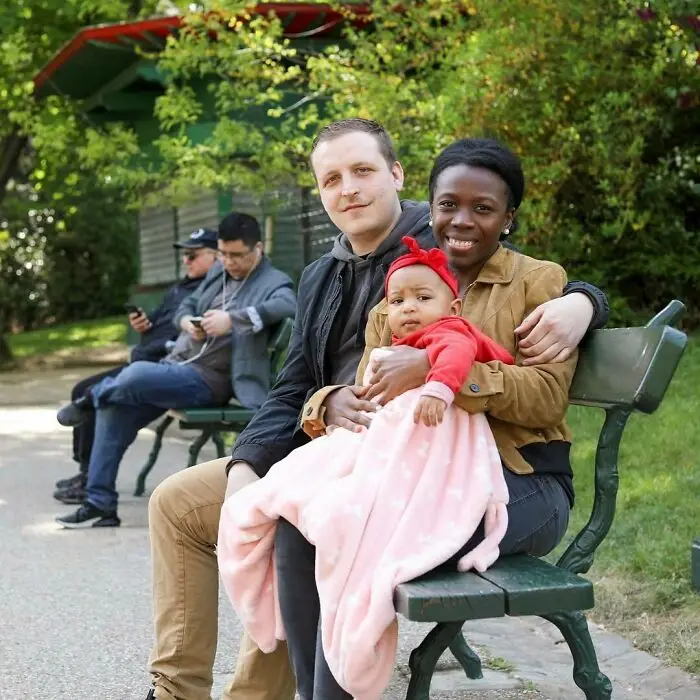
A diverse family sitting on a park bench sharing a warm moment, highlighting moving stories from Humans of New York.
“Both of us are really shy. We were working at the same office when we met. I’d do anything to walk by her desk. And she’d do the same. I’d ask her for advice on certain projects. We were flirting the entire time but neither of us wanted to admit it. Then one night we decided to take a walk together after work. We ended up sitting on a bench just like this, and we had a very intimate conversation about our lives. We were so honest with each other. I talked about my weaknesses. And mistakes that I’d made. And plans for the future. We were sitting in front of town hall, and both of us agreed that it would be a great place to get married one day—whenever we met someone. The whole time I had my arm along the back of the bench, not quite touching her. It was so cold outside, but neither of us mentioned it, because we didn’t want the night to end. When the conversation finally finished, I walked her to her car. It was a ten minute walk. I tried to act relaxed but inside I was really nervous. The whole time I was thinking about kissing her. Should I do it? Should I not? Then finally I decided on a hug. But it was a deep hug. Extra deep hug. That night I went back home, and said to my roommate: ‘That’s her.’” (Paris, France)
66points

#30 When imaginary friends feel safer than real ones
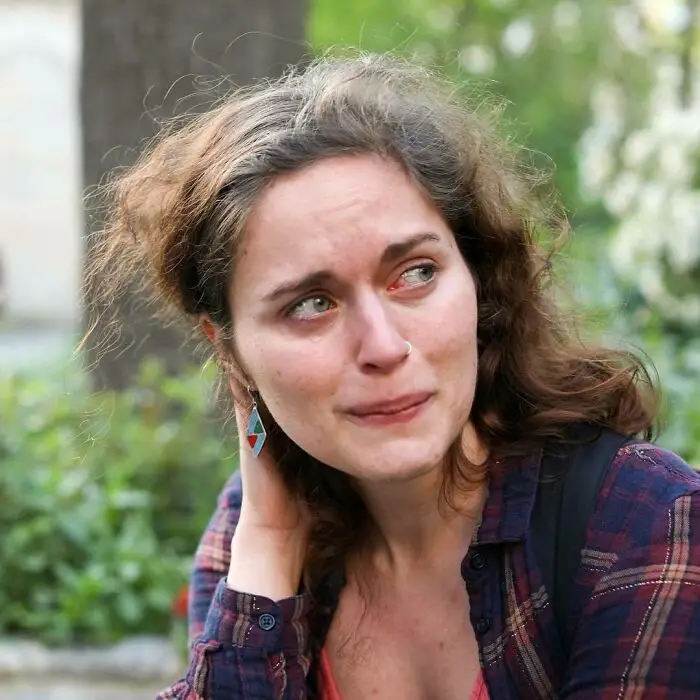
Woman with curly hair looking emotional outdoors, capturing one of the most moving stories from Humans of New York.
“I don’t know why my mother hated me. She had a sickness that you could not see. But she convinced me that I was sick. And that everything was because of me. And that I’m a monster. She criticized everything. My way of eating. My way of speaking. My way of dressing. Anything that brought me joy-- she would deny me. If I defended myself, she would hit me. I was terrified of lunch and dinner because that’s when I had to face her. I spent my entire childhood alone. I just played with my cats in the garden. Or sat on the floor of my bedroom. I’d try so hard to leave my body because I didn’t want to be on earth. And that’s when the spirits and fairies would come to me. Even Mother Mary came to me. I was never afraid of them. They’d comfort me. I remember being seven years old, sitting alone beneath a tree, talking to the fairies. Another little girl walked up and asked what game I was playing. That’s when I realized nobody else could see what I was seeing. And it’s been a very lonely existence since then.” (Paris, France)
55points

Humans of New York is also a documentary, released on Facebook Watch in 2017, called Humans of New York: The Series. It includes videos of Stanton interviewing people on the streets of New York, a whopping 1200 of them. Hearing the people tell their stories in video format adds a new layer to the whole project. In 2017, it was reported to be the most popular series on Facebook Watch.


In exploring the infinite variety of human experiences and challenges depicted by Humans of New York, we are reminded of the unpredictable surprises life throws our way. Just like Teresa Such's unexpected culinary adventure, where the mishap with an unfortunate cake turned into a humorous anecdote shared with many, we can often find humor and shared understanding in our missteps.

Delve into Teresa's story to see how sometimes comedic attempts at perfection can lead to unexpected connections.

#31
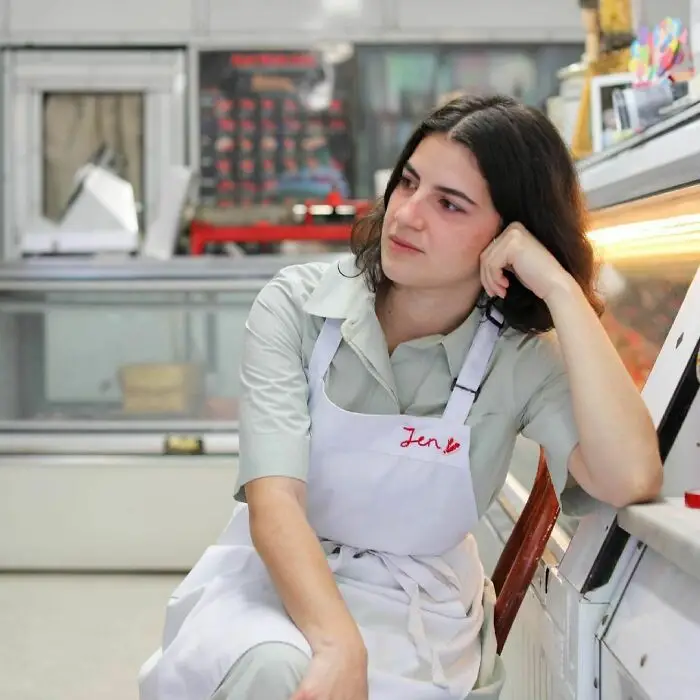
Young woman in a white apron sitting thoughtfully in a cafe, capturing a moving story from Humans of New York.
“It all began when my Grandpa Moe made a wrong turn. He was 93 years old, but he was still driving to and from his butcher shop. And one night he missed his turn in the dark. That’s when I offered to start driving him home. But he misunderstood me. Because the next morning he called at 7:30 AM, and asked: ‘When are you picking me up?’ That was the beginning of me coming here every day. The shop has been in our family for a very long time. But it was barely running by the time I arrived. Moe could still prepare the meat, but I’m not sure people even realized the place was open. He saved every piece of paper, so even the refrigerators had files in them. But thankfully he had guardian angels in the neighborhood. People were always stopping in to make sure he had water, or coffee. And there was always a neighbor to sit with him while he closed the store. It wasn’t really making money, but I think this shop is what kept him going. My first priority was to clean everything. He didn’t like that very much. He thought I was ‘messing everything up.’ He’d already started to lose his memory, which frustrated him. He’d always prided himself on telling stories and remembering names. But he was still so young at heart. We’d put on records from the 40’s and 50’s, and he’d remember the songs. And he was so gentle with me while I learned the business. Whenever I felt overwhelmed, he’d say: ‘piano, piano,’ which means slow in Italian. He taught me how to saw a lamb in half. And how to pick out meat at the market. He could get impatient sometimes. But if he ever lost his temper, he’d always apologize before the end of our car ride home. We worked together for 2.5 years. But during the first week of quarantine, my whole family got COVID. And Grandpa Moe passed away two weeks later. It was right before Easter. And when I came back to the store, there were so many flowers at our door. It was a little scary because the streets were empty. And I kept the door locked because I was all alone. But loyal customers kept stopping by, to see if I needed anything. And at night, when it was time to leave-- there was always a neighbor to sit with me while I closed the store.”
25points

#32

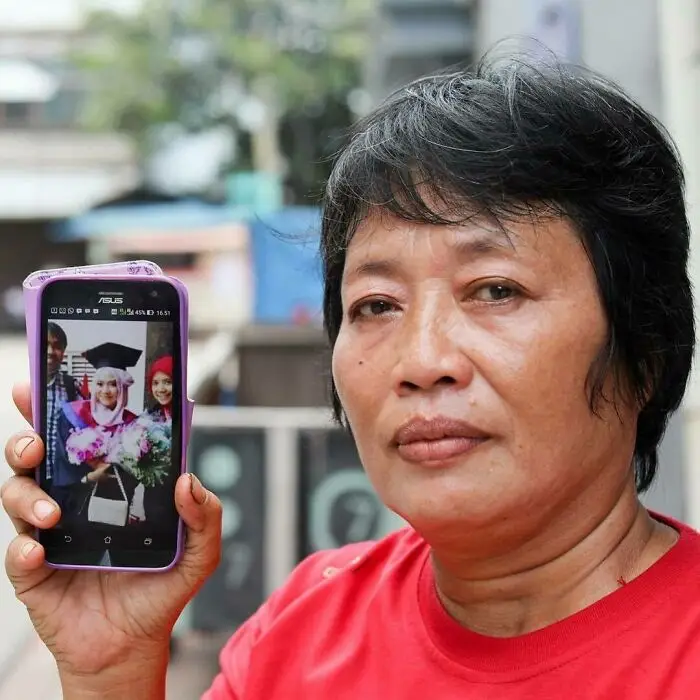
Person in a red shirt holding a phone showing a graduation photo, sharing one of the most moving stories from Humans of New York.
“My daughter was about to graduate high school when I lost my husband to a motorbike accident. She wanted to go to university but there was no one to support us. I’m an old-fashioned person. I’m not very smart. I only graduated from junior high school. But I wanted her to be better than me. I asked our relatives for help, but they all refused me. Out of desperation I approached my landlord. And she was the only one who supported us. She told me: ‘Get back on your feet so your daughter will have a chance.’ She loaned us half the tuition. The other half I earned by working morning to night. I was doing laundry. I was doing dishwashing. I was going around selling cookies and cakes. My daughter graduated recently and became a midwife. All my hard work paid off. We’ve been paying back the loan. And a few months ago she asked for my bank account number, and she’s been putting money in every week.” (Jakarta, Indonesia)
23points

#33

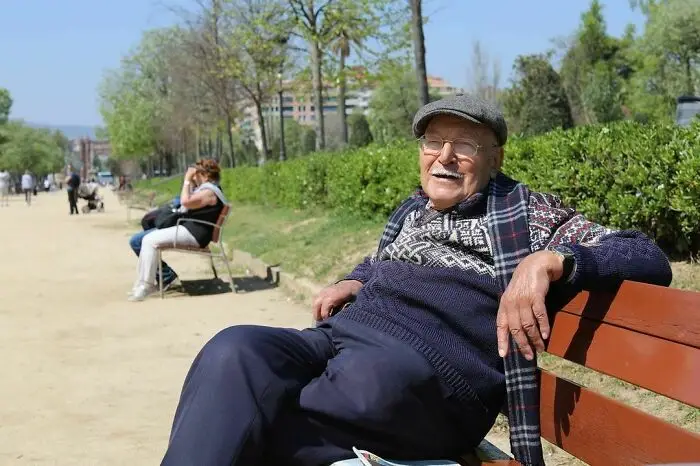
Elderly man sitting on a bench in a park, smiling and enjoying a peaceful moment, reflecting moving stories humans of New York
“I’m ninety-six years old. I’d rather just take a pill and get it over with. Whenever I tell that to my wife, she pretends to slap me in the face. But I’m ready to go. And I’d like it to be sudden. I’ve had a good run. I was lucky enough to share my life with someone. She’s ninety now. We’ve had a lot of time together. We have seven grandchildren. Eight great-grandchildren. But there are just so many things I can’t do anymore. I have the money. I have the time. Just not the ability. Whenever I walk, everything hurts. I enjoy sitting here in the park. I think about all the friends that I’ve lost. People come talk to me. Time passes by. But I’m ready. I’m not scared of it. I’d like my soul to go to wherever the souls go.” (Barcelona, Spain)
21points

#34

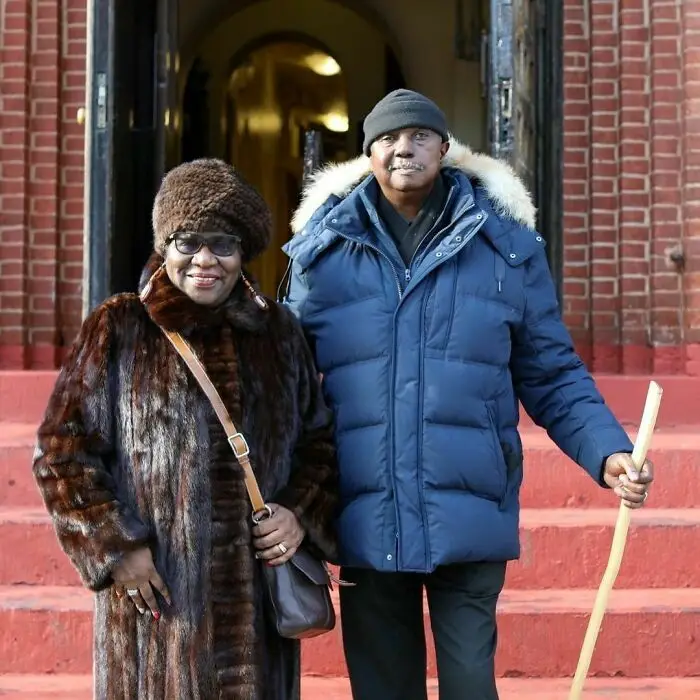
Older couple standing on red steps outside a brick building, showcasing moving stories from Humans of New York.
“If I’m away too long, he’ll come find me. Even if I’m just upstairs watching my program on television-- he’ll wander up to see what I’m doing. And we’re always holding hands. Even if we’re just sitting on the train or the bus, he'll always find some way to touch me. Just to let me know he’s right there. That he got me. He might not even notice that he’s doing it. But I always do.”
21points

#35

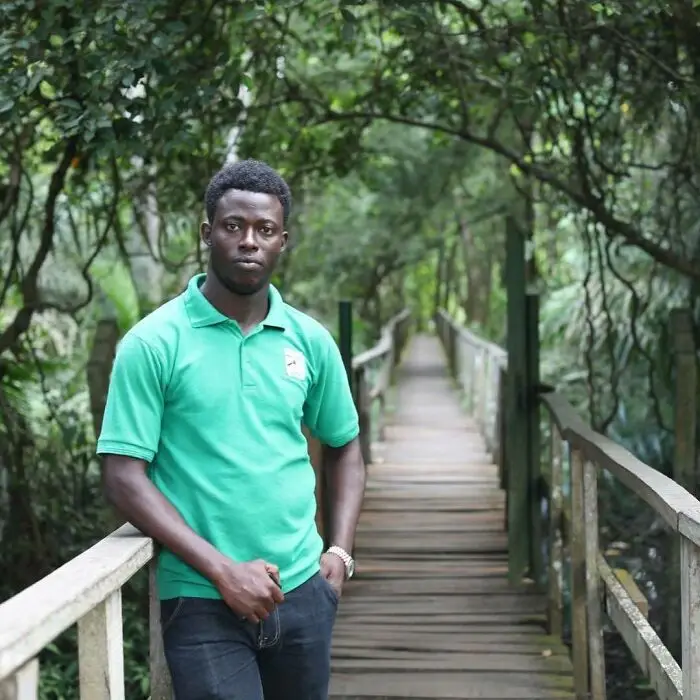
Young man standing on a wooden bridge surrounded by trees, representing moving stories from Humans of New York.
“I used to walk 12 kilometers to school. And every day along the side of the road, there’d be an old woman who was so sick that she couldn’t move. The sun would beat her. The rain would beat her. And nobody would help. I was only seven years old. I couldn’t stand it. But my parents wouldn’t agree to bring a total stranger into our house. How are we OK with people dying like chickens on the side of the road? Millions of people in this country haven’t even taken a single meal today. I can’t stand it. I’m thirty now and I’m struggling. But I’m still trying to help even though I don’t have money. I taught myself to treat diabetes with herbs. I’ve treated ten people so far who can’t afford the hospital. But I want to do more. I’ve given myself a timeframe. I’ve been working at this conservation center for three years now, and I’ve learned a lot. In a few years I’m going to open my own center. I can use the profits to build houses for people who have no place to stay. Each person can stay for a year. Maybe if they can just rest their head for a month, they’ll find a way to feed themselves. And if they eat for a week, they’ll start to reason like a human being. At the very least they’ll see that it’s possible to be loved by someone. And maybe they’ll realize that God loves them too.” (Lagos, Nigeria)
21points

#36

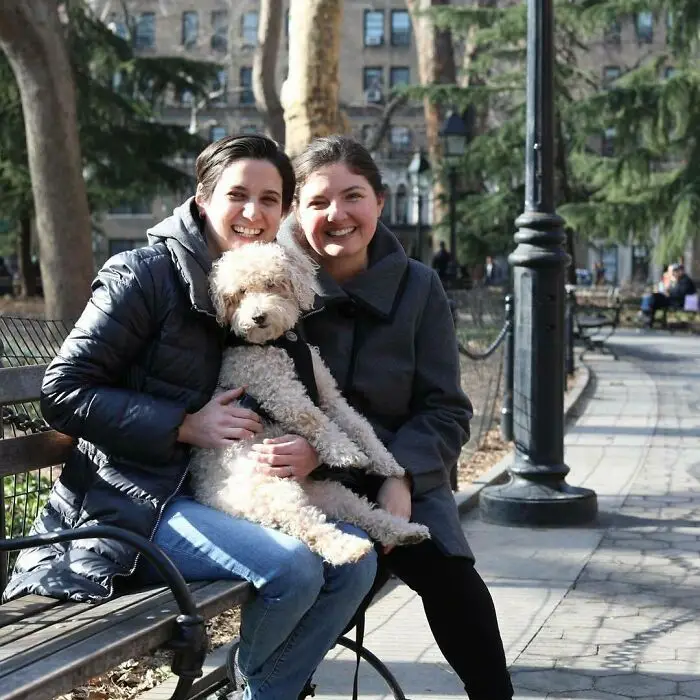
Two women sitting on a park bench in New York, smiling and holding a fluffy dog, capturing moving stories from humans.
“We had dorm rooms next to each other freshman year. We mainly just played a lot of board games: Risk, Scrabble, Scattergories, a Trivial Pursuit game from the 1980’s-- which everyone sucked at. But we became best friends, and the next year decided to get a house together. That’s when things started to get tense. We began sitting closer together. We were touching more. We’d play with each other’s hands. Never holding hands-- but playing with hands. And we’d even fall asleep in the same bed together. There was a time that she told me goodnight, and I swear I felt her brush my lips, but by the time I opened my eyes she was out of the room. Neither of us had ever dated a woman. And I was terrified to try anything. We were such good friends. There was always this fear that if I voiced the desire, it would ruin our friendship. But one night we were out for drinks at a hotel where Al Capone used to stay. I was feeling pretty drunk, so I leaned over and said: ‘Sometimes I feel like I want to kiss you.’ And she replied: ‘Sometimes I do too.’ I didn’t say a thing. I wasn’t even sure that I’d heard her correctly. I just kept thinking: ‘Oh my God, it’s happening. It’s happening.’ Then once we finished our drinks, and started walking home, I stopped her in front of a bridge. I said: ‘Shall we do it here?’ It was December 12th, 2002. And even though we got married five years ago, that’s the day we celebrate as our anniversary.”
20points

#37

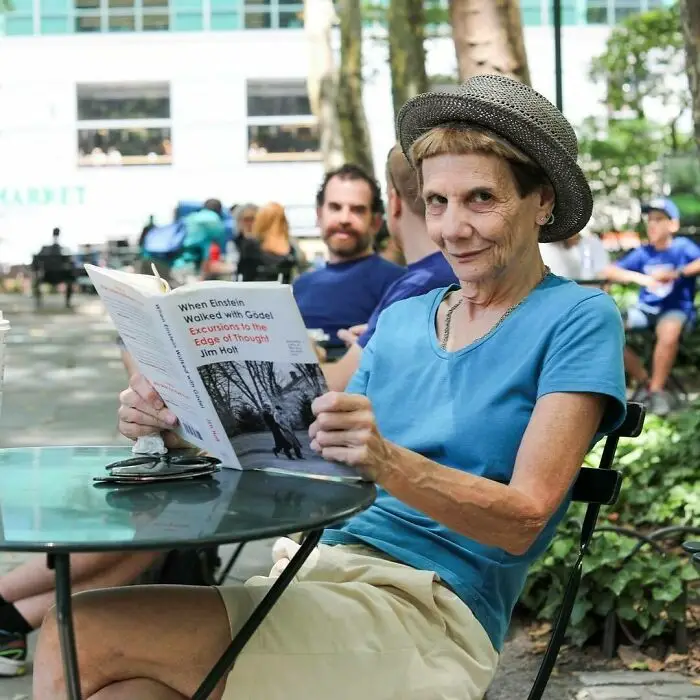
Woman wearing a hat and blue shirt sitting outdoors, reading a book, part of moving stories from Humans of New York.
“My father called me ‘stupid’ a lot. Even when I’d bring home good grades, he’d say things like: ‘You’re smart, but you don’t know anything.’ I just wasn’t a big reader like him. He always had a book in his hand. Math was my thing. During lunch I’d go to the junior high library and sit on the floor with puzzle books. Now I’m a teacher, and I’ve taught every math class in the high school curriculum. A few years ago I was teaching my precalculus class, and I stumbled upon a set of numbers that generated ellipses with identical positioning in both the rectangular and polar coordinate systems. So I turned them into variables, wrote a two-page proof, and had my work published in a journal called The Mathematics Teacher. Take that, Dad.”
20points

#38

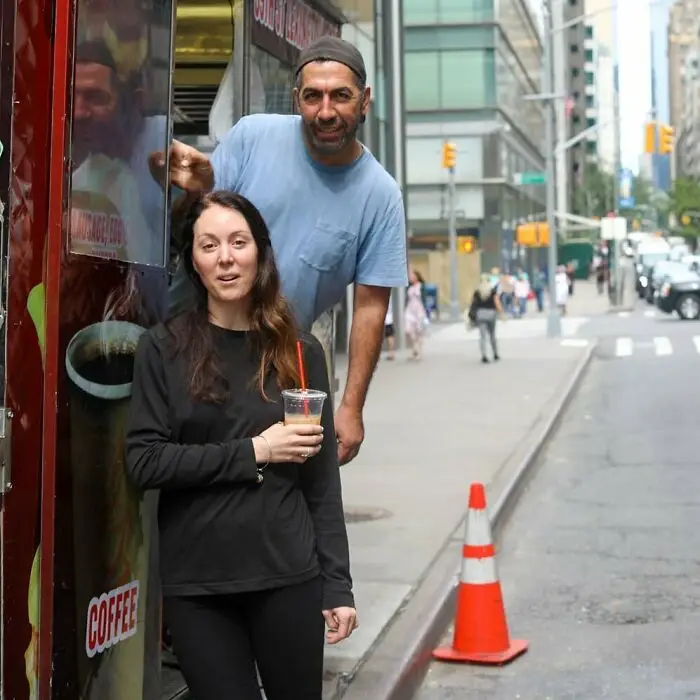
Two people sharing a moment on a busy city street, capturing moving stories from Humans of New York.
“Early childhood was chaotic; my brother and I endured a lot of abuse. Having one another helped. It was sort of: ‘Hey, at least there’s another human with me.’ We’ve handled our trauma differently over the years. My brother doesn’t trust authority, and he’s been arrested in seven different states. It usually involves some sort of power struggle with police. His last altercation was in Texas, and it landed him in solitary confinement for 18 months. It couldn’t have come at a worse time. Law school was kicking my ass. I was living off student loans, so I didn’t have the cash to go visit him as often as I wanted. I was drinking a lot. On weekend nights I’d stumble out of the subway at 3 AM or 4 AM, after the bars had closed. And Abe, my coffee cart guy, would be outside my station-- setting up for the day. He’d talk s**t to me before giving me a bagel and water. Then he’d walk me to my building to make sure I got home safe. He was my late-night safeguard in addition to my morning barista. The 8AM line was long, so we had a cheat system. I’d send him a text when I was leaving my place, and he’d have a paper bag with my food and coffee waiting for me inside the cart window. On Saturdays when it was slower, I’d sit on a crate behind the cart and we’d talk for hours. He became a best friend. He introduced me to his wife and children. I learned that his cart supports some of his family back in Egypt, and that’s why he hadn’t taken a day off in almost twenty years. I told him about my family too. Mainly I talked about my brother’s incarceration. Others advised me to cut him off, but never Abe. He told me not to give up on my family. During one of our Saturday conversations, I mentioned that I couldn’t afford to go see my brother. I was careful how I phrased it, because I didn’t want Abe to think I was asking for help. But the following Monday morning when I grabbed my paper bag from inside the window, there was another bag rolled up inside. I thought it may be a chocolate croissant that he’d sneak in sometimes, but it was $3000. I said, ‘Abe no f**kin’ way,’ but he wouldn’t take it back. ‘Pay me back whenever,’ he said. ‘And go see your brother as much as you need.’”
20points

#39

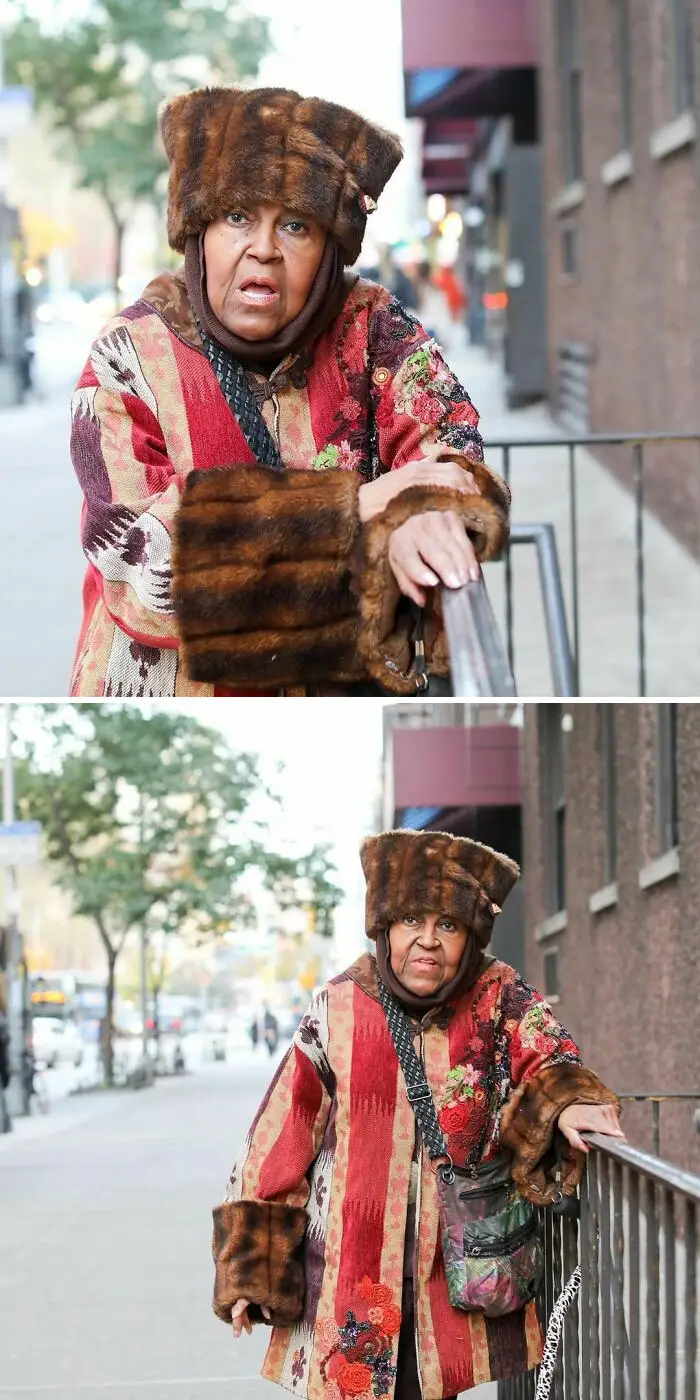
Elderly woman in a colorful coat and fur hat posing on a city sidewalk, captured in moving stories from Humans of New York.
“My mom threw me out of the house at seventeen for getting pregnant, then had me arrested when I tried to get my clothes. Then she f**ked the head of parole to try to keep me in jail. She was some prime pussy back then. But the warden did some tests on me and found out I was smart, so I got a scholarship to go anywhere in New York. I chose the Fashion Institute of Technology, which I hated. But by that time I was already getting work making costumes for the strippers and porn stars in Times Square. All my friends were gay people, because they never judged me. All I did was gay bars: drag queen contests, Crisco Disco, I loved the whole scene. And I couldn’t get enough of the costumes. My friend Paris used to sit at the bar and sell stolen clothes from Bergdorf and Lord and Taylors, back before they had sensor tags. So I had the best wardrobe: mink coats, 5 inch heels, stockings with seams up the back. I looked like a drag queen, honey. One night a Hasidic rabbi tried to pick me up because he thought I was a tranny. I had to tell him: ‘Baby, this is real fish!”
Many of you will remember this young lady. Tanqueray caused quite a stir a few months ago when she dropped some truth bombs on us, while wearing a hand-beaded faux mink coat that she made herself. What you don’t know is what happened afterward. Tanqueray—whose real name is Stephanie—sat for a series of twenty interviews with me, during which time I transcribed her entire life story. And whoa boy, what a story. Stephanie is a born performer, so we were initially going to make a podcast out of it. But unfortunate circumstances have required a change in plans. Stephanie’s health has taken a bad turn, and she’s in a really tough spot. So I’m going to tell her story right here, right now. It’s the most ambitious storytelling I’ve ever attempted on the blog. It will unfold over the course of 32 posts. But if there’s anyone who can hold an audience for an entire week—it’s Tanqueray. As her story is shared, we will be raising money to ensure that Stephanie can live the rest of her life in comfort and dignity. Stephanie has a lot of urgent needs, so her care will be expensive. But her story is priceless. If the series adds any value to your life over the next seven days, please consider making a contribution to our fundraiser through the link in bio. ‘Tattletales From Tanqueray’ will begin tomorrow.
17points

#40

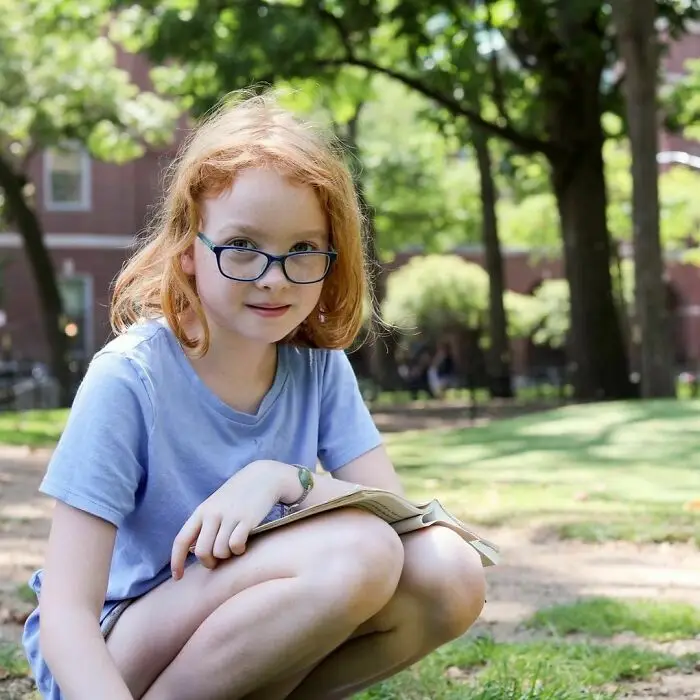
Young girl with glasses reading a book outdoors, captured in one of the most moving stories from Humans of New York.
“Adults guess and assume that I’m not going to understand things just because I’m a little kid. And it can be frustrating. Cause, like, I really want to know stuff. Or even when they do talk to me about things, they’ll always try to ‘tone it down to my level.’ They especially avoid the heavy themes like sex and death and cannibalism and stuff. But that’s stuff I want to talk about. I’m really fascinated by the Donner Party. The entire expedition-- really. What did it feel like to eat people that you knew? I’m also fascinated by how the human mind deals with death. It’s like people shut down the idea of death completely, and insist that heaven and hell are places after death. But death is death. And everyone after death is dead, because consciousness is just your brain. And even if there is evidence of life after death, it’s difficult to assess. We’re going to be incredibly biased toward any information that suggests there’s something more. Because we are so desperate to believe it.”
17points
85
9